10 Tried-and-True Perennials for Every Garden
Choose dependable perennials by light, soil, bloom season, spread, and maintenance needs. These 10 garden-tested picks return with less work.
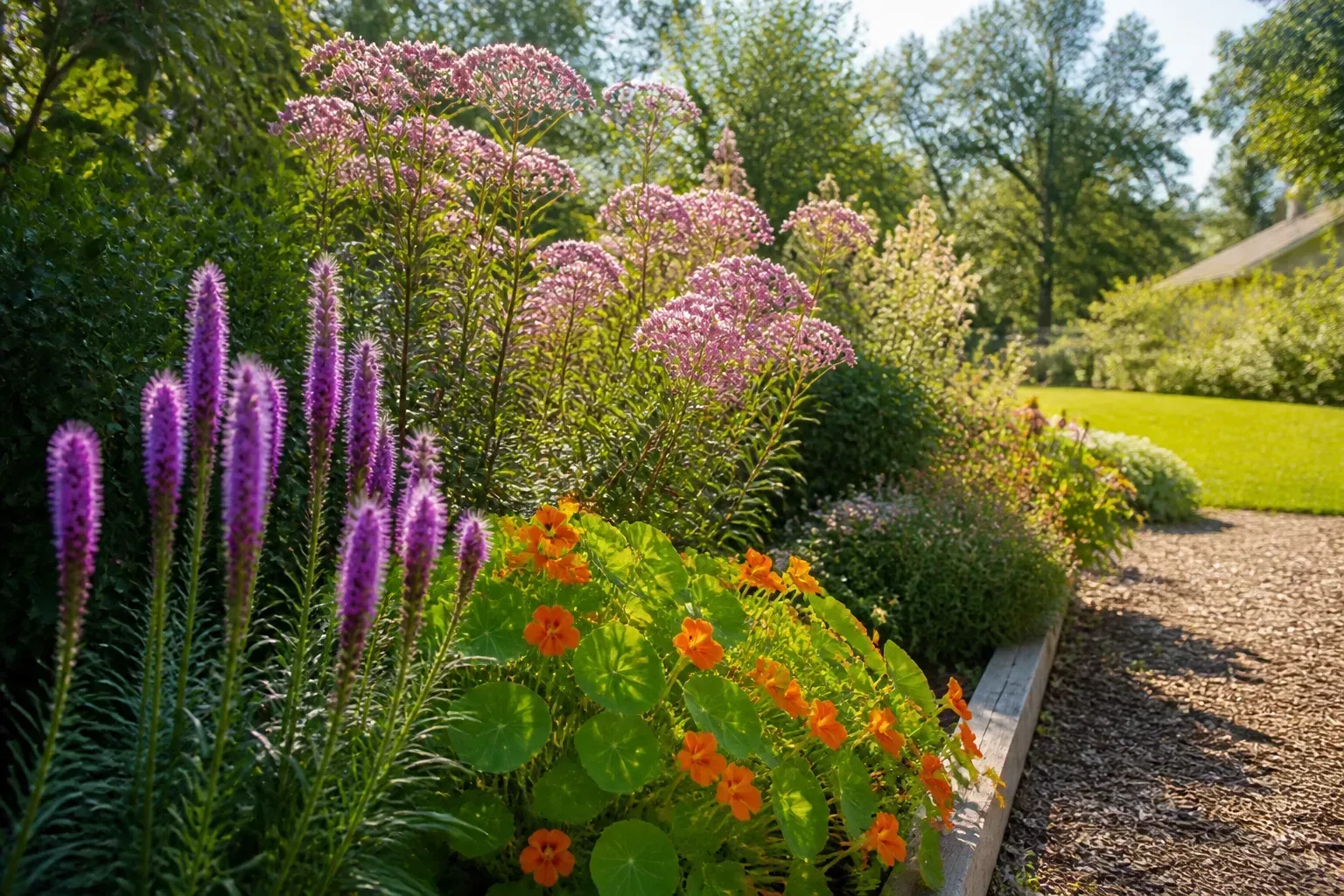
The best perennial is not the plant that survives the most neglect. It is the plant whose needs line up with the patch of ground you have: enough light, the right drainage, room to mature, and a climate it can handle.
That is why experienced gardeners return to a short list of dependable plants. Coreopsis, hosta, pink muhly grass, coneflower, catmint, garden sage, yarrow, sedum, mountain mint, and lamb’s ear cover a useful range of sun, shade, moisture, bloom season, texture, and wildlife value. Some are tidy clump-formers; others spread by rhizomes or seed and need a deliberate location.
The list below is a starting point, not a promise that every plant belongs in every yard. Before buying, check the botanical name and the cultivar’s mature size and hardiness. A plant labeled drought tolerant still needs regular water after planting, and a “low-maintenance” plant can become high maintenance if it is placed in wet soil or a bed too small for its roots.
What makes a perennial dependable?
A dependable perennial earns its place in one of three ways: it handles ordinary garden conditions without constant intervention, it provides a long season or more than one kind of interest, or it solves a difficult site problem. The strongest choices do several of these at once, but none is maintenance-free.
The useful distinction is between establishment care and mature care. A newly planted perennial has a small root system and can dry out quickly even if the species eventually tolerates drought. Once it has rooted into the surrounding soil, it may need only occasional deep watering, a seasonal trim, or division every few years.
Match the plant to the site before you shop
Start with the bed, not the plant tag. Watch the area on a clear day and record the hours of direct sun, then dig down several inches after rain to see whether water drains or lingers. Six or more hours of direct sun is full sun; two to six hours is generally part shade, but hot afternoon sun is more stressful than gentle morning light.
| If your site is… | Start with… | Check before planting |
|---|---|---|
| Sunny, lean, and dry after establishment | Coreopsis, sage, yarrow, sedum | Drainage and mature spread |
| Shady with soil that holds some moisture | Hosta | Deer, slugs, and winter drainage |
| Sunny with a long-season pollinator focus | Coneflower, catmint, mountain mint | Height, reseeding, and room to spread |
| A hot bed that needs fall texture | Pink muhly grass, sedum | Cold-edge hardiness and winter wet |
| A dry border or sensory garden | Lamb’s ear | Humidity, rain, and leaf-rot risk |
Do not “fix” a wet site by choosing a drought-tolerant plant. Drought-tolerant roots still need oxygen, and soil that stays saturated can cause rot. Improve drainage, raise the bed, or choose a moisture-loving plant instead. The same rule applies to shade: a plant that tolerates a few hours of shade may flower poorly in deep shade.
Water deeply while roots establish, then step back
For the first growing season, water newly planted perennials slowly and thoroughly whenever the root zone begins to dry. The exact schedule depends on heat, soil, rainfall, pot size, and planting date, so check the soil rather than following a calendar. A deep soak that wets the whole root ball is more useful than a daily sprinkle that keeps only the surface damp.
After establishment, reduce frequency and increase the interval between soaks. Mulch can moderate temperature and slow evaporation, but keep it a few inches away from the crown; mulch piled against stems invites rot. Savvy Gardening makes the same important distinction in its drought-tolerant flower guidance: drought tolerance is a mature-plant trait, not permission to abandon a new planting.
The 10 tried-and-true perennials
These plants are arranged by the garden jobs they do, not by a universal ranking. The first question is always whether the site matches the plant’s needs.
Coreopsis for a sunny, dry border
Threadleaf coreopsis (Coreopsis verticillata, now also listed under the name Anacis verticillata) produces airy foliage and a long succession of small yellow, daisy-like flowers. It is a strong choice for a sunny path, rocky border, or naturalistic drift where rich soil is not available. The NC State Extension profile notes that it tolerates drought, heat, humidity, and infertile sandy or rocky soil.
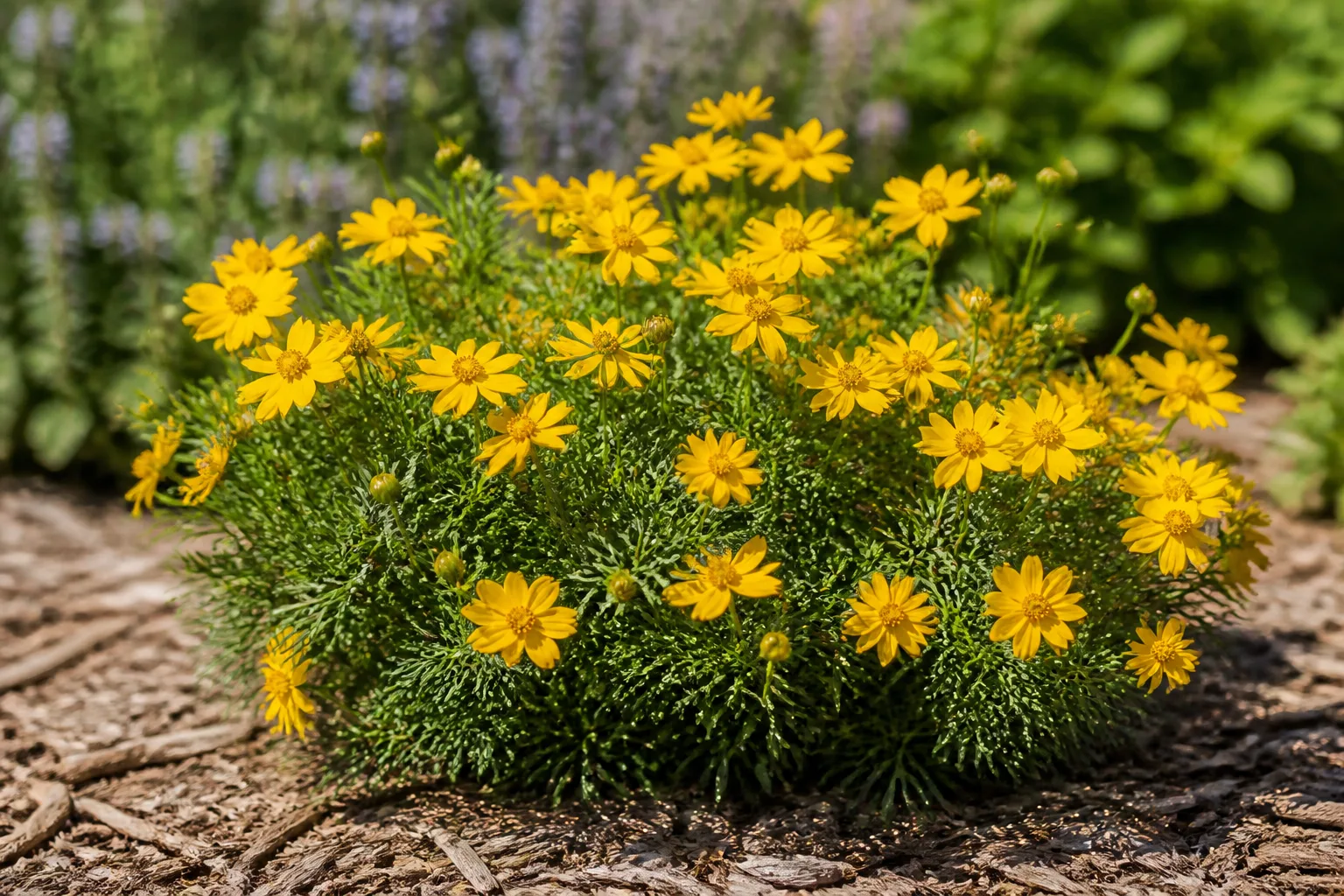
Coreopsis performs best when the soil drains freely and fertility is modest. Very rich, wet soil can create weak stems that flop, so adding more fertilizer is not the solution if the plant is falling open. Threadleaf types spread by rhizomes and may self-seed; that is useful when you want a sunny swath but less useful in a tightly designed foundation bed.
Deadhead for a tidier display, or shear the plant after its first flush of flowers if you want a fresh mound and the chance of fall bloom. The practical advantage is flexibility: you can let a drift naturalize, keep a cultivar such as ‘Moonbeam’ compact, or divide established clumps when they outgrow their space. Savvy Gardening’s Coreopsis ‘Zagreb’ notes are a good reminder that a plant can be both tough and more vigorous than expected.
Hosta for dependable shade foliage
Hosta is the shade specialist on this list. Its flowers are a bonus, but the real reason gardeners keep planting it is the range of foliage: blue, green, gold, and variegated leaves in sizes from miniature to giant. Hostas prefer morning sun or dappled shade and soil that is rich and evenly moist without staying waterlogged, according to NC State Extension’s hosta profile.
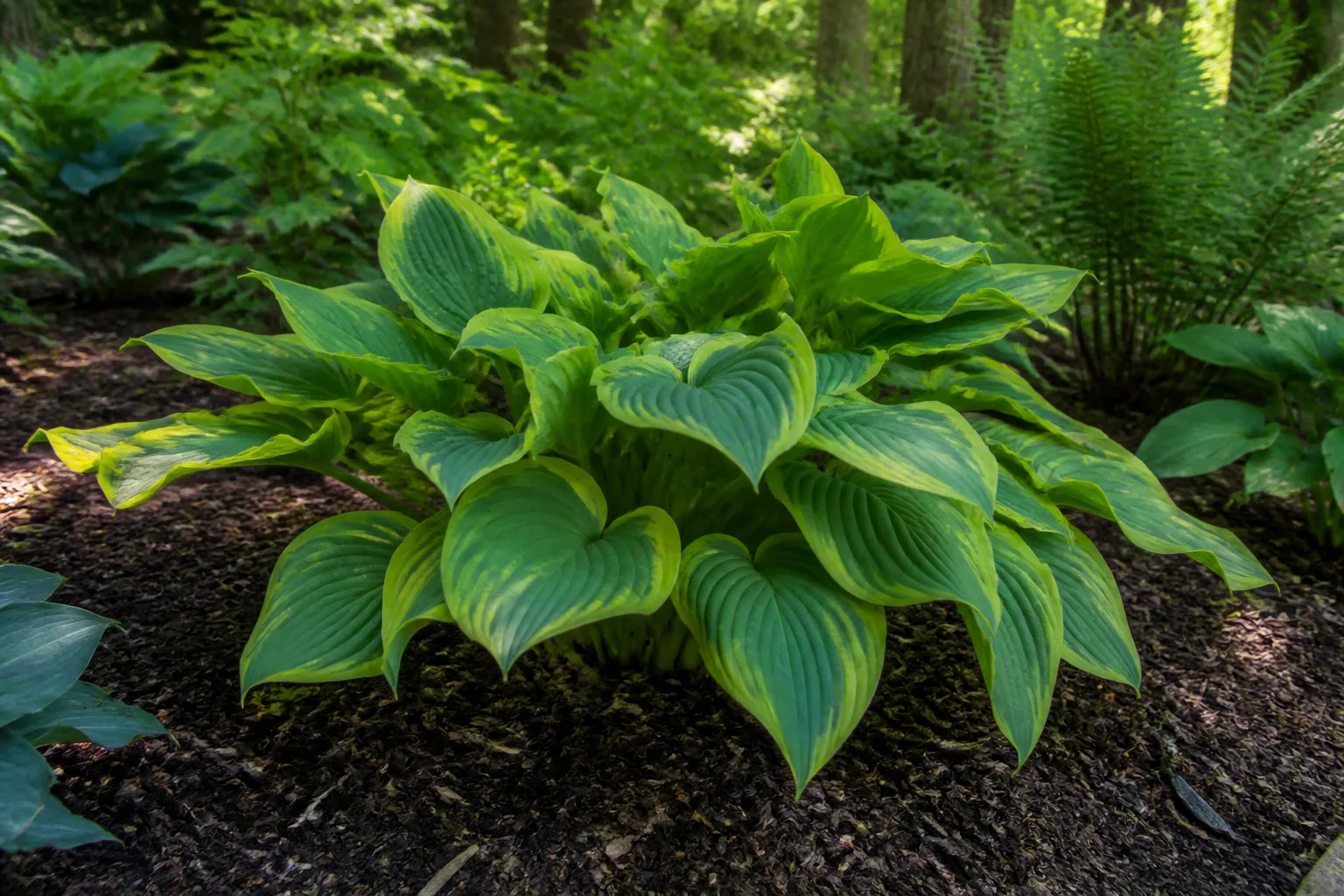
Treat hosta as a foliage plant, not a full-sun perennial that happens to tolerate shade. In hot climates, intense afternoon sun can scorch leaves, while deep dry shade can leave plants undersized. Improve the bed with organic matter if it is thin, keep watering consistent during hot weather, and avoid planting the crown in a puddle.
The main limitation is browsing. Deer and rabbits may eat the tender leaves, and slugs and snails often hide beneath them. Hostas also spread into broad clumps, which makes them easy to divide every three to five years in early spring. If pets chew plants, choose another foliage perennial: the NC State profile lists all hosta parts as toxic to cats, dogs, and horses.
Pink muhly grass for late-season movement
Pink muhly grass (Muhlenbergia capillaris) is a warm-season ornamental grass that earns its place through its fall cloud of pink to rosy-purple flower panicles. It gives a tired summer bed movement and color after many perennials have peaked, and it looks especially effective in a group rather than as a single isolated tuft.
This grass is unusually tolerant once established. NC State Extension describes pink muhly as adaptable to poor soil, heat, humidity, drought, and salt, provided the soil drains well. Give it full sun for the strongest flowering and enough room for a mature clump that can approach four feet tall and three feet wide.
The caveat is climate and winter moisture. Pink muhly is not a universal “plant it anywhere” perennial; gardeners near its cold edge should confirm the cultivar’s hardiness, and heavy wet soil can damage the crown over winter. Do not keep it constantly watered after it is established. Cut old foliage back in late winter or early spring before new growth begins, leaving the plant standing through winter if you enjoy the dried structure.
Purple coneflower for flowers and seedheads
Purple coneflower (Echinacea purpurea) is a durable native perennial with pink-purple rays, a raised central cone, and a bloom season that can run from early summer into fall. It fits a sunny border, meadow, or pollinator planting and handles more soil types than many delicate garden flowers. RHS’s Echinacea guide describes coneflowers as tough, easy to grow, and attractive to bees and butterflies.
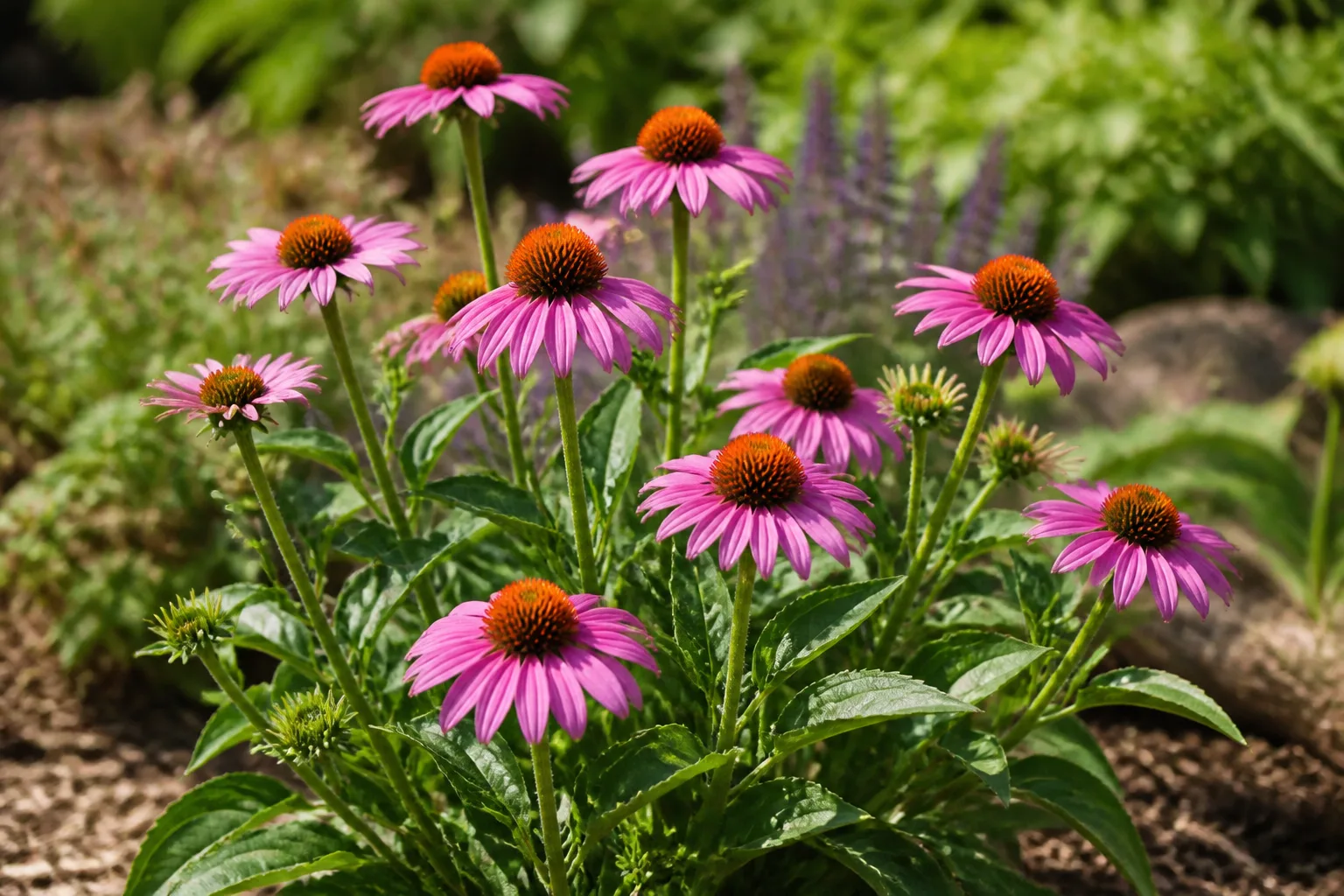
Give coneflower full sun when possible, well-drained soil, and steady moisture while it roots. It becomes drought tolerant after establishment, but prolonged heat can still shorten bloom or reduce plant size. Avoid planting it in a bed that is constantly soggy, and do not assume a named cultivar behaves exactly like the species; some compact or double-flowered selections may differ in height, seed production, and wildlife value.
One of coneflower’s best features arrives after the petals fade. The dried cones provide structure and can feed birds, while hollow standing stems offer overwintering habitat for some native bees. You can cut the plant down in late winter for a clean bed, but leaving some stems standing until spring is a more wildlife-friendly choice. The U.S. Fish and Wildlife Service includes purple coneflower among pollinator-friendly perennial choices.
Catmint for repeat blooms with little fuss
Catmint (Nepeta, including blue catmint hybrids) makes a soft mound of aromatic gray-green foliage covered in lavender-blue flower spikes. It is one of the most useful edging plants for a sunny border because it softens hard lines, flowers for a long season, and tolerates lean soil better than many showy perennials.
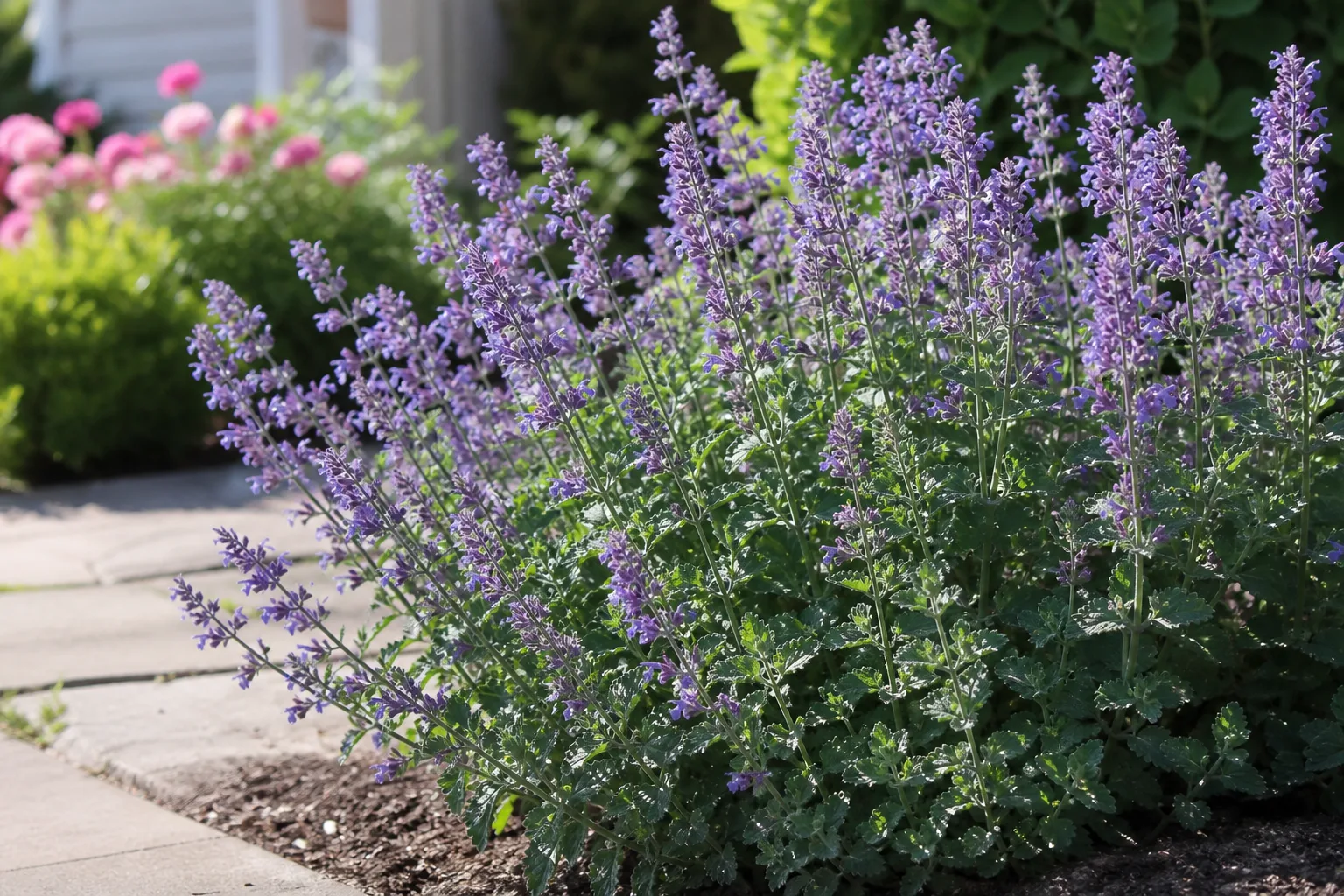
The RHS Nepeta guide describes catmints as dependable, low-maintenance perennials that flower over a long season and respond well to trimming after bloom. Give most catmints full sun and well-drained soil; in hot southern gardens, some afternoon protection can help. Once established, many hybrids tolerate dry spells, but a damp, poorly drained bed can cause decline.
Shear the plant by about one-third after the first flush of flowers fades. That removes the floppy flower stems, refreshes the mound, and often encourages another display. Choose a sterile hybrid such as a compact ‘Junior Walker’ type if reseeding is a concern. Catmint is not the same as catnip, and cats may be attracted to its scent even though deer usually avoid it. Place it where its mature width can spill slightly over a path instead of forcing it into a narrow slot.
Garden sage for edible foliage and dry soil
Common garden sage (Salvia officinalis) brings evergreen or semi-evergreen gray-green foliage, soft texture, edible leaves, and early-summer flower spikes. It is a perennial shrub-like herb rather than a soft herbaceous clump, so it adds structure to a kitchen garden, rock garden, or sunny border even when it is not in flower.
Sage wants the conditions of its Mediterranean origin: full sun, sharp drainage, and soil that dries between waterings. The NC State Extension sage profile specifically warns that it is intolerant of wet or poorly drained soil but tolerates drought and poor soil once established. Overwatering is the fastest way to turn this “easy” perennial into a short-lived one.
Harvest lightly in the first year so the plant can build roots. In spring, prune to shape and remove winter damage, but do not cut deep into old woody stems; they may not resprout. In colder climates, sage may be less reliably perennial, especially in wet winters, so use the hardiness information for your cultivar and site. Ornamental salvias sold for flowers are different plants and should not be assumed to have the same culinary value.
Yarrow for tough sites and pollinators
Yarrow (Achillea millefolium) has ferny foliage, flat-topped flower clusters, and a talent for thriving where fussier perennials struggle. It tolerates drought, poor soil, heat, and some salt, making it useful for a dry slope, roadside edge, meadow, or low-traffic lawn alternative. Flower colors range from white and yellow to pink, red, and warm apricot in cultivated selections.
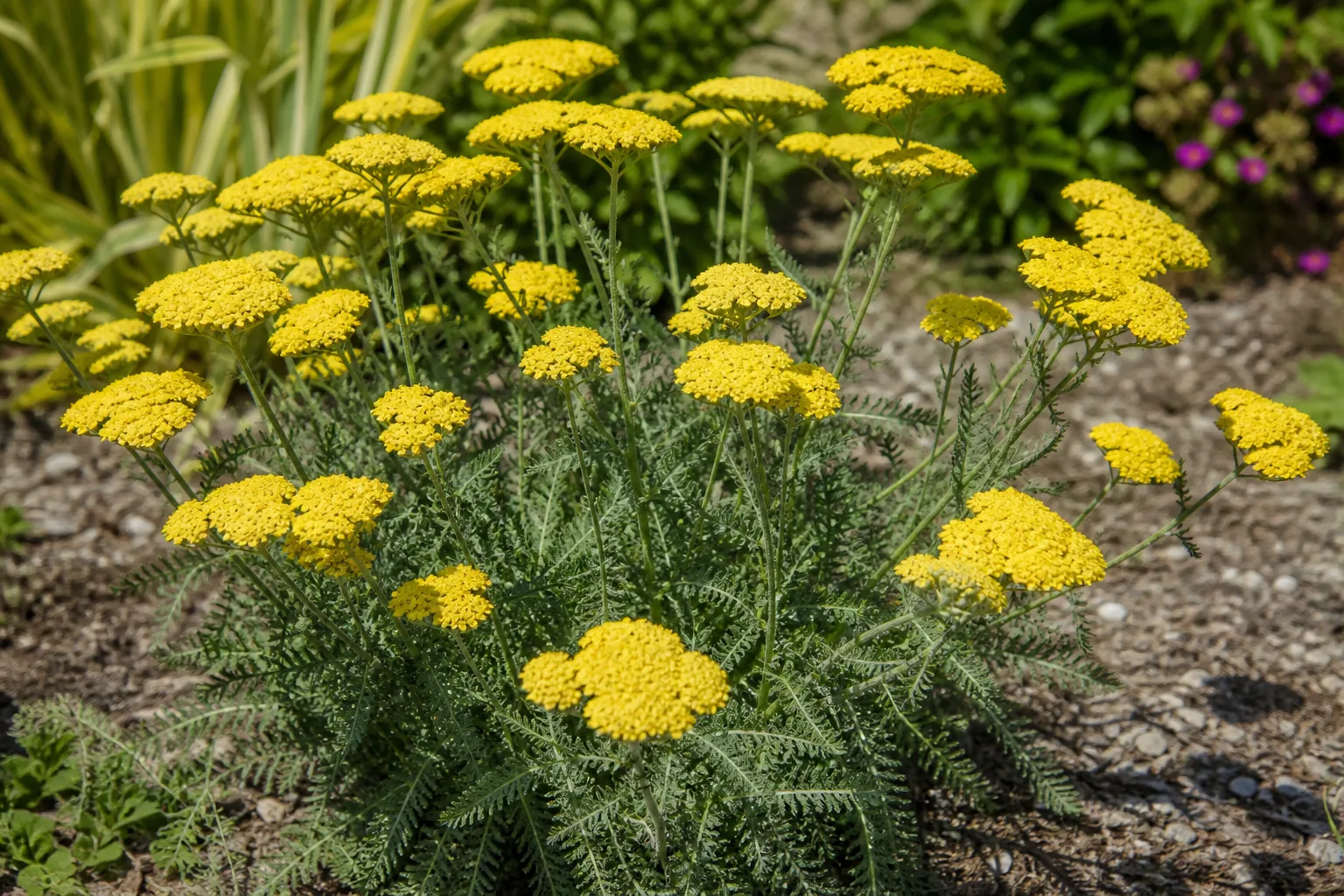
The trade-off is spread. NC State Extension’s yarrow profile notes that yarrow can spread aggressively by rhizomes and seed, and that it may be too weedy for a formal border. Plant it where a drift is welcome, or choose a better-behaved cultivar and divide it before it crowds neighboring plants. Deadheading helps extend bloom and reduces the amount of seed that lands in the bed.
Yarrow also deserves a safety note. NC State advises avoiding it where pets roam and wearing gloves because contact dermatitis is possible. That does not make yarrow a bad garden plant; it makes placement part of the recommendation. Keep it away from play areas and pet paths, and treat “deer resistant” as a browsing tendency, not a guarantee.
Sedum for drought-tolerant fall color
Showy stonecrop (Hylotelephium spectabile, formerly often sold as Sedum spectabile) forms a sturdy clump of succulent leaves topped with broad pink flower heads in late summer and fall. It is a compact, architectural contrast to fine-textured grasses and airy flowers, and its dried heads can remain attractive into winter.
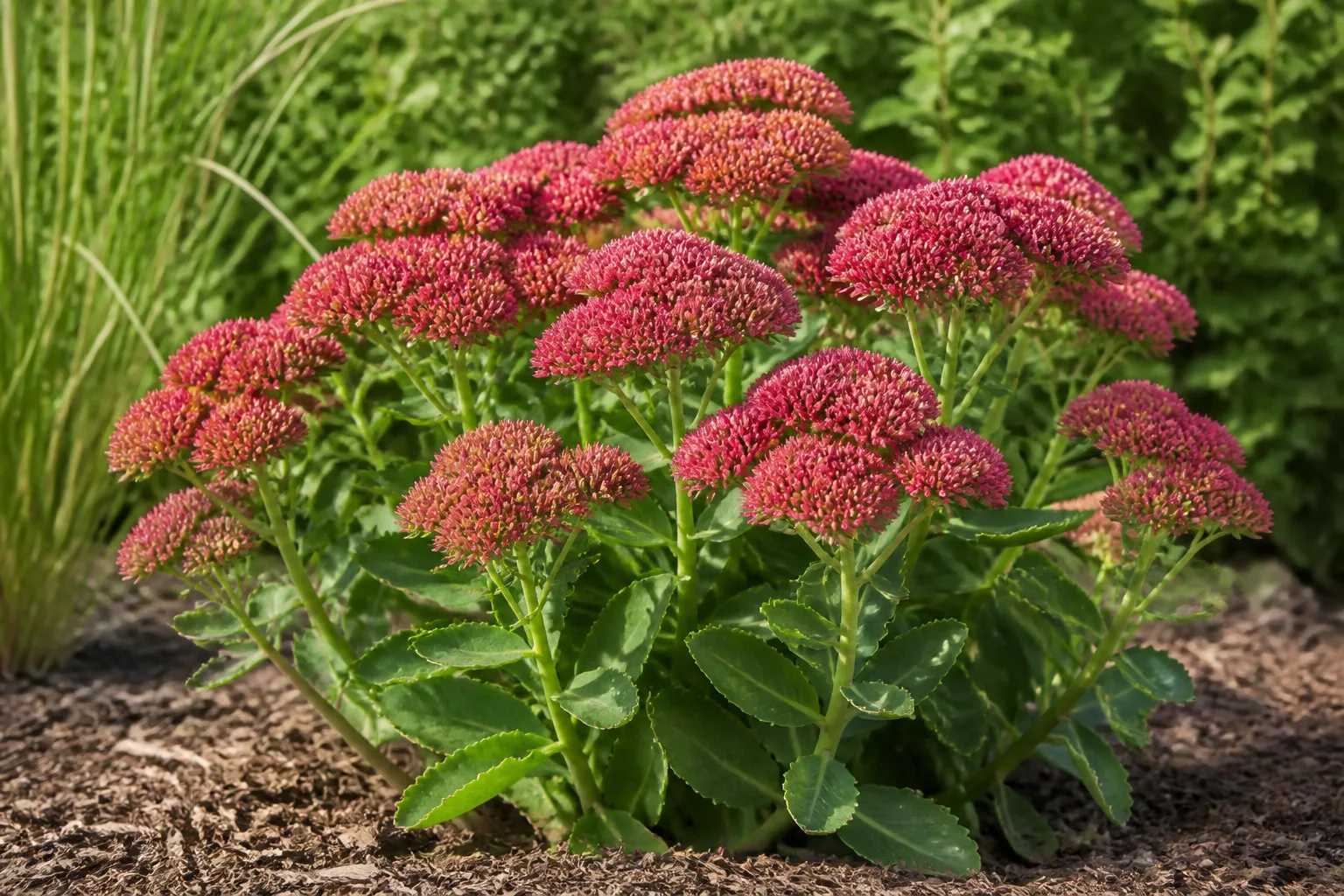
Stonecrop prefers full sun or light partial shade, gritty or well-drained soil, and low to average fertility. The NC State profile for showy stonecrop notes its drought tolerance, low maintenance, and dislike of overly moist or fertile soil. Water deeply during the first season, then let the soil dry between thorough waterings.
If tall stems flop, the problem is often too much shade, fertility, or moisture rather than a need for more support. Pinching or cutting stems back in early spring produces a shorter, bushier plant; pruning in summer may delay flowering. Sedum is generally resistant to rabbits, but deer may browse it, and wet soil can still cause rot. Keep the older botanical name in mind when searching plant tags, because nurseries may use either name.
Mountain mint for a buzzing native planting
Blunt mountain mint (Pycnanthemum muticum) is a tall, fragrant native perennial for gardeners who want pollinator activity and a relaxed, meadow-like look. It produces clusters of small flowers surrounded by silvery bracts, and the leaves release a strong mint scent when crushed. It is especially useful in a pollinator border, rain garden, native planting, or the back of a sunny-to-partly-shaded bed.
The NC State Extension mountain mint profile describes it as a vigorous but non-invasive grower that spreads by rhizomes in favorable conditions. That distinction matters: “not invasive” does not mean “stays in a six-inch clump.” Give it two to three feet of room, edge the roots with a spade in spring if necessary, and avoid placing it beside a tiny ornamental that it will overwhelm.
Mountain mint prefers moist soil with good drainage, so it is not the same dry-bed plant as sage or sedum. Let the flowers stand for pollinators and late-season structure, then cut old stems in late winter. Because it can reach three to four feet, place it behind shorter plants or use it as a visual screen rather than expecting a low edging plant.
Lamb’s ear for silver texture
Lamb’s ear (Stachys byzantina) is grown primarily for its thick, soft, silver leaves. It forms a low spreading mat that brightens the front of a border, sensory garden, rock garden, or dry path. Its small pink-purple flower spikes are secondary; many gardeners remove them to keep the foliage mound compact.
Give lamb’s ear full sun to light partial shade and very well-drained soil. NC State Extension notes that the plant is moderately drought tolerant after establishment but dislikes overwatering, wet leaves, and humid conditions. In hot, rainy climates, a slope or raised position can be safer than a flat bed that stays damp.
Lamb’s ear spreads by stems that root at the nodes and may need division every few years. That is easy to manage in a border with room, but less charming when the plant is invading a narrow walkway. Remove damaged, mushy leaves during wet weather, improve air movement, and do not irrigate the foliage overhead in the evening. The result is a durable silver groundcover, not a carefree plant for a poorly drained corner.
Build a low-maintenance perennial planting plan
Once you know the site, choose plants that share a watering pattern. A dry-sun group might combine coreopsis, sage, yarrow, sedum, and lamb’s ear, while a pollinator drift can pair coneflower and catmint with mountain mint in a slightly moister, well-drained bed. Hosta belongs in a separate shade planting rather than being watered on the same schedule as sedum.
Layer bloom times, heights, and foliage
Build the bed in layers. Use low foliage at the edge, medium mounds in the middle, and taller stems or grass at the back. Then repeat plants in groups of three or five so the garden reads as a composition instead of a collection of unrelated specimens.
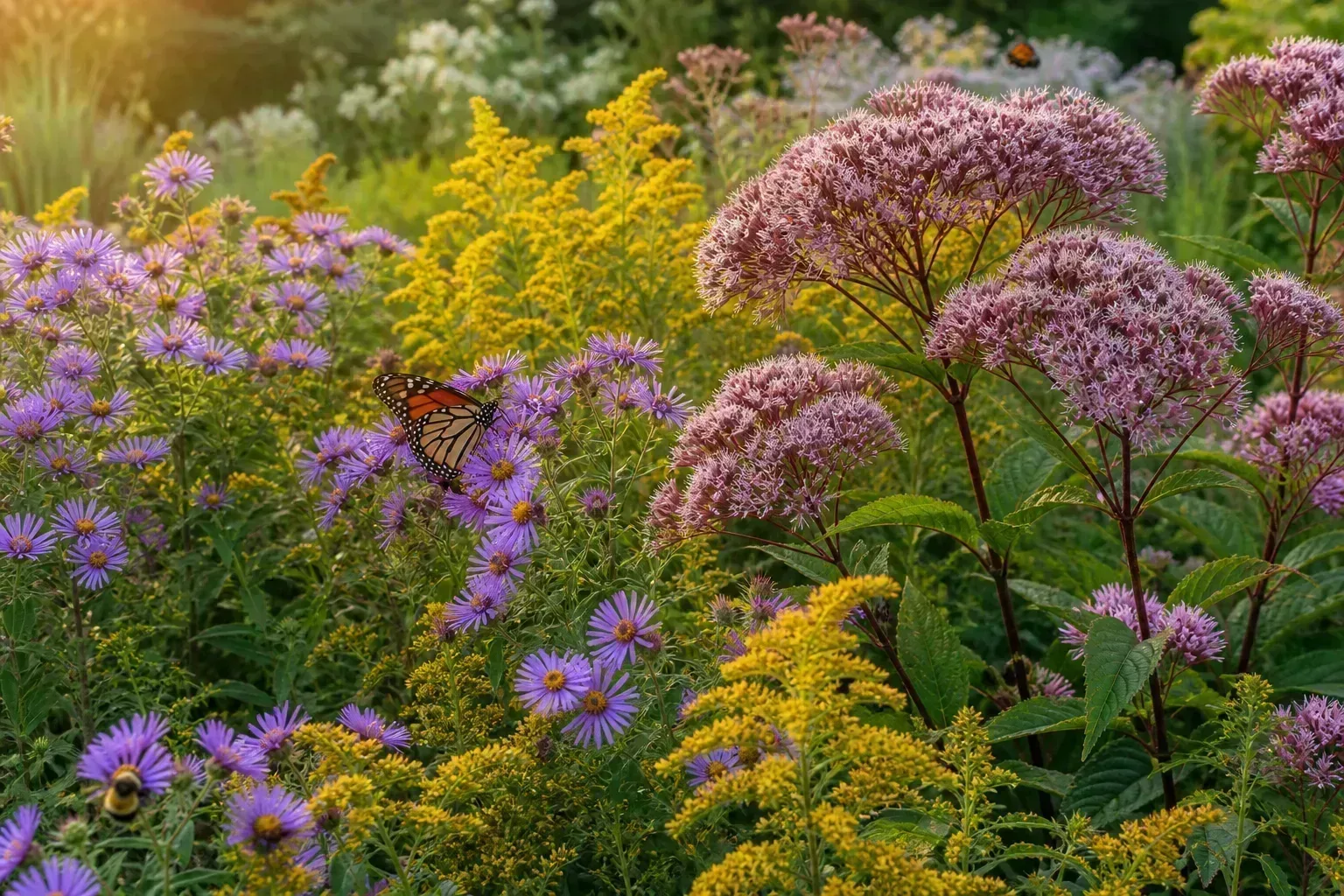
Bloom succession matters more than finding one plant that flowers every month. Coreopsis and catmint can carry early-to-midseason color, coneflower and sage bridge into summer, and pink muhly grass and sedum give the late season its strongest texture. Leave some coneflower cones and muhly plumes standing so the bed still has shape after peak bloom.
Foliage is the insurance policy. Hosta, lamb’s ear, sage, sedum, and coreopsis all contribute leaf texture even when flowers are between flushes. This is one reason expert gardeners do not judge a perennial only by the photograph on its plant tag.
Respect spread, moisture, and pet-safety limits
Before planting, measure the mature width rather than the nursery pot. Coreopsis, yarrow, mountain mint, and lamb’s ear can all expand beyond the spot where a small starter plant looks perfect. Leave room, edge roots when appropriate, or choose a compact cultivar.
Group plants by moisture: sage, sedum, and lamb’s ear want fast drainage; mountain mint and hosta appreciate more consistent moisture; coneflower and catmint sit between those extremes but still dislike a saturated crown. If a bed needs daily irrigation to keep a drought-tolerant plant alive, the plant is probably in the wrong place.
Finally, check the plant against the people and animals who use the garden. Hostas are toxic to cats, dogs, and horses, and yarrow is a poor choice for areas where pets roam. A low-maintenance garden should be easy to live with, not merely easy to grow.
The seasonal maintenance that keeps perennials reliable
In spring, remove dead stems, check for crown heaving, and divide crowded clumps before new growth gets large. This is also the best time to correct spacing and move a plant that has clearly outgrown its role. Add a thin layer of compost if the soil needs it, but avoid pushing high-nitrogen fertilizer onto plants that already flop.
During the growing season, water newly planted perennials consistently, weed while weeds are small, and deadhead only when the result is worth the labor. Deadheading can extend bloom on coreopsis, catmint, yarrow, and sage, but leaving some coneflower and sedum seedheads supports structure and wildlife. Watch for plant-specific problems rather than spraying by habit: slugs on hosta, wet-soil rot on sage or sedum, and mildew when foliage stays crowded and damp.
In fall, do not rush to cut everything to the ground. Remove diseased foliage, trim plants that have collapsed onto paths, and leave healthy stems, cones, and grass plumes where they provide winter habitat or food. In late winter, cut back old grasses and herbaceous stems before new shoots appear, then repeat the cycle with the same simple checks: light, drainage, room, and moisture.
Conclusion
These 10 tried-and-true perennials are dependable because they solve different garden problems. Coreopsis, sage, yarrow, sedum, and lamb’s ear handle sunny, well-drained conditions; hosta fills a shady bed; coneflower, catmint, and mountain mint support a lively pollinator planting; and pink muhly grass adds late-season movement.
The shortcut is not neglect. Give every new plant a careful first season, match its mature size to the bed, and take its spread, drainage, and pet-safety limits seriously. After that, the right perennial usually asks for only the occasional deep soak, trim, division, or decision to leave its winter structure standing.



