How to Grow and Care for Hostas: Complete Guide
Learn how to plant hostas, match cultivars to light, water without crown rot, divide clumps, and stop slugs and deer—extension-backed shade garden care.
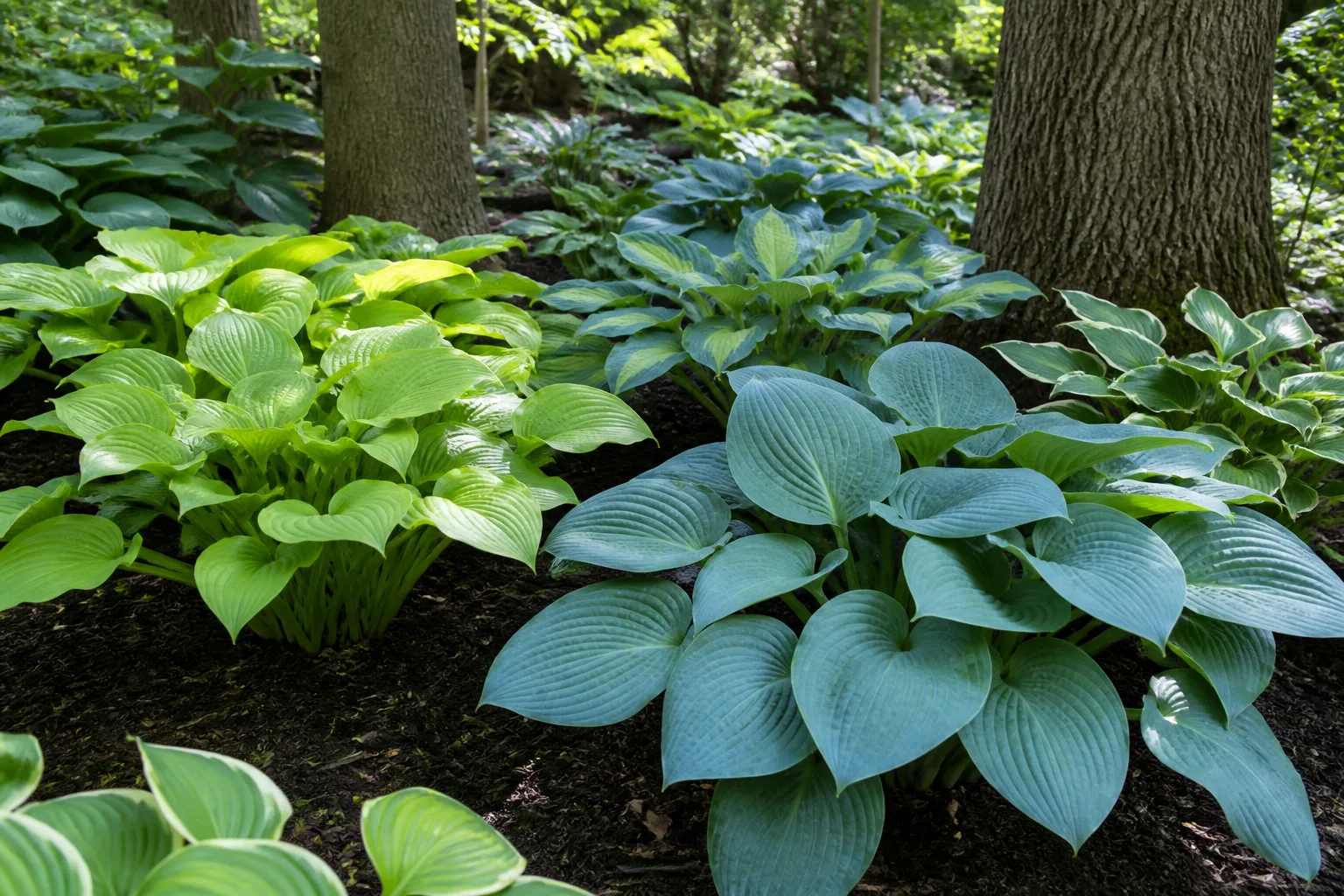
Hostas (Hosta spp.) are the workhorse foliage perennials of North American shade gardens—and for good reason. They push bold leaves from spring through fall, survive decades in the same bed, and come in sizes from six-inch miniatures to four-foot giants. The catch is not finding a hosta; it is matching the cultivar to your light, planting at the right depth, and staying ahead of slugs before they lace every leaf by June.
This guide walks through site selection, planting, watering, feeding, division, containers, pest control, and a season-by-season calendar so your hostas come back thicker each year instead of shrinking into a slug-eaten afterthought.
Why Hostas Belong in Your Shade Garden
Hostas are herbaceous perennials in the asparagus family (Asparagaceae), native to East Asia and widely grown across USDA zones 3–9. They grow from rhizomes into clumping mounds, die back after hard frost, and require a dormant period below about 40°F (4°C) for a couple of months each winter, according to the NC State hosta profile. Foliage is the main event—heart-shaped, corrugated, blue, gold, or variegated—but many cultivars also send up trumpet-shaped white, lavender, or purple flowers in summer that hummingbirds and bees visit.
What makes hostas genuinely useful in design is flexibility. Dwarf types tuck into rock gardens and troughs. Medium clumps work as groundcovers along paths. Large and giant cultivars anchor the back of woodland borders. They pair naturally with ferns, astilbe, and spring bulbs; see companion plants for hostas for spacing and moisture matches that actually last.
One honest warning up front: hostas are not deer-resistant. They are deer dessert. Plan protection before you plant a dozen expensive cultivars along a woodland edge, or read how to keep deer away from hostas for fence and repellent strategies that hold up in real yards.
Choose the Right Hosta Before You Dig
With more than 2,000 registered cultivars, buying on leaf color alone is how gardeners end up with a scorched gold hosta under a maple or a blue hosta that turns green in too much sun. Start with mature size and light tolerance, then choose the leaf you like.
Size Categories and Spacing Rules
The American Hosta Society classifies plants by mature height, and NC State Extension summarizes the ranges:
| Category | Mature height | Spacing guidance |
|---|---|---|
| Dwarf | Under 4 in. | 12–18 in. apart |
| Miniature | 4–6 in. | 15–24 in. apart |
| Small | 6–10 in. | 18–30 in. apart |
| Medium | 10–18 in. | 2–3 ft apart |
| Large | 18–28 in. | 3–4 ft apart |
| Giant | Over 28 in. | 4–5+ ft apart |
The RHS hosta growing guide recommends spacing up to 90 cm (3 ft) for large types based on ultimate spread—always check the nursery tag because a “medium” label on the pot does not tell you whether you are buying a future 18-inch clump or a 5-foot spreader like Sum and Substance.
Underspacing creates slug highways, fungal splash, and division chores every two years instead of every four or five. Overspacing leaves bare mulch for weeds the first three seasons. When in doubt, measure the tag’s mature width and add six inches of breathing room.
Match Leaf Color to Your Light
Leaf color is a sun-tolerance cheat code:
- Blue and glaucous leaves (thick wax coating) need deeper shade or morning sun only. Afternoon sun melts the bloom and fades blue to green.
- Green-leaved types accept partial shade and more morning light.
- Gold and chartreuse cultivars tolerate more sun than blues—but still not hot afternoon bake on a south wall. They need bright light to keep color; dense shade turns them chartreuse-green.
- Variegated hostas (white or yellow margins) often need morning sun to sharpen contrast. Too much sun burns white sections; too much shade dulls the variegation.
If your bed gets blasted sun after 1 p.m., pick gold types like Gold Standard or sun-tolerant selections such as Minuteman, and still plan afternoon protection in zones 7–9. For daily wilt in summer sun, see hostas wilting in sun before you assume the plant needs more water.
Pick a Site That Hostas Can Actually Live In
Hostas are forgiving once established, but they are unforgiving about winter-wet soil and reflected afternoon heat. Ten minutes with a notebook beats a cart full of the wrong cultivars.
Light Rules by Leaf Type
Most hostas perform best with morning sun and dappled afternoon shade, especially in the South. NC State notes that in hot climates, full shade or dappled shade keeps foliage colors vibrant and prevents leaf burn. Under deciduous trees is ideal: spring sun reaches the bed before canopy leaf-out, then summer shade arrives naturally.
Avoid planting hostas where air stagnates against a south-facing brick wall or where car hoods and pavement radiate heat into the bed. These microclimates scorch leaves even when the wider yard is “part shade” on paper.
Soil, Drainage, and pH
Hostas want moist, fertile, slightly acidic soil that drains. They tolerate clay if you amend with compost and avoid low spots that hold winter ice water. They fail in soggy winter soil—crown rot is real—and they struggle in dry, sandy beds without irrigation and organic matter.
The RHS advises improving heavy clay with garden compost or well-rotted manure before planting. In compacted shade under mature trees, dig a wide planting pocket (two to three times the root ball width) and mix compost into the backfill rather than amending only the hole interior—a “bathtub” of rich soil in unchanged clay collects water.
pH: Slightly acidic (roughly 6.0–6.5) suits most hostas. A soil test through your county extension office is cheaper than replacing plants.
Pet note: NC State lists all parts as toxic to cats, dogs, and horses. Keep pets from chewing leaves if they graze in the garden.
How to Plant Hostas Step by Step
Best planting windows: early spring after the ground thaws, or early fall at least four to six weeks before your first hard freeze. The RHS says you can plant any time of year but should avoid mid-summer when heat and dry soil stress transplants. Fall planting lets roots grow while soil is cool; spring planting catches the full growing season.
What to buy: Potted divisions from a nursery are the reliable route. Bare-root divisions shipped in spring work if you plant promptly and keep roots damp. Seed is a hobby project—offspring rarely match variegated parents.
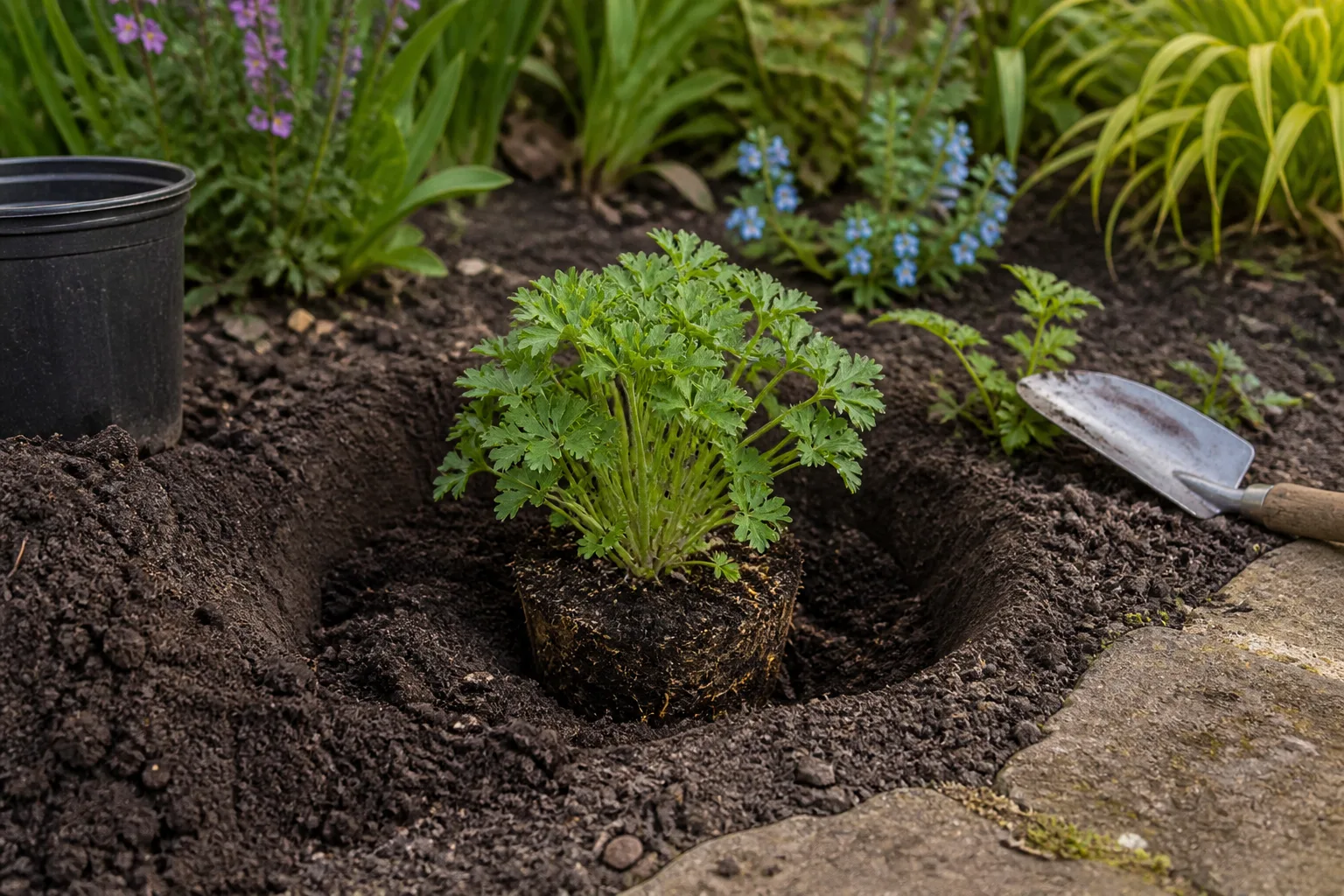
- Soak the pot if dry. Slide the plant out and loosen circling roots gently.
- Dig a hole the same depth as the root ball and twice as wide, per RHS guidance.
- Set the crown at the same level it grew in the pot—eyes (buds) just at or slightly below the soil surface. Burying the crown invites rot.
- Backfill with native soil amended with compost unless a soil test says otherwise. Firm gently; do not stomp.
- Water deeply until the root zone is saturated. Build a shallow basin outside the root mass for the first month.
- Mulch two to three inches with shredded bark or leaf mold, keeping mulch off the crown.
Space according to mature spread from the table above. In a new bed, planting perennials in May or early fall alongside hostas lets you establish the whole shade layer on one irrigation schedule.
Watering Hostas Without Rotting the Crown
Established hostas are not drought-proof. They are drought-tolerant for short spells once roots spread, but leaf size and color suffer quickly when soil dries. The RHS suggests keeping soil slightly damp to 15 cm (6 in.) deep during dry weather—check by digging nearby rather than guessing from surface dust.
Water at the soil line, not overhead in midday sun. Soaker hoses or slow hose-end watering under the leaf canopy reduces fungal splash and puts moisture where shallow roots live. Deep, infrequent soaking beats daily spritzing that wets only the top inch.
New transplants: water when the root ball begins to dry, often daily the first hot week even if surrounding soil looks fine. Established clumps: about one inch of rain plus irrigation per week is a starting benchmark in summer; clay holds moisture longer than raised beds.
Stop when soil is wet. Yellowing, mushy crowns, and a sour smell mean too much water or poor drainage—not a thirsty plant. If crown rot appears, remove affected plants and improve drainage before replanting.
Feed and Mulch for Thicker Foliage
Hostas are moderate feeders. In fertile soil, an annual spring mulch of compost or well-rotted manure supplies enough nutrition for most gardens, matching NC State’s emphasis on organic-rich soil. The RHS recommends the same for border plants; on poor soil, apply a balanced slow-release fertilizer in early spring per label rates, then mulch—never pile granules in leaf axils where they burn tissue.
Refresh mulch lightly each spring after soil warms. For depth, weed suppression, and crown clearance rules, see what is mulch and does mulch prevent weeds. Pull mulch back two inches from emerging shoots in spring so crowns breathe.
Container hostas need monthly liquid feed during active growth, per RHS container guidance, because leaching is faster than in ground beds.
Hosta Varieties Worth Planting
You cannot try every cultivar. These seven cover size and color range and perform reliably in typical shade gardens:
| Cultivar | Size class | Leaf / habit | Why plant it |
|---|---|---|---|
| Blue Mouse Ears | Small | Round blue-green cups | Tight spaces, containers, rock gardens |
| Halcyon | Medium | Spear-shaped blue-gray | Classic blue for woodland edges |
| Patriot | Medium | Green with white margins | Bright variegation; morning sun sharpens contrast |
| Francee | Medium–large | Dark green, white edge | Similar to Patriot; strong border presence |
| Guacamole | Large | Chartreuse center, green margin | Fragrant near-white flowers; part sun |
| Sum and Substance | Giant | Corrugated golden green | Background anchor; needs space |
| Empress Wu | Giant | Dark green, massive leaves | Statement plant; 4–5 ft spacing minimum |
Hosta plantaginea hybrids bring fragrant white flowers and more heat tolerance; H. sieboldiana types such as Elegans deliver corrugated blue foliage for cool, shady sites. Miniatures like Cowlick and Twist of Lime suit troughs and fairy-garden scale plantings NC State highlights for rock gardens.
Buy from reputable growers when investing in rare blues—verify plants are virus-free. Hosta Virus X (HVX) has no cure; infected plants must be destroyed and tools disinfected.

Divide and Propagate Hostas
Division is the practical propagation method. Seedlings rarely match variegated parents, and tissue culture is a nursery job—not a weekend task.
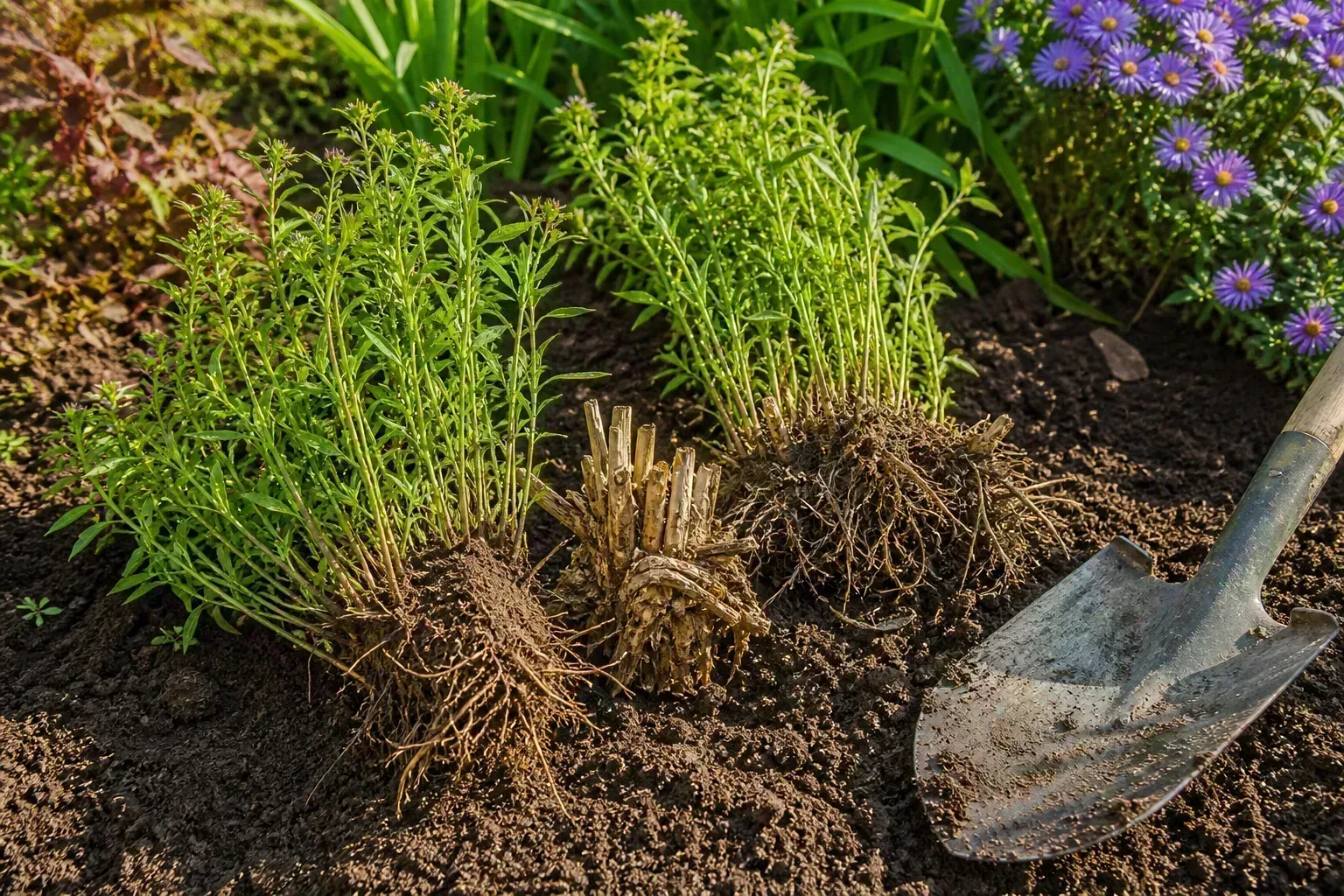
When: early spring as eyes emerge, or early fall at least four weeks before freeze. NC State and the RHS both recommend dividing every three to five years (RHS says four to five) when clumps outgrow their space or the center dies out.
How:
- Dig the entire clump with a spade or fork, lifting a wide root disk.
- Wash soil off if needed and set the clump on a tarp.
- Split with a sharp spade or knife so each division has one to three buds and healthy roots.
- Trim damaged roots cleanly.
- Replant at the same depth with buds just visible.
- Water deeply and shade for a week if weather is warm.
Divisions often flower by year two. Pieces with only roots and no leaves can survive if kept damp, but buds speed recovery.
Hostas in Containers and Overwintering
Hostas grow well in pots with ordinary peat-free multipurpose or loam-based compost (John Innes No. 3 works). Choose a pot at least as wide as the mature leaf spread with drainage holes. Miniatures such as Blue Mouse Ears are excellent container plants; giants belong in the ground unless you enjoy repotting battles.
Watering: pots dry faster than beds—check daily in summer. Leaf margins brown when roots dry repeatedly.
Winter: hostas are root-hardy, but container soil can freeze solid and thaw repeatedly, heaving crowns. In zones 3–6, sink pots up to the rim in garden soil for winter, move them to an unheated garage after leaves die back, or wrap pots with insulation. The RHS notes containers are prone to winter waterlogging—stand pots against a wall eave where rain does not soak them all season.
Indoor wintering is possible in bright indirect light but hostas still need a six-week cool dormancy below 40°F at some point. Without chill, they weaken year over year.
Repot when roots circle the pot or water runs straight through. Spring is the easiest repot window.
Slugs, Deer, and Diseases — Control That Works
Slugs and Snails
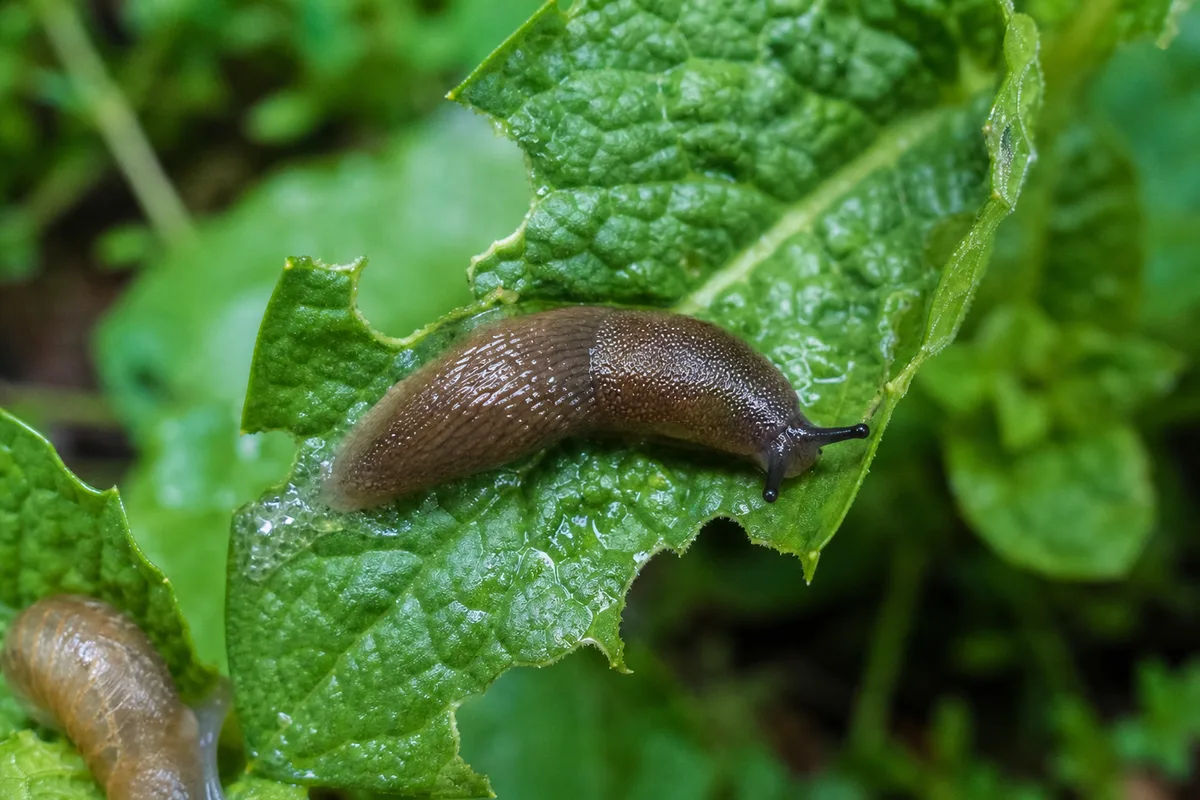
Slugs are the iconic hosta pest. Moist shade, mulch, and broad leaves create perfect habitat. Control works best as a ladder, not a single magic spray:
- Cultural: hand-pick at dusk, remove debris under plants, water in morning so beds dry by evening, encourage ground beetles and toads with log piles at bed edges.
- Barriers: copper tape on pots, diatomaceous earth rings (reapply after rain)—helpful but not sufficient alone on large beds.
- Baits: iron phosphate slug baits (pet-safer than metaldehyde) applied per label, refreshed after heavy rain.
- Cultivar choice: thicker-leaved types like Devon Green resist damage better than thin white-margined sports, per RHS observation.
Holes in June leaves are cosmetic unless slugs eat emerging shoots in spring—then intervene early.
Deer and Rabbits
Deer can level a hosta bed overnight. Fencing is the only reliable fix. Repellents, motion sprinklers, and interplanting with deer-resistant companions reduce pressure but do not eliminate it. Rabbits nip young shoots; low fencing or hardware cloth collars help on new plantings.
Diseases and Virus
Anthracnose and leaf spot show as brown-bordered lesions in wet weather. Remove affected leaves, avoid overhead irrigation, and thin crowded clumps for airflow.
Foliar nematodes cause brown streaks between veins. Affected plants should be destroyed—chemical options are toxic to wildlife.
Hosta Virus X mottles leaves with uneven color and sunken tissue. There is no cure. Dig out infected plants, bag them, and disinfect tools with a 10% bleach solution or alcohol between cuts.
Voles chew roots in winter under snow and mulch. Pull mulch back from crowns in fall and trap if tunnels appear.
Troubleshooting Common Hosta Problems
Holes, Scorched Edges, and Yellow Foliage
| Symptom | Likely cause | First action | Long-term fix |
|---|---|---|---|
| Ragged holes | Slugs/snails | Bait + evening hand-pick | Morning watering, spring bait program |
| Brown leaf edges | Afternoon sun / drought | Shade cloth short-term | Move plant or switch to gold cultivar |
| Brown spots with dark borders | Anthracnose / leaf spot | Remove leaves, stop overhead water | Thin clump, improve airflow |
| Yellow stunted center | Crown rot / overwatering | Stop watering, check drainage | Replant in raised bed |
| Interveinal brown streaks | Foliar nematodes | Destroy plant | Do not replant hostas in same spot immediately |
| All leaves green on blue cultivar | Too much sun or age | Assess light | Move to deeper shade |
Hail shreds leaves in minutes; remove torn foliage and let new leaves emerge. Do not fertilize stressed plants until they recover.
Seasonal Hosta Care Calendar
Late winter: cut dead foliage flat at ground level before shoots emerge; clears slug eggs and disease carryover.
Early spring: divide overcrowded clumps as eyes show; apply compost mulch; set slug bait before leaves unfurl; protect new shoots from late frost with fleece if needed.
Late spring–summer: water during dry spells; deadhead spent flower stalks if you prefer foliage focus (flowers help pollinators if left); watch for slug damage and scorch during heat waves.
Fall: plant new hostas and fall divisions; reduce fertilizer; keep watering until freeze if dry; clean debris; optional thin mulch after ground freezes in cold zones.
Winter: dormant crowns tolerate freeze; protect potted plants from freeze-thaw cycles; do not let pots sit in saucers of ice water.
For shade-bed design that keeps interest when hostas die back, layer shade annuals or spring bulbs as in perennial flower garden layout.
Conclusion
Hostas reward gardeners who respect three rules: match leaf color to your actual light, plant crowns at the right depth in draining soil, and manage slugs before leaves expand in spring. Get those right and a single division can become a decades-old clump that anchors the shady side of your yard.
Start with one or two cultivars sized for your space, protect them from deer if wildlife visits your neighborhood, and divide when the center dies out or the clump overtakes its neighbors. Hostas are long-lived perennials—many outlive the gardeners who plant them—when summer water and winter drainage stay in balance.