6 Fixes for Hostas Wilting in the Sun
Hostas sag in afternoon sun even after watering? Diagnose heat wilt vs drought, then fix watering, mulch, shade, pots, and scorched leaves before crown rot sets in.
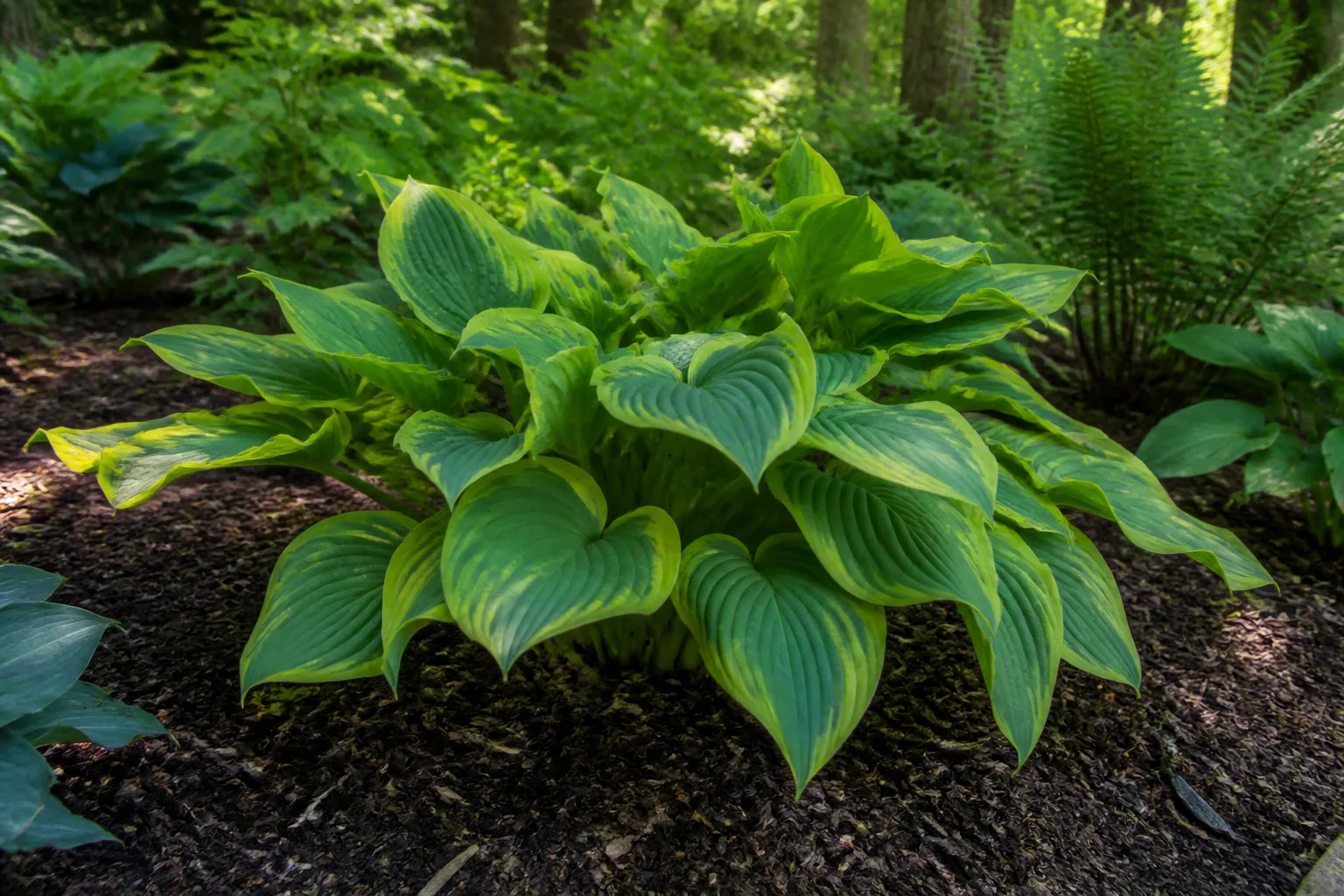
You watered this morning. By three o’clock the hosta leaves are draped like wet laundry, and you are staring at the hose wondering what you missed. Afternoon sag on hostas is common in summer sun, but the fix is not always more water. Sometimes the soil is already wet and the plant is losing moisture through the leaves faster than shallow roots can replace it. Other times the surface looks damp while the root zone is dry two inches down.
This guide walks through six practical fixes—deep watering, weed removal, mulch, temporary shade, moving pots, and trimming scorched foliage—after you diagnose what kind of wilt you are seeing. Pair it with our hot-weather plant watering guide for timing and method, does mulch prevent weeds for mulch depth and weed suppression, and wilting houseplants if you are also troubleshooting indoor sagging leaves.
Why Hostas Wilting in Sun Is Often Misread
Hostas are shade-loving perennials with shallow, spreading roots that sit close to the soil surface. NC State Extension notes they prefer moist, well-drained soil and partial to full shade depending on cultivar. That root architecture makes them fast responders to heat: when air temperature climbs and sun beats on leaves, transpiration—water loss through foliage—can outpace uptake even when the gardener watered recently.
Wilting is the plant’s short-term survival move. Leaves droop to reduce exposed surface area and slow water loss. In heat wilt, roots are often working fine but cannot keep up during peak afternoon stress. In drought wilt, the root zone is genuinely dry and the plant lacks the raw material to refill leaf cells. Treating heat wilt with repeated shallow watering can waterlog soil and invite crown rot, while treating drought wilt with shade alone leaves the plant thirsty tonight.
Evening recovery is a useful clue. Gardenish describes a pattern many gardeners recognize: leaves perk up after sunset when temperatures drop, which strongly suggests heat stress rather than root death. If foliage stays limp at dawn after a cool night, dig deeper—drought, crown damage, or disease may be involved.
Heat Wilt vs Drought Wilt — How to Diagnose Before You Act
Run this quick check before you reach for the hose or shade cloth. Your afternoon observation matters less than soil moisture at depth and overnight recovery.
| Sign | Heat wilt (transpiration > uptake) | Drought wilt (dry root zone) |
|---|---|---|
| Time of day | Worst mid-afternoon; often looks fine in morning | Can wilt any time; worsens each dry day |
| Soil at 2–3 inches | Often moist or cool | Dry, dusty, or pulls away from pot sides |
| Leaves after cool evening | Usually firm again by morning | Often still droopy or slow to recover |
| Recent watering | You watered today or yesterday | Water skipped or only foliage got wet |
| Container vs bed | Common in pots and thin soil | Common when rain missed for a week |
| Best first move | Shade + mulch + deep water if dry at depth | Slow deep soak at soil line |
| Wrong move | Repeated shallow spritzes on wet soil | Waiting for evening when roots are parched |
Finger-testing only the top inch misleads on hostas because their roots spread horizontally just below the surface. Push deeper, or use a moisture meter, before you decide the plant needs water again.
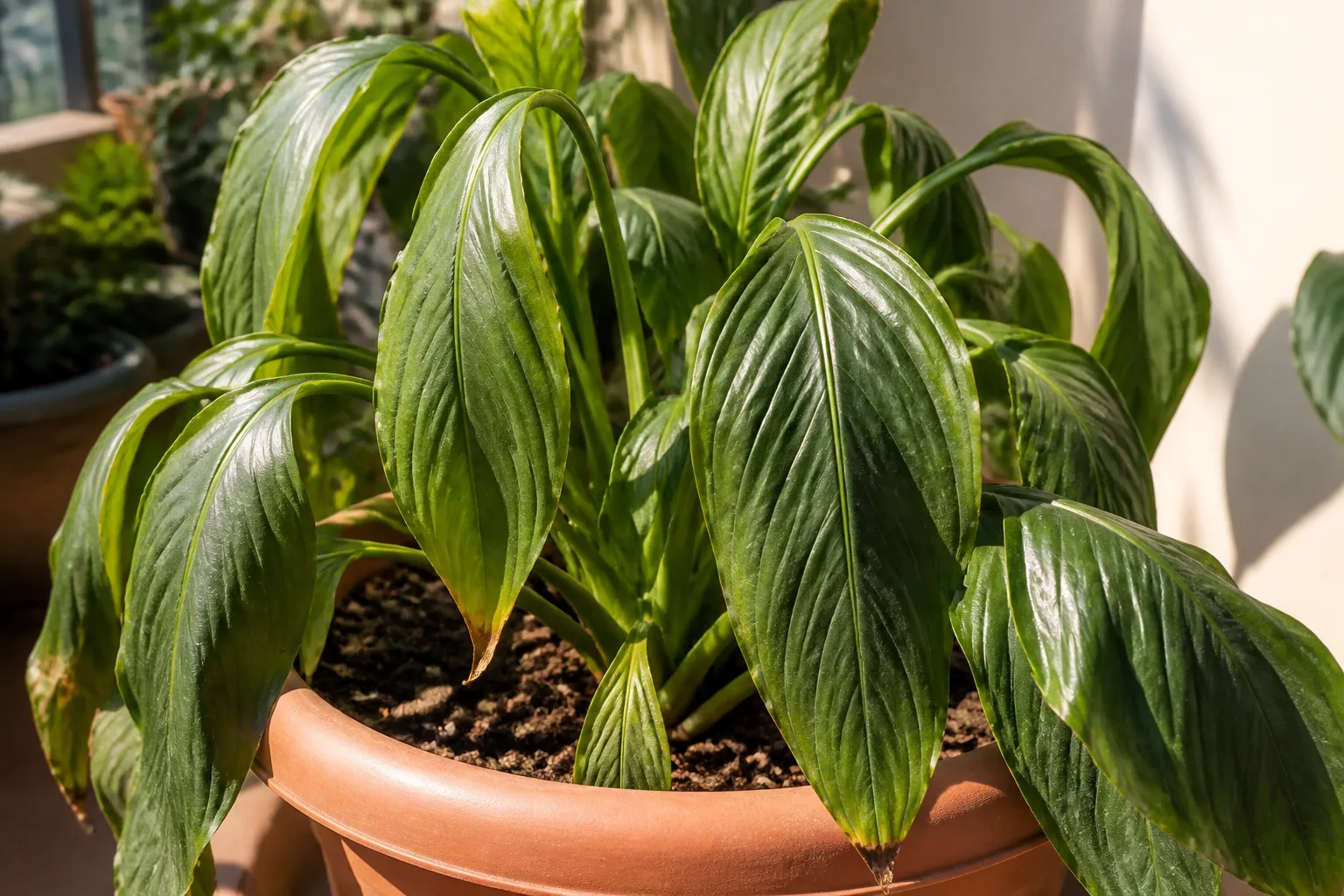
Hosta Cultivar Sun Tolerance: What Your Leaves Are Telling You
Not every hosta hits its sun limit at the same exposure. Foliage color is a rough tolerance map, not a guarantee. Gold and chartreuse cultivars generally tolerate more direct sun than blue and many green types because lighter leaves reflect more light energy—but no hosta is a full-sun perennial in hot climates.
NC State Extension lists hostas for shade to partial shade. Garden Ninja emphasizes that even sun-tolerant gold varieties need protection from scorching midday and afternoon sun, especially when reflected heat from walls, pavement, or dark mulch raises leaf temperature above air temperature.
Blue, Green, and Gold Hostas in Afternoon Sun
Blue hostas owe their color to a waxy leaf coating that melts and washes away under intense sun and overhead watering. They are the quickest to wilt and the slowest to forgive afternoon exposure. Treat blue-leaved plants as morning sun only in most regions, with shade by early afternoon.
Green hostas sit in the middle. Many handle dappled sun or a few hours of direct morning light but sag when baked on the south side of a fence with no afternoon relief. If your green hosta wilts daily on one side of the yard and never on the other, site mismatch is the story—not a watering schedule failure.
Gold and yellow hostas can often take more rays, which is why gardeners plant them in brighter beds. They still wilt when soil temperature and air temperature spike together. A gold hosta in six hours of July afternoon sun on bare soil is pushing the cultivar’s ceiling even if the tag said “sun tolerant.”
Read the plant, not the marketing label. Crispy brown leaf margins on the outer, sun-facing leaves mean the placement is too bright regardless of cultivar name. Daily afternoon wilt with nightly recovery on gold hostas usually means heat management (mulch, shade, deep watering) can work. The same pattern on blue hostas often means relocation will eventually be cheaper than fighting the site every summer.
When NOT to Water Wilting Hostas
More water is the wrong reflex when the root zone is already saturated. Hostas in heavy clay, low spots, or over-irrigated beds can wilt or yellow while soil stays wet because roots stop functioning in oxygen-poor mud. Summer heat makes that worse: warm, waterlogged soil speeds root decline.
Penn State Extension stresses watering deeply and less often so moisture reaches the root zone without keeping the surface constantly wet. If your wilt check shows moist soil at two to three inches and the plant droops only in afternoon sun, prioritize shade and mulch before another soak.
Skip the hose when rain soaked the bed yesterday, the pot feels heavy, or you see algae on the soil surface. Skip routine watering during a heat wave if you already watered deeply within the last two days and the soil still reads moist at depth—roots need air cycles, not a continuous swamp.
For broader heat-stress framing, NC State’s heat stress guidance reminds gardeners that plants have physiological limits; rescue focuses on reducing stressors, not forcing growth.
Crown Rot Red Flags You Cannot Fix With More Water
Crown rot attacks the base of the plant where leaves meet soil. It thrives in warm, wet conditions—exactly what repeated afternoon watering on already-moist soil creates. Warning signs include soft, mushy tissue at the crown, a foul smell from the base, leaves that wilt without recovering overnight, and collapse of the whole clump while neighboring plants look fine.
If crown rot is present, stop watering except to keep survivors barely alive, improve drainage, pull mulch back from the crown, and do not fertilize. Severely affected clumps may not recover; healthy divisions from the outer ring can sometimes be replanted in drier, shadier soil after you cut away blackened tissue. This is a placement and drainage problem masquerading as thirst.
Fix 1 — Water Deep at the Root Zone, Not Over the Leaves
When the diagnosis table points to drought wilt, slow water at the soil line is the first real fix. Overhead sprinkling that wets leaves in midday sun wastes water, encourages slug habitat, and can worsen scorch on sensitive foliage. Hosta roots spread in a disk roughly matching the leaf canopy; water under the foliage disk, not across it.
Use a watering wand, soaker hose, or hose without a high-pressure spray. Apply water until it penetrates at least six to eight inches in garden beds, or until water runs from drainage holes on pots. Penn State Extension recommends deep watering that reaches roots rather than light sprinkles that only wet the top inch.
If you watered from overhead and the surface feels damp, the core root zone may still be dry. That is the classic “I just watered” hosta puzzle. Gently push foliage aside and deliver water directly to soil. One deep soak beats three panic spritzes at 4 p.m.
How to Check Soil Moisture at the Right Depth
Slide your finger into the soil two to three inches down beside the crown, not in the mulch layer alone. Dry at depth means water now. Cool and moist at depth but wilting leaves in afternoon sun means heat wilt—shade and mulch first, then reassess tonight.
In containers, lift the pot. Light weight plus wilt almost always means dry mix throughout. Heavy pot plus afternoon wilt means heat in the root zone; move the pot before you soak again. Our hot-weather plant watering guide covers timing so deep watering lands when roots can use it instead of evaporating on the surface.
Fix 2 — Remove Weeds That Steal Water From Shallow Roots
Hostas compete poorly for moisture against weeds and grass with deeper or more aggressive roots. A ring of quack grass, nutsedge, or tree seedling roots under the hosta canopy steals the shallow water hostas depend on. The plant wilts in sun because its root disk is dry even when you water, since neighboring roots intercept the soak.
Clear weeds by hand, working outward from the crown in a circle roughly matching the leaf spread. NC State Extension describes hosta roots as spreading horizontally near the surface—dig carefully and leave hosta roots in place while you remove competitors.
Pull weeds before they seed, and check again mid-summer when heat and weed growth peak together. Weed-free soil also makes moisture checks honest; mulch applied later sits on clean ground and does not hide grass blades that will regrow through a thin layer.
Fix 3 — Mulch Bare Soil to Cool and Hold Moisture
Bare soil in direct sun can exceed 100°F at the surface—hot enough to stress roots that hostas keep near the top few inches. Farm Progress cites Purdue research noting soil temperatures above what roots tolerate when unprotected. Wilting leaves are often a root-zone temperature story as much as a leaf story.
Apply two to four inches of organic mulch—shredded bark, wood chips, or composted leaves—across the root zone, extending slightly past the leaf drip line. Clemson HGIC recommends similar depths for moisture conservation and weed suppression, with two inches pulled back from stems and crowns so mulch does not pack against the base.
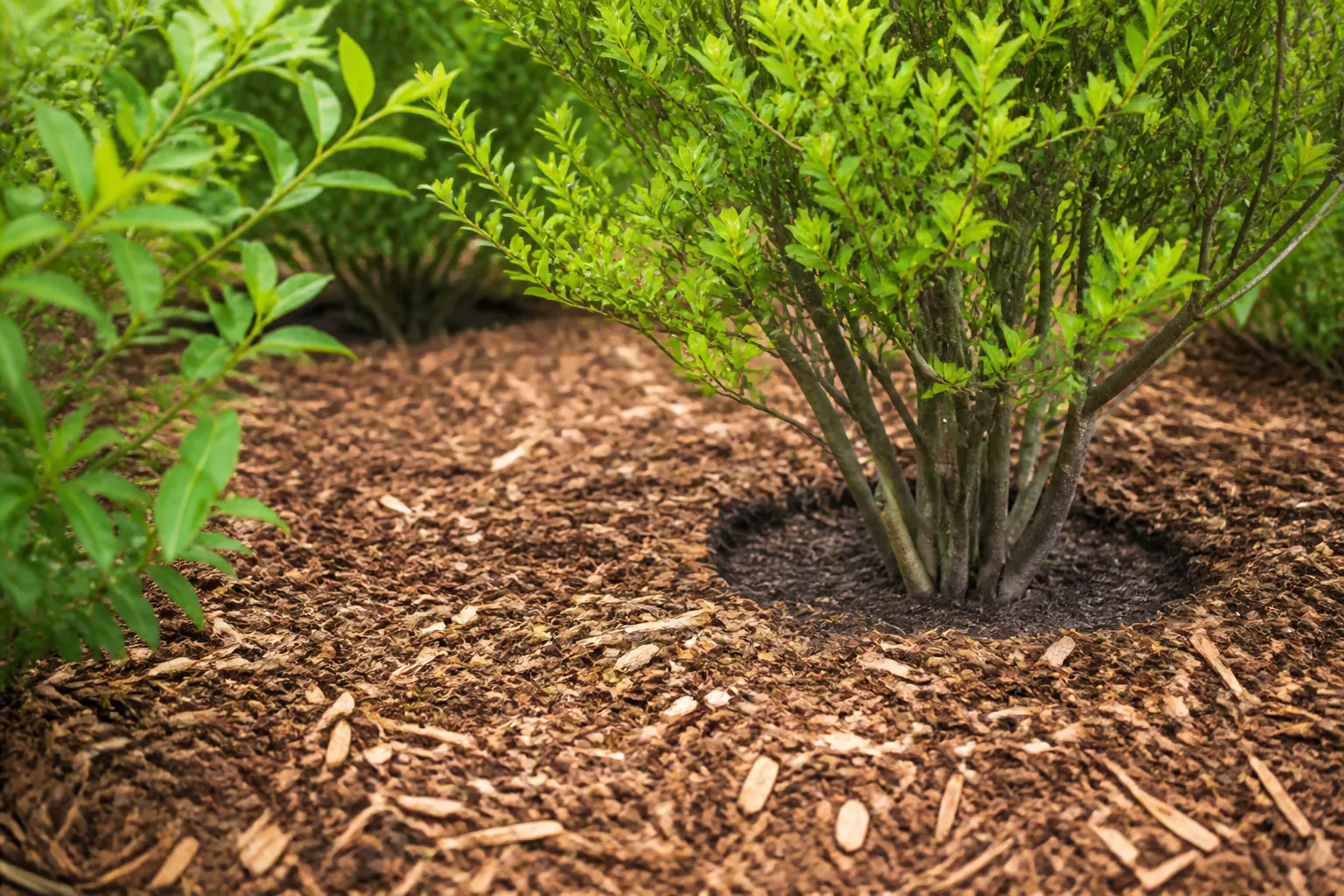
Mulch cools soil, slows evaporation, and softens the impact of overhead rain. Keep the crown clear. Mulch piled on the crown holds moisture against tissue and invites rot—the same risk as overwatering wet soil. For mulch type trade-offs and weed blocking, see our does mulch prevent weeds guide.
Dark mulch in full sun can itself get hot; a lighter mulch layer or shade cloth above may help on the hottest beds. Refresh thinning mulch in late spring before July heat, not after daily wilt has already trained the plant into stress.
Fix 4 — Set Up Temporary Afternoon Shade
When soil moisture is adequate and weeds are gone but leaves still collapse between noon and five, reduce radiant load during peak hours. Heat wilt is often a bandwidth problem: roots cannot move enough water while leaves bake.
Temporary shade works faster than waiting for a new tree to grow. Shade cloth, an old sheet on stakes, a patio umbrella, or a lattice panel on the southwest side can cut afternoon sun without plunging the plant into deep shade all day. Garden Ninja recommends protecting hostas from harsh midday sun even for tougher cultivars.
Install shade before the hottest week, not after leaves crisp. Hostas often recover overnight once afternoon stress drops; shade makes that recovery reliable instead of a coin flip.
Shade Cloth Percentages for Sensitive Hosta Foliage
70% shade cloth suits blue hostas and plants already showing scorch. 50–60% cloth often works for gold cultivars that need brightness but not blast furnace afternoons. Secure cloth above the plants, not draped directly on leaves, so air moves and heat does not build under the fabric.
Orient protection toward west and southwest exposure where afternoon sun arrives lower and hotter. Remove or roll back cloth in cool weather so plants do not sit in stagnant humid shade during mild weeks. Shade is a seasonal tool, not a permanent tent unless the site demands it.
Fix 5 — Move Potted Hostas Out of Hot Sun
Container hostas wilt faster than in-ground plants because pot volume is small and sidewalls heat up. A dark plastic pot on a paved patio can cook roots even when the foliage receives only partial sun. Daily watering on a hot pot sometimes means the mix steams by mid-afternoon.
Move pots to afternoon shade first—under a tree, beside a north wall, or on the east side of the house. If wilt continues, shift to brighter morning sun only. Heavy containers that cannot move get shade cloth or a rolling plant caddy before the next heat wave.
Double-potting—slipping the grow pot inside a larger outer pot with air gap—or using light-colored containers reduces root heat. Never leave saucers full of standing water in heat; roots need drainage and air, not a hot bath. Our heat stress houseplants guide covers container heat dynamics that apply equally to outdoor potted perennials in July.
Transplant Decision Criteria for In-Ground Hostas
Sometimes rescue stops making sense and relocation is the fix. Transplant in-ground hostas when daily afternoon wilt continues after deep watering, weed removal, mulch, and temporary shade across two heat waves, or when outer leaves scorch brown every summer while the same cultivar thrives ten feet away in shade.
Also transplant when the hosta sits in reflected heat from south-facing walls, dark driveways, or metal fencing; when tree loss opened a once-shady bed to full afternoon sun; or when the plant never grew full size after three years because the site fights it.
Best timing: early spring as shoots emerge, or early fall when soil stays warm but air cools—avoid midsummer moves unless the plant is failing and you accept setback. Dig the widest root disk you can, replant at the same depth, water deeply once, mulch, and shade for a week. If the new site has morning light and afternoon shade, you solve wilting at the source instead of managing symptoms every August.
Fix 6 — Trim Scorched Leaves and Hold Fertilizer in Heat
Brown, papery leaf edges and tips are sun scorch—tissue that will not green up again. Once leaves firm after watering or cooling, cut scorched foliage at the base of the petiole to make room for replacement leaves and reduce slug hiding spots. Gardenish notes that removing damaged leaves improves appearance and limits pests drawn to decaying tissue.
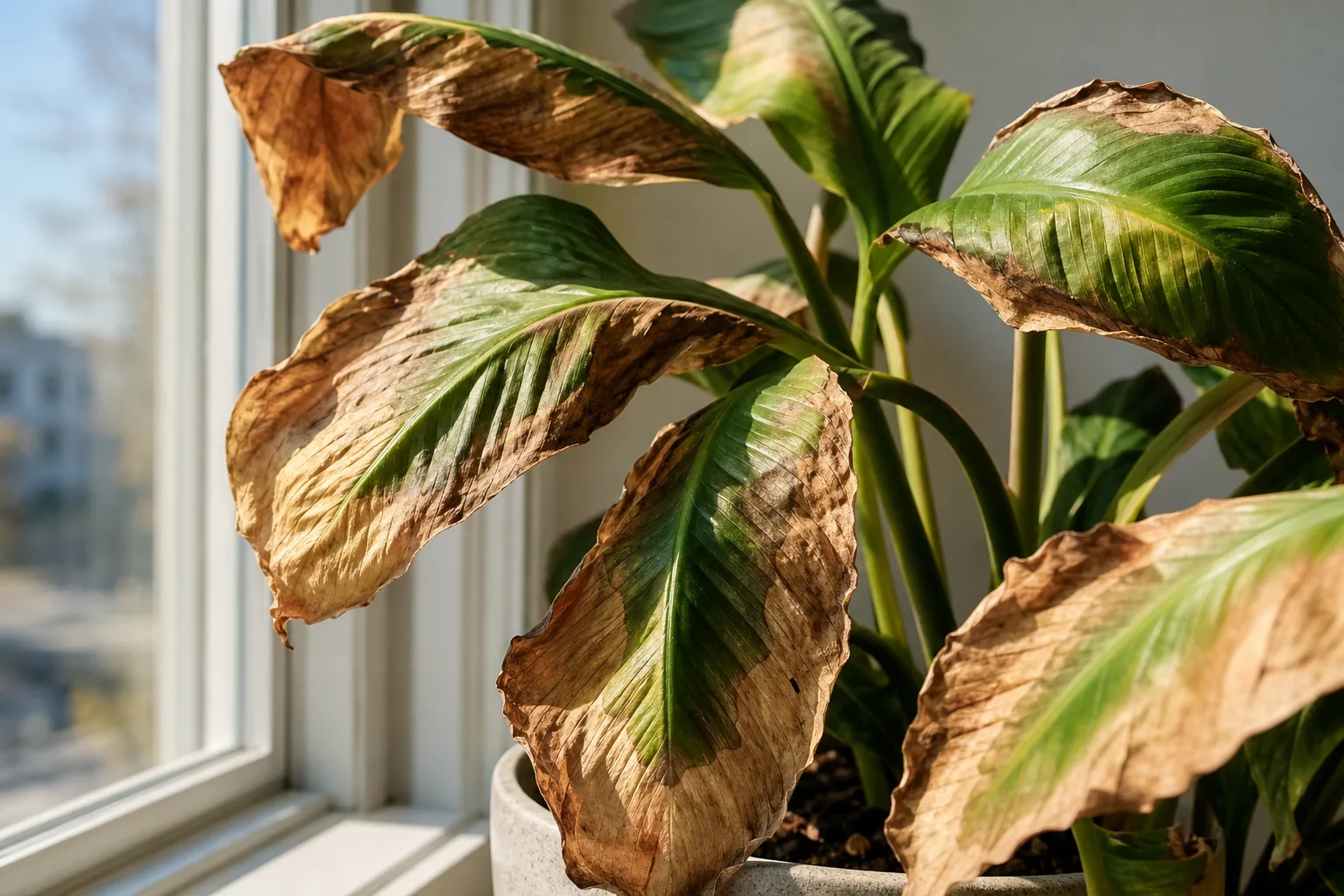
Do not strip the plant bare in one session if more than half the canopy scorched; remove the worst outer leaves first and let inner shoots push new growth. Sterilize blades between plants if any crown rot was suspected.
Hold fertilizer during active heat stress. Salt buildup and forced soft growth stress roots that are already struggling to hydrate leaves. NC State’s heat stress guidance encourages managing expectations and reducing inputs while plants cope—not pushing lush foliage in a heat wave.
Resume balanced feeding in early fall or next spring when nights cool and new leaves emerge without daily wilt. A stressed hosta needs stable moisture and shade, not a nutrient spike that demands more water uptake.
Your Heat-Week Routine for Wilting Hostas
When the forecast shows three or more days above 90°F, switch from occasional care to a short heat protocol. This sequence prevents the spiral of wilt, panic watering, and crown rot.
Morning (before 10 a.m.): Walk the hosta bed. Finger-check soil two to three inches deep. Water deeply only where dry at depth. Confirm mulch covers root zones with crown clearance. Scan for new weeds in the drip disk.
Midday (11 a.m.–2 p.m.): Do not routine-water. Deploy or adjust shade cloth on pots and scorch-prone cultivars. Move any container that sits on hot pavement. Mist the air if you must cool a patio microclimate, but do not mist leaves as a substitute for soil moisture.
Afternoon (peak heat): Observe wilt without grabbing the hose if soil was moist at dawn. Note which cultivars and placements fail first—that is your transplant list for fall. Ensure shade structures stay ventilated.
Evening: Check overnight recovery. Leaves firm by morning confirms heat wilt management. Still limp means drought, crown issues, or disease—investigate before tomorrow’s water.
Weekly: Deep soak in-ground beds once or twice if no rain, not daily light sprinkles. Refresh mulch thin spots. Trim newly scorched outer leaves. No fertilizer.
Repeat until temperatures drop. Document which plants needed shade cloth every day; those belong in a shadier permanent site.
Conclusion
Hostas wilting in sun are telling you something specific: roots are shallow, afternoon transpiration is high, and your site or soil may be hotter than the leaves alone suggest. Water deeply at the soil line when the root zone is dry, but refuse the hose when soil is already wet and wilt is purely afternoon drama.
Remove weeds, mulch bare soil to cool the root zone, shade peak hours, move hot pots, trim scorched tissue, and pause fertilizer while plants recover. Use the heat wilt vs drought table and overnight recovery as your compass. When fixes repeat every summer on the same plant, transplant beats rescue—choose morning sun and afternoon shade, and let the hosta grow without fighting July every year.



