Houseplant Heat Stress: Causes, Diagnosis and Fixes
Spot houseplant heat stress vs sunburn, wilt, and drafts. Diagnose hot glass and vents, cool the plant, and recover without overwatering.
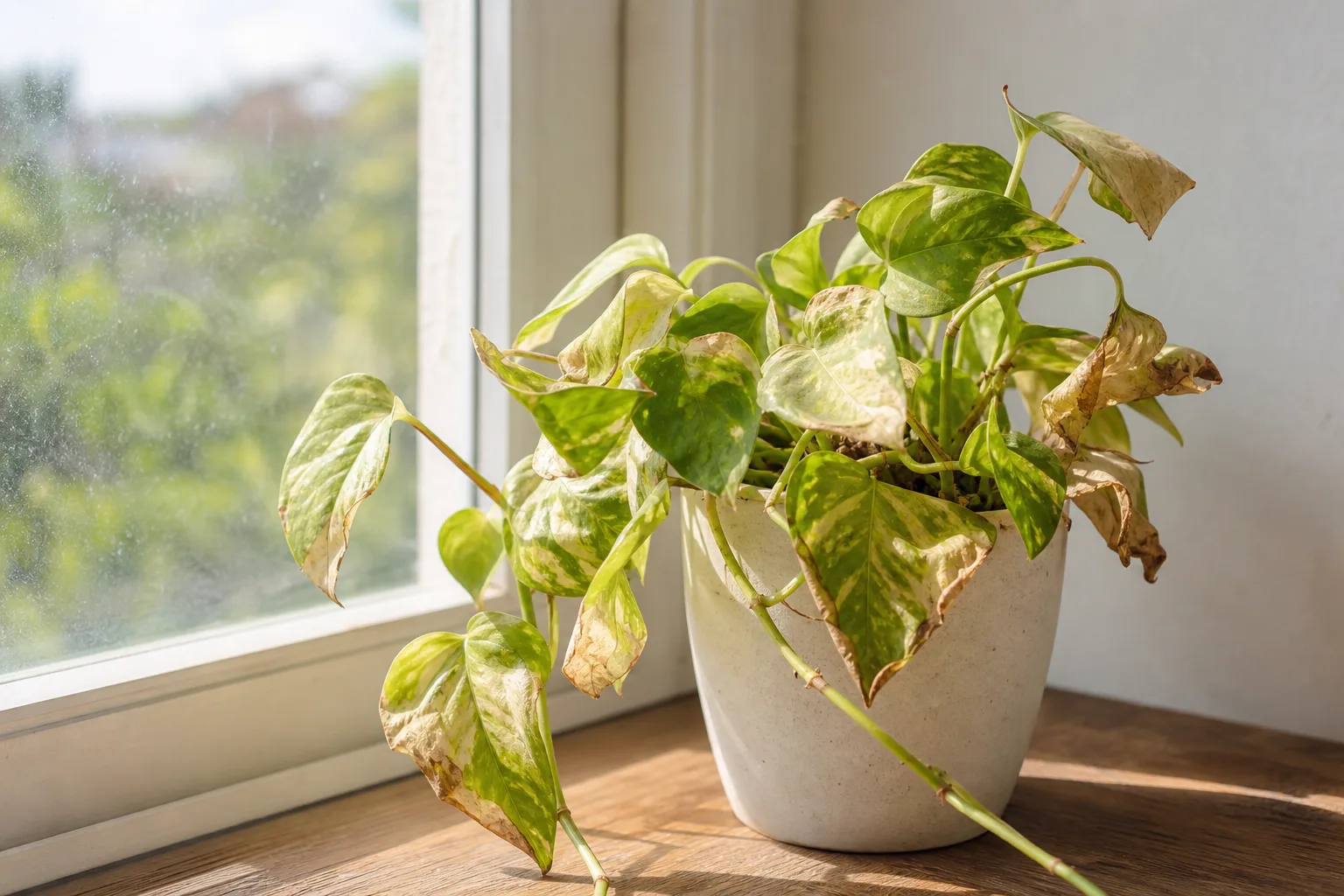
Your plant looks fine at breakfast and soft by 3 p.m. The pot is still heavy. The room thermostat says a comfortable number. That mismatch — limp foliage while moisture is still there — is classic houseplant heat stress. Heat stress is environmental demand outrunning supply: leaves lose water faster than roots can replace it because air, glass, or a vent made the canopy too hot or too dry. It is not a fungus you spray away, and it is not automatically a cue to water.
Bench note (west-sill afternoon limp, May 2026): On a west double-pane sill in a Mumbai apartment, a min/max thermometer taped at leaf height hit 94°F (34°C) at 3:15 p.m. while a second sensor at sofa height in the same room held 78–80°F. A Golden pothos in a 6-inch plastic pot felt heavy (moist mix at fingertip depth) yet the outer trailing vines went limp by mid-afternoon. Moving the pot one metre off the glass dropped leaf-height air to the low 80s°F within an hour; vines firmed overnight without added water. That single observation is the practical core of this guide: leaf temperature is not thermostat temperature, and cool placement comes before the watering can.
The Royal Horticultural Society flags leaves that wilt, roll, bleach, and go crispy as heat-stress signs, especially in very hot rooms such as conservatories in mid-summer. This page is the indoor heat decision tree: how to separate heat from sunburn, ordinary wilting, and draft injury; how to cool first; when water helps; and what recovery actually looks like. For a thin symptom overview, see the heat-stress symptom hub; for species-level follow-through after triage, start with pothos heat stress. Written by Sai Ananth; horticulture review by Dr. Priya Menon (botanist and indoor plant specialist).
What Heat Stress Means Indoors
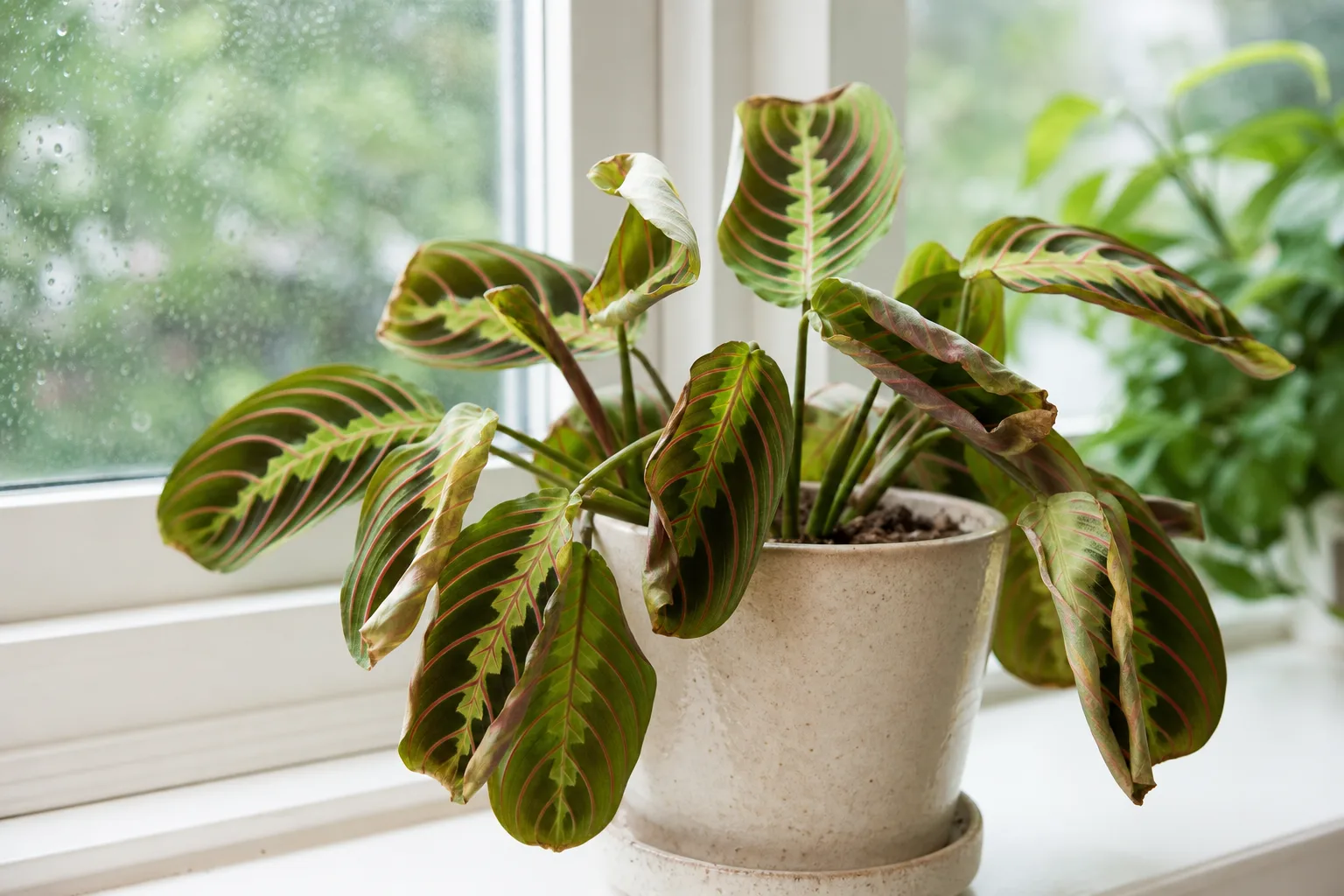
Heat stress is a water-balance problem driven by temperature and dry air around the leaf, not a single disease name. Plants stand up because of turgor — water pressure inside cells. Roots take water in and move it upward; leaves release water through stomata as they cool and exchange gases. When canopy demand spikes, cells lose pressure and tissue goes limp even if the mix still holds moisture. The RHS explains that plants need water for transport, photosynthesis, and structure, and that both too much and too little water can break that system.
Indoors, the trigger is usually a microclimate, not the average room reading. Hot glass, a sealed sunroom, a west balcony rail, or a supply vent can push leaf temperature far above the thermostat on the far wall. UConn notes that many houseplants prefer roughly the same comfort band people do — about 60–80°F (16–27°C) — and that rapid temperature swings stress plants because they cannot move themselves out of a bad spot. Tropical floor plants often prefer steadier day–night temperatures than desert succulents, so a sudden blast of dry heat hits them harder.
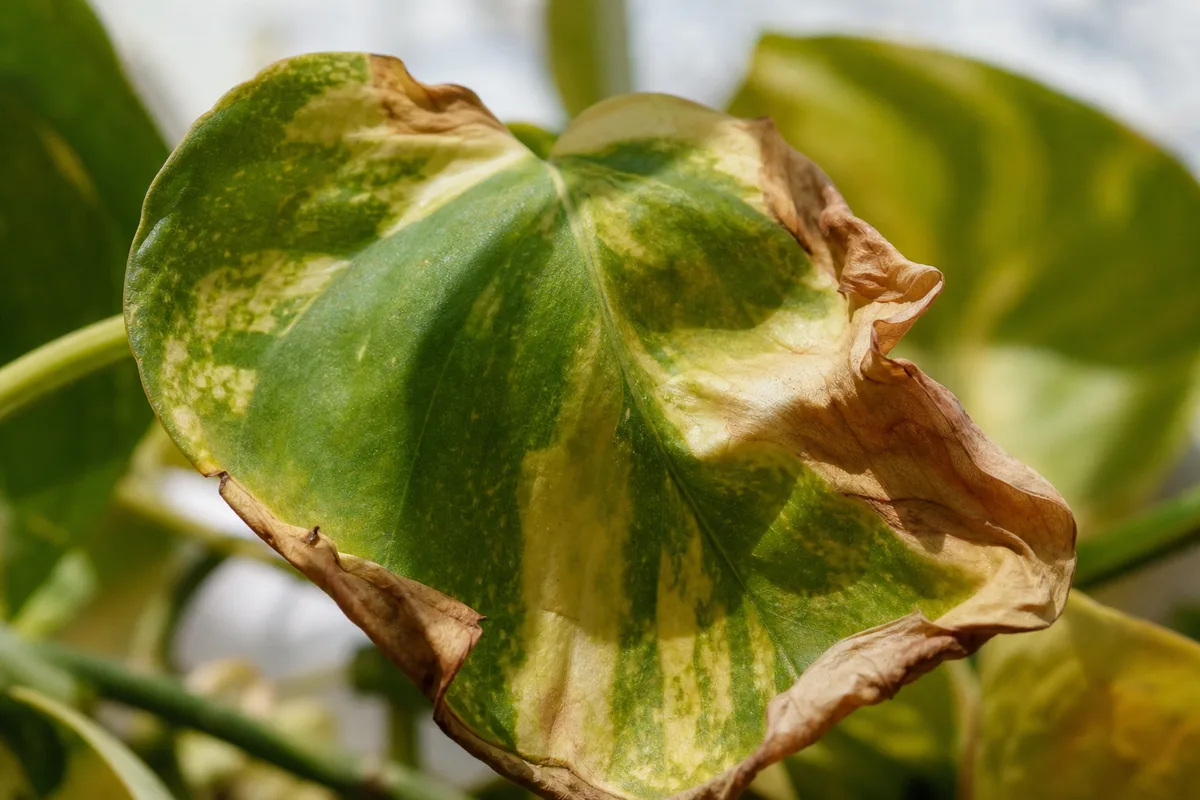
Outdoor garden heat rules that transfer indoors: plants wilt and curl when they lose water faster than roots can replace it; intense light can bleach or scorch tissue; soft new growth under fertilizer demand collapses faster in heat. NC State Extension documents those patterns for Western North Carolina garden crops (tomatoes, beans, cucumbers). Houseplant-only twists: container roots heat and dry faster than in-ground roots, west glass acts like a radiant panel, HVAC vents create dry moving heat in winter, and cachepots can hide wet-soil wilt that looks identical to heat limp. Treat outdoor heat sheets as transferable principles, not indoor lab results.
Temporary Afternoon Wilt vs Lasting Damage
Two patterns matter most. Temporary afternoon wilt shows when leaves lose water faster than roots can refill them on a hot day; plants often firm up overnight once demand drops. UF/IFAS Extension describes temporary heat wilt as a protective response when transpiration outruns absorption — the plant can bounce back if water is available and exposure is not prolonged. Lasting damage shows when heat cycles repeat, the mix actually dries, roots are already compromised, or tissue cooks into bleached or crispy patches that will not green again. NC State also notes leaf scorch and bleached patches when intense light damages tissue.
If limp peaks every afternoon and resolves by morning with evenly moist — not soggy — soil, treat placement and heat load first. If limp lasts into the next morning on dry soil, you have heat plus drought. If limp lasts on wet soil with soft stems, you may have heat on top of root failure — and more water will not help.
Heat Stress vs Sunburn, Wilting, and Draft Damage
Readers often mash four lookalikes into one panic response. Use pattern, timing, and soil feel to split them before you change care.
| Pattern | What you see | Soil / timing clue | First move |
|---|---|---|---|
| Temporary heat wilt | Soft posture, inward curl, dull leaves | Moist pot; peaks in afternoon; firms overnight | Cool placement |
| Lasting heat / scorch | Crispy margins, bleached patches | Repeated hot dry cycles or glass bake | Cool + shade; do not expect green-up |
| Sunburn | Directional tan/white/papery patches | Sun-facing side only | Reduce direct beams; acclimate |
| Dry wilt | Whole-plant collapse | Light, dry pot | Water thoroughly, then drain |
| Wet wilt / root failure | Limp on heavy pot; soft crown possible | Wet mix; overnight limp persists | Stop watering; check roots |
| Cold draft injury | Water-soaked → dark/black tissue | Maps to chill/glass/door; winter shipping | Warm gradually; see cold guide |
Heat Stress vs Sunburn
Heat stress is systemic demand: soft posture, inward curl, dull foliage, crispy margins after repeated hot dry cycles, often worst in afternoon heat even when light is only bright-indirect. Sunburn is directional light injury: bleached, tan, or papery patches on the side facing the window or outdoor sun, with veins sometimes still green inside scorched tissue. Missouri Botanical Garden notes that plants getting too much sun may yellow and develop tan or white patches on leaves exposed to a south or west window, and that a sudden move from shade into bright sun can sunburn foliage.
Heat and sunburn can happen together on a west sill — hot glass plus intense direct beams — but the fixes start differently. Pull the plant out of the heat path for both; then treat sunburn as a light-acclimation problem and heat stress as a temperature and moisture-demand problem. For scorched-patch diagnosis, see sunburn and scorched leaves and the deeper sunburn guide.
Heat Stress vs Ordinary Wilting
Wilting is the symptom; heat is one cause. Dry-soil wilt needs water. Wet-soil wilt needs oxygen and often a root check. Heat wilt on moist soil needs cooler air first. Clemson HGIC warns that although wilting often signals a need for water, it is not always so — root injury, including root rot from excess water, also causes wilt, and watering then makes the problem worse. Use the full houseplant wilting guide when the main question is temporary versus permanent wilt or dry versus wet collapse.
A practical fork: afternoon limp that recovers overnight on moist mix points to heat or low humidity demand. All-day limp on a light, dry pot points to underwatering. All-day limp on a heavy, wet pot points away from “more water” and toward drainage or root damage — see also overwatered plant.
Heat Stress vs Cold Draft Injury
Heat stress and cold draft injury are opposites that both collapse tissue. Heat limp is soft and often reversible overnight; cold damage tends toward water-soaked, translucent, then dark or black tissue after chill near glass, an open door, or shipping. Missouri Botanical Garden warns that hot air from a furnace vent and cold air from a door or window can both cause leaf or flower drop, and that freezing exposure collapses or blackens foliage. RHS contrasts heat-stress wilt and crisp with cold-damage blackening and collapse in unheated rooms.
If damage maps to a winter draft or a porch delivery chill, use the cold damage guide instead of cooling routines meant for heat waves. Moving-air injury that is not clearly hot or cold may also fit draft stress.
The 60-Second Diagnosis
Skip the calendar. Run this check every time a plant softens in heat. It prevents the most expensive summer mistake: drowning a plant whose roots were already struggling.
1. Map the heat source. Stand where the plant sits at the hottest hour. Feel for radiant glass, a supply vent, a radiator shelf, or a closed sunroom. Note which side of the plant softens first — outer vines and window-facing leaves usually complain before the crown. Optional: tape a cheap thermometer at leaf height for one hot afternoon and compare it to the wall thermostat.
2. Lift the pot. A dry pot feels light. A wet pot feels dense. Cachepots that hide standing water create wet-soil wilt that looks like heat limp.
3. Check moisture at depth. Push a finger about 2–5 cm into the mix, not just the crust. Clemson’s rule of thumb is to water when the mix feels dry at fingertip depth, and to water thoroughly when you do water, then empty the saucer. A plant in a warm, dry, sunny spot needs water more often than one in a cool, low-light corner — heat changes the interval, not the diagnosis method.
4. Wait for overnight feedback when soil is moist. If the plant firms by morning without added water, prioritize cooling and humidity buffering over pouring. If it stays limp on dry mix, water deeply once, drain, and cool the placement.
Heat + wet dual failure (short checklist): limp overnight + heavy pot + sour smell or soft crown → stop watering, unpot, inspect roots, and follow wet-wilt recovery rather than “more heat rescue.” Do not park a recovering plant under a space heater or heat lamp — that raises demand again.
Common Indoor Heat Sources
Houseplant heat stress is rarely “the whole house is too hot.” It is almost always one bad spot.
Hot glass, conservatories, and west windows. South- and west-facing glass intensifies afternoon heat. A plant that thrived in spring can wilt daily by midsummer when the sun angle shifts and the sill becomes a heat panel. Conservatories and enclosed balconies trap radiant heat; leaf surfaces can feel much hotter than room air. RHS specifically calls out heat stress in very hot rooms like midsummer conservatories. Sheer curtains, a step back from the glass, or temporary shade during the harshest hour often fixes more than a watering tweak. Variegated and thin-leaved plants scorch and heat-stress faster than thick, waxy foliage because pale tissue and thin blades shed water and absorb heat poorly. Leaf-edge curl under heat demand also overlaps the curling leaves guide.
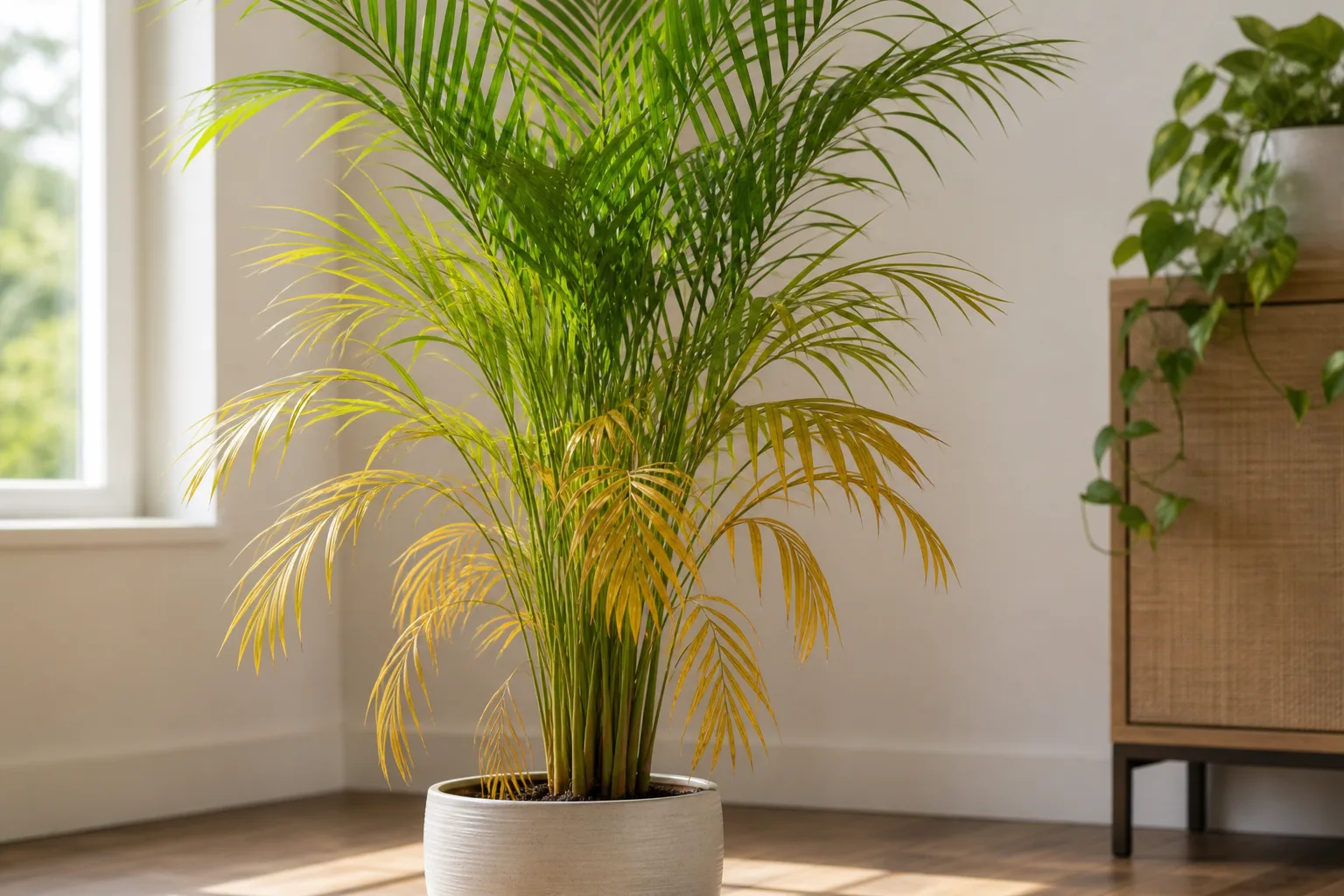
HVAC vents, radiators, and dry heat. Forced-air supply vents and radiators create a second indoor summer — dry, moving heat that strips moisture from leaves. Missouri Botanical Garden lists hot furnace air among the temperature extremes that drive leaf and flower drop indoors. Winter heating also drops relative humidity; Penn State Extension notes that heated winter air can fall below 30% RH and that misting only raises humidity until droplets evaporate — often minutes. If only the plants in the vent path look bad, move them before you change fertilizer or soil. Grouping plants helps buffer dry air slightly; a room humidifier helps more than daily misting when heat and dry air arrive together. Penn State is more skeptical that pebble trays meaningfully raise room RH, so treat trays as a minor local buffer and prioritize moving the plant and humidifying the space — while RHS still lists grouping and damp-pebble trays as local humidity helps for crispy tips.
First Aid and Step-by-Step Recovery
Recovery is about stopping the heat load, restoring a working water pathway, and waiting for new growth. Dead brown tissue does not turn green again.
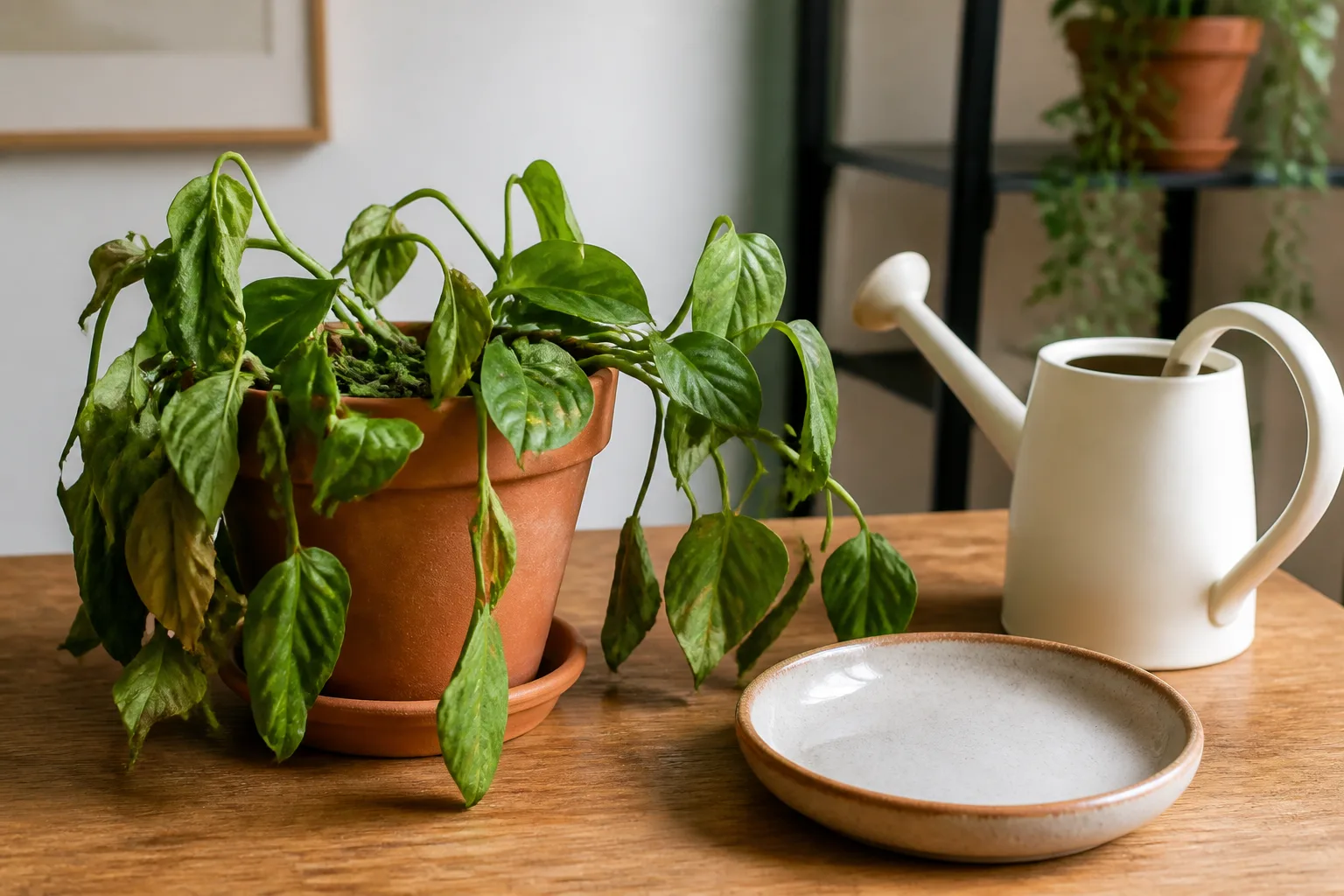
Cool First, Then Water Only If Dry
Step 1 — Move the plant. Pull it off hot glass, out of the vent stream, and away from radiator shelves. Even a one-metre shift can drop leaf temperature enough for temporary wilt to reverse.
Step 2 — Confirm moisture. Water only if the mix is dry at fingertip depth or the pot is clearly light. Use room-temperature water — Clemson recommends roughly 62–72°F (17–22°C) — and water until drainage appears, then empty the saucer. Do not soak a heavy, wet pot because the plant looks sad.
Step 3 — Reduce demand for a few days. Hold fertilizer. Skip repotting unless the plant is sitting in rotten, anaerobic mix. NC State advice for heat periods includes avoiding fertilizing during intense heat because soft new growth needs more care when stress is high. Penn State similarly notes holding fertilizer in summer heat because some products add salts that can dry plants further.
Step 4 — Buffer dry air if the room is desert-dry. Raise ambient humidity with a humidifier or plant grouping rather than relying on mist as a coolant. RHS links low humidity to crispy tips and early drop and suggests grouping or damp-pebble trays as local helps. Prefer cooler placement first; humidity alone will not fix radiant glass bake.
Step 5 — Wait before heavy pruning. Remove fully collapsed or foul tissue if it invites rot. Leave partially crispy leaves until the plant stabilizes unless they are mostly dead; green tissue still photosynthesizes while new leaves form. Bag and discard foul wet-heat tissue away from other plants — do not compost mushy crowns next to healthy pots.
What Recovered Tissue Looks Like
Judge success by overnight firmness, then by new leaves, not by old scorch. Crispy margins and bleached sunburn patches are permanent scars. A recovering plant stops afternoon collapse after you cool the spot, keeps stems firm at the soil line, and eventually pushes new growth that matches the cultivar’s normal color and size.
UF/IFAS notes that prolonged high temperatures can reduce growth and flowering on sensitive plants such as African violets and recommends moving them to a cooler spot or air-conditioned room in hot weather. Species differ in drama: peace lilies collapse loudly when dry; snake plants hide thirst and fail more often from wet heat; pothos often shows afternoon limp on outer vines first.
Expect cosmetic leaves to look imperfect for weeks. If stems soften at the crown or roots smell foul after repeated heat-plus-wet cycles, shift from heat recovery to a root-rot check. Ambiguous root collapse after heat+wet cycles is a good moment to ask a local extension office or master gardener clinic — photos of roots, pot weight, and the heat source help more than a generic “is it dying?” message.
First-Hand Notes From Heat Cases
These are single-setup LeafyPixels editorial observations used to shape the cool-first frame. They are not universal kill thresholds.
1. West-sill Golden pothos (May 2026, Mumbai). Leaf-height 94°F vs room ~79°F; pot heavy and moist; outer vines limp by 3 p.m.; overnight firmness after a one-metre move off glass; no water added that day. Outcome: afternoon collapse stopped within 48 hours; two scorched leaf edges stayed brown.
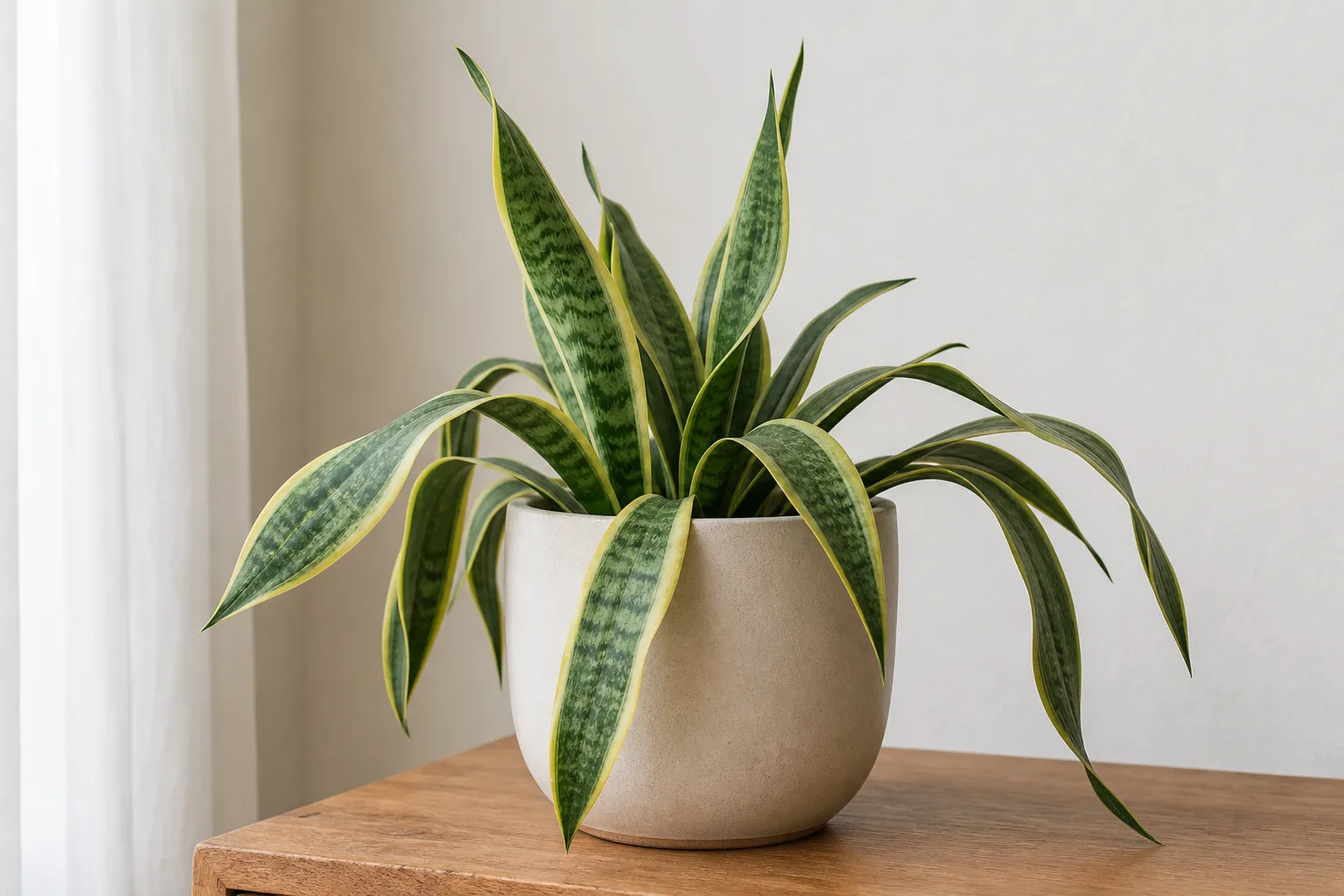
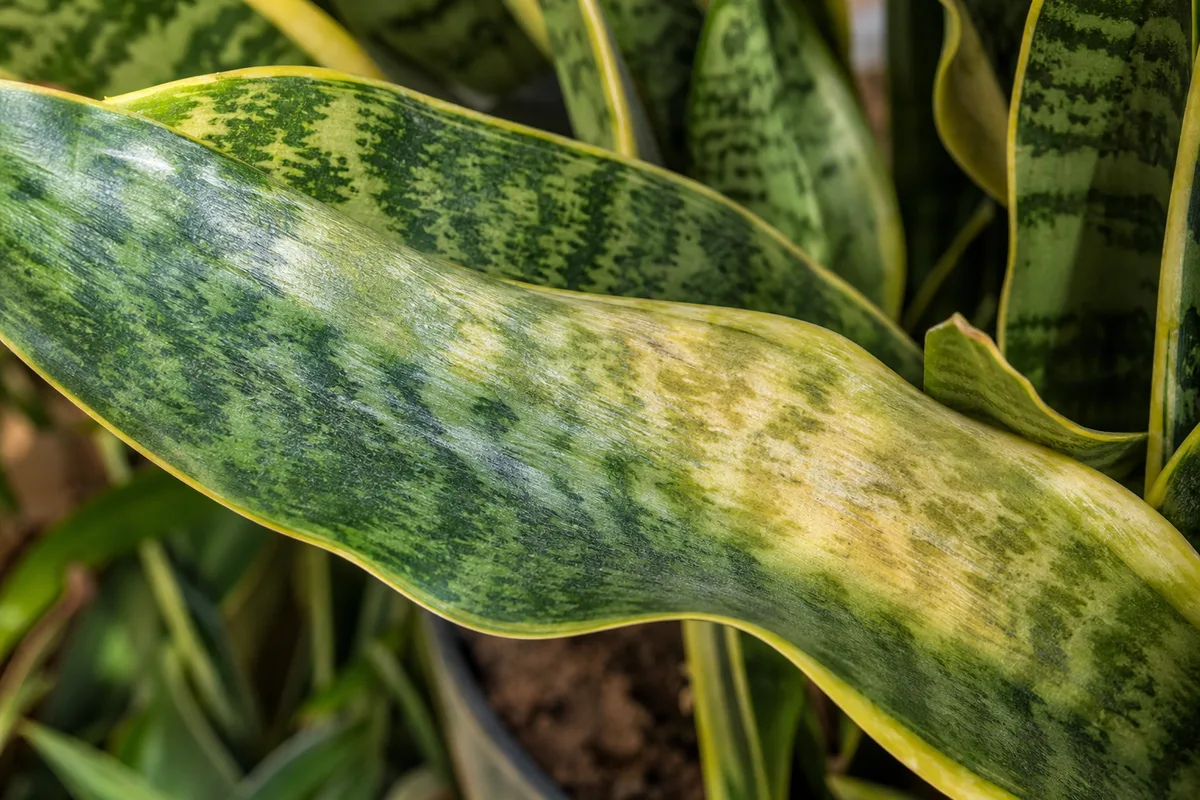
2. Vent-path snake plant (January 2026, forced-air apartment). A snake plant on a shelf in the supply-vent stream developed progressive tip crisp while a twin plant across the room stayed clean. Soil was only lightly dry. Moving the pot out of the airflow path stopped new tip death; existing brown tips were trimmed two weeks later once the live/dead line was clear. Lesson: winter “heat stress” is often dry moving air, not a summer thermostat reading.
3. Indian west-balcony soft tropicals (April 2026 heat spell). A thin-leaved philodendron and a manjula pothos on an unshaded west rail wilted and edge-scorched by early afternoon while an east-rail plant of similar size held posture. Afternoon shade cloth plus bringing the softest pots indoors for the 1–5 p.m. window stopped daily collapse; keeping a “summer soak” schedule after monsoon humidity returned caused one wet-wilt scare — reminder to change watering with the season, not the calendar.
Which Plants Soften Fastest
Relative sensitivity is a triage aid, not a hard ranking. Always check soil and placement first.
| Plant group | Typical heat behavior | Cool-first priority |
|---|---|---|
| Thin tropical vines and foliage (pothos, philodendron, peace lily) | Afternoon limp and margin crisp show early | High — move off glass/vents quickly |
| Soft flowering houseplants (African violet) | Growth and bloom drop under prolonged high temps | High — cooler room in heat waves |
| Thick waxy / semi-succulent foliage (ZZ, rubber plant, some peperomia) | Hide stress longer; tip burn after dry heat cycles | Medium — still avoid vent blast |
| True succulents and desert cacti | Tolerate heat better if light and drainage match; hate wet heat | Low for dry heat; high if mix stays soggy in heat |
| Snake plant / sansevieria | Often fails from wet heat more than dry heat drama | Check moisture before watering a “sad” plant |
For many common aroids such as pothos, Clemson cites preferred nights around 60–70°F and days around 70–85°F. Treat that as a comfort guide for that plant group, not a universal kill line: brief spikes are common, but daily baking on glass is not.
Prevention for Homes and Balconies
Prevention is placement math. Keep tropical foliage out of radiant glass and moving hot air. Acclimate slowly when you increase light. Water by soil feel as temperatures rise instead of keeping a cool-season schedule. Clemson notes that watering frequency depends on species, pot, mix, and weather — a warm, dry, sunny location simply drinks faster. Shade cloth, sheer curtains, and afternoon relocation beat emergency soaks.
Indian Balcony and Apartment Heat Waves
In Indian apartments, west and southwest balconies can behave like outdoor ovens while the living room stays tolerable. Thin-leaved indoor plants parked on a west rail often show heat wilt and scorch long before an east-rail plant of the same species. Use heat-tolerant balcony picks and afternoon shade where west sun is brutal; see balcony plants for Indian summer for species roles, pot sizes, and shade-net notes. Bring soft tropicals inside during extreme afternoon heat if the balcony has no shade, and watch monsoon handoff so you do not keep a “summer soak” schedule once humidity and rain rise.
For broader summer leaf-drop patterns — heat plus AC shock plus pests — see why plants drop leaves in summer.
Mistakes That Make Heat Stress Worse
Watering on sight. Limp leaves are not a water meter. Confirm depth moisture or you turn temporary heat wilt into root rot.
Fertilizing to “boost recovery.” Soft new growth under heat demand collapses faster. Feed only after temperatures and posture stabilize.
Misting as emergency cooling. A film of water evaporates quickly and does not replace cooler placement. Water droplets on leaves in strong sun can also contribute to spot burn; UConn warns that droplets can act like tiny lenses and burn leaf tissue.
Leaving the plant against hot glass “for more light.” Bright light is useful; radiant heat load is not the same thing. Step plants back or filter afternoon sun.
Pruning everything brown on day one. Wait until the living/dead boundary is clear unless tissue is mushy. Stripping the canopy removes the leaves that still feed recovery.
Repotting into a much larger pot during a heat wave. Extra wet mix stays wet longer in heat if you panic-water, which is a common path into wet wilt.
“Rescuing” with heat lamps or space heaters. After heat stress, do not add another artificial heat source. Cool the microclimate; do not cook recovery growth.
When to Escalate, Propagate, or Discard
Escalate when limp lasts overnight on wet soil, stems soften at the base, or the mix smells sour — those are root problems, not simple heat. Unpot, inspect roots, and follow wet-wilt guidance in the wilting guide and overwatered plant pages.
Propagate when the crown is failing but upper vines or firm leaf sections remain clean. Discard when the crown is mushy, roots are largely gone, and no firm tissue remains worth rooting. Heat-killed leaf tips alone are not a discard signal. When discarding foul tissue, clean tools and isolate the pot so wet-heat rot and fungus gnats do not hitchhike to neighboring plants.
Related Guides
- Houseplant wilting — temporary vs permanent wilt; dry vs wet collapse
- Sunburn and scorched leaves — directional bleach and papery patches
- Cold damage on houseplants — draft, glass chill, and shipping injury
- Draft stress — moving-air injury when hot vs cold is unclear
- Balcony plants for Indian summer — west vs east heat-tolerant picks
- Summer leaf drop — heat, AC, pests, and watering swings
- Pothos heat stress — species-level checks and recovery
- Heat-stress symptom hub — thin identification layer that should route here for triage
Conclusion
Houseplant heat stress is a placement and demand problem before it is a watering problem. Cool the microclimate, confirm soil moisture at depth, and only then water. Separate heat limp from sunburn patches, dry wilt, wet wilt, and cold draft injury so you do not treat the wrong cause. Crispy tissue will not green up; firm overnight recovery and healthy new leaves are the real scoreboard. Fix the hot glass, vent, or balcony bake, and most plants stop collapsing long before you need a rescue repot.
First-week cool-and-check checklist: move off the heat source → finger-test moisture → water only if dry → hold fertilizer → watch overnight firmness for three hot afternoons → prune dead tissue only after the live/dead line is clear.