How to Grow and Care for Thyme
Thyme thrives in sun and lean, fast-draining soil—not rich, wet beds. Learn planting, watering, pruning, propagation, harvest, and how to fix root rot.
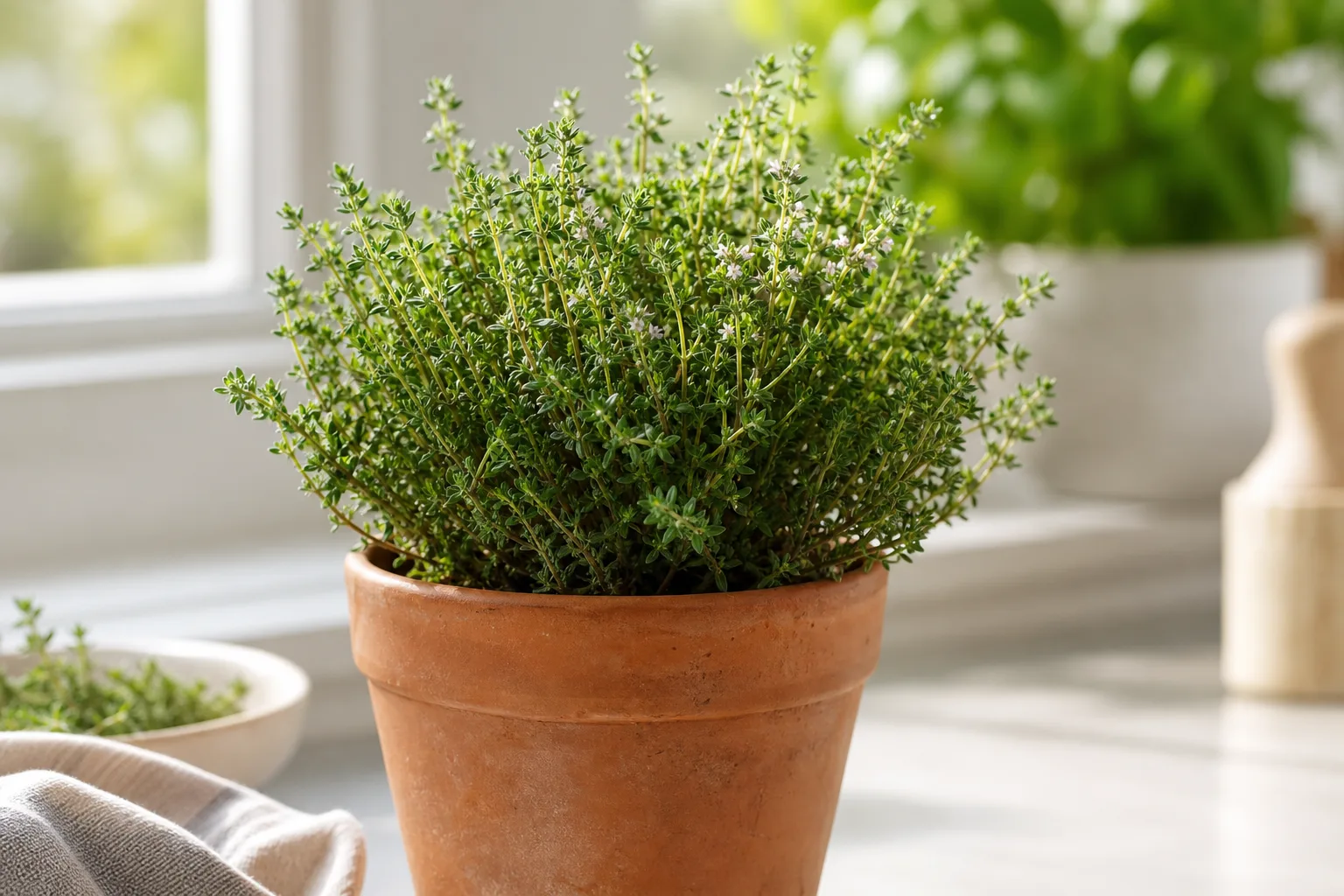
Thyme (Thymus vulgaris) is one of the most forgiving culinary herbs—if you stop treating it like basil. This Mediterranean native wants full sun, gritty soil, and long dry spells between drinks. Give it rich, constantly moist compost and a shady corner, and it will yellow, rot, or turn woody within a season. Get the basics right and thyme becomes a low-maintenance perennial in USDA zones 5–9, a pollinator magnet in summer, and a year-round snip-and-cook herb in mild climates.
This guide covers variety choice, planting in beds or pots, watering without root rot, light feeding, pruning, propagation, harvest basics, creeping-thyme ground cover, and the fixes that actually work when leaves turn brown or the plant goes bare in the center. For cutting technique and drying in depth, see our thyme harvest guide. For broader herb layout ideas, browse herb garden ideas and herbs to grow indoors.
Thyme at a Glance
Use this table as a setup checklist before you buy plants or dig holes.
| Factor | Target for healthy thyme |
|---|---|
| Botanical name | Thymus vulgaris (common/garden thyme) |
| Plant type | Woody-based perennial herb |
| Mature size | 6–12 inches tall and wide (bush types) |
| Hardiness | USDA zones 5–9 |
| Light | Full sun; 6–8+ hours daily |
| Soil | Lean, sandy or loamy, excellent drainage; pH roughly 6.0–7.5 |
| Water | Infrequent deep soak; let soil dry between waterings |
| Fertilizer | Light spring feed at half strength, or none in lean soil |
| Bloom time | Late spring through summer (pink, purple, or white flowers) |
| Lifespan | Productive 5–6 years before center woodiness declines |
| Best start method | Nursery plant or cutting (faster than seed) |
Penn State Extension notes that thyme originated in southern Europe and northern Africa, grows as a small shrub with woody stems, and attracts native bees and small pollinators when allowed to flower. (Penn State Extension) NC State Extension lists the same species as a perennial herb in zones 5–9 with a preference for full sun and well-drained soil. (NC State Extension)
Choosing the Right Thyme Variety
Not every thyme at the garden center belongs in your soup pot. Match the plant to the job—cooking, edging, or ground cover—before you plant.
Culinary bush thyme for the kitchen
Common thyme (T. vulgaris) is the standard kitchen herb: earthy, peppery, and essential in bouquet garni and herbes de Provence. Named cultivars matter for flavor and winter toughness:
- ‘Narrow Leaf French’ — lighter, sweeter taste; chef favorite per Penn State Extension.
- ‘Broadleaf English’ — robust growth and strong flavor.
- ‘German Winter’ — notably cold-hardy with good culinary quality.
- Lemon thyme (T. × citriodorus) — lemon-scented leaves; excellent for fish, tea, and compound butters.
The RHS recommends upright bush types such as common thyme for easier harvesting, since low mats are harder to pick cleanly. (RHS)
Creeping and ornamental thyme types
These are landscape workhorses, not primary kitchen crops:
- Creeping thyme (T. praecox) — 2–3 inch mats with pink to lavender flowers; popular between pavers and as thyme lawns.
- Wild/mother-of-thyme (T. serpyllum) — low edging with varied flower colors.
- Woolly thyme (T. pseudolanuginosus) — soft, scentless mat for rock gardens; not for cooking.
- Caraway thyme (T. herba-barona) — low grower with caraway-scented leaves; niche culinary use.
If your goal is maximum flavor per snip, plant upright culinary thyme near the kitchen. Save creeping types for paths, rock gardens, and pollinator strips.
When and Where to Plant Thyme
Plant thyme in spring after your last frost date, when soil has warmed and drains freely. In mild climates you can also set out young plants in early fall so roots establish before winter.
Choose the hottest, brightest, best-drained spot you have. Thyme tolerates poor soil better than rich, damp soil. In heavy clay or low spots that hold winter moisture, skip in-ground planting and use raised beds or containers instead. Space bush types 12–18 inches apart so air can move between plants—critical in humid summers when fungal issues appear.
How to Start Thyme: Seeds, Starts, or Cuttings
Buy a nursery start or root a cutting if you want harvestable thyme this year. Seed works for large plantings but patience is mandatory.
Growing thyme from seed: Thyme seeds are tiny and slow. The RHS advises sowing indoors in spring on moist peat-free seed compost, barely covering seeds, and germinating at 15–20°C (59–68°F) in a warm, bright spot; sprouts often appear within two weeks. (RHS) Penn State Extension warns that seed-grown plants may take several years to reach a useful harvest size. (Penn State Extension)
Sow thinly, water gently, and avoid soggy trays—seedlings are prone to damping off. Transplant into individual 3-inch pots once several true leaves form, then move outdoors when rooted and weather-stable.
Direct-sow only in very well-drained, sunny beds after frost, thinning to about 12 inches. For faster results, see our fastest herbs to direct sow guide for species that outperform thyme from seed.
Planting Thyme in Garden Beds
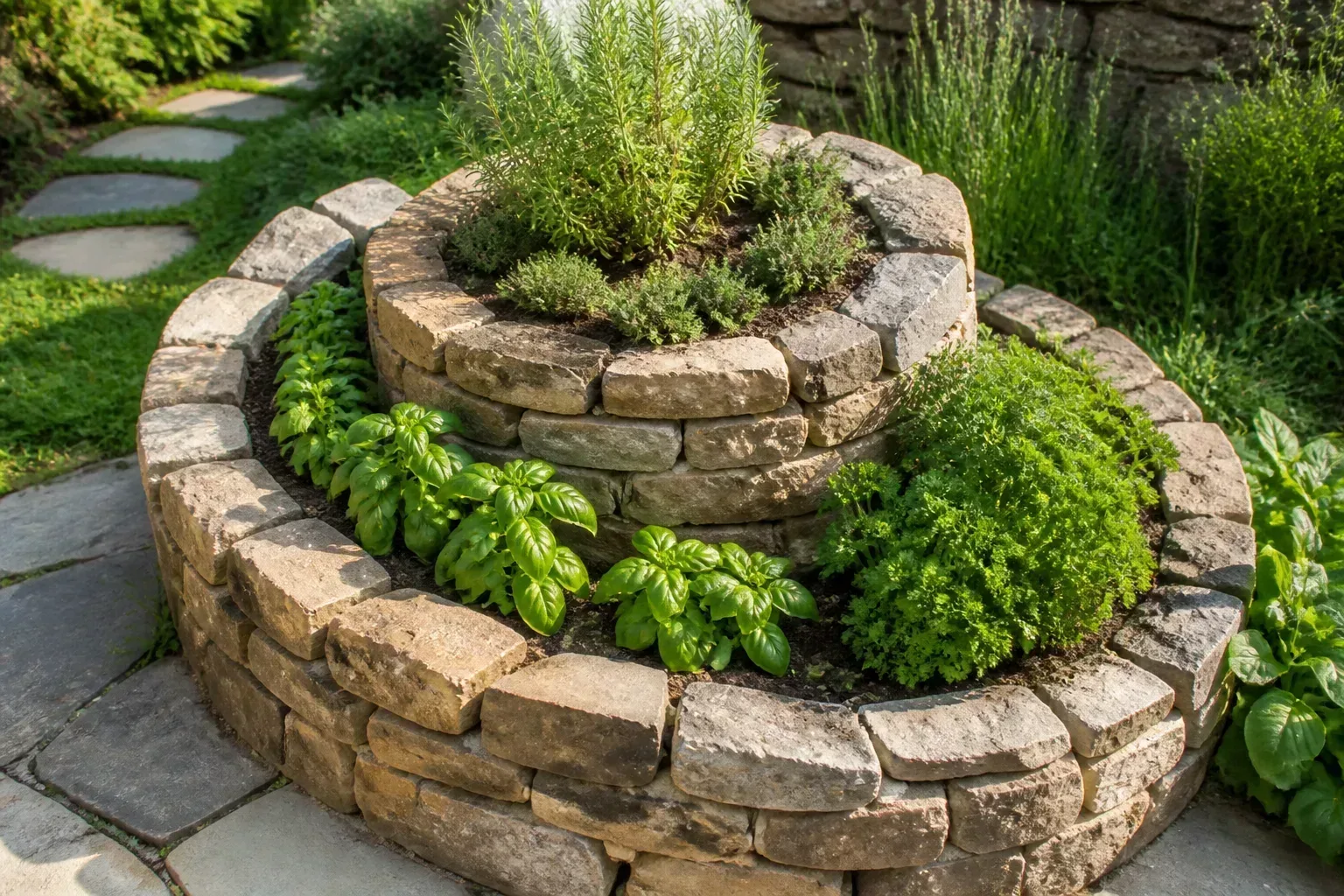
Dig a hole no deeper than the root ball and plant at the same depth the thyme grew in its pot—burying stems encourages rot. Mix up to 25% horticultural grit or coarse sand into the backfill if your native soil is heavy.
Water thoroughly once at planting, then back off. Mulch with gravel rather than bark if you mulch at all; gravel suppresses weeds and keeps low branches off damp soil, which the RHS notes helps prevent rotting on creeping types. (RHS)
Thyme pairs well at the dry edge of vegetable beds—think tomatoes, eggplant, and cabbage family crops where you want an aromatic, pollinator-friendly border without extra irrigation.
Growing Thyme in Containers
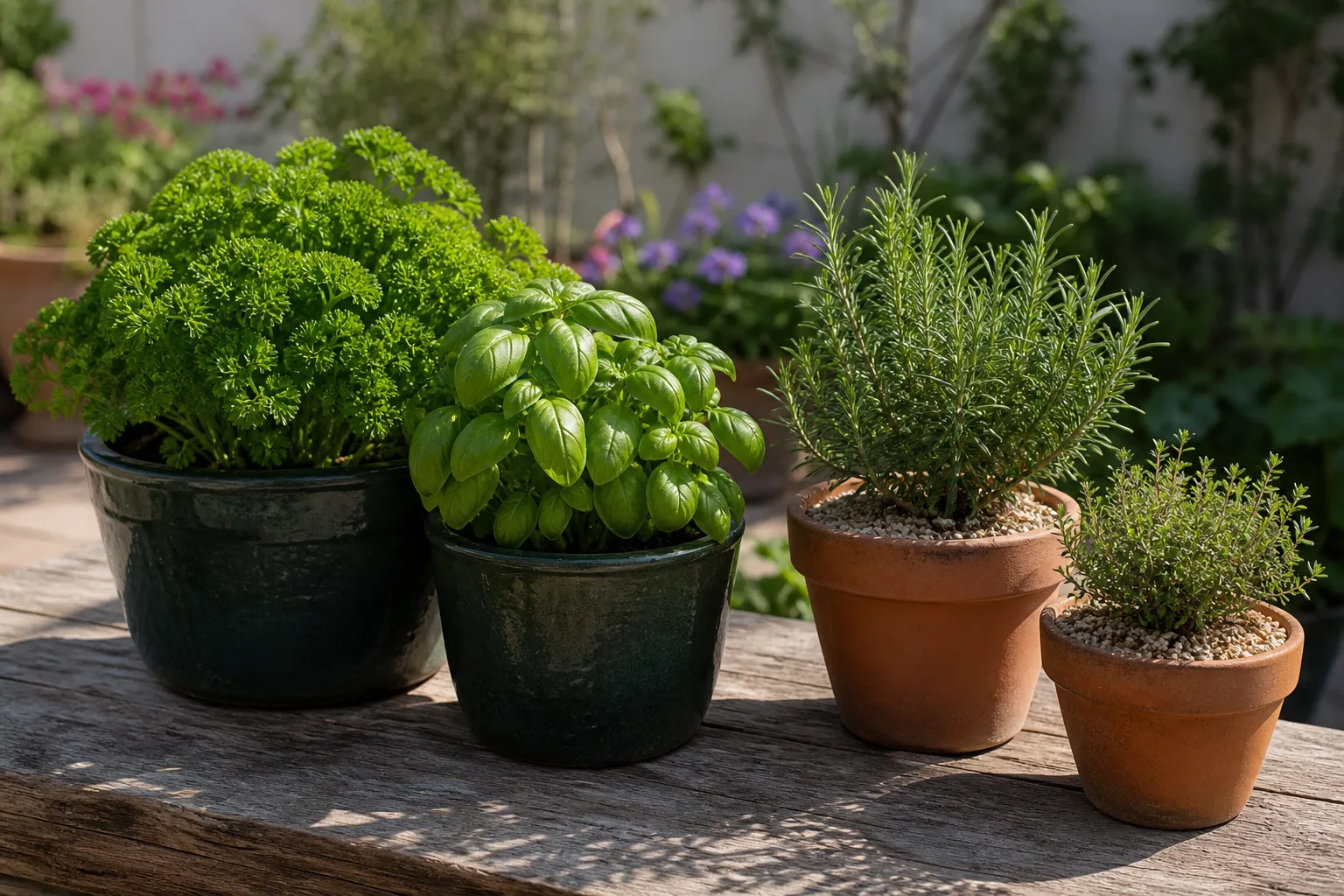
Thyme is an excellent container herb because you control drainage. Choose a pot at least 6 inches deep and 8–12 inches wide for one plant, with multiple drainage holes. Terra-cotta or unglazed clay wicks excess moisture and suits thyme better than sealed plastic in rainy climates.
Fill with quality potting mix amended with perlite or grit (up to 25% by volume). Place the pot where it receives full sun—six to eight hours minimum. On patios, rotate pots or shift them to the sunniest edge as seasons change.
Container thyme dries faster than in-ground plants. Check weekly in summer heat, but still wait until the top 2 inches of mix feel dry before watering. Our herbs in pots vs ground guide explains why thyme belongs in the “dry side” group with rosemary and oregano, not with moisture-loving basil.
Light Requirements for Strong Flavor
Thyme needs full sun—at least six to eight hours of direct light daily. More sun means tighter growth, stronger essential oils, and better flavor. Leggy, pale stems with wide spacing between leaves usually mean too little light.
Indoors, thyme is possible on a south-facing sill or under supplemental grow lights, but it is not a low-light houseplant. Without strong light, flavor fades and stems stretch. For indoor herb setups, read best herbs to grow indoors and give thyme the brightest station you have.
Soil, Drainage, and pH
Thyme’s famous line among gardeners—the worse the soil, the happier the plant—is only half a joke. It wants lean, gritty, fast-draining ground. Ideal pH sits around 6.0–7.5; Penn State Extension lists 6.3 as a target. (Penn State Extension)
Avoid planting into freshly manured or nitrogen-rich beds. Excess fertility pushes soft, leafy growth with diluted flavor—the same mechanism that makes overfed basil taste mild, but thyme shows the problem as pale yellow leaves and weak aroma.
If a soil test shows heavy clay, build a raised mound or planter rather than amending clay in place with sand alone.
How to Water Thyme (Without Root Rot)
Let soil dry completely between waterings for established in-ground thyme. In many climates that means deep soaking every two to three weeks in summer—or even less during cool, cloudy weather. Thyme is drought-tolerant; occasional dry spells rarely kill a mature plant.
New plantings need consistent moisture for the first few weeks while roots spread. After that, shift to the dry-side routine. In containers, water when the top 2 inches of mix are dry, then soak until water exits the drainage holes.
Overwatering is the number-one killer: leaves brown, wilt, or drop while stems still feel soft at the base. If your thyme sits in saucers of standing water or rainy-season sod, move pots under eaves or slip saucers away entirely.
Temperature, Humidity, and Winter Protection
Thyme handles heat well but struggles when heat pairs with stagnant humidity. Space plants for airflow and avoid overhead sprinklers that keep foliage wet overnight.
Most culinary thymes survive winter in zones 5–9 if soil drains. The risk is not cold air alone—it is cold, wet soil. In high-rainfall winters:
- Plant in raised beds or containers you can move to a rain shadow near a wall.
- Use cloches temporarily during prolonged wet spells on precious specimens.
- Add gravel top-dressing so foliage sits above soggy surface soil.
Less hardy species should stay in pots and move to a cold greenhouse or bright porch where they stay dry, not warm and damp.
Fertilizing Thyme Sparingly
Thyme does not need heavy feeding. One light application in spring—balanced organic or slow-release fertilizer at half the label rate—is enough in average garden soil. Container plants benefit from a diluted liquid feed once or twice per growing season.
Skip fertilizer if growth already looks lush and flavor seems weak. High nitrogen is a common reason thyme turns yellow-green, leggy, and bland. Lean soil produces smaller leaves with more concentrated oils—the trade-off you want for cooking.
Pruning to Keep Plants Compact
Prune thyme lightly after the main flush of flowers or in mid- to late spring to remove spent blooms and prevent bare, woody centers. Snip soft new growth only; avoid cutting deep into old brown wood that may not resprout.
Regular harvesting doubles as pruning. If you cook with thyme weekly during summer, you may never need a separate pruning session. When plants become open and sparse in the middle, start fresh cuttings rather than attempting heroic renovation cuts.
For fall tidying without shocking plants, see should you cut back herbs before winter.
Propagating Thyme by Cuttings, Division, and Layering
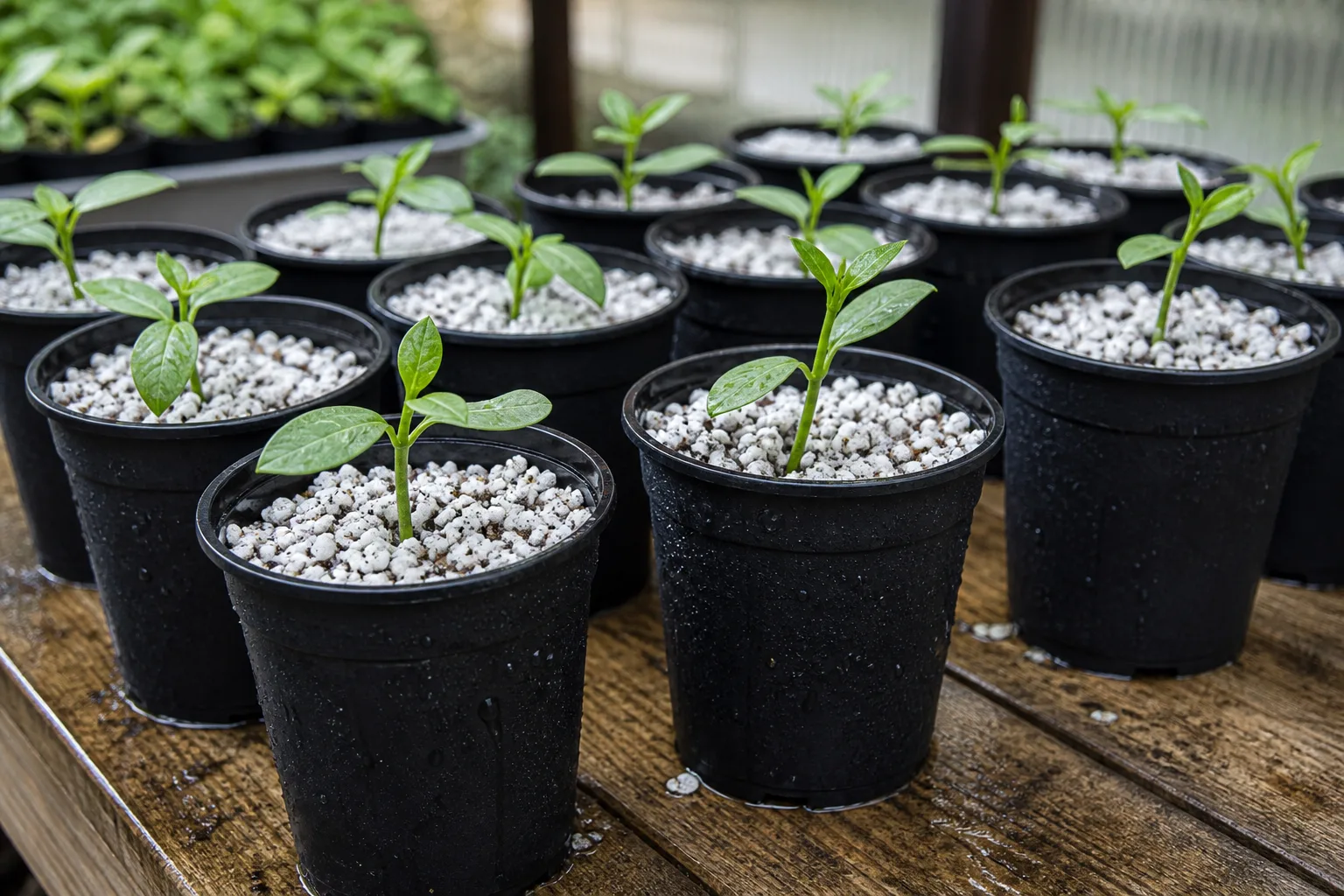
Thyme is easiest to multiply vegetatively so new plants match the parent cultivar—seedlings from named varieties often do not come true.
Softwood cuttings (late spring to early summer): Take 3–4 inch stems with fresh green tips, strip lower leaves, and insert into moist sand-perlite mix or potting soil. Bright indirect light and steady moisture produce roots in about six weeks. Penn State Extension recommends 4-inch shoot tips in sand, kept well watered until rooted. (Penn State Extension)
Division (spring or fall): Dig established clumps, split with a sharp knife so each section has roots attached, and replant immediately at the same depth.
Layering (spring or autumn): Bend a low stem to soil, pin it, and cover a node with light mix. Once rooted, sever and transplant—the RHS notes creeping thymes often layer naturally at the edges. (RHS)
Rooting hormone helps but is optional. Late spring is the sweet spot for all three methods.
Harvesting, Storing, and Using Thyme
Harvest leafy stems just before peak bloom for the strongest flavor, though evergreen thyme can be snipped any time leaves look plump. Take no more than one-third of the plant per session so it can recover.
Morning harvest on a dry day—after dew dries—preserves oils best. Use fresh sprigs in roasts, stews, roasted vegetables, breads, and marinades. Flowers are edible and make a pretty salad garnish with a mild thyme taste.
To dry, bundle small stems and hang upside down in a warm, dark, airy room until leaves crumble. Store dried leaves airtight for up to a year. Penn State Extension describes stripping leaves after drying and keeping them in sealed containers. (Penn State Extension)
For snip height, regrowth timing, and the “one-third rule” in practice, follow our dedicated how and when to harvest thyme guide.
Common Thyme Problems and How to Fix Them
Thyme is tough when drainage and sun are right. Most problems trace to water, fertility, or age—not mysterious disease.
Brown, wilted, or dropping leaves: Likely cause: root rot from excess moisture. Reduce watering immediately. If the plant is in a pot, tip it out, trim mushy brown roots with clean shears, and repot into fresh gritty mix. For in-ground plants, improve drainage with a raised mound or relocate to a drier site. Do not resume normal watering until new growth appears.
Yellow leaves and weak flavor: Yellowing often means too much water or too much nitrogen. Confirm soil dries between waterings and stop fertilizing. If the plant sits in rich compost or lawn runoff, transplant to leaner soil. Leaves should re-firm and darken green within a few weeks once stress ends.
Spider mites can appear on stressed, dusty plants in hot dry weather—rinse foliage with water and improve airflow rather than reaching for harsh sprays first.
Woody, declining plants: Thyme naturally becomes sparse and stiff-centered after about five to six years. Crispy, dropping interior growth is a sign to propagate replacements. Take cuttings from healthy outer stems, plant them, and retire the old mother plant once youngsters establish.
Hard pruning into old wood rarely rejuvenates thyme the way it can lavender; replacement is usually faster and more reliable.
Watch for rosemary beetle and sage leafhoppers on young shoots—the RHS lists them as occasional pests on thyme relatives. Hand-pick beetles or accept minor cosmetic damage; healthy dry-site plants outgrow light feeding.
Using Creeping Thyme as Ground Cover
Creeping thyme (T. praecox) and wild thyme (T. serpyllum) form fragrant mats 2–3 inches tall that tolerate foot traffic once established. They need the same full sun and sharp drainage as culinary thyme, but spacing is tighter—6–12 inches—for faster fill.
A thyme lawn or paver filler uses less water than conventional turf in sunny, dry sites. It is not a shade solution and will not thrive in wet clay. Expect two growing seasons before a solid mat forms from plugs.
Harvest from ground-cover types is possible but tedious; keep a separate pot of bush thyme for the kitchen.
Conclusion
Thyme rewards gardeners who can resist overcare. Plant it in the sunniest, driest spot available, keep soil lean and fast-draining, water only when the root zone has dried, and harvest often to maintain compact growth. Start from nursery plants or cuttings if you want usable sprigs within months; save seed for mass plantings and ground-cover projects.
When flavor fades or stems go woody, propagate fresh plants instead of fighting an aging shrub. Fix brown leaves by correcting drainage first, yellow leaves by easing water and fertilizer, and winter losses by keeping roots dry—not just warm. With that mindset, a single pot or path edging can supply years of kitchen thyme and summer flowers for pollinators.