12 Fast-Growing Herbs to Plant Now for Summer Flavor
Learn which 12 herbs to sow now, when to harvest, and how to beat bolting, slow germination, frost, and mint’s spreading habit for a steady summer supply.
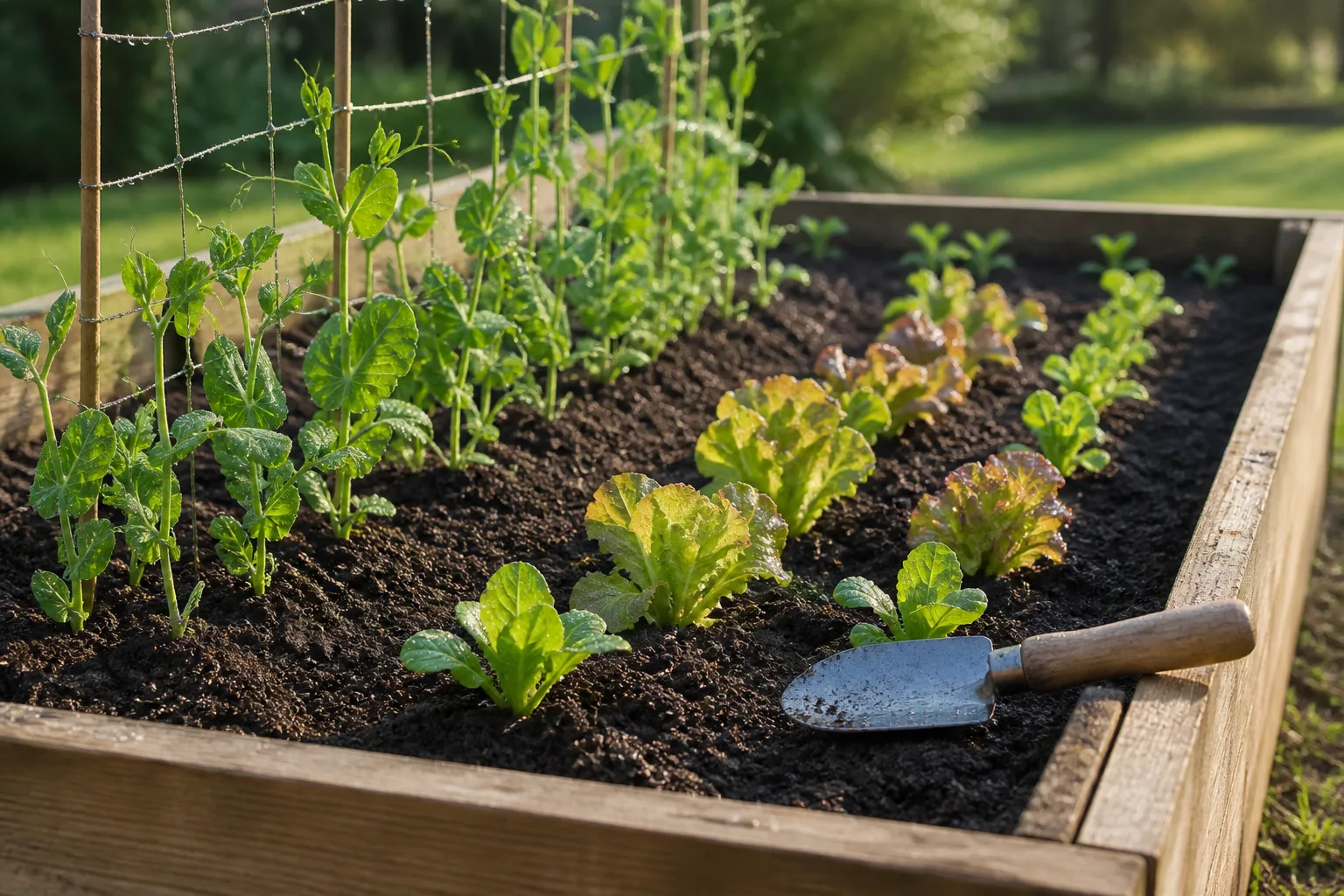
The fastest way to a summer herb harvest is not to plant every packet at once. It is to match each herb to the weather you have, then sow a small second batch before the first one gets old.
“Plant now” means different things for different herbs. Cilantro and dill can handle the cool side of spring; basil wants warm soil and nights safely above frost. Parsley is slow to wake up but keeps giving leaves once established. Mint and lemon balm grow with enthusiasm, but that is exactly why they need a container or a clearly contained spot.
The planning bands below assume healthy seed, a prepared bed, steady moisture during germination, and the light and temperatures each herb prefers. They are not promises printed in days: a cool week can slow basil, while a hot spell can push cilantro from leaf production into flowers. Use your seed packet for variety-specific spacing and your local frost date for the final call.
Start With the Weather, Not the Calendar
The two sowing lanes: cool soil and warm soil
Start with a soil thermometer if you have one, or use night temperatures and the forecast as a practical proxy. Cool-lane herbs—cilantro, dill, parsley, chives, and chamomile—can be started while spring is still mild, provided the bed is workable and not waterlogged. Warm-lane herbs—especially basil, summer savory, borage, and tender lemon balm or mint starts—should wait until frost risk has passed and the soil is warming.
Most herbs need roughly six hours of sun, but “full sun” is not a demand that every plant receive the harshest afternoon light. The University of Maryland Extension notes that mint, chives, cilantro, and chervil tolerate light shade, while Mediterranean herbs such as oregano prefer a sunny, drier position. In a hot climate, morning sun with afternoon shade can give cilantro and parsley a longer leafy season than an exposed all-day bed. (University of Maryland Extension)
Warm-season basil is the clearest test. Illinois Extension says basil germinates best when the growing medium is around 70°F, and Penn State recommends waiting until the soil is at least 60°F and nights are above about 60°F before moving plants outdoors. A packet sown into chilly soil may sit, rot, or produce a weak stand even when the calendar says spring has arrived. (Illinois Extension’s basil guide; Penn State’s basil guide)
Prepare one small seed bed that keeps seedlings alive
You do not need a special herb garden. A strip beside vegetables, a raised bed, or a group of containers can work. What matters is fine, settled soil at the surface, reliable drainage, and a location you will pass often enough to harvest. The University of Maryland Extension calls drainage the most important single factor in successful herb growing; wet soil is a poor starting point for both seedlings and mature roots. (University of Maryland Extension)
Work the top few inches until it is crumbly, remove stones and clods that create air pockets, and mix in a moderate amount of finished compost if the soil is depleted. Do not create a rich, constantly wet bed for every herb: too much fertilizer can make lush but less flavorful growth and can increase root and stem problems. Keep mint and lemon balm in their own containers unless you actively want them to spread.
Sow into moist soil, cover only as deeply as the seed packet says, and water with a fine rose or mist so you do not wash seed into a corner. Small seeds such as chamomile, oregano, and summer savory are easy to bury too deeply; press them into the surface or cover them with only a dusting when the instructions call for light. Mark every row with the herb and sowing date. That little label prevents you from watering an empty-looking row into a swamp or pulling slow parsley as a weed.
Quick Planning Chart: What to Sow, When to Pick, and What Can Go Wrong
These are practical planning bands rather than guarantees. “First useful harvest” means enough leaves, flowers, or tender stems to use without stripping a small plant bare. For mint and lemon balm, the fastest route is a healthy start or division; for oregano and sage, seed is possible but rarely the quickest path to a substantial kitchen harvest.
| Herb | Best “now” window | First useful harvest | Main catch |
|---|---|---|---|
| Chives | Cool spring or early fall | About 6–8 weeks from seed; sooner from a division | Seedlings take time to form a full clump |
| Cilantro | Cool spring, late summer, or fall | About 3–5 weeks for young leaves | Heat and long days trigger bolting |
| Chamomile | Cool spring after the bed can be worked | Roughly 8–12 weeks for flowers | Tiny seeds need light and steady surface moisture |
| Dill | Cool spring; repeat while weather is mild | About 4–6 weeks for leaves | Taproot dislikes transplanting; plants get tall |
| Mint | After frost; start or division is fastest | About 3–6 weeks from a healthy start | Spreads aggressively in open ground |
| Oregano | Warm soil; start or transplant for speed | About 6–10 weeks from a start | Seedlings are slow and need good light |
| Borage | After frost in a warm bed | About 6–8 weeks for leaves and flowers | Gets large and readily self-sows |
| Sage | After frost; a nursery start is quickest | About 8–12 weeks from a start | Seed is slow; roots dislike soggy soil |
| Parsley | Cool spring or late summer | About 8–12 weeks | Germination is slow and easy to lose track of |
| Summer savory | After frost and in warm soil | About 6–8 weeks | Fine seed should be sown shallowly |
| Basil | After frost, with soil at least 60°F | About 4–6 weeks for repeated leaf harvests | Cold slows or kills it; flowers change leaf quality |
| Lemon balm | After frost; start or division for speed | About 6–10 weeks | Spreads by roots and self-seeding |
1. Chives
Chives (Allium schoenoprasum) are a good choice when the garden is still on the cool side. They are hardy perennials that produce slender onion-flavored leaves and edible flowers, and they can return for years once a clump is established. From seed, they are not the quickest herb in this group, but their regrowth after cutting is fast and dependable.
Sow in a shallow row in early spring or start with a division from an established plant. Keep the surface evenly moist until seedlings appear, then thin crowded seedlings enough that air can move through the clump. Harvest by snipping leaves a few inches above the soil rather than pulling them. Cut only what you need at first; a young clump needs foliage to build roots.
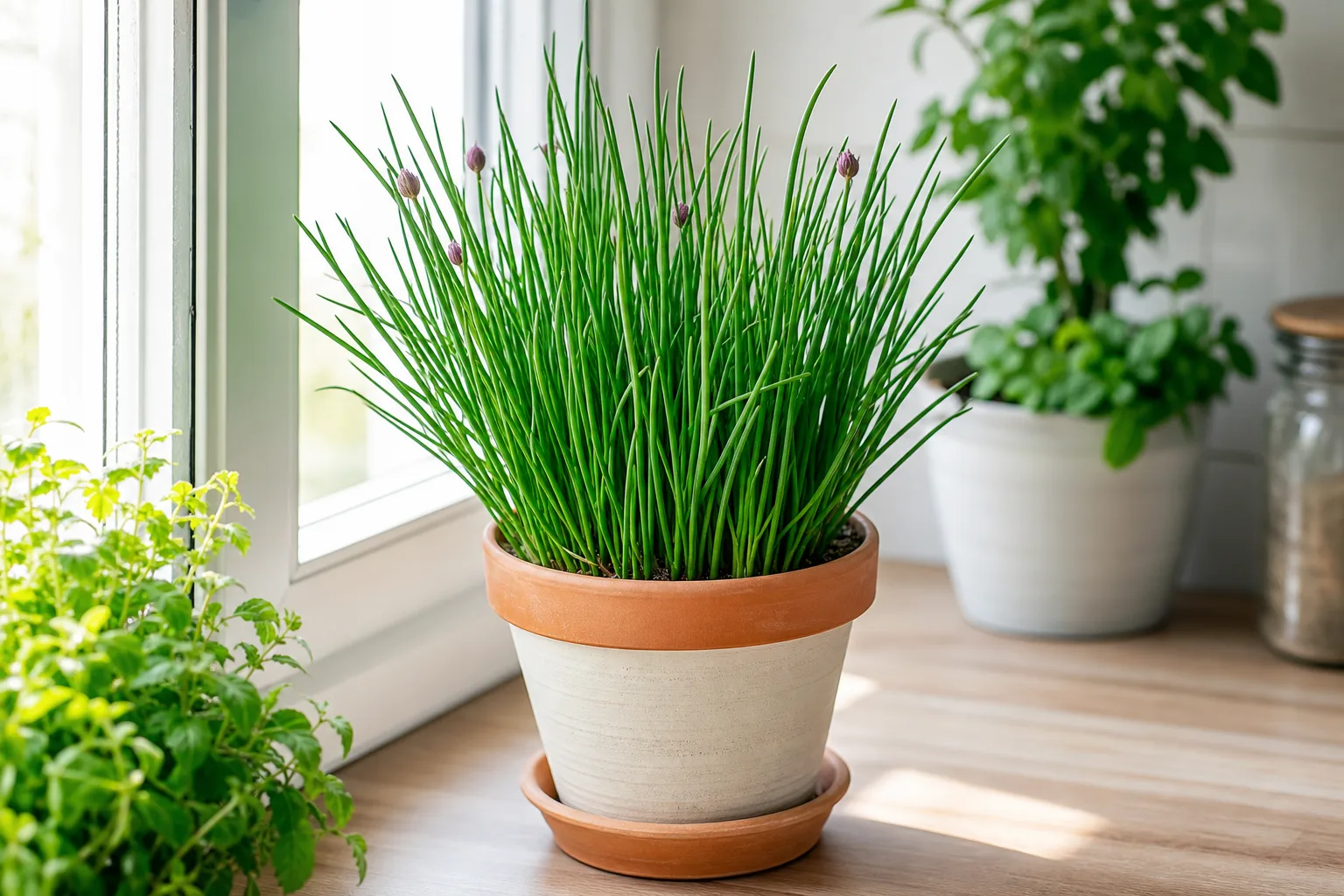
Chives can flower without becoming useless. Let a few blossoms feed pollinators, but remove spent flower heads if you do not want seedlings scattered through the bed. The University of Connecticut notes that chives tolerate a wide range of soil conditions and can be propagated by seed or division; division is the shortcut when you want a sizable clump this season. (University of Connecticut)
2. Cilantro (Coriander)
Cilantro is one of the quickest ways to get a fresh leaf harvest, and it is also one of the easiest to lose to heat. Cilantro and coriander are the same plant: harvest the green leaves and stems as cilantro, or let the plant flower and mature seed for coriander. Illinois Extension describes its useful leaf season as short and recommends successive sowings every three to four weeks. (Illinois Extension’s cilantro guide)
Direct-sow it rather than disturbing its taproot. Plant several short rows instead of one long row, cover the seed according to the packet, and start the next row before the first row is fully mature. If summer has already arrived, choose a cooler location or give the plants afternoon shade. Oregon State University Extension notes that temperature and day length both influence bolting; in hot weather, a plant can flower and set seed in four to six weeks. (Oregon State University Extension)
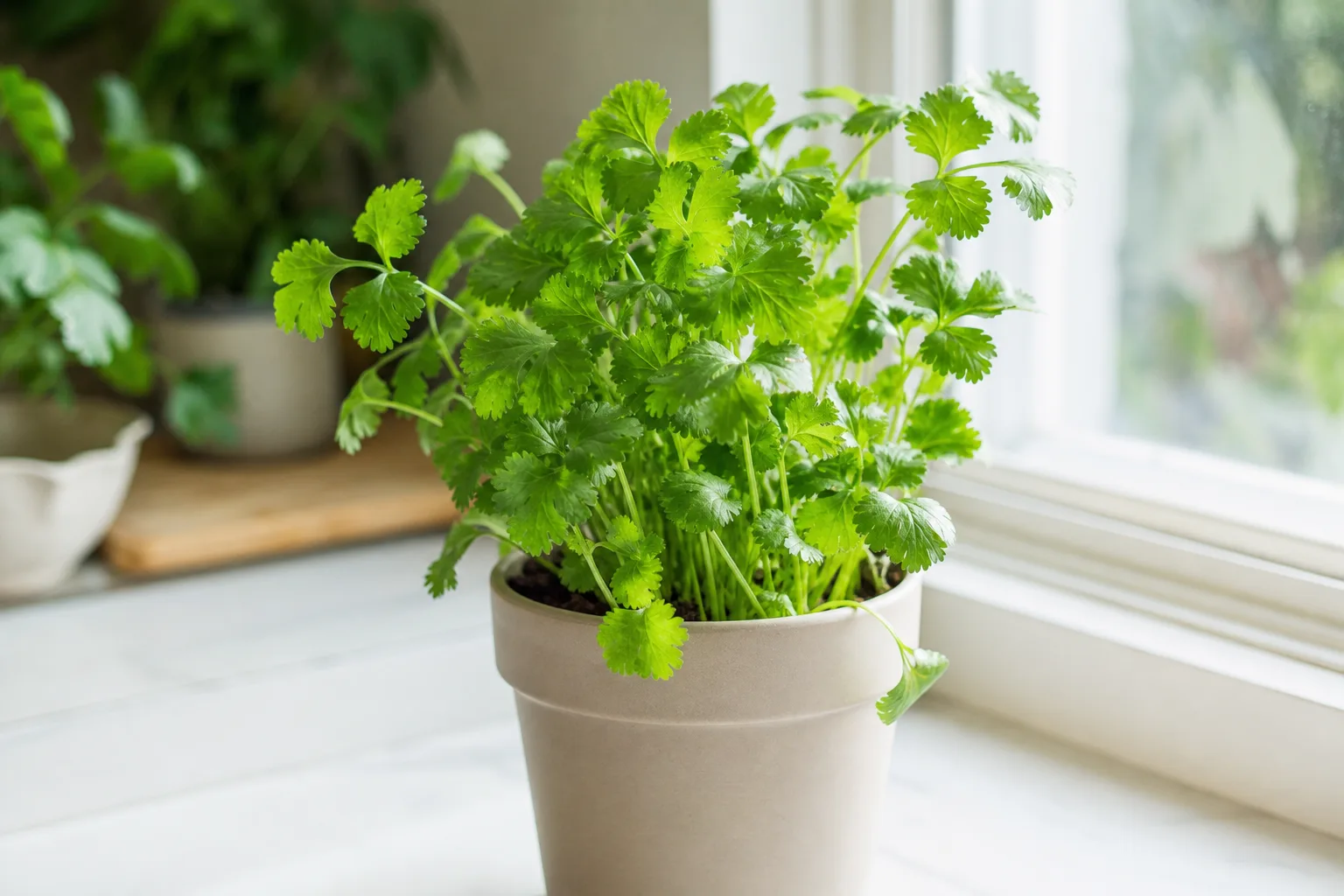
Harvest leafy cilantro when the plants are about six inches tall, taking outer stems or cutting a small cluster at the base. Once flower stalks rise, switch your goal: allow the heads to turn brown, collect the seed before it shatters, and sow another batch for leaves. Trying to force a bolting plant back into leafy growth wastes time; succession sowing is the better fix.
3. Chamomile
For a tea garden, German chamomile (Matricaria chamomilla) is the practical choice among chamomiles commonly started from seed. It is an annual with daisy-like flowers and a light apple scent. It is also a useful visual and pollinator plant, but the harvest is the flower heads—not a large volume of foliage.
The seeds are tiny and need light to germinate, so do not bury them in a deep furrow. Prepare a level, moist surface, scatter the seed, press it gently into contact with the soil, and keep the top layer from drying until seedlings are visible. Savvy Gardening recommends either a light surface sowing or a direct sowing with careful moisture management. (Savvy Gardening)
Give chamomile a spot where its fine stems will not be trampled. Thin seedlings so air can pass through, and harvest flowers when they are open and fragrant but before the centers have aged past their best. If the plant self-sows, decide whether you want next year’s volunteers before you leave every flower head in place. Chamomile is a better “start a patch and enjoy it” herb than a guaranteed fastest route to a handful of leaves.
4. Dill
Dill (Anethum graveolens) earns its place on a fast-herb list because it germinates quickly in suitable conditions and can be sown directly where it will grow. Its taproot makes transplanting awkward, and the plant can become tall enough to shade shorter herbs. Choose a sunny, well-drained position, sow shallowly, and put a small stake or nearby support in place before the stems lean.
Dill is a cool-season annual. Penn State Extension recommends direct sowing when nights are above about 45°F, barely covering the seed because it needs light to germinate, and making successive sowings about every 10 days while conditions remain cool. Its seeds may emerge in 10 to 14 days, but the plant declines soon after flowering, so a single sowing will not give a continuous supply. (Penn State Extension)
Harvest the ferny leaves often, but leave enough foliage for the plant to keep growing. Let a later plant flower if you want dill seed or the umbrella-shaped blooms that attract beneficial insects. If swallowtail caterpillars appear, decide whether you can share a plant; dill is a food plant for their larvae, so “pest-free” is not the right goal for every garden.
5. Mint
Mint is fast in the way a gardener must respect: a small start can make a large plant quickly. Most culinary mints are better propagated from division or cuttings than grown from seed because seed may not produce the flavor and habit you expected. A nursery plant or rooted division gives you usable leaves much sooner.
Plant mint in a pot with drainage, or give it a genuinely isolated area where runners cannot move into the rest of the bed. A pot sitting on a patio is easier to manage than a pot sunk into garden soil, because roots can escape through the drainage hole. Harvest the tips regularly to keep the plant branching, and cut flower stalks when you want more leafy growth.
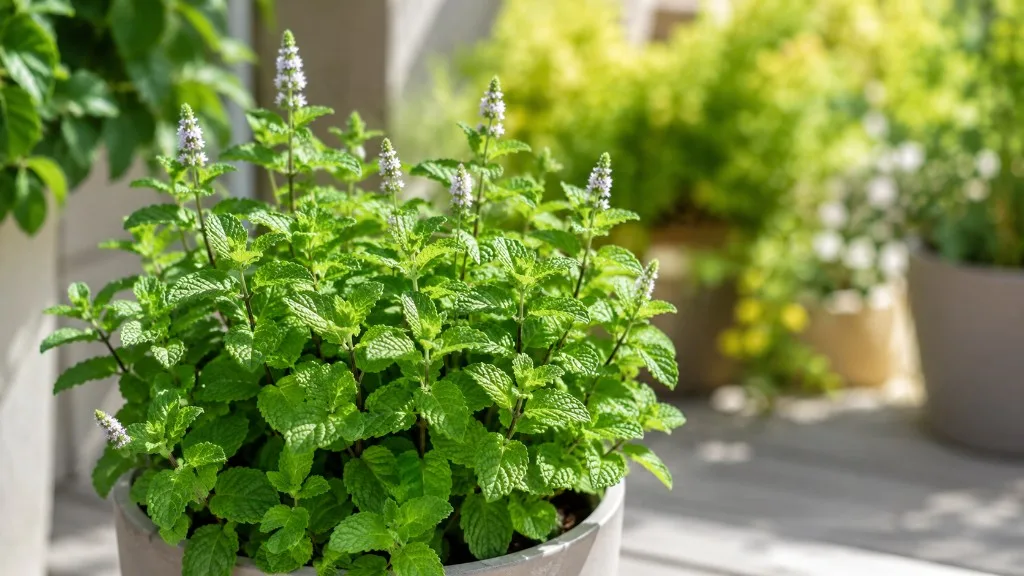
Mint tolerates light shade and appreciates consistent moisture, but it still needs drainage. The Missouri Botanical Garden calls mint notorious for rampant growth and recommends containing it; the RHS likewise suggests larger containers for stronger-growing herbs such as mint and sage. (Missouri Botanical Garden; RHS herbs guide)
6. Oregano
Oregano (Origanum species) is a perennial herb for a sunny, drier edge of the garden. It is a good candidate for a nursery start or division when the goal is a harvest this summer; tiny seeds can grow into healthy plants, but the early stage is not especially fast. Check the packet for the exact species and culinary type because “oregano” can refer to several plants with different flavor and winter tolerance.
If sowing seed, use a fine, well-drained mix or bed surface and cover it only lightly. Savvy Gardening notes that oregano seed needs light to germinate and that seedlings should be given time to size up before moving outdoors. Once the plant is growing strongly, trim leafy stems before full bloom and use the cuttings fresh or dry them in a warm, airy place. (Savvy Gardening)
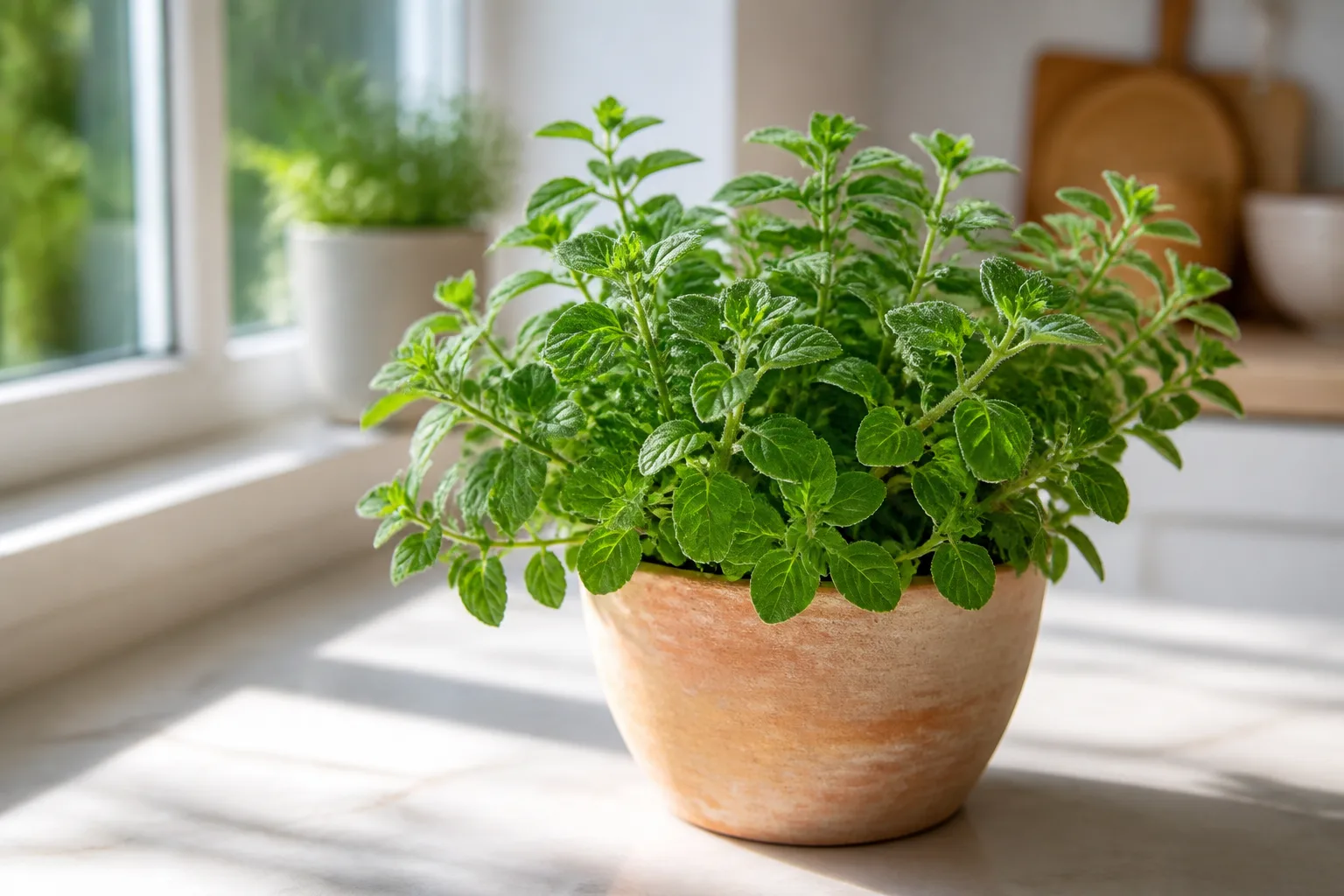
Oregano does not need a heavily fertilized bed. Moderate fertility, strong light, and careful watering produce a more useful plant than constant feeding. If you need a fast kitchen supply, buy one start now and sow seed separately for next season.
7. Borage
Borage (Borago officinalis) is a large annual herb with cucumber-scented leaves and star-shaped blue flowers. It is one of the more satisfying direct-sown choices for a warm garden because the flowers arrive quickly enough to make the plant useful as both an edible and a pollinator feature. Give it room: a small seedling can become a broad, bristly plant.
Direct-sow after the danger of frost has passed, in full sun or light shade and soil that drains well. Thin early rather than waiting until plants tangle. The leaves are best when young and tender, while the flowers can be used as a garnish; wash edible flowers and leaves carefully and introduce any unfamiliar edible plant in ordinary culinary amounts.
Borage can self-sow. That is a benefit if you want a recurring patch and a nuisance if you need tidy beds. Let a few flowers mature for pollinators and seed, then remove the rest before they drop. The University of Maryland Extension specifically lists borage among herbs that are best direct-sown because they do not transplant well. (University of Maryland Extension)
8. Sage
Common sage (Salvia officinalis) is a woody perennial, not a true instant herb from seed. It can be started from seed, but a young plant from a nursery or a rooted cutting is the more honest choice when you want leaves this season. Sage prefers full sun and very good drainage; it is far more likely to sulk in a wet bed than in an average, slightly lean one.
Plant a start after frost, water it deeply while it establishes, and then let the surface dry somewhat between waterings. Harvest lightly at first, taking leafy tips rather than cutting hard into old woody stems. A mature sage plant can supply more than a small household needs, especially if you dry leaves for winter.
Sage flowers are useful to pollinators, so you do not have to remove every bud. If maximum leaf production is the priority, trim before heavy flowering, but do not treat flowering as failure. Penn State lists sage among the perennial herbs commonly grown in a garden and advises matching the plant to its site and hardiness rather than assuming every herb behaves like basil. (Penn State Extension)
9. Parsley
Parsley is a biennial that gives its best leafy harvest in the first year and flowers in the second. It is not the quickest to germinate, so mark the row and keep the surface evenly moist rather than re-sowing every few days because nothing seems to be happening. Flat-leaf parsley usually has a stronger culinary flavor; curly parsley stays compact and works well as a garnish.
Direct-sow in cool spring weather or as temperatures begin to fall. Parsley prefers richer, moisture-retentive soil than oregano or sage and tolerates light shade, especially in a hot summer. Cut the outer stems at the base, leaving the center to produce new leaves. Removing a few whole outer stems gives a better harvest than repeatedly shaving the tops.
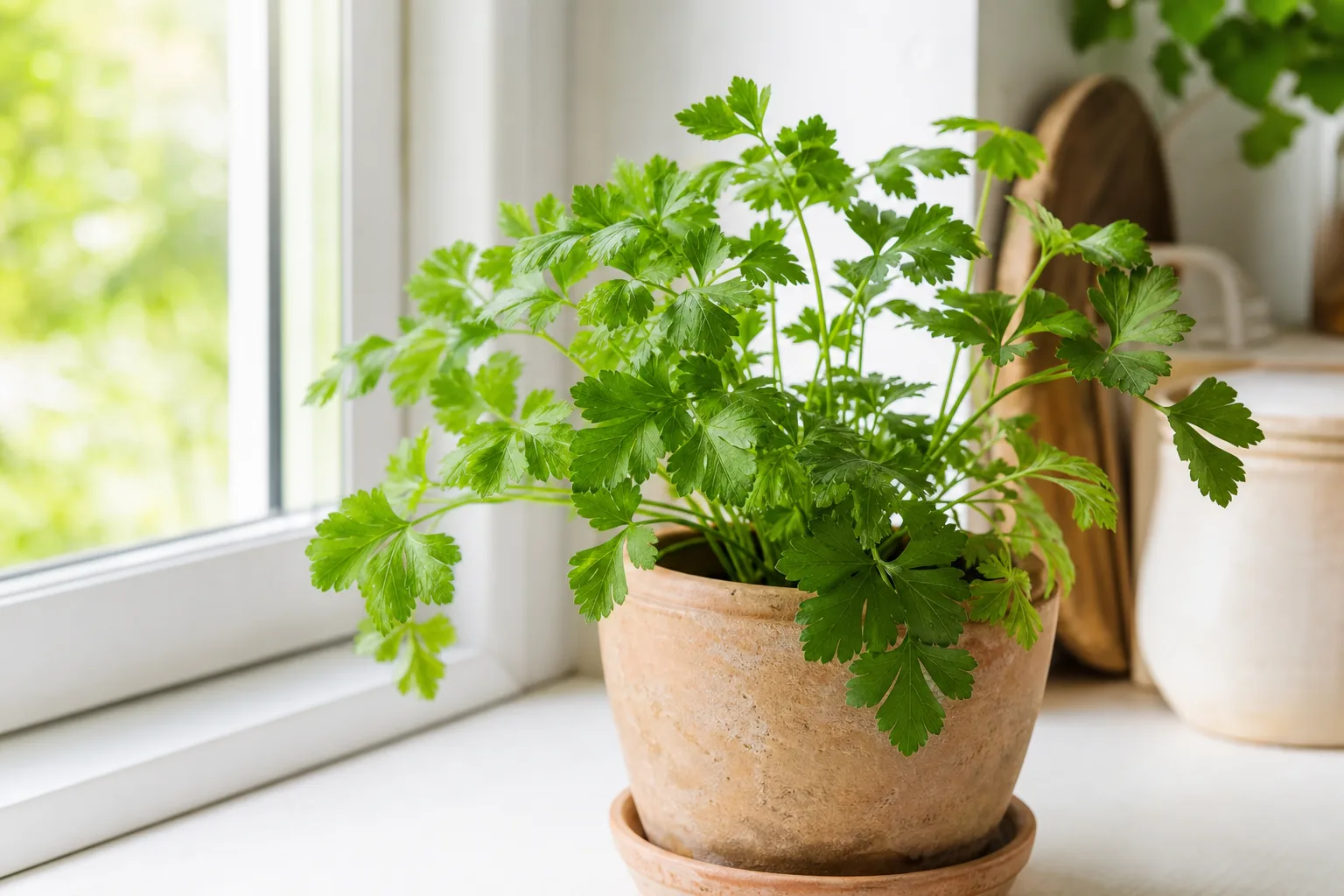
The RHS and BBC Gardeners’ World both treat parsley as a reliable seed-grown herb, but their timing also shows why local conditions matter: direct sowing belongs to a settled spring or late spring window, while a cool, damp root zone helps the plant stay leafy. (RHS herbs guide; BBC Gardeners’ World)
10. Summer Savory
Summer savory (Satureja hortensis) is an annual with a peppery flavor that works especially well in beans, soups, stuffing, and grilled vegetables. It is one of the better “start from seed now” herbs once the soil is warm, and it stays smaller than dill or borage.
The seeds are fine and need light to germinate, so sow them shallowly on a prepared surface and keep them evenly moist. Thin seedlings so air can move through the stems, and pinch or cut leafy tips regularly to prevent a leggy plant. BBC Gardeners’ World describes summer savory as a shallow-sown herb with an approximately eight-week harvest window and recommends a sunny, sheltered, well-drained position after frost risk has passed. (BBC Gardeners’ World)
If you are new to the flavor, start with one short row rather than a whole bed. You can sow a second row a few weeks later, but do not let the first row crowd itself while you wait for the second.
11. Basil
Basil is the warm-weather payoff herb: when soil is warm, seedlings emerge quickly and repeated cutting produces a generous supply of leaves. When soil is cold, basil is one of the most frustrating herbs to sow. Wait until frost risk has passed, the soil is at least about 60°F, and the forecast is settled. Illinois Extension reports germination in about five to seven days under warm conditions, with seeds germinating best around 70°F. (Illinois Extension’s basil guide)
Direct-sow in a sunny bed or container, cover the seed shallowly, and keep the surface consistently moist until emergence. Once the plants have several sets of true leaves, thin or transplant them according to the packet so air can circulate. If you cook with basil often, sow a small second batch three to four weeks after the first instead of waiting for the first plants to become woody.
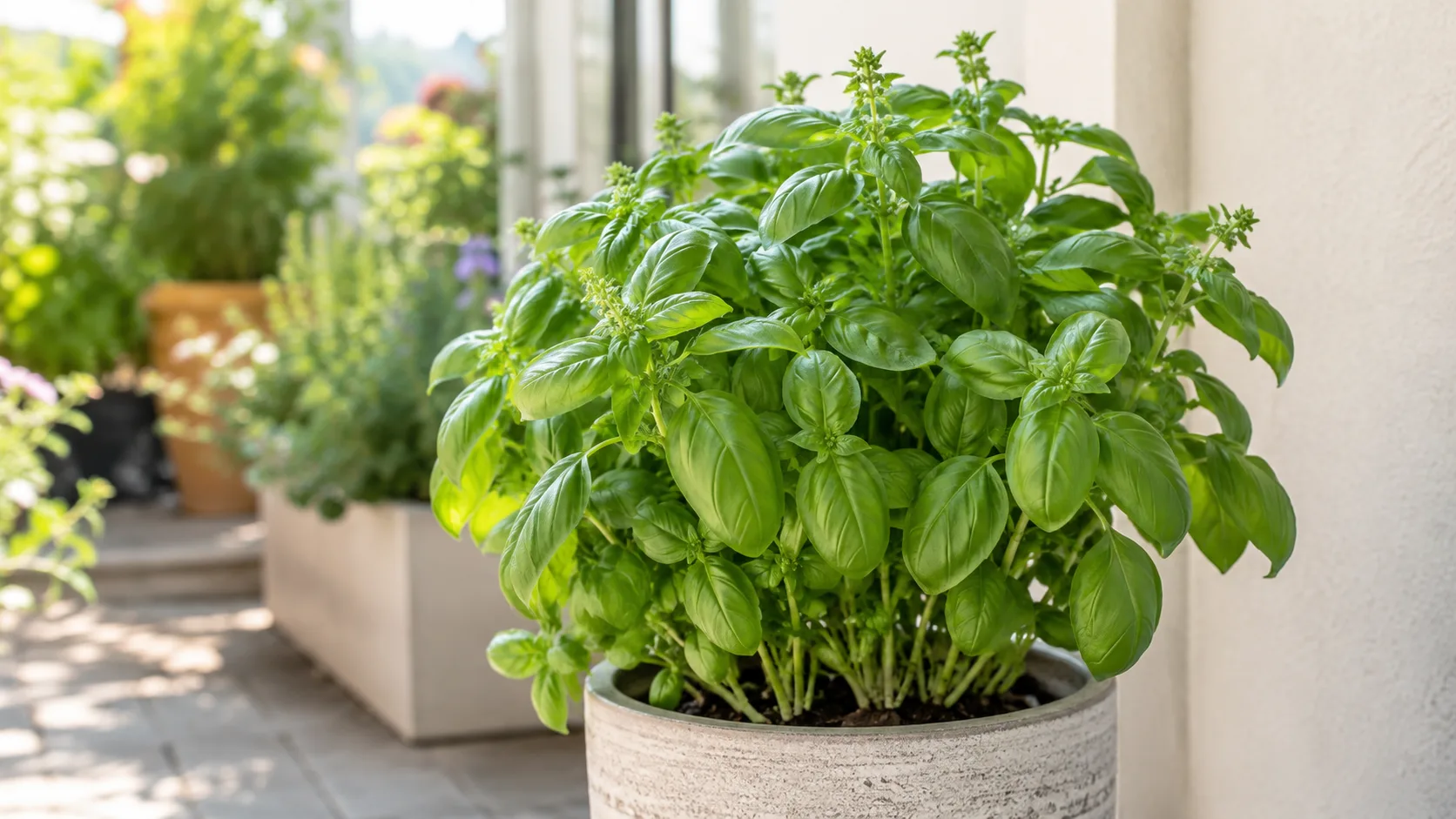
Harvest by pinching just above a pair of leaves. This removes the growing tip and encourages two branches to form. Pinch flower buds as soon as you see them if leafy pesto and salad harvests are the goal. Letting one plant flower is still worthwhile for pollinators and seed, but the leaves become less tender and the plant’s energy shifts toward reproduction.
12. Lemon Balm
Lemon balm (Melissa officinalis) is a perennial mint relative with fragrant leaves that work in tea, fruit, sauces, and cold drinks. It is quick once established, but seed-grown plants are not as instant as the name of this list might suggest. A nursery start, division, or rooted cutting is the fastest route to a leafy plant; seeds are a low-cost way to create more plants for later seasons.
Sow shallowly in a warm, moist seed bed or start under protection and move plants outdoors after frost. Lemon balm tolerates sun or light shade, but its soil should drain rather than stay saturated. Harvest leafy stems frequently and cut flowers before they seed if you want to reduce volunteers.
Contain lemon balm like mint. Missouri Botanical Garden lists it among perennial herbs and notes that mint-family growers can be vigorous; Savvy Gardening recommends growing lemon balm in pots because it can become invasive in a garden bed. A separate container also makes it easier to move the plant to the best light during the hottest part of summer. (Missouri Botanical Garden; Savvy Gardening)
How to Keep the Harvest Coming After the First Sowing
Succession sowing is the difference between having one exciting harvest and having herbs all summer. The interval depends on the herb’s life cycle:
- Sow cilantro every three to four weeks while weather is cool enough for leaves. In heat, pause and resume in late summer or fall rather than burning through packets in a week.
- Sow dill about every 10 to 14 days during the cool part of the season, as Penn State recommends, because plants decline soon after flowering.
- Sow basil, summer savory, and borage every three to four weeks while the bed remains warm and productive.
- Plant parsley and chamomile in a second location when the first row is established, so slow germination or one dry spell does not leave you without a backup.
- Keep mint, lemon balm, oregano, sage, and chives as permanent clumps or containers and harvest by pruning, division, or replacement rather than treating them like disposable annual rows.
The easiest schedule is to sow only a short row or a few container cells at each interval. Label the date, then make the next sowing when the first row has emerged—not when the first row is already bolting. The RHS recommends fortnightly sowing for herbs that run to seed quickly, and BBC Gardeners’ World describes sowing small amounts every three to four weeks as the route to harvests through autumn. (RHS herbs guide; BBC Gardeners’ World)
Harvest Without Stalling the Plant
Harvest in the morning after dew dries and before the day becomes hot. Missouri Botanical Garden explains that flower buds are a useful harvest cue for many herbs because aromatic oils are often strongest just before flowers open, although cilantro and dill may need a different plan when you want seeds. (Missouri Botanical Garden)
For leafy annuals, remove the outer stems or pinch above a leaf pair rather than stripping every leaf from the center. Never take more than the plant can replace: a small seedling needs its leaves to build roots, while an established basil or mint can tolerate a much harder cut. If you need a large amount, harvest from several plants instead of scalping one.
Dry oregano, sage, dill, summer savory, and chamomile in a warm, dry, airy place. Freeze chives and tender leafy herbs when you want a closer-to-fresh flavor. Use cilantro and basil fresh when possible; their delicate leaves lose quality faster than woody herbs. If a plant flowers, decide whether your next harvest is leaves, blossoms, or seeds, then cut for that goal instead of fighting the plant’s life cycle.
Conclusion
Choose the herbs that match your weather today, not the herbs that look fastest on paper. Start with cilantro, dill, parsley, chives, or chamomile when spring is cool; wait for warm soil before sowing basil, summer savory, borage, and the tender herbs. Use starts for sage, oregano, mint, and lemon balm when you need a quick harvest, and contain the two mint relatives before they can take over.
Then sow less than you think you need, mark the date, and repeat before the first planting fades. A short row every few weeks, harvested gently and replanted with the season, will give you more fresh flavor than one crowded bed planted all at once.