Do Eggshells Help Roses Grow? The Honest Answer
Do eggshells help roses? Learn what calcium carbonate can and cannot do, how to prepare shells for compost, and which rose-care fixes matter more.
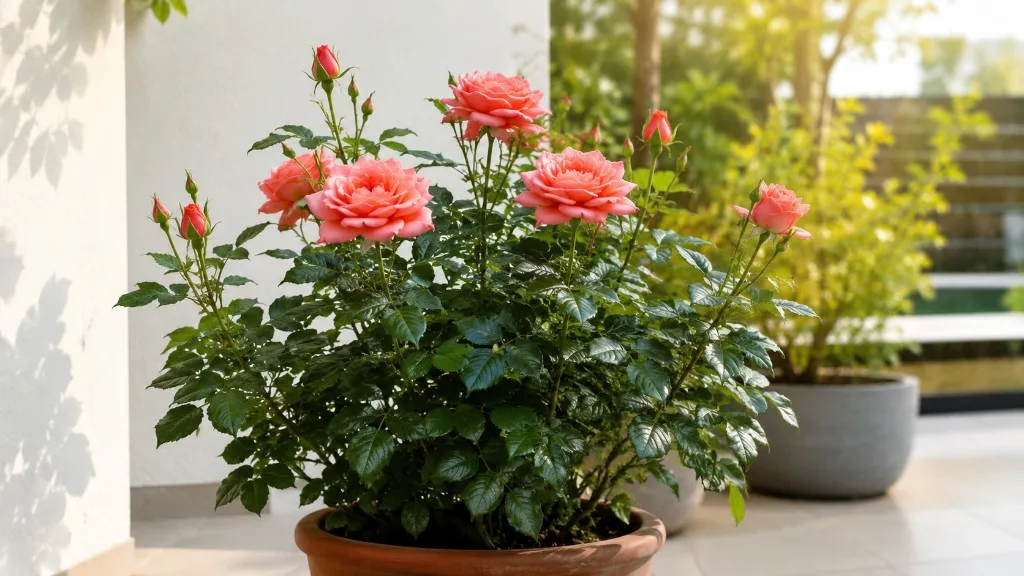
Eggshells can give a rose bed a small, slow supply of calcium, but they are not a dependable way to make a rose grow faster or bloom more. The useful answer is less exciting and more practical: save the shells if you enjoy composting, but do not use them as a substitute for a soil test, balanced feeding, reliable watering, or enough sun.
The calcium in an eggshell is mostly calcium carbonate. That mineral has to dissolve and become available in the root zone before a rose can use it, and a shell fragment sitting beside a plant is not the same thing as a soluble fertilizer. N.C. Cooperative Extension makes the same distinction when discussing eggshells and calcium-related disorders: the shells contain calcium, but the nutrient is not made available quickly enough to solve a current uptake problem (N.C. Cooperative Extension’s eggshell myth check).
The short answer: useful in compost, poor as an emergency fix
Use this table to decide what the shells can realistically do:
| Your situation | Best interpretation | What to do |
|---|---|---|
| You simply have kitchen shells to recycle | They are a compost ingredient, not a complete rose fertilizer | Rinse, dry, grind, and add them to a balanced compost pile |
| A rose is struggling right now | Shells will act too slowly to be the first response | Check light, water, drainage, roots, pests, and disease before amending |
| A soil report shows low calcium | A measured amendment may be appropriate | Follow the report and local Extension guidance; do not guess a shell rate |
| The soil is already alkaline or calcium-rich | More calcium may worsen nutrient availability | Skip shells and correct the actual limiting condition |
| You want bigger blooms | Calcium alone does not supply the main fertilizer nutrients | Improve site conditions and use a complete product only when the plant and soil need it |
That is why two gardeners can report opposite experiences. One may be adding a little finely ground shell to a healthy compost-rich bed and notice no harm. Another may scatter coarse pieces around a stressed rose and see no change because the real problem is shade, drought, root damage, or a disease. Neither experience proves that eggshells are a reliable bloom booster.
What eggshells actually contribute
Eggshells are mostly calcium carbonate, the same general mineral family used in agricultural lime. Calcium matters to plants because it supports cell walls, membranes, and growing tissues. A rose needs calcium, but needing a nutrient is not the same as benefiting from extra amounts of it.
The shell also does not provide a balanced supply of the nutrients most associated with vigorous leafy growth and flowering. It is not a replacement for nitrogen, phosphorus, potassium, magnesium, or the complete range of nutrients a soil test may assess. The RHS notes that most garden soils already contain enough of many nutrients for healthy growth, and its rose guidance emphasizes rich soil, mulch, and appropriate general-purpose feeding rather than a single kitchen amendment (RHS rose-growing guide).
Particle size changes the timetable. A large half-shell has little surface area in contact with moisture and soil microbes, so it can remain recognizable for a long time. A fine powder has much more surface area and breaks down sooner, but “sooner” still does not mean “fast enough to rescue a rose this week.”
An Extension volunteer’s small soil comparison found that ground shells changed measured calcium more than coarse shells or eggshell tea over roughly two weeks. That is useful evidence for the importance of particle size, not a universal rose application rate; the UGA article also found that the highest calcium result was a reason to test rather than blindly add more (UGA Extension’s eggshell experiment).
When eggshells are worth using
There are three sensible reasons to use them around roses. The first is waste reduction: a compost pile can turn a food scrap into a small mineral contribution alongside leaves, plant trimmings, and other organic matter. The second is long-term soil building when a test indicates that calcium and pH management are part of a larger amendment plan. The third is simply that you enjoy a low-cost gardening ritual and understand that it is optional.
The wrong reason is urgency. If a rose is wilting, yellowing, dropping leaves, or failing to flower, do not reach for a jar of shell powder before you look at the root zone. The plant cannot use a slow amendment to correct a fast-moving watering, drainage, pest, or disease problem.
The same caution applies to containers. A pot contains a small volume of soil, so repeated additions can change the chemistry faster than they would in an open bed. Before adding calcium to a patio rose, check the pot’s drainage, whether the mix dries at a reasonable pace, and whether the plant is receiving enough direct light. A handful of shells is not a harmless substitute for repotting a waterlogged plant.
How to prepare eggshells for roses
Preparation is mainly about cleanliness, dryness, and surface area. It does not turn eggshells into a complete fertilizer, but it prevents the most common mistakes: leaving wet residue in a storage jar, adding sharp large pieces while expecting quick nutrient release, or creating a pile of shells that will still be visible months later.
Wash and dry the shells
Rinse away any remaining egg white or yolk soon after cooking. Let the shells dry completely in a warm, airy place, or use a low oven only if you can do so safely and without leaving the shells unattended. Dry shells are easier to crush and less likely to smell or attract unwanted visitors while you collect enough for a batch.
If the shells came from unwashed backyard eggs, take cleanliness seriously. Gardener’s Path recommends cleaning and heat-drying shells before grinding them for garden use, a sensible precaution when food residue or poultry contact is possible (Gardener’s Path’s eggshell preparation guide). Wash your hands and the equipment afterward, especially if you are working near edible crops.
Grind fine for compost or soil
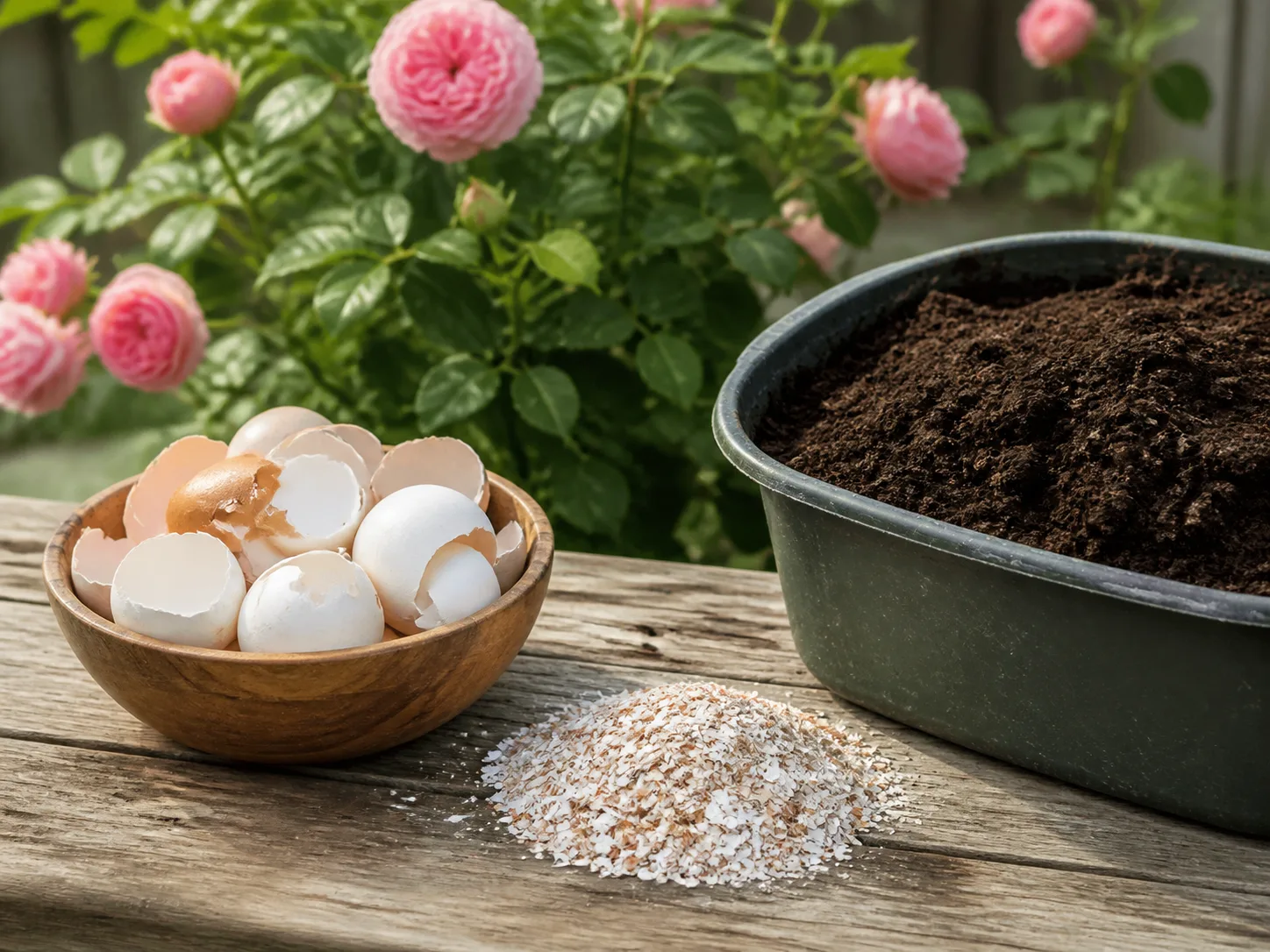
For compost or a calcium amendment, crush the dry shells as finely as is practical with a blender, coffee grinder reserved for garden use, mortar and pestle, or a sturdy bag and rolling pin. Fine grit is the goal; recognizable shards are not. Wear eye protection if you are pulverizing a large quantity, and clean the grinder thoroughly before it returns to kitchen duty.
Do not confuse two different uses. Fine powder is the form that breaks down most readily. Coarse fragments are often promoted as a barrier against slugs and snails, but that is a pest-control claim with weak and inconsistent results. If you are preparing shells for roses, make them fine and send them to compost rather than sprinkling a decorative ring around the crown.
The safest way to use eggshells: compost first
For most home gardeners, compost is the best destination. A healthy pile gives the shells moisture, microbial activity, and repeated mixing with other materials. The shells still break down gradually, but the finished compost spreads a small amount of mineral material over a larger root zone instead of concentrating an unknown dose beside one rose.
Add the powder to a balanced pile with a mixture of nitrogen-rich fresh material and carbon-rich dry material. Do not add whole eggs, greasy food, or a large amount of kitchen waste just because you are trying to use up shells; the goal is a well-managed compost process, not a calcium dump. Turn or mix the material according to your composting method, and use it only after it has become dark, crumbly, and recognizably finished.
When you apply finished compost, spread it over the soil surface beneath the rose’s canopy and out toward the drip line. Keep it away from direct contact with the main stems and graft union, and do not bury the crown in a thick layer. The compost can improve organic matter and moisture behavior while slowly returning minerals, but it should complement—not replace—your soil’s normal nutrient plan.
Direct incorporation is reasonable only when a soil test and an amendment recommendation support it. Even then, the report may recommend a measured agricultural product instead of a home supply of shells because the latter has no dependable application rate in the quantities most gardeners can produce.
Lime, gypsum, and other calcium amendments
If a laboratory soil test shows low calcium, the right product depends on the rest of the report. Agricultural or garden lime supplies calcium and raises soil pH, so it is most useful when the soil is both calcium-poor and too acidic for the plants you are growing. Dolomitic lime also supplies magnesium; that is not automatically a benefit if magnesium is already high.
Gypsum supplies calcium and sulfur with far less effect on pH than lime. It is not a universal fix for compacted clay, poor drainage, or a rose that is simply under-watered. Bone meal supplies nutrients beyond calcium and has its own soil and animal-welfare considerations; use it only when the label and soil results make sense for your garden.
The decision rule is simple: use lime when the soil report calls for calcium plus a pH increase, consider gypsum when calcium is needed without the same pH shift, and use neither when the soil does not show a need. Ask your local Cooperative Extension office how to interpret the lab’s recommendation rather than trying to convert eggshells into a do-it-yourself dosage.
Overapplication is not harmless. Adding an alkaline calcium source repeatedly can raise pH and reduce the availability of other nutrients, including iron, zinc, or phosphorus, depending on the soil. More amendment can create a new problem while the original yellow leaves or poor growth remain.
Rose-care priorities that beat kitchen hacks
Eggshells are a minor lever. Roses respond much more clearly to the conditions around their roots and leaves.
Give roses enough sun and air
Start with the planting site. The RHS recommends a sunny position and about 60 centimeters, or 2 feet, of space around a rose so it does not compete as intensely for light and water. The exact space depends on the cultivar, but crowded foliage is a practical warning that airflow and access for watering or pruning are being lost.
Aim water at the soil, not across the leaves and flowers. Directing water to the root zone reduces unnecessary wetting of foliage and helps you see whether the soil is actually absorbing moisture. A rose in deep shade will not become a prolific bloomer because you added calcium; move or replace it only when the season and transplant risk make that reasonable.
Water deeply and keep moisture even
Newly planted roses need more consistent attention while roots establish. Established roses usually tolerate short dry periods better, but hot, dry weather and sandy soil can still require a thorough soak. The RHS recommends watering at the base and notes that a good weekly soak during dry summer spells is generally more useful than frequent light sprinkling for garden roses (RHS watering guidance for roses).
Check below the surface before watering again. If the soil is dry several inches down, water slowly around the root zone and slightly beyond the canopy. If it is wet and the plant is still wilting, stop adding water and investigate drainage, damaged roots, or disease. “Needs calcium” is not a diagnosis for a rose standing in saturated soil.
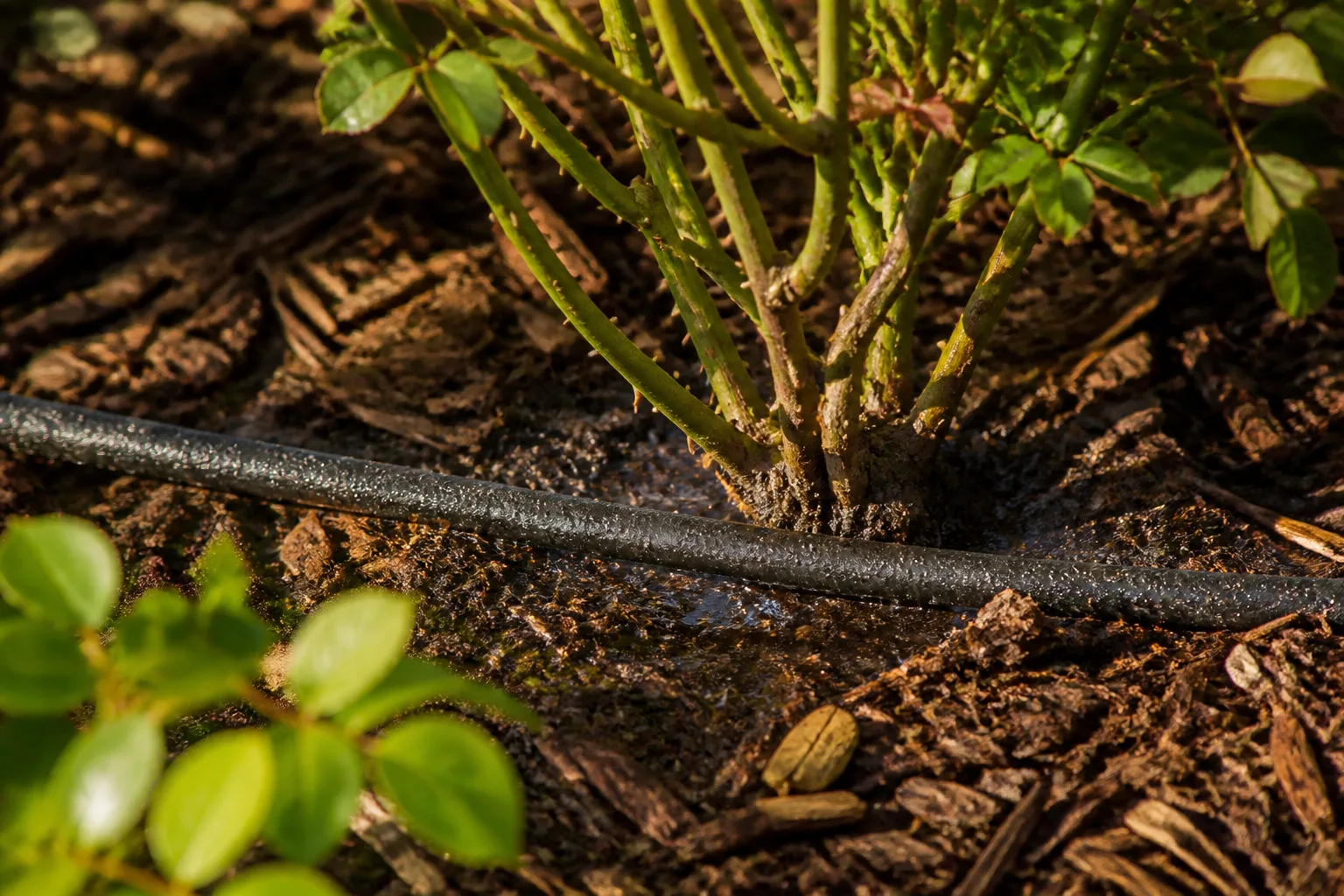
Mulch helps even out the moisture cycle, but it cannot compensate for a poorly drained bed. Use an organic mulch layer that is thick enough to reduce evaporation, then keep it pulled back from the stems. A mulch volcano around the crown holds moisture where it can encourage rot and hides problems that need inspection.
Mulch, feed, and prune with purpose
The RHS recommends well-rotted manure or garden compost as a mulch and notes that roses in poor soil or with poor growth may benefit from a general-purpose granular fertilizer. Feed according to the product label and the plant’s growth stage; never assume that a fertilizer marketed for roses is safe at any dose.
The University of Maryland Extension’s recent rose-fertilizer response makes the important point that fertilizer is most useful when a soil test or a history of poor growth shows a reason to use it. It also warns that excess nitrogen can reduce flowering, and that organic fertilizers act more slowly as soil temperatures and microbial activity change (University of Maryland Extension’s rose-fertilizer answer). That is a better framework than feeding every time a rose looks disappointing.
Pruning and deadheading are also about plant structure, not magic. Remove dead or damaged wood, open an overcrowded center where appropriate for the rose type, and make clean cuts with a sharp tool. Deadhead repeat-flowering roses when that fits the cultivar and your goal, but do not prune a once-flowering or newly planted rose by a generic calendar rule.
Diagnose the rose before adding calcium
A plant symptom tells you that something is wrong; it rarely names the amendment. Before adding shells, photograph the whole rose, inspect the newest and oldest leaves, feel the soil below the mulch, look at the underside of foliage, and check whether new growth is emerging normally.
Yellow leaves are not a calcium diagnosis
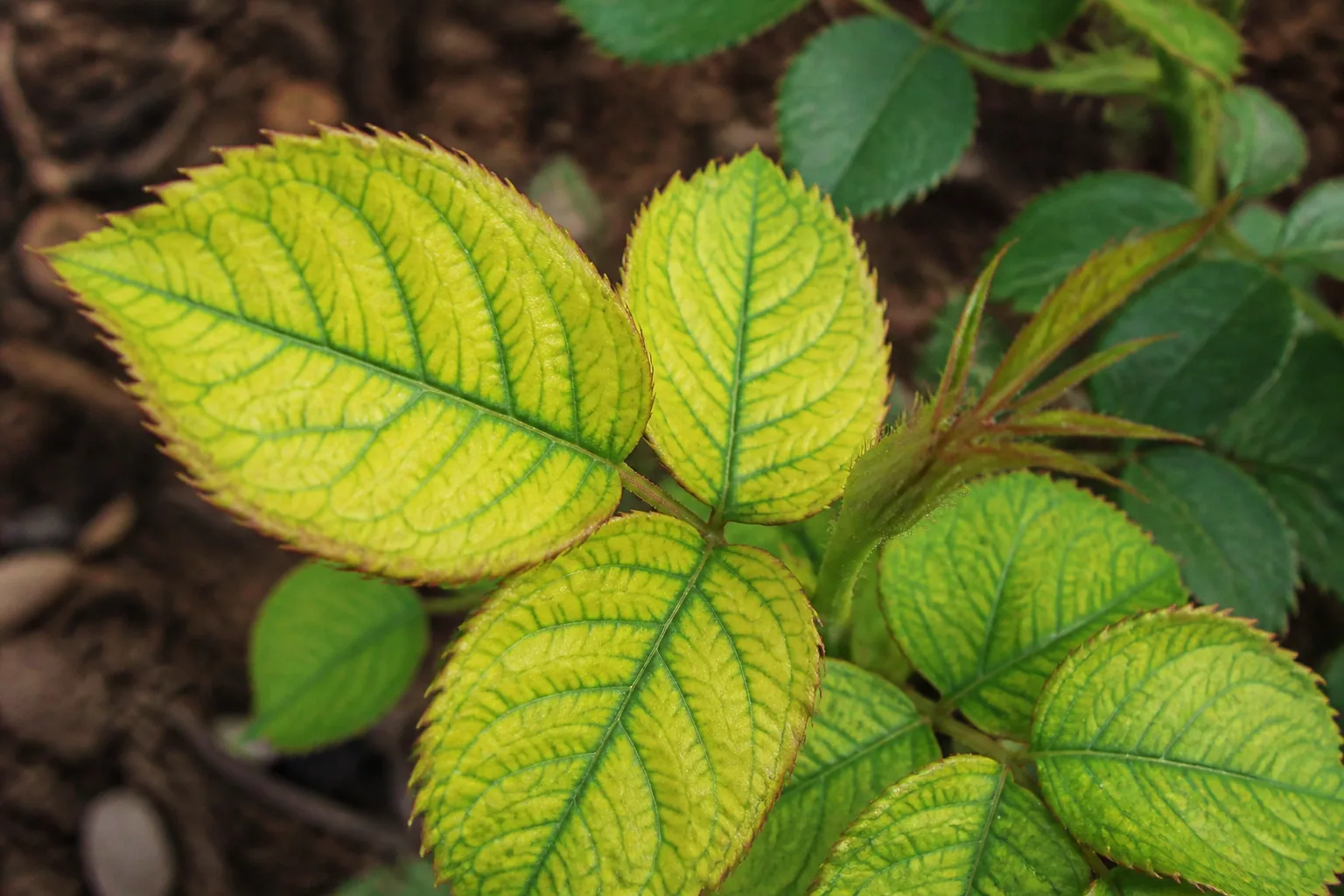
Yellowing can follow overwatering, drought, root injury, poor drainage, low light, nutrient imbalance, spider mites, black spot, or normal aging of older leaves. Interveinal yellowing on newer leaves can suggest a nutrient-availability or pH issue, but it still does not tell you that calcium is low. A soil test and a root-zone inspection provide better evidence than leaf color alone.
Look for patterns. A few oldest leaves turning yellow while new growth is strong may be ordinary turnover. Yellowing throughout a plant that sits in wet soil points you toward root stress. Fine stippling, webbing, distorted tips, or sticky residue points you toward a pest inspection. Black lesions or expanding spots on foliage require a disease-management plan, not shell powder.
Weak growth and poor blooms have many causes
Poor flowering can come from insufficient light, excessive nitrogen, drought during bud development, hard pruning at the wrong time, a young plant still establishing roots, or a cultivar that naturally flowers in a particular season. A rose that produces lots of leaves but few flowers is often receiving more nitrogen than it needs or not enough direct sun; eggshells do not correct either condition.
Weak stems can also reflect low light, crowding, wind exposure, water stress, or a structural problem at the base. Calcium has important roles in growing tissue, but a gardener should not infer a deficiency just because a stem bends or a bud aborts. Correct the conditions you can observe, then use a soil test when the problem persists or the bed has a history of nutrient imbalance.
Do crushed eggshells repel slugs?
Treat the shell barrier as folklore, not a control plan. Some gardeners report that jagged pieces discourage certain pests in certain conditions, while other observations show slugs crossing them. The result can change with shell size, moisture, the thickness of the ring, and how motivated the pest is to reach the plant.
Epic Gardening’s rose-focused review similarly concludes that eggshells are not a dependable pest solution and that rose pests need pest-specific management (Epic Gardening’s review of eggshells for roses). If slugs are damaging a rose bed, inspect at dusk, remove hiding places, adjust mulch that stays excessively wet, and use a locally appropriate control that is labeled for the pest and the setting. Do not put sharp fragments where children, pets, or bare feet will encounter them.
Eggshells also do not repel aphids, cure black spot, or stop Japanese beetles from finding a flowering rose. A healthy plant may tolerate some damage better, but that is a reason to improve growing conditions and scout regularly—not evidence that calcium powder acts as a pesticide.
A simple decision tree for this weekend
Use this sequence before you add anything:
- If the rose is healthy and you simply have shells: rinse, dry, grind, and add them to compost. There is no need to apply them directly to the plant.
- If the rose looks stressed: check sunlight, soil moisture several inches down, drainage, recent weather, roots if the plant is potted, and leaves for pests or disease.
- If the soil is chronically poor or the same symptom returns: send a representative soil sample to a laboratory or local Extension program. Test before choosing lime, gypsum, or repeated fertilizer.
- If calcium is low: follow the report’s product and rate. Use eggshell powder only as a slow supplemental material, not as the sole correction unless a qualified recommendation gives you a measured plan.
- If calcium is adequate: leave the shells out of the soil and fix the limiting factor the test and plant inspection reveal.
The most useful habit is to change one major variable at a time. If you add lime, fertilizer, compost, shell powder, and extra water on the same day, you will not know what helped—and you may create a new imbalance that is harder to diagnose.
Conclusion
Eggshells are acceptable for roses when you treat them as a slow, optional calcium-containing compost ingredient. They are not a reliable way to force growth, produce larger blooms, cure yellow leaves, or protect a rose from pests. Fine grinding improves the odds that the shells will break down, but it does not create a predictable fertilizer rate.
If your rose is healthy, compost the shells and move on. If it is struggling, inspect the site and root zone first. Then test the soil before adding lime, gypsum, or more fertilizer, and put your effort into the fundamentals roses consistently reward: enough sun, well-drained soil, deep and even watering, a sensible mulch layer, restrained feeding, good airflow, and pruning that fits the rose. That order saves time, protects soil balance, and gives you a much better chance of finding the real reason a rose is not thriving.



