5 Dwarf Citrus Trees for Patio Pots That Fruit Well
Find the best dwarf citrus trees for patio pots by fruit, size, light, cold tolerance, and care needs, then set up a pot that supports fruiting.
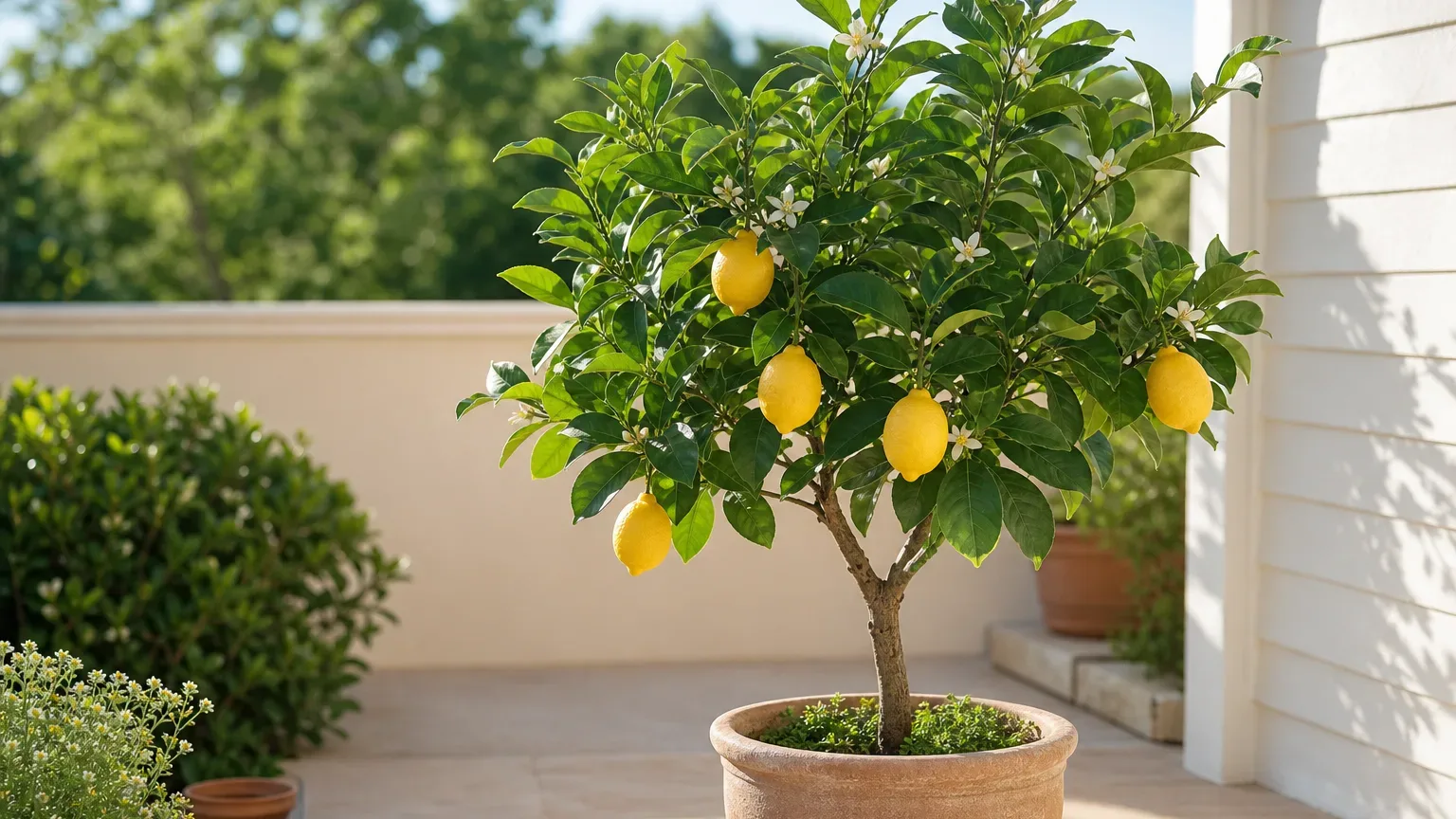
A citrus tree can turn a sunny patio, balcony, or doorstep into a small edible orchard—but the right variety matters more than the word dwarf on the plant tag. A compact tree that matches your light, winter temperatures, and cooking habits is far more likely to fruit than a larger tree squeezed into a pot that is hard to move or keep evenly watered.
The five best candidates for most container growers are Meyer lemon, calamondin, kumquat, satsuma mandarin, and Bearss lime. They do not behave identically: kumquat and calamondin are usually the easiest to keep neat, satsuma offers sweeter snack fruit but wants more room, and Bearss lime rewards warmth while giving you the least margin for a cold snap.
Choose by fruit, space, and winter plan
Start with the harvest you will actually use. Meyer lemon is the most versatile choice for cooking and drinks, calamondin is excellent for tart preserves and garnishes, kumquat is unusual because the fruit is eaten whole, satsuma is the best fit for easy-peeling sweet fruit, and Bearss lime is the practical choice for classic lime flavor.
Then measure the growing space rather than guessing from a nursery photo. Count the hours of direct sun where the pot will sit, leave room for the mature canopy and a stable saucer, and decide how the tree will move before it becomes heavy. A plant that must winter indoors needs a bright window, sunroom, or grow-light setup; a dark garage is storage, not a fruiting environment.
Container culture gives you more control over the root-zone moisture and makes seasonal moves possible. Savvy Gardening’s guide to growing fruit trees in containers makes the same practical case: a pot is valuable not only because it saves space, but because it lets you move, inspect, and manage the tree more closely.
Winter is the dividing line between a fun container project and a frustrating one. Citrus is not equally cold tolerant, and an exposed pot loses heat faster than a tree planted in the ground. The UC Statewide IPM Program’s citrus guidance notes that damage depends on variety, exposure, duration of cold, weather before the event, and fruit maturity—not only the lowest number on a thermometer.
What “dwarf” means in a container
“Dwarf” can refer to a naturally smaller cultivar, a tree pruned or trained to stay small, or a standard variety grafted onto a dwarfing rootstock. Ask the nursery which one you are buying. A grafted tree on suitable rootstock is usually a more predictable patio purchase than a seed-grown citrus, and Texas A&M AgriLife Extension explains that citrus seedlings can take seven to 15 years to flower and fruit.
When the label is vague, ask for the rootstock and expected mature size rather than trusting the word “patio.” Gardeners’ World’s guidance on dwarf fruit trees likewise recommends checking rootstock and the plant’s pollination requirements before buying a small-space fruit tree.
Compact does not mean miniature forever, and it does not mean the same yield as an orchard tree. Container volume limits roots, roots support the canopy, and the canopy supplies the energy for flowers and fruit. The same Texas A&M guidance puts the practical trade-off plainly: a container tree’s yield is proportional to the size that the container can support.
That is good news for a patio gardener. You can keep a tree at a height where you can inspect leaves, thin crowded growth, and harvest without a ladder. It also means you should choose a healthy grafted tree with a well-branched canopy instead of chasing the smallest possible plant; an undersized or stressed tree may need several seasons to build enough foliage to carry fruit.
The five best compact citrus trees
1. Meyer lemon
Meyer lemon is the strongest all-around pick if you want one patio tree for cooking, baking, drinks, flowers, and fragrance. Its fruit is generally sweeter and less sharply acidic than a standard lemon, and a healthy plant can carry blossoms and developing fruit at the same time, giving it more ornamental value than a single harvest window.
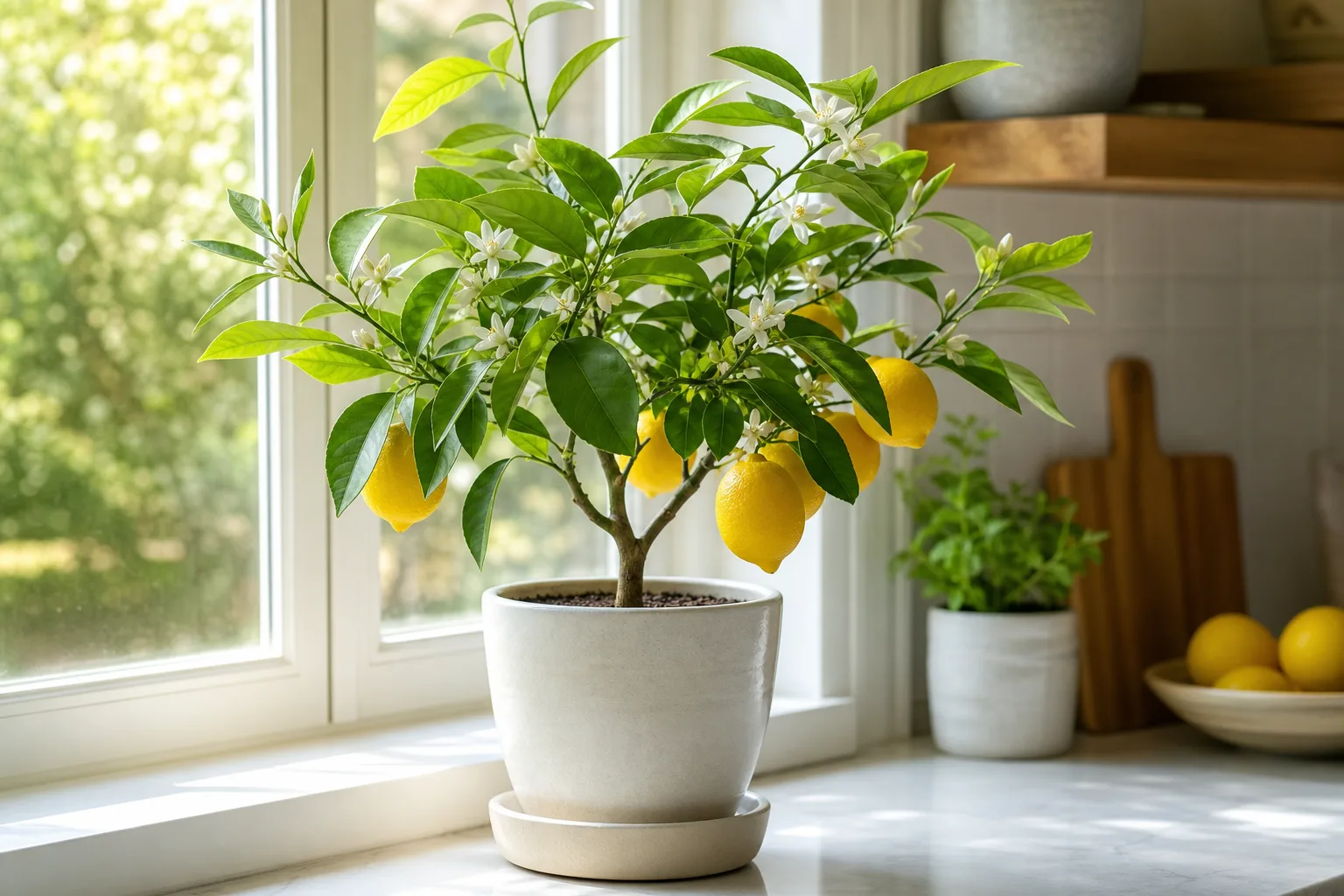
It is also forgiving in the sense that a grafted Meyer lemon adapts well to container life and can be moved indoors in colder regions. That flexibility does not make it low-light tolerant. Put it in the brightest available position, keep the root zone from swinging between bone-dry and waterlogged, and expect some adjustment when it moves between outdoor and indoor light.
Choose Meyer lemon when you want a broadly useful harvest and can provide a winter location with strong light. If your patio is very small, prune lightly for shape rather than repeatedly cutting the canopy back hard; the leaves are the solar panels that pay for the fruit.
2. Calamondin
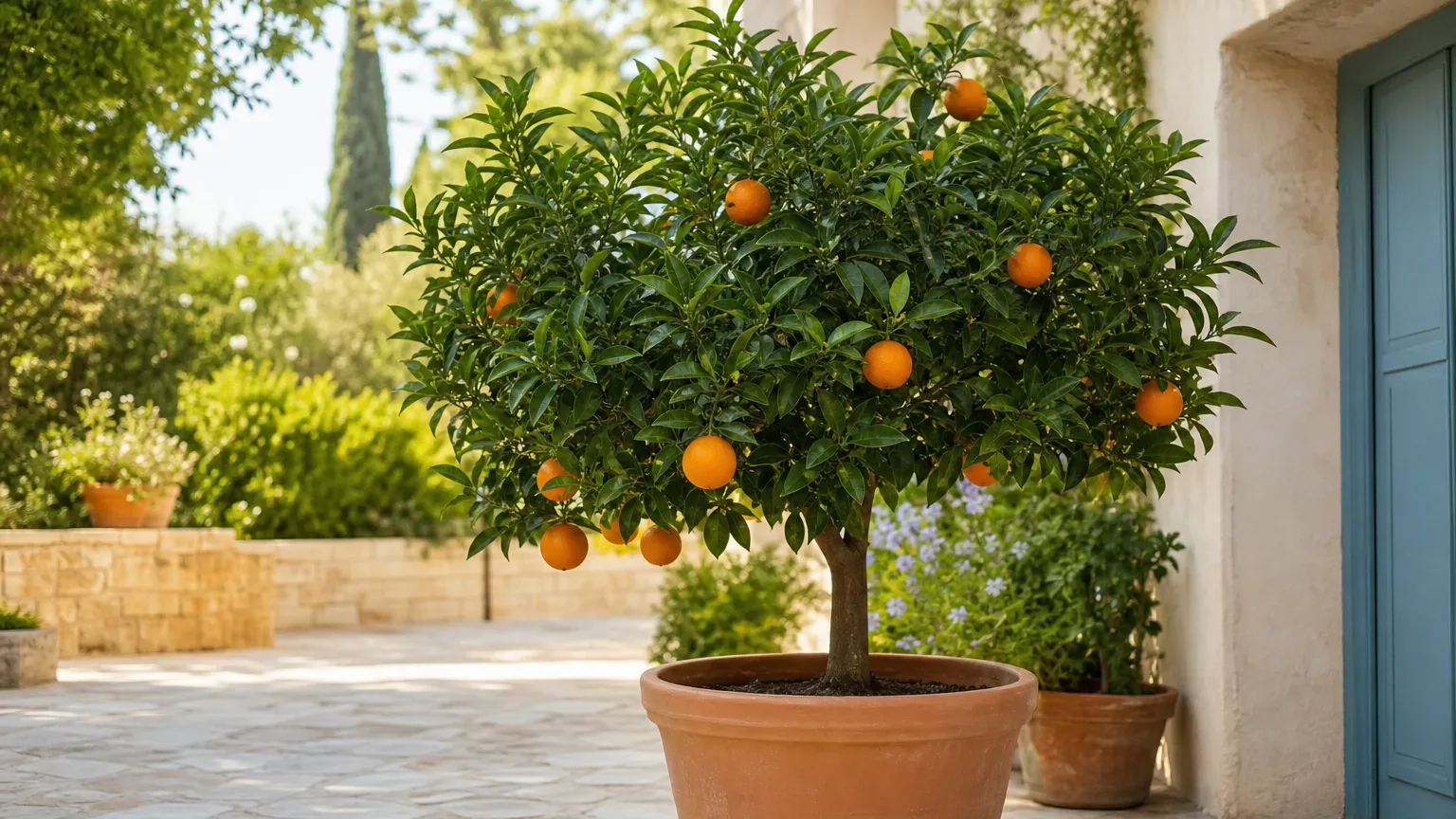
Calamondin is the best choice when the tree’s appearance matters almost as much as the harvest. The small orange fruits can remain decorative on the plant while new flowers appear, and the fruit’s tart flesh and fragrant peel are useful in drinks, sauces, baking, and preserves rather than as a sweet snack.
The NC State Extension plant profile for calamondin describes it as a small evergreen tree or large shrub, with fragrant flowers that can repeat during the growing season and fruit that may take up to a year to mature. That long overlap of bloom and fruit is exactly why calamondin looks so productive in a container even when the edible crop is modest.
Calamondin is a good fit for a bright sunroom or a patio where you want a compact, ornamental tree with a reliable-looking display. Do not buy it expecting supermarket-orange sweetness, and do not let the attractive fruit trick you into leaving the tree in a dim corner indoors.
3. Kumquat
Kumquat is the compact citrus for gardeners who want a distinctive harvest and a tree that generally handles cooler conditions better than tender limes. ‘Nagami’ and ‘Meiwa’ are common names to look for, though the exact growth habit and fruit flavor depend on the cultivar and rootstock.
The fruit is small enough to eat whole: the peel is sweet while the interior is tart. That makes kumquat useful for snacking, candying, marmalade, and cocktails, but it also means it is a poor substitute for a sweet mandarin if your priority is peeling and eating a bowl of fruit.
Kumquat’s tidy growth and glossy foliage make it especially workable on a small patio. It still needs full sun, steady moisture, feeding during active growth, and protection from hard freezes. “More cold tolerant” means you may have more time to react, not that a container-grown kumquat is frost-proof.
4. Satsuma mandarin
Satsuma mandarin is the best match for gardeners who want sweet, easy-peeling fruit and have enough room for a broader canopy. Some satsuma cultivars are relatively cold tolerant compared with lemons and limes, and Texas A&M AgriLife Extension lists some kumquats, satsumas, and tangerines among the citrus with better cold tolerance.
The trade-off is scale. A satsuma can be compact when grafted and grown in a container, but it is not always the smallest-looking tree in this group. Give it a generous pot, a wide sunny position, and enough clearance for branches to spread without rubbing a wall or blocking a walkway.
Buy a named grafted cultivar from a nursery and read the tag for expected size, pollination information, and rootstock when available. A container can support a useful crop, but it cannot turn a naturally vigorous tree into a tabletop plant without sacrificing vigor and fruiting wood.
5. Bearss lime
Bearss lime, also called Persian or Tahitian lime, is the pick for classic lime flavor in a patio-sized tree. The fruit is typically larger and less seedy than Key lime, and a thornless or nearly thornless plant is easier to place near seating, doors, and narrow walkways.
This is the warmest-site choice on the list. A Bearss lime appreciates long, bright, warm growing conditions and has less cold tolerance than kumquat, calamondin, or many satsuma selections. If your winter plan is “leave it outside and hope,” choose another tree; if your plan includes a sunny indoor location or a genuinely mild climate, it can be highly productive.
Keep the tree actively growing with consistent light and moisture rather than alternating drought with heavy watering after the leaves wilt. A lime that is constantly recovering from stress has less energy available for holding flowers and young fruit.
Quick comparison: fruit, footprint, and cold plan
| Tree | Best harvest use | Patio footprint | Winter planning | Main trade-off |
|---|---|---|---|---|
| Meyer lemon | Cooking, baking, drinks | Compact to medium | Move indoors where freezes occur | Needs strong light and steady care |
| Calamondin | Tart garnish, preserves, ornamental fruit | Compact and naturally tidy | Protect from freezes; indoor growing is possible | Fruit is acidic, not sweet like an orange |
| Kumquat | Whole-fruit snacking, marmalade | Compact | More cold-tolerant, but still protect the pot from hard freezes | Peel is sweet; flesh is tart |
| Satsuma mandarin | Sweet, easy-peeling fruit | Medium and often broader | One of the better cold choices, depending on cultivar | Needs more pot volume and spread |
| Bearss lime | Fresh lime juice and zest | Compact to medium | Warm indoor winter or mild climate preferred | Least forgiving of cold |
The table is a starting point, not a hardiness guarantee. A plant in a black pot against a warm wall, a plant on a windy balcony, and a plant in a damp exposed courtyard can experience very different conditions on the same night. Treat the cold plan as part of the purchase decision, not a rescue step after frost is forecast.
Set up the pot for fruit production
Choose the container and potting mix together
Use a sturdy container with several open drainage holes and a saucer that does not leave the pot standing in runoff. Terracotta dries faster and is heavy; plastic is lighter and holds moisture longer; a wheeled platform can make a large tree movable, but it also raises the center of gravity, so choose one that will not tip in wind.
For a young grafted tree, begin only one or two sizes larger than the existing root ball. A huge container filled with wet mix can stay damp around a small root system, which increases the risk of root problems. As the canopy and roots fill the pot, step up gradually; mature container citrus may eventually need something in the rough range of a 20- to 30-gallon container, as described by Texas A&M AgriLife Extension.
Use a commercial citrus, cactus, or other fast-draining container mix rather than dense garden soil. The goal is not to make the pot dry instantly; it is to hold enough water for roots while leaving air-filled pore space after excess water drains. If water runs straight down the sides or sits on the surface, the mix may be hydrophobic or compacted and needs attention before the tree is asked to fruit.
Plant at the same depth as the nursery container and keep the trunk flare and graft union above the mix. Burying the trunk or graft union traps moisture where bark should stay dry and can invite decay. Finish with a small gap at the rim so water can soak in, then water slowly until it drains from the bottom.
The care routine that keeps fruit coming
Light and watering
Citrus needs a bright, direct-sun position for strong growth and fruit quality. Aim for at least six hours of direct sun, with more bright light helpful where summers are cool or the patio is shaded by walls. Rotate the pot occasionally if one side becomes much fuller, but do not move it constantly; leaves need time to acclimate to their light level.
Water thoroughly when the upper layer of mix has started to dry, then let the excess drain away. Do not water by a fixed weekly schedule because a small plastic pot in wind may dry in two days while a large terracotta pot in cool weather may stay damp much longer. Texas A&M’s container-citrus guidance uses the upper inch of soil as a check, then calls for slow watering through the pot and less frequent watering when cool weather slows growth.
Check more deeply when the tree’s signals conflict. A dry surface does not prove that the lower root zone is dry, and yellow leaves do not prove that the plant needs more water. Lift the pot if it is small enough, feel the mix below the surface, inspect drainage, and look for a pattern: limp leaves with a very light pot suggests drought, while yellowing alongside persistently wet mix points toward poor aeration or root stress.
Feeding, flowers, and fruit set
Container citrus loses nutrients through repeated watering and cannot send roots beyond the pot to forage. Feed during active growth with a citrus or fruit-tree fertilizer according to its label, and avoid the temptation to add extra because the plant is flowering. UC IPM cautions that excess fertilizer can drive soft, vigorous growth and can affect fruit quality and coloring.
Flowers are not the same as a harvest. Citrus commonly sheds some young fruit after flowering, and a pot under heat, drought, low light, or sudden temperature stress may drop more than a healthy tree would. Keep conditions steady while the flowers open and young fruit enlarge; do not respond to every dropped fruit with more fertilizer or a daily soaking.
Most citrus grown as a healthy grafted tree can set fruit without a second tree, but cultivar labels still matter. If flowers fall before fruit swells, first check light, temperature swings, water consistency, and whether the tree is carrying more fruit than its small canopy can support. Indoors, a very still room may also reduce the movement that helps distribute pollen; gently brushing open flowers with a clean, dry artist’s brush can help, but it cannot compensate for inadequate light.
Prune and repot without shrinking the harvest
Prune to solve a specific problem: remove dead or damaged wood, cut out shoots emerging below the graft union, shorten a branch that blocks access, or correct crossing growth. Avoid shearing away the entire outer canopy just to make the tree look smaller. The leaves you remove are the source of energy for next season’s flowers and fruit.
UC IPM recommends timing major citrus pruning around bloom or just after fruit set and warns against late-season pruning that encourages tender growth before frost. For a patio tree, light shaping is usually enough. Clean pruners before and after cuts, especially when removing diseased material, and watch for a sudden vigorous shoot below the graft that has different leaves or thorns from the fruiting canopy.
Repot when the root ball is genuinely crowded, drainage has deteriorated, the canopy has outgrown the pot, or the plant dries unusually fast despite correct watering. Slide the tree out and inspect rather than automatically upgrading to the biggest container available. Refreshing some mix and moving up modestly gives roots room while avoiding a long period of wet soil.
Expect a short pause after repotting or major pruning. Keep light, moisture, and temperature steady, and do not stack several stresses—repotting, hard pruning, a move indoors, and a fertilizer increase—in the same week. A tree that is stable enough to keep leaves is usually closer to fruiting than one that is repeatedly “reset” by well-intentioned interventions.
Move container citrus through winter
Move before a damaging freeze, not after leaves have blackened. More cold-tolerant kumquats, calamondins, and some satsumas may stay outside later than Bearss limes, but a container’s roots are exposed on every side and can chill faster than roots in the ground. In cold regions, assume that Meyer lemon and lime need a reliable indoor or protected winter plan.
Inspect the canopy, leaf undersides, pot rim, and drainage holes before bringing the tree inside. Cornell Cooperative Extension’s guidance for growing dwarf citrus in the Northeast recommends a bright room, consistent moisture without saturation, and a gradual transition between indoor and outdoor conditions. That gradual change matters: a tree moved from full sun to a dim room can shed leaves even when the watering is correct.
Two weeks before the move, reduce the light contrast by shifting the tree toward a brighter shade position if practical. After it comes inside, place it at the brightest window available and supplement with a grow light if natural light is weak. Keep it away from a heat vent, fireplace, or cold draft, and water less often if the mix dries more slowly in the cool indoor air.
Indoor wintering is also pest management. Check for scale, aphids, and spider mites before the plant joins your houseplants, wash dusty leaves when appropriate, and isolate the tree if you find active pests. A little leaf drop after a move can be an acclimation response; widespread drop, sticky residue, webbing, or rapidly yellowing leaves deserves a closer inspection of light, pests, roots, and moisture.
Solve the most common patio failures
The tree has leaves but no fruit. Start with light. A citrus tree can look leafy in bright shade yet fail to accumulate enough energy for flowers and fruit. Next check whether the tree is a young seedling, a recently repotted grafted plant, or a tree that was pruned too hard. Then look at water and feeding consistency, because a repeating cycle of drought followed by saturation can cause flowers and young fruit to abort.
Flowers appear, then tiny fruit drops. Some drop is normal, especially after a heavy bloom. If nearly everything drops, record what changed during the previous month: a heat wave, a dry root ball, a cold night, a sudden indoor move, a pest outbreak, or a fertilizer surge. Correct the underlying stress and wait for the next flowering cycle instead of trying to force the current one with more feed.
Leaves turn yellow while the pot stays wet. Stop watering on the calendar and inspect drainage. A saucer full of runoff, a blocked hole, a compacted mix, or a pot that is too large can keep roots short of oxygen. Let the upper mix dry appropriately, improve drainage, and repot only if the root system or mix condition justifies it; repeatedly disturbing already stressed roots can make recovery slower.
The tree loses leaves after coming indoors. Check for pests first, then compare the indoor light with the outdoor light. Gradual acclimation, a brighter position, and steadier moisture usually help, but a plant that is kept in a dim room will not maintain a heavy fruit crop simply because it is near a window.
A shoot grows below the graft. Remove it cleanly at its point of origin. Rootstock suckers compete with the grafted variety and will not give you the fruit you bought the tree for. Do not leave a short stump that can resprout.
Fruit stays green for a long time. Color is not the only maturity signal, and some citrus hold fruit for an extended period. Taste a representative fruit when it has reached normal size and feels full rather than harvesting solely by peel color. UC IPM notes that full flavor matters more than color for harvest and that fruit does not become sweeter after picking.
Conclusion
The best dwarf citrus tree for a patio is the one whose fruit, mature footprint, light needs, and winter plan fit your life. Choose Meyer lemon for versatility, calamondin for a decorative tart crop, kumquat for compact whole-fruit harvests, satsuma for sweet easy-peeling mandarins, or Bearss lime when you can provide the most warmth.
Buy a grafted tree with a known variety and rootstock when possible, start with a well-drained container that is not dramatically oversized, and treat light and moisture consistency as the foundation of fruit production. With those decisions made before the first flower opens, a patio citrus tree can stay manageable without becoming merely ornamental.



