Tomato Blossom Drop: Causes and Fixes
Flowers or tiny tomatoes falling off? Diagnose tomato blossom drop by the weather and plant symptoms, then use shade, steady water, and better timing.
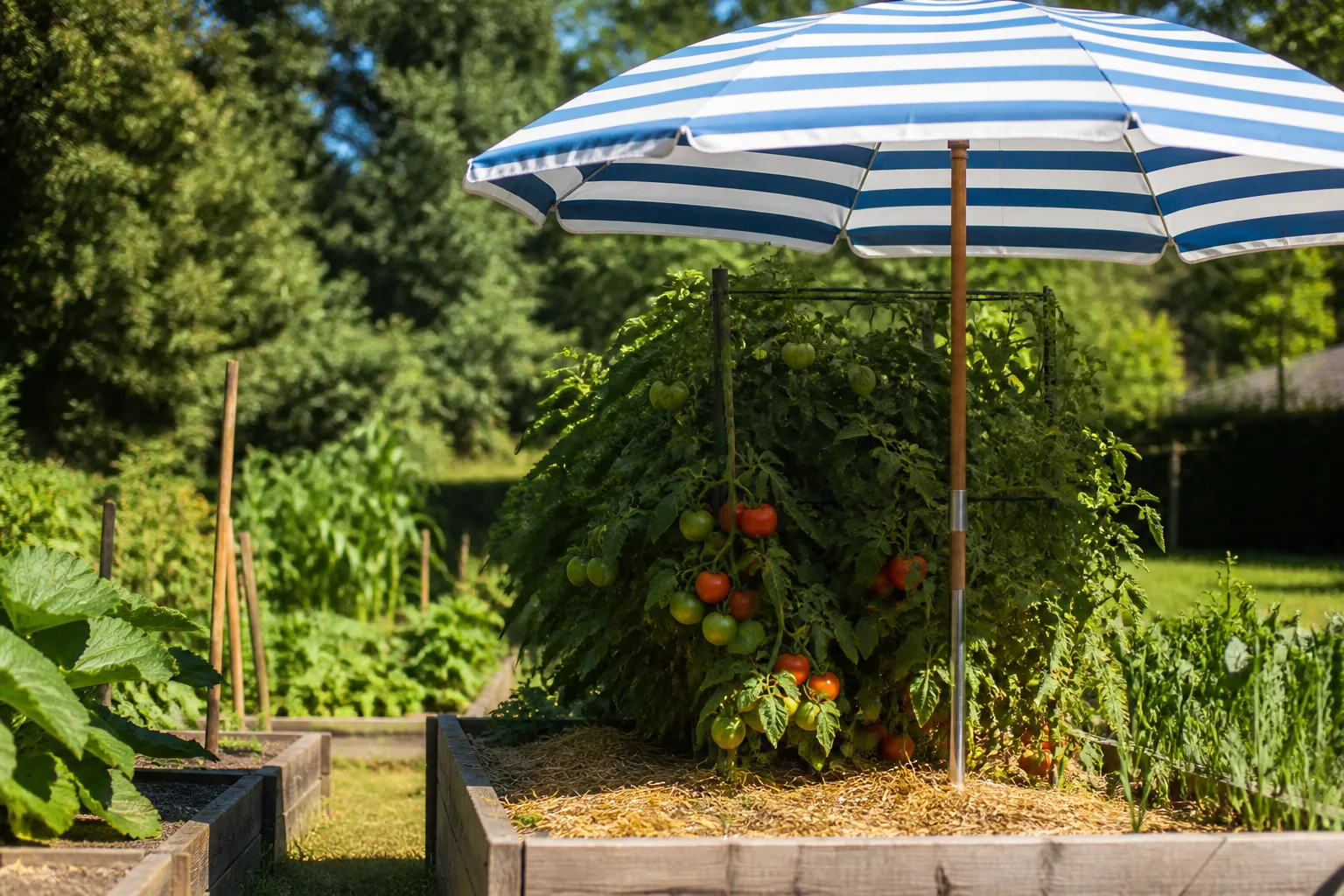
Tomato blossom drop is the failure of a flower to become a tiny green tomato, usually because heat, cold, humidity, drought, or another stress interrupts pollination or fertilization. If an already formed tomato shrivels or falls, the plant is dealing with a related but slightly different problem: fruit abortion, root-zone stress, physical damage, pests, or disease.
The fastest way to narrow it down is to look at the flower stem and the weather, not to reach for a “bloom booster.” A yellow flower that dries and drops with no swelling at its base points to failed fruit set; a thick green stem with a pea-sized tomato means pollination succeeded and something later affected that young fruit.
Start With What Actually Fell
Check the plant before you change its care. The table below turns the most common appearances into a first check, because several tomato disorders are easily mistaken for blossom drop.
| What you see | Most likely category | First check |
|---|---|---|
| Flowers brown, dry, and fall with no green swelling | Blossom drop from failed pollination or fertilization | Day and night temperatures, humidity, and flower moisture |
| Petals fall but a pea-sized green tomato remains | Successful fruit set | Leave it alone; protect the plant from the next stress |
| Tiny green fruit shrivels, yellows, or drops | Fruit abortion or fruit damage | Soil moisture, root health, heat, pests, and branch support |
| Dark, leathery patch on the bottom of a growing tomato | Blossom-end rot | Stabilize watering; do not treat it as a missing flower |
| Pale, sunken patch on the exposed side | Sunscald | Restore leaf cover and provide afternoon shade |
| Fruit has holes, cloudy spots, or chewing | Insect or animal damage | Inspect fruit, leaves, and stems for the culprit |
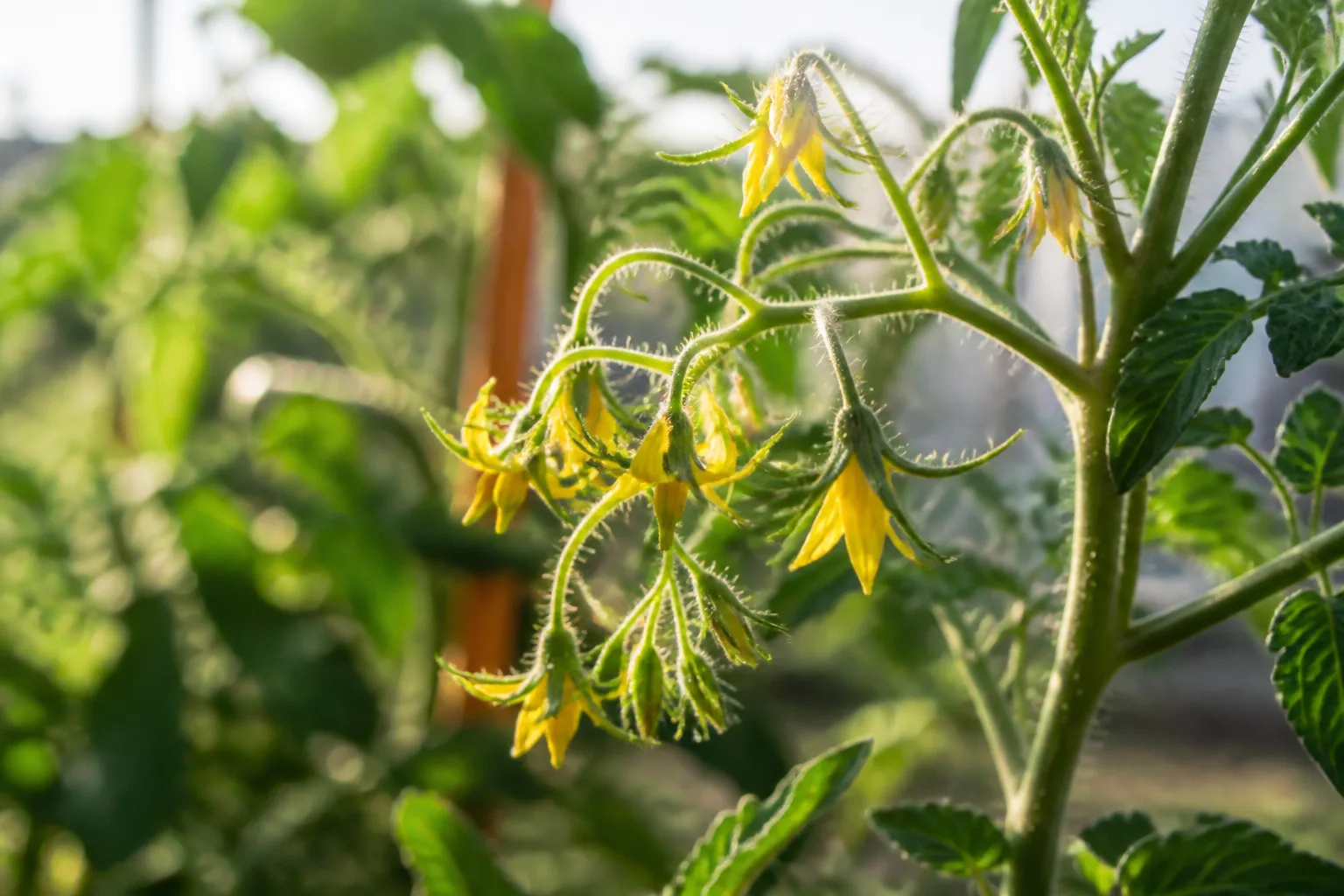
A healthy tomato flower cluster has open yellow blooms and slender stems; watch for a green swelling at the base before calling it fruit drop.
Tomatoes have male and female parts in the same flower, so a single plant can produce fruit by itself. That does not mean the flower can pollinate without movement: pollen must be released from the anther cone and reach the stigma. The Missouri Botanical Garden explains that outdoor plants usually get that movement from wind, insects, or another vibration.
What Successful Fruit Set Looks Like
After a flower opens, a successful set becomes visible as a small green ball at the base of the flower. The petals may fade and fall away, but the short stem thickens and stays green. You may not notice the swelling for several days, especially on a large-fruited cultivar, so do not judge a cluster the morning after flowering.
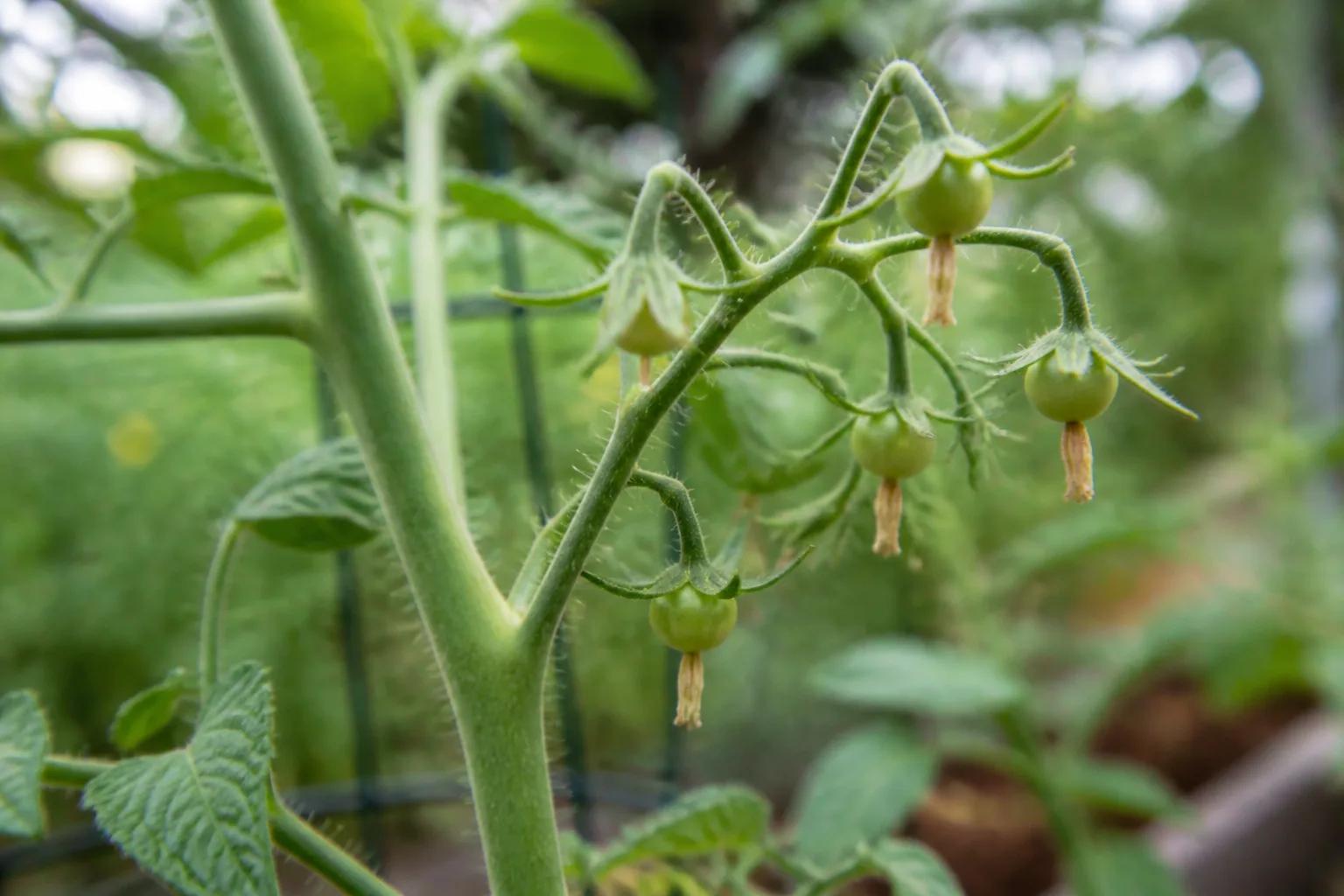
A thickened green flower stem and a small round ovary are the signs to look for after pollination succeeds.
An unpollinated flower usually stays narrow at the base, turns yellow or brown, dries, and drops. A few flowers can fail naturally, particularly on a crowded first cluster, but a whole flush of empty flowers after several hot or cold nights is a weather-and-stress pattern rather than a sign that the plant needs more fertilizer.
The Temperature Window Tomatoes Need for Fruit Set
Tomato pollen is sensitive to temperature, and the critical period is the short span around flower development and opening. High heat can reduce pollen production, stop pollen from releasing, damage pollen outright, and interfere with the pollen tube that completes fertilization. The University of Maryland Extension notes that very high daytime and overnight temperatures can cause flowers and immature fruit to drop, and that a few hours of extreme heat can be enough to affect sensitive cultivars.
There is no single magic cutoff for every tomato. As a practical home-garden guide, fruit set becomes unreliable when daytime temperatures rise above roughly 90–95°F, when nights stay above about 70–75°F, or when nights fall below about 55°F. Virginia Cooperative Extension lists an especially useful night range of about 59–68°F for fruit set, while Mississippi State University Extension puts high-temperature pollen sterilization at around 93°F and identifies nights below 55°F as less than ideal.
Hot Days, Warm Nights, and Cool Nights
Hot days are easy to notice, but warm nights often explain why a plant looks fine in the morning and still produces a run of empty flowers. The plant has no cool recovery period, so flowers developing overnight can be affected before the next morning’s pollen is released. Urban patios, rooftops, walls, concrete paths, and dark raised-bed materials can make this worse by holding heat after sunset.
Cool nights create the same visible symptom through a different mechanism. When nights dip below the mid-50s, pollen may not develop normally, so flowers opening the following morning can abort even if the afternoon is bright and warm. This is why early-season blossom drop is not fixed by shade: the plant needs warmer nights, not less light.
Do not interpret a heat pause as permanent crop failure. Flowers that were damaged during the extreme weather will not recover, but new flowers can set when temperatures moderate and the plant has retained healthy leaves and roots.
Heat Is Common, but It Is Not the Only Trigger
Weather is the first suspect, not the only suspect. If your recent temperatures were moderate, or if only one container or one branch is affected, widen the inspection before you rebuild the entire watering or fertilizer routine.
Humidity and Pollination Movement
Humidity changes how pollen behaves. Very damp air can make pollen sticky so it clumps inside the flower instead of moving to the stigma; very dry air can shorten the time a flower remains receptive. Virginia Cooperative Extension’s fruit-set guidance also points to the interaction between high heat, low humidity, and low moisture as a cause of poor set.
Rainy, cloudy stretches can reduce the wind and insect movement that normally shakes open flowers. But do not blame a lack of honeybees automatically. Tomatoes are self-fertile and do not depend on bees in the same way squash does; they need a reliable vibration, which can come from a breeze, insects, or a gardener’s gentle tap.
In a greenhouse, covered patio, or tightly enclosed balcony, improve airflow and avoid wetting flowers repeatedly. In a humid outdoor bed, space plants so the canopy dries after dew or rain. Do not remove half the foliage during a heatwave just to “open up” the plant; sudden leaf loss can expose fruit to sunscald and increase water demand.
Water Stress and Container Roots
Tomatoes can drop flowers before they look dramatically wilted. A dry root zone tells the plant to protect survival first, while a waterlogged root zone can produce the same above-ground thirst because oxygen-starved roots stop absorbing properly. Utah State University Extension lists inconsistent water availability as a contributor to flower drop, sunburn, blossom-end rot, and fruit cracking.
Containers deserve special suspicion. A dark pot on concrete can heat and dry from the sides, and a vigorous indeterminate tomato may outgrow its root volume midseason. Check moisture several inches down rather than watering by the calendar. In hot, dry weather a container may need daily checking, while a mulched in-ground bed may need a slower, deeper soak less often.
Nutrition, Wind, Roots, Pests, and Disease
Excess nitrogen creates the classic deceptive plant: tall, dark green, and vigorous, but short on flowers or fruit. Salt buildup from repeated fertilizer applications can stress roots, while severe pruning, transplant shock, root damage from digging, or strong drying wind can interrupt set. The Missouri Botanical Garden’s tomato guidance specifically warns that excess nitrogen and dry soil can contribute to failed fruit set.
Look for evidence that the problem is not purely environmental: mottled or distorted new growth, sticky honeydew, fine webbing, chewed leaves, stem lesions, sudden one-sided wilting, or fruit holes. A plant with a diseased or heavily damaged canopy cannot support flowers well, even if temperatures are perfect. If symptoms spread from plant to plant or include severe wilting and stem discoloration, use a local Extension diagnostic service instead of applying random sprays.
What to Do in the Next 48 Hours
The goal is to remove the biggest stressor without creating a new one. Start in the morning, when the soil and plant are easier to read and the day’s heat has not yet pushed the plant into peak transpiration.
Check Moisture and Cool the Canopy
Push a finger or narrow trowel 2–3 inches into the soil near, but not against, the stem. If that zone is dry, water slowly at the soil line until the root area is thoroughly wet; in a container, let excess water drain freely and empty a saucer. If it is wet and heavy, do not keep adding water—check drainage, compacted soil, and root damage instead.
Then lower the afternoon heat. A 30% shade cloth is a useful starting point for tomatoes because it blocks some intensity while leaving most light available for photosynthesis; the University of Maryland Extension recommends 30% shade cloth for heat-stressed tomato plants. Suspend it above the canopy rather than laying it on leaves, leave open sides for air movement, and use it during the hot window instead of creating a dark enclosure for the entire season.
An anchored patio umbrella can serve as a short-term shield for one or two plants, but treat it as a wind-sensitive structure. Close or secure it before gusts, and make sure it does not rub against stems. Shade lowers the peak load; it does not correct waterlogged roots, a virus, or a nutrient overdose.
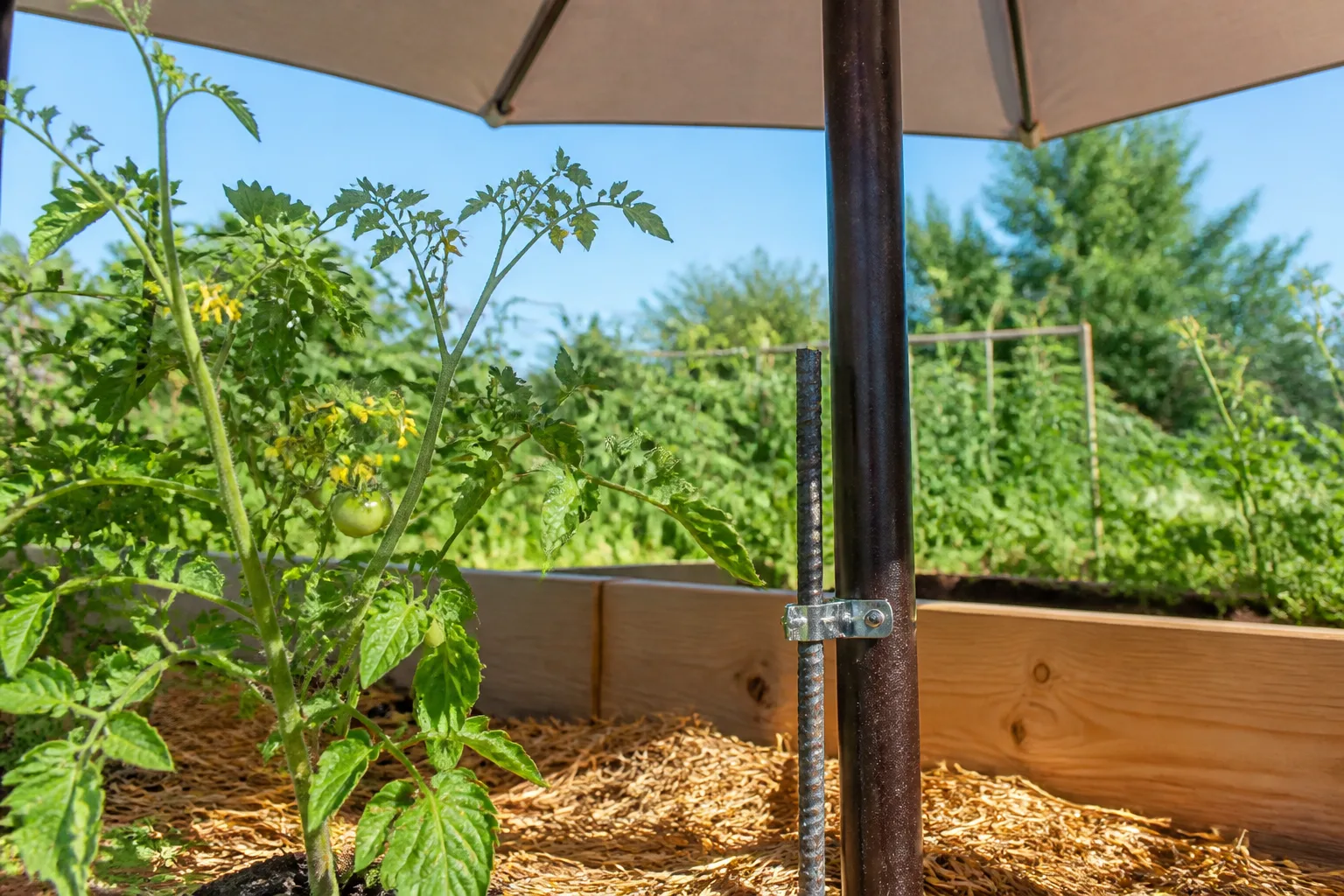
A temporary overhead shield works best when it leaves the tomato canopy open to air and is anchored independently of the stems.
Pollinate Only When Conditions Allow
If the plant is otherwise healthy, gently tap the support or flick the flower stem once the flowers are dry and the air is not at the day’s hottest or most humid point. A light vibration is enough; shaking the entire plant hard can snap trusses and scatter immature fruit. Repeat every day or two while fresh flowers are opening if the garden is still sheltered from wind.
Hand vibration cannot revive a flower whose pollen was sterilized by extreme heat. Wait for a cooler, drier window, then help the next flowers. Hormone-based blossom-set sprays may improve set during some cool-weather situations, but extension guidance warns that they are not effective during high heat and can produce misshapen fruit. They are not the first response to a summer heatwave.
How to Prevent Another Round of Drop
You cannot control a heatwave, but you can reduce the difference between a tolerable day and a damaging one. The most reliable strategy is a stable root zone plus a cooler, ventilated canopy, with variety and planting timing doing the work next season.
Use Mulch and Irrigation That Stay Even
Apply a 2–3-inch layer of organic mulch over the root zone, keeping it a few inches away from the main stem. Mulch slows evaporation, softens soil-temperature swings, and reduces the drought-to-flood cycle that makes flowers and young fruit vulnerable. Keep checking beneath the mulch; it reduces water loss but does not make watering unnecessary.
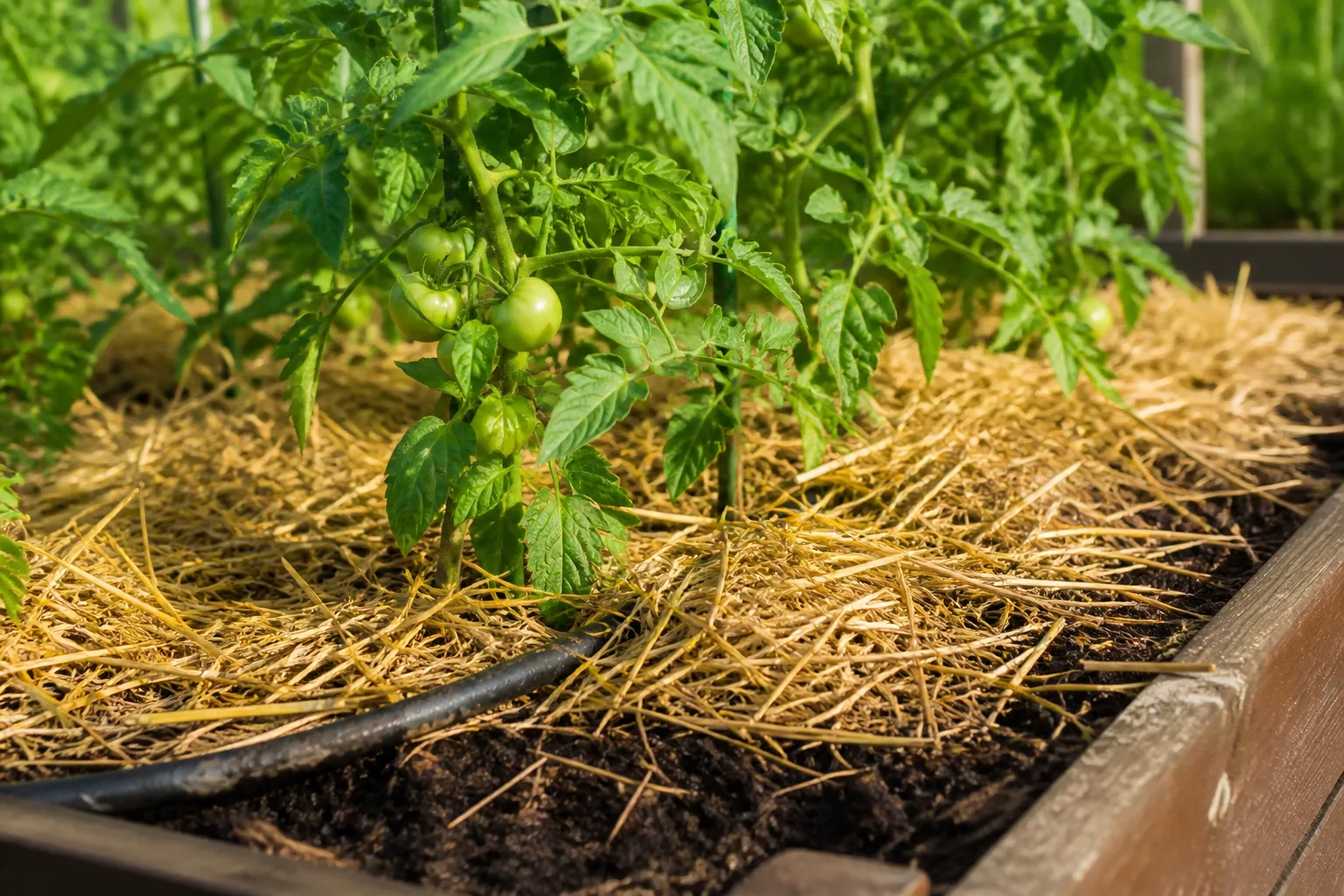
Mulch and low, steady irrigation help keep the root zone from swinging between dry and saturated.
Use a soaker hose or drip line when possible, and water deeply enough to reach the main root zone rather than sprinkling the surface every afternoon. Utah State University’s tomato irrigation guidance recommends uniform moisture and increasing irrigation as plants grow and temperatures rise. In a bed, the right interval depends on soil and rainfall; in a container, smaller root volume means the interval may shrink dramatically.
Water early enough for wet foliage to dry, and avoid using a daily wilt as the only signal. A tomato can temporarily curl leaves during hot afternoons while the soil remains moist. Check the root zone first so you do not turn heat protection into oxygen-starved roots.
Choose Varieties for Your Climate
If your garden regularly has hot nights, choose seed descriptions that mention hot set, heat tolerance, or regional performance rather than assuming every tomato has the same temperature range. University of Maryland Extension lists ‘Heatmaster,’ ‘Florida 91,’ and ‘Celebrity’ as examples, but availability and performance vary by region.
Small-fruited cherry and grape types often keep setting more reliably in difficult weather than very large beefsteaks because each fruit places a smaller demand on the plant. N.C. Cooperative Extension reports that cherry types are especially reliable in hot southern conditions and notes that larger fruit can be harder to grow there; its tomato variety guidance is a useful reminder to match cultivar choice to climate rather than treating heat tolerance as a universal label.
Planting date matters just as much as the seed packet. In a hot-summer climate, an early crop can set much of its fruit before the hottest nights, while a later heat-tolerant crop can restart when the weather begins to ease. In a cool climate, delaying transplanting until nights are reliably warm can prevent the first flower cluster from being wasted.
Avoid the Fertilizer Trap
Do not add a high-phosphorus “bloom” fertilizer or calcium amendment just because flowers fell. Phosphorus does not override heat-damaged pollen, and a soil that already contains adequate calcium will not be rescued by a handful of eggshells. Test soil if nutrition is genuinely in doubt, then feed according to the crop, soil test, and product label.
Pause heavy nitrogen applications when the plant is producing a wall of leaves but few flowers. Excess nitrogen can delay flowering, increase soft vegetative growth, and raise salt stress in a container. A calm, evenly watered plant with a balanced feeding routine is a better target than the darkest green plant in the garden.
When a Falling Tomato Is a Different Problem
Blossom drop means the flower never became a tomato. Once fruit has formed, use the symptom on the fruit and the pattern on the plant to decide what happened.
Separate Blossom Drop From Disorder, Pest, or Disease
Blossom-end rot appears as a tan, brown, or black leathery spot at the blossom end—the bottom opposite the stem—on a fruit that is still attached. It is linked to disrupted calcium movement under uneven moisture, not to a flower simply falling away. University of Illinois Extension recommends uniform watering and mulch rather than blindly adding calcium to the soil.
Sunscald is a pale, bleached, or leathery patch on the side facing intense sun, often after severe pruning or disease has removed leaf cover. Cracking usually follows a rapid change from dry soil to heavy rain or irrigation. Both problems call for steadier moisture and better canopy protection, not a pollination spray.
Catfacing creates puckered or scarred fruit, often on early large-fruited tomatoes after cold conditions. Stinkbugs can leave cloudy spots, while fruitworms and other pests can leave holes. If the fruit falls because a damaged stem breaks, support the cluster and inspect the branch rather than treating the whole plant for blossom drop.
Finally, investigate disease or herbicide injury when new leaves are twisted, mottled, narrow, or severely curled; when one side of the plant wilts; or when stems show streaks, lesions, or internal browning. Weather stress can pause fruit set, but it should not create a steadily spreading pattern of abnormal new growth.
What Recovery Should Look Like
The flowers already dropped are gone. The useful measure of recovery is what happens on the next flower clusters after several days of moderate temperatures, stable moisture, and a protected canopy.
You should see fresh flowers stay attached longer, followed by small green swellings at their bases. Existing green fruit should continue enlarging rather than shriveling, although a heatwave can slow growth and delay color. Iowa State University Extension notes that tomato fruit normally needs roughly 45–55 days from set to full ripening, with weather and cultivar changing that range.
If conditions have moderated for a week and no new flowers set, review the basics in order: night temperatures, soil moisture below the surface, container root restriction, excess nitrogen or fertilizer salts, leaf and stem symptoms, and pest activity. A plant that keeps declining despite careful care may have a root or vascular disease and needs diagnosis, not another round of emergency amendments.
Conclusion
When tomato flowers or tiny fruit fall early, start with the plant’s timing: what fell, what the weather did during flower development, and whether the soil stayed evenly moist. Heat and hot nights are common causes, but cool nights, sticky or overly dry air, water swings, excess nitrogen, damaged roots, pests, and disease can produce the same disappointing result.
Protect the next flowers with light afternoon shade, deep consistent watering, mulch, good airflow, and gentle vibration only during a dry, moderate window. Once you match the intervention to the symptom, a short pause in fruit set becomes a setback to manage—not a reason to give up on the rest of the season.



