How to Grow and Care for Cassava
Grow cassava successfully with practical advice on climate, soil, watering, fertilizer, propagation, containers, pests, harvest, and food safety.
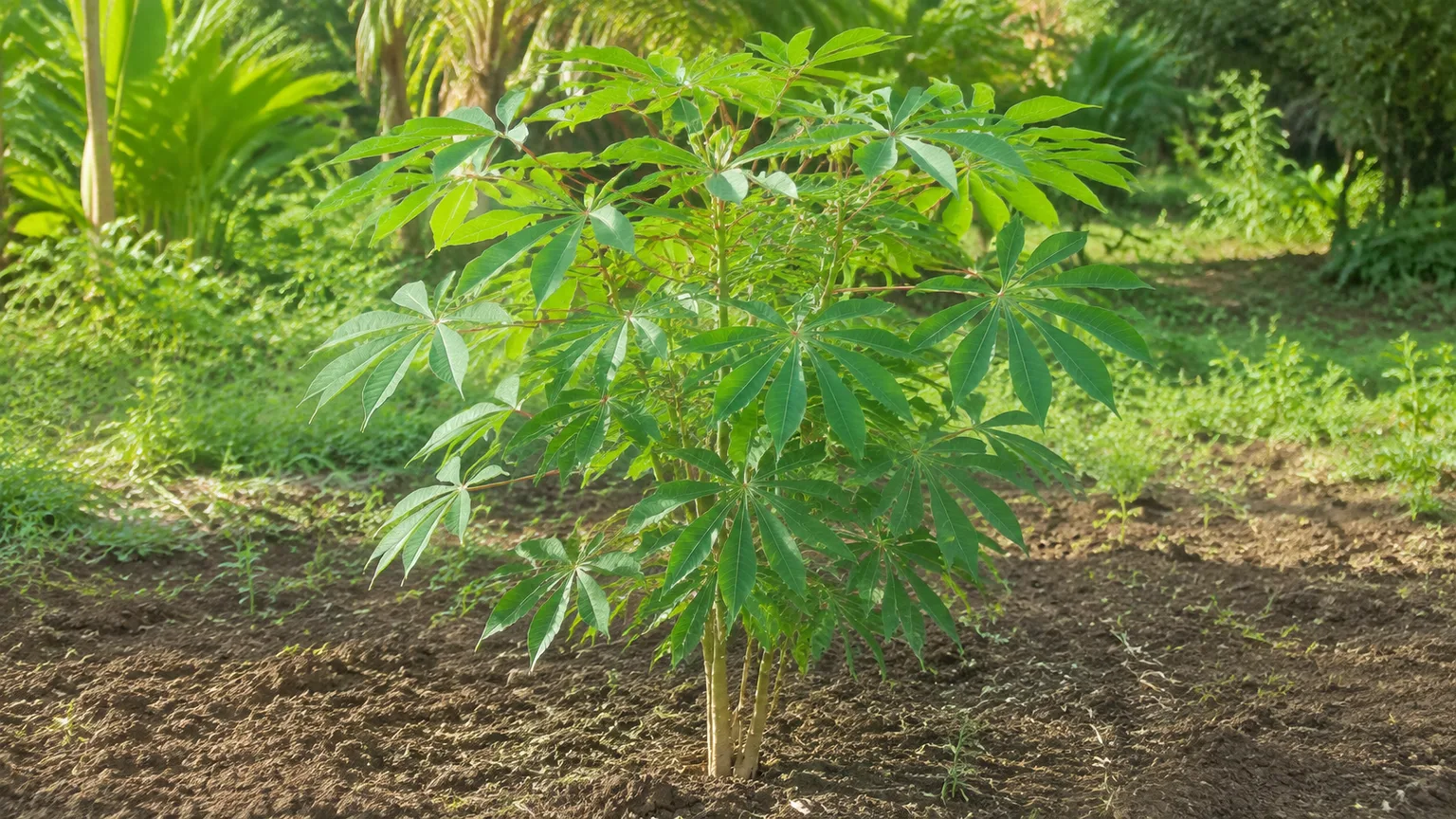
Cassava (Manihot esculenta) is a warm-climate shrub that rewards patience with clusters of starchy storage roots. It is also called yuca, manioc, or tapioca plant; the spelling matters because it is not the same plant as yucca, the spiky ornamental genus. A healthy cassava plant can become a striking, many-branched landscape plant, but a productive root crop requires a long season, loose soil, and planting material you can trust.
The most important rule comes before planting: cassava is not a crop to experiment with as food if you do not know the cultivar or how the roots were processed. Raw cassava and raw leaves contain cyanogenic glycosides that can release cyanide. Treat every homegrown root as needing proper preparation, and do not taste a raw root to decide whether it is “sweet.”
Is Cassava Right for Your Climate and Garden?
Cassava is a perennial in frost-free tropical and subtropical climates, but many gardeners grow it as a warm-season annual or overwinter a plant in a container. It needs roughly eight to 11 months of warm weather to make worthwhile edible roots; Penn State PlantVillage describes a usual harvest around nine to 12 months, depending on variety and conditions. In a cool summer, the plant may grow tall and leafy yet finish with small, fibrous, or unformed roots.
Use a simple go/no-go test. If your garden regularly offers a long frost-free season and warm soil, cassava is a realistic food crop. If you have a shorter season, grow it in a large container that can move under cover, use a greenhouse or sunroom for the cold months, or grow it mainly as an ornamental and choose a faster root crop for your edible harvest. A late start is especially costly because a cutting planted in midsummer may not have enough time to bulk roots before cool weather stops growth.
Cassava is naturally tall and broad. Mature plants commonly reach 6 to 8 feet in a garden, and some can grow taller in ideal conditions. Give each plant room for air circulation and for lifting roots later; crowding makes inspection harder and turns harvesting into a damaging excavation job. UF/IFAS describes roots forming in clusters near the stem, which is why a generous planting area matters more than a tiny “trial” corner.
Cassava vs. Yucca: The Name Difference
Yuca is cassava; yucca is a different plant. Cassava is a woody, broadleaf shrub grown for edible storage roots, while yuccas are mostly rosette-forming plants with stiff, sword-shaped leaves. They are not interchangeable in the garden, kitchen, or plant-identification search. Gardening Know How also emphasizes this distinction because the similar common names routinely lead gardeners to the wrong plant.
When shopping, look for Manihot esculenta, not Yucca species. A nursery listing that says “tapioca plant,” “manioc,” or “yuca” may still be cassava, but confirm the botanical name and whether the seller intends the plant for food or ornament.
Choose Planting Material and a Safe Cultivar
Cassava is normally propagated from woody stem cuttings, not from the roots. The roots do not behave like seed potatoes, and a piece of harvested root is not a dependable way to make a new crop. Choose a mature, healthy stem from a vigorous plant that has no cankers, lesions, unexplained yellow mosaic, scale, or weak, crowded shoots. PlantVillage specifically advises using disease-free stems; a cutting can carry a problem into an otherwise clean bed before the new plant shows symptoms.
For a home garden, a cutting about 8 to 12 inches long with several viable nodes is a practical size. Avoid the greenest tip growth and avoid stems that are soft, cracked, shriveled, or already diseased. Mark the original growing direction before cutting so you do not accidentally plant the section upside down. If you buy cuttings, ask for the cultivar name, intended use, harvest window, and the region where it performs well.
The words sweet and bitter describe broad cultivar groups with different cyanogenic potential, not a safe tasting test. Bitter or “wild” types can have much higher cyanogenic content and may be more resilient in the field, but that resilience is not a reason to grow an unknown type for the kitchen. For food, obtain a named edible cultivar from a reputable source and still follow full preparation practices; “sweet” does not mean safe to eat raw.
Prepare a Warm, Drained Growing Site
Choose the sunniest practical location, with at least six to eight hours of direct light. Cassava can tolerate some temporary dryness once established, but shade reduces vigor and yield, while standing water can suffocate roots and encourage rot. A raised bed or broad mound is often the simplest improvement for heavy, rain-prone ground.
The ideal texture is loose, fertile, well-drained sandy loam. Cassava tolerates a wider range of soils than many vegetables, but compacted clay can deform roots and make them difficult to lift intact. Work finished compost into the surface and loosen the root zone without creating a water-holding basin. Do not bury fresh manure against the stem; it can create excessive salts or uneven nutrient release.
Test Drainage Before Planting
Dig a hole about 12 inches deep and wide, fill it with water, and let it drain. Fill it again and watch the water level for an hour. If water still stands for a long time, solve the drainage problem with a raised bed, a mound, or a better-drained location before planting. Cassava’s drought tolerance is sometimes mistaken for tolerance of soggy soil; PlantVillage notes that the plant does not tolerate waterlogging, and its root-rot guidance links disease with poorly draining conditions.
Space garden plants about 3 to 4 feet apart, with similar room between rows when you have the area. Wider spacing is useful for large plants, wet climates, and anyone who wants to lift individual roots without stepping on neighboring stems. If your goal is ornamental foliage rather than roots, you can cluster plants more closely, but keep enough airflow to inspect stems and leaf undersides.
Plant Cassava Stem Cuttings Correctly
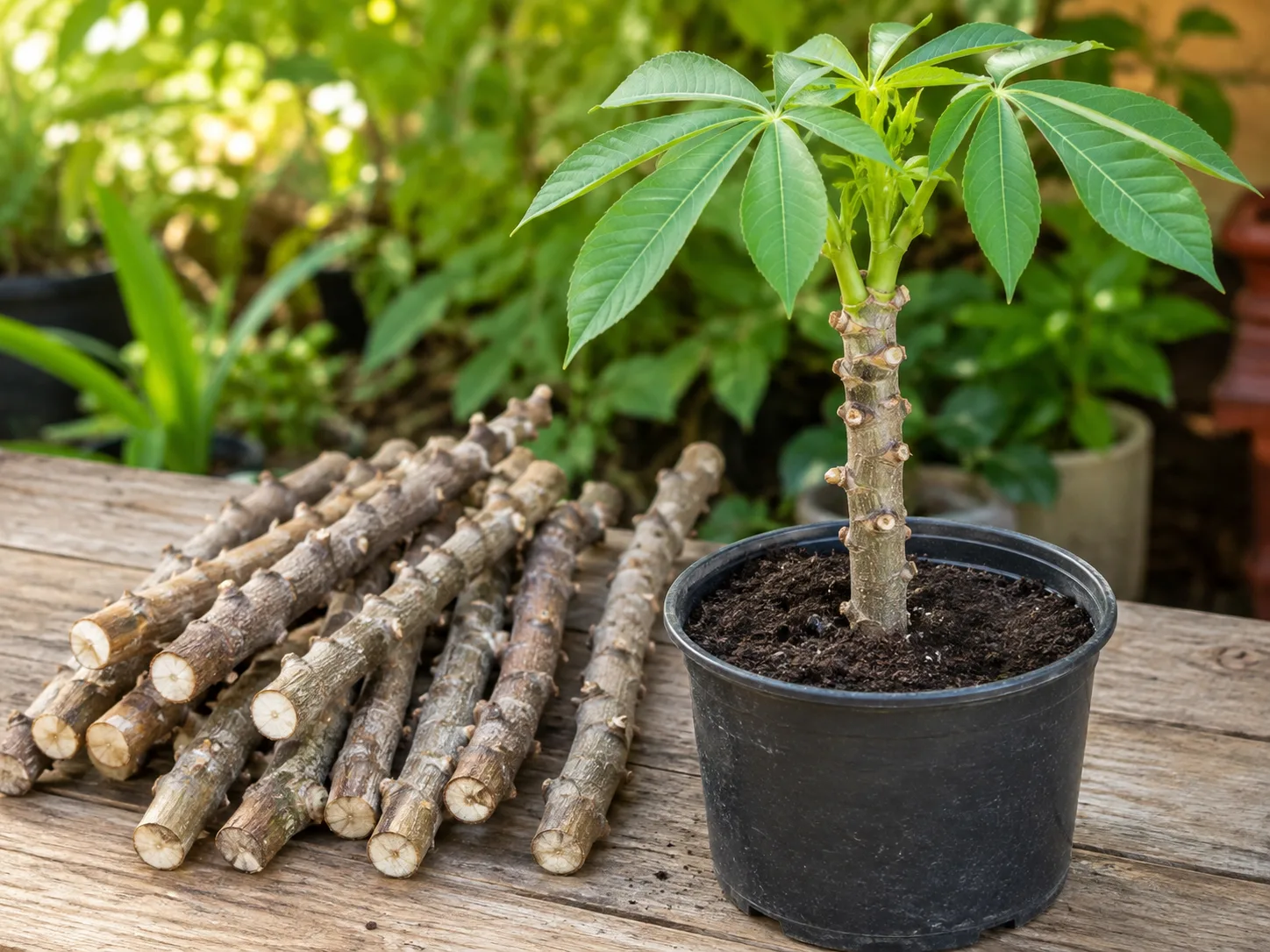
Plant after the danger of frost has passed and the soil is genuinely warm. The cutting needs time to root before it faces drought or cool nights, so early in the warm season is better than a late planting. A straightforward sequence is:
- Cut a healthy, woody stem into 8- to 12-inch sections with several nodes.
- Remove leaves from the portion that will be underground and keep the original top end identified.
- Set the cutting upright with about 2 to 4 inches below the soil surface and at least one node above it.
- Firm the soil around it, water thoroughly once, and keep the bed evenly moist while roots form.
- Maintain the planned spacing instead of planting tightly and hoping to thin later.
UF/IFAS recommends approximately 10-inch stem sections planted 2 to 4 inches deep. Epic Gardening likewise advises foot-long pieces with the lower leaves removed and at least 2 inches in the soil. The exact measurement is less important than the principle: enough buried stem to root securely, but not so deep that the cutting sits in a cold, wet pocket.
New shoots may appear within days to a few weeks in warm conditions, but top growth is not proof that the root system is established. For the first several weeks, check the soil below the surface rather than watering by calendar. Moist is good; constantly saturated is not. A cutting that pulls loose easily or develops a soft, dark base is more likely suffering from rot than thirst.
Presprout Cuttings in Containers
Presprouting is useful when your season is marginal or when you need to protect new cuttings from heavy rain. Place the stem in a light, well-drained potting mix with its original lower end down, burying only a few inches. Keep it in bright light, water when the mix begins to dry at the surface, and transplant after it has rooted and pushed healthy new growth.
The container is a staging area, not a permanent home for a full-size food plant. Harden the rooted cutting over a week by gradually exposing it to stronger outdoor sun and wind. Transplant in the evening or on a cloudy day, disturb the new roots as little as possible, and water it in. If the plant is still weak, postpone transplanting rather than putting a small root system into harsh midday heat.
Manage Light, Water, and Humidity
Full sun drives the strongest growth and the best chance of a useful root crop. In climates with brutal afternoon heat, light afternoon shade can reduce leaf scorch, but do not confuse protection from extreme reflected heat with placing cassava in deep shade. A plant grown indoors over winter needs the brightest window available and may need a grow light to prevent weak, stretched stems.
Water newly planted cuttings whenever the upper soil begins to dry, and keep that rhythm through establishment. Once rooted, cassava can handle a dry spell better than many vegetables, but regular moisture during active growth supports fuller roots. Extended drought can cause lower leaves to drop and may leave roots stringy or small; a sudden return to heavy irrigation after severe drought is also stressful.
Use mulch to slow evaporation, suppress weeds, and buffer soil temperature, keeping it a few inches away from the stem. In rainy climates, focus on drainage rather than adding more frequent irrigation. If the bed stays wet after a normal storm, do not “fix” the plant with fertilizer; improve the bed or move future plants to a mound.
Feed for Roots, Not Just Leaves
Start with a soil test if the bed has a history of poor growth. Cassava is resilient and can produce in low-fertility ground, but resilience is not the same as maximum yield. Compost improves structure, while a balanced vegetable fertilizer or a product appropriate to your soil can support establishment when nutrients are genuinely low.
Avoid reflexively applying high-nitrogen fertilizer. Nitrogen can push large, soft foliage while leaving root development disappointing. Once the plant is established, feed lightly according to the product label and soil-test needs; do not increase the dose because the plant is tall. A high-potassium approach is often used for root crops, but potassium cannot compensate for shade, compaction, waterlogging, or a season that is too short.
If you are growing cassava for leaves as well as roots, the nutrient balance and harvest pattern change. Frequent leaf harvest removes photosynthetic tissue the plant needs for root bulking, so take only a modest amount and never strip a young plant. For a root-focused crop, let the canopy build and feed only when the plant shows a real nutrient need.
Weed, Mulch, and Prune Without Sacrificing Yield
Keep the first few feet around a young cutting weed-free. Weeds compete for water while the cutting is rooting and can hide chewing insects or stem damage. Hand pull close to the stem rather than chopping into the shallow establishment roots, and refresh mulch as it decomposes.
Routine hard pruning is unnecessary for a root crop. Remove dead, badly damaged, or clearly diseased leaves with clean tools, but leave a healthy canopy in place. If a plant becomes too tall for your space, a light cutback after the main growth period can provide stems for the next crop, but cutting repeatedly during active root bulking reduces the energy available below ground.
Sanitation matters more than cosmetic tidiness. Disinfect cutting tools between plants when you suspect disease, and do not use stems from a plant with mosaic, cankers, or unexplained dieback. PlantVillage identifies infected cuttings and contaminated tools as important pathways for several cassava diseases.
Grow Cassava in Containers or as an Ornamental
Container growing works best for a smaller ornamental selection or for a plant you plan to protect through winter. Choose a heavy container with large drainage holes and enough depth for a substantial root system; a pot barely larger than the cutting will restrict growth quickly. Use a coarse, free-draining mix rather than garden soil that compacts in a pot.
Potted cassava dries faster than an in-ground plant and also has less nutrient reserve. Check moisture by hand, water deeply when the mix begins to dry, and empty any saucer that holds water. Feed lightly during active growth, and repot when roots fill the container rather than letting the plant remain pot-bound through a hot season.
In colder regions, move the container into a bright, frost-free space before temperatures threaten the plant. Expect slower growth indoors and reduce watering during the low-light period, but do not let the stem and root ball remain bone-dry for months. A large plant may be more trouble to move than it is worth, which is why growing cassava as an ornamental annual can be the better choice in a short-season garden.
Know When Roots Are Ready to Harvest
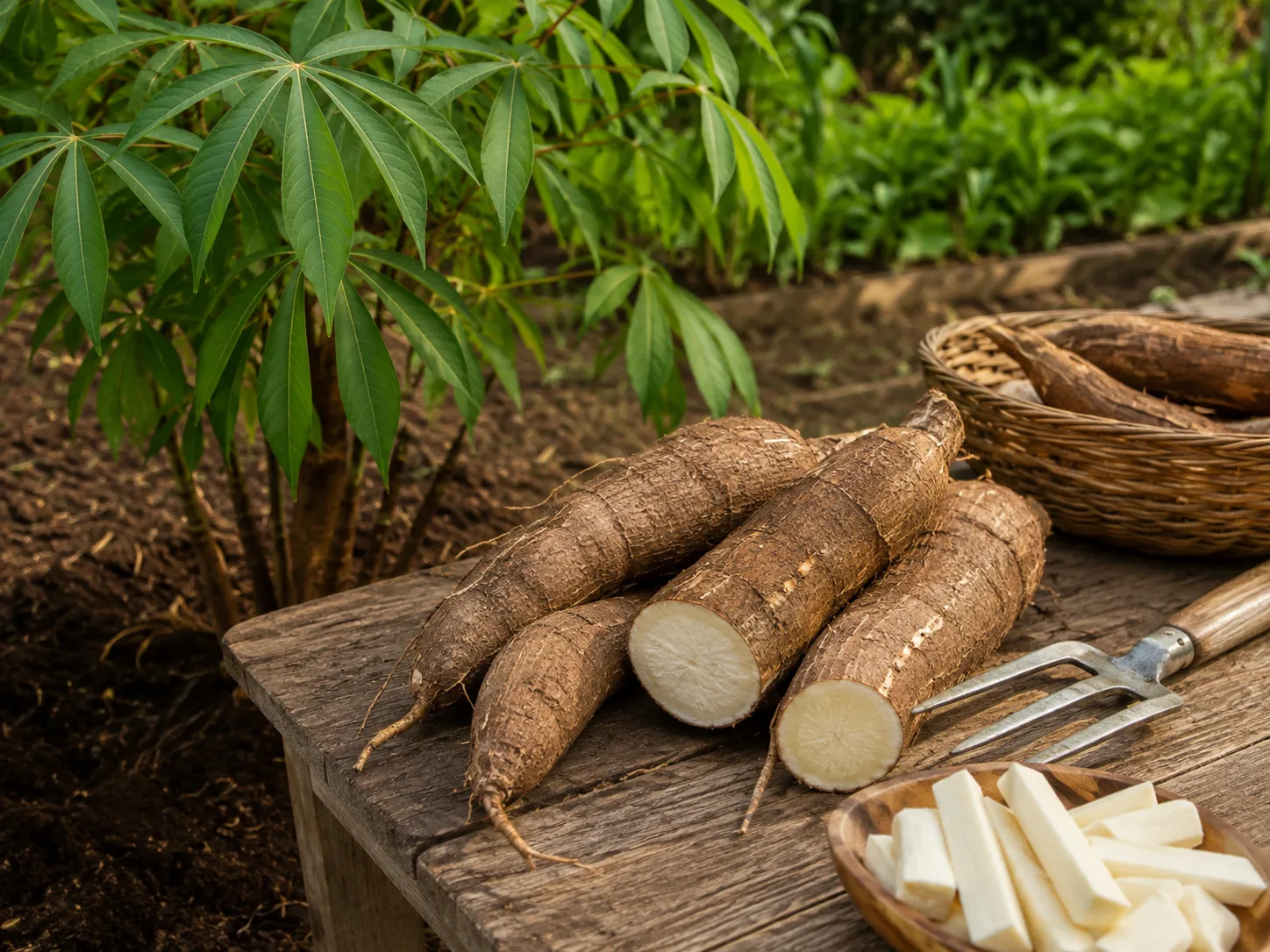
Harvest timing depends on cultivar, climate, and whether you want tender roots for immediate use or larger roots for a later meal. Begin checking after about eight months in a long, warm season, with many crops ready around nine to 12 months. Do not use calendar days alone: look for a mature canopy, swollen roots, and the approach of cool weather that will stop growth.
You can make a small test dig beside the stem to inspect one root without uprooting the whole plant. Productive roots usually form in a cluster and feel firm and full rather than thin and stringy. If the root is still narrow, return the soil carefully and give the plant more warm growing time. Leaving roots in the ground can extend the harvest window, but older roots may become fibrous, so “bigger” is not automatically “better.”
Lift Roots Without Bruising Them
Water lightly a day before digging if the soil is very hard, but do not harvest from saturated mud. Cut back only enough stem to give you room, loosen the soil in a wide circle with a potato fork, and lift from underneath. Pulling the stem alone can snap the roots or leave part of the cluster underground.
Handle roots gently. UF/IFAS notes that fresh cassava deteriorates rapidly after harvest, and bruises accelerate that decline. Move only what you can process soon, or prepare the remainder for freezing rather than treating it like a long-storing potato.
For a perennial planting, you do not have to harvest every root at once. Lift a few mature roots from the side of the plant and leave the stem and remaining roots to continue growing, provided your climate remains warm and the plant is healthy. In a seasonal garden, harvest before frost and save sound stems for the next planting.
Handle and Store Cassava Safely
Never eat raw cassava roots or raw cassava leaves. The plant contains cyanogenic glycosides, including compounds that can release hydrocyanic acid. The CDC documented an outbreak linked to improperly processed cassava flour and stresses strict adherence to established detoxification methods; the FAO also explains that effective processing reduces cyanide through tissue disruption, soaking, washing, fermentation, drying, and heat.
For a known, commercially recognized sweet cultivar, a common home-kitchen approach is to scrub, peel generously, cut away the ends and any damaged areas, and boil the pieces in plenty of water until fully tender. Drain and discard the cooking water rather than using it in soup. This is not permission to improvise with a bitter, wild, unidentified, or unusually bitter-tasting root: higher-cyanide cultivars can require longer, validated processing such as soaking and drying, and bitterness is not a reliable home safety test.
Keep raw roots away from children and pets, and clean knives, boards, and surfaces after preparation. If anyone eats raw or undercooked cassava and develops vomiting, dizziness, breathing difficulty, confusion, faintness, or seizures, treat it as a potential poisoning emergency and contact local emergency services or poison control immediately. Do not wait for symptoms to “settle.”
Fresh roots have a short storage life. Use them soon after harvest, or peel and cut them before freezing. If you temporarily refrigerate peeled pieces in water, follow a food-safety practice that includes changing the water regularly and cooking promptly; do not store raw cassava indefinitely and assume refrigeration makes it safe.
Cassava Pests and Diseases
Cassava is comparatively tough, but “low maintenance” does not mean pest-proof. Inspect new growth, leaf undersides, stems, and the soil line each week. Aphids, spider mites, whiteflies, grasshoppers, and chewing insects can weaken foliage, while rodents, goats, and pigs may damage or dig around roots in gardens where those animals are present.
Start with cultural controls: remove weeds, keep the plant watered during dry weather, hose off small soft-bodied pests, and use a barrier or fence for animals. Avoid spraying a product not labeled for edible crops, and follow the label’s crop, rate, harvest interval, and protective-equipment directions. A pest that appears after drought may be a stress signal, not a reason to apply a broad pesticide immediately.
Mosaic and Bacterial Problems
Mosaic symptoms can include pale mottling, distorted leaves, reduced leaf size, and stunting. Some yellowing is simply age, drought, or a nutrient problem, so do not diagnose a virus from one yellow leaf. A repeating mosaic pattern across new growth, distorted shoots, poor vigor, or a history of infected plants deserves caution and local extension advice.
PlantVillage lists cassava mosaic disease, bacterial blight, anthracnose, and root rots among the problems that can affect the crop. Bacterial diseases can spread through water splash, tools, and infected planting stems; root rots are favored by waterlogged soil. Remove and dispose of clearly infected plants according to local guidance, clean tools, improve drainage, and never save cuttings from a suspect plant.
Do not try to rescue a diseased cassava plant by taking a healthy-looking tip from the same stem. Some infections are systemic or show uneven symptoms. Start the next crop with verified clean material and, where cassava diseases are common, use varieties recommended by your local agricultural extension service.
Troubleshoot Weak Growth and Poor Roots
When cassava looks healthy above ground but produces disappointing roots, work through the growing conditions in order instead of adding more fertilizer. The most common explanations are insufficient season length, too little sun, compacted soil, waterlogging, severe drought during bulking, or a cutting that never rooted strongly.
Use this diagnosis sequence:
- Thin, weak stems and sparse leaves: check for shade, cold nights, drought, or a soft, rotting cutting base.
- Yellow lower leaves only: check plant age, dry soil, and normal leaf turnover before assuming disease.
- Mottled, distorted new leaves: isolate the plant and seek local diagnosis; do not propagate from it.
- Small or forked roots: inspect compaction, stones, drainage, and planting depth; roots need loose soil to enlarge.
- Mushy roots or a dark stem base: stop routine irrigation, inspect drainage, and remove rotting material rather than keeping the bed wet.
- Large canopy with few roots: suspect too much nitrogen, frequent leaf harvesting, shade, or an immature crop.
The remedy should match the failure. A raised bed helps waterlogging; compost and loosening help compaction; shade reduction helps light; time helps an immature crop. No fertilizer can turn a frost-limited season into a tropical one.
Save Cuttings for Next Season
If frost will kill the top growth before you can plant outdoors again, save healthy woody stems before the first hard freeze. Cut sections about 8 to 12 inches long, remove leaves, label the cultivar, and keep the pieces oriented so you know which end was closest to the roots. Do not store stems showing lesions, scale, mosaic, or decay.
You can root cuttings in a one-gallon pot of light, well-drained medium and keep them in a bright, frost-free place. Water sparingly—enough to prevent the cutting from shriveling, never enough to leave the medium wet. Another option is to keep sound dormant stems protected and plant them when the next warm season begins, but storage details vary with humidity and temperature, so inspect often and discard anything soft or moldy.
PlantVillage recommends presprouting in a nursery bed or container and transplanting rooted plants after several weeks. That approach is especially useful when the outdoor season is short: you gain warm indoor rooting time, then move an established plant outdoors once the soil and nights are ready.
Conclusion
Growing cassava successfully is mostly a matter of matching the crop to the climate and protecting the roots from avoidable setbacks. Start with a named, healthy stem cutting; plant it early in a warm, sunny, well-drained bed; keep moisture steady while it roots; feed lightly; and leave enough space to inspect and lift the root cluster.
Expect patience rather than instant results. Check roots after the appropriate warm-season window, harvest carefully, use fresh roots promptly, and treat raw cassava as unsafe until it has been properly prepared. If your garden cannot provide a long frost-free season, a movable container or ornamental planting can still be worthwhile—but a realistic harvest plan is better than forcing a tropical crop into unsuitable conditions.