Ponytail Palm Care Guide: Light, Water & Caudex Rules
Grow ponytail palm indoors with bright light, gritty soil, and deep infrequent watering. Learn caudex checks, winter dry-down, offset division, and brown-tip fixes.
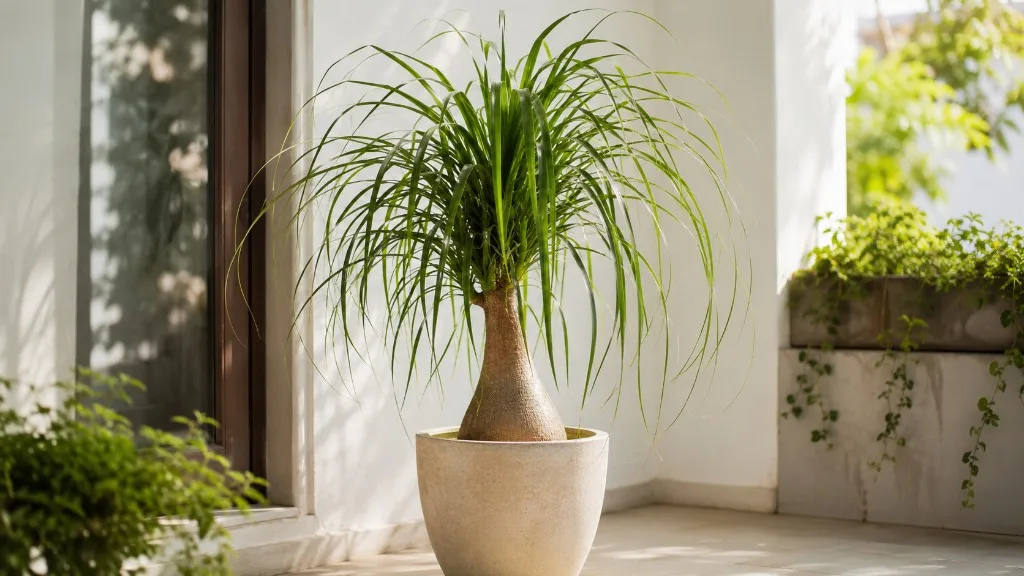
Ponytail palm (Beaucarnea recurvata) looks like a miniature palm tree the day you bring it home—upright stem, fountain of strap leaves, instant sculptural presence. Six months later, the same plant often tells a different story: a spongy base, yellow lower leaves, and brown tips that refuse to green up. That crash is not bad luck. Ponytail palm is not a true palm. It is a slow-growing caudiciform succulent in Asparagaceae, native to semi-desert southeastern Mexico, Belize, and Guatemala, with a swollen trunk base that stores water the way a canteen stores drink. Most living rooms run too dim and too wet for that biology. This guide closes the gap with clear targets—or helps you decide honestly when a ZZ plant or jade plant fits your space better.
Ponytail Palm Quick Reference
Use this table before you change anything. If several factors are off, fix light and watering first—fertilizer rarely saves a ponytail palm in a dark, soggy pot.
| Factor | Indoor target | Notes |
|---|---|---|
| Light | Bright direct to bright indirect; sunniest window you have | Leggy stretch = too dim; scorched leaves = too much hot midday sun through glass |
| Water | Deep soak, then dry down fully | Check caudex firmness and soil depth—not a calendar |
| Soil | Fast-draining cactus/succulent mix | Add pumice or grit if mix stays wet |
| Pot | Slightly snug; excellent drainage holes | Tight pots slow growth but reduce rot risk |
| Temperature | 65–85°F days; avoid prolonged below 50°F | NC State Extension lists hardiness to 50°F |
| Humidity | Average indoor (30–50%) | Low humidity is fine; misting does not hydrate the caudex |
| Fertilizer | Dilute liquid 1–2× monthly in spring–summer; none in winter | Overfeeding browns tips |
| Pets | Non-toxic to cats and dogs | ASPCA lists Beaucarnea recurvata as non-toxic |
| Indoor height | Often 6–8 feet over many years | Much slower than outdoor specimens |
| Outdoor zones | USDA 10–11 | Move potted plants indoors before frost |
| Propagation | Rooted offset division at repot time | Leaf cuttings and water jars do not work |
For deeper dives on individual topics, use the ponytail palm care hub, watering guide, light guide, soil guide, and propagation guide.
What Ponytail Palm Actually Is (and Why the Name Misleads You)
Ponytail palm belongs to genus Beaucarnea, not the palm family Arecaceae. University of Wisconsin Horticulture notes the taxonomic shuffle—it has been placed in Nolinaceae, Agavaceae, and Ruscaceae—but the practical takeaway is simpler: you are growing a desert-adapted succulent tree, not a tropical palm that wants steady moisture and high humidity. Other common names—elephant’s foot, bottle palm—refer to the same swollen base.
In habitat, ponytail palm can reach 30 feet with a caudex eventually spanning 12 feet across, developing fissured gray bark that genuinely resembles elephant skin. Missouri Botanical Garden describes the outdoor form: a water-retaining flask-shaped base, trunk-like stem, and narrow recurved leaves up to six feet long cascading like a green fountain. Indoors in a pot, expect roughly 6–8 feet over time—NC State Extension confirms that range—with growth so slow you may measure progress in years, not weeks. The species has earned the Royal Horticultural Society Award of Garden Merit, reflecting decades of reliable performance as a houseplant.
Plants are dioecious—male and female flowers occur on separate individuals—so a lone indoor specimen rarely produces viable seed. Large outdoor trees may flower with creamy-white to pinkish panicles highly attractive to pollinators, but flowering on typical houseplants is uncommon. When it happens, the plant may branch after bloom. Until you reframe ponytail palm as a succulent with a water tank at the base, you will keep reaching for the watering can the way you would for a majesty palm—and that is how healthy specimens develop soft bases within a season.
The Swollen Caudex and Why It Rewrites Watering Rules
The caudex—the bulbous lower trunk—is modified stem tissue that stores water for extended drought. UF/IFAS describes a greatly swollen trunk base, sometimes reaching seven feet across on old landscape specimens, with high drought tolerance and a tendency toward root rot on poorly drained soils. The strap leaves transpire slowly and do not signal thirst the way a peace lily wilts. Watering ponytail palm like a tropical foliage plant—keeping mix evenly moist, misting leaves, obeying a weekly app reminder—is the most common cause of failure.
A firm caudex with dry mix at depth means wait. Slight caudex softness with bone-dry gritty soil through the root zone means soak. A spongy, mushy base with sour wet soil means emergency dry-out—not another drink. That three-step logic runs through every watering decision in this guide and separates success from rot.
Light Requirements for Indoor Ponytail Palm
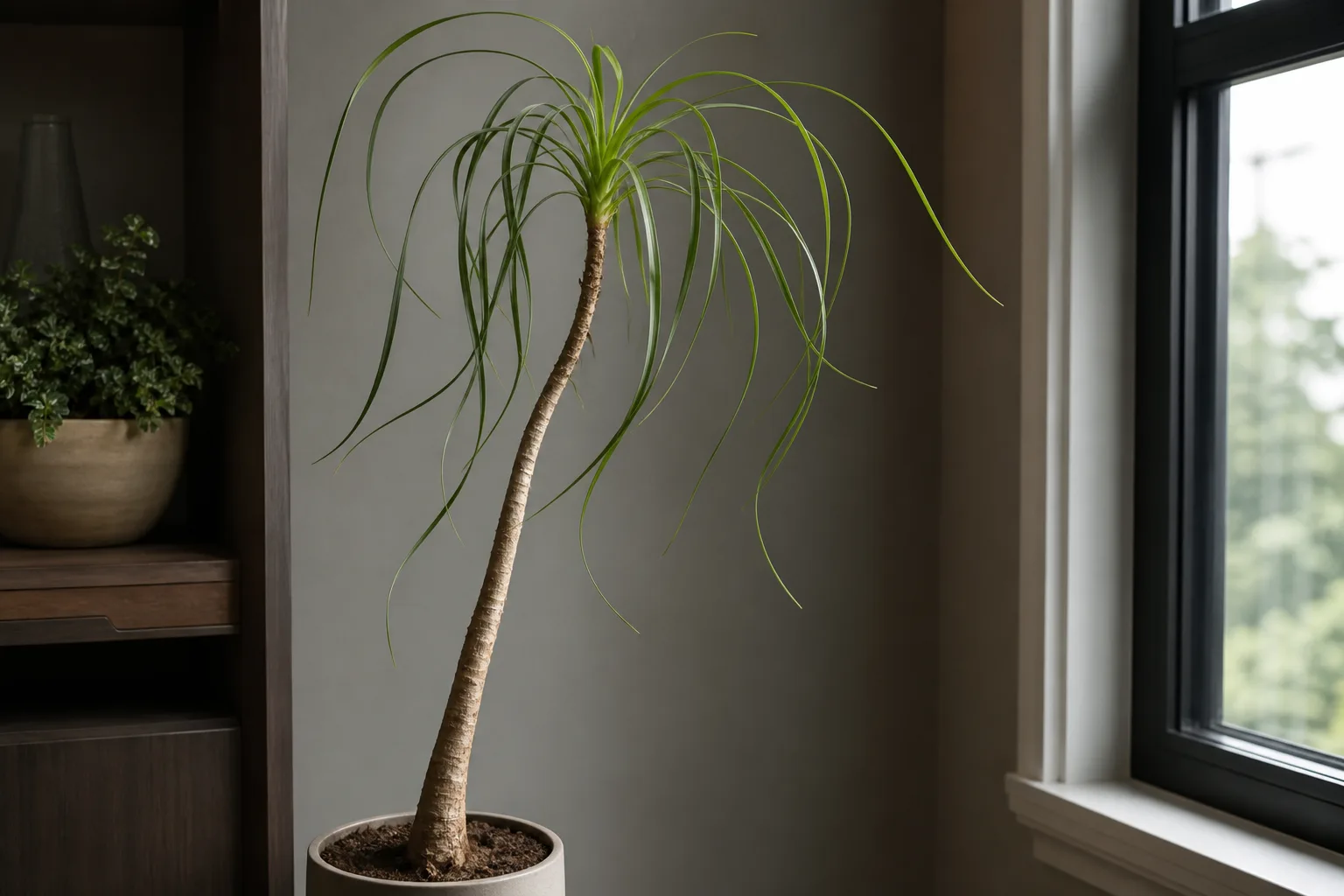
Ponytail palm wants the brightest location you can offer. University of Wisconsin Horticulture recommends full sun in well-drained mix and placing container plants in a window with as much light as possible. NC State Extension lists full sun—six or more hours of direct light daily—as the cultural ideal. Indoors, that translates to a south or west window with direct sun for part of the day, or an unobstructed east exposure. Bright indirect light several feet inside a large window also works if the plant does not stretch.
Leggy growth—longer leaf straps, wider spacing, paler color—means the plant is reaching for photons. Move it closer to glass or add supplemental grow lights rather than watering more. Brown scorched patches on leaves usually mean too much hot midday sun through south glass in summer; sheer curtains or a foot of distance from the pane fixes that without banishing the plant to a dim corner. Low light is survivable for months but eventually produces weak growth and raises rot risk because soil stays wet longer when the plant metabolizes slowly.
Best Window Placement and Summer Outdoor Moves
Place ponytail palm where it receives the longest daily light span, not where it looks best in the room layout. Rotate the pot a quarter turn monthly so all sides receive similar exposure and growth stays balanced. If every window is north-facing or blocked by buildings, ponytail palm is a poor long-term fit—consider snake plant or ZZ plant instead.
In frost-free months, potted plants can move outdoors to a sunny patio or balcony. Missouri Botanical Garden instructs gradual acclimation to full sun and cooler night temperatures after the last spring frost—start with one hour of morning sun, add an hour daily over 7–10 days, and avoid plunging a dim-office plant into blazing afternoon rays. Bring containers indoors before nights drop below 50°F; prolonged cold below that threshold stresses the caudex even though brief dips may not kill established plants immediately.
Soil, Pots, and Drainage
Grow ponytail palm in fast-draining cactus or succulent potting mix. University of Wisconsin Horticulture suggests adding sharp sand or small gravel to regular potting mix to enhance drainage. NC State Extension recommends soils formulated for cactus and succulents in a sunny window. Avoid heavy peat-heavy blends that hold moisture against the caudex, and never leave the pot sitting in a full saucer after watering.
Terracotta pots accelerate dry-down and pair well with this species. Plastic is fine if you compensate with grittier mix and lighter watering. Every pot needs a drainage hole—cachepots without exit holes are a common rot trap. For mix recipes and amendment ratios, see the ponytail palm soil guide.
Why Slightly Tight Pots Help—and When to Size Up
Ponytail palms tolerate—and often prefer—being slightly underpotted. A snug container restricts root run, slows top growth, and reduces the volume of wet soil surrounding the caudex between waterings. That is an advantage, not neglect. Many specimens go years without needing a larger pot, and University of Wisconsin Horticulture notes they can remain small indefinitely in small containers.
Size up only when roots circle densely, water runs straight through without absorbing, or the plant becomes top-heavy enough to tip. Jump one pot size—about 1–2 inches wider—not a huge nursery tub. More soil without more light usually means slower dry-down and more rot risk.
How to Water Ponytail Palm the Right Way
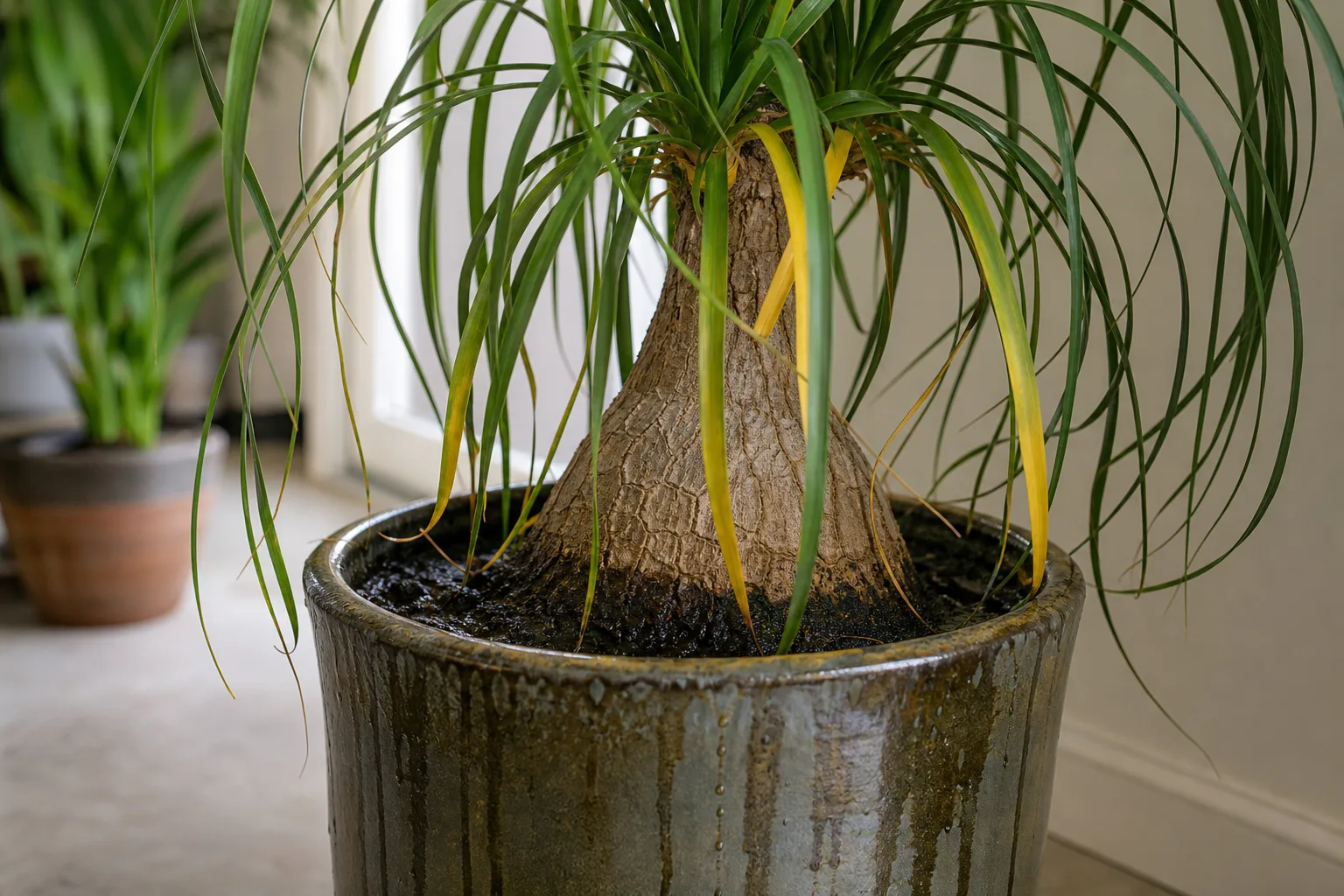
Overwatering is the most common cause of failure for ponytail palm. University of Wisconsin Horticulture states this plainly and recommends mimicking native rhythm: summer rainfall, dry winters. Water deeply but infrequently, allow full dry-down between soaks, and reduce watering significantly in winter to avoid root rot.
There is no honest universal calendar. A sunny south-window plant in a small terracotta pot may need a soak every 10–14 days in July. The same plant in a north office in January may need nothing for six weeks. Use a starting framework of roughly every two to four weeks during active warm months as a reminder to check, not as permission to pour on day fourteen regardless of conditions.
The Caudex-and-Soil Dual Check
Topsoil color lies. Gritty mix can look dusty on the surface while retaining moisture near the caudex where fine roots concentrate. Combine two signals before every watering:
Caudex feel: Gently press the swollen base. Healthy hydration feels firm, like a ripe pear—not a sponge. Slight give after a long dry period can be normal. Spongy or mushy tissue with wet soil means overwatering. Softening with dry mix through the root zone means it is finally time to soak.
Soil depth: Insert a finger, dry skewer, or moisture probe three to four inches toward the pot bottom. Bone dry at depth plus a firm caudex means wait a few more days unless leaves show drought stress. Dry at depth plus slight caudex softness means water. Any cool cling on a skewer means wait—even if the top inch looks ready.
When you do water, soak until water drains freely from the bottom, then empty the saucer within 30 minutes. Do not give small sips weekly—that keeps upper roots moist while the caudex rots below. For winter dry-down specifics and recovery from overwatering, see the ponytail palm watering guide and overwatering troubleshooting.
Temperature, Humidity, and Seasonal Rhythm
Ponytail palm prefers warm, arid conditions—think 65–85°F during active growth. NC State Extension notes hardiness to 50°F and recommends dry winters; the species tolerates indoor heated air better than many tropical houseplants because it expects seasonal dryness, not constant humidity.
Average home humidity of 30–50% is fine. Do not mist leaves expecting caudex hydration—misting does not reach the storage tissue and can encourage fungal spotting on wounded leaf edges. University of Wisconsin Horticulture notes that leaf margins carry fine serrations sharp enough to cut skin on some Beaucarnea species; B. recurvata margins are softer but still worth handling with care when grooming.
Seasonal rhythm matters: water less from late fall through early spring even if furnace heat dries the air. The plant’s metabolism slows in shorter days, and a wet caudex in a cool dim room is the classic winter rot setup. Resume more frequent checks when new leaf growth accelerates in spring.
Fertilizing Without Burning Leaf Tips
Ponytail palm is not a heavy feeder. University of Wisconsin Horticulture recommends fertilizing once or twice during the growing season—not weekly full-strength doses that burn leaf tips and accumulate salts in the caudex.
Use a balanced or low-nitrogen liquid fertilizer diluted to half strength once or twice monthly from late spring through summer, only when the plant is actively growing in bright light. Skip fertilizer entirely in winter and for six weeks after repotting. If tips brown despite correct watering, flush the pot with plain water monthly during summer to leach salts before assuming the plant needs more nutrients. Details live in the ponytail palm fertilizer guide.
Pruning, Grooming, and Single- vs Multi-Stem Looks
Ponytail palm needs little pruning. Remove fully yellow or brown dry leaves at the base by pulling gently or cutting cleanly—never strip more than a few old leaves at once during stress. Brown tips can be trimmed back to healthy green tissue for appearance, but diagnose the cause (water imbalance, salts, low light) before repeated cosmetic clipping.
Offsets—pups—sometimes emerge at the caudex base. You have two valid choices:
Single-trunk look: Cut flush offsets away for a clean tree silhouette. University of Wisconsin Horticulture warns that offsets removed flush with the trunk surface will not root to become independent plants—they are cosmetic removal only.
Multi-stem specimen: Leave pups attached until they develop their own swollen base and roots, then divide at repot time if you want separate pots—or keep them for a branched fountain effect. Mature outdoor plants also branch naturally after flowering or injury when young.
For technique and timing, see the ponytail palm pruning guide.
Repotting Ponytail Palm
Repot in spring when active growth resumes—only when necessary. Signs you need repotting: roots circling the pot surface, water running through without absorbing, or the plant becoming unstable from top weight.
Slide the root ball out gently; ponytail palms dislike unnecessary root disturbance. Move up one pot size, refresh with dry fast-draining mix, and wait one week before the first light soak so cut roots callus. Large specimens are heavy—plan lifting help before the caudex exceeds what one person can move safely. University of Wisconsin Horticulture notes older plants can easily outlive their owners but become difficult to manage if allowed to grow unrestricted indoors without a ceiling plan.
Propagating Ponytail Palms: Offsets, Seed, and What Fails
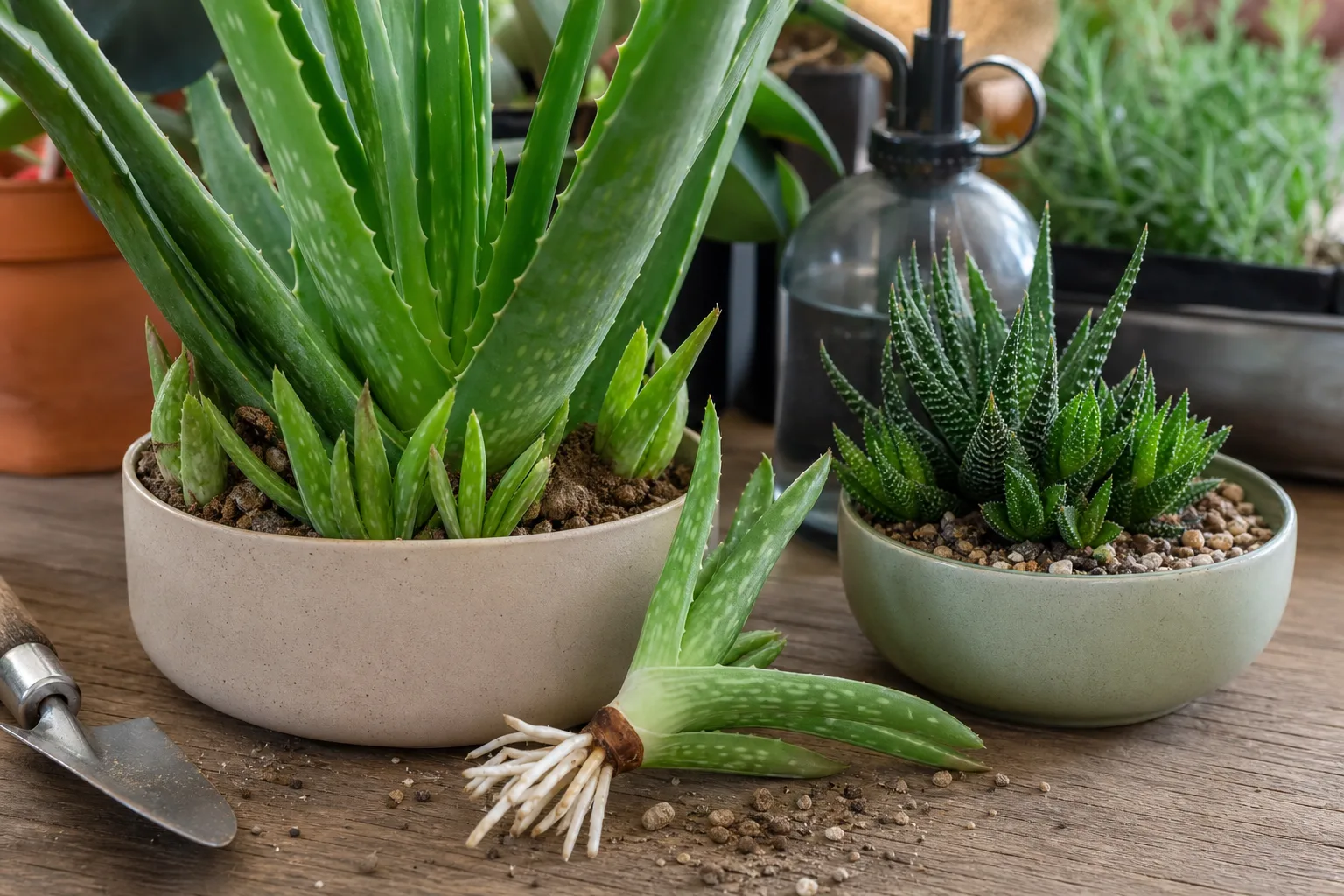
Home propagation almost always means offset division—freeing a basal pup that already has its own roots and mini-caudex. Wait until the pup is roughly 4–6 inches tall with visible roots, unpot the parent, cut the attachment with a sterile knife keeping maximum root mass, callus cut surfaces two to three days in bright indirect light, then plant in dry cactus mix and water lightly once. Spring and early summer give the highest success rate. Full steps are in the ponytail palm propagation guide.
Seed is possible but impractical for most growers. University of Wisconsin Horticulture notes seed is not commonly available; sow in spring at minimum 68°F without special pretreatment. UF/IFAS adds that seed usually must be imported from Mexico, and dioecious plants require both sexes for pollination. Seedlings take years to develop a showy caudex.
Leaf cuttings, stem chops in water, and random trunk slices do not work for home growers. A leaf may root superficially but will never form the swollen base that defines the species. Do not trust social-media water jars—submerging caudex tissue invites rot before roots form.
Pests, Diseases, and Troubleshooting
Ponytail palm has few serious problems when light and drainage are correct. NC State Extension lists mealybugs, scale, and spider mites as occasional houseplant pests. Inspect leaf bases and caudex fissures monthly; isolate new plants for two weeks. Treat infestations with insecticidal soap or horticultural oil, repeating at label intervals until crawlers are gone.
Disease issues—leaf spots, bacterial leaf streak, stem rot—trace back to overwatering in most cases. Fungal problems need dry-down and improved airflow, not more moisture.
Brown Tips, Soft Caudex, and Yellow Leaves
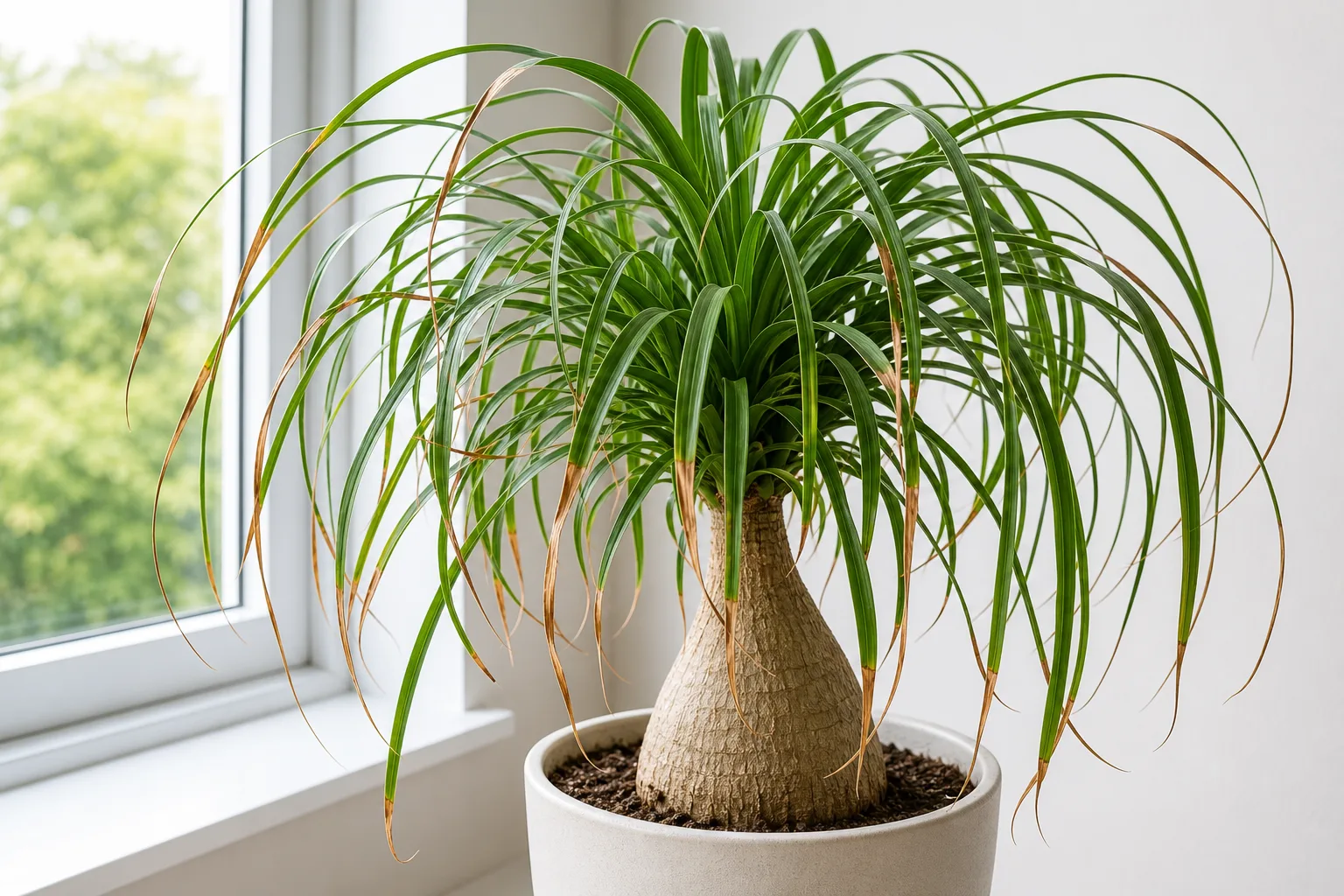
Use this decision order before changing multiple variables at once:
| Symptom | Likely cause | First action |
|---|---|---|
| Brown dry tips only | Salt buildup, fluoride, or occasional underwatering | Flush soil; verify dry-down rhythm |
| Soft spongy caudex + wet soil | Overwatering / root rot | Stop watering; check roots; repot dry if needed |
| Yellow lower leaves, firm caudex | Normal aging OR slight overwatering | Remove dry leaves; confirm soil dries fully |
| Stretchy pale leaves | Too little light | Move to brighter window |
| Sticky residue + webbing | Spider mites or scale | Isolate; treat with soap/oil |
| Mold on soil surface | Overwatering + poor airflow | Scrape mold; dry out; reduce water |
A slightly soft caudex with dry soil often recovers after one proper soak. Once the base collapses, smells sour, or turns black while soil stays wet, the main plant may not recover in place—trim rotted roots, repot into dry mix, and salvage firm offsets if any healthy tissue remains above the rot line. See brown tips, wilting, and slow growth pages for species-specific recovery paths.
Growing Ponytail Palm Outdoors in Warm Climates
In USDA zones 10–11, ponytail palm thrives outdoors in sandy, well-drained soil and full sun. Missouri Botanical Garden describes outdoor culture: regular summer water with dry-down between applications, reduced winter watering for container plants brought inside. Landscape specimens in frost-free regions can eventually reach 30 feet with massive caudices—plan placement accordingly, away from foundations and overhead utilities.
In zone 9 and cooler, grow in pots and treat as a summer patio plant only. Harden gradually in spring; return indoors before frost. In-ground planting outside zones 10–11 is not realistic for long-term survival.
Ponytail Palm vs Palms and Similar Easy Houseplants
| Plant | Type | Watering style | Light | Best for |
|---|---|---|---|---|
| Ponytail palm | Caudiciform succulent | Deep soak, long dry-down | Bright to direct sun | Sunny rooms, forgetful waterers |
| Parlor palm | True palm | Even moisture, shorter dry spells | Medium to bright indirect | Lower light, pet-safe palm look |
| Majesty palm | True palm | Consistent moisture, high humidity | Bright indirect | Humid bright rooms only |
| Sago palm | Cycad (toxic) | Moderate dry-down | Bright light | Not a pet-safe alternative |
| ZZ plant | Succulent rhizome | Infrequent soak | Low to bright | Dark offices |
| Jade plant | Succulent | Infrequent soak | Bright direct sun | Sunny windowsills |
Ponytail palm wins on drought tolerance and sculptural form in bright rooms. It loses to parlor palm in dim corners and to majesty palm if you want a lusher tropical canopy without managing a desert dry-down rhythm. Never confuse ponytail palm with sago palm (Cycas revoluta)—sago is highly toxic to pets and an entirely different plant.
Conclusion
Ponytail palm rewards growers who respect its desert biology: bright light, gritty soil, deep infrequent watering, and dry winters. The swollen caudex is your best moisture meter—firm and dry means wait; firm and thirsty at depth means soak; spongy and wet means stop watering and troubleshoot rot. Keep the pot slightly snug, fertilize lightly in summer only, and propagate through rooted offsets rather than leaves or water jars. Get those fundamentals right and Beaucarnea recurvata becomes one of the most forgiving sculptural houseplants you can own—slow, long-lived, and genuinely difficult to kill unless you love it to death with a weekly watering can.



