Overwatering on Ponytail Palm: Causes, Checks & Fixes
Quick answer
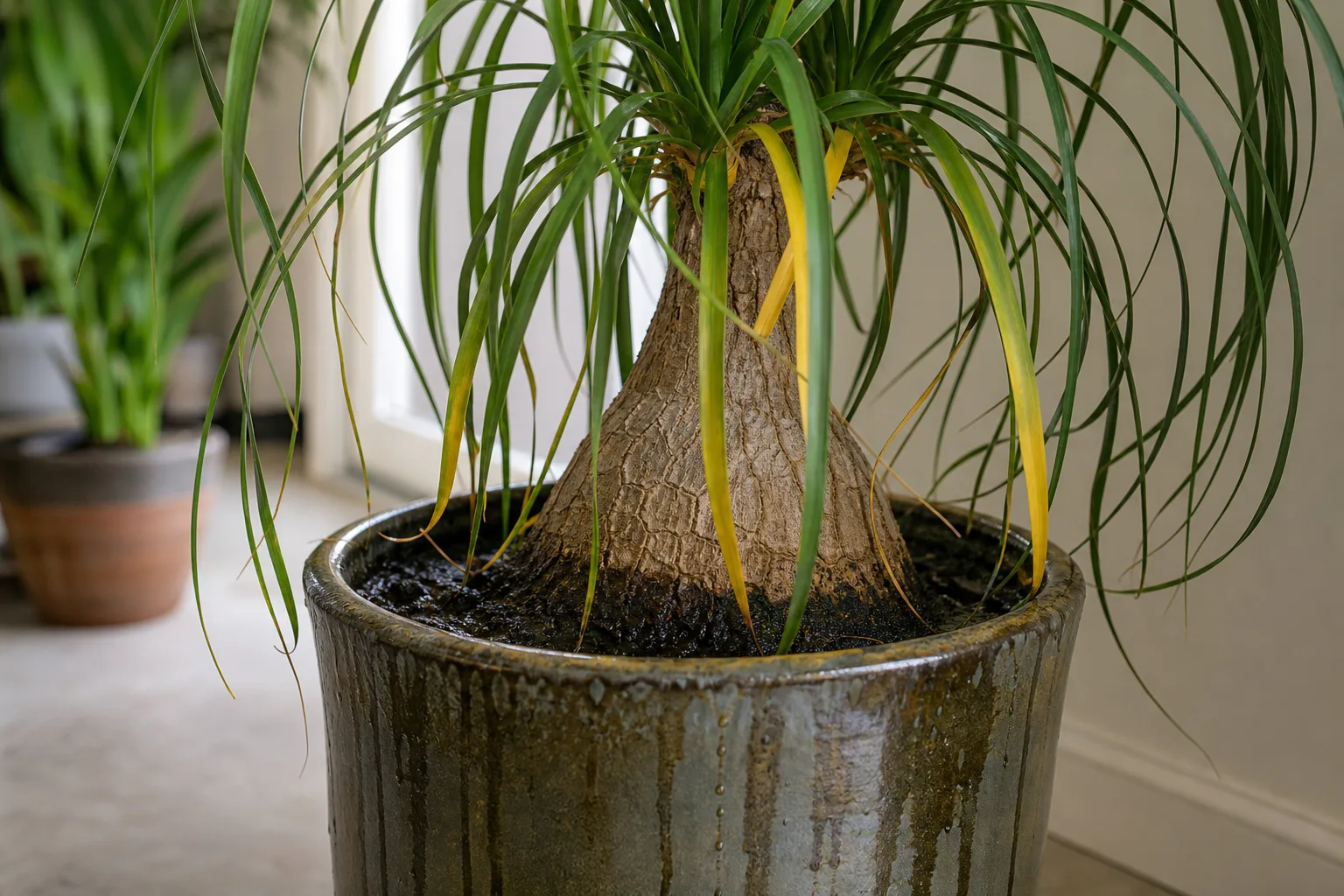
Ponytail Palm overwatering shows as a heavy wet pot, yellow lower strap leaves, and a soft spongy caudex base while soil stays damp. First step: stop watering immediately, then check caudex firmness and soil moisture at depth before any rescue repot.
Overwatering on Ponytail Palm: Causes, Checks & Fixes
This guide covers overwatering on Ponytail Palm. See also the general Overwatering guide, watering, and light pages for this plant.
Overwatering on Ponytail Palm: Causes, Checks & Fixes
Quick answer
Ponytail Palm (Beaucarnea recurvata) is a caudiciform succulent - not a true palm - with a swollen base that stores water for weeks. Overwatering here means the caudex zone and root ball stay wet too long, rotting tissue from the bottom up while leaves still look like they need a drink.
The classic pattern: heavy pot for days after watering, yellow lower strap leaves, and a soft or spongy caudex while soil at depth stays cool and damp. The trap that sends owners back to the watering can is limp leaves on wet soil - damaged roots cannot absorb water, so the plant wilts from drowning, not thirst.
First step: stop all watering immediately. Then press the caudex gently, probe soil three to four inches deep, and lift the pot to compare weight. Firm caudex with soggy mix may recover after a full dry-down. Soft caudex on wet mix needs unpot inspection - see the root rot guide before the next drink.
For seasonal watering rhythm and prevention depth, use the ponytail palm watering guide - this page focuses on diagnosis and rescue when wet soil has already gone wrong.
What overwatering looks like on Ponytail Palm
Symptoms layer from subtle to fatal, and the caudex tells the story before the crown collapses.
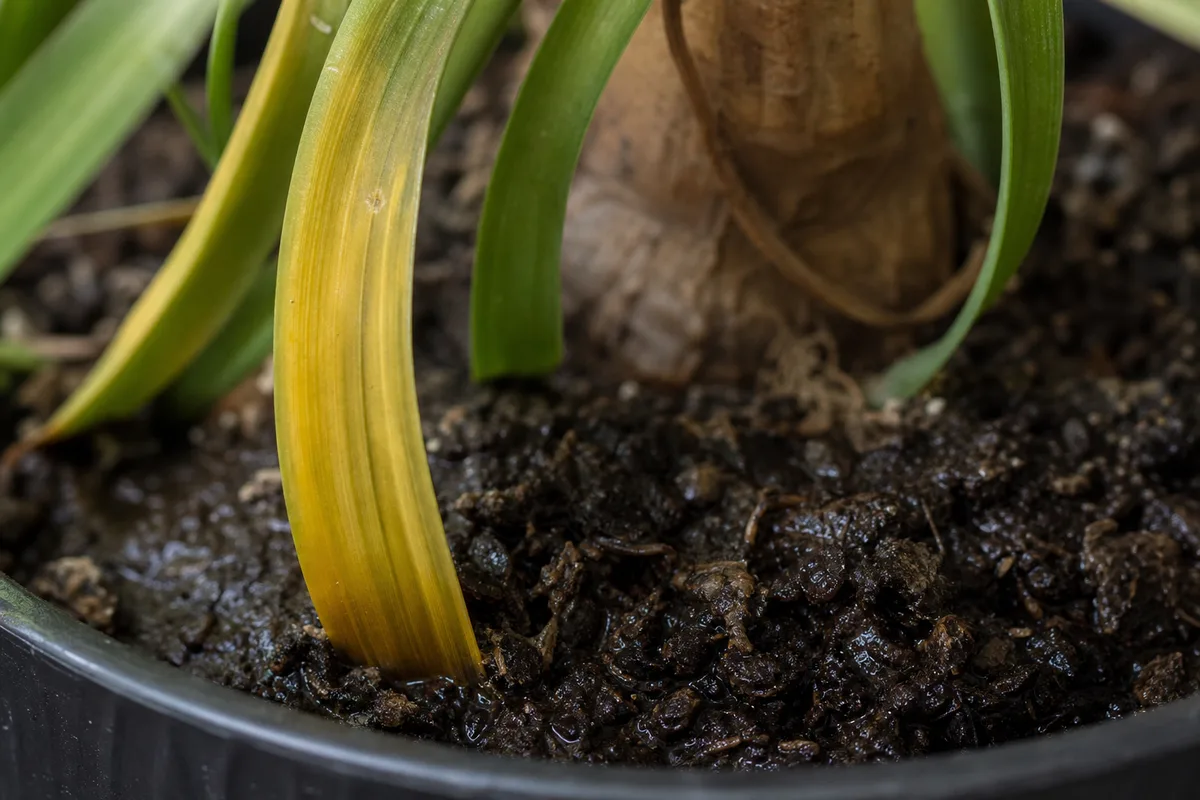
Overwatering symptoms on Ponytail Palm - compare with healthy tissue on the same plant.
Early stress (still saveable):
- Pot stays heavy and cool many days after the last soak
- Several lower strap leaves yellow at once - not one aging leaf drying naturally at the base
- Topsoil looks pale but a skewer at depth comes out dark or stuck with particles
- Slow or absent new growth during warm bright months when the plant should be active
- Fungus gnats hovering at the surface when mix never dries between waterings
Advanced stress (act today):
- Soft, spongy, or mushy caudex at soil line while mix is damp - the primary alarm for this species
- Sour or rotten smell rising from the pot
- Limp, drooping strap leaves with wet soil - the wet-soil wilt paradox
- Brown soft leaf bases where straps meet the crown
- Caudex tissue that gives inward under light finger pressure like a sponge, not a firm pear
Unlike underwatering, soil is wet and heavy, not light and pulling away from pot walls. Unlike normal old-leaf senescence, multiple leaves yellow together while the pot stays saturated.
Why Ponytail Palm gets overwatered
Beaucarnea recurvata evolved for semi-desert Mexico with summer rain and dry winters. Indoors, marketing as “drought tolerant” makes owners water on fear - small weekly drinks on already-wet mix - which is worse than occasional deep drought.
The caudex reservoir creates false confidence
The swollen trunk base stores water for extended dry periods. Owners see a thick base and assume frequent small waterings are safe. In reality, the caudex buffers drought - it does not protect roots sitting in anaerobic mix. Overwatering is the most common cause of failure for container ponytail palms.
Calendar watering and small frequent drinks
Watering every Sunday because the app says so ignores how fast your pot dries. Partial top watering keeps the upper inch damp while the caudex zone stays wet for weeks - the rot pattern extension services describe. True palms wilt quickly when dry; ponytail palm wilts when roots are damaged on wet soil, which looks identical from across the room.
Oversized pots, heavy mix, and cachepots
A ponytail repotted into a pot two sizes too large sits in a reservoir of mix roots have not colonized. Dense peat-heavy blend compacts, holds water against the fissured caudex bark, and defeats drainage holes. Decorative cachepots without drainage or saucers left full after watering keep the base saturated - exactly the condition UF/IFAS warns causes root rots on wet soils.
Winter dim-light trap
Reduce watering significantly in winter to mimic dry habitat seasons. Many homes still water on a summer schedule in a dim corner after the holidays. The plant cannot transpire what you supply in low light, so mix stays wet while metabolism slows - rot advances invisibly at the caudex. NC State Extension recommends greatly reducing water in winter while noting the species tolerates dry winters indoors.
Fear-of-underwatering overcorrection
Owners who once let a ponytail go too dry may switch to generous weekly watering. A wrinkled-looking caudex on wet soil is rot stress, not thirst - adding water accelerates collapse. Always verify soil moisture and caudex firmness together; see the underwatering guide only when the pot is light and mix is dry throughout.
Lookalike symptoms to rule out
| What you observe | Caudex feel | Soil state | Likely cause | First action |
|---|---|---|---|---|
| Brown crispy tips, light pot | Firm, may wrinkle slightly | Dry 3–4 in. deep | Underwatering | One deep soak - see underwatering |
| One old lower leaf dries brown | Firm | Dry to variable | Normal senescence | Remove leaf; no water change needed |
| Limp straps, afternoon slump only | Firm | Moist at depth, perks by evening | Heat or light stress | Check light placement; do not auto-water |
| Yellow lowers, heavy pot, soft base | Spongy | Wet at depth | Overwatering | Stop water; inspect roots |
| Sour smell, black mushy roots | Collapsing | Soggy | Advanced root rot | Unpot rescue - see root rot |
| Limp all day on wet soil | Soft to firm | Wet | Wet-soil wilt (root damage) | Stop water; unpot if not improving in one week |
Key discriminator: combine caudex squeeze, soil at depth, and pot weight. Surface dryness alone is unreliable in deep pots with slow root fill.
How to confirm overwatering
Work through this checklist in order:
- Recent watering history - Did you water within the last few days while the pot still felt heavy from the prior soak? Calendar watering during winter is a common trigger.
- Pot weight - Lift the container. A healthy dry-down cycle lightens noticeably over one to two weeks. Still heavy five to seven days after watering confirms slow evaporation or excess volume.
- Soil at depth - Insert a dry skewer three to four inches toward the pot bottom. Darkening, cool cling, or stuck particles mean wet - even if the top inch looks ready.
- Caudex firmness test - Gently press the swollen base above soil line. Firm tissue resists like a ripe pear. Spongy give on damp mix confirms overwatering stress.
- Smell - Sour, fermented, or rotten odor from drainage holes supports anaerobic rot.
- Leaf pattern - Multiple yellow lower straps on wet soil beats one aging leaf on dry mix.
- Wilt timing - All-day limp leaves with wet soil is uptake failure, not thirst.
- Drainage paths - Blocked holes, full saucers, cachepots trapping runoff, or soil piled against the caudex accelerating bark decay.
If soil is bone dry and the caudex is firm, you likely have underwatering - withholding water will worsen drought stress.
First fix for Ponytail Palm
Stop watering immediately - that is the single first action whether the caudex is still firm or already softening. More water on failing roots deepens collapse.
Then branch by severity:
If soil is wet and caudex is still firm
Move the plant to bright light - not a dark recovery corner that slows evaporation. Tilt the pot slightly to improve airflow at the drainage hole. Empty the saucer and verify no water sits in a cachepot gap. Let the mix dry completely; this may take one to three weeks indoors depending on pot size and season. Do not fertilize during dry-down.
If caudex is softening or mix smells sour
Unpot carefully in good light. Brush away mix without blasting roots with a hose. Trim black, brown, or mushy roots with clean scissors back to firm white tissue. Let the root ball air on newspaper for several hours if rot is mild. Repot into fresh, dry, fast-draining cactus mix in a clean pot with drainage - same size or smaller, never larger. Keep the caudex at the same soil line; never bury the swollen base deeper. Wait one to two weeks before the first cautious soak, then drain as normal.
If roots are heavily mushy
Follow the full root rot rescue workflow: remove all rotted material, dry repot, two-week water pause, bright indirect recovery light. Honest limit: once the caudex base turns mushy and collapses, the main plant often cannot be saved in place - salvage firm offsets through propagation only if healthy tissue remains above the rot line.
Make one correction at a time. Stacking repot, prune, feed, and pesticide on the same day hides what helped.
Recovery timeline
| Situation | Realistic expectation |
|---|---|
| Brief overwatering, firm caudex | Stabilizes after one full dry-down cycle - one to three weeks |
| Yellow lower leaves, roots intact | Old yellow straps do not re-green; judge by firm caudex and new center growth |
| Mild root trim and dry repot | New healthy strap growth in two to four weeks in bright warm conditions |
| Winter overwatering in dim room | Recovery slow - evaporation lags; extend dry pause |
| Spongy collapsing caudex | Unlikely to recover - focus on prevention next plant |
Judge success by stopped yellowing spread, firm caudex, and clean new straps - not by saving every damaged lower leaf.
What not to do
Do not keep watering because leaves look wilted when soil is already wet - that is the wet-soil wilt trap.
Do not water on a calendar without caudex and depth checks - especially November through March in dim rooms.
Do not repot into a larger pot during recovery - extra wet mix volume slows drying and worsens rot.
Do not fertilize a waterlogged ponytail; roots cannot uptake nutrients and salts stress damaged tissue.
Do not mist leaves expecting hydration - the caudex stores water, not the straps; wet foliage does not fix root-zone saturation.
Do not confuse soft wet rot with firm dry wrinkling - opposite problems need opposite fixes.
Do not bury the caudex deeper at repot; moisture against fissured bark invites decay at the storage organ.
How to prevent overwatering on Ponytail Palm
Match water to caudex firmness and soil depth, not fear or habit:
- Active growth: deep soak when soil is dry three to four inches deep - often every two to four weeks - then drain completely per the watering guide
- Winter: cut back sharply; many indoor plants need one drink every four to eight weeks or longer in cool dim rooms - allow drying between applications and reduce winter watering
- Mix and pot: fast-draining cactus blend, mandatory drainage holes, terracotta if you tend to overwater
- Light: brighter placement dries the pot faster and justifies more frequent checks - not necessarily more water per session; see light needs
- Saucers: empty within thirty minutes every time; never let the plant sit in pooled runoff
When to worry
Escalate within 24 hours if:
- Caudex feels spongy or collapses under light pressure on wet mix
- Sour smell persists after stopping water for several days
- Leaves stay limp all day with heavy wet soil and spreading yellow lowers
- Multiple signs together - gnats, smell, soft base, and wilt - mean advancing caudex rot
For mild firm-caudex cases with soggy mix only, a patient dry-down may suffice. When in doubt after one week without improvement, unpot and inspect rather than wait for crown collapse.
Ponytail Palm care cross-check
Ponytail palm tolerates average indoor humidity and stores water in its base - overwatering sensitivity matters more than misting or humidity gadgets. The plant prefers full sun to partial shade indoors; dim corners plus frequent watering are the classic failure pair.
The ASPCA lists ponytail palm as non-toxic to cats and dogs, so emergency Ponytail Palm repotting guide on a sunny windowsill is generally safe around pets - though chewing any plant can cause stomach upset, and heavy pots can tip if bumped.
Related Ponytail Palm problems
- Ponytail palm watering guide - caudex dual check, seasonal rhythm, soak-and-drain method
- Underwatering on Ponytail Palm - firm caudex on dry soil lookalike
- Root rot on Ponytail Palm - mushy caudex rescue and trim protocol
- Wilting on Ponytail Palm - wet-soil vs dry-soil wilt branches
- Soil and drainage - gritty mix and caudex depth rules
- Light needs - how sun changes dry-down speed
- Ponytail palm overview - full care hub
When to use this page vs other Ponytail Palm guides
- Ponytail Palm watering guide - Use for routine moisture checks before assuming overwatering is the main issue.
- Ponytail Palm problems hub - Browse all 5 common issues on this species.
- Root Rot on Ponytail Palm - Different entry point when symptoms overlap with overwatering.
- Yellow Leaves on Ponytail Palm - Different entry point when symptoms overlap with overwatering.