Wilting on Ponytail Palm: Causes, Checks & Fixes
Quick answer
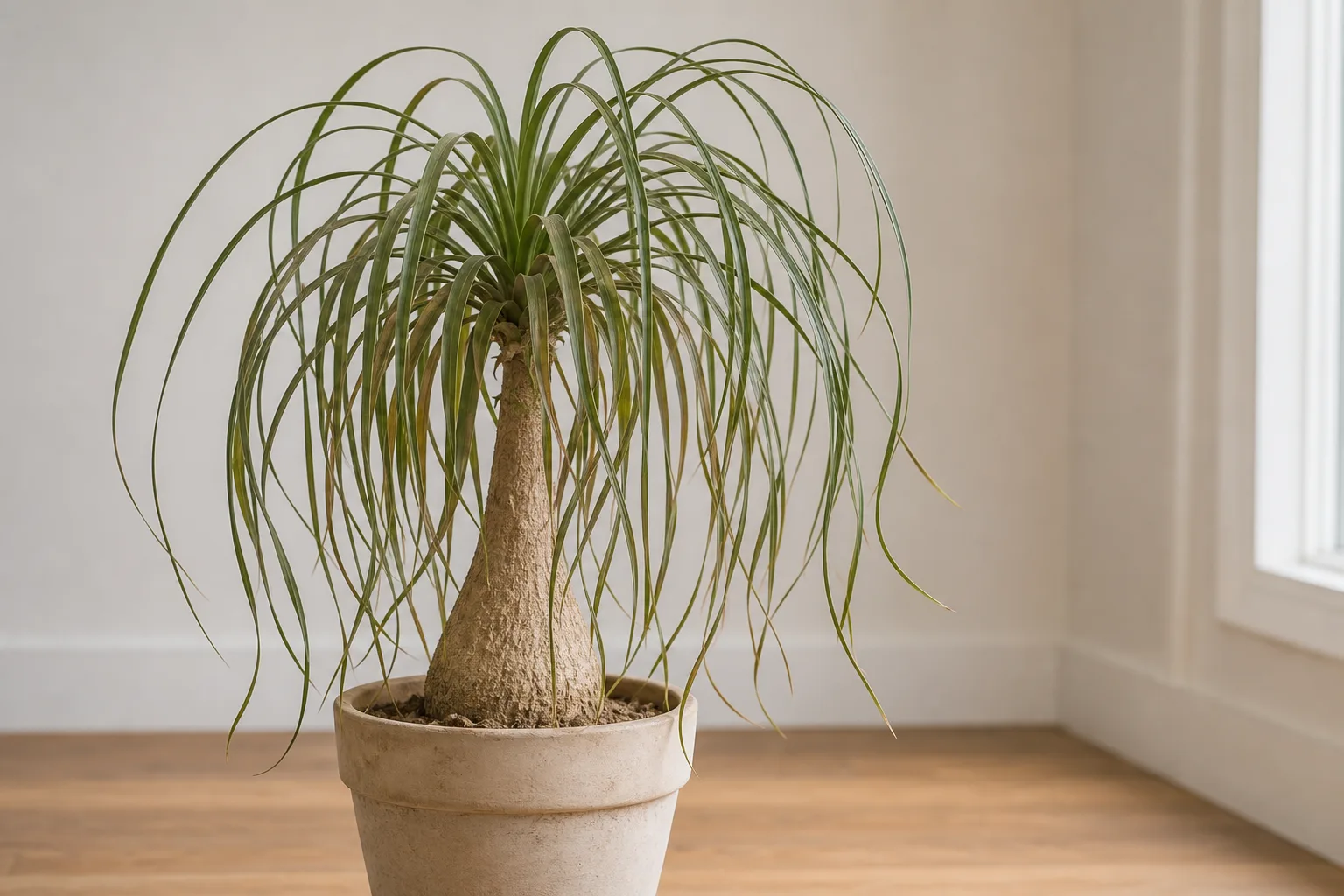
Wilting on Ponytail Palm starts with one check: healthy strap leaves cascade fountain-like with firm turgor - stress wilt is limp and dull. Then lift the pot and press the caudex. Wet heavy soil with a soft base means stop watering; dry light soil with a firm base means one deep soak.
Wilting on Ponytail Palm: Causes, Checks & Fixes
This guide covers wilting on Ponytail Palm. See also the general Wilting guide, watering, and light pages for this plant.
Wilting on Ponytail Palm: Causes, Checks & Fixes
Quick answer
Before you water or prune, know that healthy Ponytail Palm leaves naturally cascade fountain-like from the crown. That graceful recurved arch is normal - not wilt. Stress wilt looks different: straps lose glossy firmness, hang limp and dull, and often change suddenly after a watering shift, repot, or heat spike.
Wilting on Ponytail Palm (Beaucarnea recurvata) almost always traces to water balance at the roots and caudex. This drought-adapted caudiciform stores water in its swollen base and long strap leaves. When roots fail or reserves run low, turgor collapses and leaves wilt.
First step: lift the pot and press the caudex.
- Heavy wet pot + limp leaves + soft base → stop watering; suspect overwatering or rot.
- Light dry pot + limp leaves + firm base → one deep soak after confirming dryness throughout.
Do not add water hoping wilted leaves will perk when soil is already wet - and do not withhold water from a bone-dry light pot. One moisture-matched correction beats guesswork.
For soak-and-dry rhythm and seasonal intervals, pair this page with the watering guide and overview hub.
Wilting vs. drooping leaves on Ponytail Palm
Use this page when you need fast triage on acute turgor loss: sudden limp straps, whole-crown flop, or wilt that appeared within hours to a few days after a watering mistake, repot, or heat event.
Use the drooping leaves guide when leaves angle downward but tissue still feels mostly firm, the change developed slowly, and you want deeper lookalike differentiation, extended recovery branches, and posture-focused diagnosis.
Both URLs cover the same wet-soil wilt paradox on B. recurvata - limp leaves on saturated mix because damaged roots cannot move water upward. This page leads with emergency pot-weight and caudex checks; the drooping-leaves page goes deeper on chronic posture patterns and extended recovery workflows.
What wilting looks like on Ponytail Palm
Normal fountain cascade (not wilt)
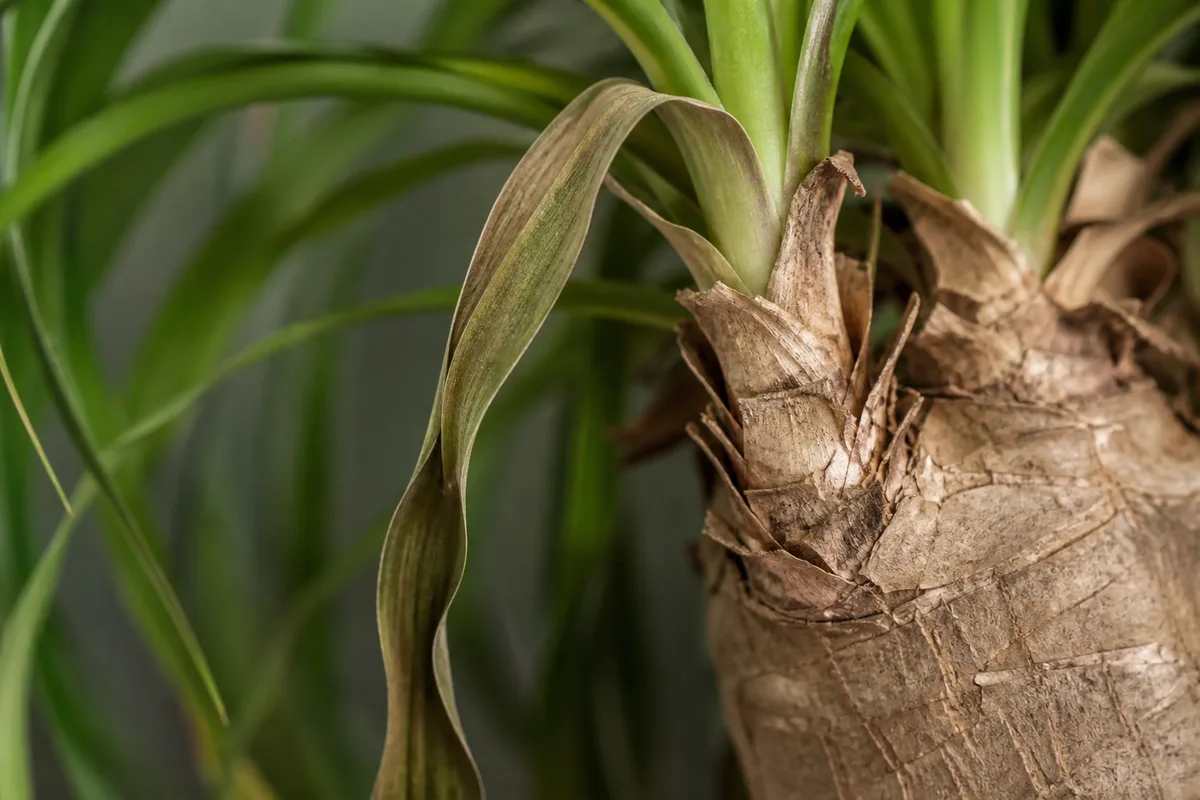
Wilting symptoms on Ponytail Palm - compare with healthy tissue on the same plant.
- Strap leaves arch outward and downward from the crown with a firm, springy feel
- Caudex is hard like a ripe apple
- Pot weight matches your normal dry-down rhythm
- No sudden limpness after a recent care change
Do not prune firm arching leaves mistaken for wilt.
Underwatering wilt pattern
- Leaves look limp, dull, and floppy - reduced turgor, sometimes curling inward
- Dry, crispy brown tips may appear on outer straps
- Pot feels very light; soil is dry several inches down
- Caudex stays firm but may look slightly wrinkled or deflated
- Plant often perks partially within hours after a deep soak on dry soil
See underwatering and brown tips when drought is the leading pattern.
Overwatering and rot wilt pattern
- Leaves hang limp while soil stays wet for days - the classic wet-soil wilt paradox
- Lower or outer leaves may yellow before full collapse
- Caudex feels soft, squishy, or yields when pressed above the soil line
- Sour or swampy smell from drainage holes
- White or gray mush on roots if you unpot
See overwatering and root rot for full rescue protocols.
Repot shock and cold-draft temporary wilt
- Uniform limpness shortly after Ponytail Palm repotting guide or a move, with firm caudex and no foul smell
- Brief wilt near drafty winter windows with adequate soil moisture and firm base
- Usually stabilizes in two to three weeks with steady light and temperature
Worked triage example
An 8-inch pot feels feather-light, skewer dry three to four inches deep, caudex firm with slight wrinkling, straps limp but not mushy at the base → drought wilt. One deep soak until runoff, saucer emptied → many owners see partial perk in 6 to 12 hours and firmer straps by 24 to 48 hours.
Why Ponytail Palm wilts
Caudex reservoir and root uptake
Ponytail palm is a drought-tolerant caudiciform native to semi-desert areas of southeastern Mexico - not a true palm. Its swollen caudex stores water like a reservoir. Strap leaves lose turgor when that reserve runs low or when roots cannot deliver moisture upward despite wet soil.
Overwatering and oxygen-starved roots
Root rots kill ponytail palms on wet soils. Saturated mix blocks oxygen, roots decay, and leaves wilt despite wet soil - the same wilting pattern Missouri Botanical Garden describes when overwatered roots cannot take up moisture. A soft caudex is a rot warning, not simple thirst.
Underwatering and depleted reserves
Owners often under-water out of rot fear - understandable on this species. But weeks without a deep soak depletes even the caudex. Small sips that never rewet the root zone, hydrophobic dry mix, and hot sunny windows accelerate moisture loss. The pot goes light; leaves go limp; the base stays firm.
Low-light slow-evaporation trap
In dim corners, transpiration drops but many owners keep the same watering calendar. Mix stays damp while metabolism slows - mimicking overwatering wilt without obvious surface sogginess. Brighter light speeds dry-down; see not enough light.
Heat stress and recent repotting
Sudden harsh sun after shade, or a heater blast, can increase transpiration faster than roots replace water - brief wilt with firm base. Repotting disturbs fine roots; temporary limpness until re-establishment is common with firm caudex and no sour smell.
How to confirm the cause
Work through these six checks in order:
- Normal vs. stress cascade - Run fingers along a strap leaf. Firm and glossy with natural arch = healthy. Limp and lifeless = stress wilt.
- Pot weight - Lift the container. Compare to how it felt right after your last thorough watering. Very light suggests drought; heavy and soggy suggests excess moisture.
- Caudex firmness - Press the swollen base gently above the soil line. Hard = drought or normal; soft or dented = suspect rot immediately.
- Soil moisture at depth - Probe through the drainage hole or use a moisture probe three to four inches deep. Dry throughout confirms underwatering. Wet deep down with limp leaves confirms uptake failure, not thirst.
- Recent care history - Did you water on schedule while the plant sat in low light? Repot into heavy peat? Move from shade to harsh sun? Vacation drought?
- Smell and roots - Unpot only if the caudex is soft or smell is sour. Rinse roots: firm and pale is healthy; brown mush collapses between fingers.
Wet vs. dry vs. normal comparison
| Pattern | Pot weight | Caudex | Soil at depth | Urgency | Next step |
|---|---|---|---|---|---|
| Normal cascade | Typical dry baseline | Firm, hard | Dry per your rhythm | None | No intervention |
| Drought wilt | Very light | Firm, may wrinkle | Bone dry throughout | Low | One deep soak - underwatering |
| Rot wilt | Heavy, stays wet | Soft or squishy | Wet, sour smell | High | Stop water; unpot - root rot |
| Repot shock | Variable | Firm | Moist but not swampy | Monitor | Hold steady 2–3 weeks |
| Low-light trap | Heavy for days | Firm | Damp deep, slow dry | Medium | Improve light - not enough light |
If the pot is light, mix is dry throughout, and the caudex is firm, underwatering is the leading diagnosis. If the pot is heavy, soil is wet, and the base is soft, overwatering or rot comes first - do not add more water.
First fix for Ponytail Palm
Lift the pot and press the caudex - then match your next action to what you find.
That single check prevents the most common mistake: watering a rotting plant or withholding water from a thirsty one.
- Dry soil + firm caudex: Water thoroughly until water runs from drainage holes, discard saucer water, and recheck leaf turgor in a few hours. For severely dry hydrophobic mix that sheds water on top, bottom-soak the pot in a basin until the soil mass rewets evenly - but only when the caudex is firm and soil is dry, never on a soft wet base.
- Wet soil + soft caudex: Stop all watering. Unpot, inspect roots, trim mushy tissue, and repot into dry gritty mix only after you confirm rot - do not soak on hope.
Do not fertilize, mist heavily, or repot on day one unless soft tissue and wet soil force a root inspection. Do not prune all wilted leaves immediately - wait to see which straps regain firmness.
One correction only - do not alternate guesswork watering.
Step-by-step recovery
After the first moisture-matched action:
- For drought wilt - Place in bright light, water deeply once, then wait until the mix is dry through before the next drink. NC State Extension recommends allowing plants to dry out between summer waterings and greatly reducing water in winter.
- For rot wilt - Trim all brown mushy roots back to firm tissue with clean tools. Let cut surfaces dry in bright indirect light for several days. Repot into fast-draining cactus or succulent mix in a pot with drainage holes. Withhold water for one to two weeks, then water lightly once and let dry fully. Full protocol: root rot rescue.
- Improve light if dim - Move to a sunny window. Houseplants should be placed in a sunny window for this species; better light speeds drying and reduces repeat overwatering wilt.
- Stabilize after repot shock - Hold water briefly, keep light and temperature steady, and avoid moving the plant again for several weeks.
- Trim only after stabilization - Remove straps that stay limp, brown, or collapsed once new firm growth appears or the caudex stays hard for two weeks.
Recovery timeline
Simple drought wilt often improves within 6 to 24 hours after a thorough soak on dry soil. Full leaf firmness may take two to four days. The caudex should plump slightly as it rehydrates.
Overwatering wilt without soft caudex may stabilize in one to two weeks once you stop watering and the mix dries. Leaves that yellowed will not green again - judge success by firm new straps from the crown.
Root rot with soft caudex recovery takes weeks to months if enough firm tissue remains. If the base keeps softening after dry treatment, the plant may not be saveable. Early rot caught with a still-firm upper caudex has a better outlook than advanced base collapse.
Repot shock usually resolves in two to three weeks with stable care and a firm base.
Success criteria: firm caudex, pot weight returning to your normal dry baseline rhythm, and new glossy straps emerging from the crown center. Failure signs: spreading softness at the soil line, worsening limpness on wet soil after you stopped watering, or no firm new growth after four weeks on the correct branch.
Lookalike symptoms to rule out
Normal recurved cascade - Fountain-like arch with firm leaves; no care change needed. Do not prune.
Brown tips without full limpness - Often underwatering, low humidity, or mineral buildup from tap water; caudex usually firm. See brown tips.
Yellow leaves on wet soil - Overlaps with rot wilt; treat as root stress first. See overwatering.
Scale or mealybug damage - Sticky residue, white cottony patches, or bumps on straps; firm caudex with localized decline. Inspect before assuming water stress.
Cold draft limpness - Temporary wilt near windows in winter with firm base and adequate soil moisture; move away from cold glass and heat vents.
Mistakes to avoid
Do not water because leaves look wilted without checking soil - overwatered ponytail palms wilt on wet mix.
Do not withhold water from a light dry pot hoping limp leaves will toughen up - drought stress on a reservoir plant still needs a drink when the mix is dry.
Do not confuse healthy cascade with stress wilt and prune arching leaves that are firm and normal.
Do not bottom-soak a plant with soft wet caudex - that worsens rot.
Do not use heavy peat potting mix without grit - good drainage is required to prevent stem and root rots.
Do not fertilize a stressed plant before water balance and root health are stable.
Do not repot into an oversized container - large wet soil zones around a small root ball invite rot wilt.
How to prevent wilting on Ponytail Palm
Water based on pot weight and soil dryness, not a fixed calendar. In most homes that means every two to four weeks in active growth and monthly or less in winter - but dim rooms dry slower and sunny windows dry faster. Wisconsin Extension notes winter watering should be greatly reduced indoors.
Use relatively small pots with excellent drainage. Empty saucers after every watering.
Keep the plant in bright light year-round so the mix cycles predictably between wet and dry - light needs.
Avoid watering when the caudex is soft or soil is still damp deep down - wait for full dry-down per the watering guide.
After repotting, wait several days before the first drink and use dry gritty mix, not soggy bagged peat straight from the bag.
When to worry
Treat as urgent when wilting pairs with a soft caudex, sour wet soil, blackening at the soil line, or collapse within days despite your first correction. Advanced base rot is often fatal on ponytail palm - early firm-tissue salvage is the only realistic window.
Lower urgency: Gradual limpness on dry soil, firm base, and a light pot - one deep watering usually fixes it.
Monitor closely if wilt persists more than 48 hours after proper drought correction or two weeks after stopping water on wet rot-suspect soil. Unpot if the caudex softens further or new growth fails to emerge firm.
Conclusion
Wilting on Ponytail Palm is usually a water-stress signal - but you must separate healthy fountain-like cascade from limp turgor loss, then read pot weight and caudex firmness before your next action. Dry and firm calls for a soak; wet and soft calls for stopping water and inspecting roots. Get that fork right and most ponytail palms recover; get it wrong and you either drown a rotting plant or dehydrate a thirsty one. For slower posture changes and deeper lookalike work, continue with the drooping leaves guide.
Related Ponytail Palm problems
- Ponytail palm overview - full care hub and caudex biology
- Drooping leaves - deeper posture diagnosis when wilt is not acute
- Watering guide - caudex dual check and soak-and-drain method
- Underwatering - drought wilt and deep-soak protocol
- Overwatering - wet-soil rescue when several leaves yellow together
- Root rot - spongy caudex and trim protocol
- Not enough light - dim-room slow-dry trap
- Brown tips - salt and drought lookalike without full limpness
When to use this page vs other Ponytail Palm guides
- Ponytail Palm watering guide - Use for routine moisture checks before assuming wilting is the main issue.
- Ponytail Palm problems hub - Browse all 5 common issues on this species.
- Root Rot on Ponytail Palm - Different entry point when symptoms overlap with wilting.
- Yellow Leaves on Ponytail Palm - Different entry point when symptoms overlap with wilting.