How to Prune Blueberry Bushes in Winter
Prune blueberry bushes in late winter while dormant. Learn cane-age rules, renewal cuts, flower-bud thinning, and mistakes that shrink your harvest.
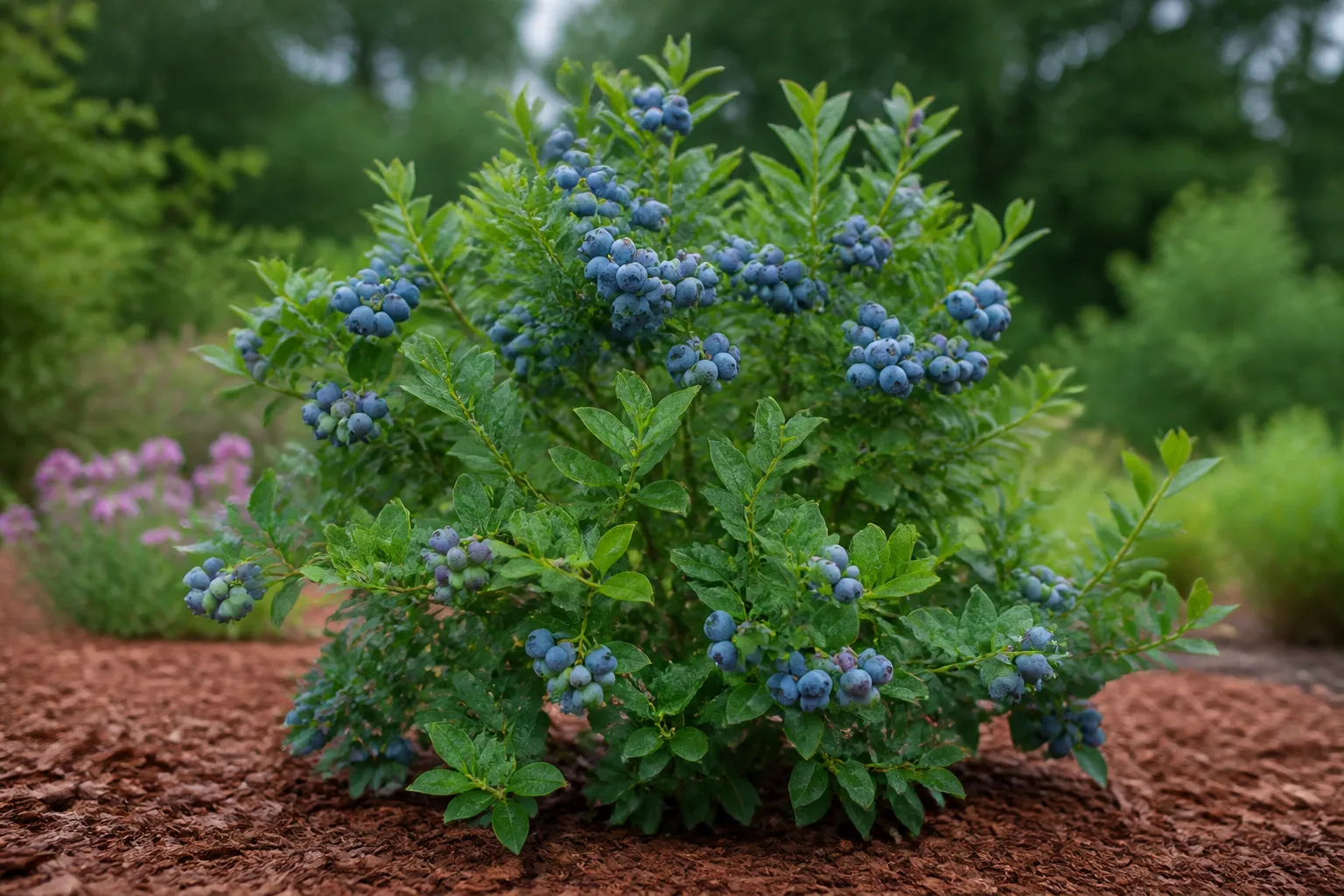
Prune blueberry bushes once a year in late winter, after leaves have dropped and before flower buds swell in spring. That dormant window lets you see every cane, remove old wood at the crown, and thin flower buds without fighting summer foliage. The goal is not a smaller bush—it is a renewal cycle that keeps a mix of 1- to 6-year-old canes producing large berries on upright growth.
Blueberries are long-lived shrubs that fruit on one-year-old wood, with the best crops typically on canes in their second through fourth year. Skip annual pruning and you get crowded centers, small berries, and declining yields on gray, lichen-covered wood. Prune too hard in fall and you risk tender shoots that winter-kill. This guide walks through age-based cuts, a crown-first renewal routine, and recovery options for bushes that have gone years without attention.
A well-managed blueberry patch depends on annual dormant pruning as much as acid soil and consistent moisture. Winter is when structure—and flower buds—are easiest to read.
The quick answer: prune blueberries in late winter while dormant
For most highbush plantings in the U.S., plan pruning between late December and early March, depending on your climate. In mild regions, finish before buds break; in cold northern zones, wait until the harshest winter cold has passed but still complete work before green tissue appears. UConn Extension’s blueberry pruning guide recommends pruning only when plants are fully dormant from late winter through early spring.
Walk the row on a dry day with sharp bypass loppers (for canes up to about 2 inches) and hand pruners for detail work. Start at the crown—the point where canes emerge from the ground—not at the top of the bush. Remove dead, damaged, and diseased wood first, then take out the oldest unproductive canes and thin excess flower buds. A healthy mature bush often ends with roughly 18 canes of mixed ages rather than a dense thicket of twiggy laterals.
Dead or broken branches can be removed any time you notice them. Reserve the full structural session for dormancy so you do not stimulate soft growth in fall or strip leaves that are still feeding the plant.
How blueberry bushes grow—and why that changes your cuts
Cultivated blueberries are upright, multi-stemmed deciduous shrubs. Unlike a tree with a single trunk, a blueberry renews itself from the ground up. Each spring, new shoots (canes) push from the crown. Those canes elongate, branch into laterals, and set flower buds in late summer on wood that will fruit the following season.
Canes, crown, and where fruit actually forms
Think of the crown as a bowl-shaped zone 12 to 18 inches across where canes should originate. Canes that sprout outside that circle create a wide, floppy base and make harvest harder. Canes that stay inside but crowd the center block air and light.
Fruit buds form on one-year-old wood and on lateral shoots off older canes. The largest, sweetest berries usually come from the upper half of the bush on upright canes roughly 2 to 4 years old. Wood older than about six years tends to produce fewer, smaller berries and more twiggy growth. Your annual job is to remove the oldest canes at the base while keeping strong new shoots coming up to replace them.
The Southern Region Small Fruit Consortium (NC State) describes two cut types: thinning cuts remove an entire cane to the crown and drive renewal; heading cuts shorten a shoot and are mainly for finishing work on whips or leggy tips after thinning is done.
Northern highbush, southern highbush, and rabbiteye differences
Northern highbush (Vaccinium corymbosum) is the standard commercial type in cool climates, typically 6 to 12 feet if unpruned. Southern highbush hybrids tolerate warmer summers and may need slightly earlier or later pruning based on local bud-break dates. Rabbiteye (Vaccinium virgatum) grows taller (10 to 15 feet unpruned), is more heat-tolerant, and is common in the Southeast.
Principles are the same—renew from the crown, favor upright canes, thin flower buds—but rabbiteye cultivars often produce more basal sprouts and may need heavier crown thinning. Oregon State University Extension notes that moderate annual pruning of highbush blueberries in winter can turn a mediocre harvest into a stronger crop with better berry quality. Match your timing to local dormancy, not a national calendar date.
Why winter dormancy is the best pruning window
Dormant pruning gives you three practical advantages at once: visibility, plant safety, and yield control.
With leaves gone, gray older canes, crossing branches, and fat flower buds stand out. You can trace each cane to the crown and decide which three oldest stems to remove without guessing under a green canopy. Cuts made while metabolism is low heal as spring growth begins, and pests and disease organisms are less active than in warm, wet months.
Winter pruning also forces a honest conversation about crop load. Flower buds are visible and tempting to keep—but leaving too many produces a heavy crop of small berries and stresses the bush for years. The Small Fruit Consortium advises expecting to remove at least one-third of flower buds during a proper dormant prune. That temporary yield reduction buys larger fruit and healthier canes.
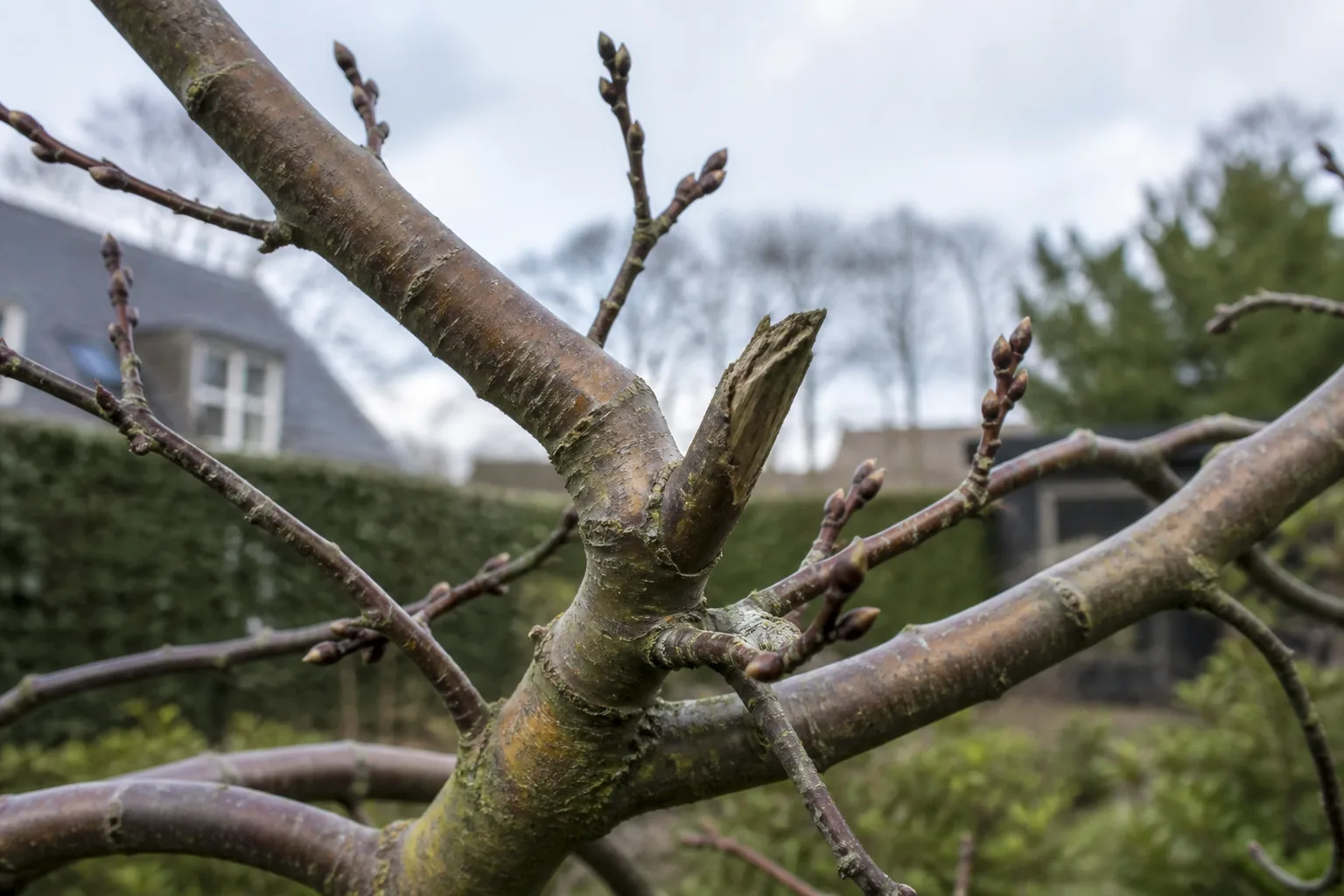
Without leaves, you can see crossing canes, dead tips, and bud density. That is why fruit growers schedule blueberry pruning in the same late-winter window as grapes and many tree fruits.
What happens if you prune too early or too late
Fall pruning (after leaf drop but before deep dormancy in mild areas) can stimulate new shoots that do not harden off before cold weather. Those shoots often die back, wasting plant energy and opening wounds to disease.
Late-spring pruning, after buds open, removes wood that already committed to flowers and forces the bush to regrow when it should be fruiting. You lose the current crop on cut branches and may invite stress during the hottest part of the year.
If you are past bud swell, limit yourself to sanitation—dead wood, broken limbs, or canes killed by winter injury—and schedule full renewal cuts for next winter. Bushes in very cold climates sometimes show delayed winter injury; canes that looked fine in February may die back in April. Cut to healthy green wood as soon as you see dieback, even if that means a light mid-season trim.
Tools and sanitation before you start
You need tools sized for woody canes, not houseplant scissors.
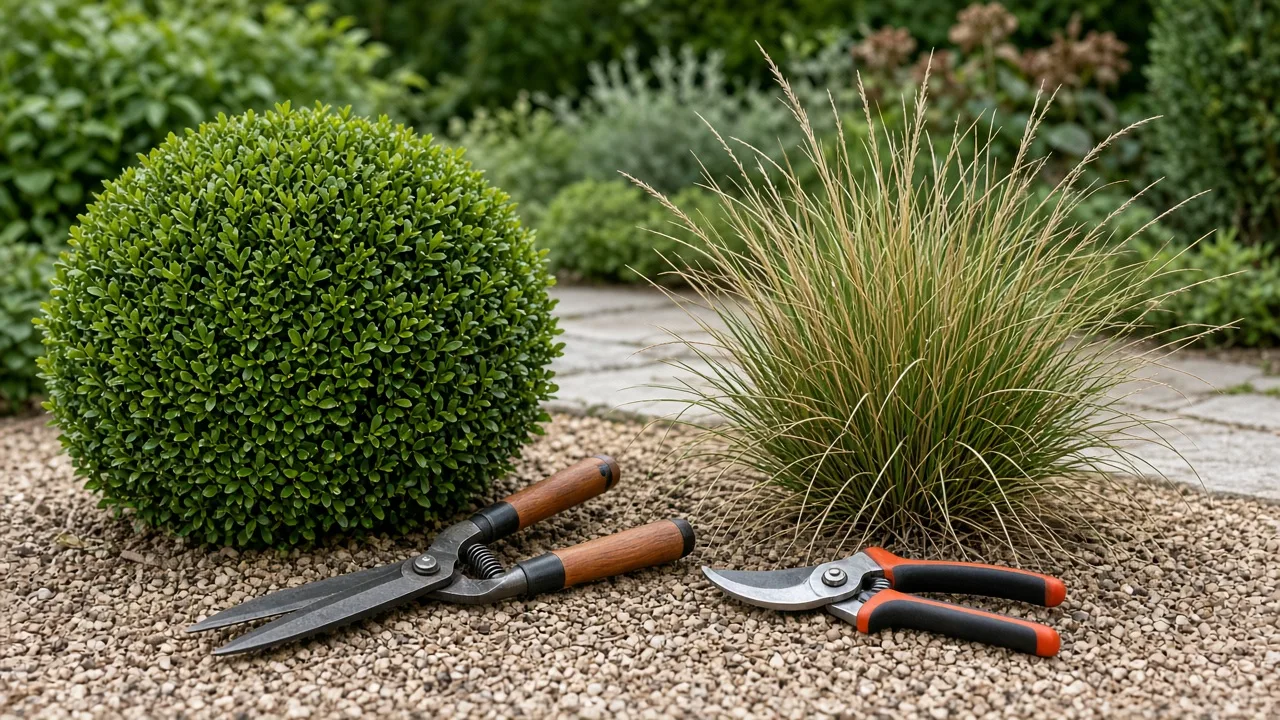
- Bypass loppers with long handles for basal cuts on canes up to about 2 inches thick
- Bypass hand pruners for laterals, twiggy wood, and finishing
- Optional: small pruning saw for oversized stubs (rare on home bushes)
- Gloves and eye protection—old canes snap back
Make flush cuts at the crown without leaving stubs that rot. Disinfect blades between bushes if you suspect disease (mummy berry, stem canker, or obvious cankered wood). Remove pruned material from the patch—do not compost diseased wood in place.
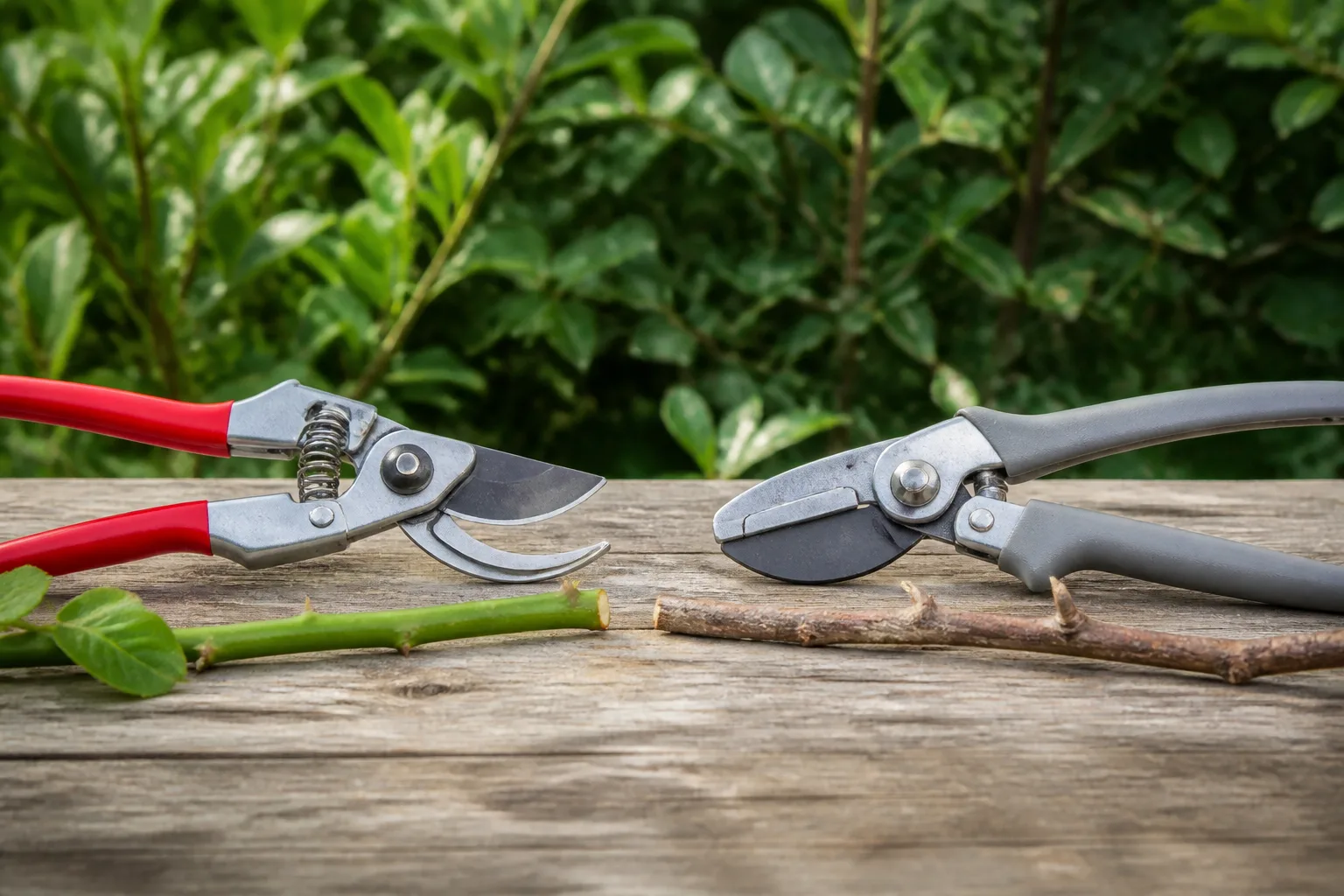
Blueberry canes thicken faster than they look. Long-handled loppers are not optional on mature bushes—they save your wrists and make clean basal cuts possible.
Pruning young blueberry bushes (years 0–2)
Young bushes need structure and roots, not maximum berries. The hardest pruning happens at planting and in the first two winters.
At planting and year one
At planting—usually late winter while fully dormant—remove all flower buds and cut back top growth by about one-half to two-thirds. The Small Fruit Consortium is explicit: strip buds and reduce height so the plant invests in roots and new shoots instead of fruit.
In year one after planting, repeat the discipline: remove flower buds again and take out weak, low, crossing, or whip-like shoots growing from the crown center. You are building a vase-shaped framework with 3 to 6 strong upright canes. No berries this year is a feature, not a failure.
Year two: when to allow the first berries
If the bush grew vigorously in year one—new canes 2 to 3 feet or more—you may leave a limited number of flower buds in year two. UConn Extension suggests continuing to remove buds in year three as well if the plant still looks undersized.
A practical cap for home growers: allow fruit only on the strongest canes and keep total bud count modest (on the order of a few dozen buds, not hundreds). If growth was weak, treat year two like year one and remove all buds again. Overcropping a young bush creates permanent stunting.
Pruning bushes ages 3–5
By year three, the bush should have multiple cane ages and a visible crown. Focus on selection, not just height reduction.
Remove low horizontal laterals that will drape fruit in mud or splash soil onto berries. Take out crossing canes and weak twiggy shoots in the center. Keep the healthiest upright canes and begin identifying which new basal shoots will replace older wood next year.
Penn State Extension emphasizes opening the center for air circulation and light—similar to training a small fruit tree with multiple trunks. You are still thinning flower buds heavily; routine pruning at this stage should remove a large fraction of buds so vegetative growth keeps pace.
Shape toward an upright vase: narrower at the base, open in the middle, with fruiting wood on the upper half. Avoid flat-topping the bush; that stimulates dense water sprouts.
Pruning established blueberry bushes (year 6+)
A mature, productive highbush is a rolling population of canes from year 1 through year 6. Each winter you evict the oldest residents and recruit new ones.
UConn Extension targets about 18 canes per plant—roughly three canes per year of age, with none older than six years. Every year, remove the three oldest, least productive canes at the crown, and thin excess new shoots so only the three strongest new canes remain to replace them.
The four-step renewal routine
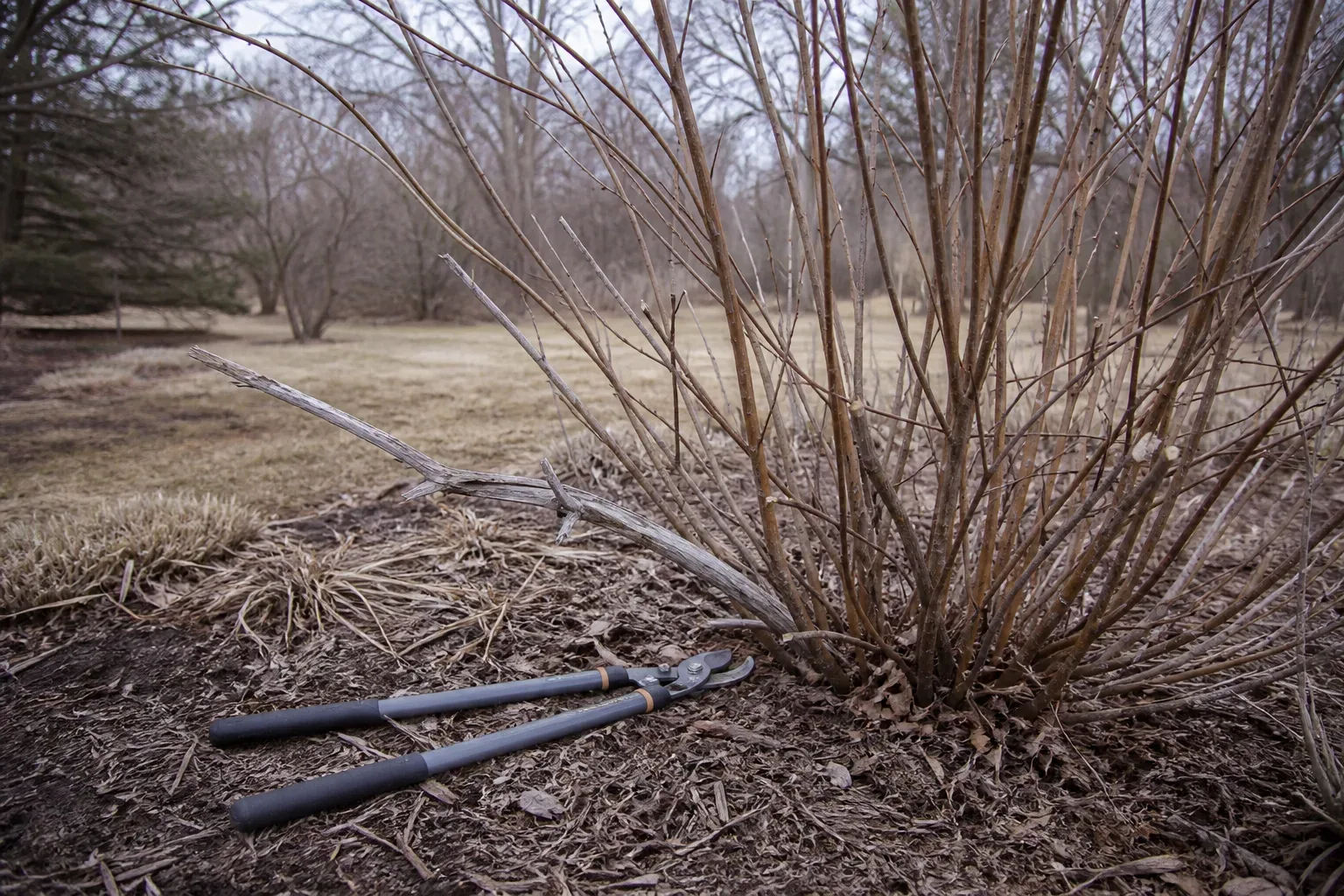
Renewal pruning starts with large thinning cuts at the crown—removing entire old canes, not just snipping branch tips.
Adapted from commercial hand-pruning workflows, this crown-first sequence keeps decisions fast:
Step 1 — Define the crown. Imagine a 12- to 18-inch circle at the base. Remove every cane emerging outside it, regardless of age.
Step 2 — Remove low and crossing wood. Cut out canes that lean toward the ground, angle through the center, or rub against better stems. What remains should be mostly upright.
Step 3 — Open the center with thinning cuts. Remove one to three of the oldest, grayest canes from the middle—often those with lichen and few fat buds. Make cuts low at the crown.
Step 4 — Thin twiggy laterals and head tall whips. On remaining canes, remove clusters of matchstick-sized laterals that will produce tiny berries. Shorten excessively tall whips to keep fruit in the harvest zone (roughly 4 to 6 feet for highbush).
This order matters: if you start by snipping tips, you still have an overcrowded base.
Reading flower buds during winter pruning
Flower buds are plump, rounded, and often clustered toward shoot tips. Leaf buds are slimmer and pointed. When in doubt, cut a bud open—flower buds show tiny scale-like structures inside.
If branches look like a bottlebrush of buds, that cane is overloaded. Remove the weakest twigs entirely or head back to a side branch with fewer buds. Home for the Harvest notes that stems thinner than about ¼ inch at the bud zone often produce small fruit; trim those tips back to stouter wood, leaving roughly five bud clusters per branch on heavy-blooming cultivars.
Expect the bush to look sparse when you finish—that is correct. A well-pruned mature blueberry often has one-third fewer flower buds than when you started.
Rejuvenation pruning for neglected bushes
Bushes that have not been pruned for years become a tangle of old wood, weak shade-grown shoots, and erratic crops. Rejuvenation pruning resets the cycle.
UConn Extension recommends removing at least one-third of all canes, and up to the entire plant in severe cases, cutting at the crown. Follow with a soil test: blueberries need acid soil (pH roughly 4.5 to 5.0) and adequate nitrogen to push strong basal shoots. If pH is wrong, new canes will be weak no matter how hard you cut.
After a hard rejuvenation, treat the plant like a young bush for two to three years—minimal fruit, emphasis on new cane selection. Full production may take several seasons. Cutting healthy bushes completely to the ground will regenerate vegetatively but typically delays meaningful harvest for three or more years; use that only when the alternative is removing the planting.
Common blueberry pruning mistakes
Pruning in fall for convenience invites tender regrowth and winter damage. Wait for true dormancy.
Keeping every flower bud because yields look promising this spring. Overcropping shrinks berry size and weakens next year’s wood.
Topping without crown work leaves a puffball of old wood at the base and fresh shoots only at the tips.
Removing all new basal shoots starves the renewal pipeline. You need young canes waiting in the wings.
Ignoring soil fertility and pH when the bush will not sprout new shoots. UConn Extension specifically flags checking pH and nitrogen if basal growth is poor.
Shearing into a ball reduces light penetration and encourages outer shell growth. Aim for a vase, not a hedge.
Pruning wet bushes in marginal weather spreads fungal spores. Choose a dry day in the dormant window.
Aftercare once pruning is done
Pruning is one line item in annual care, not the whole job.
- Mulch with pine bark, pine needles, or other acidifying organic mulch—see our blueberry winterization guide for depth and timing in cold climates.
- Fertilize according to a soil test; avoid heavy nitrogen immediately before a hard freeze in borderline zones.
- Water if winter is dry; roots still need moisture to support spring push.
- Plan companions and pollination: a second cultivar with overlapping bloom improves set—our blueberry companion plants guide covers spacing and neighbors.
- Monitor for winter injury into late spring and remove dead tips promptly.
Mark your calendar for next late winter before growth starts. Annual moderate pruning beats a crisis cut every decade.
Conclusion
Winter pruning works for blueberries because it matches their biology: you see the crown, the cane ages, and the flower buds before the plant spends energy on leaves and fruit. Use thinning cuts at the base to renew wood, keep a rolling mix of cane ages, and thin buds ruthlessly enough to protect berry size.
Young bushes sacrifice harvest for roots; mature bushes lose their three oldest canes each year; neglected bushes may need staged rejuvenation plus soil correction. Get those three stages right and a blueberry planting can stay productive for decades—with larger berries on wood you can actually reach.