11 Companion Plants for Hostas (Shade Garden Guide)
Eleven hosta companion plants matched by shade, moisture, and bloom timing—plus spacing rules, a layered border plan, and four pairings to skip.
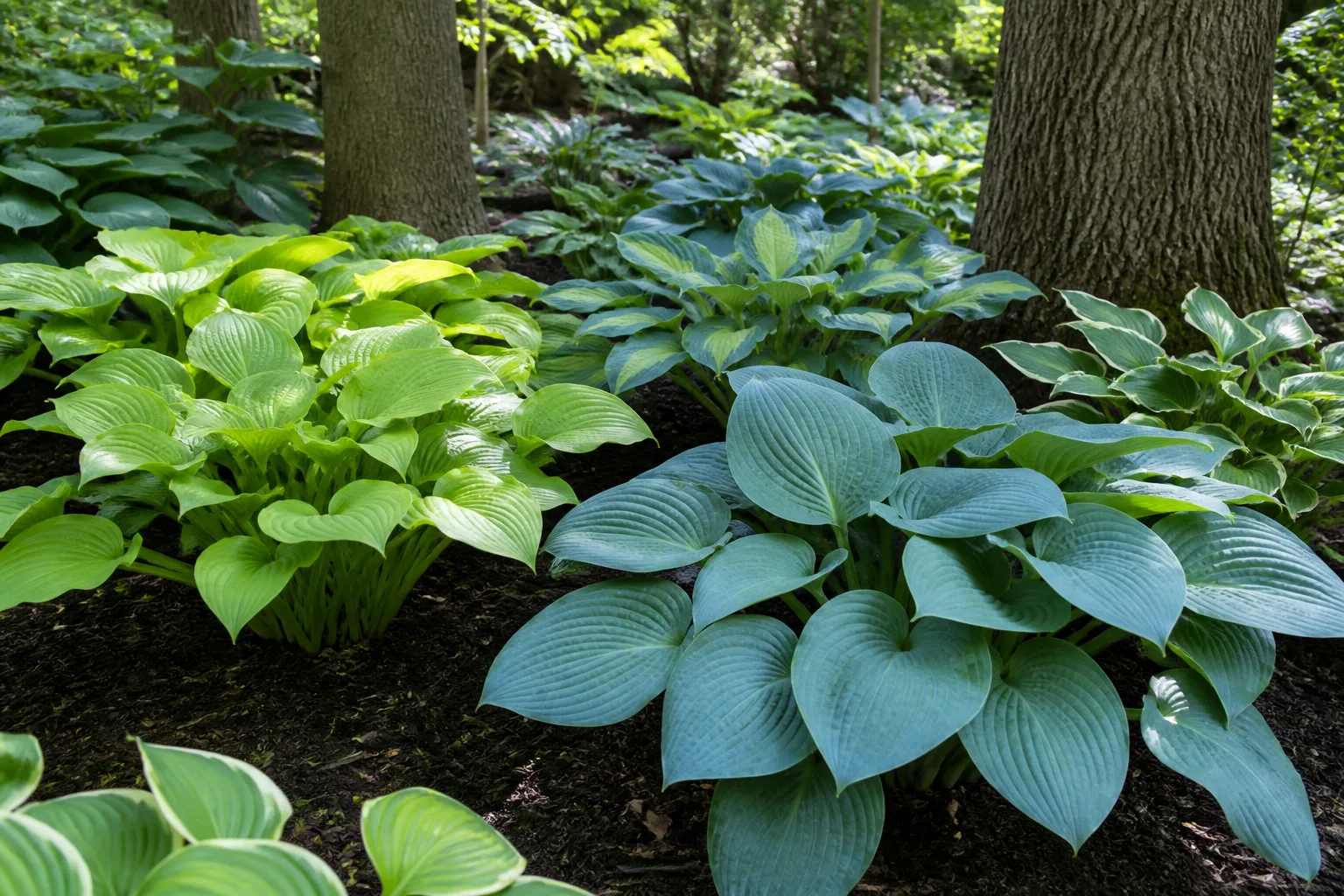
Hostas (Hosta spp.) are the backbone of North American shade gardens for a reason: bold foliage from spring through fall, low maintenance once established, and thousands of cultivars in blue, gold, green, and variegated forms. The mistake is treating them as solo specimens in empty mulch rings. A hosta bed that pairs the right neighbors—by light, moisture, height, and season—looks intentional from March bulb color through August leaf architecture.
This guide covers 11 companion plants worth planting with hostas, the site rules every partner must share, four pairings to skip, and a 4×10-foot sample layout you can adapt before your next nursery run.
What Makes a Good Hosta Companion
Companion planting beside hostas is less about secret root chemistry and more about shared culture plus visual and seasonal complement. Penn State Master Gardener material on good-neighbors companion planting describes polyculture as diverse plantings that mimic natural communities—not a guarantee that pests disappear. For hostas, companions succeed when they tolerate the same shade and moisture, occupy a different height layer, and cover the calendar when hosta foliage alone would look flat.
Shared Shade, Moisture, and Soil Needs
Run a ten-minute site check before you buy anything:
Light: Most hostas perform best in morning sun and dappled afternoon shade. The NC State hosta profile notes that blue-leaved forms need deeper shade, while many green types accept partial shade; in hot southern gardens, full shade or dappled shade keeps leaf color crisp and prevents scorch. Match companions to the actual light on your bed—not the label on a sun-loving perennial.
Soil: Hostas want moist, fertile, slightly acidic soil that still drains. They are intolerant of winter-soggy clay and of droughty sand unless you amend and irrigate. The RHS hosta growing guide recommends improving heavy clay with compost and mulching to conserve moisture. Partners like astilbe and ferns need similar humus; dry-soil specialists will fail beside a well-watered hosta clump.
Water: Keep the root zone consistently damp but not flooded—roughly the top 6 inches slightly moist through summer, per RHS guidance. If you must choose between overwatering a dry-soil neighbor or underwatering hostas, split the bed rather than compromise both.
Hardiness: Most garden hostas are hardy in USDA zones 3–9; miniatures and giants vary. Match companion zones to your winter lows and to the microclimate under eaves or tree canopies.
Bloom Timing and Foliage Layering
Hostas are grown primarily for leaves, with trumpet-shaped flowers—white, lavender, or purple—in midsummer. Plan companions so something interesting happens before leaves unfurl and after spent blooms brown:
| Season | Companion role | Examples from this list |
|---|---|---|
| Late winter–spring | Early color before hosta emergence | Lungwort, brunnera, bleeding hearts |
| Early–mid spring | Bulb display under deciduous trees | Tulips, daffodils, muscari, allium |
| Late spring–summer | Foliage contrast + plumes | Ferns, heuchera, astilbe |
| Summer–fall | Shrub height and blooms | Hydrangeas |
| Year-round | Leaf architecture | Hosta cultivars mixed by size and color |
Height layering matters as much as bloom time. Put low ground-layer plants (lungwort, brunnera, small heuchera) in front, medium hostas and astilbe in the middle, and tall ferns or hydrangeas toward the back when the bed is viewed from a path. For more on sequencing perennials through the year, see perennial flower garden layout.
Set Up the Hosta Bed Before You Pick Companions
Spacing, Drainage, and Mulch Rules
Hosta spacing: The RHS hosta guide recommends spacing plants up to 90 cm (3 ft) apart for large cultivars—check mature spread on the tag. NC State suggests dividing clumps every three to five years in early spring as leaves emerge; tight spacing makes division harder and slug hiding easier.
Companion clearance: Leave 12–18 inches between a hosta crown and the stem of a shrub or tall fern so neither competes for root space or airflow at the crown. Spring bulbs can sit 3–6 inches from dormant hosta eyes if you plant in fall without slicing through rhizomes.
Drainage first: In clay, raise the bed 4–6 inches with compost and coarse grit. Hostas rot in winter-wet soil; NC State lists crown rot as a real risk in poorly drained sites. Slope beds slightly away from foundations.
Mulch: Apply 2–3 inches of shredded bark or leaf mold after planting—never piled against hosta petioles. Mulch suppresses weeds, keeps soil cool, and reduces splash that spreads foliar disease. Refresh lightly each spring.
Planting window: RHS advises spring or autumn planting and avoiding mid-summer heat for new installations. Install the whole border in one cool season when possible so irrigation schedules stay consistent.
Choose Companions by Job—Not Color Alone
Pick two or three roles per bed instead of planting all eleven at once:
| Job | What it does | Examples from this list |
|---|---|---|
| Foliage contrast | Breaks up green-on-green | Heuchera, painted fern, variegated hosta |
| Vertical bloom | Height behind mounds | Hydrangea, allium |
| Spring color | Interest before hosta leaves expand | Tulips, daffodils, muscari, bleeding hearts |
| Ground-layer fill | Covers soil early | Lungwort, brunnera |
| Texture pairing | Fine vs bold leaves | Ferns, astilbe |
| Shrub skirt | Hides bare woody stems | Hostas at hydrangea base |
For what science supports versus garden lore, see does companion planting actually work. Cultural match beats color contrast every time.
11 Hosta Companion Plants Worth Planting
The plants below are the eleven worth serious consideration for hosta beds and woodland edges. Each entry notes why it pairs well, spacing, and realistic limits.
Ferns: Airy Texture Behind Broad Leaves
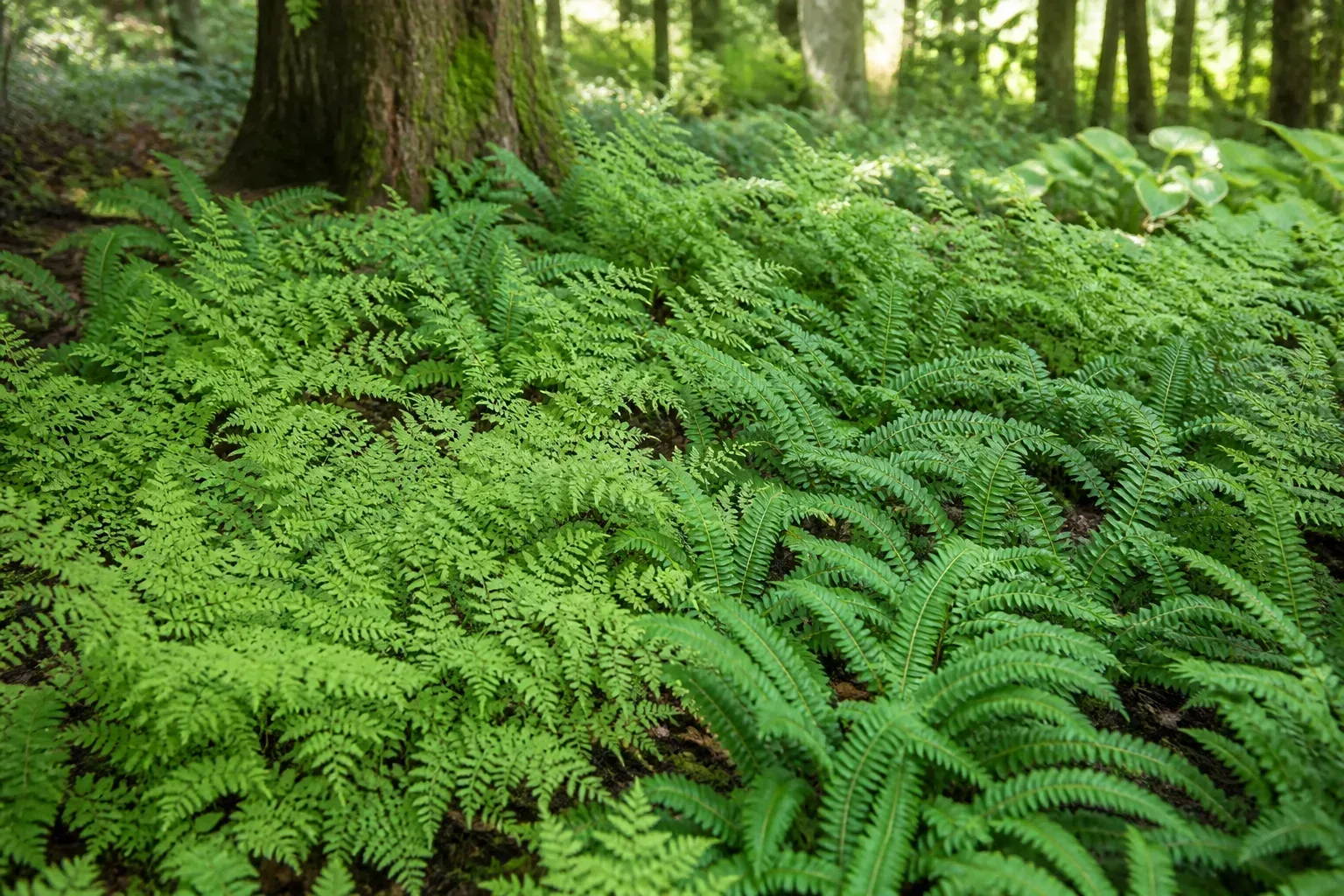
Ferns are the classic hosta partner: fine, divided fronds against hosta’s smooth, heart-shaped leaves. Ostrich fern (Matteuccia struthiopteris) reaches 3–4 feet and works as a backdrop; lady fern and Japanese painted fern (Athyrium) stay lower for mid-border texture. Most hardy ferns want partial to full shade and moist, rich soil—the same niche hostas occupy.
Plant tall ferns 18–24 inches behind medium hostas so fronds do not flop over hosta crowns. Smaller ferns can tuck between hosta clumps for a layered woodland look. NC State lists hostas for pond, rock, and shade gardens where ferns also thrive; keep both away from blasting afternoon sun on south-facing walls.
Maintenance is straightforward: cut browned fronds in late winter, divide crowded clumps every few years, and watch for slugs on both ferns and hostas in damp beds. For species selection beyond ostrich fern, see types of fern.
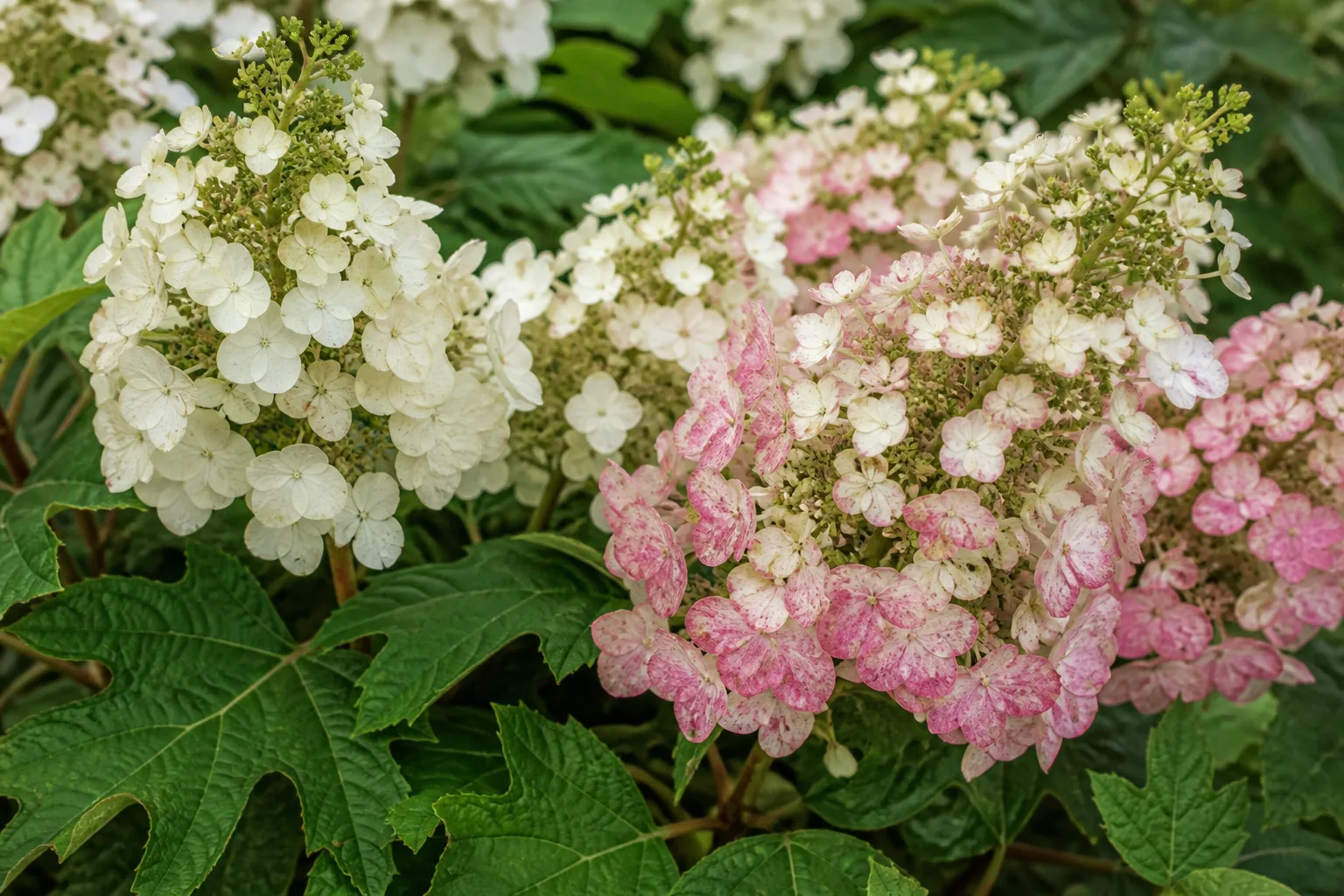
Hydrangeas: Vertical Blooms With a Living Skirt
Hydrangeas (Hydrangea spp.) and hostas share moist, fertile soil and partial shade—especially bigleaf types (H. macrophylla) and smooth hydrangea (H. arborescens ‘Annabelle’). Plant hostas at the base of medium shrubs to hide bare lower stems and unify the shrub skirt into one lush mass.
Space hydrangeas 3–6 feet apart depending on mature size; place hostas 12–18 inches from the trunk, offset so roots do not compete in the first year. Blue-leaved hostas beside blue or lavender hydrangea blooms create a cohesive cool palette; chartreuse hostas pop against pink mopheads.
Hydrangeas need more sun than hostas in northern gardens but still appreciate afternoon protection in the South. Do not let hydrangea drip irrigation soak hosta crowns nightly—aim emitters at the shrub root zone and water hostas on a separate schedule if drainage is mediocre.
Coral Bells (Heuchera): All-Season Leaf Color
Coral bells (Heuchera spp.) deliver ruffled foliage in purple, amber, silver, and lime while hostas are still emerging. Many heucheras are evergreen in mild zones, giving early-spring structure when hosta eyes are just poking up. They tolerate the same partial shade and well-drained, organic soil hostas prefer.
Plant heuchera 6–12 inches in front of medium hostas or between dwarf hostas in a tapestry bed. NC State’s native Heuchera villosa handles heat and humidity better than some older cultivars—worth considering in southern shade.
Heuchera can heave in freeze-thaw cycles; mulch in autumn and replant shallowly in spring if crowns lift. Replace tired clumps every three to four years when the woody center goes bare—same rhythm as hosta division.
Astilbe: Feathery Plumes Between Hosta Mounds
Astilbe brings fern-like leaves and feathery plumes in pink, red, white, and lavender from late spring through midsummer. It wants moist soil even more insistently than hostas; pair them in low spots, rain-garden edges, or beds you will irrigate during drought.
Space astilbe 18–24 inches from hosta crowns. When plumes fade, astilbe foliage often bronzes—hosta leaves expanding beside them hide the transition. The RHS astilbe guide notes astilbe will not rebloom after deadheading like some perennials; plan partners for late-season interest. For a mirror view of this pairing from astilbe’s perspective, see astilbe companion plants.
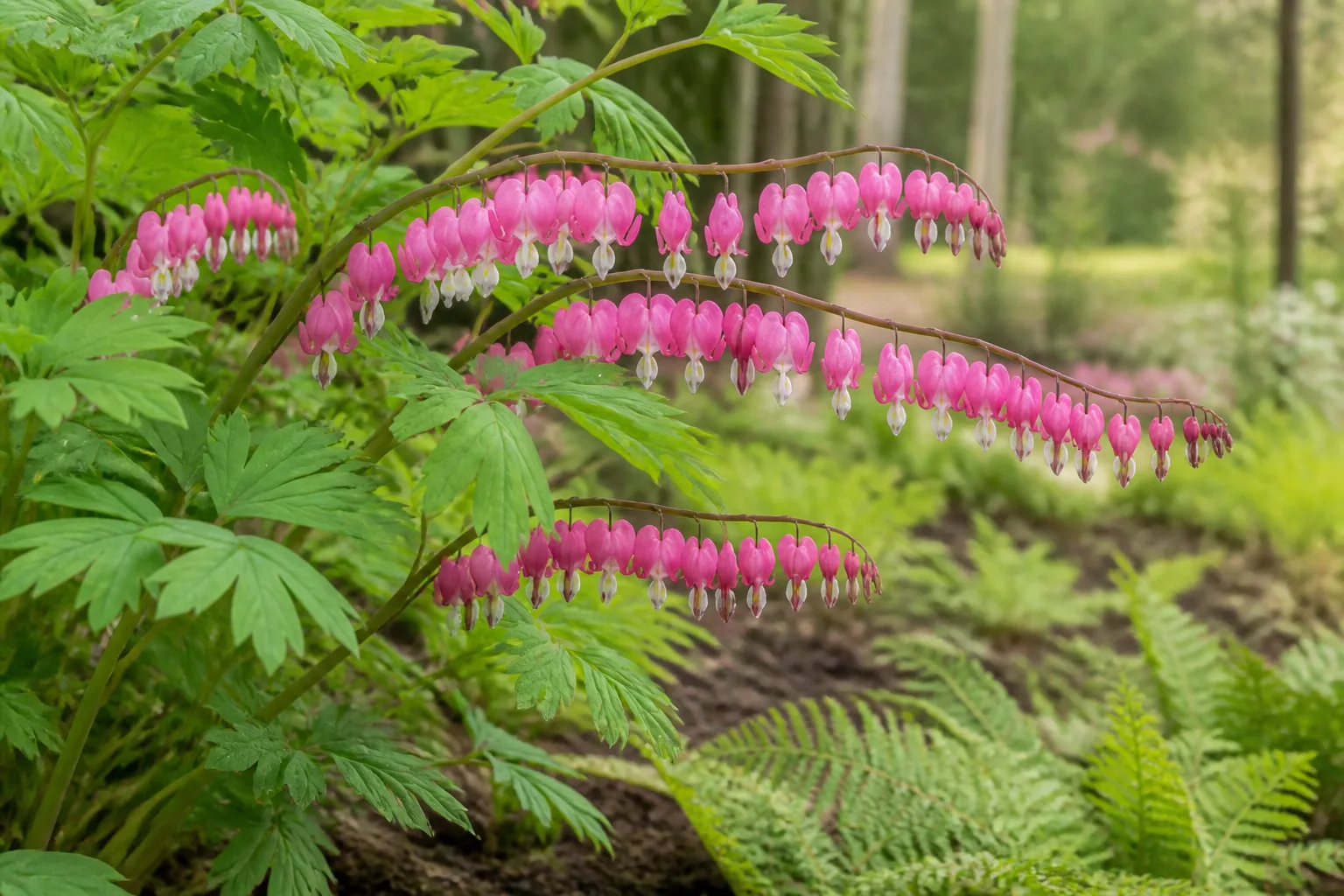
Bleeding Hearts: Spring Drama Before Hostas Fill In
Old-fashioned bleeding heart (Lamprocapnos spectabilis) produces arching stems of pink or white hearts in early spring while hostas are still small. The combination is a woodland classic: delicate blooms against bold emerging hosta leaves.
Bleeding hearts go dormant by midsummer, leaving a gap hostas fill handsomely. Mark plant locations so you do not slice rhizomes when dividing hostas. Space bleeding hearts 24–30 inches from large hostas; they reach 2–3 feet tall and wide in rich shade.
Fringed bleeding heart (Lamprocapnos eximia / Dicentra eximia) and Dutchman’s breeches offer longer-lasting foliage if you need less of a summer hole.
Lungwort and Siberian Bugloss: Early Spring Ground Layer
Lungwort (Pulmonaria spp.) and Siberian bugloss (Brunnera macrophylla) cover the low ground layer with speckled or frosted leaves and blue spring flowers that open as hostas unfurl. Both tolerate shade, compete politely, and do not spread aggressively like some groundcovers.
Plant lungwort and brunnera 8–12 inches apart in drifts at the front edge. ‘Jack Frost’ brunnera’s silver-marked leaves pair beautifully with blue hostas like ‘Halcyon’. Pulmonaria’s pink-to-blue flower color shift is a spring conversation piece before hosta scapes rise.
Powdery mildew can spot pulmonaria in stagnant air—thin overcrowded hosta leaves after bloom if airflow is poor.
Spring Bulbs That Share Hosta Beds
Tulips, Daffodils, Grape Hyacinth, and Allium
Spring bulbs solve hosta’s late-winter blank bed problem—if you respect light and foliage timing.
The deciduous-tree trick: Under deciduous trees, spring bulbs get full sun while branches are bare, then hostas enjoy shade after the canopy closes. Epic Gardening’s hosta companion overview describes planting tulips and daffodils among dormant hostas in fall for April color, then letting expanding hosta leaves mask spent bulb foliage—critical because you must leave bulb leaves until they yellow to recharge the bulb.
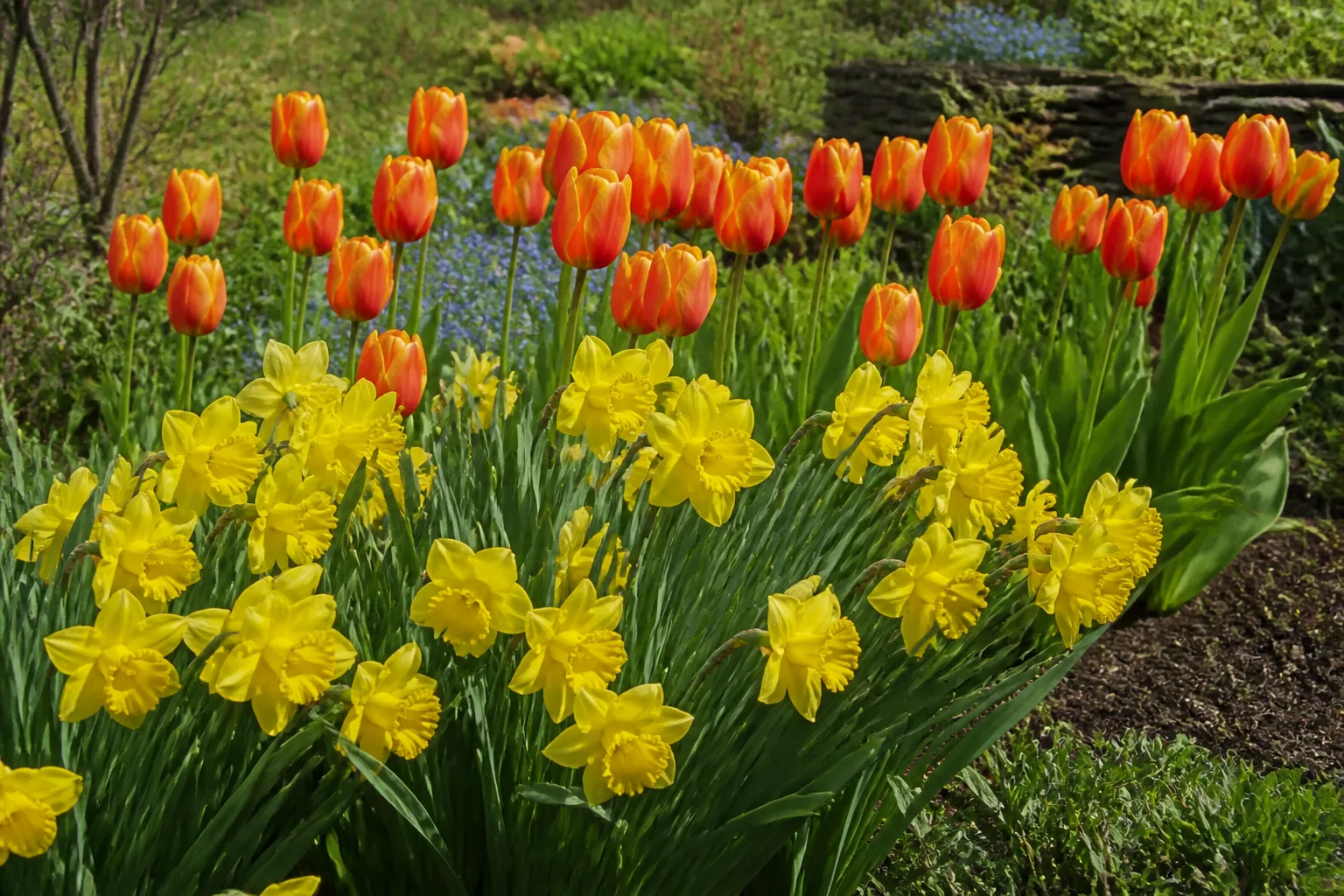
Tulips (Tulipa spp.): Plant 6–8 inches deep, 4–6 inches apart, in clusters of seven or more for impact. Avoid deep shade year-round; they need spring sun. Species tulips naturalize better than stiff hybrid bedding types in woodland settings.
Daffodils (Narcissus spp.): More shade-tolerant than tulips and deer-resistant—a practical edge where deer browse hostas. ‘Thalia’ and ‘Jetfire’ work in part shade; plant behind low hostas so dying leaves disappear under June foliage.
Grape hyacinth (Muscari armeniacum): Low 6–9 inch spikes of blue-purple pair with miniature hostas at the front edge. Naturalizes gently in moist, humus-rich soil.
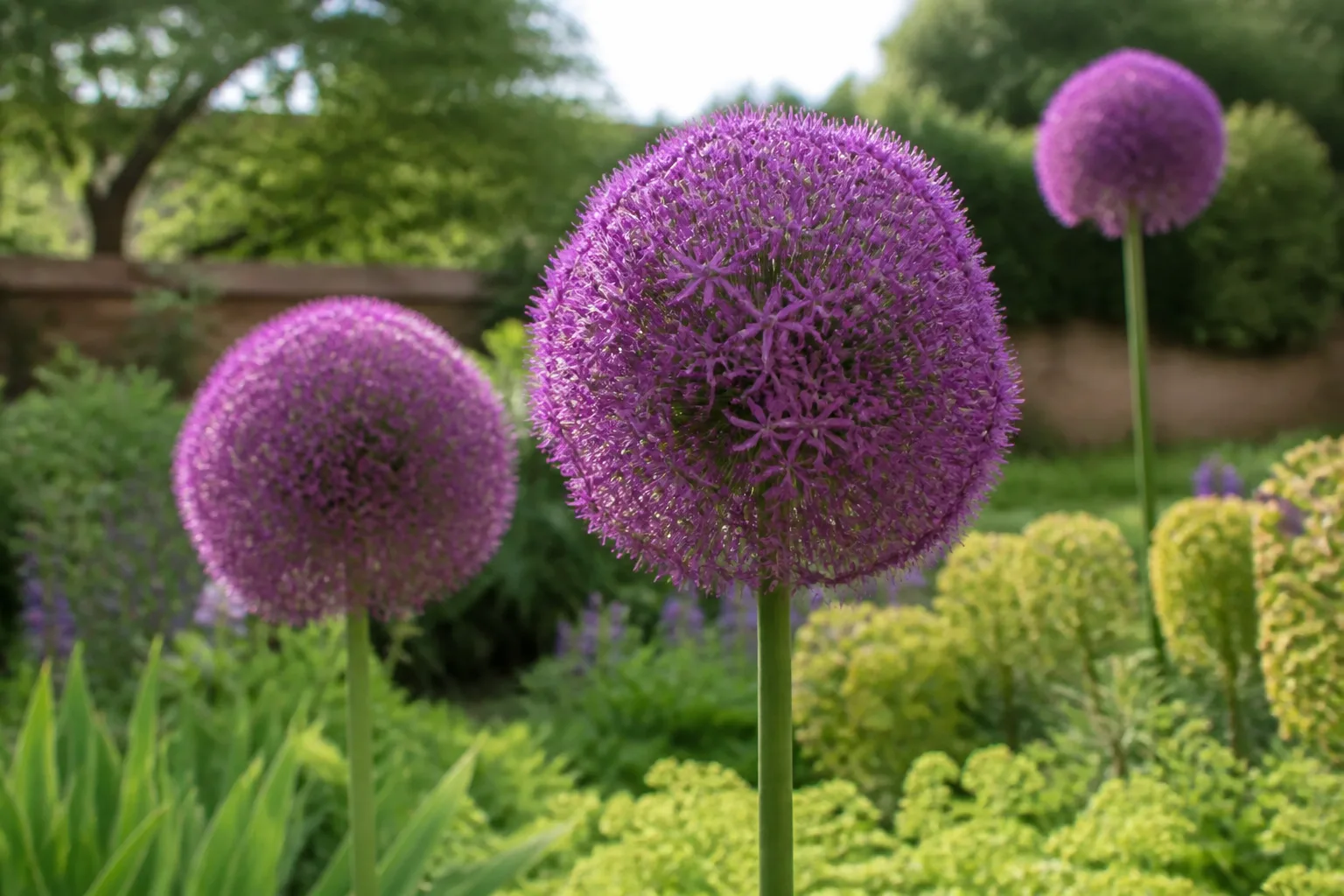
Allium (Allium spp.): Ornamental onions send up globe blooms on bare stems just as hostas emerge—perfect for hiding allium’s scrappy basal leaves. ‘Globemaster’ and ‘Purple Sensation’ need the same spring-sun window as tulips. Plant allium bulbs 6 inches deep behind medium hostas where bulb foliage can yellow unnoticed.
Fall planting is standard for all four groups: soil cool but not frozen, six to eight weeks before hard freeze. Mark bulb locations with labels so spring cultivation does not damage them.
Four Pairings to Skip Beside Hostas
-
Dry-soil sun lovers — Lavender, sedum, and prairie grasses want sharp drainage and bright sun. Constant moisture for hostas rots their crowns or starves the neighbor.
-
Aggressive spreaders — Mint, goutweed (Aegopodium), creeping jenny, and vinca can overrun hosta crowns in a few seasons. Keep them in containers or separate beds.
-
Deep-shade spring bulbs — Tulips and allium planted under evergreen canopies or on the north side of buildings without spring sun will return weakly and disappear.
-
Heavy root competition without irrigation — New hostas tucked against mature maples or beeches in dry summers often stall unless you irrigate and amend a wide planting pocket. The tree wins the water war.
Sample Layout for a 4×10-Foot Shade Border
Viewed from a path along the 10-foot length, back against a fence or hydrangea row:
Back row (north or shaded side): One smooth hydrangea (H. arborescens ‘Annabelle’) centered, flanked by two ostrich ferns.
Middle band: Three medium hostas (‘Halcyon’, ‘June’, ‘Francee’) spaced 24 inches apart, with two astilbe (‘Vision in Red’) between them.
Front edge: Drifts of brunnera ‘Jack Frost’ and lungwort, plus a cluster of 15 muscari bulbs and 9 daffodil ‘Thalia’ planted among hosta crowns in fall.
Irrigation: Soaker hose along the middle band; mulch 2 inches throughout. Divide hostas and astilbe when the center dies out—typically year four or five.
Adjust for your light: swap hydrangea for tall ferns in deeper shade; move daffodils toward the brightest end of the bed.
Conclusion
Hostas play well with others when you match shade, moisture, and season first and color second. Ferns, hydrangeas, coral bells, astilbe, bleeding hearts, lungwort, and brunnera cover the perennial calendar; tulips, daffodils, muscari, and allium add spring punch under deciduous canopies. Set spacing and drainage before you shop, pick two or three jobs per bed, and skip pairings that fight hostas for water or space.
Start with one shrub or tall fern, three hosta cultivars sized for your bed depth, and one spring-bulb cluster this fall—you can layer heuchera and brunnera in front next spring without ripping the whole border out.