Do Deer Eat Hostas? How to Keep Them Safe
Stop deer from destroying hostas with a diagnosis-first plan: tall fencing, labeled repellents, netting, timing, recovery steps, and shade-plant alternatives.
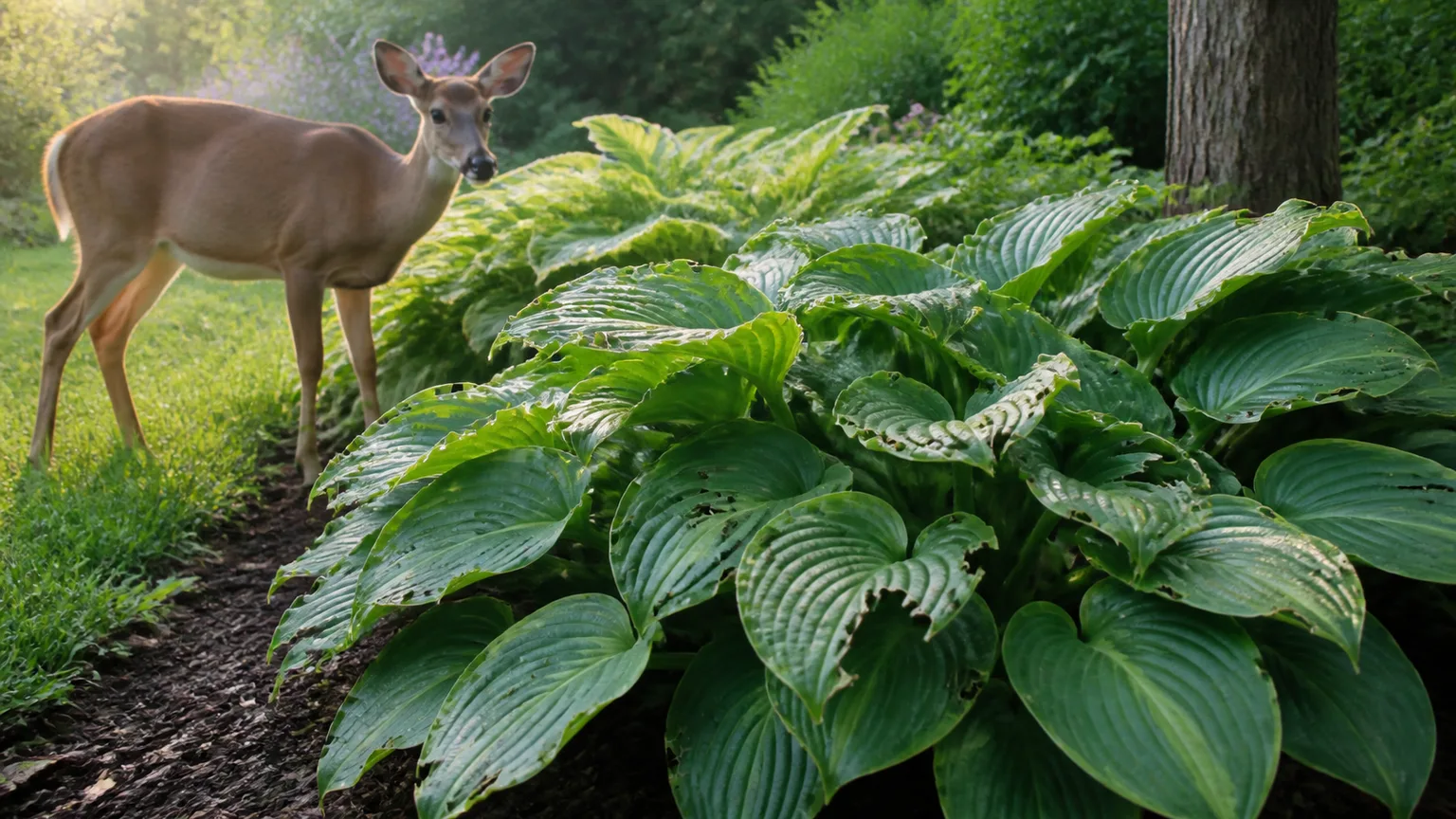
Yes, deer eat hostas, and they often go for the soft new leaves before the plants have had time to fill out. If a herd has learned that your shade garden is an easy feeding stop, it may strip several plants in one visit. The most dependable answer is not a scented spray by itself: confirm the damage, block access when pressure is high, and use repellents or plant selection as supporting layers.
Hostas are still worth growing. The goal is to match the protection to your garden rather than assume every nibble requires an insecticide or that one “deer-proof” cultivar will solve the problem. The sequence below helps you decide whether a small net, a labeled repellent, or a full barrier makes sense.
Yes, deer eat hostas—especially fresh spring growth
Hosta leaves are tender, leafy forage, so they are an attractive target in many landscapes. Penn State Extension notes that white-tailed deer eat new growth on woody and herbaceous plants in spring and summer, while winter feeding becomes more important when natural food is limited. That seasonal pattern explains why a bed can look untouched one week and then lose its emerging leaves overnight. Penn State Extension’s deer guidance describes both the seasonal diet and the way deer return to familiar feeding areas.
Young green hostas are usually more vulnerable than older plants with thick, coarse, or heavily textured foliage. Blue-leaved cultivars and rugose types may be less appealing to some deer, but that is a preference, not a guarantee. Epic Gardening’s hosta and deer overview makes the same useful distinction: thicker-leaved types can be browsed less often, yet a hungry deer can still eat them.
If deer pressure is light, cultivar choice and strategic placement may buy you time. If deer are repeatedly removing every leaf, do not spend a season testing hosta textures one plant at a time. Exclusion will protect a favorite cultivar far more reliably than hoping an individual plant tastes bad.
Check the damage before choosing a deterrent
Look at the damaged leaves and the surrounding soil before you buy anything. Deer often browse from several plants in the same bed, leaving torn, uneven edges rather than neat cuts. Check early in the morning or near dusk if you can; those are common active periods for white-tailed deer, according to Penn State Extension.
Pay attention to height and pattern. Damage on the upper or outer foliage, multiple plants affected at once, and a trail or bedding area nearby all raise the likelihood of deer. A single missing leaf is not enough evidence to choose a control method, especially in a bed where rabbits, slugs, and snails are also present.
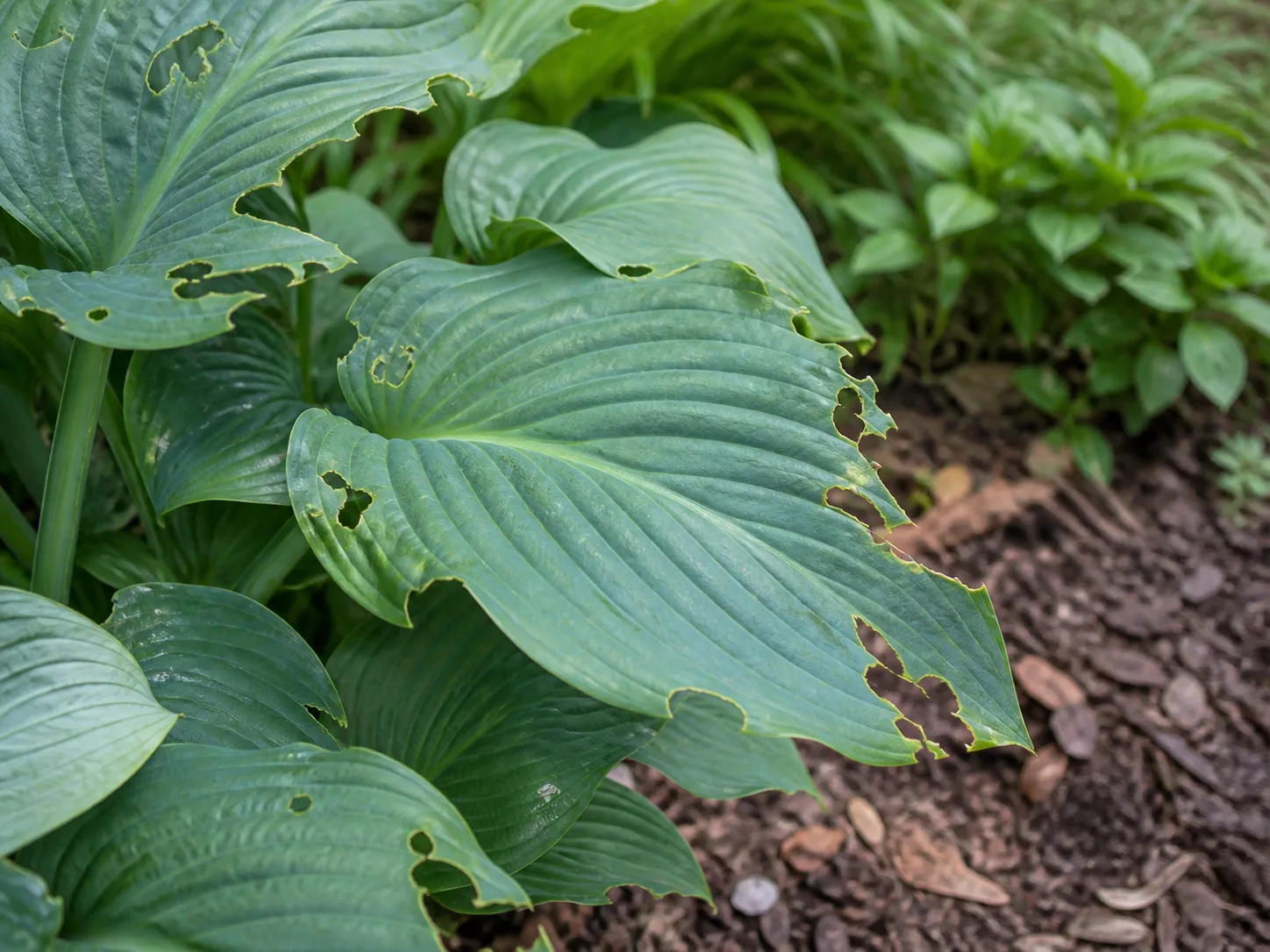
Deer vs. rabbit, slug, and snail damage
Deer lack upper incisor teeth, so they tear vegetation and leave a ragged edge. Rabbits, by contrast, tend to leave a cleaner cut on low foliage. Penn State Extension also recommends looking for the distinctive split-hoof track in damp soil or snow; a track is much stronger evidence than a missing leaf alone. Read the extension damage-identification guidance before treating a whole bed.
Slugs and snails leave holes within the leaf, often with irregular but more localized damage, and may leave slime trails. Deer can also tear through a leaf so aggressively that the remaining edge looks shredded. If you see both edge loss and interior holes, you may have two problems; a deer repellent will not solve the mollusks.
Use this protection plan for the fastest result
When a hosta bed has just been browsed, use a short sequence instead of trying five remedies at once:
- Confirm the animal. Look for ragged edges, browse height, repeated damage, and tracks.
- Block tonight’s access. Cover a small bed with securely anchored deer netting or a row cover, or close a gate on an existing enclosure.
- Choose the durable layer. Use a complete, tall fence when damage is extensive or recurring.
- Add a labeled repellent. Apply it before deer establish the bed as a routine feeding site, and follow the label for the exact plant, weather, and reapplication instructions.
- Recheck after rain and new growth. A repellent that worked on last week’s leaves cannot protect leaves that emerged afterward.
This order puts exclusion ahead of wishful thinking. It also lets you use a smaller amount of repellent while you decide whether the fence is solving the problem. Penn State’s integrated management guidance emphasizes monitoring and combining methods because deer pressure, weather, and food availability change from site to site.
1. Install a barrier deer cannot casually clear
For a high-pressure site, a physical barrier is the strongest option. A conventional woven-wire deer fence about 8 feet tall can exclude deer when it forms a continuous enclosure, sits close to the ground, and has no loose gate or corner where animals can enter. Penn State Extension calls fencing the most efficient way to reduce extensive damage when deer density is high.
Fence the whole planting, not just the two hostas at the front. Deer will walk around a short section to reach an unprotected leaf, and a gate that is left open turns an expensive fence into a decorative backdrop. A dark mesh fence can be visually quieter than livestock wire, but it still needs taut, secure installation and a gate that closes completely.
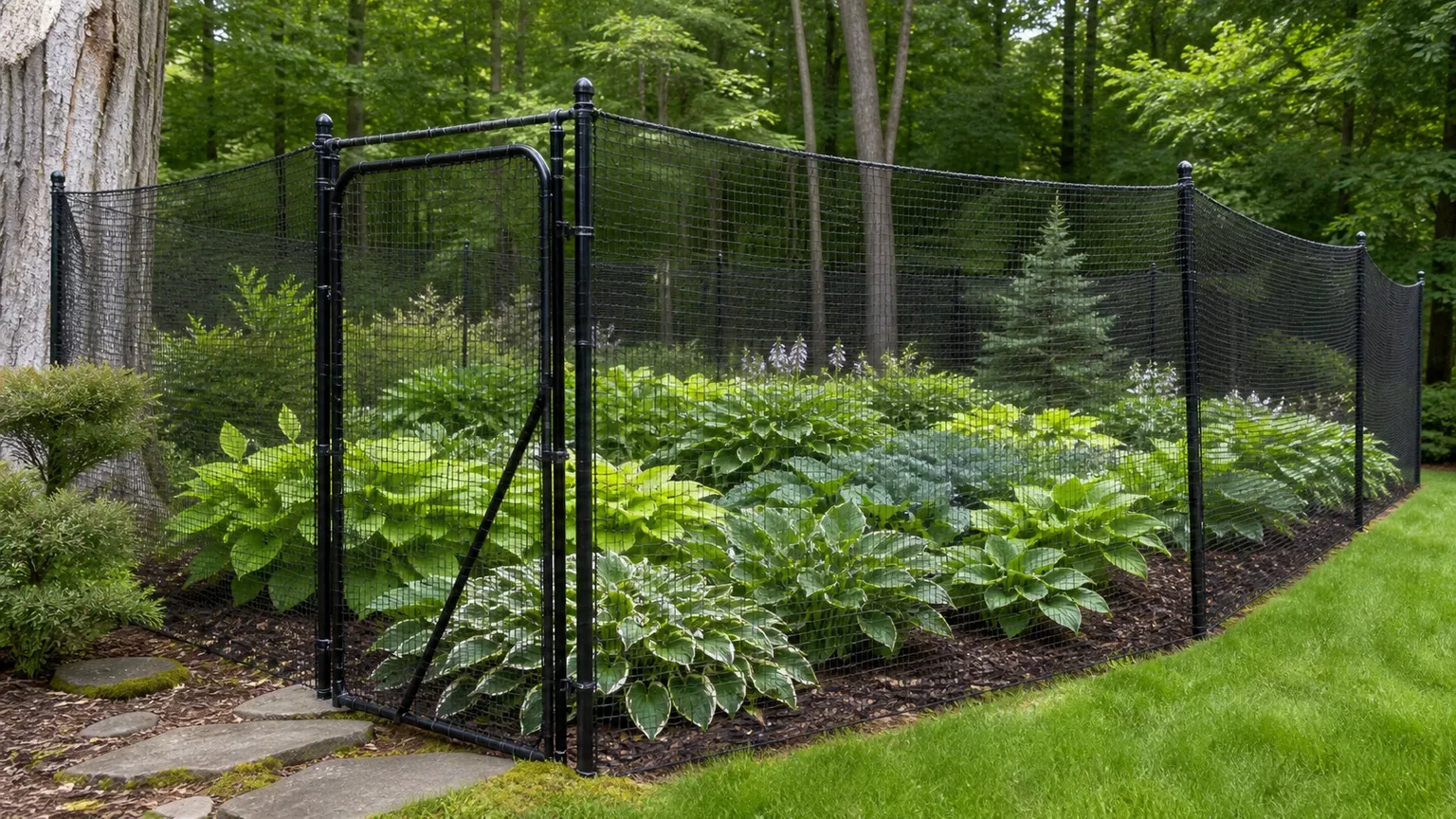
How tall should a hosta fence be?
Use 8 feet as the conventional starting point for a true deer-exclusion fence, then check local extension or wildlife guidance for your terrain. A lower fence may work in a small, enclosed bed when it is paired with a second fence line or another design that makes the jump unattractive, but it is less predictable than a single tall enclosure. Penn State’s Master Gardener guidance notes that deer can clear an 8-foot fence and discusses taller or double-fence approaches for difficult sites.
Electric fencing is a different tool: it changes deer behavior rather than creating a solid wall. It can cost less than woven wire, but it needs regular inspection, a functioning energizer, and a clear, mowed strip so vegetation does not short the wire. It is not a set-and-forget choice for a homeowner who cannot check it.
Low-cost netting for a small bed
Deer netting or a well-secured row cover can protect a small group of hostas during the vulnerable leaf-emergence period. Stretch the material over hoops or a simple frame, anchor every edge, and inspect it after wind or heavy rain. Loose mesh can sag onto the foliage, snag wildlife, or leave a gap large enough for a deer to push through.
Netting is especially useful as an emergency layer while you plan a permanent fence. Home for the Harvest’s hosta-protection guide likewise treats secured netting as a practical low-cost option, with the caveat that it needs hands-on checking. It is less convenient for a bed you visit constantly, because you must remove or open it for watering, weeding, and enjoying the flowers. If you cannot commit to checking it, use a complete fence or a properly labeled repellent instead.
2. Apply a labeled repellent before deer settle in
Repellents work by making the plant or the area less attractive, but their results vary. The best time to use one is before deer have developed a regular feeding pattern, or at the first sign that they are testing the bed. Once deer are already entering nightly and the hostas are their easiest food, a spray is more likely to be a supporting layer than the entire solution.
Choose a product whose current label specifically allows use on ornamental plants and lists the target animal and application site. “Natural,” organic, or plant-based does not mean a mixture is automatically safe for hosta foliage, pets, people, or nearby water. Do not copy an essential-oil recipe or increase a concentrate because a stronger smell seems more effective; test any permitted product on a small area and follow its label.
Area repellents vs. contact repellents
An area repellent is placed around the plants and relies mainly on odor. A contact repellent is applied to the foliage and relies on taste when deer take a bite. Penn State Extension describes both categories and warns that commercial products must be used exactly as their labels direct.
Expect to reapply when the label says to, after weather removes the product, or when unprotected new leaves expand. Some products weather better than others, and the same formula can perform differently from one yard to the next. Measure success by reduced damage, not by expecting a permanent invisible wall around the garden. Penn State’s repellent guidance explains why home remedies often have limited success and why results vary with hunger and weather.
Blood meal, human hair, soap, and strong-smelling kitchen ingredients are commonly suggested area deterrents. They may be inexpensive experiments in a low-pressure bed, but they are not a dependable substitute for a barrier. They also need replacement, can become ineffective as deer habituate, and may attract other animals or create an unpleasant garden edge.
3. Rotate sensory deterrents and motion
A motion-activated sprinkler can surprise a deer at the edge of the bed without putting a chemical on the leaves. Motion lights, moving objects, and occasional sound can also help during the first days of a problem. Their weakness is habituation: an animal that learns the device is harmless may walk past it to reach a preferred plant.
Use motion as a temporary bridge or as one layer in a broader plan, not as proof that a bed is protected. Change the location or type of stimulus when it stops working, and aim a sprinkler so it does not spray a walkway, neighboring property, or plants that dislike wet foliage. Penn State Master Gardener’s critter-control guidance specifically notes that scare devices can lose their effect once pests recognize that they are not a threat.
Dogs can deter deer when they already live in the home and can safely patrol an appropriate enclosed area. Do not get or tether a dog solely as a hosta-protection device; a chained dog has a predictable range, and the arrangement can create welfare, nuisance, and neighborhood problems. The sensible rule is to use the animals and equipment you can manage responsibly, then rely on exclusion for the plants you truly need to save.
4. Choose thicker-leaved hostas—but do not call them deer-proof
If you are planting new hostas in an area with occasional browsing, start with cultivars known for thicker, coarser, or more textured leaves. Blue-leaved types often have a heavier surface and may be less appealing than soft green leaves, while newly unfurled foliage is generally easier for deer to eat. The difference can reduce damage; it cannot erase it.
Treat cultivar choice as risk reduction. Plant the most valuable or rare hostas inside the protected part of the bed, and use less costly plants at the outer edge while you learn the local browsing pattern. If deer eat every hosta in the neighborhood, an attractive leaf texture will not override a shortage of forage.
5. Replace or surround hostas with less-preferred shade plants
When a bed is repeatedly stripped, redesigning part of it may be more satisfying than fighting a losing battle. Ferns, coral bells, hellebores, bergenia, and lungwort are common shade-garden alternatives that are often less preferred than hostas, although deer resistance varies by region and no plant list is a promise. Rutgers Cooperative Extension’s deer-resistant plant resource is a useful place to check local recommendations rather than treating a national list as universal.
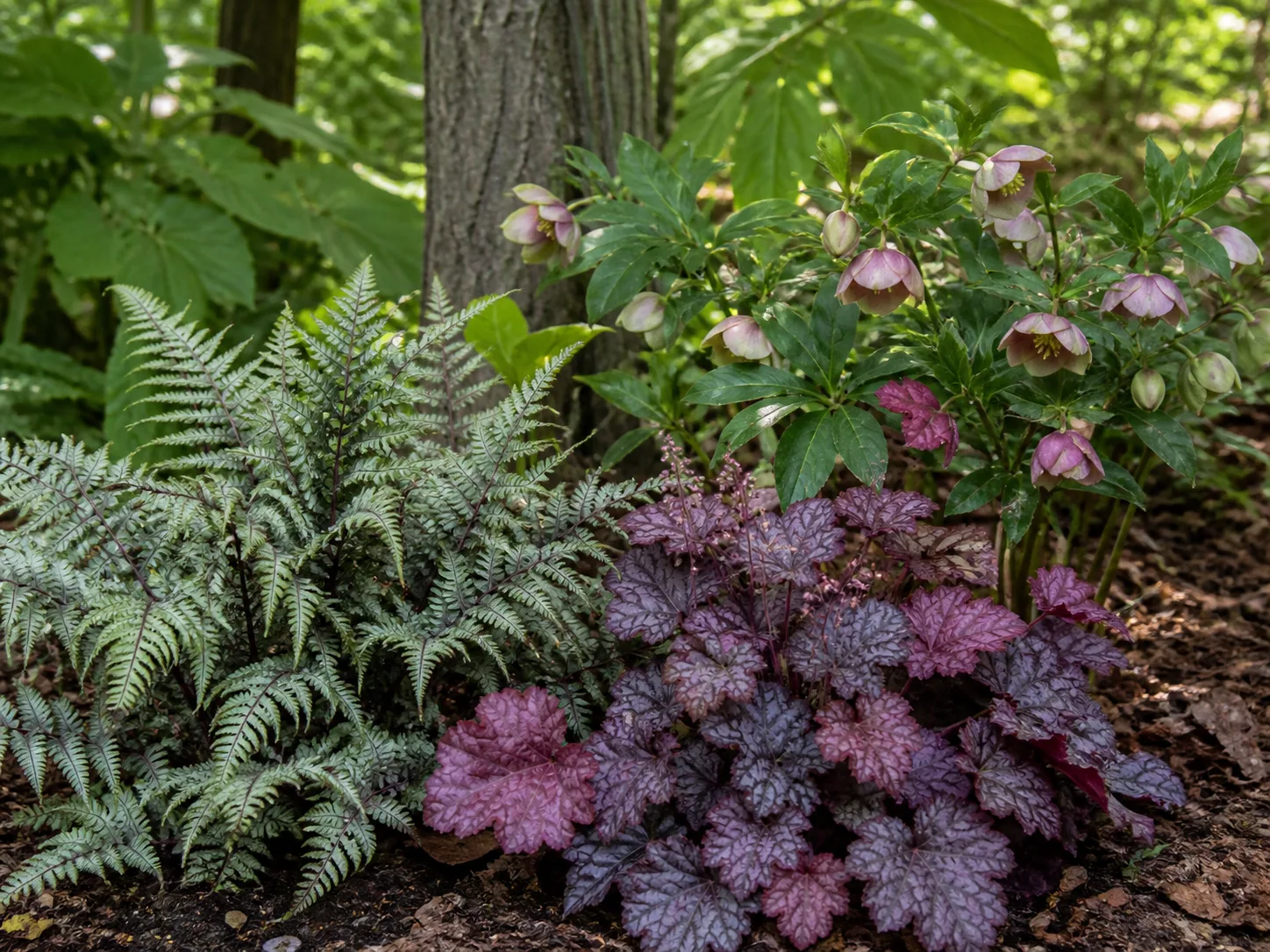
You do not have to remove every hosta. Put a few favorite clumps behind a barrier, then use ferns or coral bells to carry the foliage effect through the unprotected front of the bed. A mixed planting also keeps one attractive species from becoming the only obvious food source, though it should complement—not replace—fencing when pressure is high.
Check mature size, moisture, and light before swapping plants. A deer-resistant plant that cannot handle the dry shade beneath a tree will fail for a different reason. Also check local advice about any plant’s toxicity if children or pets use the garden; “deer avoid it” is not the same as “every household should plant it.”
What to do after deer eat your hostas
Start by protecting the plant from another visit. Then remove only leaves that are badly torn, hanging, or likely to rot against the crown; leave healthy green tissue in place so the hosta can continue photosynthesis. Clean cuts look better, but pruning every leaf immediately can remove the plant’s remaining energy source.
Water according to the soil and weather rather than flooding the bed. A browsed hosta does not need a fertilizer dump, and excessive nitrogen can push soft growth that is attractive to deer while the plant is already stressed. Keep the crown at its normal depth, maintain mulch without piling it over the crown, and watch for a second round of browsing.
When hostas will regrow
The crown may produce replacement leaves after early-season browsing if it remains healthy and the growing season is long enough. A hosta eaten late in the season may not have time to replace its display before dormancy, so it can look ruined even though the crown survives for next year. Repeated stripping is more serious than one early browse because it repeatedly removes the plant’s photosynthetic tissue.
Do not judge recovery the next morning. Look for new shoots over the following weeks, keep the soil evenly but not constantly wet, and protect the plant while it rebuilds. If the crown is soft, lifted, or damaged at the soil line, investigate drainage or physical disturbance as well as deer; browsing alone usually affects the leaves rather than uprooting the crown.
How timing and deer pressure change the answer
Hostas are most exposed when shoots are emerging and leaves are still soft. That is the moment to install temporary netting or begin a labeled repellent, not after the bed has become a dependable feeding station. Penn State Extension notes that deer commonly feed around early morning and evening and return to familiar ranges, so inspect at those times and keep a simple record of dates, weather, and damaged plants.
Pressure also changes with the surrounding landscape. A yard beside woods, a migration route, or a dense deer population may need a tall enclosure even if a neighbor succeeds with a spray. During periods of limited natural food, deer can ignore odors they previously avoided. Conversely, a single deer that is merely passing through may be managed with short-term netting and motion while you observe.
Use a calendar as a reminder, not a guarantee. Spring leaf emergence, dry periods, nearby mowing, new construction, and changes in forage can all alter when deer show up. The most useful schedule is the one built from your own observations and adjusted after every failed or successful protection attempt.
Common mistakes that make deterrents fail
The most common failure is an incomplete barrier. A short fence, loose corner, open gate, or gap at ground level gives deer a simple route to the leaves. If a fence works on one side but damage continues, walk the perimeter at deer height and look for the point of entry rather than adding another scent.
The next mistake is treating repellent as a one-time application. Rain, irrigation, weathering, and new leaves change coverage. Follow the product label, keep notes on when you applied it, and stop using it if the foliage reacts poorly. An untested essential-oil or pepper concentrate can burn leaves without changing deer behavior.
Do not rely on one scare device for an entire season. Penn State guidance describes habituation to novelty, and practical garden sources also recommend changing methods when deer learn the pattern. Finally, do not mistake thick hosta leaves, a bar of soap, or a handful of hair for a deer-proof system; each may help under narrow conditions, but none deserves more confidence than the evidence from your own bed.
A practical decision guide by damage level
Use the smallest intervention that is likely to work, then escalate when the pattern proves it is not enough:
| What you find | Best next move |
|---|---|
| One or two ragged leaves, no repeat visit, crown and bed healthy | Photograph the damage, check for tracks, and monitor for several days. Use temporary netting if new shoots are emerging. |
| Several hostas browsed once, deer confirmed, pressure appears moderate | Cover the bed immediately, then apply a labeled repellent and inspect after rain or new growth. |
| The same bed is browsed repeatedly or stripped overnight | Stop experimenting with scents alone. Install a complete tall fence or a securely framed netting system, using repellent only as a supporting layer. |
| Deer ignore the barrier or damage continues around the perimeter | Find the gap, gate, or jump route; ask local extension or wildlife staff for site-specific advice before adding more products. |
| The bed cannot be protected at a reasonable cost | Keep a few favorite hostas behind a barrier and redesign the exposed area with shade plants that deer tend to prefer less. |
This approach also limits unnecessary pesticide exposure and wasted purchases. If you do use a commercial repellent, save the label, record the target and application site, and keep children and pets away according to the directions. If a product and a general gardening tip disagree, the current label and local extension advice control.
Conclusion
Deer do eat hostas, especially the tender leaves emerging in spring, but the answer is not to abandon every shade garden. Confirm the ragged browsing pattern first, then choose protection according to deer pressure: a complete tall fence for recurring heavy damage, securely anchored netting for a small bed or emergency window, and a labeled repellent or motion device as supporting layers.
Thicker-leaved cultivars and less-preferred shade plants can reduce risk, but they are not guarantees. Protect hostas before deer settle into a feeding route, recheck after rain and new growth, and give browsed crowns time to recover. A diagnosis-first plan saves the plants you value while keeping the garden flexible enough to adapt when local deer behavior changes.