How to Get Rid of Lawn Grubs: Timing That Works
Brown patches are not proof of grubs. Use this lawn-grub guide to sample the soil, time treatment, compare options, and restore the turf.
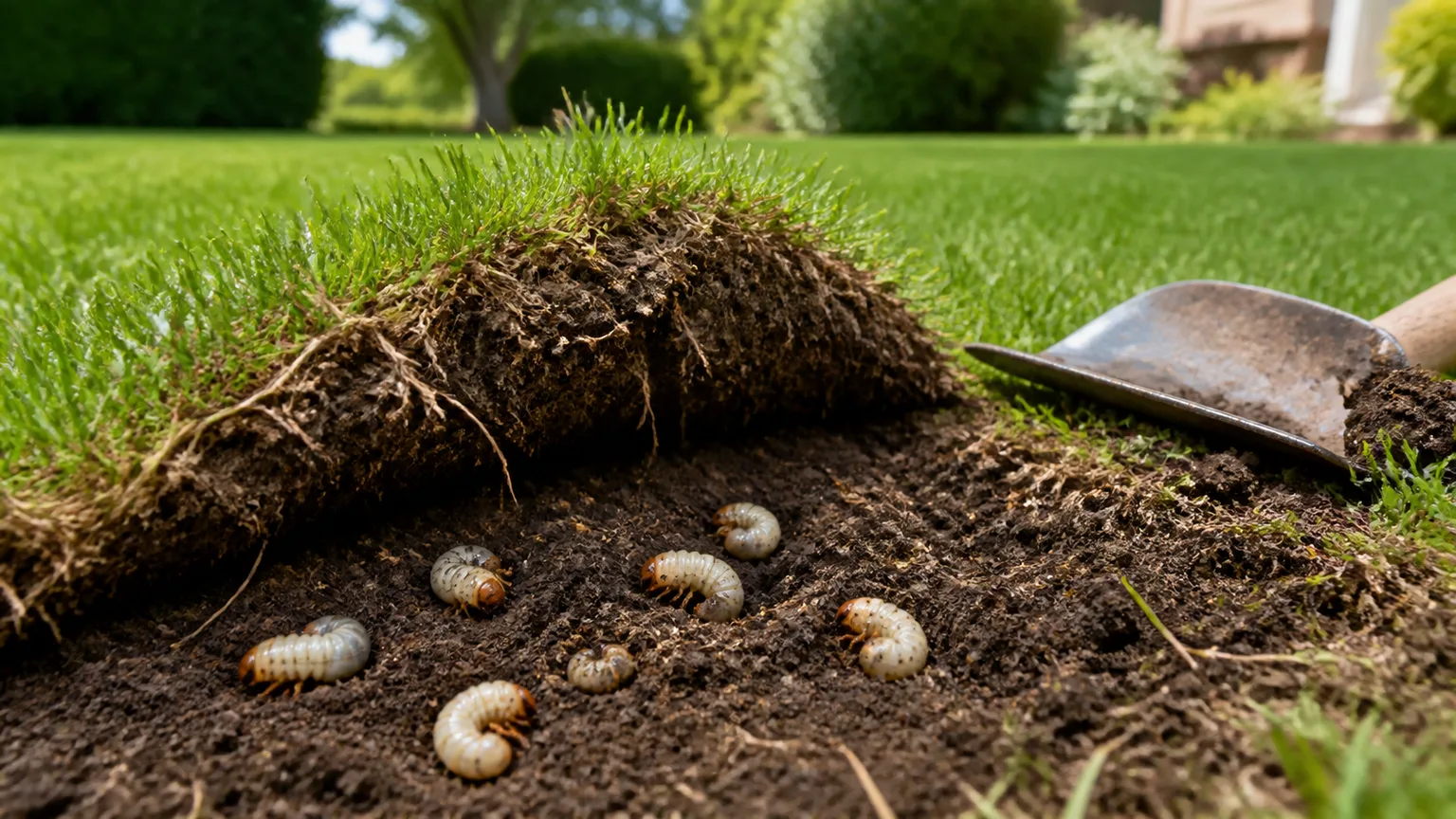
If a brown patch lifts from the soil like a loose carpet, do not spread grub killer across the whole yard yet. First confirm what is under the turf, count the larvae in more than one spot, and decide whether you are looking at an active infestation or a normal background population.
That order matters because lawn grubs are not one insect and brown grass is not one diagnosis. A few scarab-beetle larvae can live in healthy soil without causing visible injury, while a concentrated population of root-feeding larvae can loosen turf quickly during hot, dry weather. The right treatment also changes with the species, the season, and whether the grubs are small and feeding near the surface or mature and moving deeper.
The fastest safe response is confirm, count, then choose
Use this sequence when you notice thinning grass, wildlife digging, or a patch that stays wilted after rain:
- Check the turf. Pull gently at the edge of the damaged area. Loose sod is a clue, not proof.
- Cut and inspect a sample. Examine the upper 2–4 inches of soil and the thatch-root interface.
- Sample more than one location. Grubs are usually patchy, so one empty plug does not clear the lawn and one crowded plug does not condemn every square foot.
- Match the response to the result. Leave a healthy lawn with a few larvae alone, use a rescue treatment for a confirmed active problem, or plan preventive control for a site with a documented recurring history.
This is a better first move than reacting to every beetle, mole tunnel, or brown spot. Penn State Extension notes that damage thresholds vary with species, grass, weather, and site conditions, and that five to ten grubs per square foot is only a commonly used curative range—not a universal law. Penn State’s white-grub guidance recommends surveying several spots and replacing and watering the sod after inspection.
What lawn grubs are—and why damage can look sudden
“Lawn grub” or “white grub” usually means the soft, cream-colored larva of a scarab beetle. Japanese beetles, masked chafers, European chafers, oriental beetles, and May or June beetles can all produce larvae that live below the surface and feed on roots. They are not true worms, and the common species can look nearly identical unless you examine the hair pattern on the underside of the last abdominal segment.
The useful field description is simple: a grub has a brown head, three pairs of legs near the front, and a C-shaped posture when disturbed. Size alone is not a dependable identification because larvae grow through several stages. West Virginia University Extension’s white-grub reference explains that larvae can range from about three-eighths of an inch to nearly two inches depending on age and species.
The damage happens at the roots, not on the visible blades. As roots are severed, grass loses access to water and nutrients; heat and drought then turn a manageable root loss into a fast-looking collapse. The larvae may also attract skunks, raccoons, crows, turkeys, or other predators that tear the turf while searching for food.
Is it really grubs?
Above-ground clues that justify a closer look
The most useful pattern is an irregular patch that thins, wilts, yellows, or dies even though nearby grass is receiving similar water. A spongy feel underfoot and sod that peels back with little resistance are stronger clues because they point to missing roots. Fresh digging or pecking can support the diagnosis, but wildlife may also be hunting earthworms or other insects.
Do not diagnose from a single symptom. Drought, fungal disease, compacted soil, poor irrigation coverage, excessive thatch, and other turf insects can all create brown or thin areas. Moles are especially weak evidence: they can feed on earthworms and other soil organisms, so a mole run does not identify grubs.
Adult beetles can provide a seasonal clue, particularly when they are flying low over the grass or gathering around lights. They still do not prove that the larvae are damaging your lawn. The adults and larvae may be different species, and adult activity in one part of the yard does not tell you how many larvae are beneath another part.
How to confirm grubs below the turf
Cut three sides of a roughly one-square-foot section at the edge of a suspect patch, then fold the sod back rather than removing a large area. Look through the thatch and the top few inches of soil for cream-colored C-shaped larvae and check whether the roots are still anchoring the turf. If the sample contains no grubs, broaden the diagnosis instead of applying an insecticide automatically.
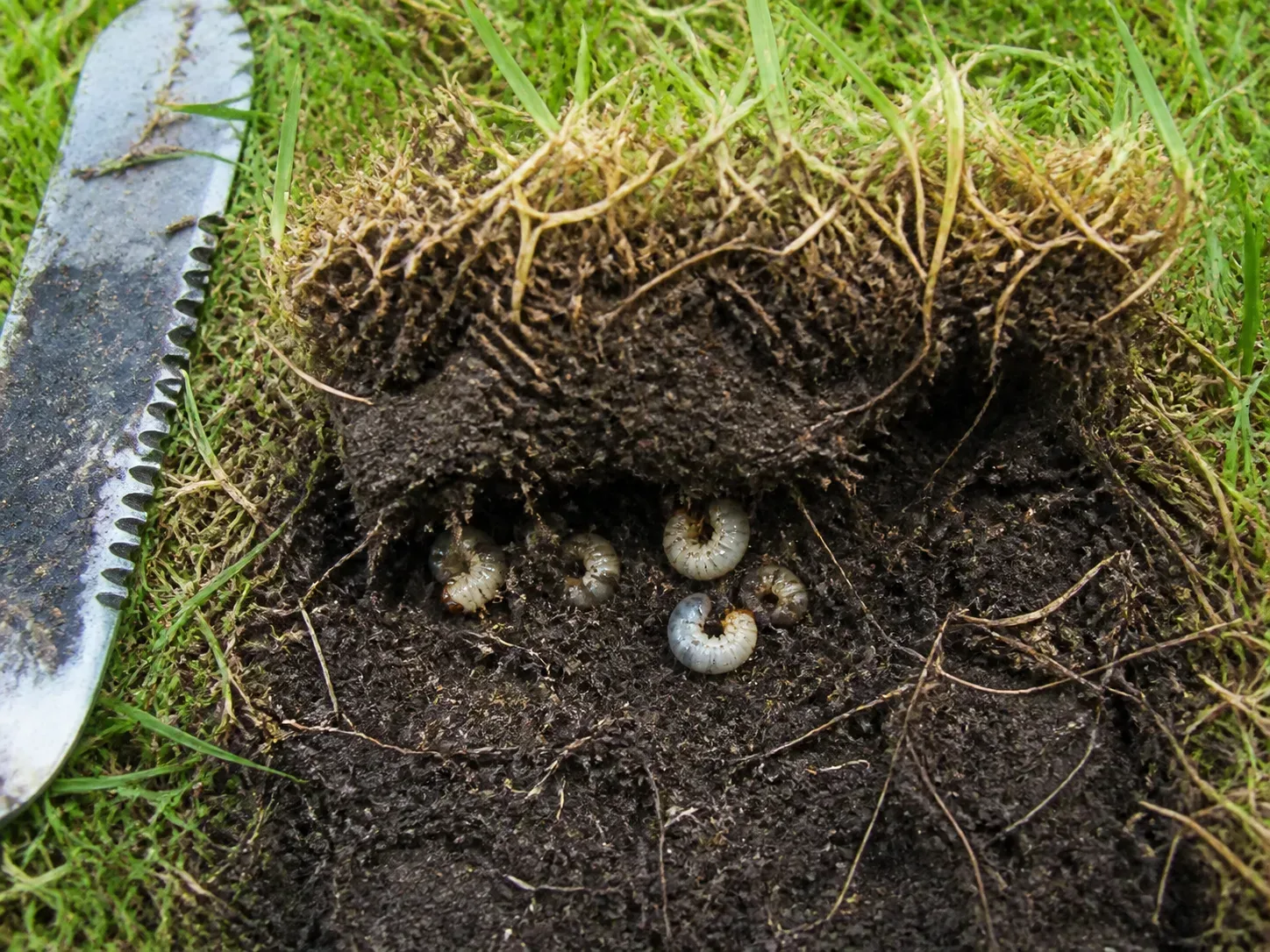
Replace the flap when you finish and press it into contact with the soil. Water that spot if it is dry; a sample left open can become a new dead patch that confuses your follow-up inspection. For a large lawn, mark each sample on a simple map so you can see whether the problem is concentrated near a sunny edge, a regularly irrigated zone, or a previous trouble spot.
Sample the lawn and interpret the count
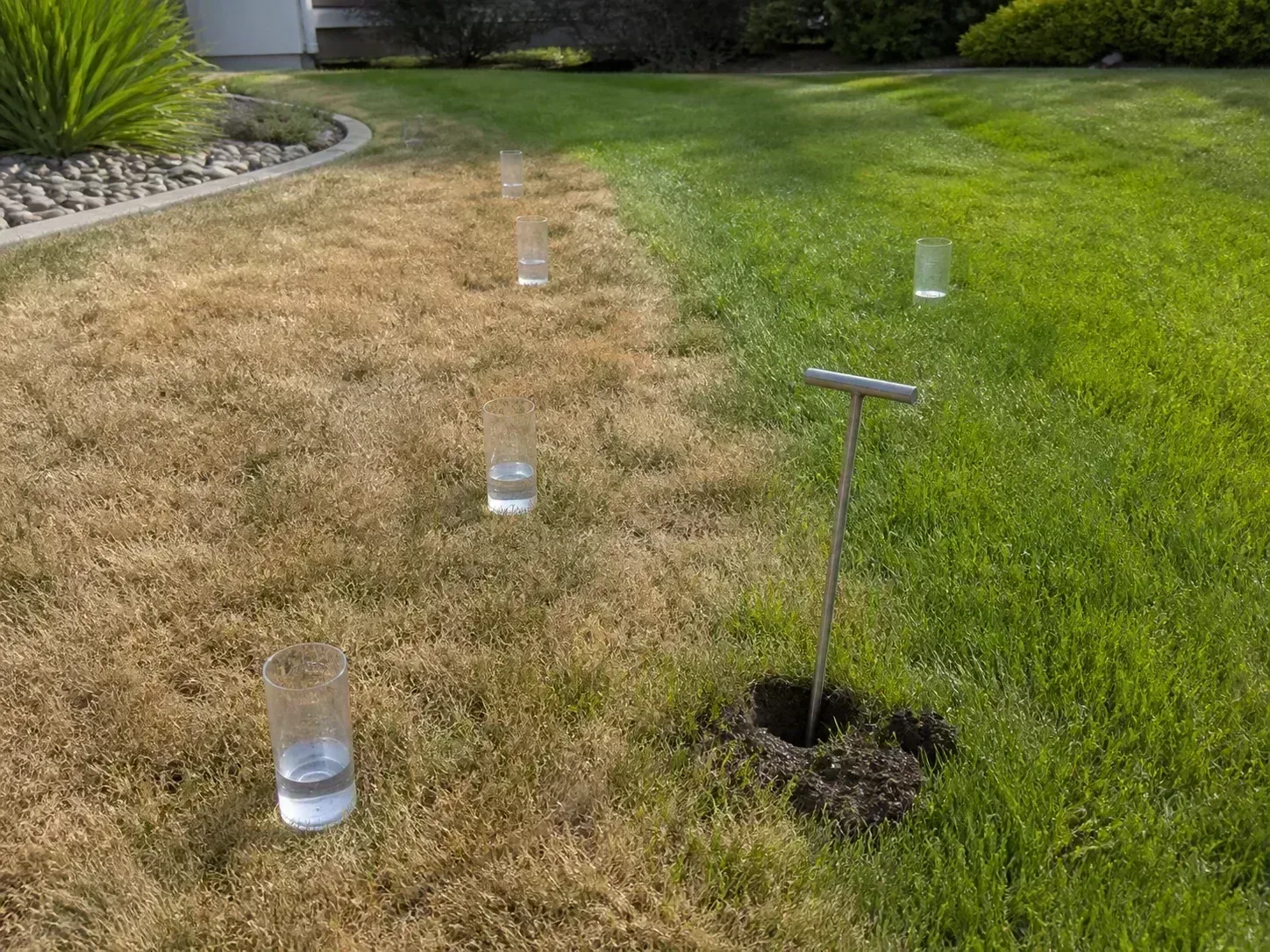
Take several one-square-foot samples
Take at least three samples when the lawn is large enough to support them: one in the most damaged area, one at the transition between damaged and healthy grass, and one in a nearby area that looks normal. If the lawn has a history of grubs, sample the places that have been damaged before. Rutgers Extension emphasizes that white-grub populations are patchy and recommends recording both positive and zero samples rather than treating the whole lawn based on one crowded plug.
Inspect down to about 2–4 inches, where many active larvae sit near the thatch-soil interface. Count live larvae, note whether they are tiny or nearly full-sized, and record whether roots are visibly chewed. Return each sod cap and irrigate it as needed. This is a five- to ten-minute check that can save the cost, ecological impact, and timing mistake of an unnecessary lawn-wide application.
Treat the number as a decision aid, not a verdict
There is no single “too many” number that applies to every lawn. Rutgers’ integrated white-grub management guide reports published damage thresholds around 6–10 grubs per square foot for several common species and 15–20 for Asiatic garden beetles, while well-maintained, deep-rooted turf can tolerate more. Grass type, soil moisture, heat, mowing, and the length of time roots have been under attack all change the outcome.
Use this practical interpretation rather than treating the ranges as a guarantee:
| Finding in several samples | Sensible response |
|---|---|
| A few grubs, attached turf, no expanding damage | Do not treat automatically. Improve turf care and keep monitoring. |
| About 5–10 grubs per square foot, or visible stress | Investigate species, grass health, and season; treatment may be justified, especially in a low-tolerance area. |
| More than 10 grubs per square foot with loose or dying turf | Treat as a likely damaging infestation, choosing a product or biological control that fits the life stage and label. |
| A high count in one plug but zeros nearby | Spot-treat or resample before treating the entire lawn. |
The table is a starting framework, not a substitute for local extension advice. A healthy tall-fescue lawn may tolerate a higher count than shallow-rooted, heat-stressed turf, while a newly seeded lawn or high-use play area may justify earlier action. The visible condition of the roots and the direction of change—stable, improving, or expanding—matter as much as the count.
Choose treatment by the situation in front of you
If damage is active now
If the turf is expanding in irregular patches, pulls up easily, and contains numerous live grubs, focus on a rescue or curative approach. Curative products work on grubs that are currently feeding, but they are short-lived and timing-sensitive. In many cool-season lawn regions, the useful window is late summer into early fall while young larvae are near the surface; local weather and species can move that window by several weeks.
Do not expect the grass to turn green overnight after treatment. The application is intended to stop or reduce further root loss; the turf still needs time to regrow roots, and completely rootless sod will not repair itself. If the damage is concentrated, a label-permitted spot treatment can reduce the amount of product used.
If the lawn has a recurring history
A history of confirmed damage is a reason to monitor adult beetle activity and plan a preventive window, not a reason to apply insecticide every year without checking conditions. Preventive products stay active long enough to encounter newly hatched, vulnerable grubs, but they can be wasted if the timing is wrong or the site no longer has a damaging population.
Keep a simple annual record: date of adult beetle activity, sample counts, grass type, damaged locations, and what treatment—if any—was used. That record is more useful than a generic calendar because it helps you predict the next egg-laying and egg-hatch period for your own yard.
If you find only a few grubs
Leave them alone when the turf is dense, roots are attached, and the lawn is not declining. Most soils contain some white grubs, and Wisconsin Extension notes that many are beneficial scavengers rather than turf pests. Broad-spectrum treatment can remove natural enemies and non-target insects without improving the lawn.
Instead, correct the conditions that make damage worse: mow at the recommended height for your grass, avoid shallow frequent irrigation, relieve compaction when the season is suitable, and keep thatch from becoming excessive. Monitor the same patch again if it begins to wilt or lift.
Match treatment to the grub life cycle
Most damaging white grubs have an annual cycle: adults lay eggs in summer, young larvae hatch and feed near the surface, larger larvae move deeper as soil cools, and survivors return toward the root zone in spring before pupating. May beetles and June beetles can take two or three years, so a one-year calendar may not fit them. WVU Extension summarizes these life-cycle differences.
Preventive timing before egg hatch
Preventive control belongs before or around egg hatch, while small larvae are most susceptible. Depending on the product and region, extension timing may run from late spring into early or midsummer. Wisconsin Extension’s species table places preventive applications around June–July for Japanese beetles and northern masked chafers, while other species can require earlier timing. Always use the current product label and local extension recommendations; a calendar date from another state can be wrong for your beetle species.
Common preventive active ingredients include chlorantraniliprole, imidacloprid, thiamethoxam, and clothianidin, but products, rates, sites, and legal uses change. Neonicotinoids can pose risks to bees and other pollinators. Mow flowering weeds before an application, keep spray and granules away from blooming plants and water, and follow every label restriction for protective equipment, irrigation, reentry, and treatment frequency. Wisconsin Horticulture’s grub-control guide explains both the preventive-versus-curative distinction and the pollinator concern.
Rescue timing while young grubs feed
Curative or rescue treatment is most useful after you have found active grubs and before they become large, mature larvae or pupae. Products containing trichlorfon or carbaryl are commonly listed for curative use in extension guidance, but availability and permitted uses differ by location. Spring rescue applications are often less effective because the grubs are larger and close to pupation; they also do not prevent the next summer’s egg-laying adults.
Watering is part of the application, not an optional finishing step. Soil insecticides must reach the root zone, so follow the label’s irrigation instruction exactly; extension recommendations commonly call for roughly a quarter to a half inch of water after treatment, depending on the product. Do not apply to saturated ground, and do not improvise a rate or mix. If the label and a general gardening article disagree, the current label controls.
Compare control options and their trade-offs
Chemical rescue treatment: This is the option most likely to reduce a confirmed active infestation quickly when the product is correctly timed and labelled for the site. It carries risks to people, pets, pollinators, aquatic life, and beneficial soil organisms, so use the smallest justified area and wear the protection the label requires. Expect several days to a couple of weeks before you can fairly judge the result; no soil insecticide works instantly.
Preventive insecticide: This fits a lawn with a documented recurring problem, low tolerance for damage, or a high-risk site where monitoring shows likely egg-laying. It is not a repair for large grubs already feeding in late summer. Preventive treatments can also cover more area than is actually infested and may reduce natural enemies, which is why Wisconsin and Rutgers Extension both recommend limiting them to situations where the risk and tolerance justify the cost.
Beneficial nematodes: Species of Heterorhabditis and Steinernema are living organisms that seek insect larvae in the soil. Their performance varies with grub species, soil texture, moisture, temperature, product quality, and handling. Buy fresh stock, follow storage instructions, apply in low light when practical, irrigate as directed before or immediately after application, and keep the soil suitably moist afterward. Savvy Gardening’s practical nematode notes are useful for handling, while WVU Extension cautions that biological results are mixed.
Milky spore: Paenibacillus popilliae is specific to Japanese beetle grubs; it is not a universal treatment for chafers, oriental beetles, or May and June beetles. It is slow and may take years to establish, and university guidance does not treat it as a dependable rescue for every white-grub problem. Consider it only after confirming the target species and checking local extension advice and the product label.
Dish soap, neem oil, and diatomaceous earth: A soap drench may bring some soil insects toward the surface, but that is not the same as dependable control throughout a lawn’s root zone; LawnStarter’s practical lawn-grub guide likewise treats soap solutions as an unreliable substitute for targeted control. Neem and diatomaceous earth are often marketed for broad garden pest use, yet neither should be assumed to control turf grubs unless the product label specifically lists the target, site, and method. Avoid using a homemade concentrate across the lawn; it can injure grass and non-target organisms while leaving the grubs untouched.
Help the lawn recover and reduce repeat damage
Treatment stops a pest; it does not rebuild roots. If the sod is still attached, keep the root zone evenly supplied with water according to the needs of your grass and local weather, and avoid mowing so short that the weakened turf loses more leaf area than it can replace. Do not respond with a heavy nitrogen dump: lush top growth can make the lawn look temporarily better while roots remain compromised.
If a patch has no living roots and rolls back completely, remove the dead material after the grub problem is under control. Correct obvious compaction or grading issues, add only the soil amendments supported by a soil test or site diagnosis, then reseed or resod during the best establishment window for your grass. Keep repaired areas moist enough for establishment without creating a permanently wet surface.
Water management needs nuance. Wet periods during summer egg-laying can improve egg and young-larva survival, so avoid routine shallow watering when the lawn does not need it. But once grubs are actively feeding and the turf is stressed, appropriate irrigation can help the grass produce new roots. Penn State and WVU both warn that deliberately drying a lawn can reduce grub survival but can also damage the grass; use dormancy tactics only when they suit the grass type, climate, water rules, and weather.
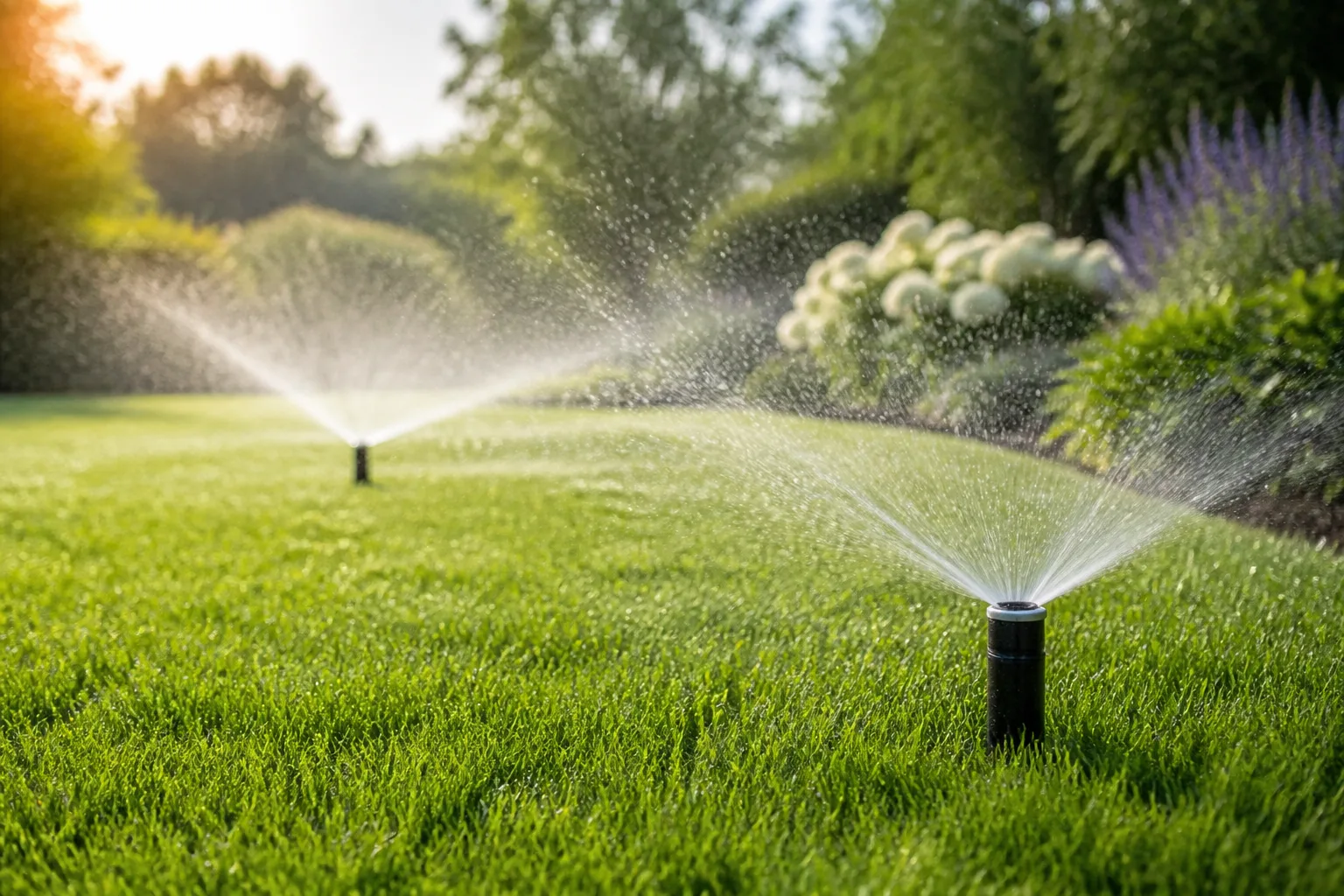
Long-term prevention is mostly resilient turf and targeted monitoring. Mow at the recommended height rather than scalping, keep traffic off saturated soil, manage thatch when it is genuinely excessive, and record where damage occurs. A vigorous, deep-rooted lawn can tolerate more feeding than a compacted or heat-stressed one, so lawn care is not a replacement for grub diagnosis but it changes how much damage a given population can cause.
When to call an extension office or professional
Ask a county or state extension office for help when the grubs do not match the common description, the treatment window is unclear, or damage returns despite correct label use. Species identification can matter because preventive products do not perform equally against every grub, and a local specialist can account for turf type, soil, weather, and pesticide registration.
Consider a qualified lawn professional when the affected area is large, wildlife is tearing up the turf, the lawn is part of a shared or high-use property, or you cannot safely apply the product. Ask what active ingredient they plan to use, whether it is a preventive or curative treatment, why the timing fits the life stage, how they will protect pollinators and waterways, and how success will be measured. A vague promise of instant eradication is a reason to keep looking.
Conclusion
The reliable way to get rid of lawn grubs is not to chase every brown patch with a pesticide. Confirm the larvae in the root zone, sample enough locations to understand the pattern, and use the count alongside turf condition, grass type, and local timing. A few grubs in attached, healthy sod need monitoring; a high, repeated count with loose turf calls for a correctly timed rescue or preventive plan.
Choose biological controls with realistic expectations, treat pesticide labels as the final authority, and protect pollinators by limiting applications to the area and season that justify them. Once feeding is controlled, give the grass time to rebuild roots before deciding whether it needs reseeding or new sod. That diagnosis-first sequence saves turf, money, and beneficial soil life.