35 Types of Fern for Home and Garden
Compare 35 fern types by light, moisture, USDA zones, and growth habit. Indoor picks, hardy shade ferns, epiphytes, and pet-safety notes that stop costly mistakes.
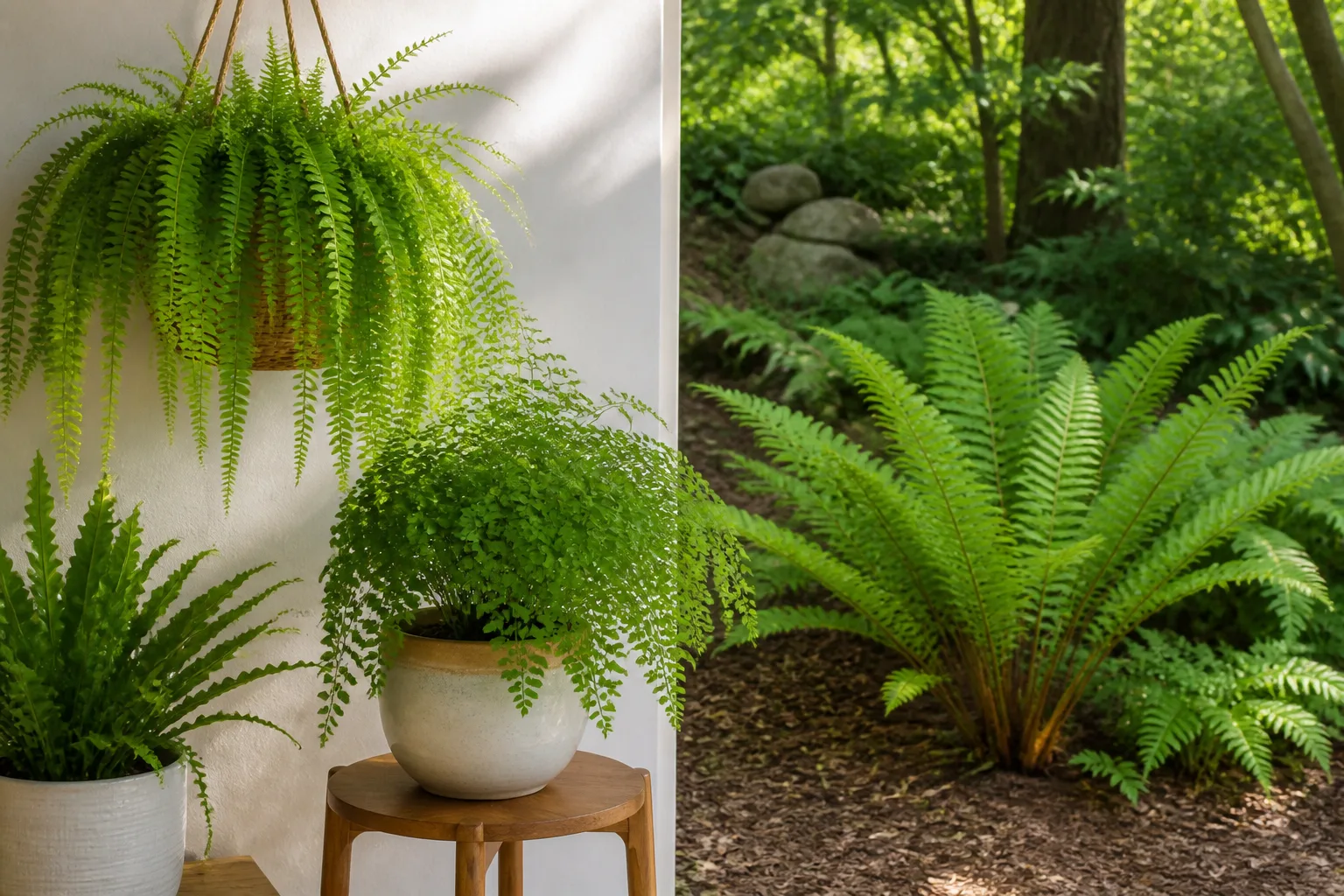
Ferns are ancient plants — fossil records push them past 350 million years — yet the nursery bench still reduces them to one floppy Boston fern in a plastic hanger. Botanists recognize roughly 10,000 fern species worldwide. Home gardeners usually choose from a few dozen cultivated types split across indoor humidity lovers, hardy woodland perennials, epiphytic showpieces, and a handful of wet-garden specialists.
This guide profiles 35 fern types you are most likely to see at garden centers and houseplant shops. You will get decision rules first, then grouped profiles with USDA zones, size, light, and the one care mistake each type punishes hardest. For species-level watering and troubleshooting after you pick a plant, use our indoor fern plant care guide and the linked species guides below.
How to Choose the Right Fern Before You Shop
Buying by photo alone is how ferns die in dry living rooms and shade beds that bake all afternoon. Start with your site, not the tag art.
Match Light, Moisture, and USDA Zone First
Run this three-question filter before you memorize Latin names:
Where will it live? Steamy bathroom and bright indirect window → tropical houseplant ferns (Nephrolepis, Asplenium, Adiantum). Shaded woodland with reliable soil moisture → hardy natives like lady fern or Christmas fern. Pond edge or constantly wet swale → sensitive fern, royal fern, cinnamon fern. Mounted on bark or a board → epiphytes like staghorn and blue star.
How dry is the air and soil? Most true ferns want steady moisture without sogginess. Epiphytes are the exception: the RHS notes epiphytic houseplant ferns prefer compost that dries slightly between waterings while air stays humid. Desert-dry apartments fail maidenhair and Boston ferns fast; blue star and rabbit’s foot tolerate more forgiving indoor air.
What is your USDA zone? Outdoor hardiness is non-negotiable. Ostrich fern thrives in zones 3–7; Australian tree fern needs zones 8–11 frost-free winters. A tropical fern sold as a houseplant will not survive a Michigan planting bed no matter how much you mulch it.
True Ferns vs Fern-Imposter Plants
Two popular “ferns” on this list are not ferns at all. They belong to Asparagus in the asparagus family and reproduce with flowers and berries, not spores.
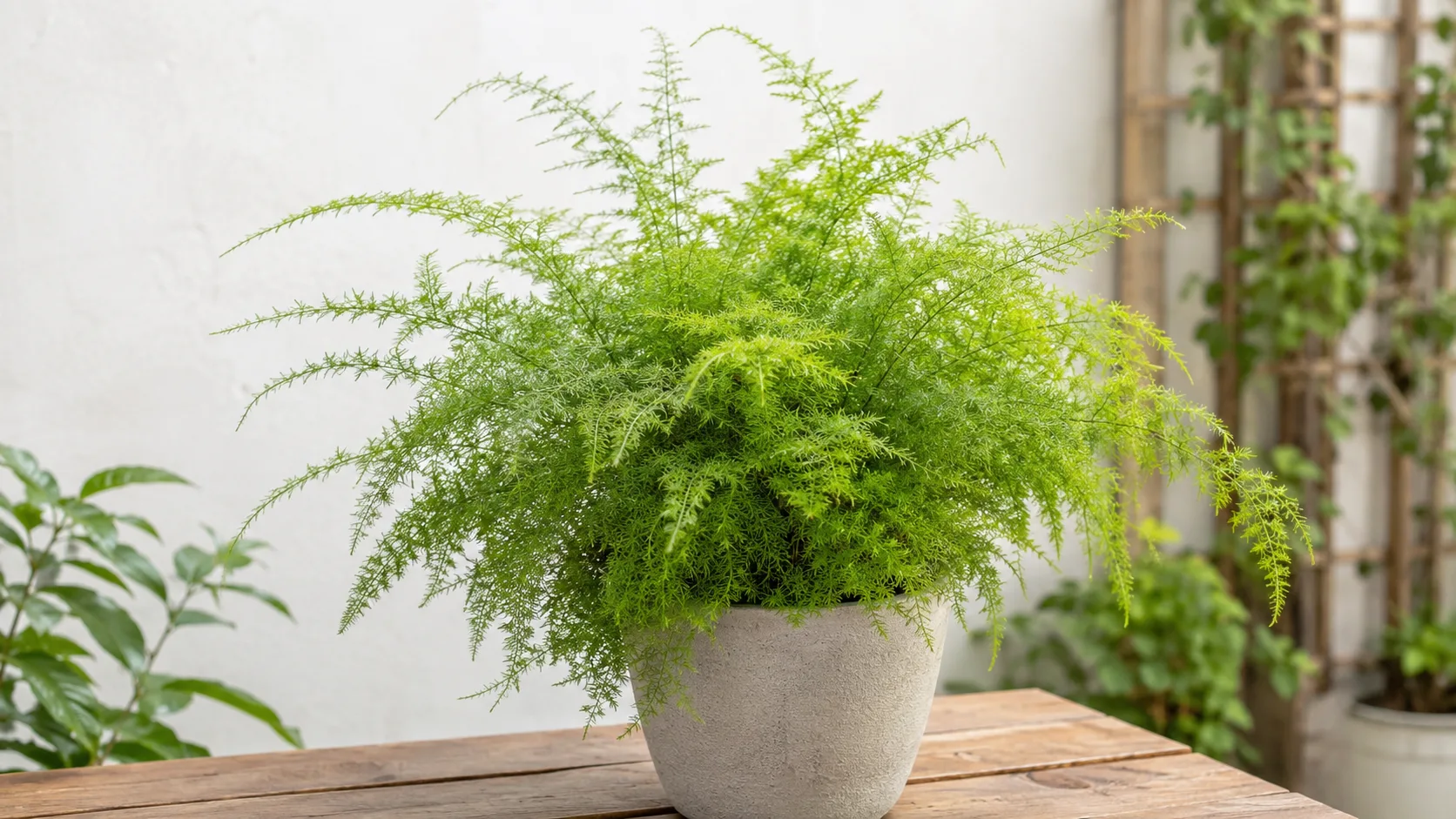
Asparagus fern (Asparagus aethiopicus) and foxtail fern (Asparagus densiflorus) look ferny but behave like semi-succulent shrubs. The ASPCA lists asparagus fern as toxic to dogs, cats, and horses. Foxtail fern berries can irritate humans and pets. If pet safety matters, verify the botanical name — “fern” on a pot label is not proof.
True ferns reproduce via spores (often visible as brown dots on frond undersides). NC State Extension points out that Boston fern sori are normal — not insects or disease.
Shared Indoor Fern Care Rules
Indoor ferns share a few non-negotiables regardless of species.
Light, Water, Humidity, and Soil Basics
Light: Bright, indirect light wins for most houseplant ferns. Direct sun through south glass scorches fronds; dim corners produce sparse, yellowing growth. Bathrooms and east windows are classic fits when humidity stays higher.
Water: Keep tropical potting mix evenly moist for terrestrial types like Boston and maidenhair. Let the top inch dry only for epiphytes and blue star. Reduce watering in winter when growth slows — soggy cold roots rot fast.
Humidity: Group plants, use a humidifier, or set pots on pebble trays. Misting helps briefly but does not replace ambient humidity for finicky species.
Soil: Loose, organic, well-draining mix. Epiphytic ferns do better in orchid bark blends than heavy peat alone, per RHS epiphytic guidance.
Temperature: Most indoor ferns prefer 60–75°F (15–24°C) and hate hot dry air from heating vents.
Best Indoor Ferns for Beginners
If you have killed a fern before, start with forgiving species and stable humidity — not the prettiest photo on Instagram.
Boston, Kimberley Queen, and Nephrolepis Types
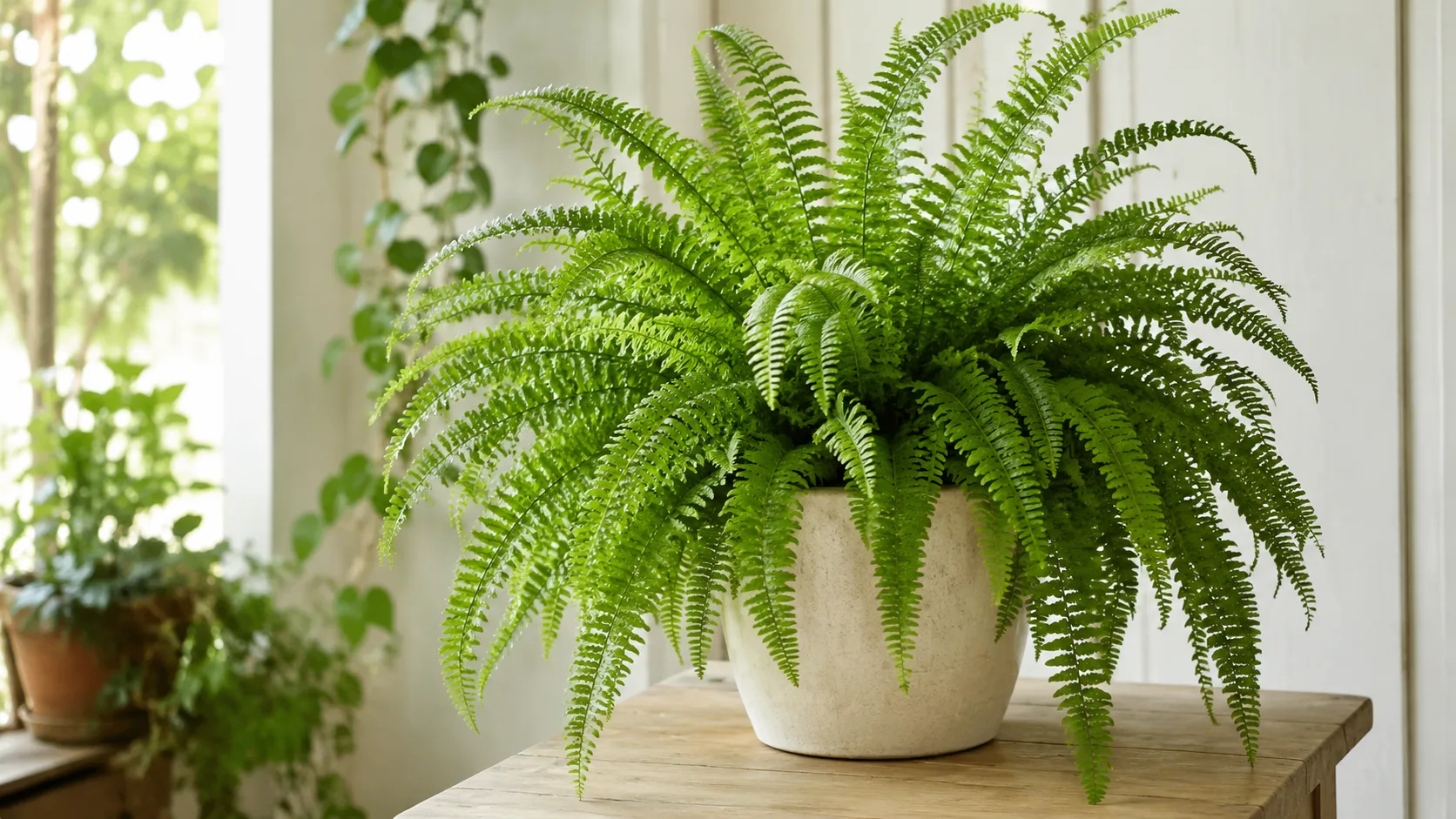
Boston fern (Nephrolepis exaltata ‘Bostoniensis’) — The classic arching basket fern. NC State Extension recommends bright indirect light, 60–70°F, high humidity, and soil that never dries completely. Grows 2–3 ft tall and wide. Hardy outdoors only in zones 10–12; treat as a houseplant elsewhere. The ASPCA lists Boston fern as non-toxic to dogs and cats. Deep care: Boston fern plant hub and indoor fern guide.
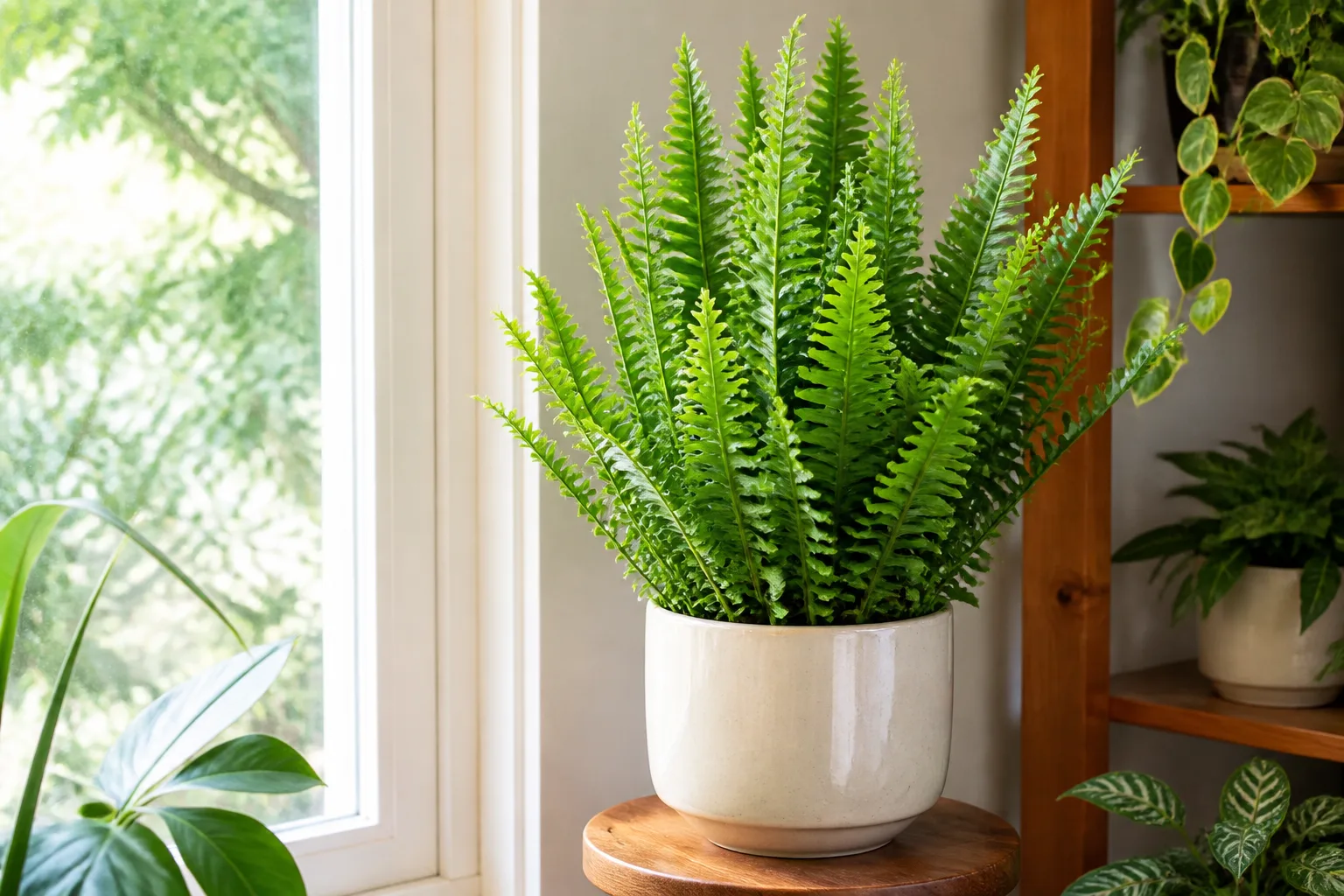
Kimberley Queen fern (Nephrolepis obliterata) — Upright sword-shaped fronds, less messy than Boston. Easier in heated rooms. Zones 9–11 outdoors. See our Kimberley Queen fern guide.
Macho fern (Nephrolepis biserrata) — Giant sword fern with fronds up to 4 ft in humid conditions. Bold porch or conservatory plant in zones 9–11. Needs space and steady moisture. Macho fern growing guide.
Lemon button fern (Nephrolepis cordifolia ‘Duffii’) — Compact 12-in. dwarf with a light citrus scent when brushed. Easier than full-size Boston in small apartments. Zones 8–10.
Maidenhair, Bird’s Nest, and Humidity-Loving Species
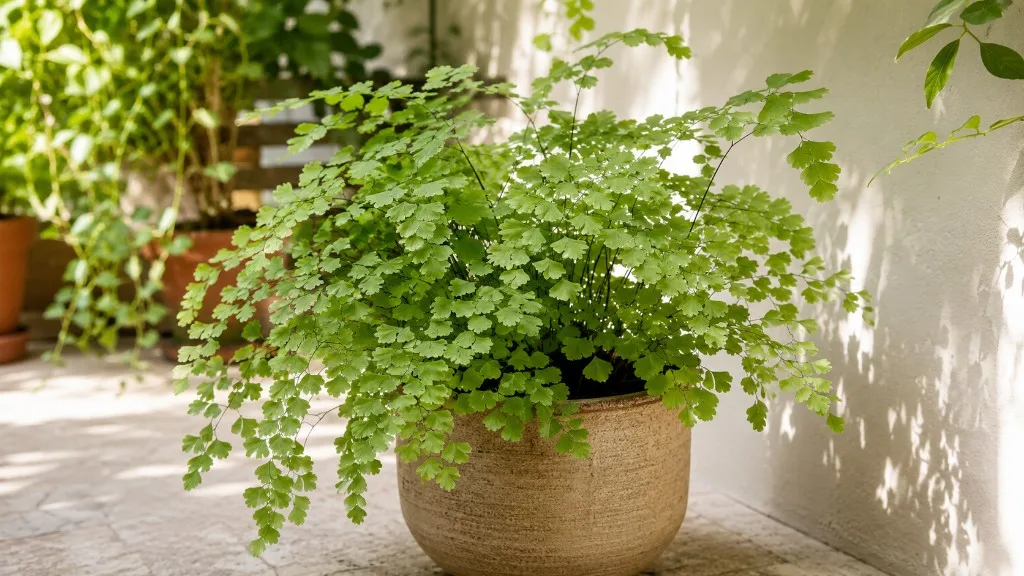
Maidenhair fern (Adiantum raddianum) — Delicate fan-shaped leaflets on black wiry stems. Stunning but unforgiving of dry air. Slow grower. Zones 10–11 outdoors. Maidenhair fern care guide and grow Adiantum ferns.
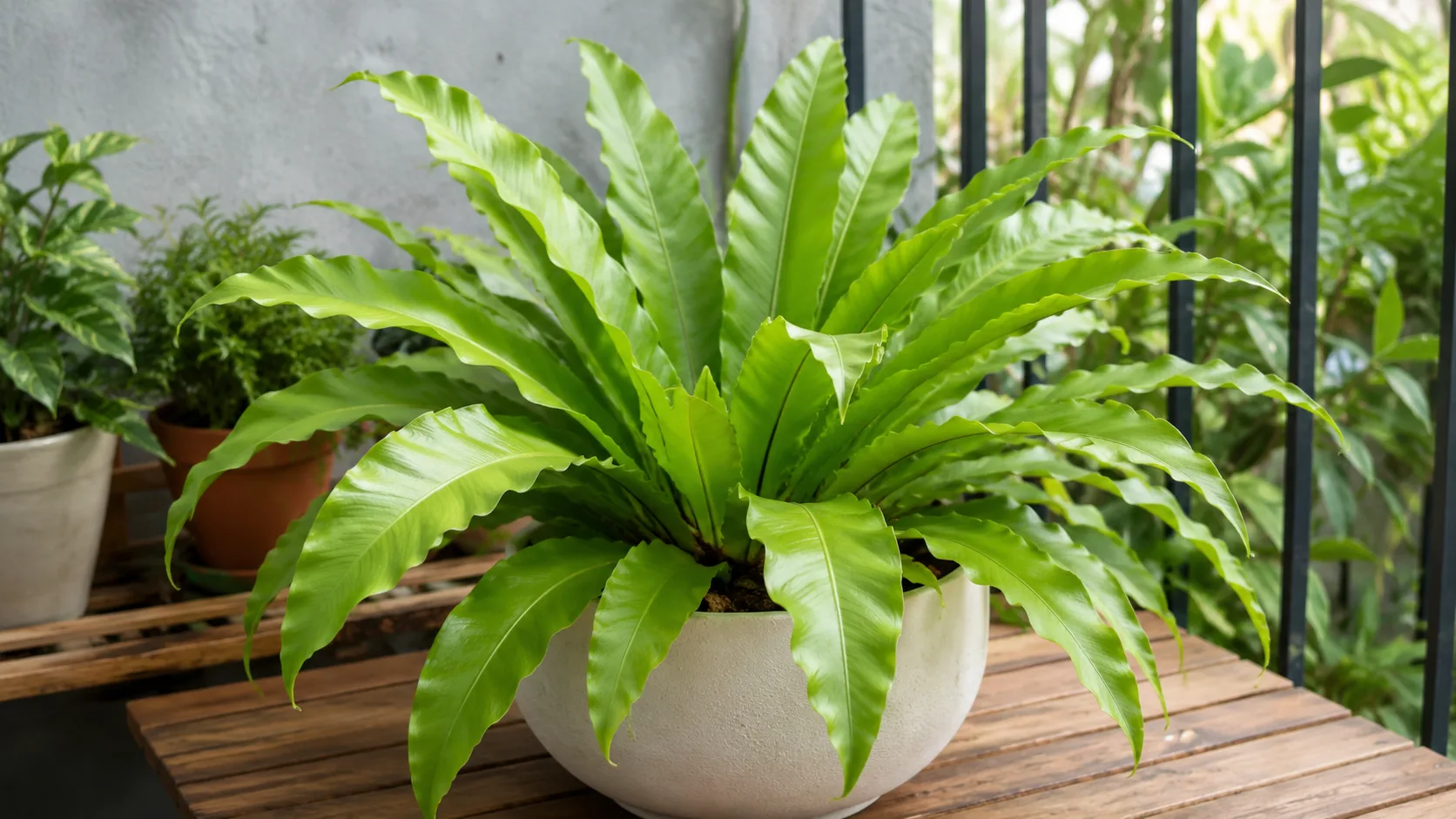
Bird’s nest fern (Asplenium nidus) — Spoon-shaped fronds in a rosette; epiphytic in nature. Excellent bathroom plant. Zones 11–12; houseplant elsewhere. Bird’s nest fern guide.
Ribbon fern (Pteris cretica) — Variegated center stripe; tolerates more light than many ferns. Good houseplant with moisture. Zones 9–12.
Crocodile fern (Microsorum musifolium) — Textured “scaly” fronds; slow, tropical. Needs steamy humidity. Zones 10–11.
Heart fern (Hemionitis arifolia) — Tiny heart-shaped leaves; terrarium favorite under 8 in. Zones 10–11.
Japanese holly fern (Cyrtomium falcatum) — Glossy, holly-like pinnae; more heat-tolerant than many indoor ferns. Evergreen in mild winters. Zones 7–10.
Epiphytic and Mounted Ferns
Epiphytes grow on trees in habitat, not in dense wet soil. They need open bark mixes, high humidity, and careful watering.
Staghorn, Blue Star, Rabbit’s Foot, and Wall Displays
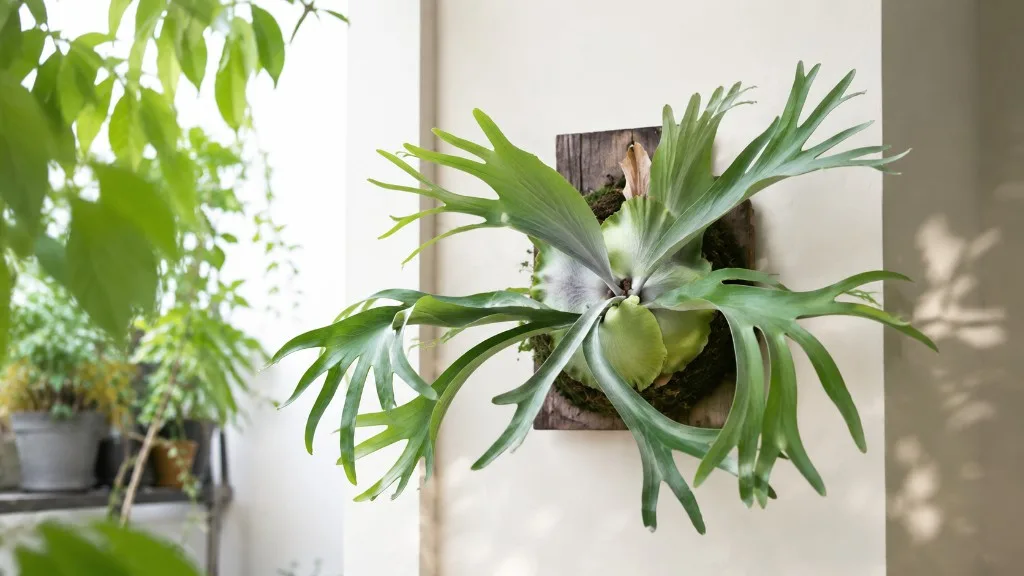
Staghorn fern (Platycerium bifurcatum) — Antler-shaped fronds; mount on board or basket. Slow but dramatic. Soak mounts when moss dries. Zones 9–12. RHS lists it among top epiphytic houseplant ferns.
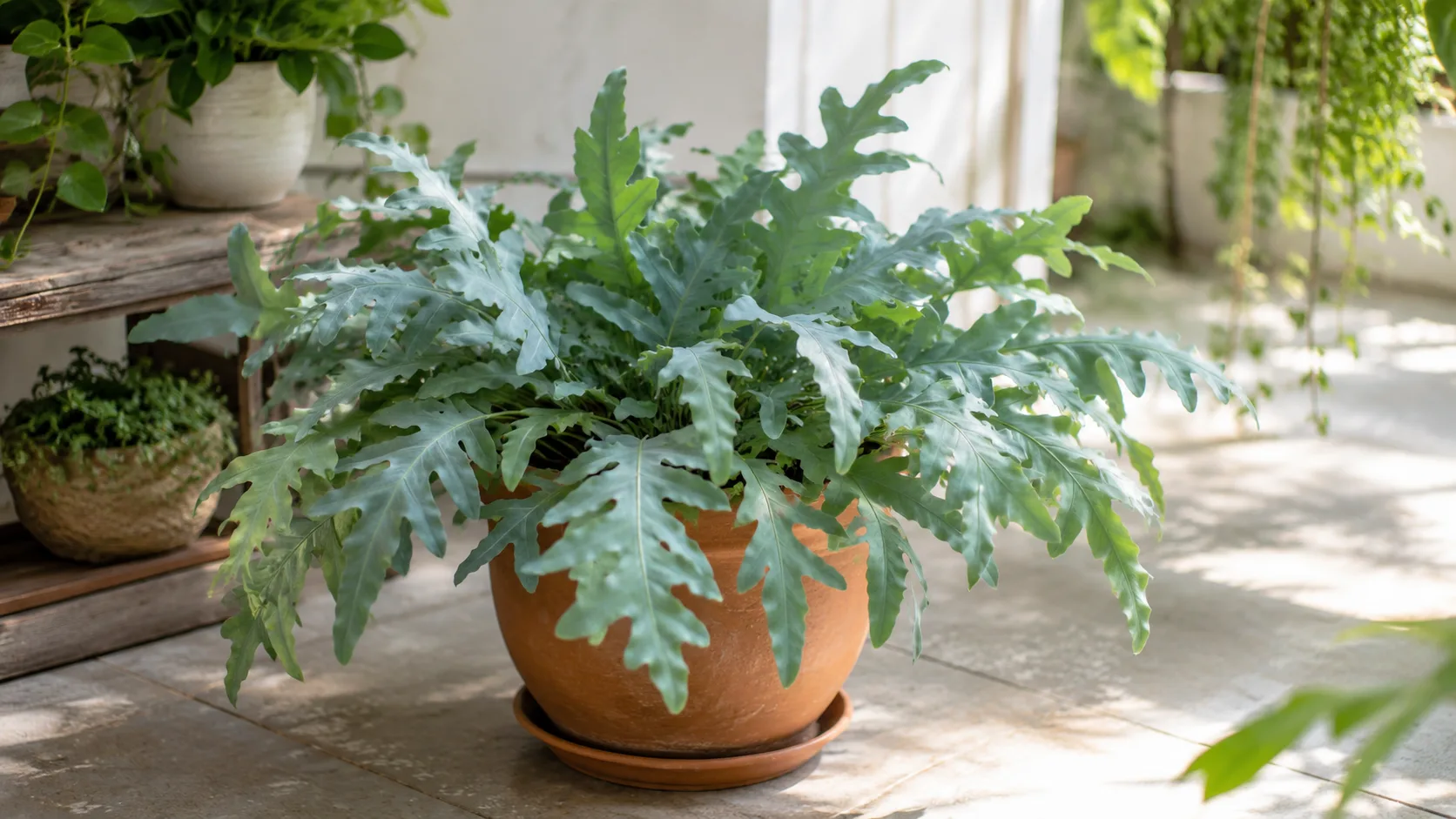
Blue star fern (Phlebodium aureum) — Blue-gray fronds; furry rhizomes creep over pot edges. Tolerates lower humidity and brighter light than Boston. Do not bury surface rhizomes. Zones 9–11.
Rabbit’s foot fern (Davallia fejeensis) — Fuzzy rhizomes spill over hanging baskets. Keep humidity high. Zones 10–12.
Licorice fern (Polypodium glycyrrhiza) — Pacific Northwest epiphyte on logs and mossy rocks. Surprisingly drought-tolerant once established outdoors. Zones 4–9, up to 1 ft.
Compact and Terrarium Ferns
Button fern (Pellaea rotundifolia) — Round leaflets; compact 1-ft mound. Windowsill friendly in zones 9–11.
Lemon button fern — See Nephrolepis section; best beginner compact.
Heart fern — See humidity section; closed terrariums only in dry homes.
Kangaroo paw fern (Microsorum diversifolium) — Variable shiny fronds; forgiving indoor species. Zones 9–11.
Hardy Outdoor Ferns for Shade Gardens
These are the ferns that earn their keep in woodland borders, foundation shade, and native plantings where hostas and hellebores already live.
Woodland Ground Covers and Native North American Types
Ostrich fern (Matteuccia struthiopteris) — Tall vase-shaped clumps 4–6 ft; edible fiddleheads in spring when positively identified and cooked. Loves wet shade. Zones 3–7; struggles in hot southern summers.
Lady fern (Athyrium filix-femina) — Lacy, fast-spreading deciduous fern. Pest-resistant workhorse. Zones 3–6 (some forms to zone 8).
Western sword fern (Polystichum munitum) — Evergreen Pacific Northwest icon; up to 4 ft. Excellent cut foliage. Zones 5–9.
Christmas fern (Polystichum acrostichoides) — Glossy evergreen fronds; winter interest in eastern woodlands. Fronds lie flatter in cold. Zones 3–9.
Autumn fern (Dryopteris erythrosora) — Copper-red new growth turning green; neat 2-ft mound. Zones 5–9.
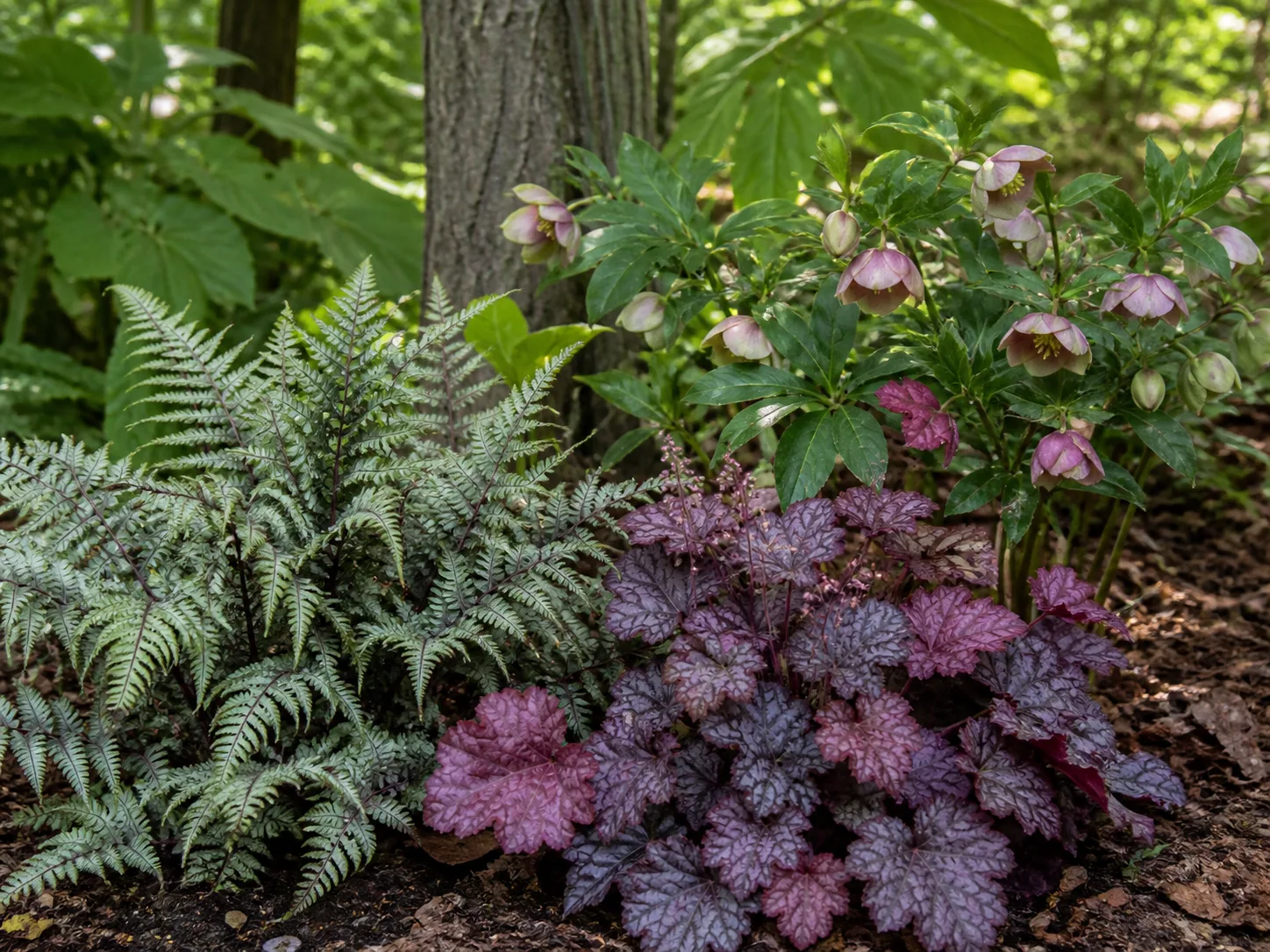
Japanese painted fern (Athyrium niponicum) — Silver-purple fronds; needs moist, well-drained soil — not dry shade. Zones 3–8.
Hay-scented fern (Dennstaedtia punctilobula) — Fast colonizer with hay aroma when crushed; can be aggressive — use where you want ground cover. Yellow fall color. Zones 3–8.
Male fern (Dryopteris filix-mas) — Large deciduous clumps; low maintenance in moist shade. Zones 4–8.
Japanese tassel fern (Polystichum polyblepharum) — Shuttlecock evergreen form; dislikes waterlogged soil. Zones 6–8.
Hart’s tongue fern (Asplenium scolopendrium) — Unusual undivided strap fronds. Limey or neutral soil in cool climates. Zones 5–9.
Southern shield fern (Thelypteris kunthii) — Sea-green fronds; more drought-tolerant than most ferns once established. Zones 7–10.
Wet-Garden and Bog Ferns
Cinnamon fern (Osmunda cinnamomea) — Named for brown fertile fronds rising from green foliage. Loves wet feet. Zones 4–10.
Royal fern (Osmunda regalis) — Shrub-sized up to 6 ft in moist soil; yellow fall color. Tolerates sun only with constant moisture in cool climates. Zones 3–10.
Sensitive fern (Onoclea sensibilis) — Apple-green fronds; dies back with first hard frost. Perfect beside ponds. Zones 4–9.
Sun-Tolerant and Heat-Hardy Exceptions
Most ferns want shade. These break the rule — with limits:
Dixie wood fern (Dryopteris × australis) — Upright hybrid; unusual sun tolerance in moist soil. Zones 5–9.
Ribbon fern and water clover fern — Accept brighter sites if moisture stays high.
Royal fern — Full sun only where summers are cool and soil never dries.
Macho fern and Australian tree fern — Heat and humidity lovers for southern gardens, not northern shade beds.
Tree Ferns and Large Landscape Specimens
Australian tree fern (Cyathea cooperi) — Trunk-forming tropical tree fern up to 25 ft in frost-free climates. Conservatory specimen in cold zones. Protect from hard frost. Zones 8–11.
Royal fern — See wet section; herbaceous giant, not a trunked tree fern.
Ostrich fern — Tall but herbaceous; dies back in winter.
Aquatic and Pond Ferns
Water clover fern (Marsilea mutica) — Four-leaf clover look; aquatic spreader for pond margins. Fast growth — contain it. Zones 5–11; full sun to part shade with wet soil.
Pet Safety: True Ferns vs Asparagus Fern
Many true ferns are considered non-toxic to pets. Boston fern is the common example on ASPCA’s non-toxic list. That does not mean pets should eat houseplants — chewing any foliage can cause stomach upset.
Asparagus fern is toxic. Foxtail fern berries irritate humans and animals. Always confirm the botanical name on the tag, not the common name alone.
For a broader pet-safe plant list, see our pet-safe houseplants guide.
Quick Comparison Table: 35 Fern Types at a Glance
| Common name | Botanical name | Best use | USDA zones | Height | Light | Key caution |
|---|---|---|---|---|---|---|
| Ostrich fern | Matteuccia struthiopteris | Wet shade, fiddleheads | 3–7 | 4–6 ft | Part–full shade | Not for hot South |
| Macho fern | Nephrolepis biserrata | Porch, large pots | 9–11 | 3–8 ft | Part shade | Needs space |
| Lemon button fern | N. cordifolia ‘Duffii’ | Small indoor pots | 8–10 | 12 in. | Part–full shade | Dry air browns tips |
| Western sword fern | Polystichum munitum | Woodland evergreen | 5–9 | 4 ft | Part–full shade | Slow to establish |
| Autumn fern | Dryopteris erythrosora | Shade border accent | 5–9 | 2 ft | Full shade | Needs moisture |
| Lady fern | Athyrium filix-femina | Native shade ground | 3–6 | 3 ft | Part–full shade | Spreads by rhizomes |
| Japanese painted fern | Athyrium niponicum | Front-of-border color | 3–8 | 18 in. | Part shade | Dry shade fails |
| Boston fern | Nephrolepis exaltata | Hanging basket indoor | 10–12 | 3 ft | Bright indirect | Low humidity drops fronds |
| Asparagus fern ⚠ | Asparagus aethiopicus | Not a true fern | 9–11 | 3 ft | Part shade | Toxic to pets |
| Foxtail fern ⚠ | Asparagus densiflorus | Outdoor accent | 9–11 | 3 ft | Part shade | Berries irritate |
| Christmas fern | Polystichum acrostichoides | Winter evergreen | 3–9 | 2 ft | Part–full shade | Fronds flatten in cold |
| Ribbon fern | Pteris cretica | Indoor, brighter shade | 9–12 | 2 ft | Part sun–shade | Needs steady moisture |
| Australian tree fern | Cyathea cooperi | Tropical specimen | 8–11 | 25 ft | Part shade | Frost kills trunk |
| Maidenhair fern | Adiantum raddianum | Humid indoor | 10–11 | 2 ft | Part–full shade | Unforgiving of dry air |
| Bird’s nest fern | Asplenium nidus | Bathroom epiphyte | 11–12 | 5 ft | Part–full shade | Overwatering rots crown |
| Rabbit’s foot fern | Davallia fejeensis | Hanging basket | 10–12 | 3 ft | Part shade | Low humidity |
| Staghorn fern | Platycerium bifurcatum | Wall mount | 9–12 | 3 ft | Bright indirect | Do not overpot |
| Dixie wood fern | Dryopteris × australis | Sun-tolerant shade | 5–9 | 4 ft | Sun–shade | Still needs moisture |
| Crocodile fern | Microsorum musifolium | Tropical indoor | 10–11 | 5 ft | Part–full shade | Slow; high humidity |
| Kimberley Queen fern | Nephrolepis obliterata | Upright indoor/porch | 9–11 | 3 ft | Part–full shade | Less messy than Boston |
| Cinnamon fern | Osmunda cinnamomea | Bog, stream edge | 4–10 | 5 ft | Part shade | Wet soil essential |
| Sensitive fern | Onoclea sensibilis | Pond margin | 4–9 | 4 ft | Part–full shade | Frost-sensitive foliage |
| Kangaroo paw fern | Microsorum diversifolium | Easy indoor | 9–11 | 12 in. | Part shade | Avoid soggy mix |
| Button fern | Pellaea rotundifolia | Windowsill | 9–11 | 1 ft | Part shade | Do not let dry out fully |
| Japanese holly fern | Cyrtomium falcatum | Shade ground cover | 7–10 | 2 ft | Part–full shade | Invasive in mild climates |
| Blue star fern | Phlebodium aureum | Beginner epiphyte | 9–11 | 3 ft | Part–full shade | Burying rhizomes rots |
| Hay-scented fern | Dennstaedtia punctilobula | Woodland ground cover | 3–8 | 2 ft | Part–full shade | Aggressive spreader |
| Japanese tassel fern | Polystichum polyblepharum | Evergreen accent | 6–8 | 3 ft | Part–full shade | Hates waterlogged soil |
| Male fern | Dryopteris filix-mas | Low-care shade | 4–8 | 4 ft | Part–full shade | Allow room to clump |
| Royal fern | Osmunda regalis | Large wet specimen | 3–10 | 6 ft | Sun–shade | Needs constant moisture |
| Southern shield fern | Thelypteris kunthii | Heat-tolerant shade | 7–10 | 4 ft | Part–full shade | Drought OK when established |
| Hart’s tongue fern | Asplenium scolopendrium | Cool shade rockery | 5–9 | 2 ft | Part–full shade | Alkaline soil preference |
| Heart fern | Hemionitis arifolia | Terrarium | 10–11 | 8 in. | Part shade | Dry air kills |
| Water clover fern | Marsilea mutica | Pond | 5–11 | 4 in. | Sun–part shade | Invasive in water |
| Licorice fern | Polypodium glycyrrhiza | Mossy log epiphyte | 4–9 | 1 ft | Part–full shade | West Coast native |
⚠ = not a true fern (Asparagus genus)
Conclusion
The right fern is less about picking the prettiest frond photo and more about matching moisture, light, and hardiness to your actual room or garden bed. Start with forgiving indoor types like Boston, Kimberley Queen, or blue star if you are new to ferns. Plant ostrich, Christmas, and lady fern where native shade and soil moisture already support them. Reserve staghorn, bird’s nest, and rabbit’s foot for humid rooms or mounted displays. And always check the tag for Asparagus imposters before you assume a lacy plant is pet-safe.
Once you shortlist a species, dive into our indoor fern plant care guide for watering rhythms and humidity fixes — or the species-specific guides linked above for Boston, maidenhair, macho, Kimberley Queen, and bird’s nest ferns.



