Macho Fern Care Guide: Light, Water, Size & Winter Care
Nephrolepis biserrata 'Macho'
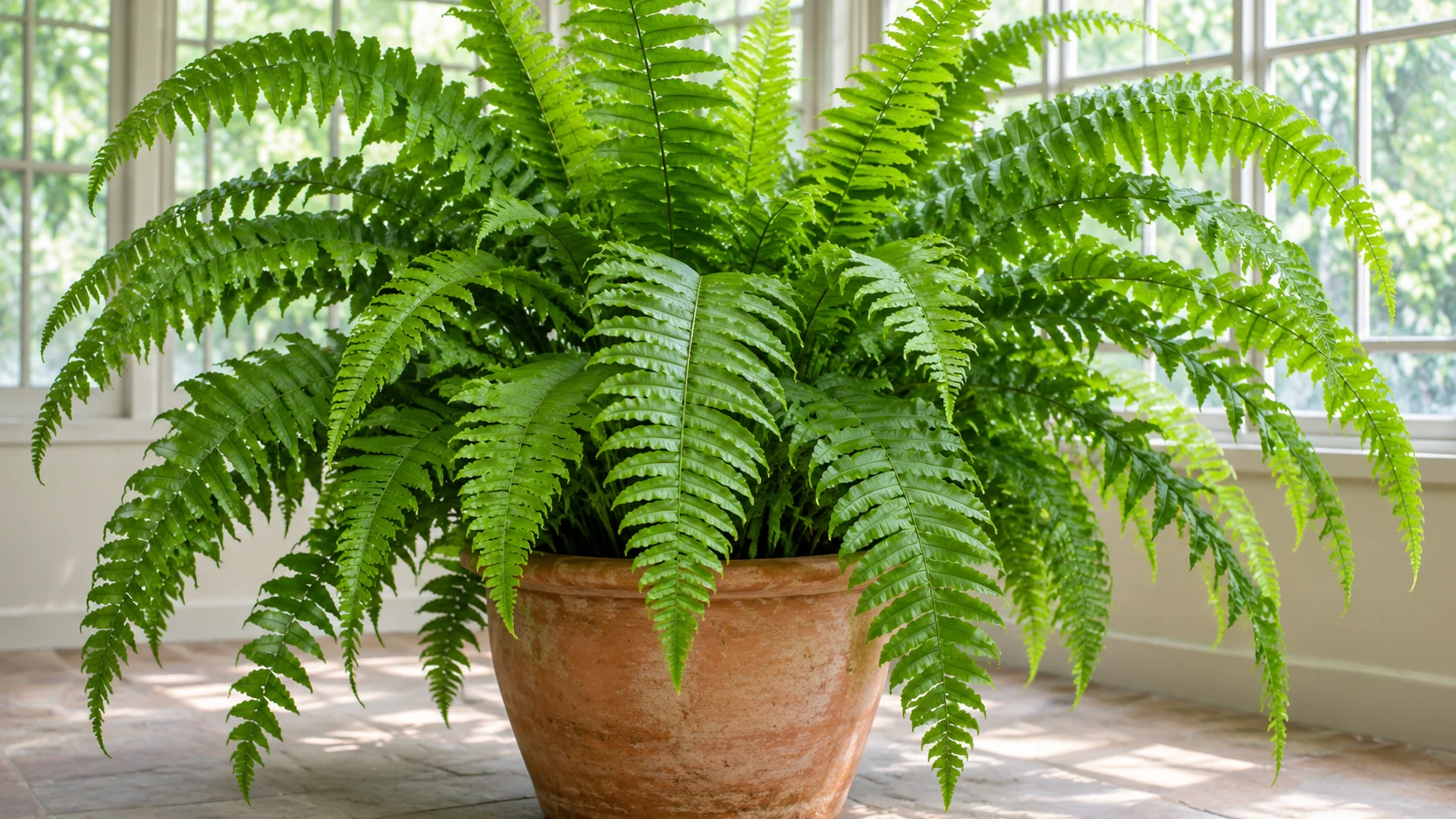
Grow Macho Fern (*Nephrolepis biserrata* 'Macho') in bright indirect light or outdoor shade, with warm humid air and consistently moist, well-draining potting mix. Protect it from frost and allow room for arching fronds several feet long.
Macho Fern Care Guide
Start with wateringThe most common care mistake for Macho FernWatering guide →Macho Fern care essentials
Light
Bright, indirect light indoors; partial shade to shade outdoors.
Water
Keep the potting mix consistently moist but never waterlogged. Water thoroughly when the surface is just beginning to dry, then let excess drain; do not let the root ball dry out completely.
Soil
Use an airy, moisture-retentive, well-draining mix rich in organic matter. Slightly acidic to neutral soil suits this fern; avoid heavy mix that compacts around its roots.
Humidity
Warm, humid air, especially when grown indoors.
Temperature
Warm conditions, roughly 10–27°C (50–80°F)
Fertilizer
Feed actively growing container plants lightly in spring and summer; young plants may need more frequent feeding than mature, established ferns.. Balanced all-purpose fertilizer used at the label rate or more diluted
About Macho Fern
Macho Fern is native to Tropical Americas, Africa, and Southeast Asia, typically reaches Commonly sold Macho plants grow about 3–4 ft (0.9–1.2 m) tall, with fronds reaching 3–4 ft long and a mature spread around 3–5 ft; the species can grow larger in tropical landscapes. indoors, with rapid in warm, moist conditions growth. Macho Fern has a evergreen, clump forming fern with large arching fronds growth habit and part of the Polypodiaceae (NC State Extension; RHS lists Lomariopsidaceae) family. It is also known as Macho fern, Giant sword fern, and Broad sword fern.
| Detail | Information |
|---|---|
| Also known as | Macho fern, Giant sword fern, Broad sword fern |
| Native region | Tropical Americas, Africa, and Southeast Asia |
| Mature size | Commonly sold Macho plants grow about 3–4 ft (0.9–1.2 m) tall, with fronds reaching 3–4 ft long and a mature spread around 3–5 ft; the species can grow larger in tropical landscapes. |
| Growth rate | Rapid in warm, moist conditions |
| Growth habit | Evergreen, Clump Forming Fern With Large Arching Fronds |
| Scientific name | Nephrolepis biserrata 'Macho' |
| Family | Polypodiaceae (NC State Extension; RHS lists Lomariopsidaceae) |
How to care for Macho Fern?
How much light does Macho Fern need?
Bright, indirect light indoors; partial shade to shade outdoors.. Filtered light. Deep shade. Bright indoor light away from direct midday sun. low light
- Bright, indirect light indoors; partial shade to shade outdoors. - Bright, indirect light indoors; partial shade to shade outdoors..
- Filtered light - Filtered light.
- Deep shade - Deep shade.
- Bright indoor light away from direct midday sun - Bright indoor light away from direct midday sun.
- low light - low light.
When should you water Macho Fern?
Keep the potting mix consistently moist but never waterlogged. Water thoroughly when the surface is just beginning to dry, then let excess drain; do not let the root ball dry out completely.
- Feel the mix near the surface and a few centimeters below it. Water when it is beginning to lose moisture - Water thoroughly when the surface is just beginning to dry, then let excess drain; do not let the root ball dry out completely.
- then empty any standing water from the saucer - Water thoroughly when the surface is just beginning to dry, then let excess drain; do not let the root ball dry out completely.
- Drain excess water - Water thoroughly when the surface is just beginning to dry, then let excess drain; do not let the root ball dry out completely.
What soil works best for Macho Fern?
Use an airy, moisture-retentive, well-draining mix rich in organic matter. Slightly acidic to neutral soil suits this fern; avoid heavy mix that compacts around its roots.
- Quality potting mix with peat or coir for moisture retention - Use an airy, moisture-retentive, well-draining mix rich in organic matter.
- Perlite and fine bark to keep the mix open and improve drainage - Use an airy, moisture-retentive, well-draining mix rich in organic matter.
How to propagate Macho Fern?
Separate a rooted rhizome section and pot it into moist, free-draining mix.
- Divide a healthy clump in spring - Separate a rooted rhizome section and pot it into moist, free-draining mix.
Grower notes for Macho Fern
Check the botanical name before buying
Macho Fern is sold under *Nephrolepis biserrata*, sometimes with the cultivar name 'Macho'. Older references may use the synonym *Nephrolepis exaltata* var. *biserrata*. It is distinct from Boston fern (*N. exaltata*) and Kimberly Queen fern (*N. obliterata*), even though all three are sword ferns. When a label only says “sword fern,” check the botanical name rather than assuming which plant it is.
Give its fronds room to arch
The commonly sold Macho form often reaches about 3–4 feet tall, with fronds as long as 3–4 feet and a spread of several feet. Use a roomy floor pot, large hanging basket, or sheltered patio container; a crowded shelf quickly becomes impractical. NC State describes the species growing even larger in tropical garden conditions.
Filter the light and keep it out of hot sun
Indoors, place the fern in bright indirect light; outdoors, choose shade or partial shade. It can tolerate low light, but avoid full, hot afternoon sun, which can burn the fronds. A covered porch or a bright room behind a sheer curtain fits its broad, delicate foliage better than an exposed sunny window.
Keep the root zone moist and airy
This fern dislikes drought, so let only the surface begin to dry before watering again. Keep the mix moist rather than soggy, and make sure the pot drains. Yellowing and leaf drop can accompany overwatering, while a dried root ball can also trigger drooping and damaged fronds; check soil moisture and drainage before changing the watering routine.
Plan for winter before the first frost
Macho Fern is tropical and frost-sensitive. In a cold-winter region, move an outdoor container indoors before frost and inspect it for scale, mealybugs, aphids, and fern mites first. Growth slows in winter, so water less often but do not let the roots dry completely. Warm, humid indoor air helps limit crispy tips during the heating season.
Keep the pet-safety claim species-specific
ASPCA lists *Nephrolepis biserrata* under Bold Sword Fern and Whitman Fern as non-toxic to cats, dogs, and horses. Those listings do not establish safety for rabbits, birds, turtles, or tortoises. Prevent other pets from chewing it unless an appropriate veterinarian confirms guidance for that animal.
Macho Fern pet safety
ASPCA lists *Nephrolepis biserrata* as non-toxic to cats, dogs, and horses under the common names Bold Sword Fern and Whitman Fern. Rabbit, bird, turtle, and tortoise safety is not established by those listings; ask an appropriate veterinarian before allowing access or feeding.
Species-specific ASPCA entries classify Nephrolepis biserrata as non-toxic to cats, dogs, and horses. This does not establish safety for rabbits, birds, or reptiles.
Watering Macho Fern
For Macho Fern, feel the mix near the surface and a few centimeters below it. Water when it is beginning to lose moisture, then empty any standing water from the saucer. and water check more often during warm, active growth. Indoor plants may need water once or twice a week in warm conditions, but use the mix and pot weight rather than a fixed calendar. Reduce watering when growth slows in winter without letting the root ball dry out. Growth slows during the cooler, darker months. Water less often then, but keep the root ball lightly moist and never bone dry.
| Detail | Information |
|---|---|
| How often | Check more often during warm, active growth. Indoor plants may need water once or twice a week in warm conditions, but use the mix and pot weight rather than a fixed calendar. Reduce watering when growth slows in winter without letting the root ball dry out. |
| How to check | Feel the mix near the surface and a few centimeters below it. Water when it is beginning to lose moisture, then empty any standing water from the saucer. |
| Seasonal changes | Growth slows during the cooler, darker months. Water less often then, but keep the root ball lightly moist and never bone dry. |
Signs of overwatering
- Yellowing fronds or excess leaf drop
- Mix that remains saturated because the pot drains poorly
Signs of underwatering
- Fronds that droop or dry while the mix is dry
- Crispy tips after the root ball has been allowed to dry out
Soil & potting for Macho Fern
Use a mix of Quality potting mix with peat or coir for moisture retention, Perlite and fine bark to keep the mix open and improve drainage for Macho Fern. Keep the mix evenly moist while allowing excess water to drain freely; use a pot with drainage holes. Target soil pH around Slightly acidic to neutral (about pH 6.0–7.0). Repot every 1–2 years if container growth fills the pot; move up only one pot size., ideally in spring, as active growth resumes.
| Detail | Information |
|---|---|
| Recommended mix | Quality potting mix with peat or coir for moisture retention, Perlite and fine bark to keep the mix open and improve drainage |
| Drainage | Keep the mix evenly moist while allowing excess water to drain freely; use a pot with drainage holes. |
| Soil pH | Slightly acidic to neutral (about pH 6.0–7.0) |
| Repotting frequency | Every 1–2 years if container growth fills the pot; move up only one pot size. |
| Best season to repot | Spring, as active growth resumes |
Signs it needs repotting
- Roots crowding the pot or emerging from the drainage holes
- The mix compacting or drying much faster than before
Humidity & temperature for Macho Fern
Macho Fern prefers warm, humid air, especially when grown indoors. Keep temperatures around warm conditions, roughly 10–27°C (50–80°F). Avoid letting Macho Fern sit below Frost-sensitive. Bring container-grown plants indoors before frost; Proven Winners advises moving them inside when temperatures fall below about 10°C (50°F). NC State lists the species for USDA zones 10–11, while some nursery guidance includes zone 9. Treat it as tropical and frost-tender; grow it outdoors year-round only in a genuinely frost-free climate.
| Detail | Information |
|---|---|
| Humidity | Warm, humid air, especially when grown indoors. |
| Ideal temperature | Warm conditions, roughly 10–27°C (50–80°F) |
| Minimum temperature | Frost-sensitive. Bring container-grown plants indoors before frost; Proven Winners advises moving them inside when temperatures fall below about 10°C (50°F). |
| Temperature notes | NC State lists the species for USDA zones 10–11, while some nursery guidance includes zone 9. Treat it as tropical and frost-tender; grow it outdoors year-round only in a genuinely frost-free climate. |
Humidity tips
- Choose a naturally humid room or use a room humidifier in dry indoor air
- Keep the fern away from heating vents and cold, drying drafts
Fertilizer & pruning for Macho Fern
Feed Macho Fern feed actively growing container plants lightly in spring and summer; young plants may need more frequent feeding than mature, established ferns. using balanced all-purpose fertilizer used at the label rate or more diluted. The best feeding window is spring and summer while new fronds are growing. Heavy feeding in winter or concentrated fertilizer that can damage roots.
| Detail | Information |
|---|---|
| Fertilizer schedule | Feed actively growing container plants lightly in spring and summer; young plants may need more frequent feeding than mature, established ferns. |
| Best season | Spring and summer while new fronds are growing |
| Fertilizer type | Balanced all-purpose fertilizer used at the label rate or more diluted |
| What to avoid | Heavy feeding in winter or concentrated fertilizer that can damage roots. |
Pruning (optional)
Remove old or faded fronds at the base; routine hard pruning is unnecessary.