How to Grow and Care for Macho Ferns
Learn macho fern care with practical rules for light, watering, soil, humidity, repotting, winter care, and fixes for brown tips, yellow fronds, and leaf drop.

Macho fern is the kind of plant people buy for instant impact. A healthy plant throws out huge, arching green fronds and fills a porch, patio, or bright room faster than most common ferns. That dramatic look is also why it gets into trouble so easily. Growers often treat it like a tougher Boston fern, then place it in hot direct sun, let it dry too hard, or keep the pot heavy and wet for too long.
The better way to think about macho fern care is simple: give it the soft light and moisture of a wet tropical edge, but keep enough air around the roots that the crown never sits in stale muck. Once you understand that balance, most of the routine becomes straightforward.
Macho Fern Care at a Glance
If you want the quick version, these are the rules that matter most:
- Give macho fern bright shade outdoors or bright indirect light indoors.
- Keep the mix evenly moist, but do not let the pot stay waterlogged.
- Use a loose, airy potting mix with bark, coir or peat-free base, and a drainage hole.
- Keep it warm and humid, especially indoors in winter.
- Feed lightly during active growth instead of fertilizing heavily year-round.
- Bring it indoors before cool nights or frost if you live outside warm tropical zones.
That baseline lines up with the species’ natural profile. Kew Science lists Nephrolepis biserrata as a perennial fern or epiphyte from wet tropical and subtropical habitats, and NC State Extension notes that it grows rapidly, prefers partial shade to deep shade, and is intolerant of drought.
Understand What a Macho Fern Needs
Macho fern is the common nursery name for Nephrolepis biserrata, also called giant sword fern or broad sword fern. University of Florida IFAS describes it as a perennial fern native to Florida, with fronds that can reach about 2.5 meters in the wild. Even if your container-grown plant never gets that large, it still behaves like a fern built for humid, warm, spacious conditions.
That matters because many care problems start with underestimating its size. A macho fern in a small nursery pot can still produce a big, thirsty top growth surprisingly fast. When the foliage expands, the old watering rhythm, small pot, or dim corner that seemed fine a month ago may stop working.
Why It Behaves Differently From Smaller Ferns
The plant’s scale changes the routine. NC State Extension lists mature dimensions around 3 to 8 feet tall and 4 to 6 feet wide, with the ‘Macho’ form often carrying fronds about 4 feet long. That bigger canopy loses more moisture and catches more heat than a small tabletop fern, so it can swing from thirsty to stressed faster outdoors, especially in a hanging basket or black nursery pot.
It also spreads differently. NC State notes that giant sword fern can grow as an epiphyte or lithophyte and spread by stolons in moist tropical areas. In a container, that translates to a vigorous root-and-rhizome system that appreciates room, airflow, and steady moisture, but not a giant pot of dense wet compost.
Give Bright Shade or Gentle Indirect Light
Light is where many macho ferns are misread. They are often sold as “shade plants,” which is true in the sense that they do not want hard direct afternoon sun. But deep, gloomy darkness is not the goal either. A macho fern keeps the best color and fuller fronds in bright shade, filtered porch light, or strong indoor indirect light.
Gardening Know How recommends filtered light and warns that full sun burns the fronds and reduces vigor. Indoors, Houseplant Central suggests bright but indirect light, with gentler morning exposure being safer than harsh afternoon sun. Those two sources fit together well: give enough light for active growth, but avoid prolonged direct sun on delicate fronds.
Best Placements Indoors and Outdoors
Outdoors, the easiest placements are under a covered patio, bright porch roof, high tree canopy, or a spot that gets only soft early sun. If your plant gets direct midday or afternoon sun, expect fading, crisping, or tan patches.
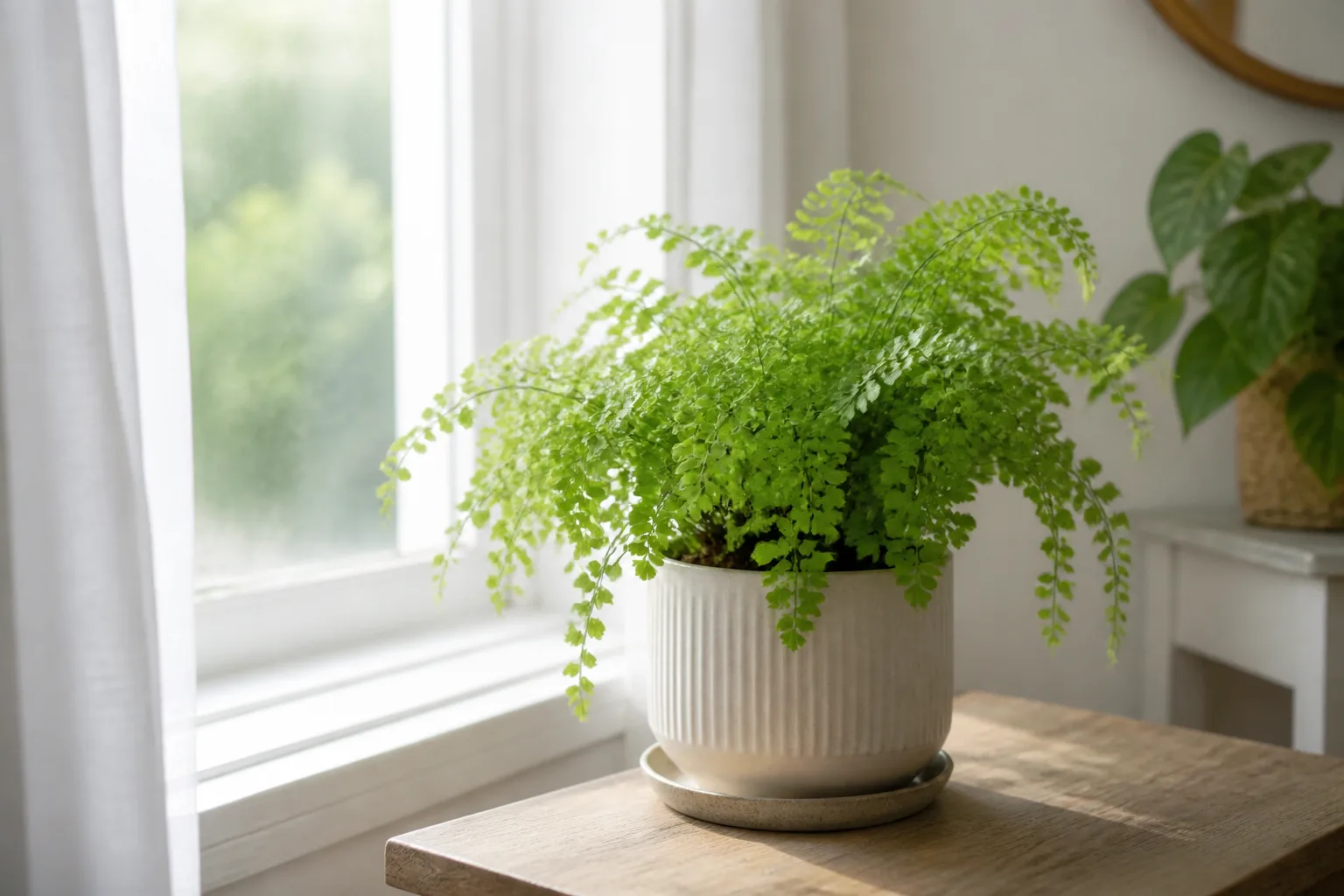
Indoors, an east-facing window is often the least dramatic choice. A few feet back from a bright south or west window can also work if the light is softened by a sheer curtain. If a room is so dim that you can barely read there comfortably during the day, it is probably too dark for a macho fern to stay dense and vigorous for long.
Watch the fronds rather than memorizing compass directions. Scorched or bleached areas usually mean too much direct sun. Long, floppy, weak new growth and a pot that stays wet for ages often point to too little usable light.
Keep the Root Zone Evenly Moist
This is the core rule of macho fern care: the root ball should stay consistently moist, but the pot should not remain swampy. That sounds obvious until you see how many plants fail from one extreme or the other. Let the root ball go bone-dry and fronds crisp fast. Keep the mix heavy and airless all the time and the roots weaken, yellowing follows, and the plant sheds.
Houseplant Central emphasizes that macho fern is less drought tolerant than some indoor ferns and should not be allowed to dry out completely. Gardening Know How puts it neatly: keep it moist, not soggy. That is the right target, but you need a way to judge it in real life.
How to Water Without Keeping the Pot Soggy
Do not water by the calendar alone. A macho fern on a breezy summer porch may need water far more often than the same plant in a cool indoor room. Instead, use three checks together:
- Feel the top inch or two of the mix. It should feel lightly damp to just barely drying, not dusty dry and not swampy.
- Lift or tip the pot if possible. A plant that still feels heavy from the last watering probably does not need more yet.
- Look at recent conditions. Heat, wind, brighter light, and a crowded root system all speed drying.
When it is time to water, do it thoroughly. Wet the whole root ball until excess drains out, then let the pot finish draining fully. Do not leave it sitting in a saucer of water for hours. If the mix has gone so dry that water races down the sides, water in two passes several minutes apart so the center rewets instead of staying hydrophobic.
Outdoor baskets and porch pots dry faster than people expect because air reaches them from all sides. Indoor pots dry more slowly, especially in winter. That is why one rigid “once a week” schedule causes so many fern failures.
Use Airy Soil and a Draining Pot
Macho fern likes a medium that holds moisture but still contains air after watering. The competitor article hints at this, but it is more useful to explain what that means in practice. Dense soil stays wet and compacted around the roots. A loose mix with bark, coir or peat-free base, and drainage material gives you a bigger margin for error.
Houseplant Central recommends a moist but free-draining, well-aerated, slightly acidic mix and suggests combining a multipurpose potting medium with coconut coir, grit, and orchid bark. Gardening Know How similarly recommends light, airy, well-draining soil around pH 6.0 to 6.5.
For most home growers, a practical potting recipe is:
- 2 parts quality indoor potting mix or peat-free houseplant mix
- 1 part orchid bark or fine pine bark
- 1 part perlite or pumice
Use a pot with a real drainage hole. Decorative cachepots are fine only if the plant sits inside a draining nursery pot that can be lifted out and emptied. Avoid jumping several pot sizes at once. A slightly larger pot is helpful; an oversized one can hold more wet soil than the existing roots can handle.
Warmth and Humidity Matter More Than Constant Misting
Macho fern is happiest when conditions feel consistently warm and humid, not chilly and dry. NC State Extension places it in USDA zones 10a to 11b, while Gardening Know How calls it suitable for zones 9 to 10 outdoors and an indoor plant elsewhere. The overlap tells you the same practical thing: cold is the real limit.
Indoors, normal room temperatures are usually fine if they stay steady. Trouble comes from heater blasts, AC vents, drafty doors, and cold window glass in winter. Outdoors, the plant can enjoy warm-season patio life, but it should come back in before nights turn chilly.
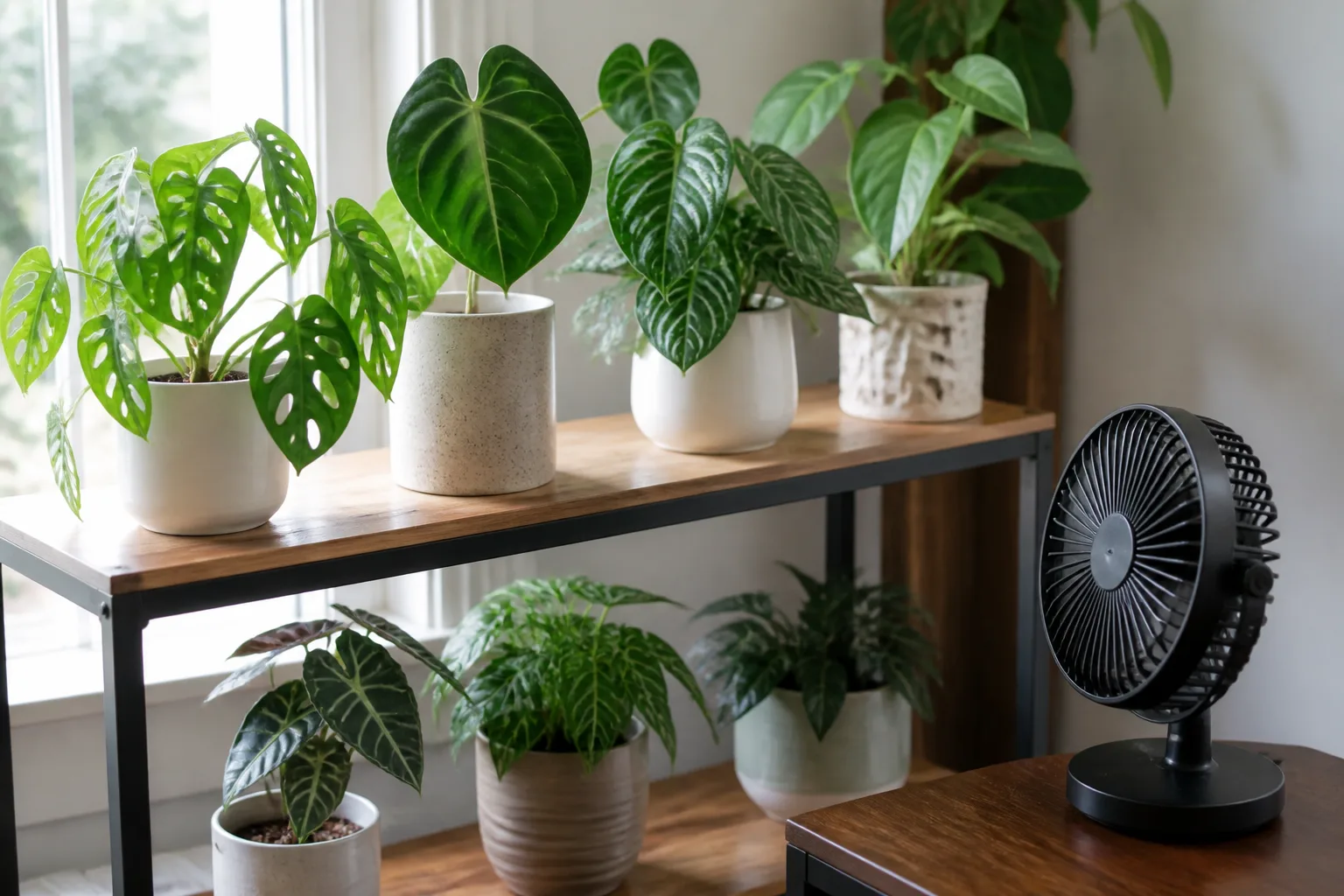
Humidity matters most when the plant is indoors through a dry heating season. Houseplant Central suggests grouping plants, using a humid room, or placing the pot above a pebble tray. Those approaches can help, but the goal is not to obsessively spray the leaves all day. A room humidifier or naturally humid space changes the environment more reliably than occasional misting.
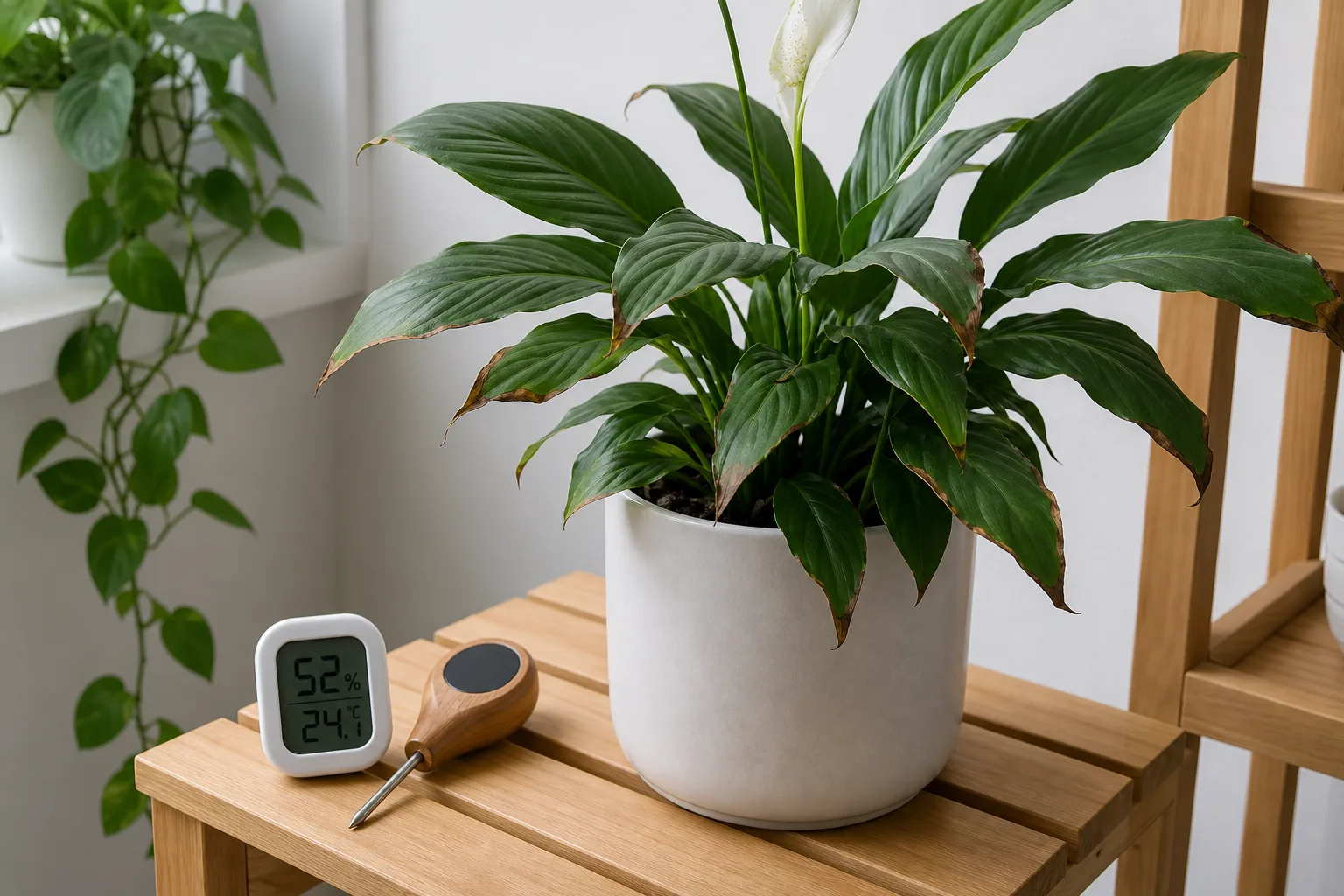
Brown, crispy tips are common when dry air combines with irregular watering. Humidity alone is rarely the whole story, but it can be the stress multiplier that pushes a decent plant into a tired-looking one.
Fertilize for Frond Growth, Not Fast Soft Growth
Macho fern responds well to modest feeding during active growth, but it does not need aggressive fertilizing to stay impressive. Too much fertilizer can cause salt buildup, root stress, and tip burn, especially in container-grown ferns that are already sitting in a limited root zone.
Gardening Know How recommends feeding new container plants every six weeks with a diluted balanced fertilizer and established plants about once a year. Houseplant Central gives a similar but slightly more generous practical range for younger plants during spring and summer. The safest takeaway is to feed lightly when the plant is actively growing and back off when growth slows.
A good home routine is a balanced liquid fertilizer at half strength every 4 to 6 weeks from spring into late summer. Skip feeding when:
- the plant is newly repotted
- the soil is very dry
- the roots are stressed or the plant is yellowing from overwatering
- the plant is barely growing in cool winter conditions
If you see a white crust on the soil or pot rim, flush the pot thoroughly with clean water and reduce feeding. More fertilizer is never the cure for a macho fern that is already struggling from bad light or bad root conditions.
Prune and Groom Without Setting the Plant Back
Macho fern does not need constant pruning, but it does benefit from regular cleanup. Old, torn, or fully browned fronds can be removed at the base to keep the plant looking fresh and improve airflow through a dense canopy.
Gardening Know How recommends removing dead fronds as they occur, which is the right default. Hard cutting every green frond back just because the plant looks messy is usually unnecessary unless you are resetting a badly stressed specimen.
If a plant is tired, sparse, and mostly damaged, you can cut it back more firmly and let clean new growth replace the old fronds. Just do this during warm active growing conditions, not when the plant is already cold-stressed or being moved indoors for winter. Ferns recover better when light, warmth, and root health are already in place.
For day-to-day grooming, trim only fully dead portions of a frond if the rest is still green and useful. If tip damage is cosmetic, shape the dead end lightly with clean scissors rather than removing the whole frond.
Divide and Repot in Spring
Repotting and propagation work best when macho fern is preparing for an active growth stretch. Spring is ideal because the plant can re-root and replace stress faster than it can in winter.
Repot when you see clear signs that the current container is no longer working:
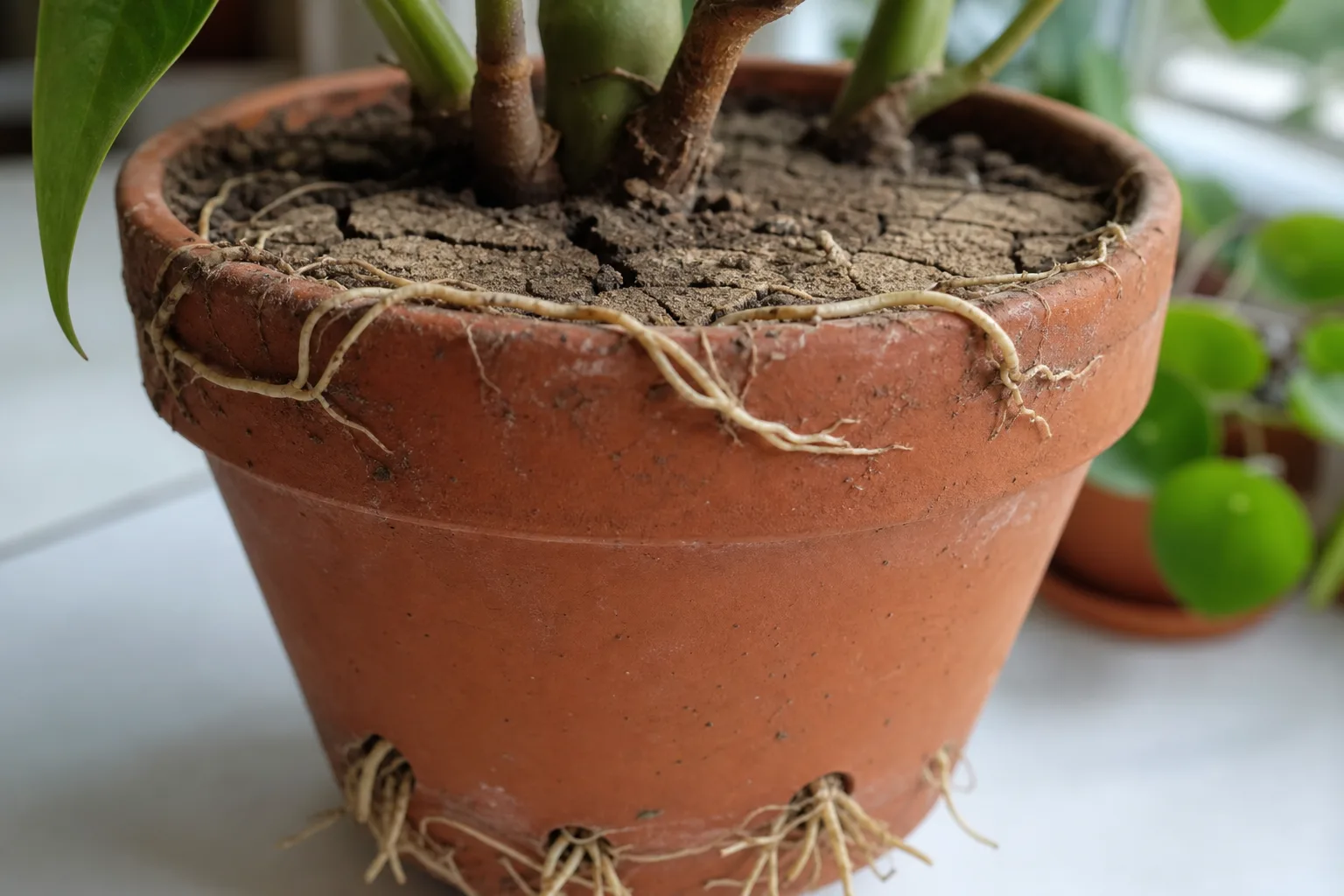
- roots and rhizomes crowding the pot heavily
- the plant drying out much faster than it used to
- water running through too quickly because the root mass has taken over
- a fern that has become top-heavy and unstable
Move up only one pot size. Gardening Know How specifically recommends repotting container plants one size up every one to two years, and that advice is sensible because giant jumps in pot size often backfire.
How to Split a Large Macho Fern Safely
Division is the easiest way to make more plants from a healthy mature macho fern. NC State Extension lists division as the recommended propagation strategy, and it fits the way the plant naturally expands.
Use this sequence:
- Water the plant the day before so the root ball is hydrated but not dripping.
- Slide it out of the pot and look for natural clumps in the rhizome mass.
- Pull or cut sections apart with as many roots attached as possible.
- Replant each division at the same depth as before in fresh airy mix.
- Water thoroughly and keep the new divisions in bright shade while they reestablish.
Do not divide a weak fern just because it is large. If the plant is already yellowing, dropping heavily, or dealing with pests, fix health first. Division adds stress, and weak pieces stall much longer.
Overwinter Before Nights Turn Cold
If you garden outside the plant’s warm-zone range, macho fern should be treated like a summer outdoor plant that comes back inside before real cold arrives. That move is easiest when you act early rather than waiting for the first near-freezing surprise.
Gardening Know How advises bringing plants indoors if frost threatens, and that is non-negotiable. Frost can ruin the foliage quickly. Even repeated cool nights before frost can stress a tropical fern enough to trigger shedding and slowdown.
Before you bring the plant indoors:
- inspect the undersides of fronds and the crown for pests
- rinse the foliage if needed
- isolate it from other houseplants for a short period if you suspect hitchhikers
- move it into bright indirect light, not a dark storage corner
Once inside, expect slower growth. Water less often than you did outdoors in summer, but do not let the root ball go fully dry. Winter care is not “keep it wet because it is a fern.” It is “slow down with the season while preserving stable moisture.”
Diagnose Brown Tips, Yellow Fronds, and Leaf Drop
Most macho fern problems are not mysterious. They usually trace back to light, moisture, humidity, cold, or the compounding effect of two or three of those at once.
Brown tips usually suggest one or more of these:
- dry air
- missed waterings or a root ball that dries too hard
- fertilizer salt buildup
- root stress from compacted or stale mix
- sun scorch if the damage is broader and paler
Yellow fronds more often point to root-zone trouble. If the pot stays wet for too long and the older fronds start yellowing, suspect overwatering or poor drainage first. If the plant dries extremely fast and yellows while looking limp, it may be too root-bound or simply too thirsty.
Leaf drop needs context. NC State Extension notes that dropping leaves can indicate either overwatering or underwatering. That sounds frustrating until you use the pot and soil to break the tie. A wet, sour, heavy pot tells one story. A feather-light, bone-dry root ball tells the other.
A Quick First-Check Sequence
When your macho fern looks off, check in this order:
- Touch the mix. Is it wet, evenly moist, or dry all the way through?
- Check the light. Has direct sun increased, or has the plant been moved somewhere darker?
- Review the environment. Any heater vent, AC blast, cold draft, or sudden outdoor weather change?
- Inspect roots and crown if needed. A declining plant in a constantly wet pot may need to come out and be checked.
- Look for pests. Fine stippling, sticky residue, or cottony clusters point away from a pure watering issue.
The first fix should match the first confirmed problem. Do not change everything at once. If the fern is overwatered, the answer is not more fertilizer. If it is scorched, the answer is not extra water on the same hot windowsill.
Watch for Pests After Outdoor Time
Macho fern is not usually the most pest-ridden plant in the room, but it can pick up problems, especially after spending warm months outdoors. NC State Extension specifically flags Florida fern caterpillar, fern scale insect, mealybugs, scale, aphids, and fern mites as issues to watch for.
That makes outdoor-to-indoor transition the highest-risk moment. Inspect the undersides of fronds, the base of the crown, and the tight interior where pests hide. A quick rinse and a short isolation period can save your whole indoor collection from an avoidable outbreak.
For minor issues, remove pests physically first and repeat inspections over the next week or two. Use a labeled houseplant-safe treatment only when you are sure what you are dealing with and the plant actually needs it. Fern foliage can be more sensitive than thicker-leaved houseplants, so stronger is not better.
Conclusion
Macho fern rewards the grower who pays attention to conditions instead of chasing routines. Give it filtered light, a moist but airy root zone, steady warmth, and more humidity than a dry winter room naturally provides, and it becomes one of the most dramatic easy-care tropical foliage plants you can grow.
The big mistakes are predictable: too much sun, too little water, soil that stays soggy, and waiting too long to bring it in from the cold. Avoid those, and a macho fern can stay lush for years, whether it lives on a shaded porch all summer or anchors a bright indoor room year-round.