Hummingbird Nectar Recipe: 1:4 Sugar Water
Make hummingbird nectar with one part white sugar and four parts water. Learn safe ratios, what never to add, storage limits, and feeder cleaning that keeps birds healthy.
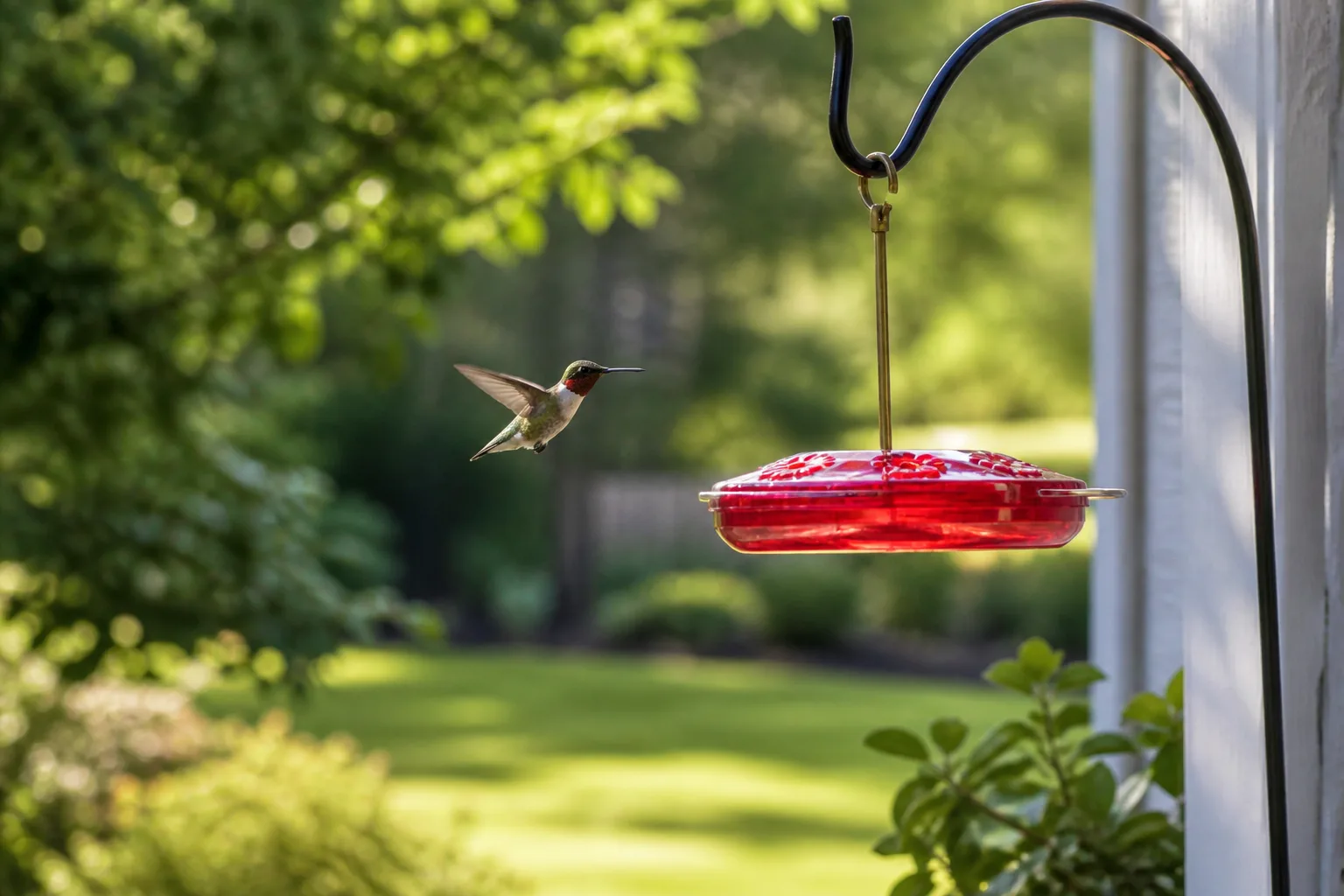
A hummingbird nectar recipe is one part plain white granulated sugar dissolved in four parts water by volume—the same sweetness range many tubular flowers provide. That 1:4 ratio is what cooperative extension services and major bird organizations recommend for everyday feeder use, and it keeps sugar concentration close enough to natural nectar that hummingbirds can digest it without the risks that come from shortcuts like honey, brown sugar, or red dye.
Homemade nectar costs pennies, takes minutes, and beats most store-bought concentrates that add dyes or preservatives you do not need. The real work is not mixing sugar water—it is keeping the feeder clean, the liquid cool, and the concentration accurate week after week. Get those three habits right and your yard becomes a reliable fuel stop for ruby-throated hummingbirds in the East and Anna’s or rufous hummingbirds where they overlap feeders in the West.
Why Homemade Hummingbird Nectar Works
Hummingbirds run on sugar. Their metabolism is so fast that they may visit 1,000–2,000 flowers per day and feed every 10–15 minutes during active periods, according to the National Audubon Society. A backyard feeder does not replace that flower-hopping lifestyle—it adds a concentrated pit stop when blooms are scarce, when migrants arrive hungry in spring, or when adults are fattening up before fall migration.
Sugar water from your kitchen mimics the carbohydrate punch of floral nectar. It does not replace the protein, fat, vitamins, and minerals hummingbirds get from insects and spiders, which breeding females may consume by the thousands while feeding nestlings (Rutgers NJAES). Think of your feeder as supplemental energy, not a complete diet. That distinction matters because it keeps expectations realistic: correct nectar keeps birds coming back, but it will not fix a yard with zero flowers, zero insects, or a filthy feeder port clogged with mold.
What Hummingbirds Actually Need From Your Feeder
From the feeder itself, hummingbirds need three things: correct concentration, clean ports, and cool liquid. Too weak and they burn calories traveling for little reward; too strong and the mix ferments faster, crystallizes around ports, and can stress their kidneys over time (Penn State Extension). Dirty feeders grow bacteria and yeast; warm nectar in full sun can ferment into alcohol within days—a serious hazard Rutgers extension warns about explicitly for hot weather.
They also need safe access: clear flight paths, shade during the hottest hours, distance from window glass, and enough space from bushes where cats ambush. Nectar quality and feeder placement work as one system. Perfect sugar water in a sun-baked, moldy tube feeder still fails the birds.
The Standard 1:4 Sugar-to-Water Ratio
The standard hummingbird sugar water ratio is 1 part granulated white sugar to 4 parts water, measured by volume—not weight. One cup of sugar plus four cups of water, one quarter-cup sugar plus one cup water, or one tablespoon sugar plus four tablespoons water all produce the same concentration as long as you use the same measuring cup for both ingredients.
Penn State Extension states plainly that weaker solutions are less attractive and stronger solutions may be harmful. The 1:4 recipe sits in the sweet spot extension services and the Smithsonian’s National Zoo cite for routine feeding. It is close to the sugar content of many hummingbird-pollinated flowers without pushing into syrup territory.
Batch Sizes That Match Your Feeder
Match batch size to how fast your birds drain the feeder—not to how big your pitcher is. Small batches reduce waste and make it easier to stick to a cleaning schedule.
| Sugar | Water | Good for |
|---|---|---|
| 1/4 cup | 1 cup | One small feeder or testing a new location |
| 1/2 cup | 2 cups | Two refills of a modest saucer feeder |
| 1 cup | 4 cups | Multiple feeders or a busy migration week |
During quiet weeks, mix half a batch and fill the reservoir only partway. You can always top up with fresh nectar after a clean-and-rinse, but never pour new nectar over old liquid sitting in the feeder—that preserves yeast and mold you cannot see.
When a Slightly Stronger Mix Makes Sense
Some guides suggest a 1:3 ratio (one part sugar to three parts water) during cold snaps when hummingbirds need extra calories and fermentation slows in cool air. The National Audubon Society notes colder weather as one context where a slightly sweeter mix can help. Use 1:3 as a temporary cold-weather adjustment, not your default recipe.
In ordinary spring, summer, and fall feeding, stay at 1:4. Stronger nectar ferments faster in heat, attracts bees and wasps more aggressively, and leaves sticky residue that clogs feeder ports. If insects swarm your feeder, fix leaks and placement first—see our guides on bees at hummingbird feeders and keeping ants out—before cranking up sugar concentration.
Step-by-Step Hummingbird Nectar Recipe
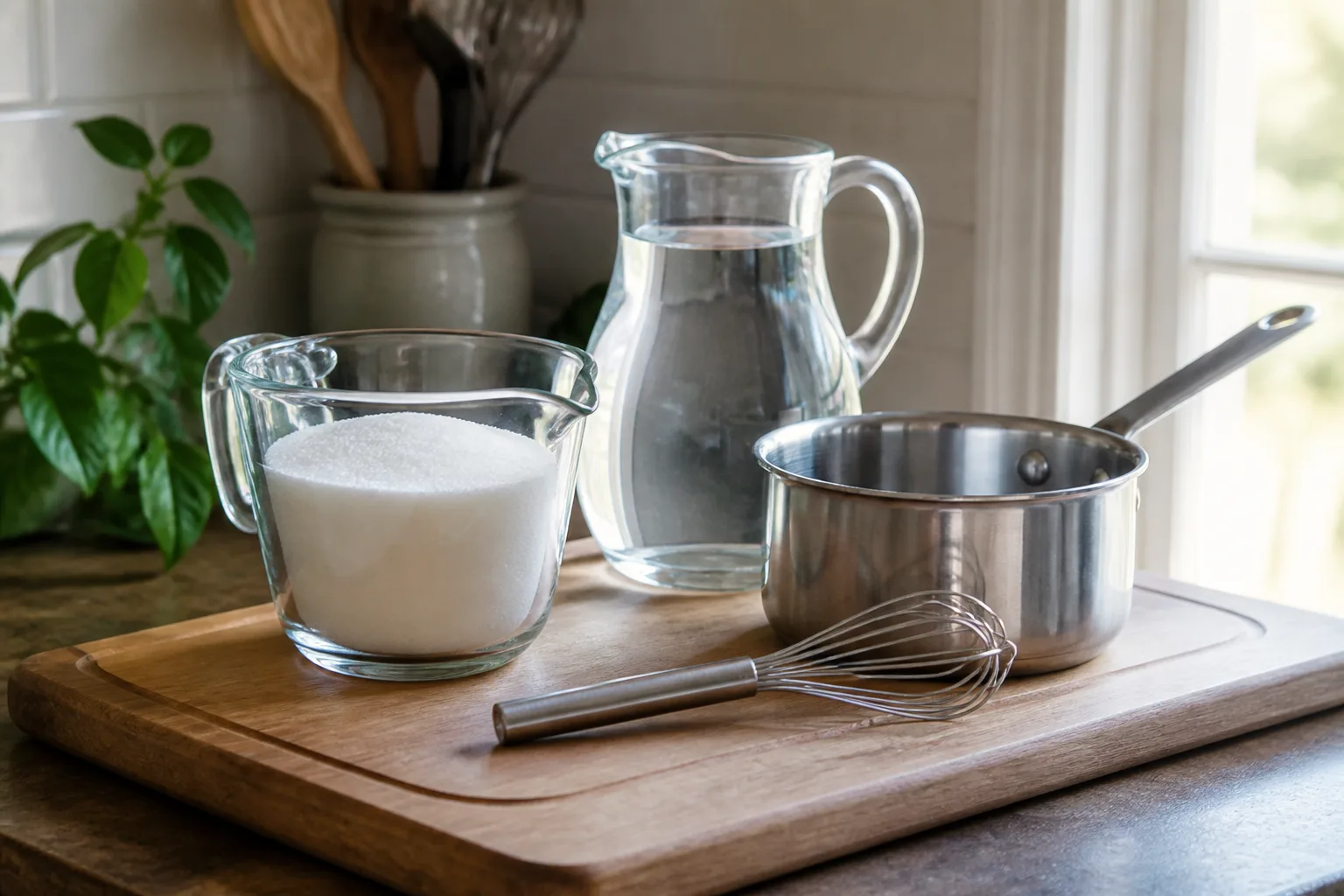
You need plain white granulated table sugar, water safe to drink, a clean measuring cup, a spoon or whisk, a saucepan or heat-safe bowl, and a pitcher or jar for storage. Skip food coloring, honey, and “natural” sweeteners—those belong nowhere near a hummingbird feeder.
Combine Sugar and Water
Measure 1 part sugar and 4 parts water into a saucepan or large bowl. For a starter batch, use 1/4 cup sugar and 1 cup water—enough for most single-feeder homes without leaving a quart of nectar aging in the fridge.
Use refined white granulated sugar only. Powdered sugar contains anti-caking agents; raw and brown sugars add minerals and molasses flavors that ferment unpredictably; artificial sweeteners provide zero usable calories. Penn State Extension is explicit: never use honey, because fermented honey can cause a fatal fungal disease in hummingbirds.
Dissolve Without Overthinking Boiling
Here is where many recipe pages overcomplicate things. Boiling is optional, not mandatory. The Smithsonian National Zoo and Cornell Lab’s All About Birds both describe dissolving sugar in water without requiring a boil—stir or shake until no crystals remain.
Boiling can help in two situations: dissolving a large batch quickly, and slowing initial microbial growth in the stored concentrate before it goes into the feeder. If you boil, heat until the sugar dissolves, then remove from heat immediately. Do not reduce the liquid—evaporation concentrates sugar and throws off your 1:4 ratio. Rutgers NJAES recommends boiling one part sugar with one part water, then adding the remaining three parts cold water—a method that protects ratio accuracy.
If you skip boiling, use warm tap water and vigorous stirring. Either path works when the final mix is clear and fully cool before it reaches the feeder.
Cool Completely Before Filling
Never fill a feeder with warm or hot nectar. Warm sugar water warps plastic reservoirs, stresses glass seals, and—more importantly—ferments faster once birds introduce beak bacteria into the ports. Cool the batch to room temperature, then refrigerate any portion you are not using immediately.
Fill the feeder over the sink so drips do not coat the outside with sticky sugar that advertises your setup to ants and bees. Wipe the base dry before hanging. If nectar ever feels hot to the touch in the feeder, dump it, clean the ports, and start fresh—shade and placement fix heat problems better than any recipe tweak.
Ingredients You Should Never Use
The shortest section on this page is also the most important: hummingbird nectar is only sugar and water. Everything else is either useless or actively dangerous.
Why Honey and Brown Sugar Are Dangerous
Honey spoils fast in feeders and promotes fungal growth that Penn State Extension warns can kill hummingbirds. Brown sugar, molasses, corn syrup, and organic raw sugars introduce compounds white sugar does not, changing fermentation and mouthfeel in ways birds did not evolve to handle. Sugar substitutes deliver no energy— a hummingbird hovering at your feeder would literally starve while sipping.
If you ran out of white sugar, wait until you restock. Feeding the wrong sweetener to fix an empty pantry is worse than leaving the feeder down for a day.
Red Dye Is Unnecessary and Risky
Do not add red food coloring to hummingbird nectar. Feeders already use red ports, bases, and flowers to catch attention; dye in the liquid adds no benefit. The U.S. Fish and Wildlife Service and multiple extension offices flag unnecessary dyes as a risk not worth taking when clear nectar works.
If your feeder lacks red accents, add a red ribbon or choose a red feeder model—do not dye the drink. Clear nectar also makes spoilage easier to spot: cloudy, stringy, or dark liquid means discard immediately.
Tap Water vs Filtered Water
If your tap water is safe for you to drink, it is safe for hummingbirds in nearly all cases. Audubon and Cornell both treat standard municipal water as acceptable. Consider filtered or bottled water only when your tap supply has strong chlorine smell, sulfur taste, or known heavy mineral issues that you already avoid drinking yourself.
Softened water high in sodium is a gray area—if you would not cook with it regularly, use filtered water for nectar. The sugar concentration matters more than perfect water sourcing; measuring the ratio correctly beats chasing distilled water while still using honey or dye.
How to Store Leftover Nectar Safely
Refrigerate extra nectar in a clean covered container for up to one week—the limit Penn State Extension and Audubon both cite. Label the jar with the date you mixed it so leftovers do not become an experiment in the back of the fridge.
Before each refill, inspect stored nectar. Discard it if you see cloudiness, floating particles, stringy threads, off smells, or fermentation tang. When in doubt, mix a fresh quarter-cup batch; sugar is cheap, and birds pay the price for stale nectar.
Never freeze and thaw nectar repeatedly for feeder use—freezing is unnecessary for a recipe you can mix in two minutes. Do not store nectar at room temperature before it goes outside; the fridge slows microbial growth until you are ready to fill a ** freshly cleaned** feeder.
Feeder Cleaning and Refill Schedule
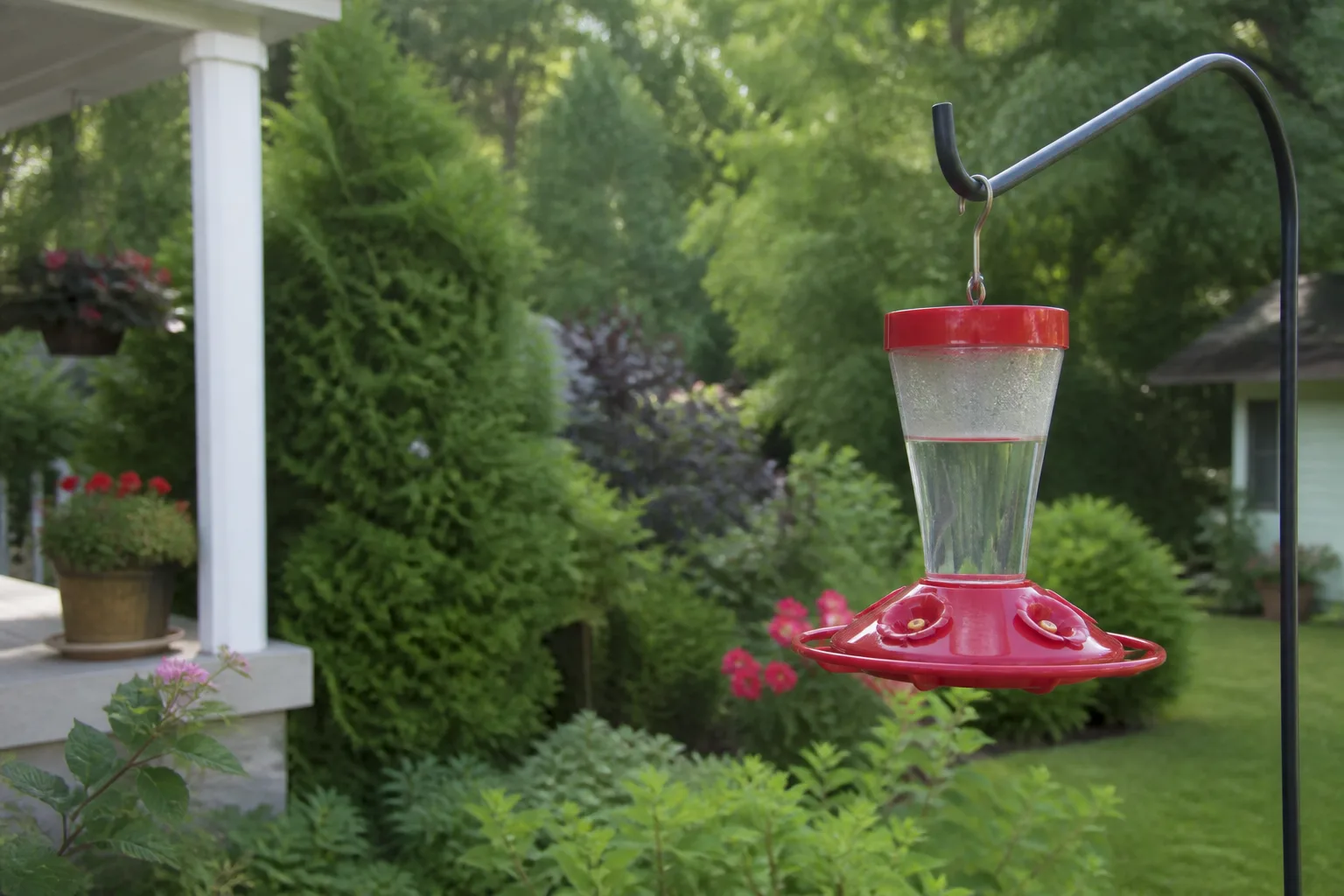
Treat feeder maintenance as part of the recipe, not an optional chore. Empty, disassemble, and scrub the feeder before every refill when possible—at minimum every two to three days in hot weather and weekly in cool spring or fall, per Rutgers NJAES guidance.
Hand-wash with hot water and a bottle brush, reaching ports and seams where mold hides. For a deeper clean, soak disassembled parts in a mild bleach solution—Rutgers recommends 1/2 cup bleach per gallon of water—then rinse thoroughly until no bleach smell remains. Dishwasher-safe feeders can go through a hot cycle with the reservoir opening facing down.
Refill only after the feeder is dry. If bees or ants have taken over, clean first, then address placement and guards—our bee and ant guides cover humane fixes without pesticides on the feeder itself.
Hot-Weather Fermentation Warning
Sugar water ferments quickly in heat, producing alcohol that is toxic to hummingbirds (Rutgers NJAES). A feeder in direct afternoon sun may need nectar changed every day or two in July and August even if it looks full. Shade, smaller fills, and more frequent cleaning beat any “preservative” trick.
Signs of trouble: cloudy liquid, black mold dots in ports, bees drunk on fermented sugar, or hummingbirds skipping a feeder they used to visit. Dump the nectar, bleach-rinse if mold appeared, and hang the feeder in partial shade before refilling with a cool fresh batch.
Where to Hang Your Feeder for Safe Feeding
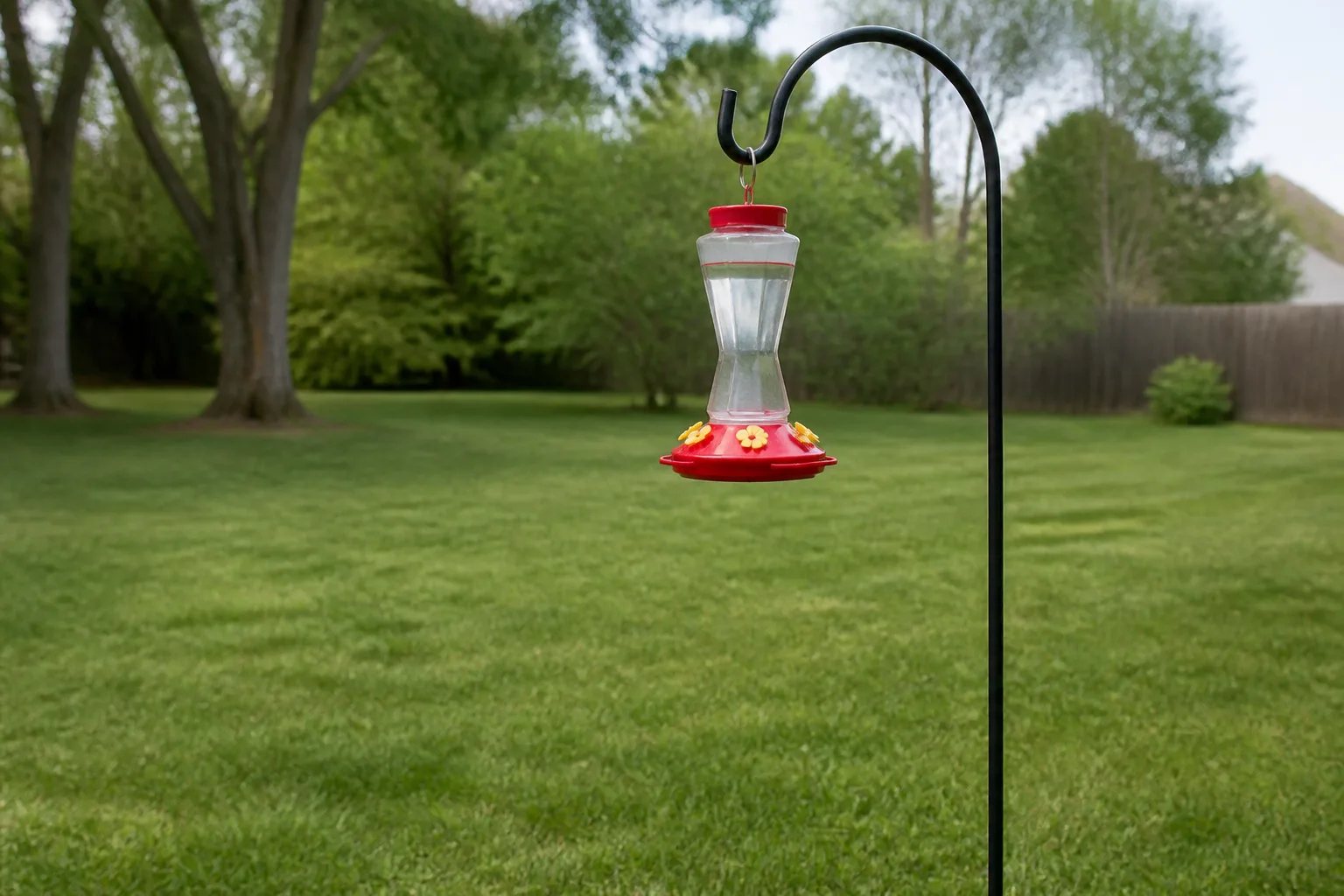
Place the feeder where birds can approach openly but predators cannot lurk nearby. Rutgers recommends at least 15 feet from low shrubs where outdoor cats hide, and Audubon-style guidance adds 10–15 feet from dense cover that ambush predators use. Combine that with window safety: hang feeders either within three feet of glass (so collisions are low-speed) or more than 30 feet away—middle distances cause the deadliest strikes.
Partial shade during the hottest part of the day slows heating and fermentation. Morning sun with afternoon shade is ideal in many yards. Provide a nearby bare branch or trellis so hummers can perch between sips; they defend feeding territories and need lookout spots.
Keep feeders separate from seed feeders when possible—spilled seed attracts rodents and squirrels that disturb hummingbird traffic. If you hang multiple nectar feeders, space them out of sight from each other to reduce territorial battles, or cluster them only when you want one busy hub of activity.
Pair Nectar With Native Flowers and Insects
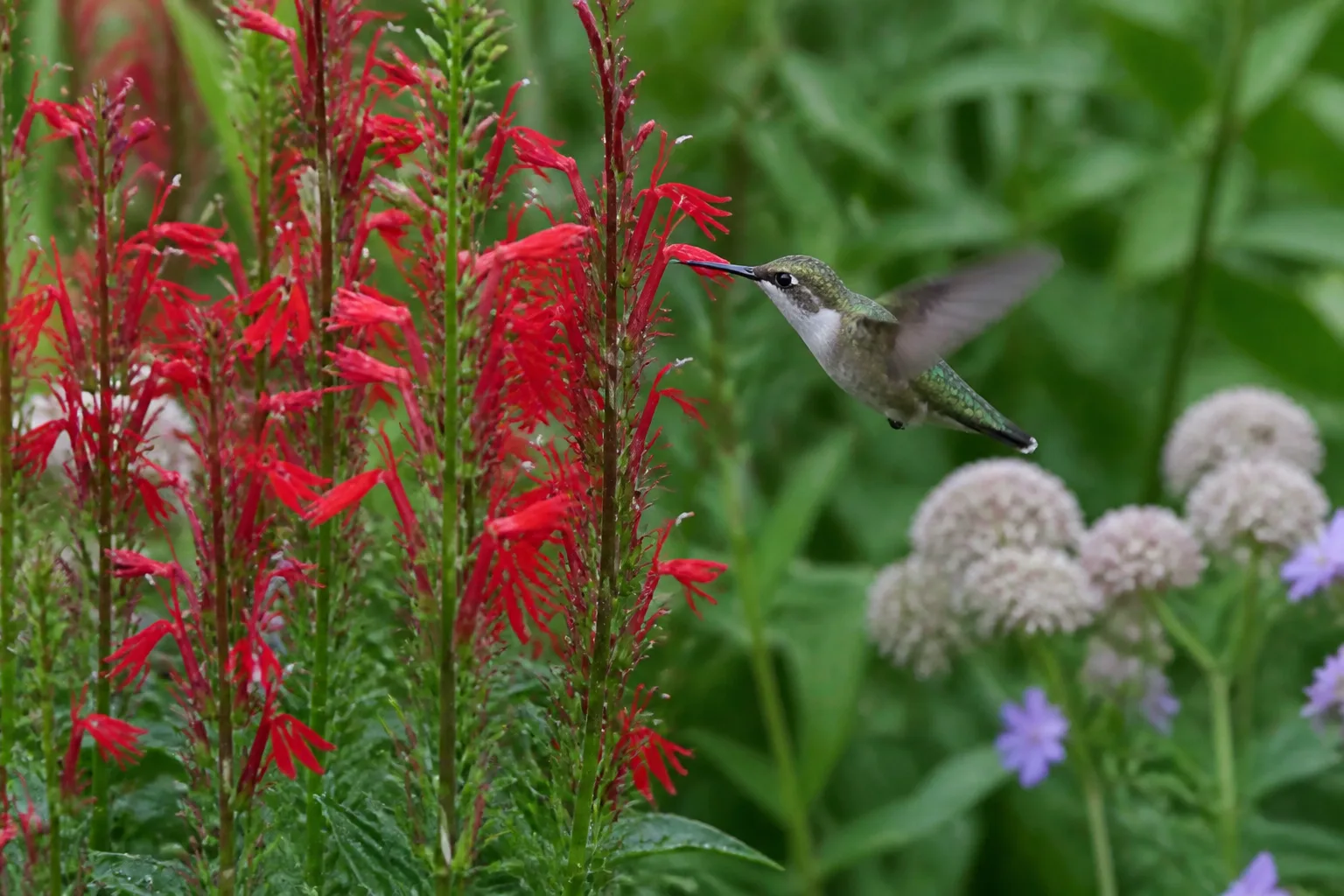
The best hummingbird nectar recipe still plays second fiddle to native nectar plants. Rutgers documents ruby-throated hummingbirds co-evolved with tubular red and orange flowers such as cardinal flower, coral honeysuckle, and bee balm—plants that supply both sugar and the insect prey birds need for protein. A yard with staggered bloom times from late spring through early fall gives birds natural food when you travel or skip feeder refills.
Avoid spraying pesticides on flowers and lawn areas hummingbirds hunt. A female ruby-throated hummingbird may capture thousands of insects while raising young; wiping out gnats, aphids, and spiders removes the protein sugar water cannot provide. If you want planting ideas beyond petunias, see whether petunias alone satisfy hummingbirds in your setup—they visit them, but native tubular flowers usually deliver more value.
Leaving feeders up in fall does not stop migration. Rutgers notes that ruby-throated hummingbirds depart on schedule; feeders may help late migrants and early returners, but they will not trap birds north through winter except in rare vagrant western species. In most regions, keep feeding until you have seen no hummers for two weeks, clean the feeder, and store it dry for next spring.
Conclusion
The hummingbird nectar recipe worth memorizing fits on one line: one part white granulated sugar, four parts water, fully dissolved, completely cool, no dye and no honey. Measure by volume, match batch size to your refill rhythm, refrigerate leftovers for no more than a week, and scrub the feeder every few days—or daily in heat—before the sugar ferments.
Boil if you want; stir if you prefer—both work when the ratio stays 1:4 and the nectar reaches the feeder cold. Pair that discipline with shade, safe placement away from cats and windows, and native flowers that feed insects as well as nectar, and your feeder becomes what hummingbirds actually need: a clean, honest energy source in a yard that supports the rest of their diet.



