Do Hummingbirds Like Petunias? The Honest Answer
Do hummingbirds like petunias? Yes—but color, bloom density, placement, and companion plants matter. Learn how to grow a display birds will revisit.
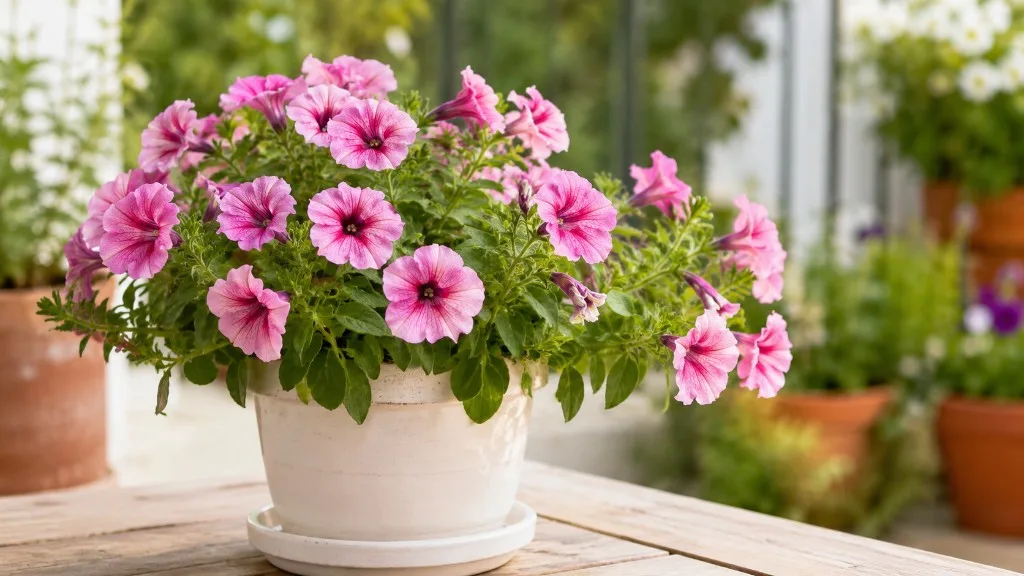
Yes, hummingbirds will visit petunias. The bright, open blooms are easy to spot, the funnel-shaped corollas can be accessible to a hummingbird’s long bill and tongue, and a full petunia plant can keep offering flowers when many spring displays have faded.
The important qualification is that a petunia display attracts attention more reliably than it guarantees a complete food supply. If you want hummingbirds to make regular stops, use petunias as a visible, flexible layer in a larger garden that also provides season-long flowers, insects, shelter, perches, and—if you choose to use one—a well-maintained feeder.
Short answer: yes—with a catch
Petunias fit several traits hummingbirds commonly use when deciding which flowers to investigate: color, accessible nectar, and a steady supply of open blooms. That makes a sunny container, window box, or border of petunias a worthwhile addition, especially when you want to bring birds close to a porch or viewing window.
But hummingbirds do not choose a flower from a checklist. They respond to what is available in their territory, when it is blooming, how easy it is to reach, and whether the whole location offers enough food and cover. Penn State Extension describes hummingbirds as using nectar-bearing plants alongside nearby trees and shrubs for shelter and perching, while the National Park Service notes that hummingbirds also need insects for protein. Petunias can help advertise a garden; they do not replace the garden’s other jobs.
What makes a petunia worth visiting?
The most useful way to judge a petunia for hummingbirds is to look at the whole plant rather than one flower. A single trumpet bloom may be attractive, but a plant with dozens of accessible flowers, a long bloom window, and a site where birds can hover safely gives them more reason to return.
| Petunia trait | Why it helps | What to choose or do |
|---|---|---|
| Visible color | Helps a bird notice a flower patch while moving through the yard | Use a bold group of red, pink, orange, or magenta blooms, then add other colors if you like them |
| Open, funnel-shaped blooms | Gives the bill and tongue a route toward nectar | Avoid burying every flower inside dense foliage or placing the basket where a wall blocks access |
| Many flowers at once | Makes a short visit more worthwhile | Choose a vigorous, well-branched plant and keep it from drying out or becoming severely leggy |
| Long season | Helps bridge gaps between other flowering plants | Combine petunias with perennials and shrubs that bloom before and after the petunias peak |
Color helps birds find blooms
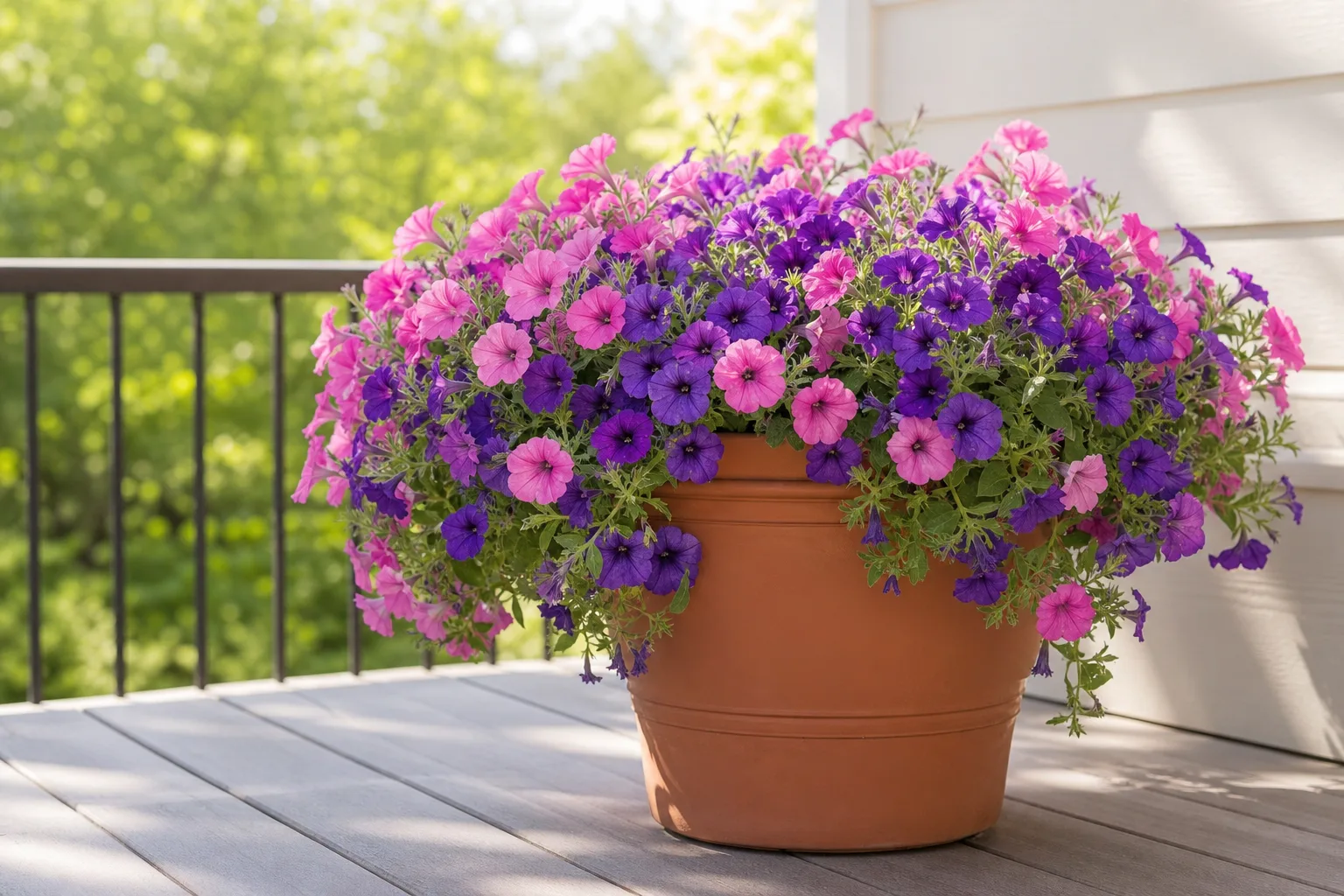
Red, orange, and pink flowers are useful visual flags in a hummingbird garden, but “red is the only color that works” is too rigid. Penn State Extension says hummingbirds tend to prefer red, orange, and pink while still taking nectar from flowers of most colors. A professional horticulturist quoted by Better Homes & Gardens likewise describes hummingbirds as flexible foragers when a flower has an accessible shape and nectar.
For a practical planting decision, put your strongest visual signal where a bird is most likely to see it: a hot-pink hanging basket at the edge of a porch, a red container near a garden path, or a mass of coral and pink petunias against green foliage. Purple, white, and blue petunias can still contribute; use them as part of the display rather than assuming a pale, scattered plant will advertise itself from across the yard.
Color is an invitation, not a guarantee. If the display is in deep shade, contains only a few flowers, or blooms after the local hummingbird season has passed, a bright label will not overcome the timing and habitat problem.
Flower shape and access matter
Hummingbirds are built for flowers: they have long, slender bills and tube-like tongues, and they can hover while feeding. The National Park Service explains that these traits let them reach nectar in brightly colored flowers and pollinate plants as they move from bloom to bloom.
Petunia flowers are generally funnel-shaped, so they are physically usable by hummingbirds. The real garden question is whether the flowers are easy to approach. A trailing plant spilling over a basket can offer a generous menu at the edge of the foliage. A cramped pot wedged against a railing may have the same number of flowers but leave no comfortable hovering space.
Give the blooms air around at least one side of the container. In a bed, keep taller plants from forming a solid wall in front of the petunias. You do not need to create a bare, sterile planting; you need enough open flight space that a bird can approach, hover, and leave without brushing against a tangle of stems.
Nectar visits are not the same as a complete food supply
Seeing a hummingbird drink from one petunia proves that the flower is usable at that moment. It does not tell you how much food the plant supplies across a day, whether it will keep blooming through a dry spell, or whether the garden supports the bird between flower flushes.
Hummingbirds also eat small insects and spiders. Penn State Extension lists those foods alongside flower nectar and sugar-water solutions, and the National Park Service describes insects as a protein source. That is why a garden covered in broad-spectrum sprays can look colorful while becoming less useful to the birds it was meant to attract.
Treat bloom quantity and continuity as the practical measurement. If a petunia plant has few open flowers, is wilted every afternoon, or has stopped after a hot-weather slump, it is a weak food stop regardless of its color. If it is one of several flowering plants that overlap through the season, it earns a useful place in the garden.
Petunias versus native nectar plants
Petunias are annuals, so they are easy to add where you have temporary space: a porch, balcony, rental garden, or newly built border. You can change the color each year, move a basket closer to a window, and use a trailing type to cover a bare edge without waiting for a perennial to mature.
Native plants bring a different kind of value. They are selected by local climate and wildlife relationships, and a regional mix can supply flowers at times when annual containers are not yet planted or have already declined. Audubon’s Plants for Birds resources direct gardeners to a native-plant database so the recommendation can be matched to location rather than copied from a national list.
My practical rule is simple: let petunias be the flexible color layer, and let regionally appropriate plants carry more of the habitat continuity. This is not a competition between annuals and natives. A gardener with only a sunny balcony may get more benefit from a well-watered basket of petunias than from a plant that cannot survive in a container. A gardener with a yard can use petunias to fill gaps while building a backbone of local perennials, shrubs, and vines.
Pick a petunia that can carry its share
There is no single cultivar that guarantees hummingbird visits. Read the plant tag for the traits that matter instead: mature habit, flower production, light needs, heat tolerance, and whether the plant is suited to a basket, a window box, or a ground bed.
Habit and bloom window matter more than a novelty name
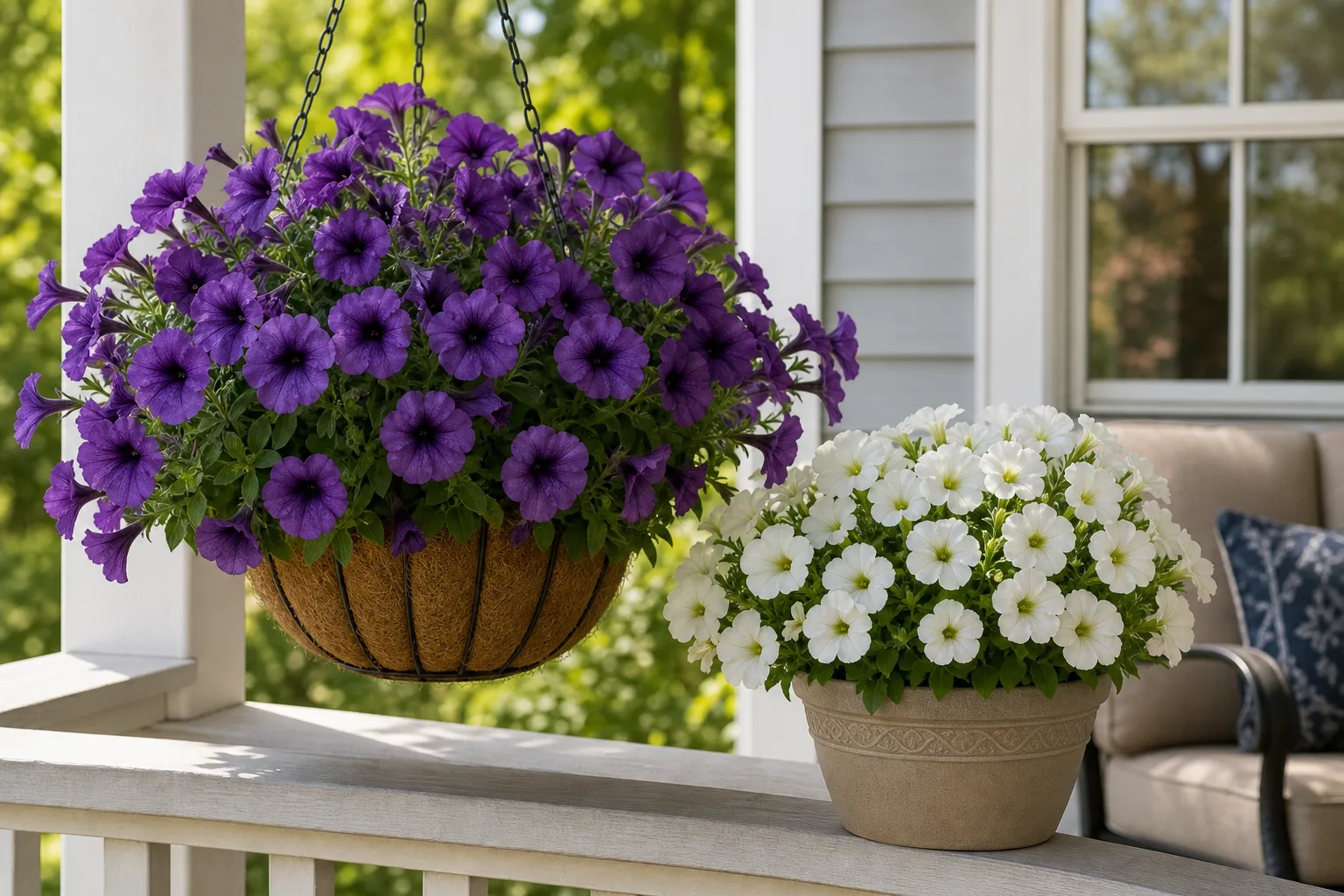
For containers and hanging baskets, look for vigorous trailing or spreading petunias that can cover the outside of the pot with flowers. A full basket puts blooms into the birds’ flight path and gives you a more visible color mass than a single upright plant tucked behind other foliage.
In a border, a compact or mounding type may be easier to position near taller nectar plants without letting stems sprawl into a path. Grandiflora-style flowers can be spectacular, but very large blooms are not automatically a better food source if the plant produces only a few at a time or collapses after rain. The better choice is the plant that stays productive in your actual conditions.
Birds & Blooms highlights Wave petunia Carmine Velour, an All-America Selections winner with large flowers and a spreading habit that covers the plant through summer. That is a useful example of the selection logic, not a ranking that makes other petunias unsuitable. Breeding lines and availability change, so compare current tags for flower abundance and habit rather than buying a name on reputation alone.
Plant petunias where hummingbirds can use them
The best petunia for hummingbirds is still a poor choice if it is planted in cold, waterlogged soil or placed where the flowers are hidden. Site design controls how many blooms the plant can produce and whether the birds can approach them.
Get light, drainage, and watering right
Petunias need strong light to flower well. Better Homes & Gardens practical guidance recommends at least four to six hours of direct sunlight and more if the site can provide it safely. Wait until the risk of frost has passed in your area before planting annual petunias outdoors; a cold setback can cost the early flowers that migrating hummingbirds would otherwise find.
Use a container with a real drainage hole and a potting mix that holds enough moisture for the plant without staying saturated. A saucer can catch runoff, but it should not become a hidden reservoir that keeps the roots wet. Hanging baskets and balcony containers dry faster than a bed because they have more exposed surface area, wind, and less soil volume, so check them more often during heat.
In the ground, improve drainage if water sits after rain, and avoid placing petunias at the bottom of a slope that stays wet. Water the root zone when the mix or soil has begun to dry, then water thoroughly rather than giving a shallow sprinkle that wets only the surface. The goal is a plant that can keep making flowers without oscillating between wilt and saturated roots.
Make the bloom cluster visible and accessible
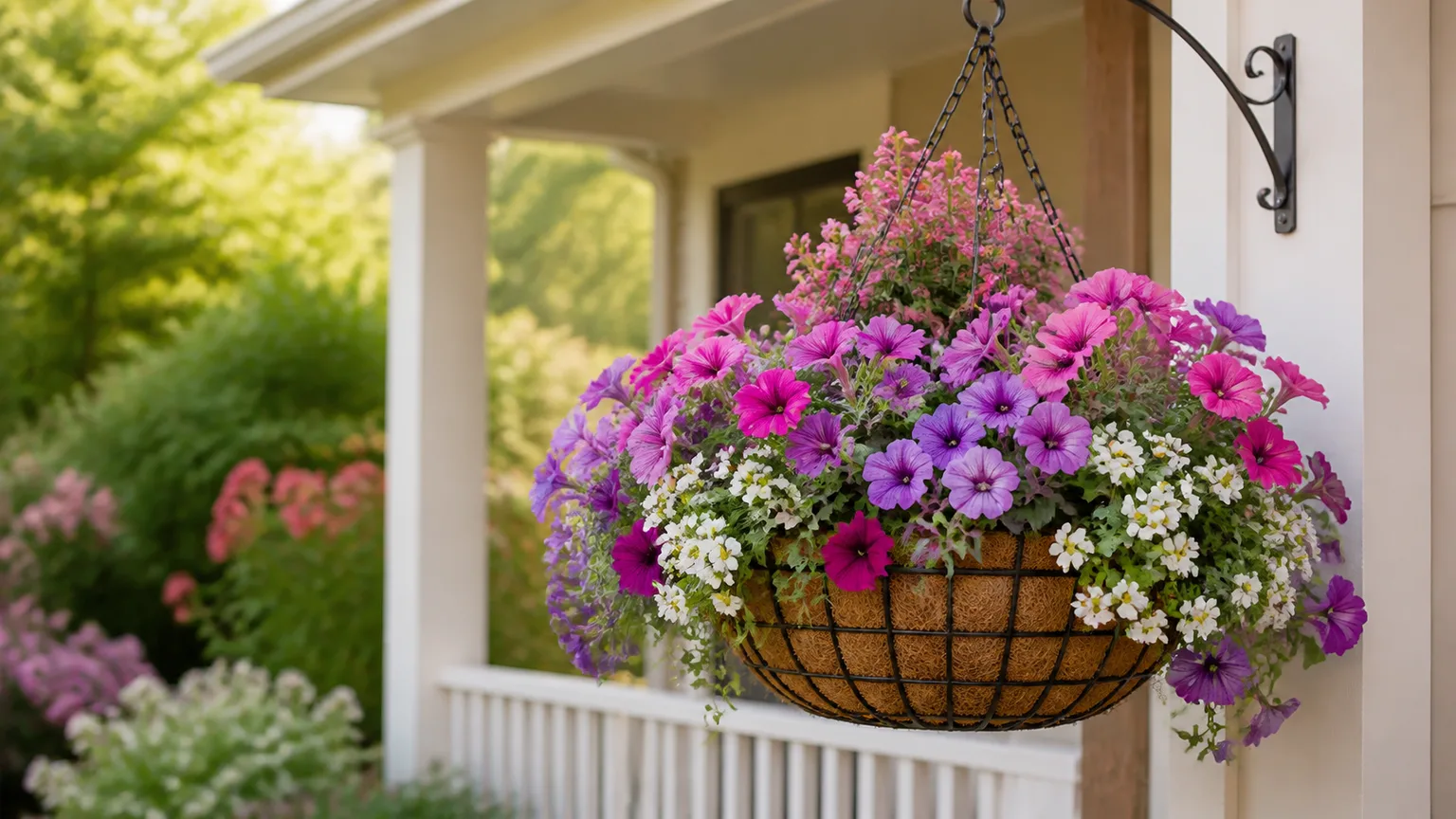
Hummingbirds notice flower patches more easily than isolated stragglers. Group several petunias in one container, repeat a color in two or three nearby pots, or plant a short block along the edge of a bed. A cluster also makes your own troubleshooting easier: you can see whether the plant is flowering, drying out, or being shaded.
Place the cluster near a spot where hummingbirds can perch between feeding visits, such as a shrub, small tree, or open branch nearby. Penn State Extension notes that hummingbirds prefer nectar-bearing flowers with trees and shrubs close enough to provide shelter and perching. Do not hide the flowers inside a dense thicket, though; keep the immediate approach open.
If you are growing petunias for observation, put the container where you can see it from a porch or window without needing to stand in the planting every time you check it. A comfortable viewing position also encourages better care because you are more likely to notice a dry basket, faded display, or pest problem early.
Keep the display flowering through summer
The hummingbird does not care whether the faded flower looks tidy. It benefits from the next flower being open, which means the useful maintenance target is new bloom production, not a perfect plant shape.
Trim and renew instead of chasing a perfect schedule
Many modern petunias are largely self-cleaning, so you do not need to pinch every spent bloom. Better Homes & Gardens expert guidance recommends cutting back foliage when plants become leggy to encourage bushier growth. That is especially helpful in a basket where the outer stems have grown long, the center has thinned, and most new flowers are forming at the tips.
Use clean snips to shorten the longest, barest stems back to a leafy section rather than removing every green stem at once. If the plant is drought-stressed or heat-stressed, water it and let it recover before a major trim. A modest reset can produce a denser flowering surface; an aggressive cut during a crisis can leave you waiting for the plant to rebuild.
Keep the plant fed according to the label of the fertilizer you choose, but do not assume that more nitrogen means more hummingbird value. Excess leafy growth can come at the expense of flowers, while a depleted container may stop blooming even when the leaves still look green. Compost-rich potting media and light, regular feeding suited to flowering annuals are more useful than a heavy dose applied sporadically.
Skip routine pesticide use on and around the flowers. Penn State Extension warns that pesticides can reduce the insects hummingbirds eat, kill flowering plants, and expose birds to chemicals. If you see damage, identify the pest first and decide whether the plant can tolerate it, whether hand removal or pruning is enough, and whether a labeled treatment is truly necessary.
Build a complete hummingbird garden around petunias
Petunias work best as part of a sequence. The aim is not to force every plant into one pot; it is to make sure the property offers a useful mix of flowers and cover before, during, and after the petunias’ strongest bloom period.
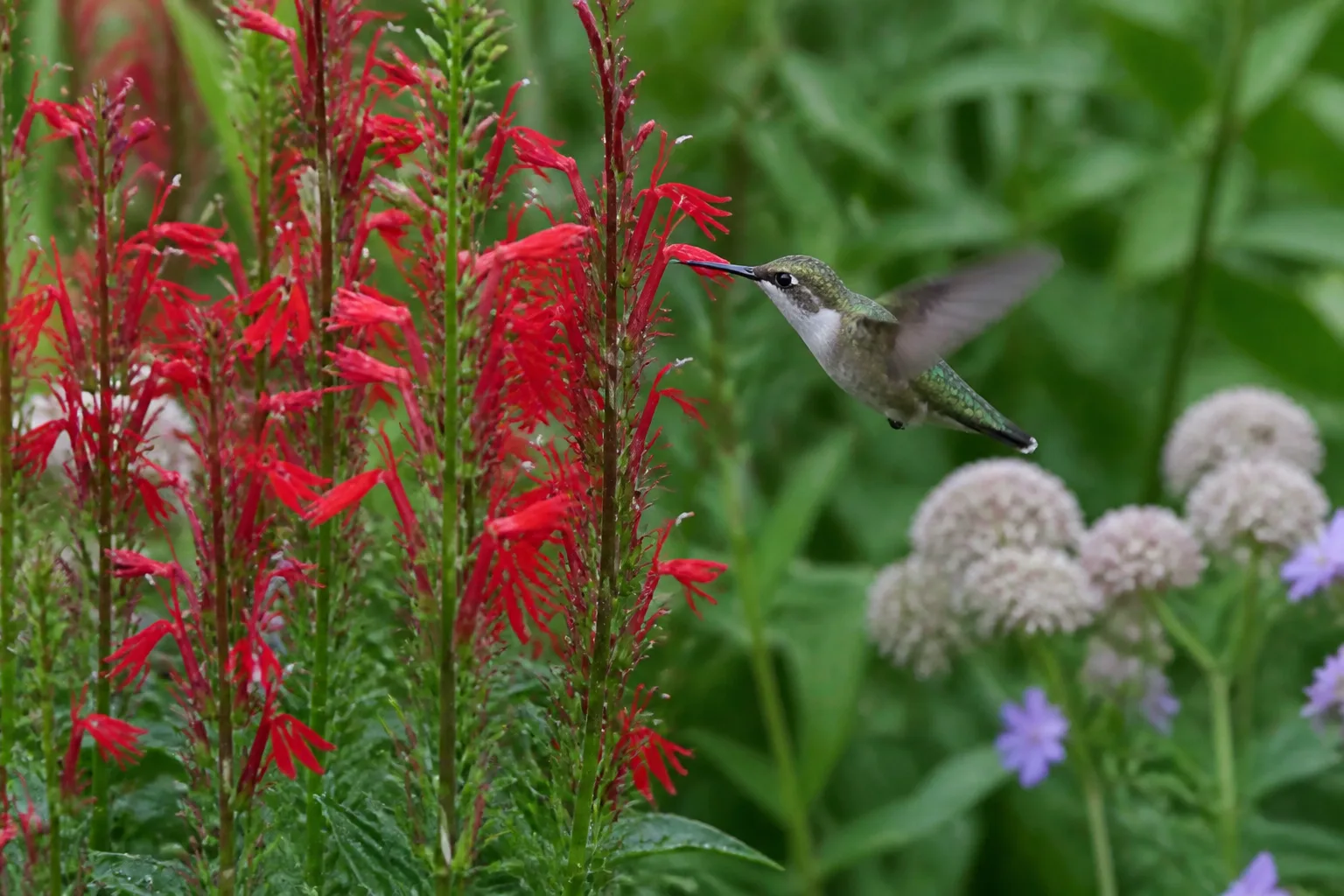
Add nectar plants that cover different seasons and sites
Penn State Extension recommends a variety of plants that flower across the time hummingbirds are present and notes that large flower clusters are conspicuous to the birds. Use that principle to pair petunias with plants that fill a different calendar slot or prefer a different part of the yard.
- Columbine can help cover the early season, when the first migrants may arrive before summer annuals are at full strength.
- Bee balm or wild bergamot offers a bold summer flower and a substantial perennial presence where the soil and climate suit it.
- Penstemon is useful for a sunny, well-drained section, with the exact species chosen for your region.
- Cardinal flower can extend the display into a moist site or later-season window, but it is not a dry-container companion for petunias.
- Salvia and fuchsia can add strong color in containers or beds when their light, temperature, and moisture requirements match the site.
- Trumpet honeysuckle or another locally appropriate native vine can add vertical flowers and structure where a trellis or sturdy support is available.
These are examples, not a universal planting prescription. Check your local extension service or a regional native-plant database for species that are hardy, noninvasive, and suited to your soil. The useful comparison is not simply “which flower attracts hummingbirds?” but “which flower gives this garden a bloom at a time and in a place the petunia cannot cover?”
Add shelter, insects, and safe water
Flowers are only one part of a hummingbird stop. Nearby shrubs and small trees offer perches and cover, while an unsprayed garden supports the insects hummingbirds need. Leave some plant structure in place when it is safe to do so, and avoid turning every corner into a perfectly bare, chemically managed bed.
Water is helpful, but hummingbirds do not need a deep open birdbath in the same way larger birds do. Penn State Extension says they get much of their water from nectar and wet leaves and particularly like bathing in fine mist. If you add water, use a shallow, clean source or a gentle mister designed for birds, and keep it away from places where cats can ambush them.
Think about cats as part of the planting plan too. Penn State Extension recommends keeping cats indoors and placing feeders in open, elevated locations if an outdoor cat is present. A beautiful petunia basket is not hummingbird-friendly if it concentrates birds within easy reach of a predator.
Why hummingbirds may ignore your petunias
Do not start by buying a different color. First work through the factors that determine whether a bird can find and use the flowers.
- Check the calendar. Hummingbird species and migration timing vary by region. A petunia planted after a local peak may be healthy but simply out of sync with the birds you expected.
- Count open flowers, not plant height. A large, leafy petunia with six open blooms may be less noticeable than a shorter plant covered in flowers.
- Look at the approach. Move a basket away from a solid wall or crowded railing if birds cannot hover beside it. In a bed, remove the plant or branch that blocks the flower face.
- Check the light and root zone. Shade, a dry container, or saturated soil can all reduce flowering. Fix the growing condition before changing the cultivar.
- Look for nearby cover. A bare patio with one isolated pot may be less appealing than a garden with flowers, shrubs, and perches close together.
- Review chemical use. Pesticides may remove insect food and can expose birds. Ask whether the damage truly requires treatment and choose the least disruptive response.
- Confirm that hummingbirds use your area. Local species differ, and not every region has the same abundance or season. A native-plant plan based on local guidance is more reliable than a national color rule.
Give a changed planting time to work. Hummingbirds may already have established feeding routes, and a new pot may need to become visible over several days or weeks. Keep caring for the plant based on its needs rather than escalating to more sugar, more chemicals, or a crowded collection of feeders.
Do you need a feeder if you grow petunias?
No. A garden can support hummingbirds without a feeder, and a feeder cannot replace flowers, insects, shelter, or safe water. A feeder is an optional way to provide a predictable observation point, especially during a flower gap or migration period, but it creates a maintenance obligation.
If you use one, follow Penn State Extension’s basic nectar guidance: mix one part plain white sugar with four parts water, allow it to cool, and never use honey. Red dye is unnecessary. Store extra nectar in the refrigerator, replace the solution regularly, and clean the feeder before refilling; warm weather can spoil sugar water quickly.
Place a feeder near, but not inside, a flower cluster so birds can discover it without being forced into a tangle. Keep it away from cats and monitor for ants, bees, wasps, and territorial conflict. If one bird is chasing all others away, a second feeder in a separate location can spread the activity.
The best setup is complementary: petunias make a porch or garden conspicuous, native flowers extend the season, shrubs provide cover, insects add protein, and a clean feeder supplies a consistent option when you are willing to maintain it.
Conclusion
Hummingbirds do like petunias, and a full, sunny display can be a practical way to bring them close to a porch, balcony, or garden edge. Choose a vigorous plant with abundant accessible blooms, use warm colors as a visual signal, give the roots dependable drainage and moisture, and keep the flowers visible rather than scattering a few stems through a crowded bed.
The bigger win comes from using petunias as one layer of a real habitat. Add regionally appropriate nectar plants for different bloom periods, keep shrubs or small trees nearby for shelter and perching, protect the insects hummingbirds eat, and use a clean feeder only if you can maintain it. That combination gives petunias a useful job: inviting the birds in while the rest of the garden gives them reasons to stay.