Do Eggshells Deter Slugs in the Garden?
Do eggshells deter slugs? Learn what RHS trials and pest pros found, how to prep shells correctly, and which slug controls work better than DIY barriers.
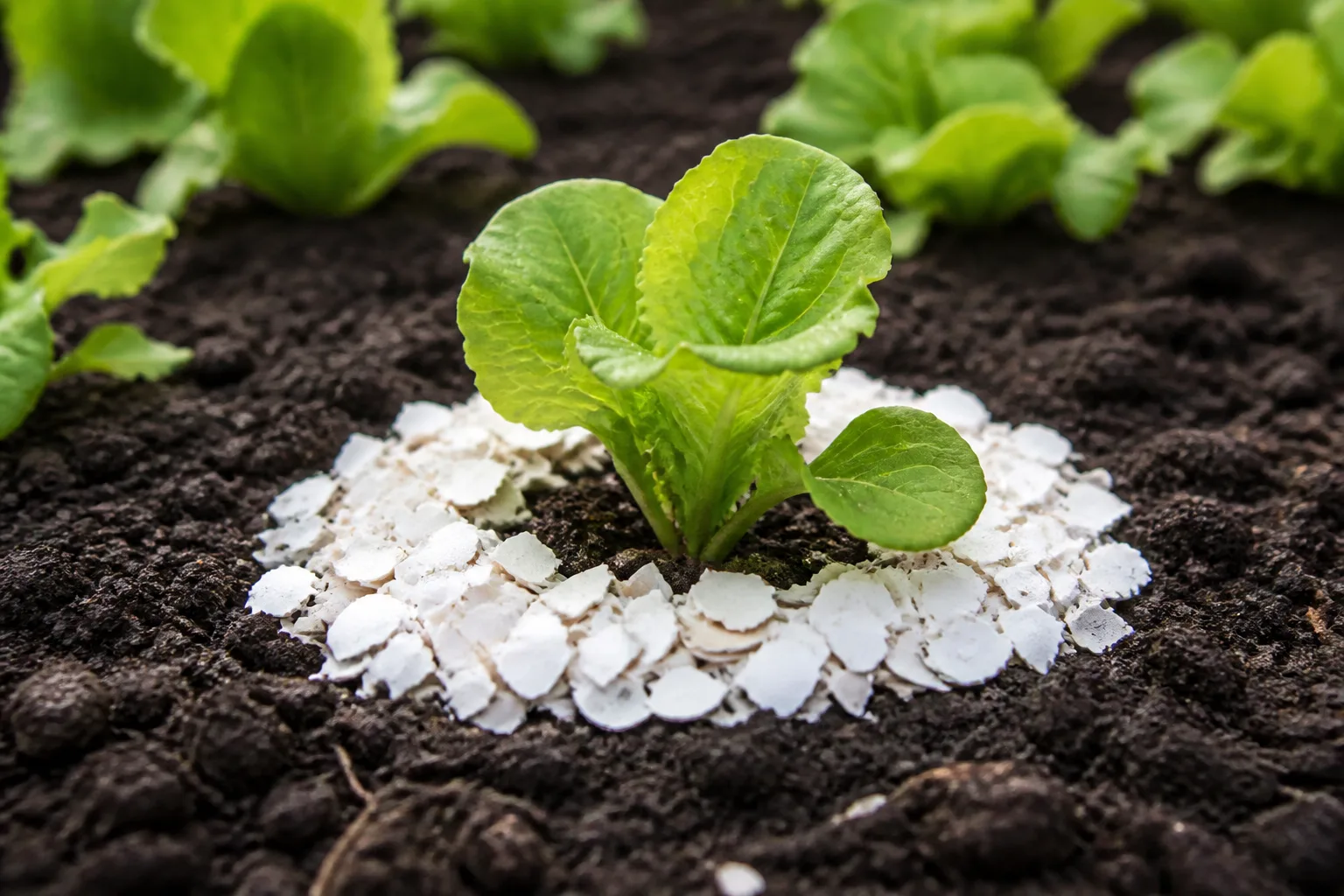
If you have ever saved breakfast shells and scattered them around hostas or lettuce, you are not alone. Crushed eggshells are one of the most repeated natural slug deterrents in gardening forums, kitchen-scrap composting guides, and well-meaning neighbor advice. The idea is simple: slugs have soft bodies, eggshells have sharp edges, so a ring of shells should work like barbed wire.
The honest answer is less satisfying. Eggshells can slow a slug or discourage a casual crossing when conditions are perfect, but they are not reliable slug control for a vegetable bed, a row of seedlings, or a slug-heavy shade border. When pest pros, university researchers, and controlled garden trials test physical barriers—including eggshells—the pattern is consistent: slugs still reach the plants.
That does not mean you must throw your shells in the trash. It means you should treat eggshells as a supplemental, weather-dependent barrier on a small scale, not as a substitute for monitoring, traps, hand removal, or targeted bait when damage is costing you harvests.
The short answer: a weak barrier, not slug control
Eggshells do not reliably deter slugs in the garden. In a Royal Horticultural Society field-style trial, lettuces surrounded by crushed eggshells sustained the same slug damage as unprotected plants over six weeks. Horticulturist Jeff Gillman, testing eggshell rings on slugs in controlled setups, found slugs crossed the barriers anyway—even when shells were crushed to about the size of a baby aspirin and piled a quarter-inch deep.
Gardeners still report occasional success, usually on dry days, around single seedlings, with fresh, coarse shells and no gaps. That is a very different claim from “eggshells solve slugs.” If your goal is to protect tonight’s salad greens from a population that already left slime trails on your pavers, eggshells alone will probably disappoint you.
Use this quick decision rule:
- Try eggshells if: you have dry weather forecast, a few high-value transplants, time to refresh the ring after rain, and low slug pressure.
- Skip eggshells and move to proven controls if: leaves are already ragged, you garden in a wet climate, slugs are feeding on multiple beds, or you need protection across an entire row.
Why the eggshell slug hack keeps spreading
The sharp-edge theory sounds logical
Slugs and snails are gastropods with soft ventral tissue that contacts the ground as they glide on mucus. It is easy to imagine that jagged calcium carbonate shards would cut or irritate that tissue enough to turn a slug back. Coffee grounds, diatomaceous earth, and sharp grit get recommended for the same reason.
The problem is physics and slug behavior, not gardener enthusiasm. Slugs produce copious mucus that lubricates contact surfaces. Many species are also surprisingly determined feeders when a preferred plant is on the other side of a barrier. A ring that looks vicious to human eyes can feel like inconvenient terrain to a hungry slug—especially once shells soften, settle into soil, or get buried by mulch.
Eggshells feel free, visible, and virtuous
If you already eat eggs, shells are a zero-cost byproduct. Crushing them lets you reuse kitchen waste, and a white ring around a seedling looks like you did something proactive. That visibility matters psychologically after you find holes in basil or slime on a patio pot.
GrowVeg, a long-running vegetable-gardening resource, flatly calls eggshell slug deterrence a myth—while still recommending shells as a calcium source for homemade fertilizers. That split is important: eggshells can be useful in the garden without being useful against slugs.
How slugs move—and why shells rarely stop them
Slugs are mostly nocturnal or damp-weather feeders. During the day they hide under boards, pots, dense foliage, and mulch where soil stays moist. At night they emerge along the ground, climbing stems when leaves touch soil or neighboring plants create bridges.
Their movement depends on mucus secretion, not bare skin dragging on gravel. Wet mucus reduces friction. That is why barriers that depend on “sharpness” often fail in real gardens: a little moisture turns crushed shell into gritty mud. Slugs also vary by species and size. A barrier that might give a small juvenile slug pause may not stop a large mature slug with momentum and hunger.
Slugs also exploit shortcuts. They do not need to cross your eggshell ring if they can:
- travel under mulch that covers the shells
- climb a stem or leaf that bridges over the barrier
- enter from the side where the ring has a gap
- wait for rain to wash shells flat
Understanding that behavior explains why tidy DIY photos look more convincing than slug biology usually allows.
What controlled tests found about eggshell barriers
Anecdotes are not useless—they tell you what conditions a gardener had—but they cannot settle a yes-or-no question across climates and slug species. Two lines of evidence matter most for eggshells.
The RHS gastropod barrier trial
RHS entomologist Hayley Jones set up a Gastropod Barriers project to test home remedies gardeners actually use. She grew 108 lettuces in patio pots and raised beds, applying complete circular barriers of:
- crushed eggshells
- pine bark mulch
- copper tape
- sharp horticultural grit
- wool pellets
After six weeks, there was no difference in slug damage between protected lettuces and unprotected controls. Visual ratings and leaf-area measurements told the same story: the barriers did not cut damage in a garden-realistic scenario.
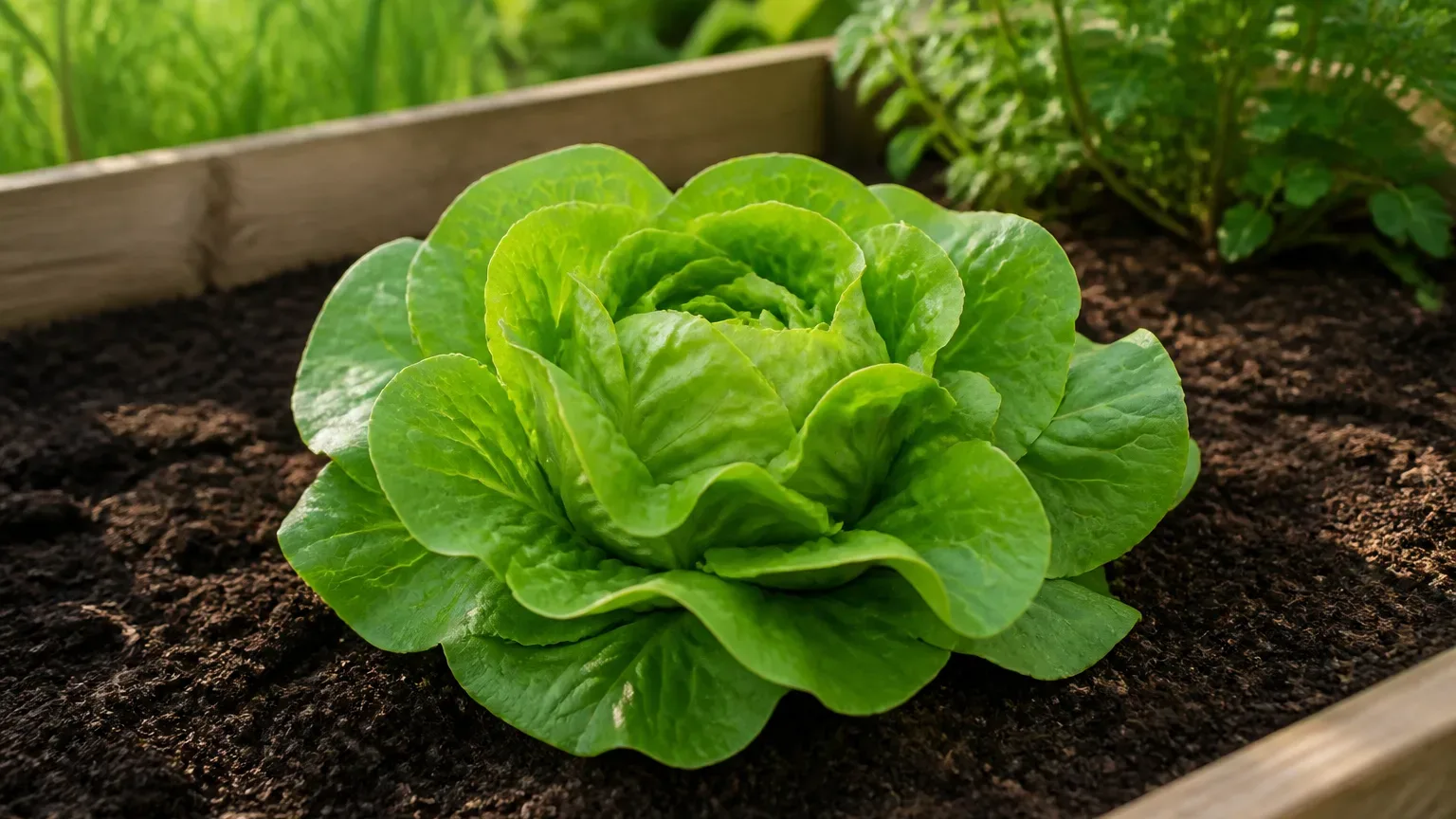
The RHS notes that some lab studies suggest certain barriers can work, which is why they have not ruled every barrier out forever—but for eggshells specifically, this trial is a strong reason to lower expectations. The society’s slug and snail advice page also cautions that many “rough or sharp” mulches lack scientific proof and that barriers can be unreliable in practice.
Jeff Gillman’s plate-and-barrier experiment
In The Truth About Garden Remedies: What Works, What Doesn’t, and Why, Jeff Gillman describes testing crushed eggshell rings on slugs placed in the center of a paper plate. Slugs crossed the shell barrier. He repeated variations—different crush sizes, deeper piles—and found that even his best shell setup only slowed slugs; it did not stop them.
Gillman tested copper pennies the same way. They failed too, which matters because pennies are another viral slug hack. Gardener’s Path recounts Gillman’s classroom replication with students and reaches a similar verdict: interesting experiment, not dependable control.
Gillman’s work does not test every slug species on every continent, so I would not call eggshells impossible under all conditions. I would call them unproven at garden scale and contradicted by the best public field trial we have.
When eggshells might still be worth trying
None of the research above says you are foolish for sprinkling shells. It says you should know what you are buying.
Eggshells are most plausible when all of these are true:
- slug pressure is low to moderate, not a bed-wide infestation
- you are protecting a few transplants, not an entire row
- shells are freshly crushed, coarse, and dry
- the ring is continuous, slightly proud of the soil, and checked after rain
- you are combining shells with other tactics—evening patrols, traps, or iron phosphate bait on the perimeter
A Guardian garden column on natural slug control notes that eggshell edges can help when shells are clean and dry, but rain quickly reduces effectiveness. That matches what slug mucus biology predicts.
Eggshells may also have a secondary role against cutworms and other soft-bodied crawlers when coarse shards sit around seedling stems, though that is still a barrier strategy with the same wet-weather limits. Do not confuse cutworm collars with slug population management.
How to prepare eggshells the right way
If you are going to test shells on a seedling ring, preparation matters more than most social-media clips suggest.
Rinse, dry, and crush to the right size
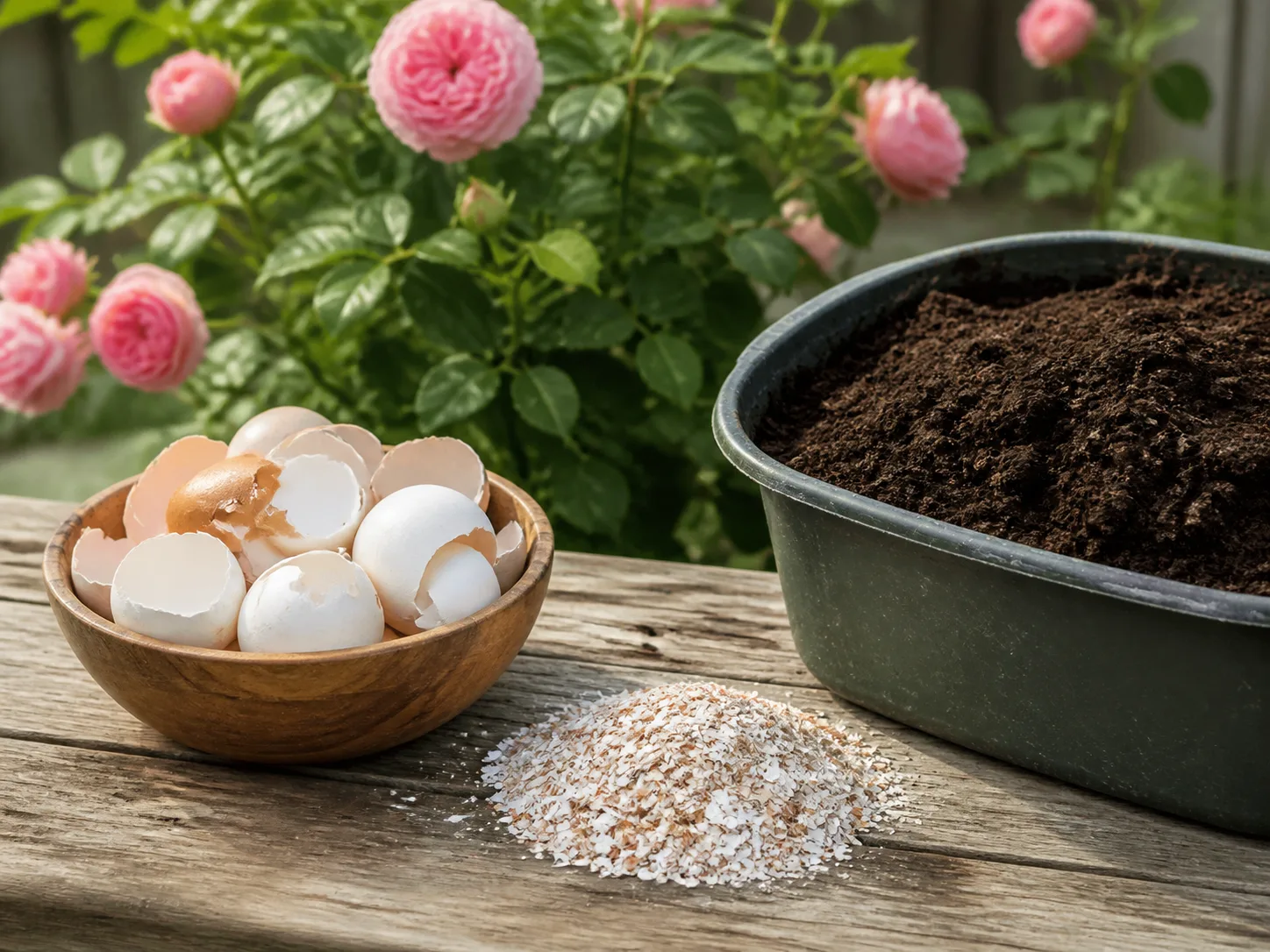
- Rinse shells after cracking to remove raw egg residue. Leftover albumen attracts flies and smells in warm weather.
- Dry shells completely. Wet shells clump, mold, and lose the sharp profile that is the entire theory.
- Crush by hand into coarse shards about 2–5 mm across—think jagged flakes, not powder. Powder disappears into soil and does not present an edge.
- Store dry shells in a ventilated jar until you are ready to apply them.
Too-fine crush is one of the most common reasons barriers fail on day one. You want pieces that stay angular for a few days, not dust that looks busy but offers no edge.
Bake shells for cleaner storage
If you save shells over weeks, baking reduces odor and lowers food-safety concerns. Spread rinsed shells on a baking sheet and heat at 200–225°F (about 95–110°C) for 20–30 minutes. Cool, then crush.
Gardener’s Path notes that brief moist heat above about 170°F kills Salmonella on eggshells, which is why baking is a reasonable step if shells contact edible crops or you handle them frequently. Baking is optional for a quick same-day ring, but helpful for stockpiling.
How to lay an eggshell ring with the best chance of working
Application is where Pinterest-perfect advice meets slug cunning.
Choose the right plant. Start with slug magnets you can monitor daily: lettuce, basil, young brassicas, marigold seedlings, or hosta divisions—not a whole bed at once.
Clear the zone. Pull mulch back 3–4 inches from the stem so shells sit on bare soil, not on top of moist bark that slugs already inhabit.
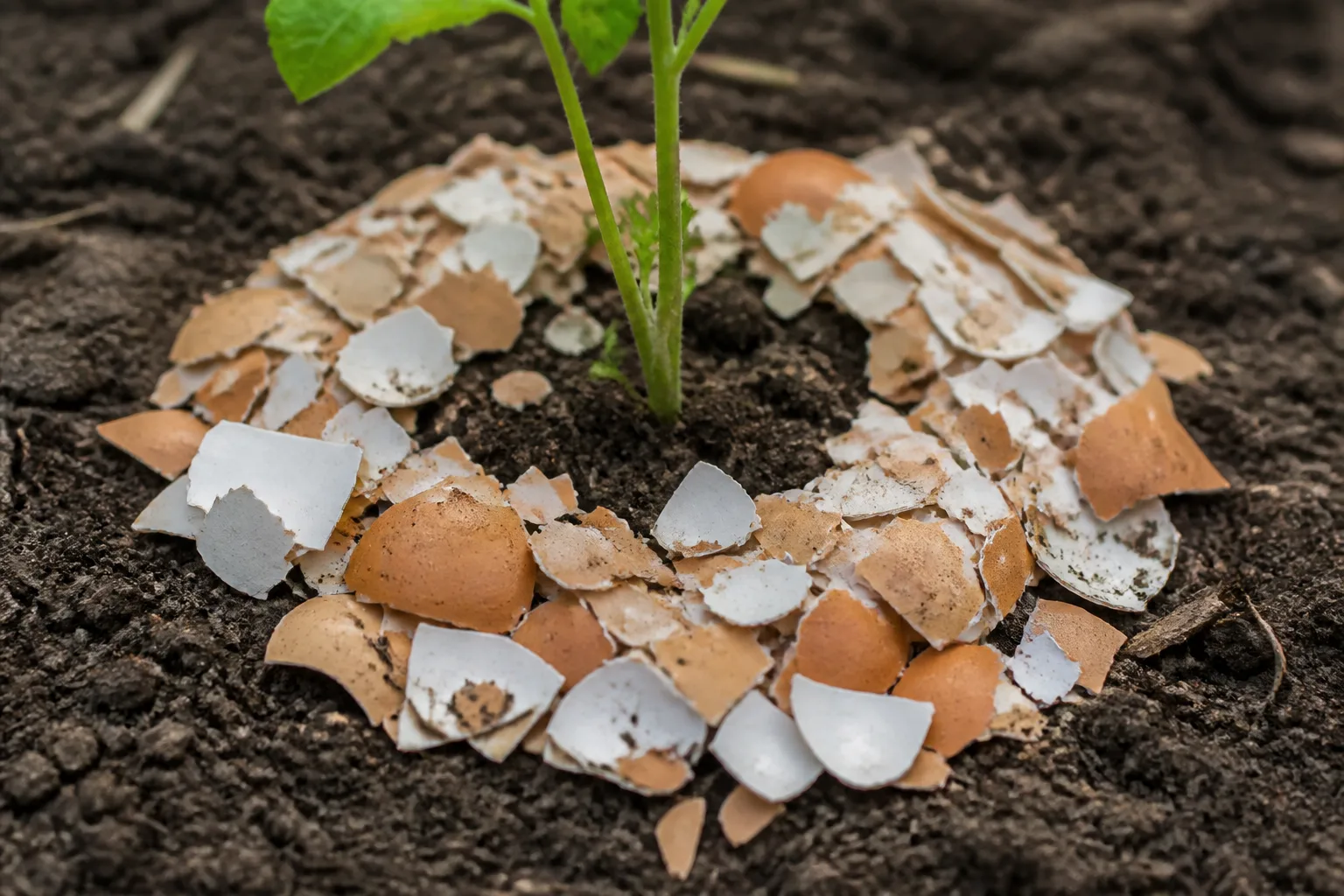
Build a continuous ring. Lay a band 3–5 cm (about 1–2 inches) wide around the stem, slightly mounded so pieces do not instantly sink. Press lightly so wind does not scatter them, but do not bury shards; buried shell is invisible to slugs and useless to you.
Eliminate bridges. Remove lower leaves that touch soil. Stake floppy stems so foliage does not create a slug ladder over your ring.
Refresh after rain. Plan on re-crushing and replenishing shells after every heavy rain or irrigation flood. If you will not refresh, do not bother installing.
Inspect at night. Slugs feed in damp, cool hours. A flashlight patrol tells you whether the ring is working or whether you are feeding slugs calcium while they feed on your plants.
Why eggshell barriers fail in real gardens
Even perfectly prepared shells stumble on predictable problems.
Rain and irrigation soften shells, wash them into gaps, and integrate them into the soil surface. The Guardian’s slug-control piece is blunt: wet weather ends eggshell effectiveness quickly.
Mulch and compost bury sharp edges. Slugs travel under moist organic matter where your visible ring never intersects their route.
Leaf and stem bridges let slugs bypass the barrier entirely. Slugs do not need to cross soil if a petal rests on the ground.
Species and population size change outcomes. A light ring might nudge one slug on a dry night; it will not hold back a population that has already colonized the bed.
False security is the practical failure mode. Gardeners scatter shells once, assume the problem is solved, and stop checking—while slugs continue breeding in cool, moist pockets under pots and boards.
If you recognize your garden in that list, the fix is not “more eggshells.” It is a control method that works in wet conditions and at population scale.
The calcium bonus is real—but separate from slug control
Eggshells are roughly 95% calcium carbonate. Over time, finely ground shell can contribute calcium to soil and help buffer acidity, similar in concept to agricultural lime—though crushed rings around a stem are not the same as a soil test and a measured lime application.
Alabama Cooperative Extension work cited by Gardener’s Path found that coarsely crushed eggshells barely change soil pH unless they are ground to a fine powder smaller than sand particles. NC State Extension lists eggshell meal as a low-analysis organic fertilizer material. For blossom-end rot concerns on tomatoes, calcium availability is about soil moisture and uptake timing—not a handful of shards at planting.
If calcium is your goal, composting clean shells or grinding them into amendment is more logical than using them as pest control. LeafyPixels covers another kitchen-waste use in our guide on eggshells for roses, where the focus is soil nutrition—not gastropods.
Do not expect tonight’s crushed ring to fix tomorrow’s slug holes and next month’s calcium deficiency. Those are different jobs.
Better slug strategies that actually scale
When slugs are costing you harvests, you want tools that work in damp weather and across more than one stem.
Hand picking, traps, and iron phosphate bait
Hand picking is unglamorous and effective in small gardens. Go out after dusk or on drizzly evenings with a headlamp, drop slugs into soapy water, and repeat until counts drop. It works best combined with hiding-place cleanup.
Beer traps use yeast odor to lure slugs into liquid they cannot escape. Sink a shallow container so the rim is near soil level. Empty and refill regularly; traps attract slugs from nearby areas, so position them as a draw away from seedlings, not as your only plant protection.
Iron phosphate bait (often sold as slug and snail bait labeled for organic production) is widely recommended when non-chemical methods are not enough. Utah State University Extension notes iron phosphate baits are effective and generally safer around pets and wildlife than older metaldehyde products—though you should still follow label directions and keep bait away from children and pets.
Place bait near slug travel lanes—damp borders, under boards—not randomly across leaves. Bait manages population pressure; it does not replace habitat cleanup.
Biological control and habitat management
In suitable soils and temperatures, nematode biological controls such as Phasmarhabditis hermaphrodita infect slugs in the soil. RHS biological control guidance stresses they need moist, warm-enough soil—typically spring through early autumn—and are aimed at slugs, not snails, because snails spend less time in contact with soil-dwelling nematodes.
Habitat management is the long game:
- remove boards, pots, and dense weeds that create slug hotels
- water in the morning so beds dry before evening feeding
- raise vulnerable seedlings in protected trays until stems toughen
- encourage predators—ground beetles, toads, birds—by leaving some rough garden structure and avoiding broad-spectrum sprays that kill beneficials
For a wider pest-control lens on vegetable beds, see our guide to natural pesticides for a vegetable garden and common garden pests and protection.
What about copper tape, pennies, and diatomaceous earth?
These get bundled with eggshells in listicles, but they deserve separate verdicts.
Copper tape has lab support in some studies, yet the RHS barrier trial found no reduction in lettuce damage with copper tape in their garden-realistic setup. Copper products also vary in width, purity, and whether slugs can bridge over them on leaves or soil. If you try copper, use wide horticultural tape in a continuous ring and check for bridges—not loose pennies with almost no copper in modern coinage.
Pennies fail Gillman’s barrier test for the same reason eggshells do: slugs cross them. They are not a substitute for horticultural copper products.
Diatomaceous earth (DE) can desiccate soft-bodied pests when completely dry, but it washes out with rain and irrigation—exactly when slugs are most active. DE is a better fit for dry greenhouse benches or spot treatments than for rainy outdoor slug wars. It also poses inhalation risk during application; wear a mask and avoid windy days.
Coffee grounds, essential oil sprays, and aromatic herbs sometimes appear beside eggshells in viral posts. Texture and scent might nudge slugs in dry, small-scale tests, but they are inconsistent and can affect soil structure or plant health when overapplied. Treat them as experiments, not insurance.
Cultural fixes that reduce slug pressure before you barrier-hop
Barriers treat the symptom at the stem. Cultural changes shrink the population and the damage window.
Tidy slug habitat without sterilizing the garden. Lift pots, stack lumber off soil, and compost diseased debris away from beds—but leave some beetle-friendly cover at the margins if you want predators.
Time planting to avoid peak slug breeding and feeding windows in your climate. Transplant sturdy seedlings instead of sowing directly into slug-heavy beds when possible.
Use physical exclusion where it actually works: row cover on hoops for young brassicas, cold frames with intact seals, or raised beds with smooth sides and vigilant checks for bridges.
Accept some damage on ornamental foliage if slugs are part of a healthy garden food web. The RHS rightly notes slugs and snails are normal ecosystem members; the goal is protection where it matters—food crops and prized seedlings—not total eradication.
Know your plants. Hostas, tender lettuces, and young seedlings are slug favorites. Tougher stems, aromatic Mediterranean herbs, and some hairy-leaved plants get less attention—but “slug-resistant” is not slug-proof.
If you are comparing other kitchen-garden folklore, our piece on whether marigolds really deter pests uses the same evidence-first frame: separate what sounds helpful from what survives field conditions.
Conclusion
Eggshells are not a dependable slug deterrent. Research from the RHS and experiments by Jeff Gillman show that slugs still reach protected plants when crushed shells form the barrier—just as they do with several other popular home remedies tested in the same trial.
That does not make eggshells worthless in the garden. It reframes them. Use coarse, dry shells as a small-scale, dry-weather experiment around a few transplants if you enjoy reusing kitchen waste—but refresh rings after rain, watch for bridges, and do not stop scouting.
When slime trails multiply and leaves disappear, shift to methods that scale: hand picking, beer traps, iron phosphate bait used per label, nematodes where appropriate, and habitat cleanup that dries slug hiding places. Eggshells can sit in your compost bucket and your soil-amendment plans. They should not sit at the center of your slug strategy.



