Natural Pesticides for a Vegetable Garden: What Works
Compare natural pesticides for a vegetable garden by pest, crop, timing, coverage, pollinator risk, and harvest interval before you spray.
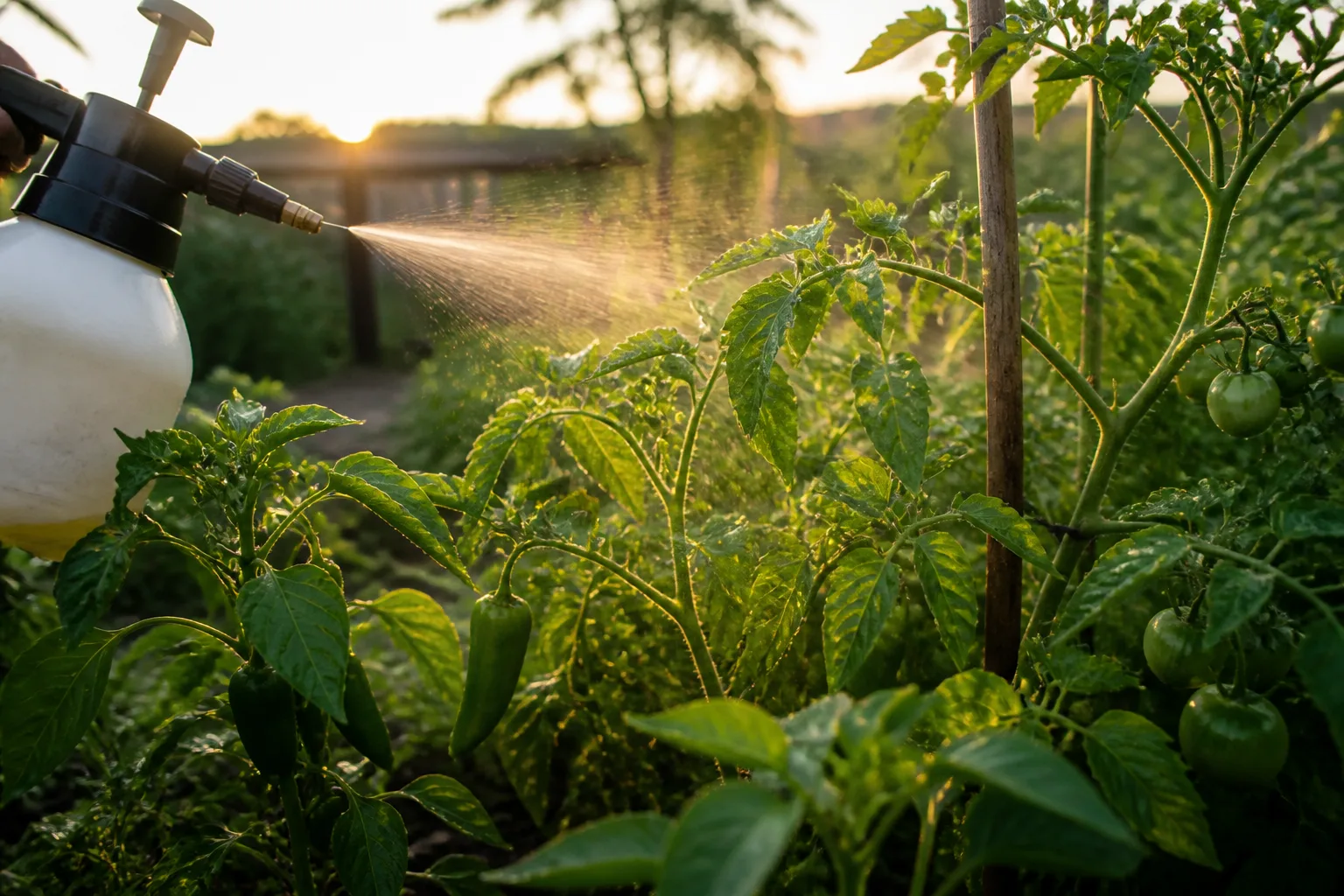
The best natural pesticide for a vegetable garden is the one that matches the pest, crop, and life stage—and that you can use exactly as its label directs. For many gardens, that means a row cover, a hose, handpicking, or a selective product such as Bt before it means a general-purpose spray.
“Natural” describes an ingredient’s origin, not a guarantee that it is harmless, residue-free, or approved for every edible crop. Insecticidal soap, horticultural oil, neem, Bt, spinosad, pyrethrins, and diatomaceous earth all have useful roles, but each has a different target, application method, and set of limits. The goal is not to spray less carefully because a bottle says organic; it is to use the narrowest effective tool and stop when the pest is under control.
Start With Pest Identification, Not a Spray
Spraying the wrong product is one of the fastest ways to turn a small garden problem into a bigger one. A chewed leaf, a yellow leaf, and a sticky leaf point to different causes, and none of them tells you the pest’s identity by itself. The Penn State Extension IPM sequence starts with inspection and monitoring because treatment makes more sense after you know what is feeding, where it is feeding, and whether the damage is still increasing.
Match the damage to the pest type
Look at the plant in the morning, including the undersides of leaves, new growth, stems, and the soil line. Use a hand lens if you have one. Aphids cluster on tender tips and leave sticky honeydew; whiteflies flutter when foliage is disturbed; spider mites cause fine stippling and sometimes webbing; caterpillars leave ragged holes and dark droppings; flea beetles make many small shot holes; slugs leave irregular chewing and slime trails.
The pattern determines the first tool. A few aphids may fall to a firm stream of water, a cabbageworm can be picked off, and a row cover can prevent a flea beetle from reaching a seedling. A spray becomes reasonable when monitoring shows that the pest is multiplying or the damage threatens the crop—not simply because you found one insect.
| What you see | First control to try | Natural pesticide if damage continues | Main limitation |
|---|---|---|---|
| Aphids, whiteflies, or thrips on leaf undersides | Water spray; remove badly infested tips | Insecticidal soap, horticultural oil, or a labeled neem product | Must contact the pest; repeat coverage is often needed |
| Caterpillars on broccoli, kale, or tomato | Handpick; exclude egg-laying adults | Btk for listed caterpillars; spinosad for some chewing pests | Btk must be eaten and works best on young caterpillars |
| Flea beetles or cucumber beetles | Row cover on young plants; handpick | A labeled spinosad or botanical product if permitted | Covers must come off flowering cucurbits for pollination |
| Spider mites and their stippling | Strong water spray; reduce plant stress | Horticultural oil or neem-based product on the label | Oils can burn stressed plants and may also hit predatory mites |
| Slugs and snails near the soil | Boards, handpicking, habitat cleanup | Dry barrier or labeled iron-phosphate bait | Diatomaceous earth loses its dry action when wet |
If you are buying rather than mixing, compare products by active ingredient and label, not by the number of pests pictured on the bottle. A “3-in-1” product may combine an oil, soap, or fungicide with an ingredient that is less selective than the pest requires. A ready-to-use product also reduces measuring errors, which matters when the crop is edible and the difference between a labeled rate and an improvised rate can be the difference between control and leaf injury.
Keep a simple garden log: date, crop, pest, product, rate, weather, and harvest date. That record makes it easier to see whether a treatment worked, prevents accidental overuse, and gives you useful evidence before you reach for a second product. It also helps you notice recurring patterns—such as flea beetles arriving only on young brassicas or aphids flaring after excessive nitrogen—so you can solve the cause with timing or garden design.
The Best Natural Pest Controls by Job
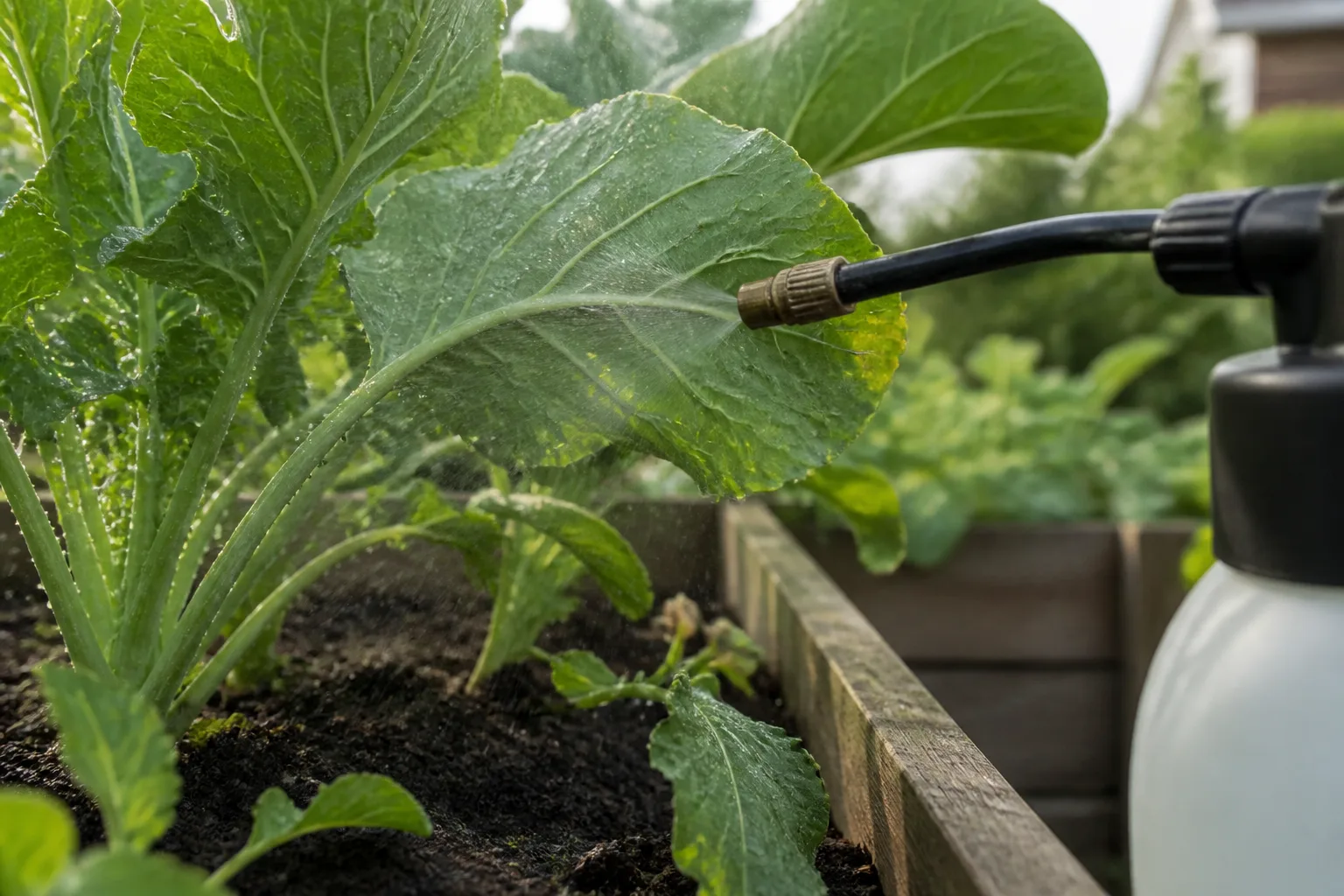
Insecticidal soap for soft-bodied pests
Insecticidal soap is made from potassium salts of fatty acids. It kills small, exposed pests by disrupting their cell membranes and protective coatings, so the spray has to wet the insect directly. It is a good fit for aphids, whitefly nymphs, mealybugs, some thrips, and mites; it is a poor fit for large caterpillars, beetles, and armored adult scale.
The spray has no meaningful residual kill after it dries. Aim the wand at the leaf undersides, growing tips, and stem joints where pests hide, and expect to repeat the application if new insects hatch. Colorado State University Extension also warns that commercial insecticidal soap is not the same as household dish detergent: cleaning products can contain degreasers, fragrances, preservatives, and other ingredients that injure leaves and are not tested as pesticides.
Use a labeled product on edible crops whenever possible. If you are considering a homemade soap mixture, treat it as an untested experiment: patch-test a small part of the plant, use a conservative mix, and do not assume a recipe has a legal crop use or a tested harvest interval. Soap can burn tender, hairy, waxy, drought-stressed, or heat-stressed foliage even when the pest dies.
Soap is also a poor rescue treatment when leaves are tightly curled around the insects. The liquid cannot reach pests protected inside the curl, and soaking already damaged tissue increases the chance of injury. Pruning a small number of infested tips, directing water into the foliage, or waiting for natural enemies to work can be more sensible than repeatedly wetting a plant that the spray cannot actually reach.
Horticultural oil and neem for sap feeders and mites
Horticultural oil and neem oil are not interchangeable, although both are oils. Horticultural or narrow-range oil works mainly by coating and suffocating exposed pests and eggs; it is useful against aphids, mites, whiteflies, scale crawlers, and some thrips when coverage is thorough. Neem products may contain clarified hydrophobic neem oil, azadirachtin, or both. Azadirachtin can disrupt feeding and insect development after a pest eats treated tissue, while clarified oil acts more like a contact oil.
Read the active-ingredient panel rather than relying on the word “neem” on the front of a package. The National Pesticide Information Center’s neem fact sheet notes that neem breaks down relatively quickly on leaves, but the product still needs to be used according to its label. The same fact sheet distinguishes the behavior of neem oil from azadirachtin and notes greater concern for fish and aquatic organisms than for birds and mammals.
Oils are useful when a pest is exposed and you can coat it, but they are not a cure for every distorted leaf or yellow plant. Do not apply oil to a wilted plant, during extreme heat, or in combination with sulfur unless the label gives a safe interval. Test a small area first, especially on cucurbits, tender seedlings, plants with hairy leaves, and varieties you have not treated before.
Bt for caterpillars
Bacillus thuringiensis var. kurstaki (Btk) is a naturally occurring bacterium used as a microbial insecticide. A caterpillar has to eat treated foliage for Btk to work, so coat the leaves rather than spraying a moth or butterfly in flight. It is most effective while caterpillars are young and before they have caused extensive defoliation, as University of Minnesota Extension explains.
Btk is often the most selective choice for cabbageworms, cabbage loopers, and similar leaf-feeding caterpillars on labeled crops. It does not solve squash bugs, aphids, beetles, or caterpillars hidden inside fruit or stems. Identify the caterpillar and check the label: different B. thuringiensis strains target different insect groups, and a vegetable crop must be listed for the specific product.
Timing matters more than a heavy coating. Inspect brassicas and tomato plants every few days during an active flight period, then treat while the caterpillars are small. Once a hornworm has eaten a large section of a tomato plant, Btk cannot restore the missing leaves; it can only protect the foliage that remains and the new growth that appears later.
Spinosad for stubborn chewing pests
Spinosad is made by fermenting a naturally occurring soil microorganism. It can help with some caterpillars, thrips, leafminers, and beetles when a product is labeled for the pest and crop. It is broader and longer-lasting than soap or Btk, which is exactly why it deserves more caution.
UC IPM notes that spinosad can harm bees while the spray is wet and for a period afterward, and it can affect some natural enemies. Never spray a blooming crop while bees are foraging, and never assume that “organic” removes the pollinator warning. Use it as a spot treatment when a more selective option will not work, not as a weekly blanket spray.
Diatomaceous earth for crawling insects
Diatomaceous earth is a dry mineral powder made from fossilized diatoms. Its abrasive particles damage the waxy outer layer of some crawling insects, so it works only while the powder remains dry and where the pest contacts it. It is more useful as a dry barrier around a vulnerable plant or bed edge than as a cure for aphids hidden on a leaf.
The Utah State University vegetable guide specifically notes that diatomaceous earth becomes ineffective when wet. Rain, irrigation, and heavy dew can erase its benefit, and dusting flowers or foliage can expose bees and other small organisms unnecessarily. Reapply only as the product label allows, and avoid creating clouds of dust while handling it; a properly fitted mask and eye protection are sensible for any fine powder.
Check the label before using a bag sold for filters, pools, or other non-garden purposes. A food-grade label is not the same thing as a pesticide label, and not every diatomaceous-earth product is registered for application to growing vegetable plants.
Garlic, hot pepper, and other homemade sprays
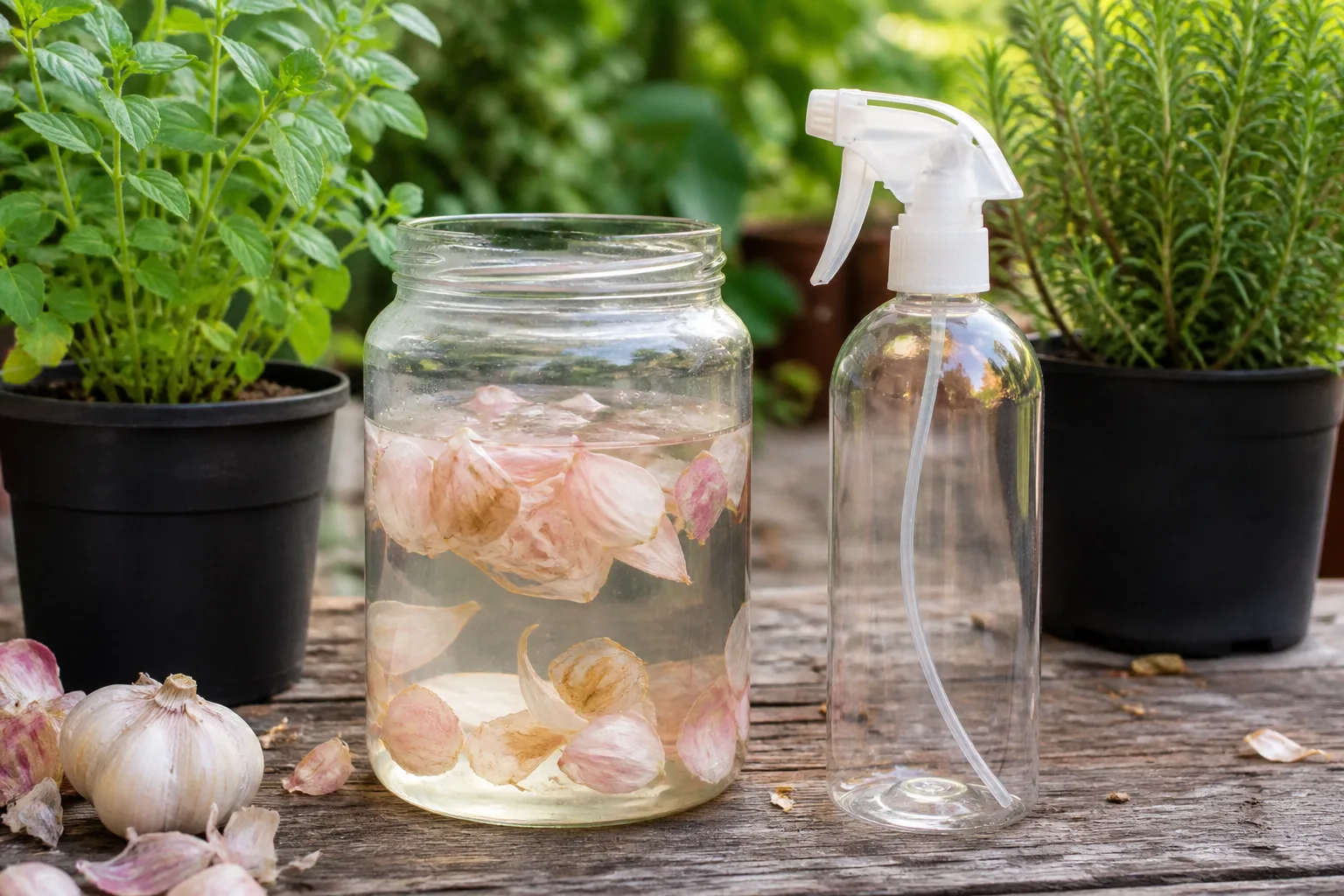
Garlic and hot pepper preparations are best described as short-lived repellents or deterrents, not dependable stand-ins for a labeled insecticide. Their odor or capsaicin may discourage feeding temporarily, but the strength varies with the ingredients, the plant, weather, and the pest. They are especially unreliable once an infestation is established or the pest is protected inside curled leaves, stems, or fruit.
There is a second problem with kitchen recipes: soap, oil, essential oils, and concentrated pepper extracts can scorch foliage and irritate skin or eyes. The Royal Horticultural Society advises caution with homemade brews because they are not properly tested and may harm plants, non-target organisms, or the wider environment. Do not add dish detergent to a garlic or pepper tea and assume it has become insecticidal soap.
If you still choose a homemade repellent, test it on one plant first, spray in cool conditions, keep it off open blooms, and stop if leaves spot or curl. For edible crops, use only a labeled product when you need a predictable result or a clear preharvest interval. A row cover is usually a more reliable “natural spray alternative” than a stronger kitchen mixture.
Exclusion and Biological Controls Often Beat Sprays
Row covers and crop timing
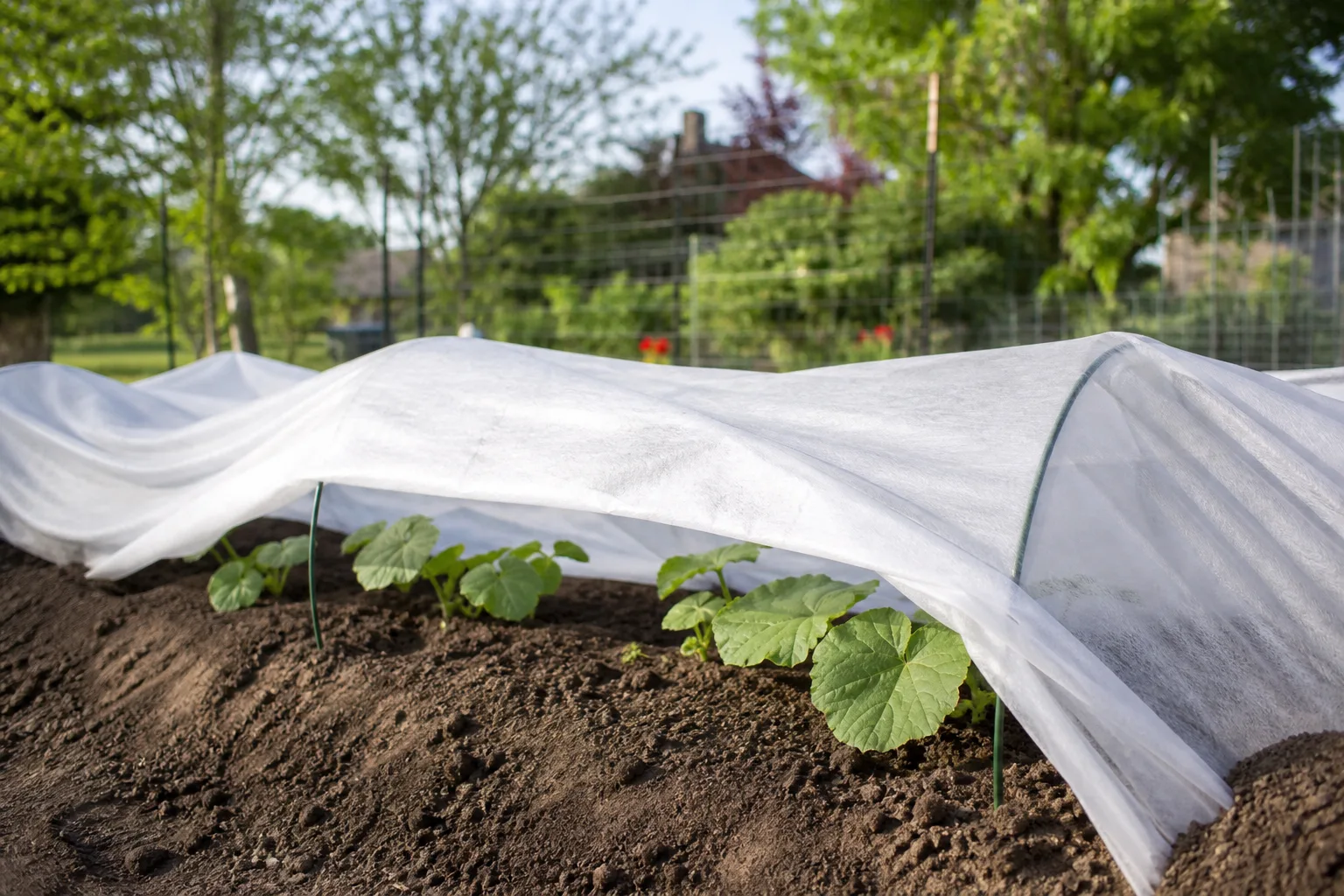
Lightweight floating row cover blocks many adult insects from reaching seedlings and laying eggs. It is particularly useful for cabbage moths, flea beetles, cucumber beetles, carrot rust flies, and other pests that must find the crop from outside. Secure the edges completely; one gap at the soil line can undo the barrier.
Use covers before the pest arrives, not after adults have already laid eggs beneath them. Remove the cover when a crop needs insect pollination. Cucumbers, squash, melons, and some beans may flower under a cover but will not set a normal crop without pollinator access or deliberate hand-pollination. For crops such as kale or broccoli whose harvested parts do not require pollination, a cover can often stay in place much longer.
Crop rotation, resistant varieties, clean transplants, mulch, and prompt removal of badly infested debris extend the benefit. These controls change the pest’s access or life cycle, so they keep working after a spray residue has washed away.
Natural enemies and habitat
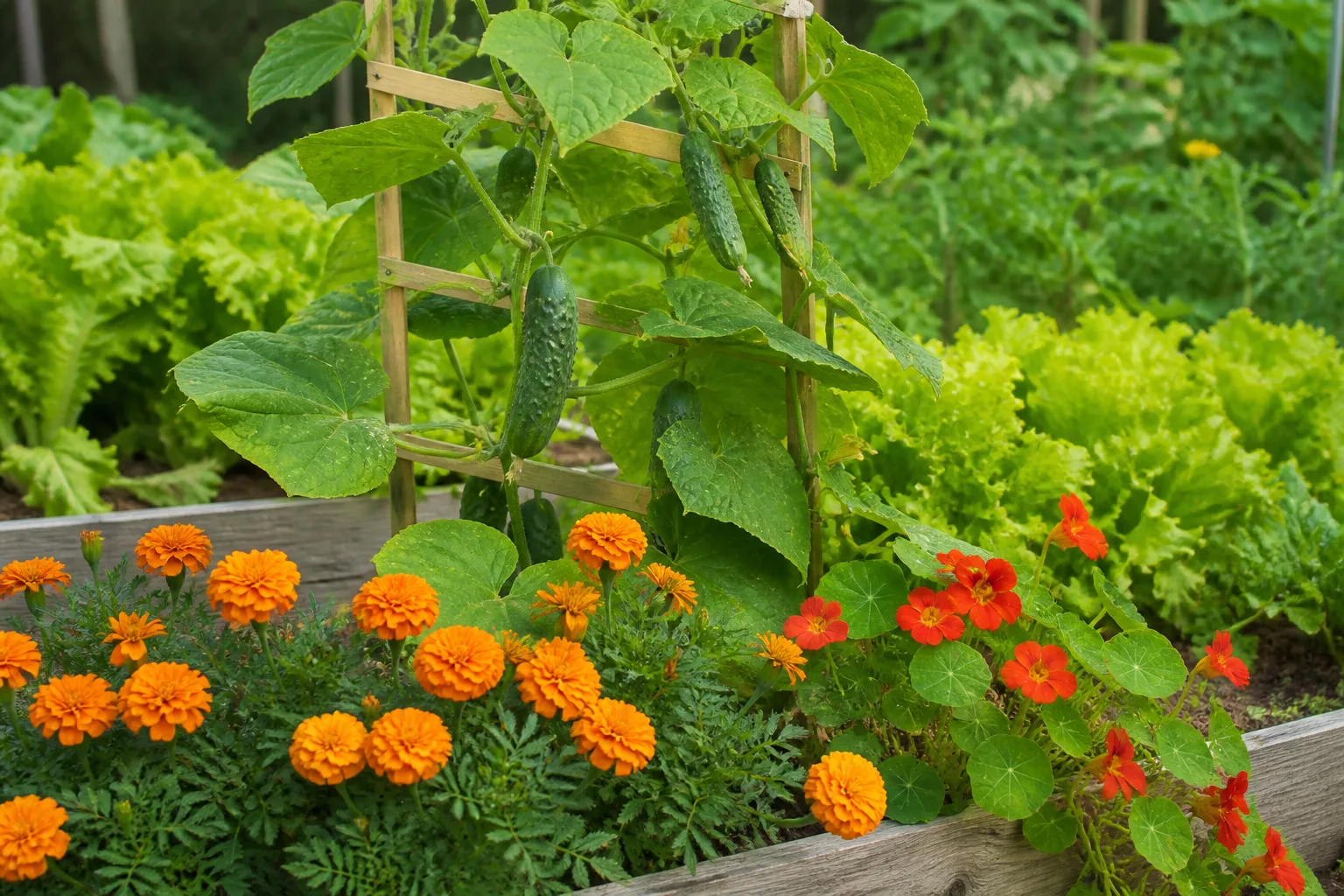
Lady beetles, lacewings, syrphid-fly larvae, predatory bugs, spiders, birds, and parasitic wasps are part of a working vegetable garden. They will not always prevent every damaged leaf, but they can suppress pests between scouting visits. Planting small-flowered herbs and flowers that bloom at different times gives adult beneficial insects nectar and shelter, while leaving a little non-crop habitat nearby gives them somewhere to live.
Avoid confusing a beneficial insect with a pest. A parasitized tomato hornworm with white, rice-like wasp cocoons should stay in the garden; the wasps emerging from it can search for more hornworms. Broad or repeated sprays can remove these allies and trigger secondary pest outbreaks, so UC IPM recommends selective products, spot applications, and nonpersistent materials when pesticide use is necessary.
How to Apply a Natural Pesticide Safely to Edibles
Label, crop, and harvest-interval check
The product label is part of the safety instructions and the legal use directions. Before opening the sprayer, confirm all four items:
- The active ingredient is identified and the product is labeled for the pest.
- The vegetable or crop group you intend to treat appears on the label.
- The rate, maximum applications, and spray interval fit the product’s directions.
- The preharvest interval (PHI) tells you how long to wait between the last application and harvest.
The EPA’s garden guidance says to read the label before selecting and using a pesticide. The EPA labeling FAQ clarifies that if a crop is not listed, you cannot treat it simply because another vegetable is listed. A product’s natural origin, organic branding, or “safe around the garden” marketing does not replace those directions.
“Organic” has a specific production context, too. The EPA’s organic-farming guidance explains that naturally derived pesticides may be allowed in organic production, but the product and use still need to meet the applicable organic rules. A home gardener does not need certification to garden responsibly, but it is still useful to distinguish “natural,” “organic-approved,” and “labeled for this crop.”
Coverage, weather, and pollinator timing
Contact products fail when they do not reach the pest. Spray the undersides of leaves, new growth, leaf axils, and the soil surface only when the label calls for it. Aim for even coverage rather than runoff. Soap and oil need direct contact; Btk needs to remain on foliage for a caterpillar to eat; diatomaceous earth needs to stay dry; neem and other products may have specific reapplication instructions.
Choose a calm, cool period when rain is not about to wash off the treatment. Avoid spraying drought-stressed plants, newly transplanted seedlings, and foliage that will sit in intense sun while wet. Wear the protective equipment listed on the label, keep children and pets away as directed, and store concentrates in their original containers.
Protect pollinators by checking the label’s bee language, keeping sprays off open flowers, and treating only the infested area. The EPA’s pollinator guidance identifies timing outside active foraging and bloom restrictions as important risk-reduction measures. Early evening is often safer than midday, but the label controls; a cool morning can still overlap with wild-bee activity.
Common Mistakes That Make Natural Sprays Fail
Treating a symptom instead of a pest. Yellow leaves can come from drought, root problems, nutrient imbalance, disease, or insects. Inspect before spraying; an insecticide will not fix a watering problem.
Using dish soap as a substitute for insecticidal soap. Household detergent may strip leaf waxes and cause burn. Use a labeled insecticidal soap or choose a mechanical control.
Applying a contact spray once and calling it ineffective. Soap and oil kill what they reach. If new pests hatch or the first application missed the undersides, a correctly timed repeat may be needed—but increasing the concentration is not the same as improving coverage.
Spraying every natural enemy you see. A general treatment can kill predators along with pests. Spot-treat hotspots, leave lightly affected plants alone when damage is tolerable, and learn the difference between a pest and a parasitoid.
Dusting wet plants with diatomaceous earth. Moisture removes its dry abrasive action. Fix the source of moisture and follow the label rather than piling on more powder.
Leaving row covers over flowering cucurbits. A cover can stop cucumber beetles and also stop bees. Remove it for pollination or hand-pollinate according to the crop’s needs.
Ignoring the harvest interval. A spray that is fine for tomatoes may have different instructions for lettuce, beans, or cucumbers. Write the application date on a garden calendar and follow the longest relevant wait period on the label.
A Simple IPM Sequence for This Week
If you need a practical starting plan, use this order:
- Scout two or three times. Check the same plants and record the pest, damage, life stage, and whether the population is increasing.
- Remove what you can. Hose aphids, handpick caterpillars and beetles, prune heavily infested tips, and use boards or approved traps for slugs.
- Add a barrier. Cover young crops, seal row-cover edges, add a stem collar for cutworms, or adjust mulch and debris that create hiding places.
- Choose the narrowest tool. Btk for a labeled caterpillar, soap or oil for exposed soft-bodied pests, and a dry labeled barrier for a crawling pest are more targeted choices than a blanket spray.
- Read the label before mixing. Confirm crop, pest, rate, PHI, pollinator precautions, weather limits, and protective equipment.
- Spot-treat and reassess. Spray only the affected plants, inspect again after the label’s interval, and stop when fresh damage and pest numbers have stabilized.
This sequence is also a useful reality check. If a row cover prevents the next generation, a spray is unnecessary. If a plant is tolerating a few chewed leaves and beneficial insects are active, intervention may create more risk than the pest. If the same pest returns every year, redesigning planting time, crop rotation, sanitation, or exclusion will usually do more than adding another bottle to the shed.
Conclusion
Natural pesticides can protect a vegetable garden, but they work best as targeted tools inside an integrated pest-management plan. Use insecticidal soap for exposed soft-bodied pests, horticultural oil or the right neem formulation for sap feeders and mites, Btk for young leaf-eating caterpillars, and spinosad only when its broader effects and pollinator restrictions fit the situation. Treat diatomaceous earth as a dry, limited barrier—not a universal dust—and treat garlic or hot-pepper brews as variable repellents rather than proven cures.
The most reliable first move is still careful scouting. Identify the pest, try exclusion or physical removal, select the narrowest labeled control if damage justifies it, and record the harvest interval before you spray. That approach protects the crop while leaving room for the bees, predators, and parasitoids that make the next pest problem smaller.



