How to Grow Columbines for Spring Flowers
Grow columbines with the right light, moisture, soil, and timing. Get practical planting, seed-starting, after-bloom care, and troubleshooting advice.
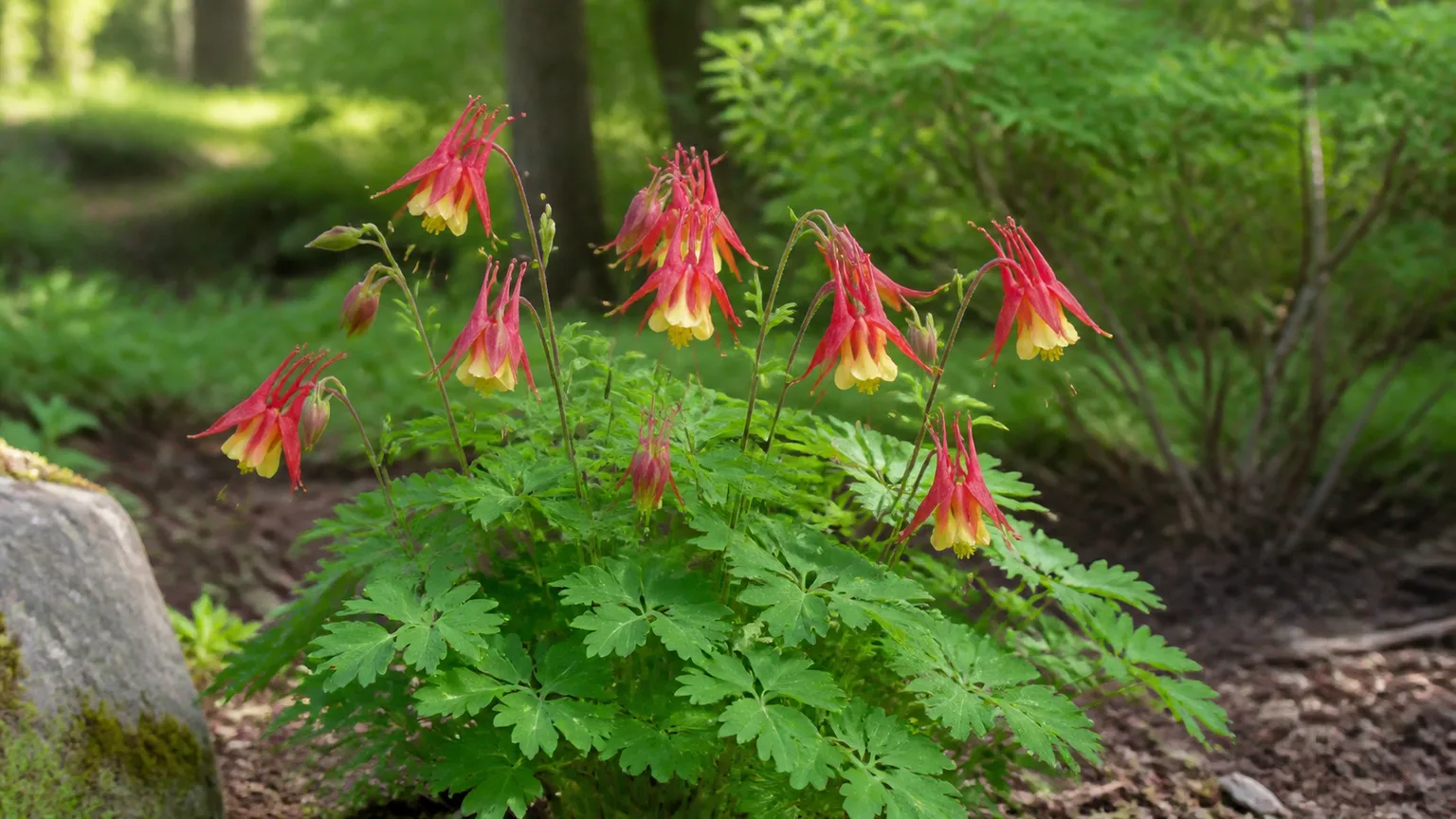
Columbines are the spring perennial for gardeners who want character without a high-maintenance routine. Their nodding, spurred flowers appear above soft, divided foliage, and the plants can settle into a woodland edge, cottage border, rock garden, or pollinator planting without demanding a perfectly sunny, perfectly amended bed.
The useful word is not “fast” by itself. A nursery-grown columbine can establish quickly and may flower in its first season, while a seed-grown plant usually spends its first year building a rosette and roots. That distinction is why experienced gardeners buy plants when they want flowers soon, but sow seed when they want a naturalized colony over time.
Why Columbines Earn a Place in Spring Gardens
Columbine is the common name for plants in the genus Aquilegia, a group of herbaceous perennials in the buttercup family. The flowers are easy to recognize once you know the clues: five petal-like sepals, prominent nectar spurs, and a nodding or open, bonnet-like form carried on wiry stems. Foliage is usually divided into rounded leaflets and forms a low mound before the flower stalks rise.
The best-known North American choice is eastern or Canadian columbine, Aquilegia canadensis. North Carolina State Extension describes it as a native perennial for partial shade and organically rich, moist soil, with red-and-yellow tubular flowers that attract hummingbirds, butterflies, and bumblebees. Its profile also notes that the foliage can be cut to the ground after it deteriorates and that seedlings may flower in their second year. North Carolina State Extension’s plant profile is a useful reference when you are choosing a native form rather than an unnamed hybrid.
Columbines also solve a design problem. They provide early vertical flowers without making a bed look stiff, then leave a mound of textured foliage that can bridge the gap before later perennials take over. They are especially effective at the front of a shrub border, along a lightly shaded path, or in the transition between a sunny bed and a woodland area.
There is one honest limitation: an individual columbine is not always a long-lived anchor plant. The RHS describes aquilegias as naturally short-lived, but their ability to self-sow often keeps the planting going. Think of them as a moving population rather than a single permanent clump. That is a benefit in an informal garden and a maintenance issue in a highly controlled border.
How to Identify a Columbine Before You Buy
Look for a healthy basal rosette, clean leaves, and flower stems with visible spurs. The flowers may be red and yellow, blue and white, pink, purple, maroon, or a combination depending on species and cultivar. Some modern forms have double flowers or shortened spurs, so a plant can still be columbine even when it does not resemble the classic red-and-yellow wildflower.
Read the botanical name and mature size on the label instead of buying by flower color alone. Aquilegia canadensis is a strong choice for a North American native garden, while Aquilegia vulgaris and hybrid groups offer different colors, heights, and flower shapes. Missouri Botanical Garden’s Plant Finder lists the McKana Group at roughly 2 to 2.5 feet tall, hardy in zones 3 to 9, and suited to full sun through part shade; those figures apply to that group, not to every columbine. Missouri Botanical Garden’s columbine entry shows why the plant tag matters.
Avoid a pot with collapsed foliage, blackened stems, or a sour-smelling, saturated root ball. A few minor leaf marks are not automatically a deal-breaker, but a plant already stressed by poor drainage will have a harder time making the transition into your garden. If you are shopping in spring, choose a plant with a compact crown and sturdy flower buds rather than one stretched by low indoor light.
Choose the Right Columbine for Your Site
The right columbine is the one that matches your light, moisture, and desired level of self-sowing. A plant that thrives beneath a deciduous canopy may struggle in a hot, exposed bed, and a hybrid selected for a formal display may not behave like a local native species.
Pick the Planting Spot First
Start with the site, then choose the plant. For most garden columbines, the sweet spot is morning sun or bright part shade with soil that stays moderately moist in spring and does not remain saturated after rain. A light tree canopy is useful because it gives spring light before the leaves fully expand and more protection as summer heat arrives.
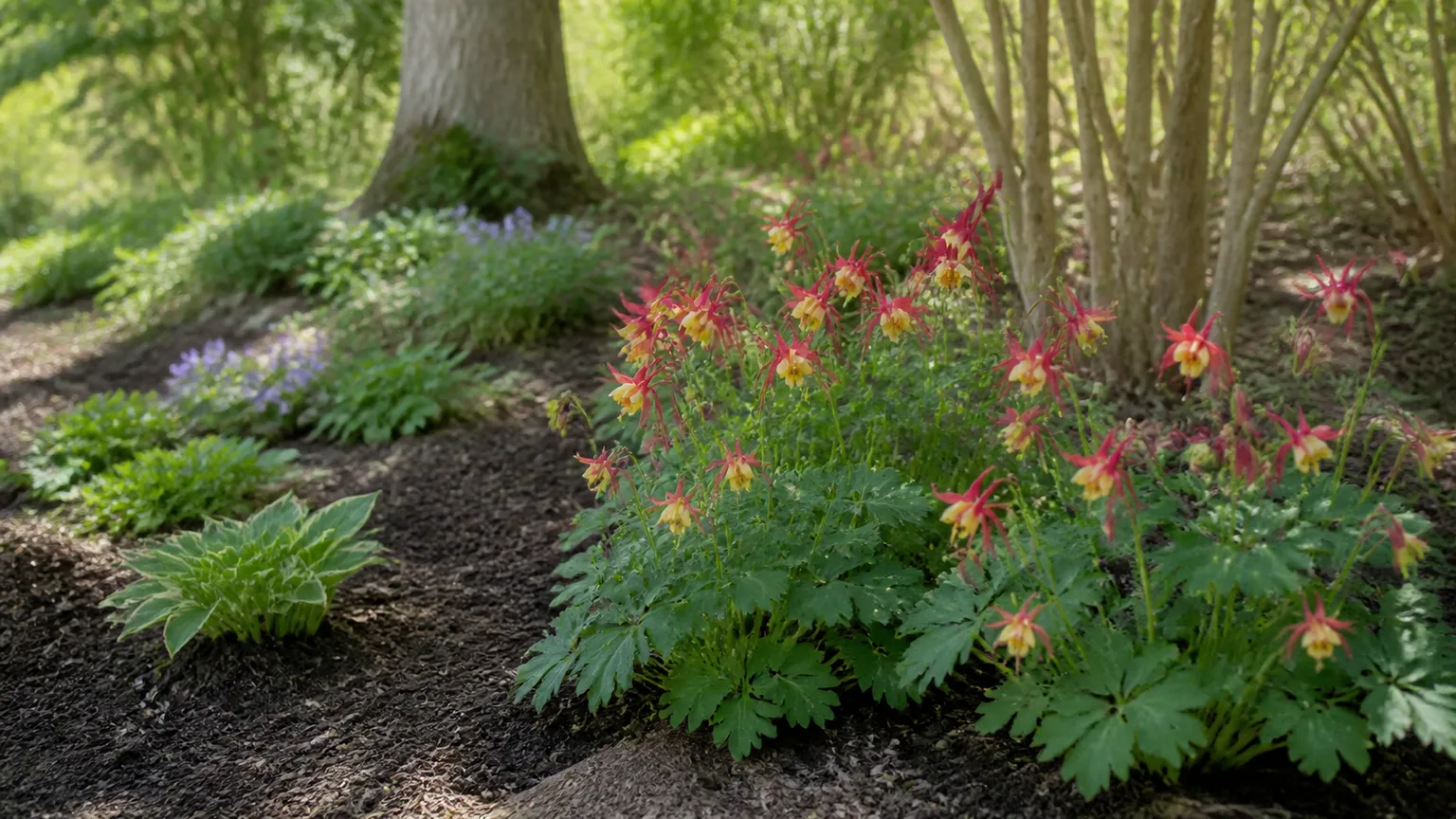
If you have a sunny garden, do not rule out columbine automatically. Eastern columbine tolerates more sun when moisture is dependable, and some forms handle full sun in cooler climates. The practical test is the combination of heat and water: six hours of sun beside a reliable irrigation line is very different from six hours of reflected heat beside a dry wall.
Sunlight: Morning Sun Beats Hot Afternoon Sun
Morning sun is a forgiving choice because it provides energy for flowering while allowing foliage to dry and temperatures to fall later in the day. Afternoon shade is especially valuable in hot-summer climates, where a full-sun placement can shorten the display and stress a plant that otherwise has enough water.
Deep, dark shade is not the answer either. Columbines can survive with little direct sun, but weak light usually means fewer flowers and looser stems. If the bed is shaded by a dense evergreen or a building all day, choose a brighter edge or move the columbine where it receives filtered light.
Soil: Moist Does Not Mean Waterlogged
Work with soil that holds some moisture but drains freely. The RHS recommends rich, moist but free-draining soil, while Missouri Botanical Garden notes that columbines tolerate a range of soils except heavy, poorly drained ground. Mix compost into poor soil if needed, but do not bury the crown in a deep pocket of wet amendment.
In heavy clay, improve the whole planting area with organic matter and use a slight raised mound or a better-drained part of the bed rather than creating a tiny hole filled with loose potting mix. In sandy or gravelly soil, add compost and plan to water more consistently during the first growing season. Drainage is the non-negotiable part; moisture can be adjusted with mulch and irrigation.
Planting Nursery Columbines in Spring
Spring is a good time to plant a container-grown columbine because the plant can root while temperatures are moderate. It is also the most reliable route to flowers this season, although a newly purchased plant may still need time to recover from transport or greenhouse conditions before it opens every bud.
Step 1: Acclimate and Water the Root Ball
If the plant was grown under cover, give it a short transition into outdoor conditions rather than moving it from a protected bench into harsh afternoon sun. Place it in a sheltered, bright spot for a few days, then plant it during a cool part of the day once the weather and soil are workable.
Water the pot thoroughly before planting. If the root ball is dry and has pulled away from the sides of the container, set the pot in a shallow tray of water for a short soak, then let excess water drain. A hydrated root ball is easier to plant without crumbling and less likely to lose tender roots during the first warm spell.
Step 2: Set the Crown at the Original Depth
Dig a hole about as deep as the root ball and at least twice as wide. Slide the plant out carefully, loosen only roots that are circling tightly, and set the top of the root ball level with the surrounding soil. The crown—the point where stems emerge from the roots—should not be buried under a thick layer of soil or mulch.
Space plants about 12 inches apart for many garden forms, then check the label if the cultivar is unusually tall or wide. Giving air space between plants helps foliage dry and gives each rosette room to expand. If your goal is a loose naturalized drift, you can leave room for volunteer seedlings rather than packing every gap with purchased plants.
Step 3: Water and Mulch the Root Zone
Backfill with the soil you removed, firm it gently, and water slowly until the entire root zone is wet. Keep checking the soil during the first few weeks; water when the surface begins to dry rather than following a fixed daily schedule. A plant in cool spring soil may need far less water than one planted into a sunny, windy bed.
Add a thin layer of organic mulch to slow evaporation, keeping it a few inches away from the crown. Thick mulch touching the center of the rosette can hold excess moisture against the stems. Once the plant is rooted and growing, it should need less intervention unless the site is unusually hot or dry.
Growing Columbine From Seed
Seed is the economical way to create several plants, but it is not the shortcut to immediate flowers. Fresh seed is usually more useful than old seed, and the result may not match the parent exactly if different columbines grow nearby. Cross-pollination is part of the charm of a naturalized patch, but it makes the flower color and form less predictable.
Cold Stratification and Sowing Timing
Columbine seed often benefits from a cold, moist period before it germinates. In nature, seeds fall into the garden, experience winter conditions, and emerge when the season is favorable. You can imitate that cycle by sowing outdoors in late fall or winter, or by following the seed packet’s instructions for moist stratification in a refrigerator.
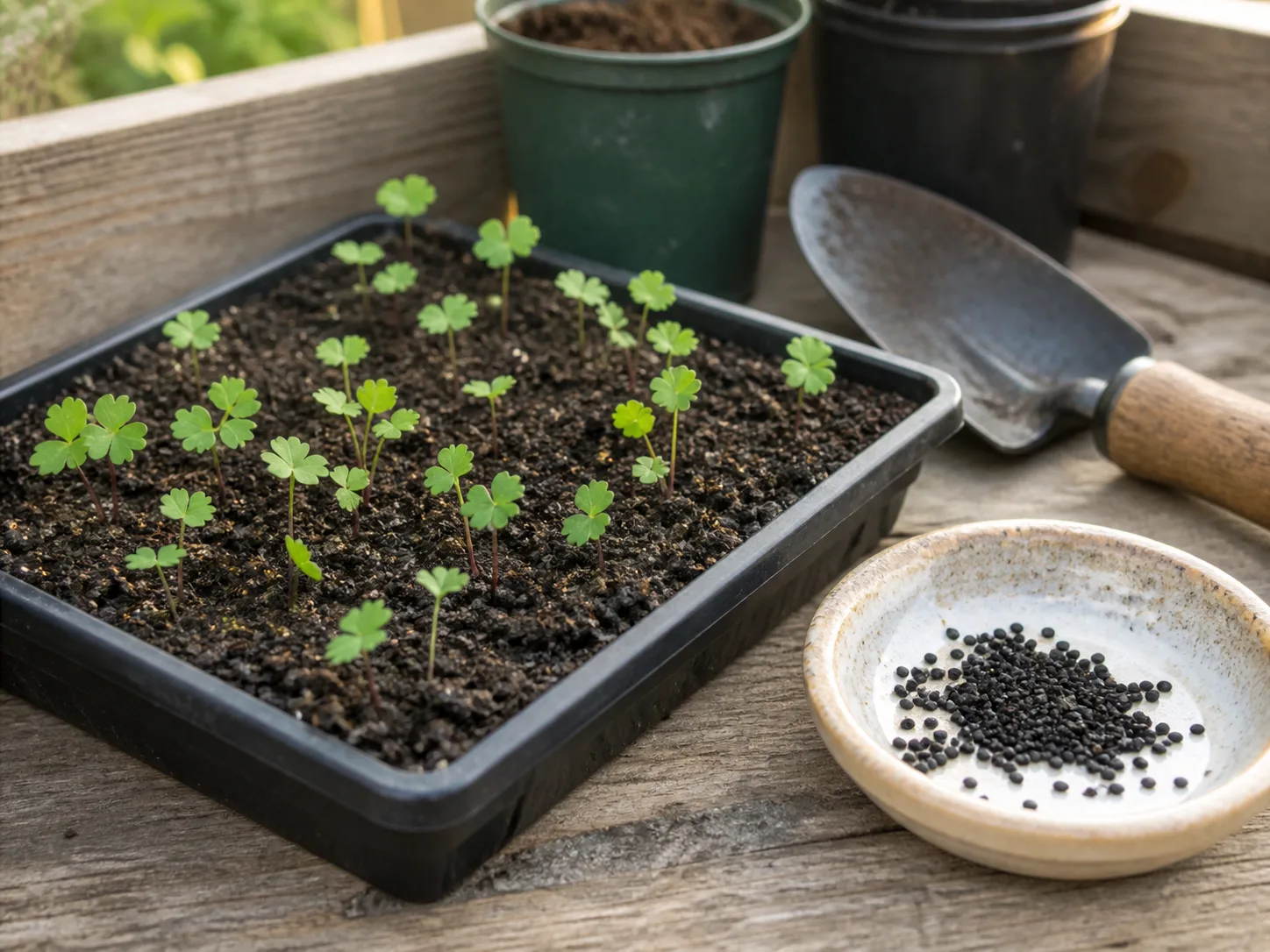
The RHS recommends fresh sowing in spring or early summer and notes that seed can be slow to germinate; if seedlings do not emerge after several months, a period of cold, moist stratification can help. Savvy Gardening’s practical guide also describes fall or midwinter sowing and winter sowing in ventilated containers as workable approaches for wild columbine. The RHS growing guide and Savvy Gardening’s wild columbine guide provide useful detail on those methods.
Use a clean container with drainage and a fine-textured seed-starting mix. Sow according to the packet, keep the mix evenly moist rather than waterlogged, and give seedlings bright light once they emerge. Avoid repeatedly disturbing the surface to check for roots; slow germination is normal, and a soggy tray creates more problems than patience solves.
What the First Two Years Actually Look Like
The first year is usually about roots and a basal rosette. A seedling may look unimpressive beside a blooming nursery plant, but that small mound is the plant’s foundation for surviving winter and producing stronger flower stems later.
Early spring- or summer-sown plants may be ready to plant out in autumn if they have formed a good rosette. Flowering the following year is possible, but the RHS cautions that it can take two years. North Carolina State Extension similarly notes second-year flowering for new seedlings of eastern columbine. Treat first-year flowers as a bonus, not a promise.
Choose seed when you want quantity, local adaptation, or the loose variation of a self-sown garden. Choose nursery plants when the bed needs a visible spring accent now, when you need a known color, or when your remaining growing season is too short for seedlings to establish. That simple choice prevents most disappointment around “fast-growing” columbines.
Columbine Care After Flowering
Columbine care becomes easier when you stop asking the plant to stay in peak bloom all summer. Its strongest contribution is often a spring flower show followed by attractive foliage for a while, then a natural decline as heat and drought increase.
Deadhead for Tidiness or Leave Pods for Seed
Deadhead after flowering if you want a tidier clump, fewer volunteer seedlings, or a small chance of encouraging additional bloom. Cut the flower stem back to the foliage rather than shearing the whole rosette while it is still green and productive.
Leave some flowers to form brown seed pods if you want columbines to naturalize. Scatter the seed where you want future plants, but thin seedlings that land too close together or crowd slower woodland perennials. Remember that volunteer offspring may differ from the parent because columbines cross-pollinate readily.
The choice is not “right” versus “wrong.” Deadheading gives you control; leaving pods gives you resilience and free replacement plants. In a formal border, remove most pods and save a few in a designated corner. In a woodland or cottage garden, letting the best plants seed themselves may be the lowest-effort way to keep the display going.
Cut Back Declining Foliage Without Panicking
Columbine foliage can lose quality after flowering, especially during hot, dry weather. Yellowing or tired leaves in midsummer do not automatically mean the plant is dead. Missouri Botanical Garden, North Carolina State Extension, and the RHS all describe cutting back declining or old foliage after flowering; the plant can produce a fresh flush when moisture is available.
Wait until the main flowering period is over and the foliage is genuinely declining, then cut the plant near the base with clean shears. Water afterward if the soil is dry. Do not cut a healthy plant to the ground during its main bloom period simply because you want a shorter plant; that removes the season’s flowers and reduces the plant’s ability to replenish itself.
Garden plants generally do not need routine fertilizer in average soil. If growth is weak and a soil test or site history suggests poor fertility, use a general fertilizer according to its label rather than repeated heavy feeding. Excess nitrogen can produce soft foliage without solving a light, drainage, or moisture problem.
Common Problems and Fast Troubleshooting
Columbines are forgiving, but their delicate foliage can show stress quickly. Diagnose the pattern before reaching for a spray, because the same “bad leaf” can come from an insect, a fungus, heat, or a root-zone problem.
| What you see | Most likely issue | First response |
|---|---|---|
| Pale winding trails inside leaves | Leaf miner | Remove badly affected leaves, clear fallen debris, and monitor new growth; do not treat healthy leaves blindly. |
| White, dusty coating on leaves | Powdery mildew | Improve air movement, reduce crowding, keep the plant from drying severely, and remove declining foliage after bloom. |
| Brown or black spots spreading across leaves | Leaf spot or another fungal problem | Remove affected leaves, water the soil instead of wetting foliage, and correct crowded or persistently damp conditions. |
| Rust-colored pustules or powder | Rust | Remove affected foliage, improve airflow, and avoid carrying infected leaves into compost if the disease is active. |
| Plant wilts while soil stays wet | Root stress or poor drainage | Stop automatic watering, inspect drainage, and move or replant in a better-drained site if saturation persists. |
| Whole plant fades after flowering in hot weather | Seasonal foliage decline | Check the crown and soil moisture, then cut back only after flowering if the foliage has naturally deteriorated. |
Fine Gardening lists powdery mildew, rust, fungal leaf spots, aphids, leaf miners, and caterpillars among potential problems, while the RHS also flags aquilegia-specific pests and diseases. Fine Gardening’s plant guide is helpful for the broad problem list, but the first treatment should still be cultural: drainage, spacing, sanitation, and correct watering.
If a few leaves are mined or chewed but the crown is growing and flowers are forming, the plant may not need intervention beyond removing the worst foliage. If the crown is soft, the soil remains saturated, or new leaves collapse, solve the root-zone problem first. Spraying a stressed plant without changing its growing conditions rarely fixes the underlying cause.
Eight Easy Spring Companions for a Longer Display
Columbine is most useful when it is part of a relay rather than the entire flower show. Pair it with plants that take over at a different time or prefer a different layer of the garden, and the bed can look intentional even after columbine foliage fades.
-
Spring bulbs such as daffodils, crocuses, and snowdrops open earlier than most perennials and tolerate cold. Their important limitation is timing: the bulbs usually need to be planted in fall for a dependable spring display.
-
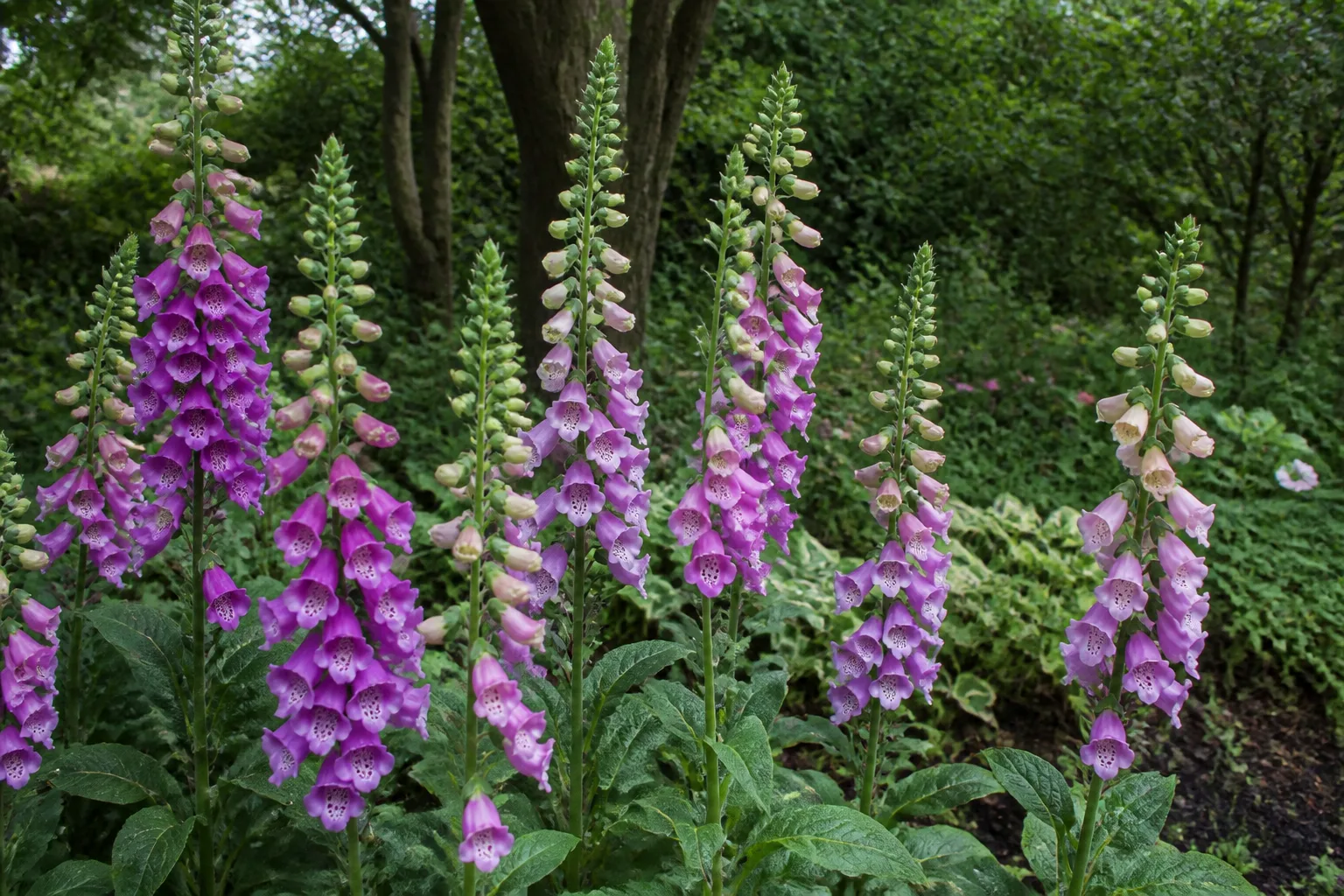
Foxgloves add height and vertical bells in late spring or early summer. They can self-sow, but many are biennial or short-lived rather than permanent clumps, so use them when you are comfortable with a changing planting and confirm safety requirements for your household before choosing them.
-
Johnny jump-ups bring small, open-faced flowers to cool-season beds and containers. They are a good choice when you want color close to the ground while columbine provides height, but they perform best during cool weather and may not persist through a hot summer.
-
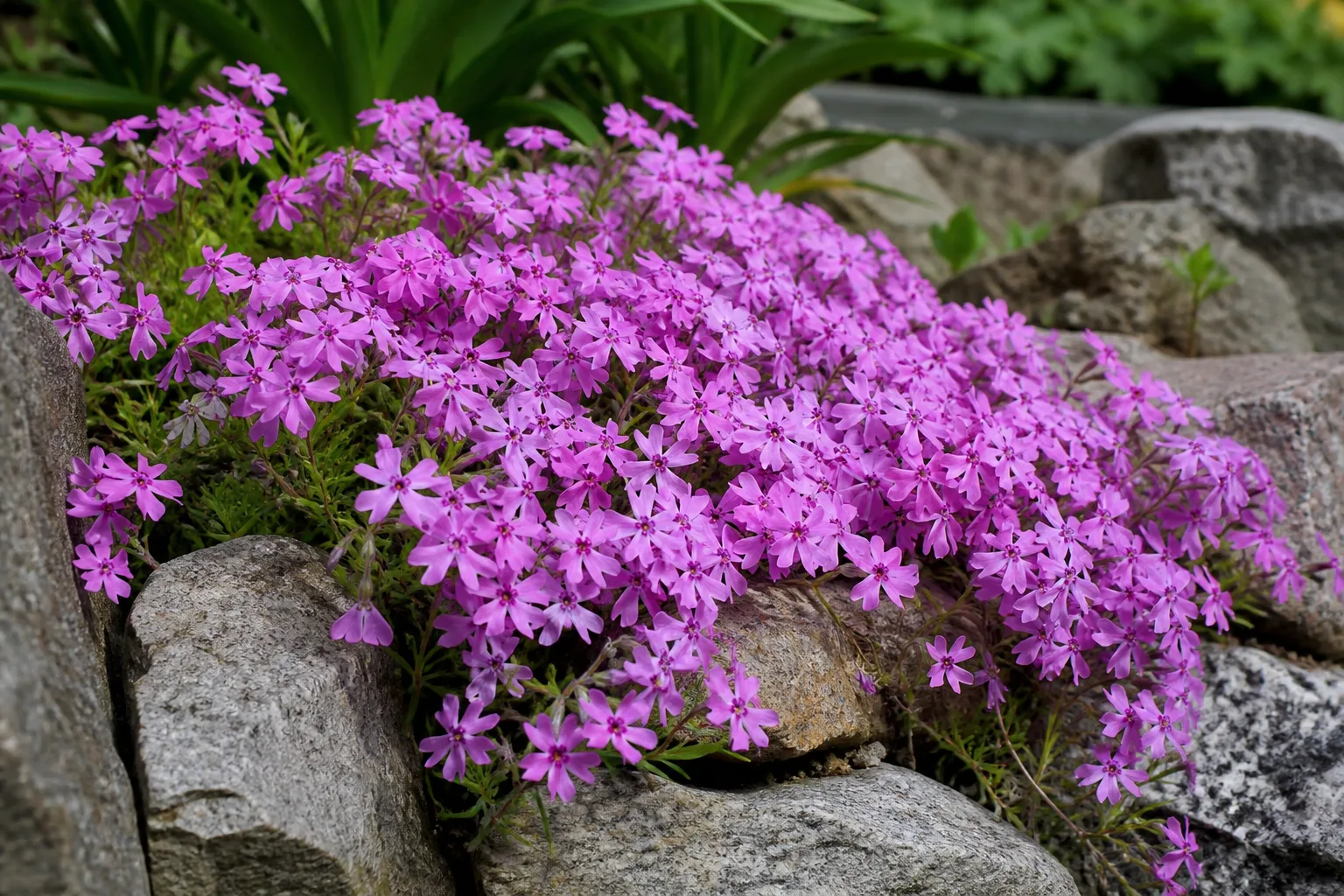
Creeping phlox suits the sunny side of the garden rather than the deep-shade niche where columbine is strongest. Its low, spreading habit can soften a path or wall while the taller, airy columbine occupies the back edge of the same transition.
-
Bleeding heart is a natural partner for moist, part-shade beds. Its arching stems and heart-shaped flowers create a different silhouette, and both plants benefit from protection from the hottest afternoon sun.
-
Dianthus is better for a sunny, well-drained edge. Use it to carry color into early summer where the columbine bed receives more light, but do not force the two into the same watering zone if one site is cool and moisture-retentive while the other is dry.
-
Poppies bring bold, simple flowers to a sunny bed and can fill gaps from direct sowing. Their bloom window and form differ from columbine, which makes the combination more interesting, but poppies generally need more light and should not be used to solve a shady-site problem.
-
Basket-of-gold is a low, yellow-flowering choice for a sunny rock garden or wall edge. It is a better companion for a drier, brighter part of the yard than for the moist woodland pocket where eastern columbine is happiest.
The easiest plan is to match each plant to its real conditions instead of treating “spring flower” as a care category. Use columbine for morning sun or part shade, add bulbs for the earliest color, place a later perennial behind it, and reserve sun-loving companions for the brighter edge.
Conclusion
Columbines deserve their spring popularity because they offer unusual flowers, useful pollinator value, and an ability to fit into gardens that are neither full sun nor deep shade. The best results come from choosing the site first, keeping the soil moist but well drained, and deciding whether you want a known plant now or a variable self-sown colony later.
Buy a container-grown columbine when immediate flowers matter. Sow fresh seed when you can wait through a first year of root and rosette growth. After bloom, deadhead for control or leave a few pods for volunteers, and do not mistake summer foliage decline for failure. Give the plant the conditions it actually prefers, and it will keep returning to the spring garden in a way that feels both effortless and alive.