How to Keep Ants Out of Hummingbird Feeders
Ants clog hummingbird feeder ports and drive birds away. Learn ant moats, fishing line, cleaning habits, and safe fixes that keep nectar for hummingbirds.
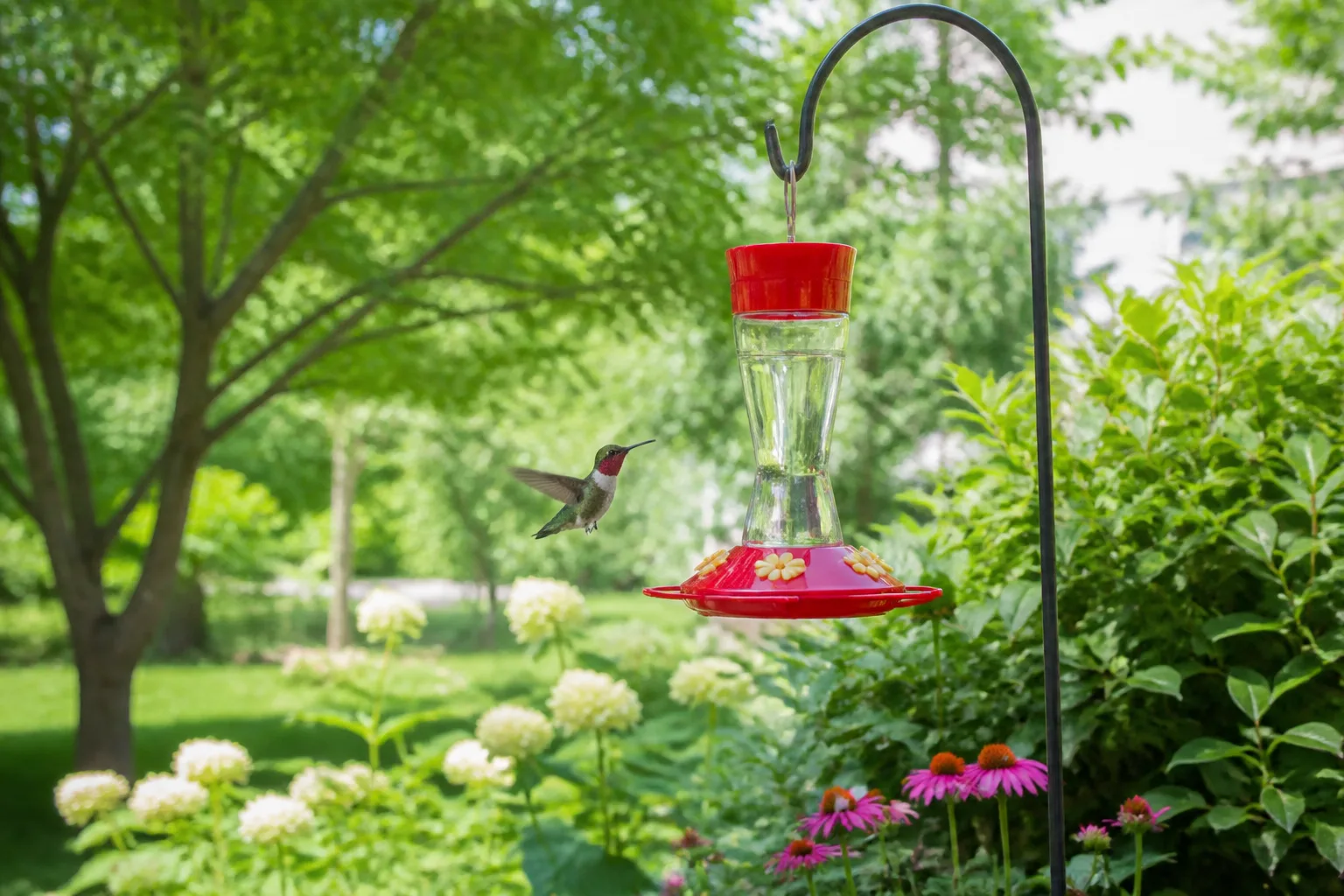
Ants on a hummingbird feeder are not a minor nuisance. A few scouts become a steady column within days, sugar water pools on the hanger, dead ants clog the ports, and the hummingbirds you hung the feeder for stop coming. The fix is not one random trick from a list—it is blocking the climb path, removing spilled sugar, and breaking scent trails before the colony commits to your porch.
Most yards solve this with an ant moat plus better filling habits. Others need fishing line, a feeder move, or a layered plan when pavement ants bridge a shallow cup of water. This guide walks through what works, what fails, and what you should never smear near a hummingbird’s bill.
Why Ants Invade Hummingbird Feeders
Hummingbird feeders hold the same thing ants want: concentrated sugar. Homemade nectar at the standard one part white sugar to four parts water ratio mimics flower sweetness closely enough that ants treat a drip on the deck like a jackpot (Penn State Extension). Unlike bees and wasps, which can hover and drink from open ports, most feeder ants arrive on foot. They follow vertical surfaces—shepherd’s hooks, deck posts, tree bark, and feeder cords—until they reach the reservoir or a sticky spill.
Scent Trails and Colony Recruitment
Ants do not wander randomly. Foragers lay down pheromone trails when they find sugar, and nestmates reinforce the route on every return trip. That is why wiping one ant off the feeder rarely helps: the chemical highway remains until you remove the food source or block the path. Moving the feeder even a few feet can interrupt a trail, but only if you also clean residue off the old hook and fix any leaks that kept the signal strong.
Different ant species behave differently. Small pavement ants and odorous house ants are common feeder pests in suburbs. Carpenter ants are larger and may ignore a shallow moat by bridging it with linked bodies—a behavior that surprises people the first time they see it. Knowing your ant is less important than knowing they all respond to sugar, scent, and accessible climbing surfaces.
When Ants Become a Real Feeder Problem
Ants rarely attack hummingbirds directly. Hummingbirds eat small insects, but they do not rely on ants at feeders and will not “clean up” an infestation for you. The damage is indirect: ports jammed with dead ants, fermented nectar contaminated by insect bodies, and birds that refuse to hover through a crawling mass. If you see ants inside the feeding ports or a ring of bodies around the base, treat it as urgent—empty the feeder, scrub it, and reset your barriers before refilling.
For healthy nectar basics and why honey is never safe in feeders, see our hummingbird nectar recipe guide. If bees and wasps are also competing for ports, the companion article on bees in hummingbird feeders covers a different set of fixes that pair well with ant barriers.
Start With the Fastest Fixes
If you want a short priority list before reading every section, use this order:
- Fill or install an ant moat above the feeder and check water every few days in heat.
- Hang with monofilament fishing line instead of a wide fabric strap ants can grip.
- Clean and dry the feeder exterior every refill; tighten caps and fix drips.
- Move the feeder if the pole sits on an active ant nest or foraging highway.
- Add mint or a slippery barrier on the hanger only away from ports and perches.
One method alone may work in a light year. In a hot summer with a colony already mapped to your deck, combine moat plus line plus leak repair. The sections below explain how to execute each step without putting birds at risk.
Install or Fill an Ant Moat
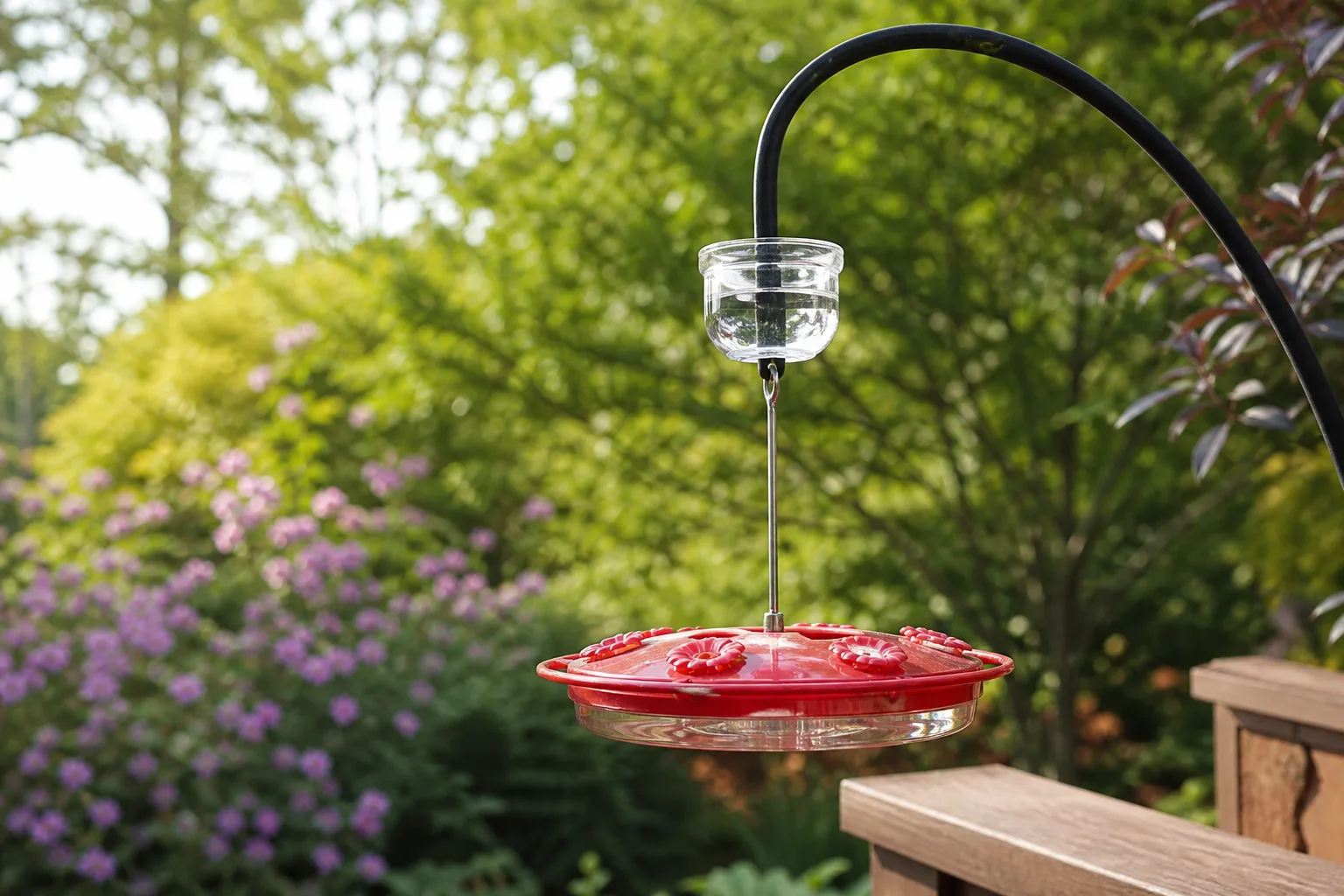
An ant moat is a small water-filled cup hung between the overhead hook and the feeder. Ants cannot fly over it; they must walk down the hanger, hit water, and stop. Saucer-style feeders often include a built-in moat depression in the lid—check yours before buying accessories. Bottle-style feeders usually need a separate moat cup threaded onto the hanging wire.
Fill moats with plain water. A drop of dish soap is sometimes recommended online to break surface tension, but plain water is easier on birds if splashing occurs and is what most birding educators default to. Refill every two to four days in summer; shallow cups evaporate fast on a sunny porch.
Built-In, Add-On, and DIY Moat Options
Built-in moats sit in the feeder top cap. If you own a dish feeder, look for a shallow channel around the hanging loop—many Aspects-style saucers work this way. Add water until the channel is full and verify the feeder hangs level so nectar does not tilt and leak.
Add-on moats are small cups with hooks on both ends: ceiling hook → moat → feeder. They cost little and fit almost any model. Choose a cup deep enough that evaporation does not dry it out in one afternoon.
DIY moats work when you already have wire and a waterproof lid. A soda-bottle cap or small spice-jar lid sealed around a coat-hanger hook with waterproof glue can hold enough water to block ants. The critical detail is a watertight seal where the hook passes through—ants exploit pinhole gaps. Hang the feeder from the bottom hook and test for leaks before adding nectar.
Why Moats Fail—and How to Fix Them
Moats fail for two predictable reasons. First, the water evaporates. Check moats on the same schedule you change nectar in hot weather—every two to three days when temperatures climb above 85°F (29°C). Second, some ant colonies bridge the gap by linking bodies across the water. If you see a living ant chain across the moat, shallow water alone will not hold.
Upgrade steps when bridging happens: switch to a wider, deeper moat so the gap is too far to span; hang the feeder from fishing line below the moat so the final approach is slippery; or relocate the feeder away from the colony’s main trail. Commercial ant guards filled with permethrin repel ants on the hanger, but use only products labeled for bird feeders and keep insecticide off nectar ports—details belong on the label, not smeared around food openings.
Hang Feeders on Slippery Fishing Line
Monofilament fishing line is thin, slick, and difficult for many ant species to climb. Replace wide fabric straps or thick jute hangers with 10–20 lb test line rated for your feeder’s filled weight. Tie the line to the hook above and to the feeder’s hanging loop or moat below. Use a secure knot (Palomar or double overhand) and replace line that frays in UV sun.
Fishing line is not invisible to people or pets. Tie a bright ribbon or flag on the line at eye level so nobody walks into it on a narrow porch. Line works best combined with a moat: ants that defeat the line’s grip often still drown or turn back at water. Line alone may not stop every species, but it is a free upgrade worth doing on every new feeder install.
Keep Feeders Clean and Leak-Free
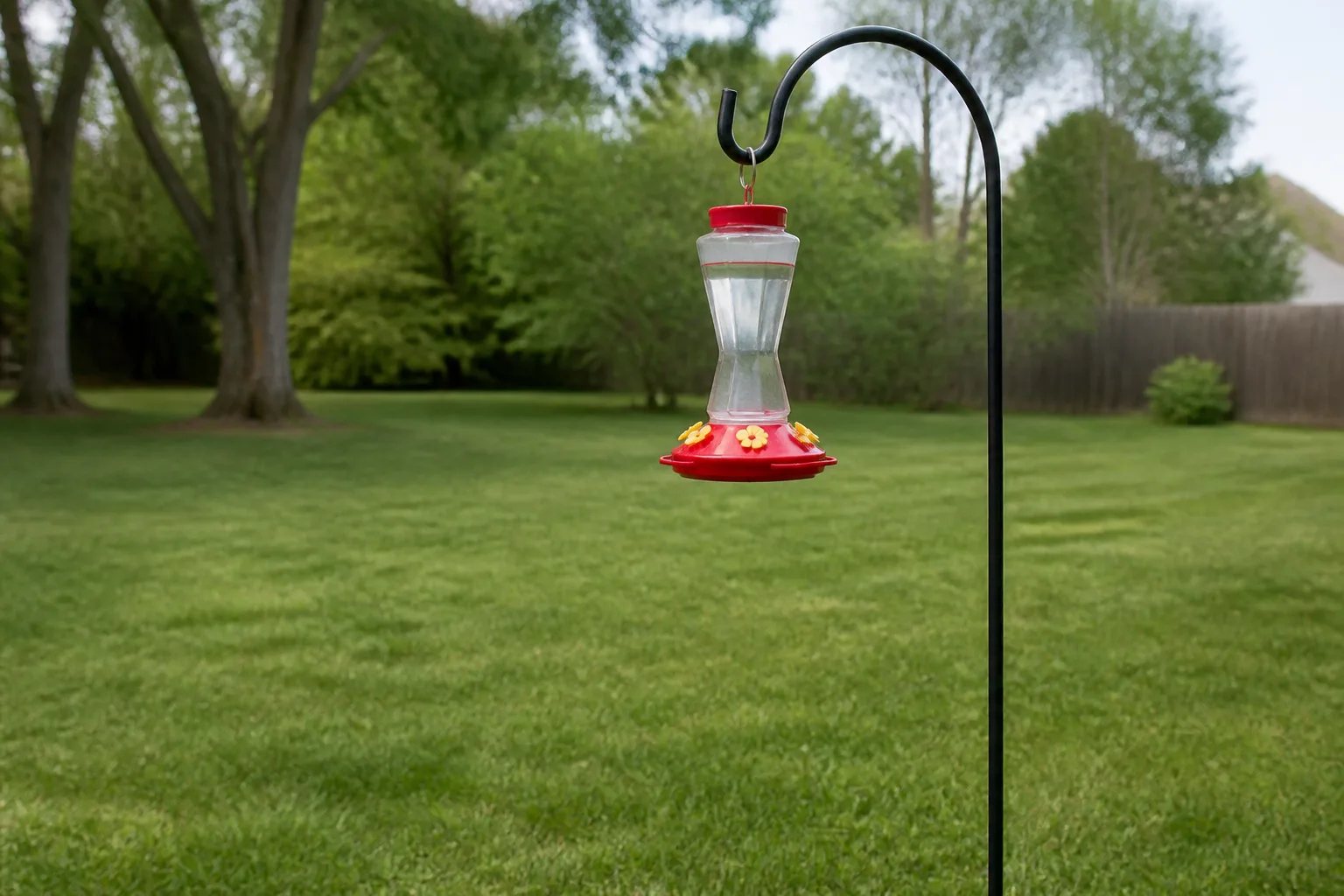
Ant prevention starts with hygiene. Sugar film on the reservoir exterior is an open invitation. Each time you refill, take the feeder down, empty old nectar, and wash all surfaces with warm water and a bottle brush. A dilute vinegar rinse can cut grease; rinse thoroughly so no vinegar scent remains near ports. Let the feeder dry completely before reassembly—trapped moisture plus sugar grows mold fast in heat.
The Cornell Lab of Ornithology and National Audubon Society both stress fresh nectar and clean feeders as core hummingbird care, not optional polish. Ants are one reason why: exterior stickiness recruits foragers even when the reservoir inside is fine.

Spill-Free Filling and Refilling
Fill feeders over the sink or a tray, not over the deck boards. Screw caps on firmly but do not overtighten cracked threads. Invert the feeder slowly when hanging so air locks do not burp nectar out the ports. Wipe the base and perches with a damp cloth before you walk away—thirty seconds of wiping prevents days of ant traffic.
Use only plain white granulated sugar at a 1:4 ratio. Stronger mixes attract more insects and can harm birds; weaker mixes are less appealing to hummingbirds without solving ants (Penn State Extension). Never use honey—fermented honey carries a fungal risk to hummingbirds.
Repair Cracks and Heat-Expansion Drips
Leaks are ant magnets. Inspect plastic reservoirs for hairline cracks after storms or falls. Glass feeders in full sun can expand and push nectar out ports on hot afternoons. Move heat-prone feeders to morning sun, afternoon shade, or dappled light under a tree canopy. Tighten replacement gaskets and O-rings on bottle feeders yearly; dried-out seals weep slowly enough that you may not notice until ants arrive.
If a cheap feeder chronically drips, replace it. A saucer-style feeder with a sealed reservoir often leaks less than inverted bottle designs because nectar sits below the ports instead of pressing against them by gravity.
Relocate Feeders When Scouts Find You
Sometimes the feeder is fine and the location is wrong. A shepherd’s hook driven into soil above a pavement-ant nest will never stay clean for long. Hang the feeder on a different side of the house, farther from shrubs that touch the hook, or on a bracket with no plant bridge to the ground.
Relocation works best as a reset, not a permanent shuffle. Move the feeder, scrub the old site, fix leaks, install a moat, and give the new spot two weeks. If ants return, you are dealing with a wide foraging territory—layer fishing line and cleaning rather than moving every weekend. Pairing relocation with nectar-rich flowers elsewhere in the yard can spread bird activity so one feeder is not the only sugar source on the block.
Use Mint as a Scent Barrier (Carefully)
Peppermint and spearmint produce strong volatile oils that can discourage ants on short walks. Rub fresh leaves on a metal pole below the moat, tuck crushed leaves around a hook base, or grow mint in a container near the hanger—not in open ground, where mint spreads aggressively. Reapply after rain; scent barriers are temporary, not structural.
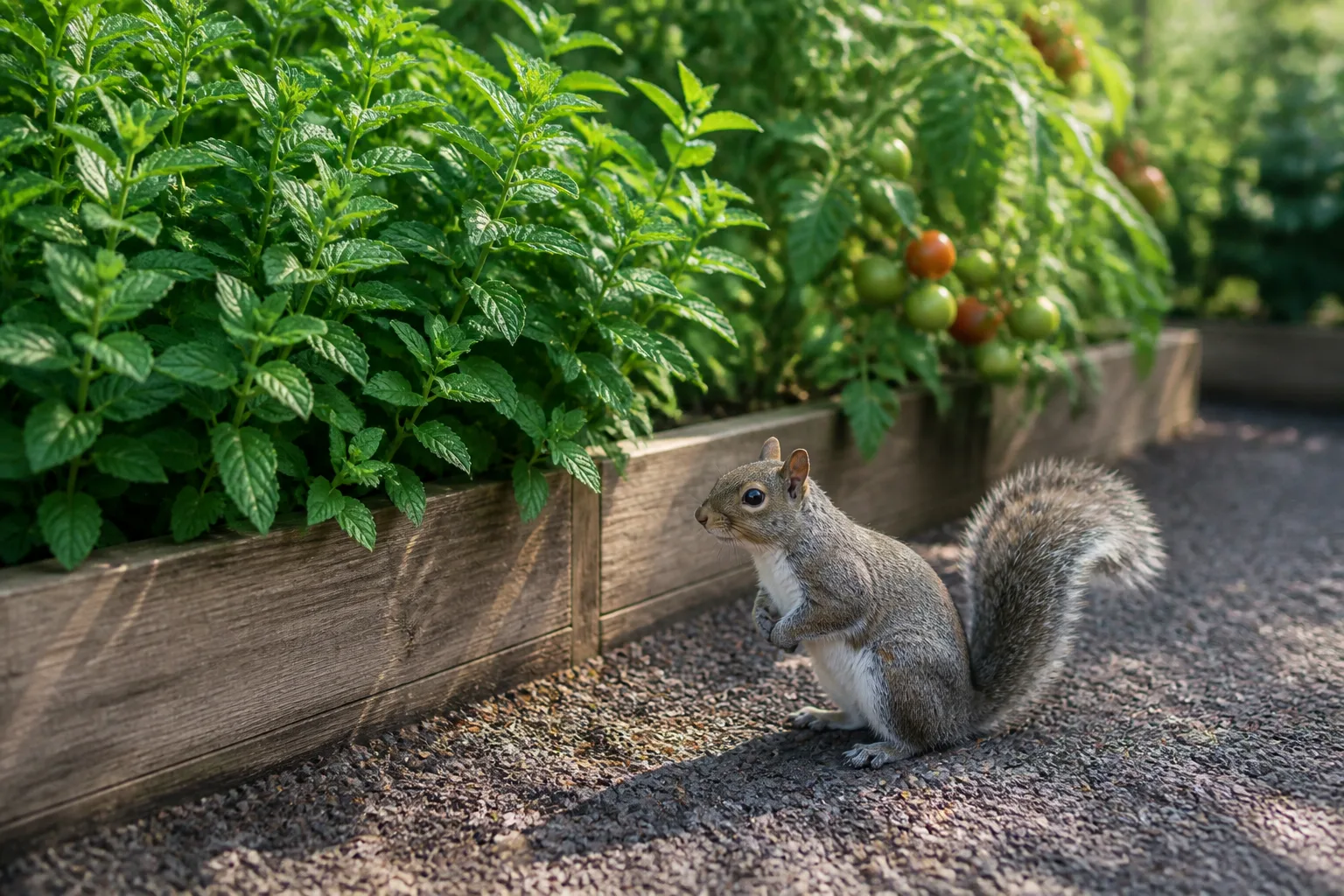
Peppermint essential oil sprays show up often online. If you use them, dilute heavily, spray only on poles and hangers away from ports and perches, and never soak surfaces hummingbirds touch. Oils that coat feathers can interfere with insulation and flight. A potted mint on the deck is lower risk than concentrated oil on the feeder itself.
Mint complements moats; it does not replace them. Think of mint as extra friction on the climb, not a guarantee.
Create a Water Barrier When Moats Are Not Enough
Ants dislike crossing open water, which is why moats work—and why some gardeners hang feeders above a birdbath or small fountain basin. The feeder sits on a line centered over water too wide for ants to bridge. Hummingbirds still reach the feeder; ants stop at the rim. This is a heavier setup than a cup moat, but it solves persistent bridge-building colonies when you already maintain a bath.
Keep bath water fresh for birds and mosquitoes alike. Change water every few days, scrub algae, and position the feeder high enough that splash does not dilute nectar in the ports below. The National Park Service notes that hummingbirds are drawn to yards combining nectar sources and water for drinking and bathing (NPS hummingbirds).
When Slippery Barriers Help—and When to Skip Them
Petroleum jelly, cooking oil, or commercial “tangle” products on poles and hooks can stop ants that bypass moats. Apply a thin smear only on metal or painted surfaces below the moat and nowhere near feeding ports, perches, or flowers hummingbirds brush while feeding. Reapply after rain and in extreme heat, when jelly melts and drips.
This method is messy and easy to overapply. Skip grease entirely if you cannot keep it off bird contact points. Never coat the feeder body. Our bees in hummingbird feeder guide notes the same caution: slippery products on wires away from birds can help insects; on the feeder itself they create health risks.
What Not to Do on Hummingbird Feeders
Some popular “hacks” cause more harm than ants:
- Do not spray insecticide on feeders, nectar, or flowers hummingbirds use. Even “bee-safe” sprays are not designed for sugar ports birds insert their bills into.
- Do not use honey, brown sugar, or red dye in nectar. Honey can promote fatal fungal infection in hummingbirds (Penn State Extension).
- Do not fill moats with sticky substances meant to trap ants—birds can contact them while hovering.
- Do not ignore dead ants inside ports. Empty, scrub, and refill; clogged ports starve birds silently.
- Do not assume hummingbirds will eat the ants. They will abandon a feeder long before they pick ants off one by one.
If ants persist after physical barriers and cleaning, a labeled ant guard on the hanger is a better escalation than DIY pesticides on the feeder.
Combine Methods for Stubborn Ant Colonies
Treat ant control like layered garden defense. A reliable stack for a tough summer:
Layer 1 — Hygiene: leak-free feeder, 1:4 nectar, exterior wiped every refill, nectar changed every two to three days in heat per Cornell/Audubon guidance.
Layer 2 — Physical block: filled moat plus fishing line below it.
Layer 3 — Location: move off known nest lines; trim branches that touch the hook.
Layer 4 — Scent/slip: mint on the pole or a thin petroleum jelly band on the hook shaft only, reapply after storms.
Layer 5 — Hardware: deeper moat, ant guard per label, or feeder centered over a birdbath.
Check the stack weekly. Evaporation, new ant trails after landscaping, and heat expansion leaks undo good work quietly. A five-minute inspection when you refill nectar prevents full infestations.
Conclusion
Keeping ants out of hummingbird feeders comes down to three habits: block the climb with moats and slick line, remove spilled sugar through careful filling and frequent cleaning, and interrupt trails by moving feeders when scouts keep finding you. Start with water above the feeder and clean ports—not mint oil on the nectar holes—and add layers only when bridge-building ants prove moats alone are not enough.
Your reward is not a pest-free porch for its own sake. It is a feeder hummingbirds return to all season: clear ports, fresh sugar water, and no crawling barrier between a ruby-throated hover and the meal you meant to provide. Get the moat filled, the line hung, and the drip fixed today; the birds notice the difference within a day.



