How to Get Rid of Sugar Ants: 5 Easy Methods
Sugar ants keep returning? Identify odorous house ants, erase scent trails, choose slow bait safely, and fix the outdoor food or moisture source.
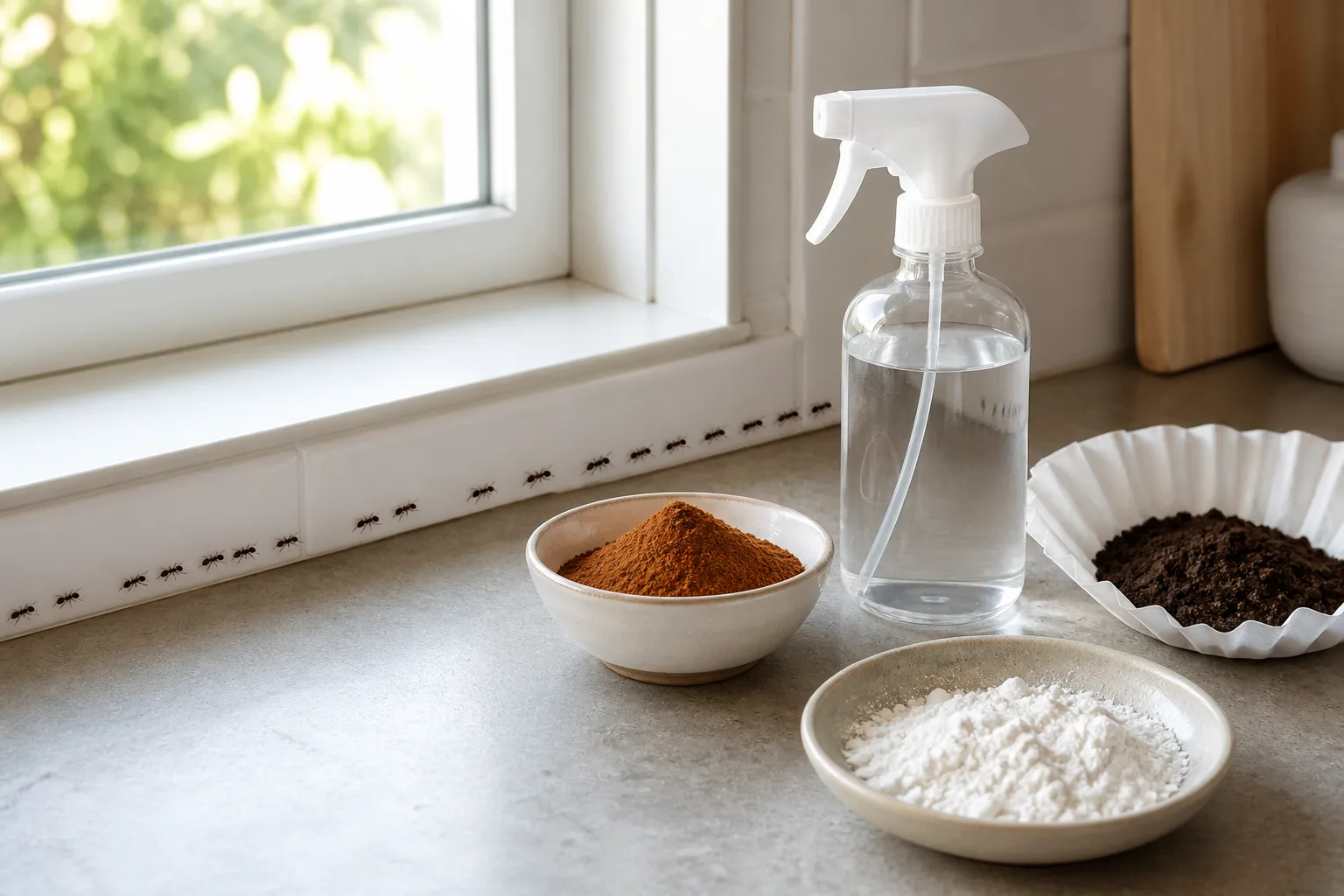
“Sugar ant” is a useful household description, not a precise species name. In North America, tiny brown or black ants following a sweet trail are often odorous house ants (Tapinoma sessile), but pavement ants, Argentine ants, thief ants, and even young carpenter ants can look similar at a glance.
The most reliable fix is not a stronger spray. It is a short integrated plan: remove the food or water drawing workers inside, erase the scent trail, seal the route, use a slow-acting bait when activity is steady, and inspect the outdoor source. That sequence treats the reason ants are present instead of only killing the workers you can see.
The Fastest Plan for Sugar Ants
If you need a practical order of operations today, do this:
- Follow the trail to its food source or entry point, then remove crumbs, sweet spills, pet food, overripe fruit, and standing water.
- Wipe the route with soapy water and vacuum remaining ants; this removes scent cues that guide the next wave of workers.
- Seal the crack or gap where the trail enters, but do not seal an active bait station inside the same route while ants are still feeding.
- Place a labeled sweet ant bait near an active trail or entry point, out of reach of children and pets, and leave it undisturbed long enough for workers to carry it home.
- Check outside for damp mulch, stones, boards, plants touching the wall, aphids, honeydew, or a leak that keeps supplying the colony.
The first two steps can reduce visible ants within hours. Colony control is slower. Depending on the species, bait, colony size, and access to competing food, you may need five days to two weeks before activity clearly drops. Penn State Extension notes that slow-acting bait gives workers time to carry the material back to queens and developing ants, and that control can take two weeks or longer (Penn State Extension’s odorous house ant guidance).
Are Sugar Ants Really Odorous House Ants?
The term “sugar ant” is especially confusing because it can refer to any small ant attracted to sweet food. In the United States, the likely match is often the odorous house ant, but location changes the shortlist. Do not choose a pesticide solely because an ant walked toward sugar.
Clues That Point to Odorous House Ants
Odorous house ants are usually small, about 1/16 to 1/8 inch (2.4–3.3 millimeters) long, with workers that look roughly the same size. They range from brown to black, move in fast, organized lines, and give off a distinctive rotten-coconut smell when crushed. They have one hidden node between the thorax and abdomen, but that feature is difficult to see without magnification.
University extension descriptions from Penn State and Utah State University agree on the most useful homeowner clues: small, uniform workers; sweet-food preference; moist, shaded nesting sites; and the odor. The smell is a clue, not a reason to crush a large number of ants or handle them unnecessarily.
Odorous house ants are also budding ants. Their colonies can contain multiple queens and related subcolonies. A queen and workers may move brood to a new nest, and a poorly timed or incomplete repellent treatment can split the problem into more connected nests rather than solving it. That biology is why “I sprayed the line and saw more ants tomorrow” is a common experience.
When Not to Assume
Tiny ants that invade a pantry are not automatically harmless odorous house ants. If the workers are larger and vary greatly in size, if you see sawdust-like material near damp or damaged wood, or if winged ants appear indoors, ask a local extension office or pest professional to identify them. Carpenter ants, termites, fire ants, and several pantry-invading species require different decisions.
Pavement ants are another frequent look-alike. They can be similar in color and size but generally have two visible nodes, while the odorous house ant’s node is hidden. UC IPM’s household ant information shows why identification matters: bait preference, nesting behavior, and the safest management approach vary by species.
Why Sugar Ants Keep Returning
The ants on your counter are mostly foragers, not the colony. They are searching for sugar, grease, protein, water, shelter, or honeydew produced by sap-feeding insects outdoors. Once a worker finds a reliable resource, it lays a chemical trail that helps nestmates travel the same route.
Killing those workers can make the counter look better without changing the colony. New workers may follow the same path, enter through a different crack, or arrive from a connected subcolony. Utah State University describes odorous house ants as flexible nesters that prefer moist, shaded sites near food and can form large networks of related nests (USU Extension).
Weather can make the pattern look sudden. Rain, irrigation, dry heat, or a change in indoor temperature can disturb outdoor nests or make a house more attractive. A recurring winter trail is more suggestive of an indoor nest or a protected wall void than a brief outdoor visit, especially if ants appear around warm plumbing, baseboards, or a water heater.
Method 1: Trace the Trail and Remove the Attractant
Do this before choosing a treatment. Watch the ants for 10–20 minutes without spraying. Follow the line in both directions: one end may lead to a spill or pet bowl, while the other disappears under a baseboard, through a window frame, around a pipe, or toward a plant outside.
Kitchen and Pantry Checks
Inspect the places that are easy to overlook: the underside of a syrup bottle, the seam under a toaster, a sticky recycling bin, the floor beneath a pet-food mat, and the gap beside the refrigerator. Sugar ants can be satisfied by a thin film of soda or juice that looks clean from standing height.
Move sugar, honey, jam, ripe fruit, and opened baked goods into hard, sealed containers. Wipe shelves and counters with a suitable household cleaner, then dry them. Wash the inside and outside of garbage and recycling bins, and remove food waste frequently while the infestation is active.
Do not leave a bait beside an open food source and then conclude that the bait failed. Ants choose the easiest, richest food. Cleaning is not a substitute for colony control, but it makes a bait test meaningful and reduces the number of new trails.
Moisture and Houseplant Checks
Bathrooms, kitchens, laundry areas, and rooms with condensation deserve equal attention. Check under sinks, around drainpipes, behind toilets, near pet-water bowls, and below leaking appliances. Fix a drip or wipe pooled water dry; a sugar source may bring ants in, but a reliable water source can keep them there.
If ants are concentrated around a houseplant, inspect the soil, saucer, stems, and leaf undersides. Ants may be nesting in a dry potting mix, using the pot as a bridge, or collecting honeydew from aphids, scale, mealybugs, or whiteflies. Isolate the plant from the rest of the collection and use the diagnostic steps in how to check ants on houseplants before applying any pesticide to foliage or soil.
Method 2: Erase Trails and Clean Safely
After removing the attractant, wipe the trail with soapy water and a disposable cloth or sponge. National Pesticide Information Center guidance recommends soapy-water trail cleanup because it removes the pheromone cues that help later ants follow the route (NPIC’s ant control tips). Vacuuming is useful for visible clusters; empty a bagless canister outdoors or dispose of the vacuum bag promptly.
Diluted white vinegar can also help with trail cleanup on a surface that tolerates it. BBC Gardeners’ World Magazine describes a one-part-vinegar-to-three-parts-water wipe as a practical way to disrupt a trail (BBC Gardeners’ World’s ant guide). Test any solution on a hidden surface first, and never mix vinegar with bleach or other cleaners.
This is a route reset, not a colony treatment. If the food remains, a different trail will appear. If the colony remains and the entry point is open, new workers can rebuild the line quickly. Clean, observe, and then decide whether exclusion or bait is the next step.
Method 3: Seal Entry Points and Ant Bridges
Once you know where ants enter, seal the route with the appropriate repair. Use caulk around fixed cracks in baseboards, window frames, plumbing penetrations, and foundation joints. Repair damaged screens, replace worn door sweeps, and close gaps around sliding doors or utility lines.
Outside, inspect anything that lets ants bypass the wall: branches resting on siding, vines touching windows, stacked firewood, landscape fabric, mulch piled against the foundation, and irrigation that wets the foundation. Trim plant growth away from the building and correct drainage or leaking gutters. UC IPM recommends combining caulking, food cleanup, leak repair, and vegetation management because no single exclusion fix lasts if the surrounding conditions continue to support a trail.
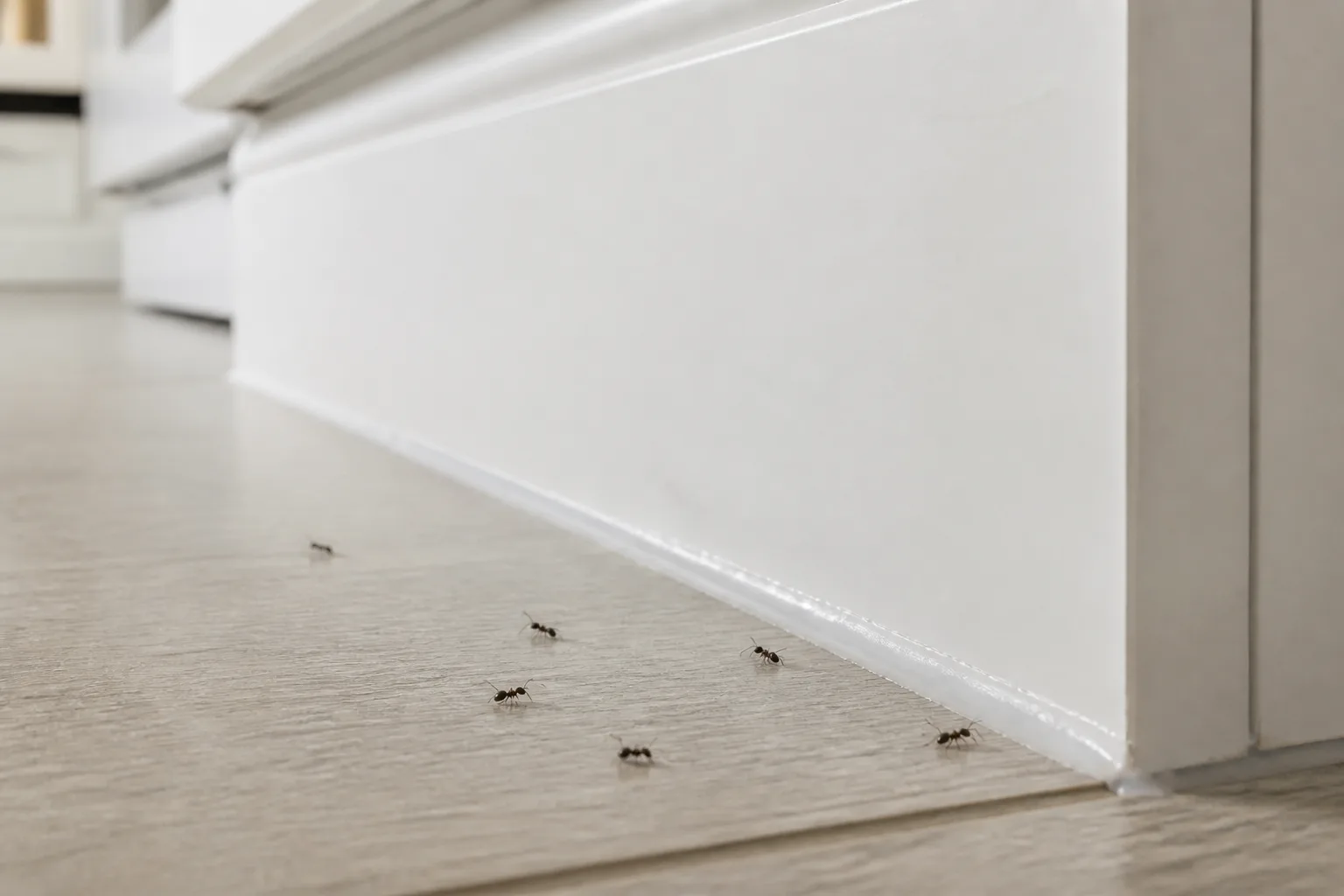
Do not seal a crack blindly if ants are pouring out of it and you plan to bait that route. Blocking the opening can push workers into a wall void or another room. Let the baiting phase finish according to the product label, then seal the empty route and monitor it for renewed activity.
Method 4: Use a Sweet Ant Bait Patiently
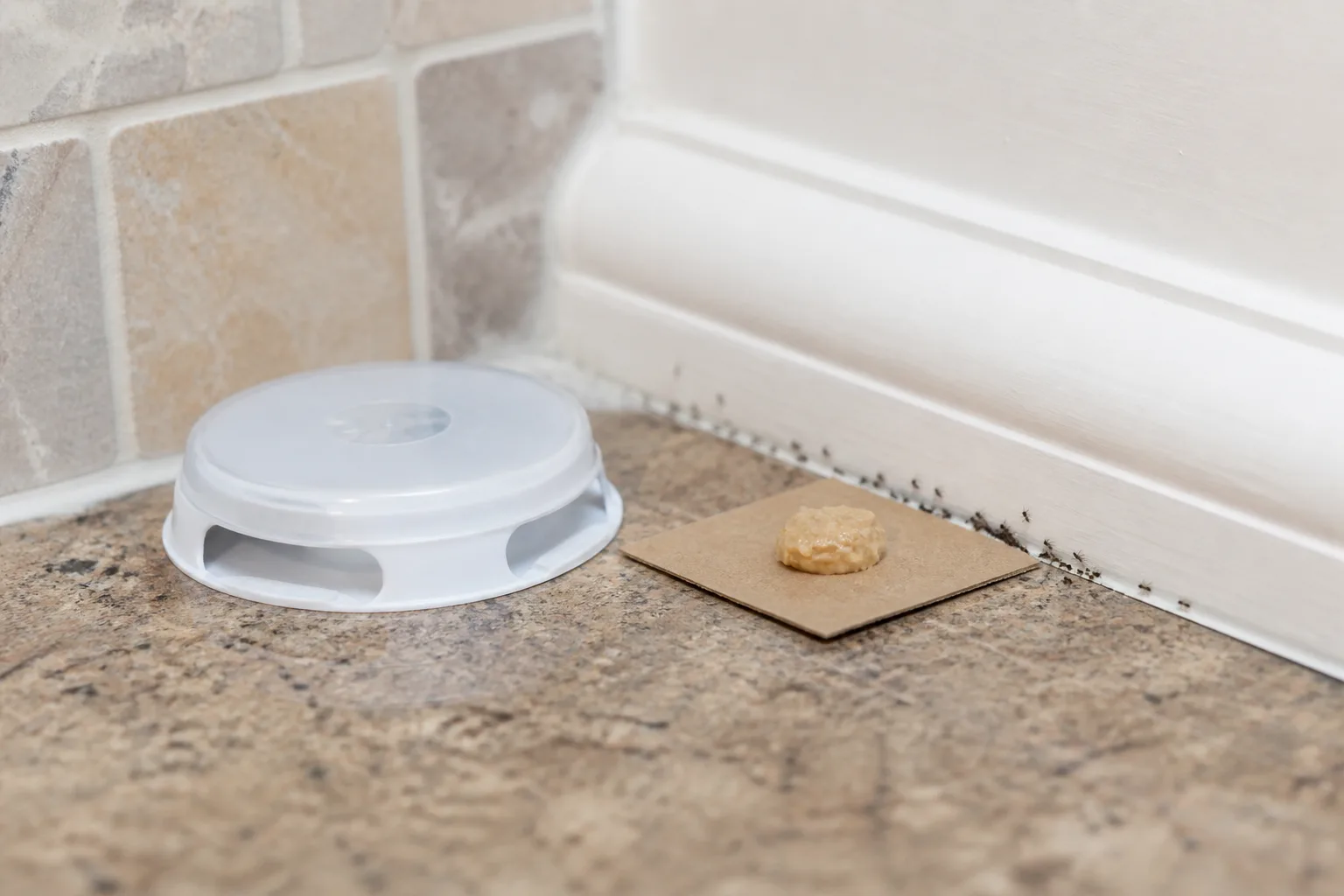
For a steady trail, a slow-acting, labeled bait is usually more useful than a contact spray. The bait combines an attractant with an insecticide. Workers feed, carry it to nestmates, and share it with larvae and queens. The colony is the target; the ants on the counter are only the delivery system.
Choose a product whose current label covers ants and the location where you will use it. Odorous house ants often prefer sweet liquid bait, but food preference varies by species, colony needs, and season. UC IPM explains that bait effectiveness depends on the ant, attractant, active ingredient, and competing food. If ants ignore one labeled bait, reposition the station near the trail or try another labeled formulation rather than adding more random ingredients.
How to Place Bait
Use a ready-to-use or refillable bait station exactly as directed. Put it beside an active trail or near the entry point, not in the middle of food-preparation space. Keep it out of reach of children, dogs, cats, and other animals; a closed cabinet is not automatically safe if a pet can open it or a child can reach the shelf.
Do not spray, mop, vacuum, or apply vinegar directly over the bait route while ants are feeding. You want workers to find the station and return to the nest. Replace or replenish it only according to the label and keep competing food sources cleaned up. A brief increase in ant activity around the station can mean the bait is being found, not that the treatment is failing.
Expect a slower result. Penn State Extension says control may take two weeks or longer for odorous house ants, while UC IPM says many bait programs take about five to 10 days before fewer ants are visible. Treat those as planning windows, not guarantees. A large colony, multiple nests, rain, poor placement, and reinvasion from a neighboring property can all extend the process.
Why Sprays Can Backfire
A fast contact spray kills the workers it reaches, but it usually does not reach queens and brood inside a nest. Repellent sprays can also interrupt a trail between an indoor foraging route and an outdoor nest. For budding ants, that disruption may encourage relocation or create additional trails.
This does not mean every pesticide is wrong. A licensed professional may use a non-repellent product or a targeted nest treatment as part of an IPM plan. For a homeowner, the safer default is to avoid spraying a visible trail before you have identified the species, read the label, and decided whether bait is the better tool. NPIC’s ant guidance recommends identification, exclusion, sanitation, and careful label reading before pesticide use.
Method 5: Treat the Outdoor Source
Indoor ants often begin outdoors. Look along the foundation, patio edge, window well, hose bib, utility line, and the underside of rocks, boards, pots, and mulch. Odorous house ants favor moist, shaded shelter, and outdoor nests can be shallow and easy to overlook.
If the trail leads outside, use a labeled exterior bait near the active route or nest only where the label permits. Keep granules or liquid away from storm drains, ponds, edible harvests, and areas where children or pets play. Do not pour boiling water into a flower bed or near a foundation: it can injure roots and soil organisms while missing a queen or connected nest.
Check Aphids and Honeydew
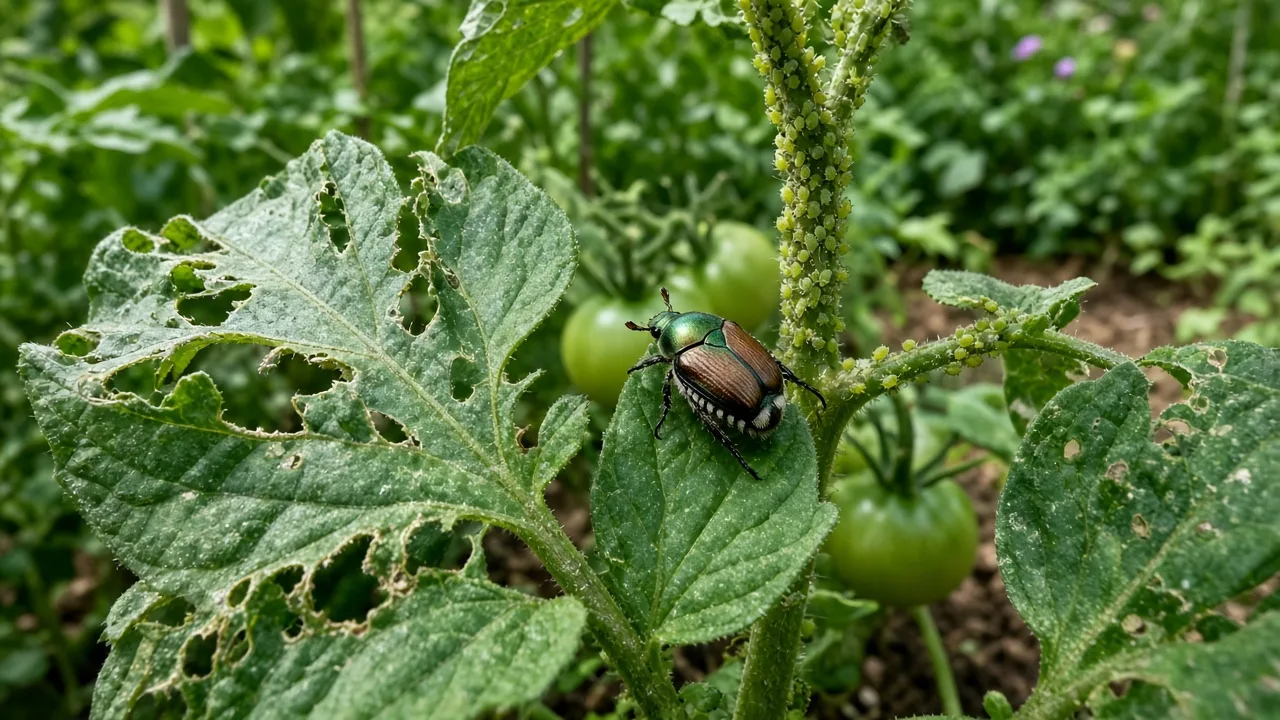
Ants on a plant are often responding to another insect. Aphids, soft scale, mealybugs, and whiteflies excrete a sweet liquid called honeydew. Ants may protect or tend those insects, so killing ants without addressing the sap-feeders can leave the food source intact.
Inspect new growth, leaf undersides, stems, and the sticky surfaces below a plant. Wash aphids from sturdy foliage with a directed stream of water, prune heavily infested tips when appropriate, and use a treatment specifically labeled for the pest and plant. Do not blanket a flowering plant with a broad-spectrum insecticide just because ants are present; that can harm pollinators and natural enemies while leaving the colony problem unresolved. UC IPM’s landscape ant guidance recommends managing honeydew-producing insects and sealing building gaps as part of the same decision.

Natural Remedies: What Helps and What Does Not
Natural is not a synonym for harmless or permanent. The useful question is what job a remedy can do.
- Soapy water: Good for removing visible ants and scent trails from washable surfaces. It does not reach a nest.
- Vinegar: Useful as a short-term trail disruptor on compatible surfaces. It does not reliably kill a colony, and it can damage some finishes or plants.
- Peppermint, lavender, citrus, cinnamon, coffee, and bay leaves: Strong smells may make a spot less attractive for a while, but they are temporary deterrents. BBC Gardeners’ World and Gardening Know How’s ant coverage treat scented materials as practical barriers, not dependable replacements for exclusion or bait.
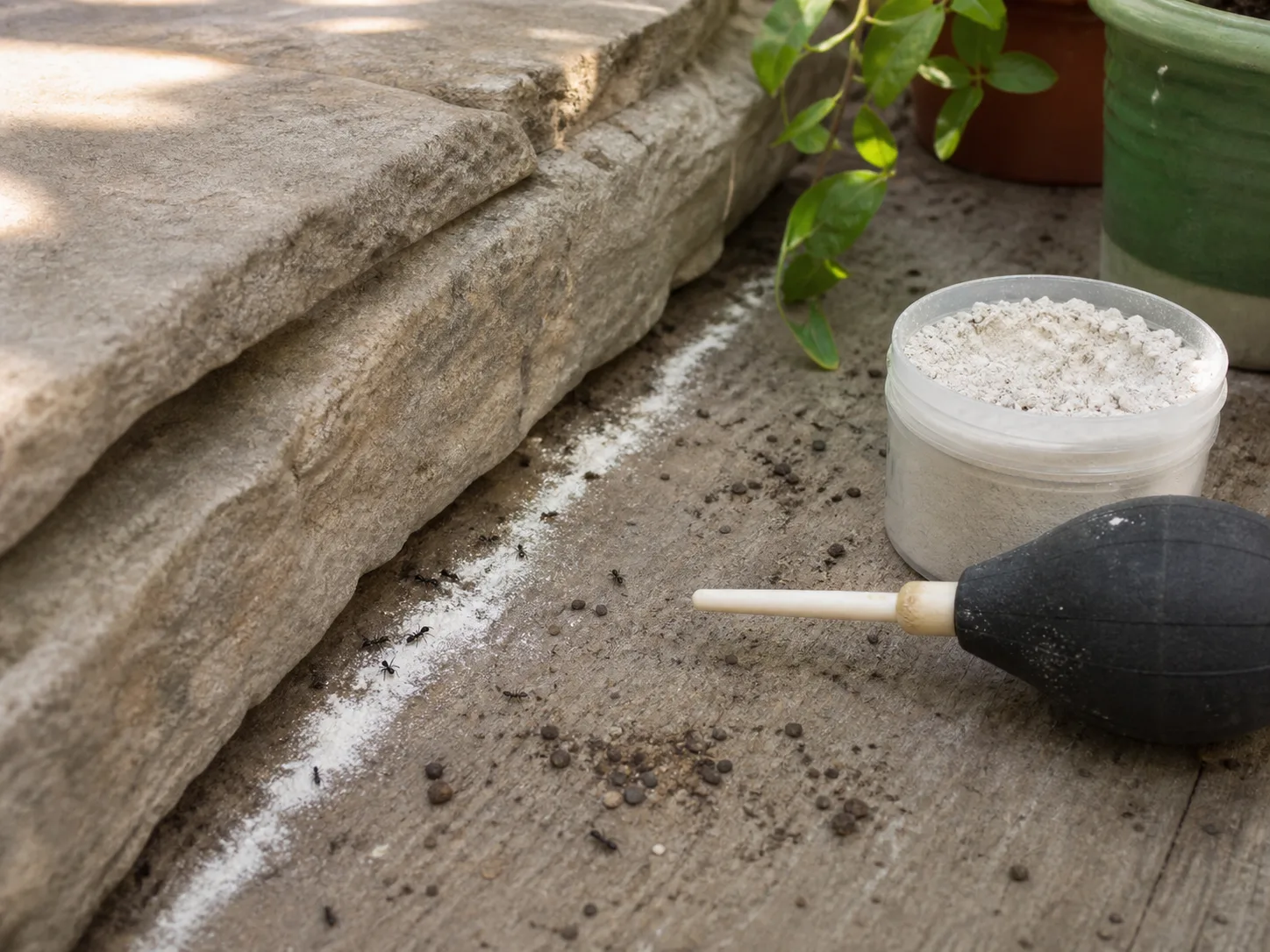
- Diatomaceous earth: A dry layer can kill individual ants that cross it by damaging and drying their outer surface. It fails when wet, when ants walk around it, or when the product is not labeled for the site and pest. Dust can irritate eyes and lungs; NPIC’s pesticide guidance supports reading the label and using protective directions rather than scattering powder loosely.
- Homemade borax or boric-acid mixtures: Concentration, placement, exposure, and legality can all be wrong. A commercial bait station with a label is easier to secure, use, and replace. Never leave a sweet pesticide mixture on an open floor where a child, pet, or wildlife can reach it.
If a remedy only repels ants, place it at a crack after the colony problem is under control—not across every possible route while you are trying to make a bait attractive. Otherwise you can create a maze of redirected trails.
When to Call a Pest Professional
Call for help when ants continue appearing after a correctly placed bait and sanitation program, when trails emerge from walls or ceilings, or when activity spreads through several rooms. You also need professional or extension help when identification is uncertain, the ants sting, the workers are unusually large, or you see signs that point to carpenter ants or termites.
Professional help is especially sensible in apartments and attached housing, where a connected nest may be beyond your unit; in homes with persistent leaks or inaccessible wall voids; and when children, pets, respiratory illness, or widespread pesticide exposure make DIY dusts and sprays a poor fit. Ask what species was identified, where the nest or entry route is, whether the plan uses bait or a targeted treatment, and how indoor and outdoor applications will be kept away from people, pets, water, and edible plants.
Be wary of a plan that starts with an automatic monthly perimeter spray without inspecting food, moisture, entry points, and trail behavior. A treatment can be legal and still be poorly matched to a budding ant colony or a misidentified species.
A 7-Day Follow-Up Plan
Today: Photograph or collect a few undamaged workers only if you can do so safely, trace the trail, clean the attractant, wipe the route, and fix the obvious leak. Keep pets and children away from any product you plan to use.
Day 1–2: Place labeled bait near the active route if the traffic is steady. Do not spray the trail or move the station every few hours. Inspect outside along the same wall and look for plant branches, mulch, stones, damp soil, aphids, and honeydew.
Day 3–5: Check whether ants are feeding on the bait and whether the trail is shrinking, moving, or splitting. Replace an empty station only as directed. If ants ignore the bait, remove competing food, reposition it close to—not on—the trail, or choose a different labeled bait for the identified ant.
Day 6–7: If activity is clearly falling, keep monitoring and seal the empty entry route once baiting is complete. If activity is unchanged, appears in new rooms, or emerges from wall voids, stop escalating DIY sprays and arrange identification or a professional inspection.
The goal is not to win a single afternoon battle against visible workers. It is to remove the reason they chose your home, interrupt the route, and give the colony-control step enough time to work.
Conclusion
The best way to get rid of sugar ants is to treat the whole trail system, not just the ants on the counter. Start with food and moisture, erase the scent route, seal entry points, use a slow sweet bait patiently, and inspect outdoor nests and honeydew-producing insects.
Vinegar, soap, essential oils, and diatomaceous earth can each have a narrow use, but none should be presented as a guaranteed colony cure. If the ants keep returning after a careful week, enter from walls, appear across multiple rooms, or may be a different species, identification and professional IPM advice will save time and reduce unnecessary pesticide exposure.