23 Best Plants to Attract Hummingbirds
Red helps, but tubular blooms matter more. See 23 hummingbird plants by season, zone, and yard type, with invasive warnings and feeder backup tips.
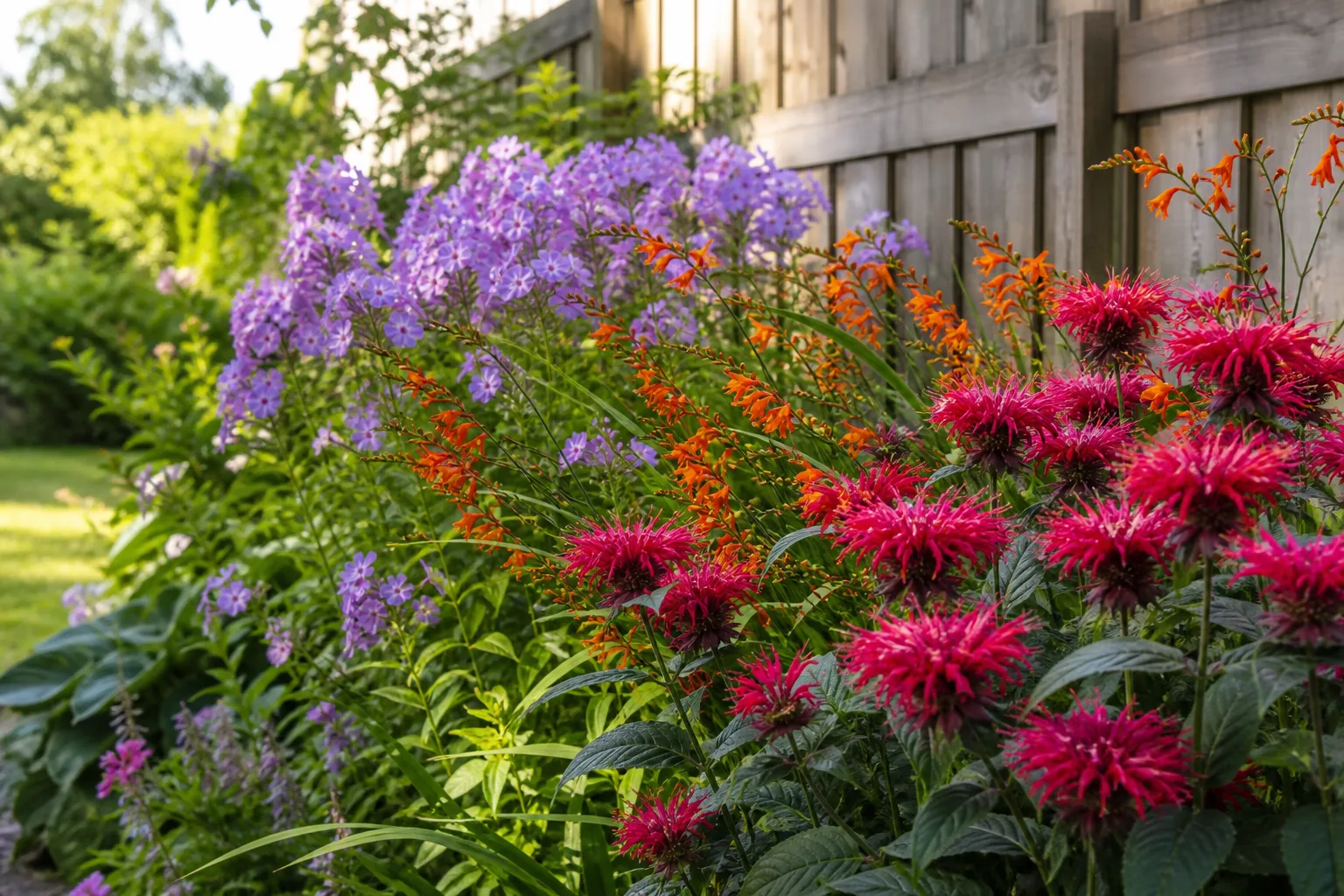
A hummingbird garden is not a red-flower shopping list. Ruby-throated hummingbirds east of the Mississippi—and western species such as Anna’s and rufous hummingbirds—follow blooming corridors north in spring and need tubular, nectar-rich flowers from early spring through early fall. The best plants to attract hummingbirds are the ones that keep nectar available across that entire window, sit where birds can see them from above, and do not turn your yard into a maintenance fight with aggressive spreaders.
The 23 plants below cover that full season. Use them with a simple bloom calendar and layered planting plan so something is always open when hummingbirds are in your area.
What hummingbirds actually look for in flowers
Hummingbirds lack a strong sense of smell. They find food by sight, which is why red, orange, and pink blooms get noticed first—but they readily visit purple, yellow, and white flowers when nectar is easy to reach (Penn State Extension). Shape matters more than color alone: tubular petals and long stamens evolved alongside hummingbird bills and tongues so pollen sticks to the bird’s head as it feeds.
That co-evolution shows up in native northeastern plants hummingbirds help pollinate, including columbine, trumpet vine, cardinal flower, and wild bergamot (Penn State Extension). Cultivated garden plants with similar flower architecture work for the same reason.
Clusters beat singles. Hummingbirds defend productive patches. Plant in groups of three to seven of the same species rather than one stem here and there. Place groups where you can see them from a window, but leave open flyways between beds so birds are not trapped near cats or windows.
Plan a bloom calendar before you buy plants
Migration timing varies by latitude, but the logic is the same everywhere: match flowers to when hummingbirds are present. In the Northeast, ruby-throats follow early azalea, rhododendron, and columbine bloom northward, arriving from late March through May and staying until September (Penn State Extension). Your job is to extend that buffet on both ends.
Early spring: migration fuel
Red columbine (Aquilegia canadense, zones 3–8) is one of the most useful early perennials. Its nodding red-and-yellow flowers fit returning hummingbirds when little else is open. Give it partial shade and well-drained soil; it self-seeds politely in many gardens. Mature clumps reach 1–3 feet tall and bloom for several weeks in April and May in the mid-Atlantic, earlier in the South.
Catawba rhododendron (Rhododendron catawbiense, zones 4–9) adds shrub-scale bloom in late spring. Evergreen foliage gives cover; lavender-to-rose trusses supply nectar on 6–8-foot plants. It needs acidic, well-drained soil—not a foundation shrub for alkaline clay without amendment. Site on the east or north side of a building where roots stay cool. Important: rhododendron is toxic to dogs, cats, and people if ingested (ASPCA).
Blue lupine can overlap this window in cooler zones—see early perennials below.
Summer: peak nectar demand
This is when most yards fail—everything blooms in June, then goes quiet. Stock summer with bee balm, garden phlox, salvia, penstemon, crocosmia, lantana, and trumpet vines so nectar never gaps for more than a week or two.
Late season: refuel before departure
Rose of Sharon (Hibiscus syriacus, zones 5–8) blooms when many perennials are tired. Lantana, fuchsia (in cool climates), and hummingbird bush (Anisacanthus quadrifidus var. wrightii, zones 7–10) push color into fall in warm regions. Keep at least one late bloomer in the mix so migrants do not bypass your yard.
Layer your yard like a hummingbird buffet
Think in vertical tiers, not a flat annual bed:
Trees and large shrubs provide perches and early bloom (rhododendron, rose of Sharon). Mid-height shrubs and sturdy perennials (bee balm, phlox, lantana) hold the summer show. Low edging (coral bells, impatiens) fills shade gaps. Vines (honeysuckle, trumpet vine, mandevilla, passionflower, cardinal climber) add volume on fences and arbors.
Leave a shallow water feature or mister nearby. Hummingbirds drink from wet leaves after rain and love flying through fine mist (Penn State Extension). Skip pesticides when possible—birds eat small insects and spiders caught on flowers, not nectar alone.
Quick picks by yard situation
Small sunny balcony: Lantana, fuchsia, mandevilla, and cardinal climber in pots; one sugar-water feeder as backup.
Part-shade townhouse garden: Columbine, coral bells, impatiens, and potted fuchsia; avoid demanding full-sun vines.
Mixed perennial border (zones 4–8): Columbine → bee balm + phlox + salvia + penstemon → rose of Sharon backdrop.
Dry, sunny slope: Blue lupine, penstemon, and crocosmia; skip thirsty delphinium unless you irrigate.
Fence or arbor (with boundaries): Native trumpet honeysuckle (Lonicera sempervirens) or passionflower—not unchecked trumpet vine unless you commit to yearly cutting.
Early-blooming perennials hummingbirds seek first
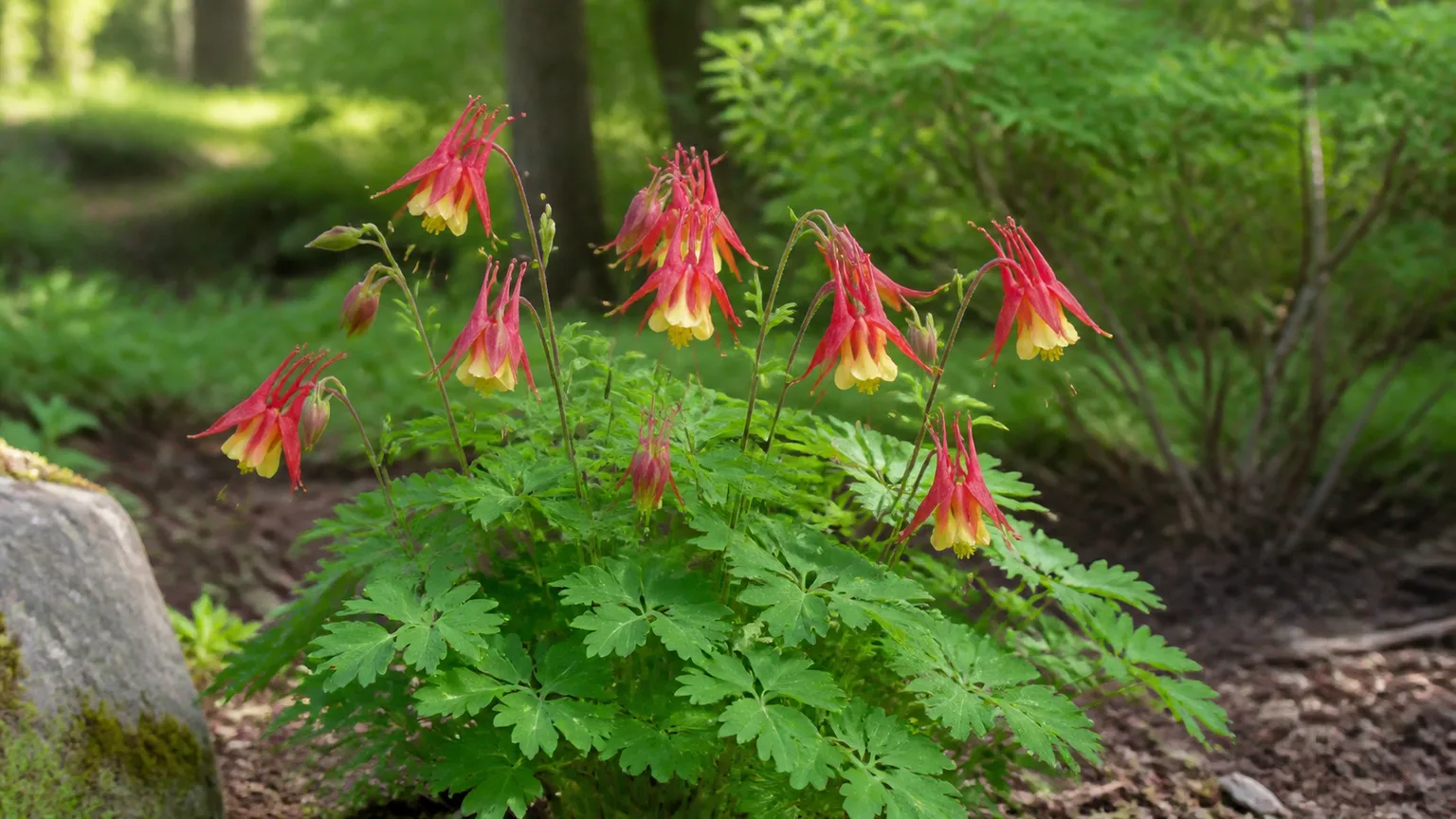
Red columbine deserves a front-row spot in woodland edges and part-shade beds. The spurred petals are a textbook hummingbird flower—red outside, yellow inside, easy to hover at. Mature size is 1–3 feet tall. Deer usually ignore it; hummingbirds do not. Divide overcrowded clumps in fall if self-sowing becomes too enthusiastic.
Blue lupine (Lupinus perennis, zones 3–8) is a native legume with blue spikes in late spring on 2-foot stems. It prefers full sun in the North, afternoon shade in the South, and sandy, well-drained soil. Less flashy than hybrid lupines but excellent for native pollinator strips and dry slopes where thirsty perennials fail.
Coral bells (Heuchera spp., zones 4–9) bloom on wiry stems 12–18 inches above colorful foliage. Individual flowers are small but produced in quantity—and hummingbirds visit them, especially cultivars with red or coral bells. Use at border fronts in part shade; ‘Blondie’ and similar yellow-flowered forms tolerate more sun if soil stays moist. Foliage color is the main show; treat flowers as a hummingbird bonus.
Summer perennial powerhouses
Bee balm (Monarda didyma, zones 3–9) is the classic hummingbird perennial—and for good reason. Scarlet cultivars such as ‘Jacob Cline’ offer strong mildew resistance and bloom from July through September (NC State Plant Toolbox). Plants reach 2–4 feet tall and spread by rhizomes, so give them room or divide every three years. They want moist, slightly acidic soil and good air circulation; full sun in the North, afternoon shade where summers run hot. Deer and rabbits usually pass it by.
Garden phlox (Phlox paniculata, zones 4–8) brings fragrant lavender, pink, or white panicles in mid-summer on 2–4-foot stems. Mildew-resistant ‘David’ (white) and ‘Nora Leigh’ (variegated foliage) are reliable in humid gardens. Plant in sun with steady moisture at the root zone; a thin organic mulch helps. Deadheading the top third of spent panicles often triggers a lighter second flush.
Salvia (Salvia nemorosa and related, zones 4–8) offers violet-blue spikes from late spring through summer if you shear spent wands. Most cultivars stay 18–24 inches tall. Full sun and average water suit them; they tolerate drought better than bee balm once established. The pungent foliage deters deer.
Beardtongue (Penstemon, zones 3–8) is the drought-tolerant counterpart to salvia. Tubular flowers in red, pink, purple, or white appear on spikes from 6 inches to 4 feet, depending on species. Western natives such as P. barbatus and P. digitalis are especially hummingbird-friendly. Sharp drainage is non-negotiable—wet winter soil rots crowns.
Crocosmia ‘Lucifer’ (zones 6–9) delivers orange-red funnel flowers on 3-foot arching stems from corms planted in spring. It is South African in origin but well behaved in many gardens when winters are not sodden. Full sun to light shade; hummingbirds and hummingbird hawkmoths both visit. Rabbits tend to ignore it.
Tall spires and back-of-border magnets
Larkspur / delphinium (Delphinium, zones 3–9) supplies towering blue, pink, or white racemes hummingbirds work up stem by stem. Heights range from 2 feet in dwarf series to 7 feet in Pacific Giant types. They need moist, rich, well-drained soil, shelter from wind, and staking on exposed sites. Delphinium is often short-lived—plan to replace plants every three to five years or treat as a biennial in hot climates. Slugs love young shoots; protect in spring.
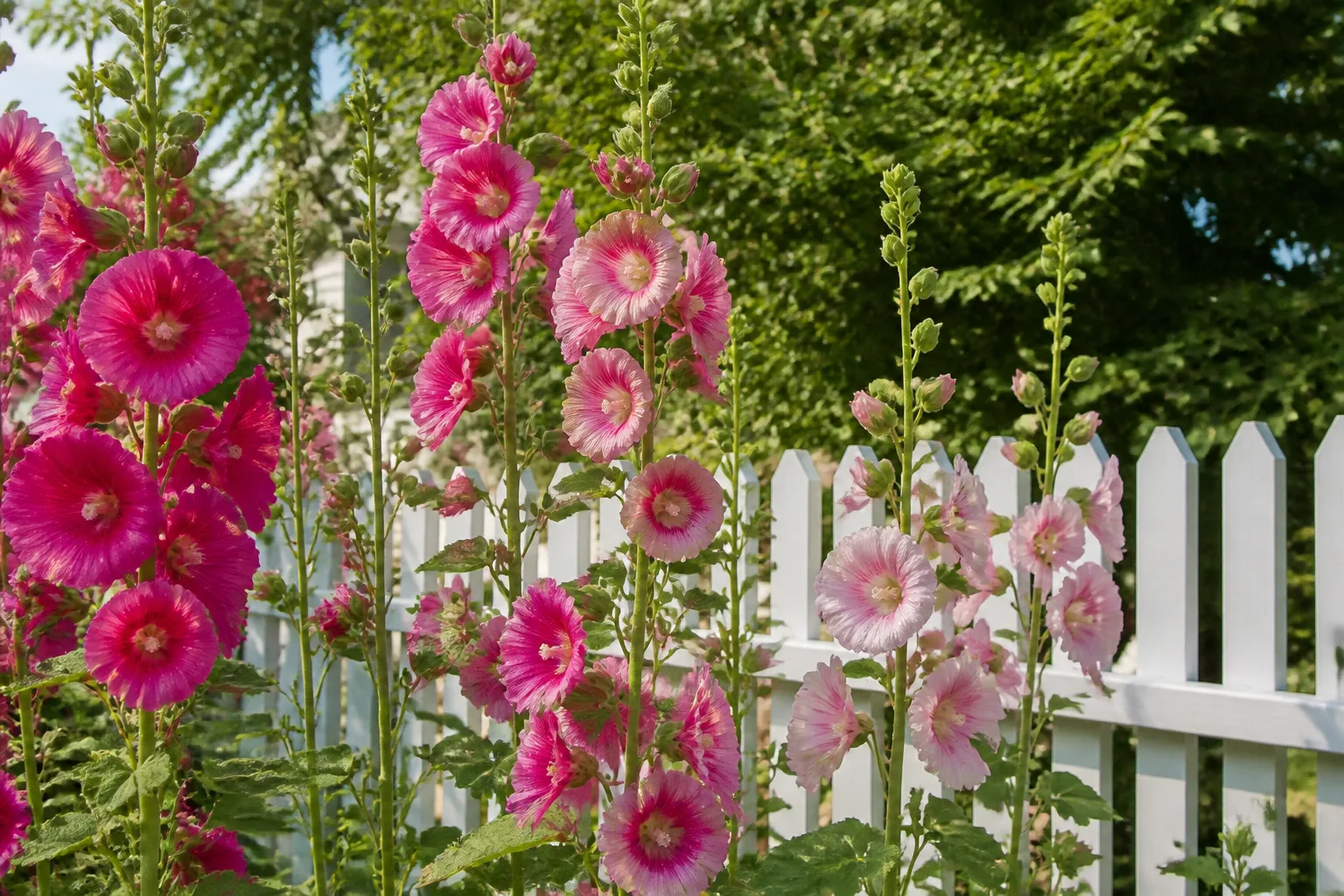
Hollyhocks (Alcea, zones 2–10) are biennials that self-seed so reliably most gardeners treat them as perennials. Eight-foot flower spikes along fences and garage walls give hummingbirds a vertical landing pad. Colors run white through pink, red, yellow, and near-black. Full sun and average moisture suit them; rust and hollyhock weevil are the main headaches in humid regions. Cut spent stalks if you do not want seedlings everywhere.
Shrubs, trees, and climbing vines
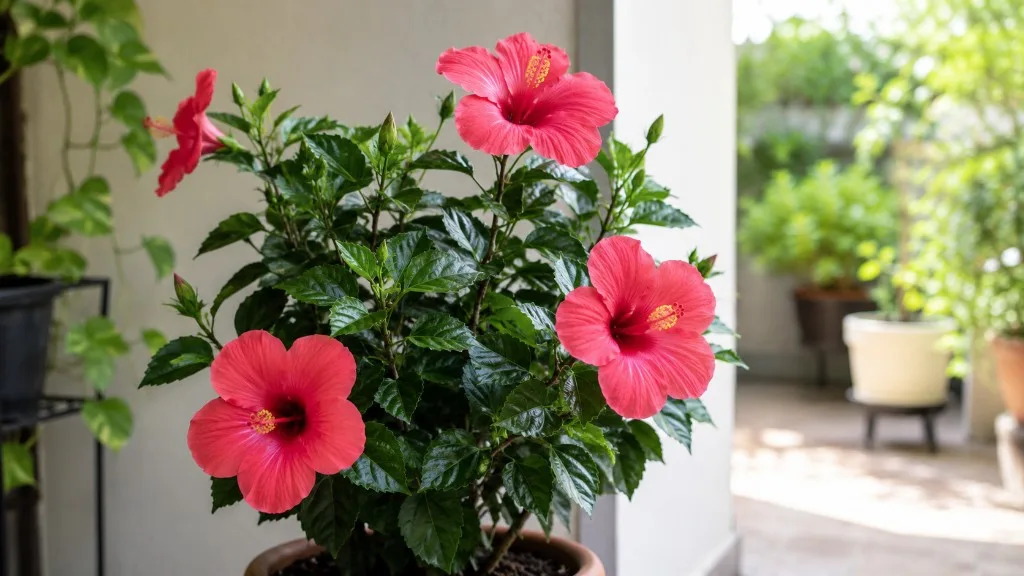
Rose of Sharon (Hibiscus syriacus, zones 5–8) is a late-summer hummingbird shrub with hibiscus-like blooms in pink, purple, lavender, or white—often with a contrasting throat. Upright habit reaches 8–12 feet without pruning. Cut back in late winter to keep it at 6 feet or shape as a small tree. Full sun to light shade; tolerates clay better than many hibiscus. Somewhat deer resistant.
Butterfly bush (Buddleja davidii, zones 5–9) draws hummingbirds and butterflies with fragrant purple, pink, or white panicles on arching stems. In mild climates it behaves like a herbaceous perennial, dying to the ground and resprouting. The problem is seedlings invading natural areas—especially in the Pacific Northwest. Choose sterile cultivars such as ‘Blue Chip’ and deadhead any spent wands, or substitute native butterfly weed (Asclepias tuberosa) for pollinators without the weed risk.
Trumpet vine (Campsis radicans, zones 4–9) is native and hummingbird-approved—and aggressively so. Orange-red trumpet flowers cover 30–40-foot vines in summer. Expect root suckers 20 feet from the parent plant and bird-dispersed seedlings unless you prune hard and mow escapes. Only plant where you can contain it—lawns, pavement, or annual root pruning.
Trumpet honeysuckle (Lonicera sempervirens, zones 3–9) is the better-behaved native vine. Cultivars like ‘Magnifica’ offer scarlet tubular flowers on 10–20-foot vines that need a trellis for best display. Bloom peaks in late spring with sporadic summer flowers. Do not confuse it with invasive Morrow’s bush honeysuckle (Lonicera morrowii), which outcompetes forest understory plants (National Park Service).
Cardinal climber (Ipomoea × multifida, annual north of zone 6) is a feathery vine with small red star flowers on 6–15-foot stems—excellent on a tripod trellis or mailbox post. Full sun; reseed yearly in cold climates. Related morning glory Ipomoea tricolor ‘Heavenly Blue’ attracts hummingbirds too, though bees visit it more heavily.
Mandevilla (Mandevilla spp., zones 10–11) is a tropical vine with pink, red, or white trumpet flowers on glossy foliage. Treat as a container annual in the North; overwinter indoors or buy fresh each spring. It wants warmth, bright light, and even moisture—perfect on a sunny deck with a trellis.
Passionflower (Passiflora spp., zones 7–10) offers some of the most intricate blooms in the vine world. Native P. incarnata (maypop) is a southeastern U.S. perennial with purple corona and yellow filaments; it spreads by underground runners—contain with a root barrier. Some passionflower parts are toxic if eaten (NC State Plant Toolbox); note this with pets or small children.
Silk tree / mimosa (Albizia julibrissin, zones 6–9) attracts hummingbirds with fragrant pink powder-puff blooms on a 20–40-foot tree. It is invasive across the Southeast, seeds freely, and produces weak wood that breaks in ice storms. Skip it in favor of native eastern redbud or serviceberry unless local guidance says otherwise.
Hummingbird bush (Anisacanthus quadrifidus var. wrightii, zones 7–10)—also called flame acanthus—is a compact, drought-tough shrub with orange-red tubes from summer into fall. It stays 3–5 feet tall, takes brutal heat, and recovers quickly from hard pruning. Plant in fall after summer heat breaks in the Southwest; excellent in xeric borders and large containers.
Shade corners, pots, and annual backup blooms
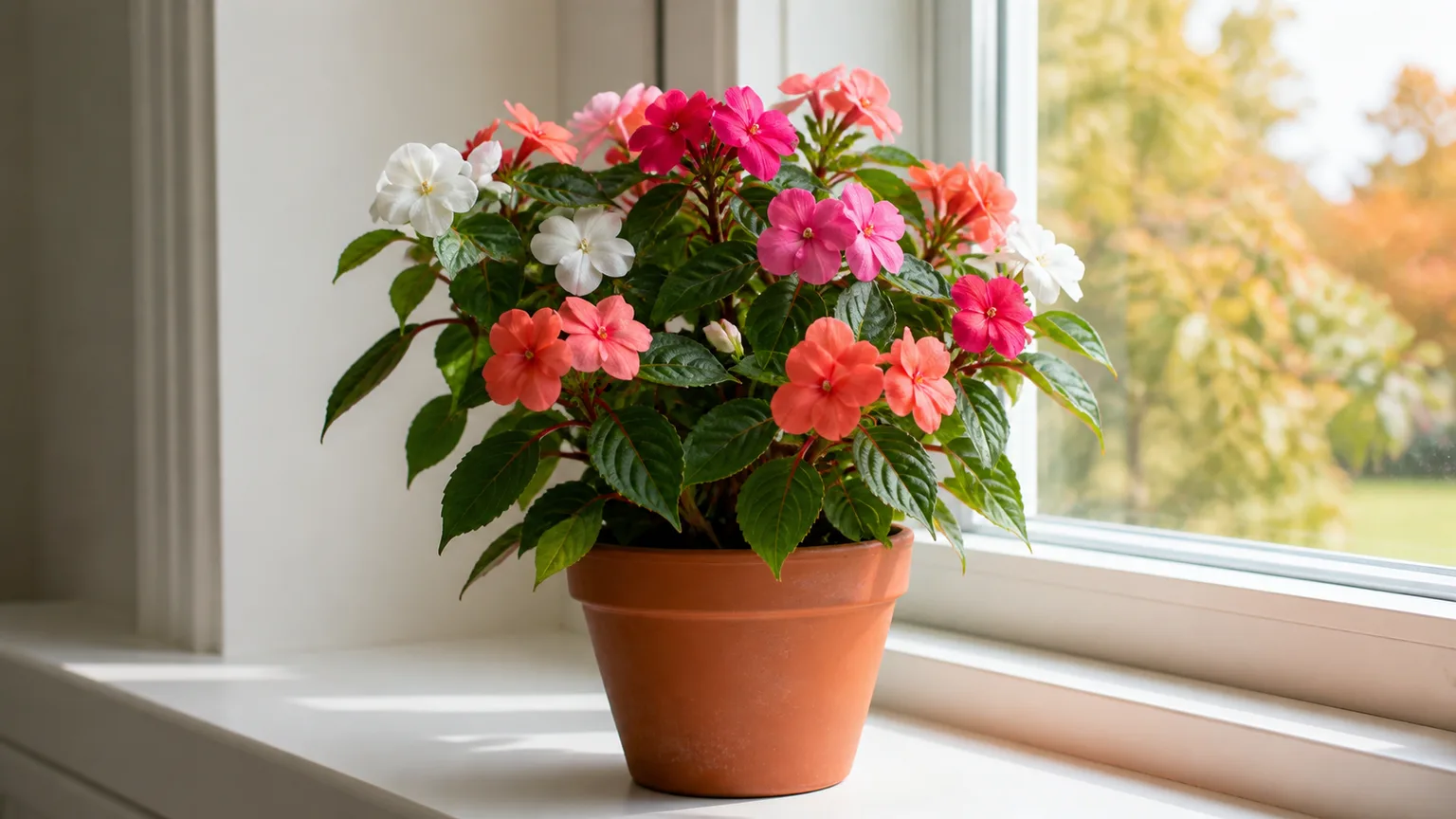
Not every hummingbird garden is a full-sun prairie. These plants fill shade pockets, hanging baskets, and the gaps between perennial flushes.
Impatiens (Impatiens walleriana, annual in most zones) fills shade baskets and north-facing beds where hummingbirds still forage. Standard bedding impatiens reach 10–24 inches in white, red, pink, violet, and coral. Keep soil evenly moist—impatiens collapse in drought. Downy mildew-resistant Impatiens walleriana hybrids (often sold as Beacon or similar series) are worth seeking in humid regions where older types failed.
Fuchsia (Fuchsia spp., zones 10–11, annual or houseplant elsewhere) is the iconic hanging-basket hummingbird plant for cool, shaded porches. Pendant bi-color bells in pink, purple, red, and white attract birds all summer if you avoid hot afternoon sun. In the North, bring pots indoors before frost or treat as a seasonal annual.
Lantana (Lantana camara, perennial zones 8–10, annual north) loves heat and sun— the opposite of fuchsia. ‘Spreading Sunset’ and ‘Miss Huff’ change floret color as they age, creating multicolor heads hummingbirds revisit. In frost-free climates lantana can reach 6 feet wide; in the North it stays compact in pots and window boxes. Check local invasive-plant lists before planting in subtropical zones where it has escaped cultivation.
These annuals and tender perennials are backup bloom, not the whole strategy—pair them with hardy perennials so spring and fall are covered too. On a balcony, one fuchsia basket, one lantana pot, and a small feeder can still draw daily visits if the site is visible from the birds’ flight path.
Plants to choose carefully (invasive and aggressive picks)
Several hummingbird favorites appear on “best of” lists without enough warning:
| Plant | Issue | Safer direction |
|---|---|---|
| Butterfly bush | Seeds into wildlands | Sterile cultivars or native milkweed / penstemon |
| Trumpet vine | Spreads by roots and seed | Native honeysuckle on a defined trellis |
| Silk tree (mimosa) | Invasive in Southeast | Eastern redbud, serviceberry |
| Bush honeysuckles (non-native) | Suppresses forest understory | Lonicera sempervirens only |
| Lantana | Invasive in frost-free subtropics | Check local lists; use in containers where restricted |
Aggressive is not always illegal to grow—but it is a long-term yard decision. Match plant vigor to the space you can maintain.
All 23 plants at a glance
| Plant | Type | Zones | Best for | Caution |
|---|---|---|---|---|
| Bee balm | Perennial | 3–9 | Summer clusters, moist soil | Mildew in stagnant air |
| Garden phlox | Perennial | 4–8 | Fragrant mid-summer | Powdery mildew |
| Red columbine | Perennial | 3–8 | Early shade edge | Short bloom window |
| Blue lupine | Perennial | 3–8 | Native spring spikes | Needs drainage |
| Delphinium | Perennial | 3–9 | Tall blue spires | Short-lived, staking |
| Hollyhock | Biennial | 2–10 | Fence-line height | Rust, self-seeding |
| Crocosmia | Corm | 6–9 | Orange summer arches | Wet winter rot |
| Salvia | Perennial | 4–8 | Repeat summer spikes | None major |
| Coral bells | Perennial | 4–9 | Shade front edge | Small individual flowers |
| Impatiens | Annual | 10–11 | Shade baskets | Downy mildew (choose resistant) |
| Butterfly bush | Shrub | 5–9 | Fast summer color | Invasive seedlings |
| Catawba rhododendron | Shrub | 4–9 | Late spring trusses | Pet toxic, needs acid soil |
| Rose of Sharon | Shrub | 5–8 | Late summer bloom | Self-seeding |
| Trumpet vine | Vine | 4–9 | Native orange trumpets | Extremely aggressive |
| Trumpet honeysuckle | Vine | 3–9 | Native red tubes | Needs support |
| Cardinal climber | Annual vine | 10–12 | Red stars on trellis | Reseed in warm zones |
| Lantana | Shrub/annual | 7–11 | Heat, containers | Invasive in subtropics |
| Fuchsia | Tender | 10–11 | Shade hanging baskets | Heat sensitive |
| Silk tree | Tree | 6–9 | Pink puff blooms | Invasive, weak wood |
| Beardtongue | Perennial | 3–8 | Drought spikes | Wet soil rots crowns |
| Mandevilla | Tender vine | 10–11 | Sunny containers | Not hardy North |
| Passionflower | Vine | 7–10 | Unique blooms | Spreads, some toxicity |
| Hummingbird bush | Shrub | 7–10 | Desert heat, late color | Limited cold hardiness |
Feeders, water, and habitat beyond flowers
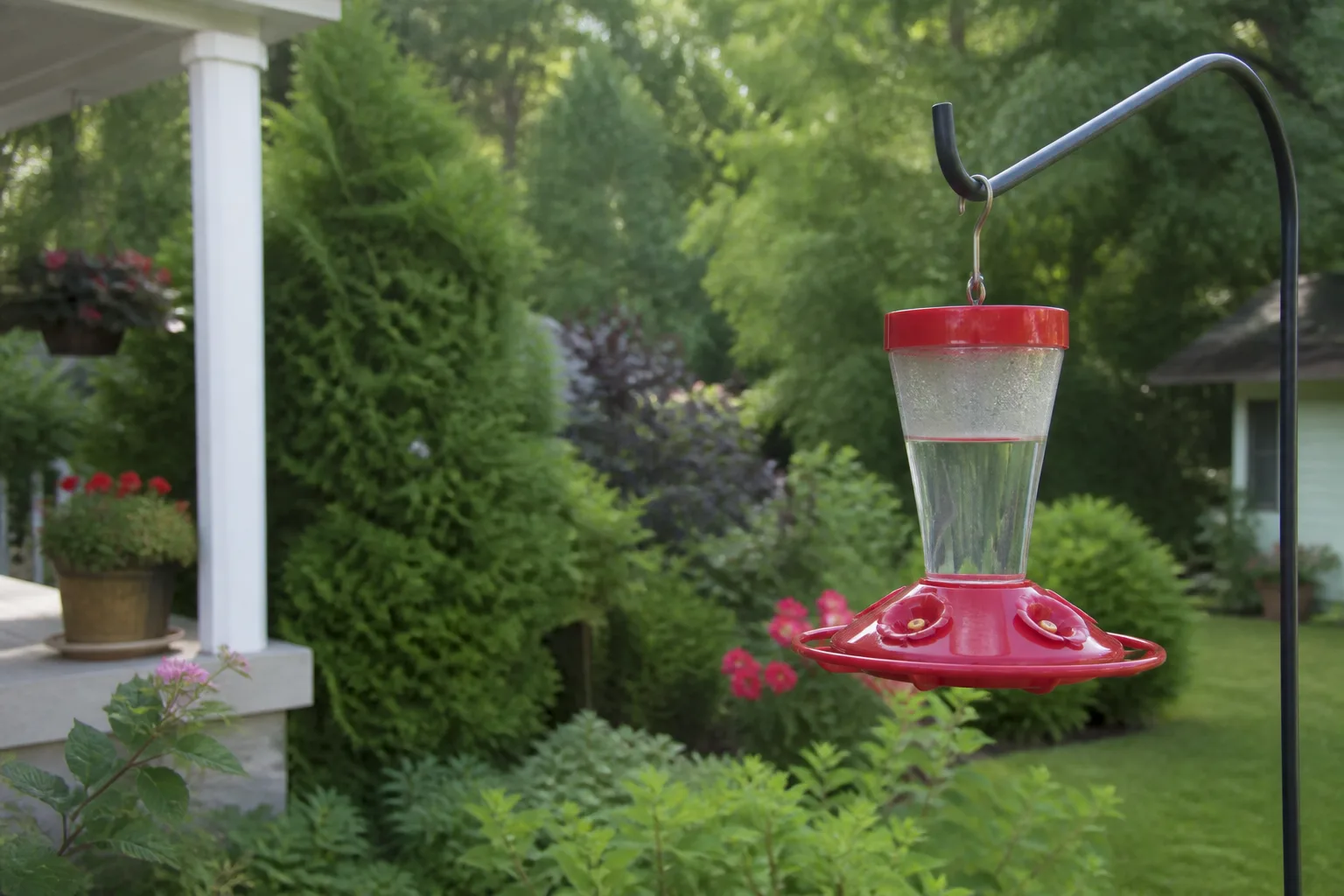
A clean sugar-water feeder supplements flowers but does not replace them (Penn State Extension). Mix 1 part white granulated sugar to 4 parts water, bring to a brief boil to dissolve, cool completely, and fill the feeder. Never use honey, brown sugar, artificial sweetener, or red dye—honey can promote fatal fungal disease in hummingbirds, and dye is unnecessary when the feeder itself is red.
Change solution every 3–5 days in cool weather and every 2–3 days above 80°F. Scrub the reservoir and fake flower ports weekly with hot water and a bottle brush; a weak bleach rinse (1 part bleach to 9 parts water) followed by thorough rinsing kills mold. Vinegar works for routine cleaning if you rinse well.
Hang feeders near flower clusters early in the season so migrating birds discover your yard, then move them for window viewing once traffic is established. Place them 5–6 feet high with open sight lines so cats cannot ambush birds and bees have less access—bee guards help but are not foolproof if sugar splashes on ports.
Water matters as much as nectar. Hummingbirds bathe in fine mist and drink from wet leaves. A mister attachment on a birdbath or a dripper over a shallow dish attracts birds that ignore standing water. Keep baths clean the same way you clean feeders.
Reduce pesticides so hummingbirds keep access to aphids, gnats, and spiders—an essential protein source, especially when feeding young. Herbicides that eliminate flowering “weeds” such as jewelweed and native violets shrink the menu without you noticing.
Nesting cover is the final piece. Hummingbirds build walnut-sized nests on small horizontal branches 5–20 feet up, often above trails or water (Penn State Extension). Leave small deciduous trees and shrubs unpruned on the lower third so females have forked twigs to anchor nests. Rough-barked trees with lichens are preferred over smooth bark.
Conclusion
The 23 best plants to attract hummingbirds work as a system: early columbine and rhododendron, summer bee balm and phlox, late rose of Sharon and lantana, plus vines and pots where space is tight. Choose tubular blooms in visible clusters, layer heights from ground covers to arbors, and keep nectar flowing from your first local arrival date to your last.
Plant the aggressive species only with eyes open, favor native trumpets and honeysuckles where you can, and back the display with a well-maintained feeder and pesticide-light habitat. Do that, and hummingbirds will treat your yard as a scheduled stop—not a lucky flyby.