The 7 Best Indoor Herb Gardens, Reviewed for Real Homes
Compare seven indoor herb garden kits by light, pod cost, capacity, and cleanup. Find the right countertop or floor model for basil, parsley, mint, and more.
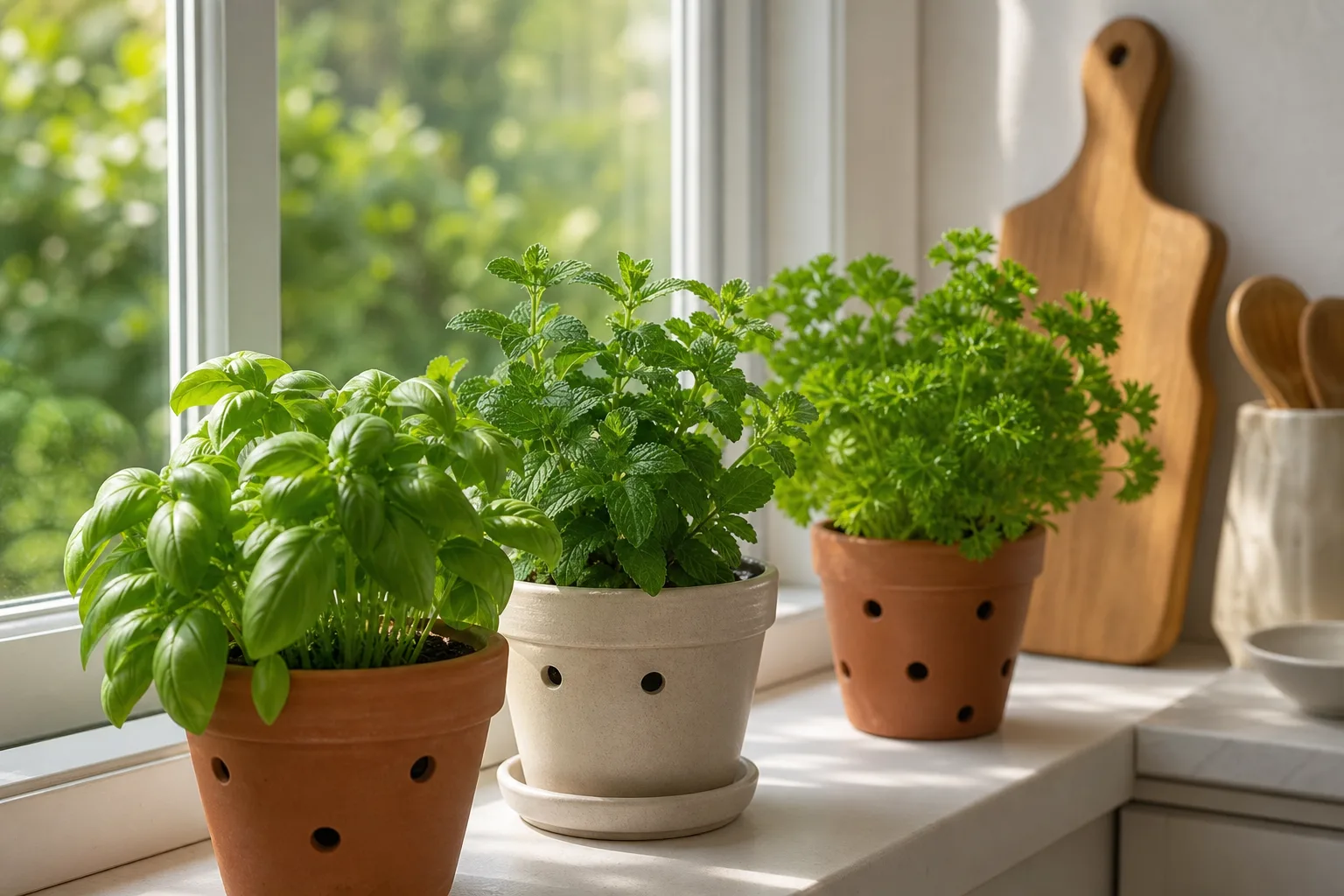
An indoor herb garden only earns its counter space if it makes cooking easier. The best one is not automatically the biggest, the smartest, or the one with the fastest advertised harvest. It is the kit that supplies enough light, fits where you will actually use it, accepts the herbs you cook with, and asks no more maintenance than you are willing to give.
This review weighs those practical constraints across seven distinct options: passive wicking, app-connected hydroponics, pre-started seedlings, a traditional soil kit, larger countertop and floor systems, and a legacy model that deserves a support check. Manufacturer pages supplied current specifications, prices, warranty terms, and availability notes; horticultural references supplied the growing standards. Vendor claims are treated as specifications, not promises of identical harvests.
Quick picks for different kitchens
| Best for | Pick | Why it makes sense | Main catch |
|---|---|---|---|
| Best overall | Click & Grow Smart Garden 3 | Small, clean, simple, and light-equipped | Only three plants; proprietary pods |
| Best smart garden | Personal Rise Garden | App reminders, 30-watt light, up to 12 plant positions | High purchase and supply cost |
| Best seedling success | Lettuce Grow Counterstand Set | Starts with living, pre-germinated seedlings | Depends on seedling availability and space |
| Best organic soil kit | Spade To Fork Organic Culinary Herb Seed Kit | Five organic herbs and everything needed to sow them | No light, reservoir, or automatic watering |
| Best for variety | Click & Grow Smart Garden 9 | Nine pod positions and a larger reservoir | The maker page showed it sold out when checked |
| Best for serious volume | Lettuce Grow Farmstand Nook | Twenty plants in a compact floor tower | About 55 inches tall and expensive |
| Best legacy option | AeroGarden Harvest Elite | Familiar six-pod hydroponic layout and integrated light | Verify seller, replacement pods, parts, and warranty |
For most people, start with the Smart Garden 3 if you want the least complicated route to basil, parsley, mint, or chives. Choose the Spade To Fork kit if you enjoy sowing seeds and already have a sunny window or a separate grow light. Move up to the Rise or Lettuce Grow systems when you need more than garnish-sized harvests and are comfortable paying for recurring supplies.
How these indoor herb gardens were reviewed
The review criteria are deliberately practical because small details decide whether a garden survives its first month. Each model was assessed for light, capacity, water and nutrient workload, seed freedom, crop-height limits, cleaning access, replacement-supply dependence, footprint, and fit for common culinary herbs.
I also checked whether a product page was live and whether the maker clearly described the model’s current configuration. That matters in this category: a product can remain popular in old roundups while its pod supply, warranty route, or official listing changes. The Smart Garden 9 and AeroGarden example below show why availability belongs in a review, not in a footnote.
No single home test can predict every harvest: basil on a warm counter behaves differently from basil beside a cold window. The recommendations connect verified hardware to horticultural requirements. Penn State Extension separates herbs that need strong light from those that tolerate less, while the RHS guide to herbs distinguishes fast-cycling basil, coriander, and dill from longer-lived chives, mint, sage, and thyme.
Decide between soil, passive wicking, and hydroponics
Before comparing brands, decide which root environment you can live with. A soil or seed-starting kit is a small container garden: you supply drainage, light, water, and fertilizer. A passive-wicking system uses a growing medium that draws water from a tank, reducing daily watering without asking you to mix a nutrient solution. A recirculating hydroponic garden holds roots in a soilless medium and sends mineral-rich water around them with a pump.
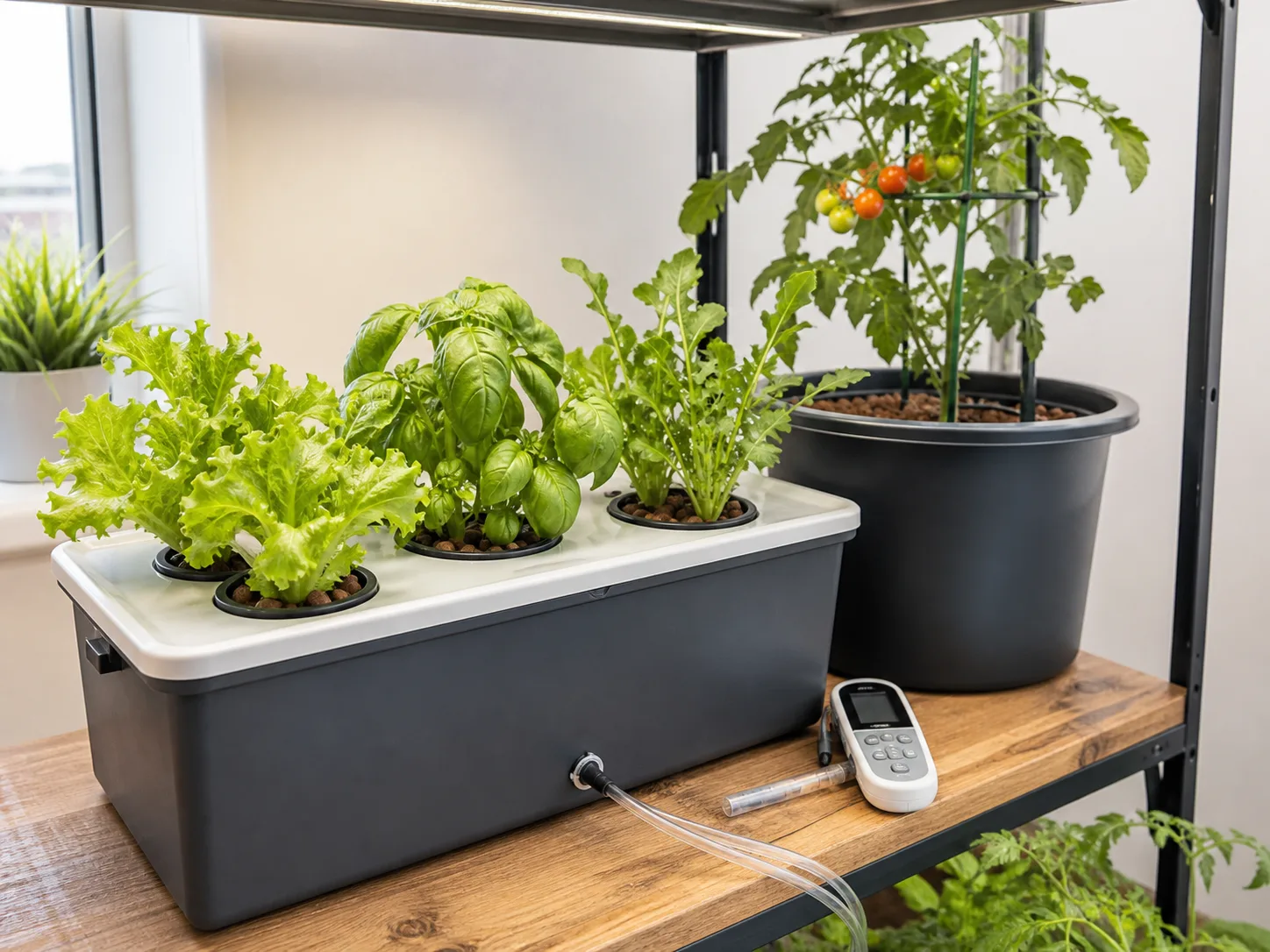
Hydroponics is not simply “plants in water.” The Royal Horticultural Society’s hydroponics guidance explains that roots need oxygen as well as moisture and nutrients; stagnant water can kill them. The same guide notes that pH matters, nutrient concentration can rise as plants remove water, and a full solution change about every two weeks helps keep the chemistry from drifting. You gain control and cleanliness, but you also inherit a pump, reservoir, nutrients, and a cleaning routine.
Choose soil when you want to use any seed packet, learn the basic growing cycle, or avoid proprietary refills. Choose passive wicking when your priority is a neat, low-intervention countertop and you are happy to buy prepared pods. Choose recirculating hydroponics when you want several plants at once, do not have a sunny window, and will check water, nutrients, roots, and the pump regularly.
The best format also depends on your herbs. Basil and parsley are productive choices for most kits. Cilantro and dill are useful but quick to bolt, so plan succession sowing rather than expecting one plant to live indefinitely. Rosemary, sage, oregano, and thyme need bright light and sharper drainage; a small, low-light countertop unit is a poor match even if the product page lists them as possible crops.
Best overall: Click & Grow Smart Garden 3
The Smart Garden 3 is the easiest recommendation for a cook who wants fresh garnish without learning hydroponic chemistry. It holds three pre-seeded pods, uses passive watering, and includes an integrated LED light. The current manufacturer page lists a 1.5-liter tank, 8-watt power draw, adjustable lamp arms, a five-minute setup, and a one-year warranty. It also ships with three basil pods, so there is no first shopping trip for seed, soil, fertilizer, or a tray.
Its roughly five-inch depth is the real advantage. It fits a slim counter or windowsill where a six- or nine-pod system would block workspace. The light reduces dependence on a south window, while the water window, passive wick, and no pump simplify care and remove one failure point.
The trade-off is capacity, not plant quality. Three pods are enough for basil plus two herbs, not a complete herb pantry. Click & Grow’s official catalog offers many prepared pod varieties and blank “Grow Anything” pods, but the easiest experience keeps you inside that refill ecosystem. At the listed price of about $125, the hardware is reasonable; the long-term calculation depends on how often you buy pods.
Buy it for a small kitchen, a first indoor garden, or a household that mainly wants basil and fresh garnish. Pass if you want to grow a rotating collection, use ordinary seed packets, or harvest enough herbs for several people every week.
Best smart garden: Personal Rise Garden
The Personal Rise Garden is the most capable countertop pick in this group for readers who want reminders and more planting positions. The current product page lists an eight-plant starter configuration that can expand to 12 positions, a 30-watt full-spectrum LED, an 18-inch height, and a footprint of 22 by 10 inches. Its app provides notifications for water, nutrients, and harvests, while the maker lists a three-year limited warranty.
This is a better fit than a tiny garden when you use herbs as ingredients rather than decoration. You can keep basil, cilantro, thyme, and parsley in rotation while reserving positions for lettuce or another compact crop. The catalog includes herbs and greens such as basil, mint, sage, rosemary, and oregano.
The app reduces memory work; it does not remove plant work. Rise says pH balance and nutrients are added weekly, and the published comparison lists average a-la-carte consumables at about $25 per month. That recurring cost is the central objection, not a minor detail. The unit also occupies more counter width than its “personal” name suggests, and a 30-watt light can be conspicuous in an open-plan room.
Choose the Rise if you want a guided hydroponic routine, plan to grow several crops, and will use the app. Skip it if you only need one pot of basil, dislike subscriptions or refill planning, or cannot give a 22-inch countertop span to the garden.
Best for pre-started seedlings: Lettuce Grow Counterstand Set
The Lettuce Grow Counterstand Set is the strongest option for someone who wants to bypass the most frustrating part of indoor growing: waiting to see whether seeds germinate. This system belongs to a seedling-based lineup, so you select living, pre-germinated plants rather than starting every crop from a dry seed or a pre-seeded capsule. The current product page lists a three-year warranty and links the Counterstand to separate countertop seedling choices and care instructions.
That starting advantage is useful for cilantro, parsley, and leafy greens, where a beginner may blame the machine for a slow or uneven seed tray. You can also order the plants you will eat instead of accepting a fixed surprise assortment.
There are two costs to that convenience. First, you are dependent on the maker’s seedling catalog, shipping schedule, and regional availability. Second, transplanting live seedlings is not the same as plugging in a cartridge: roots and foliage still need a clean reservoir, proper nutrients, and enough space. Inspect the delivered plants, install them promptly, and do not crowd vigorous basil or mint into a slot intended for a compact salad crop.
This is the best choice for a beginner who values a high-probability start over seed freedom. It is less appealing for a hobbyist who enjoys trying unusual varieties, saves seed, or wants a setup that remains useful when commercial refills are unavailable.
Best organic soil kit: Spade To Fork Organic Culinary Herb Seed Kit
The Spade To Fork kit is the honest alternative to an automated garden. It includes five Certified USDA Organic, Non-GMO, open-pollinated seed types—Genovese basil, slow-bolt cilantro, flat-leaf parsley, common sage, and common thyme—plus five compostable peat pots, five OMRI-listed potting-soil discs, plant markers, and a 26-page growing guide. The maker’s current page listed it in stock at about $30 and included a full-year grow guarantee.
This is the pick for a person who wants the act of gardening, not just the harvest. The dry kit stores easily, lets you decide when to sow, and avoids app accounts, pumps, nutrient reservoirs, and branded cartridges. Its ingredient list is also unusually practical: basil, cilantro, and parsley give quick kitchen value, while sage and thyme are slower but useful perennial-style herbs when the light is strong.
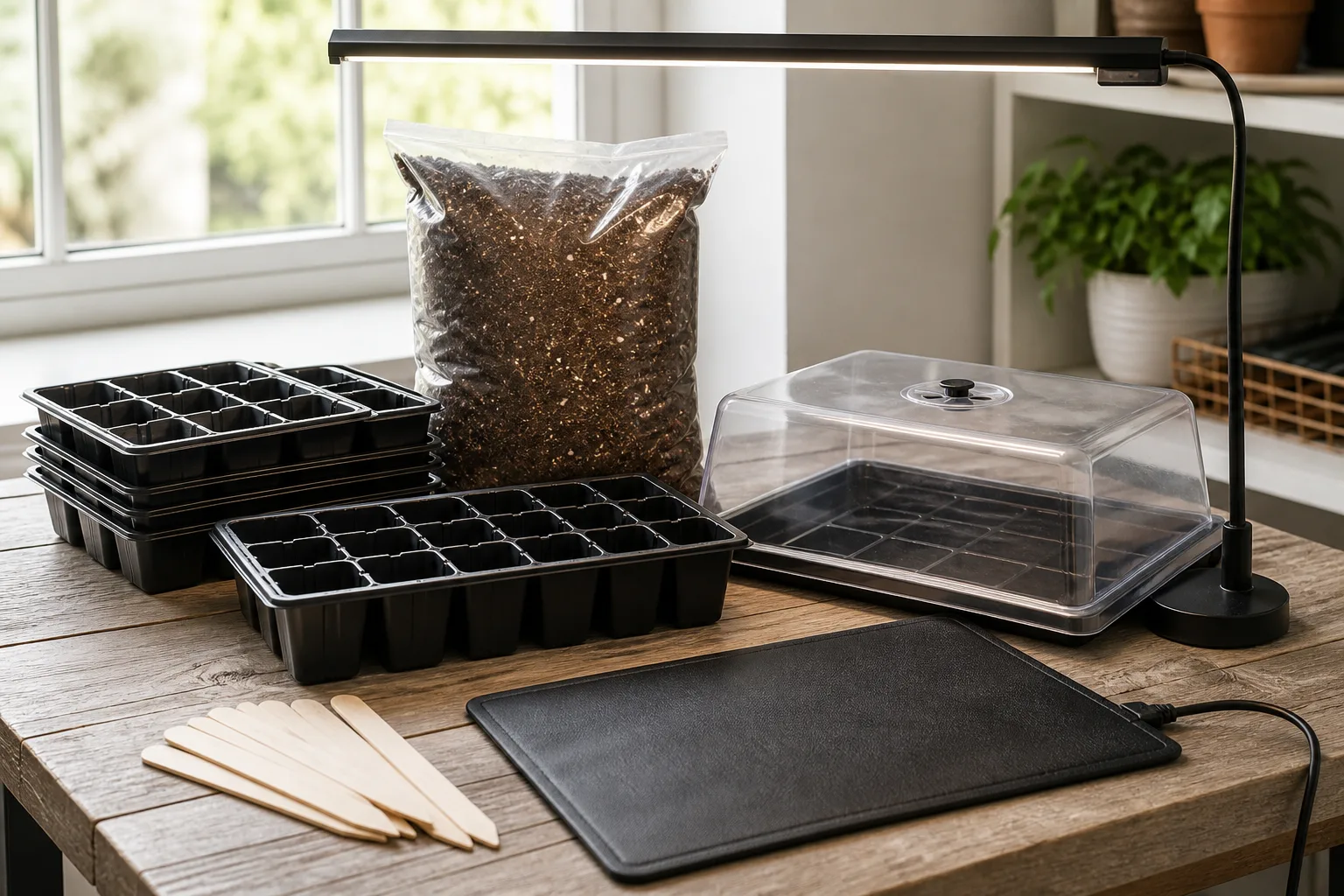
It does require attention. Expand the soil discs fully, sow into moist mix, and keep the peat pots from drying while seedlings establish. The kit includes no grow light, so “indoor” does not mean “anywhere indoors.” Penn State Extension recommends about six hours of direct sun or 14–16 hours under supplemental light; the Brooklyn Botanic Garden’s windowsill guide cautions that most windowsills act like part shade.
Repot before roots circle the small starter containers, especially for deep-rooted or vigorous herbs. Pick this kit if you have a bright window or are willing to add a grow light and water daily during germination. Pass if the person you are buying for wants automated reminders and a plant that can be ignored for a week.
Best for more variety: Click & Grow Smart Garden 9
The Smart Garden 9 is the larger answer to the Smart Garden 3’s three-pod limit. Its current product page lists nine pod positions, a four-liter water tank, a 13-watt power draw, and a roughly 24-inch-wide by seven-inch-deep body. The starter configuration combines basil, green lettuce, and mini tomato pods, while the broader catalog includes herbs, greens, flowers, and blank pods.
The layout makes sense for variety without a floor tower. Reserve center positions for light-hungry or fast-growing crops and keep shorter herbs around them. Passive wicking remains quieter than a pump-driven hydroponic unit.
There is an important availability caveat: the maker page showed the Smart Garden 9 as sold out when this review was checked, even though the product page and refill catalog remained live. That makes it a “buy when available” recommendation, not a reason to pay an inflated reseller price. Confirm the warranty route and pod supply before checking out through a third party.
Choose the 9 when nine positions will be used every week and the extra width is acceptable. If you only cook with one or two herbs, the smaller model will be easier to place and cheaper to keep supplied.
Best for serious harvests: Lettuce Grow Farmstand Nook
The Farmstand Nook is not a countertop gadget scaled up; it is a compact indoor growing tower. Lettuce Grow lists 20 ports arranged across four levels, integrated LEDs, pre-started seedlings, an app, self-watering and self-fertilizing functions, and a 55-inch assembled height. Its current page lists a $799 price, a nine-gallon water tank, less than four square feet of level floor space, a three-year warranty, and a 90-day trial.
That capacity changes what “fresh herbs” can mean. A three-pod garden produces garnish; a 20-plant tower can support a household that eats salads and herbs several times a week, provided plants are harvested and replanted instead of becoming a crowded jungle. Living seedlings shorten the wait for usable leaves.
The Nook’s footprint is small relative to its output but not small in an apartment sense. Measure floor clearance, wall outlets, nearby furniture, and the radius needed to refill a nine-gallon reservoir. Put it on a waterproof mat and a GFCI-protected outlet, and remember that a tall light cycle can affect an adjoining bedroom or sitting area.
This is worth considering for a family, serious salad eater, or dedicated indoor grower. It is poor value for an occasional basil user. The manufacturer’s “three-to-four-week” harvest language is a useful planning estimate, not a guarantee: variety, room temperature, light, root health, and harvest behavior still determine how much you eat.
Best legacy option: AeroGarden Harvest Elite
The AeroGarden Harvest Elite remains a sensible format on paper: six pod sites, a built-in LED light, an adjustable hood, a water reservoir, and reminders for water and plant food. That combination is why this style of garden became familiar to home cooks—it turns the light timer and nutrient schedule into a repeatable countertop routine.
It lands last because the buying decision now includes support risk. The official product page did not return a usable product listing when checked, so a reader should confirm that the exact seller offers a valid warranty, that replacement pods are available for the herbs they want, and that the pump or light can be replaced if the unit fails. A discounted old-stock unit is not a bargain if its consumables are hard to find.
If you already own one, keep using it while the light, pump, and reservoir are sound; generic-compatible supplies may be available, but quality and fit vary. If you are buying new, compare the total cost and support path with a currently listed model before deciding. The Harvest Elite is a reasonable remaining-stock or refurbished pick only when those checks pass.
Indoor herb garden comparison table
| Model | Growing format | Capacity or scale | What it automates | Best herb use | Watch before buying |
|---|---|---|---|---|---|
| Click & Grow 3 | Passive wicking pods | 3 pods | Light and water delivery | Basil, mint, chives, garnish parsley | Proprietary refills; small harvest |
| Personal Rise Garden | Recirculating hydroponics | 8 starter positions; up to 12 | Light and app reminders | Mixed herbs and greens | Nutrients, pH, app, monthly supplies |
| Lettuce Grow Counterstand | Seedling-based hydroponics | Countertop scale | Light and water delivery | Quick-start herbs and greens | Seedling catalog and shipping |
| Spade To Fork kit | Soil and peat pots | 5 starter pots | Nothing | Basil, cilantro, parsley, sage, thyme | Daily watering and grow light |
| Click & Grow 9 | Passive wicking pods | 9 pods | Light and water delivery | Mixed herbs, greens, compact crops | Sold out on maker page when checked |
| Farmstand Nook | Seedling-based tower | 20 ports | Water, nutrients, light schedule | Herbs plus regular salad harvests | Floor space, price, reservoir size |
| AeroGarden Harvest Elite | Recirculating hydroponics | 6 pods | Light, water, nutrient prompts | Mixed kitchen herbs | Confirm current support and refills |
How to set up a kit for strong, usable herbs
Light and placement
Light is the first filter, not an optional upgrade. Penn State Extension recommends around six hours of direct sunlight for most indoor herbs, or 14–16 hours under supplemental lighting placed close enough to the foliage to be useful. The Penn State guidance also lists basil as especially cold-sensitive and recommends daytime temperatures around 65–70°F with cooler nights around 55–60°F for most herbs.
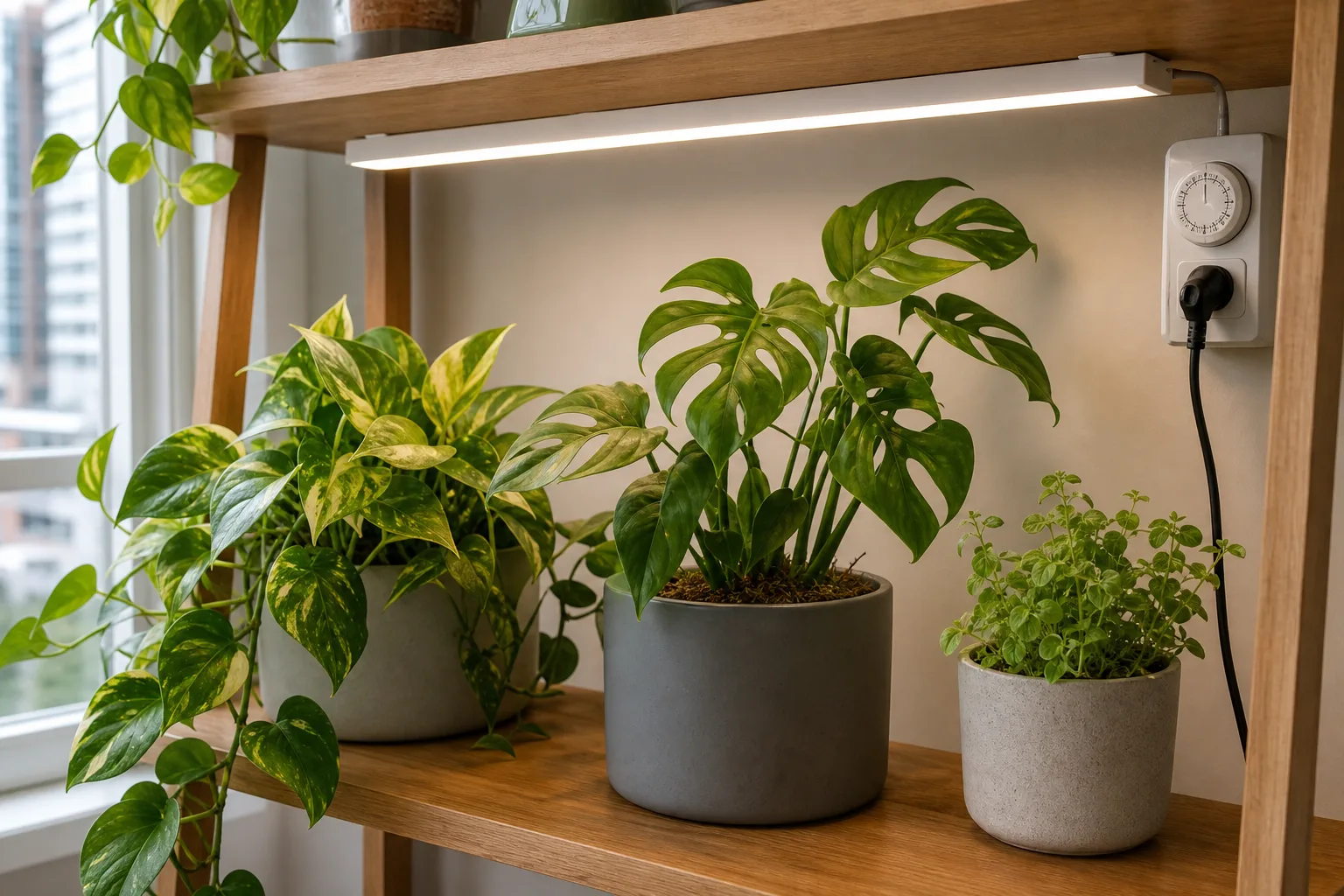
An integrated lamp solves darkness but not every placement problem. Keep the garden away from exterior doors, heat registers, cold glass, and curtains that block airflow. Use a sleep-friendly timer, check lamp height weekly, and rotate a soil kit every few days; the Brooklyn Botanic Garden notes that ordinary windowsills are often part shade.
Water and nutrients
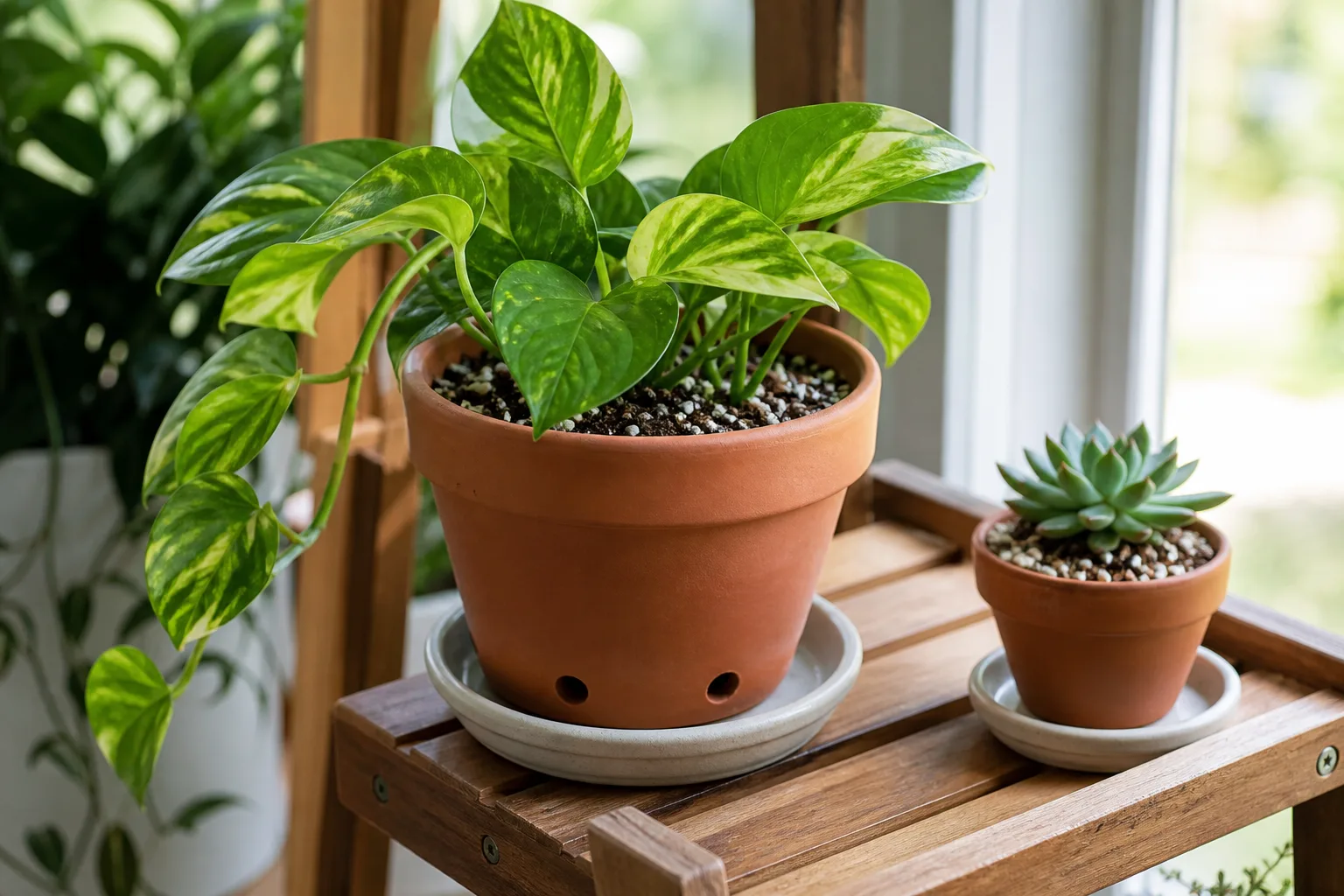
For a soil kit, water when the mix begins to dry and let excess drain; never use a decorative pot without a drainage hole. Basil, parsley, and cilantro prefer more even moisture, while rosemary, sage, thyme, and oregano should dry slightly between waterings. A calendar reminder can help you inspect a plant, but it should not replace touching the mix or checking the water level.
For hydroponics, follow the nutrient label and the garden’s own dosage instructions rather than adding extra fertilizer to force faster growth. The RHS recommends a nutrient solution near pH 5.8–6.2 for hydroponic growing and warns that solution can become more concentrated as water is removed. Top off the reservoir when needed, but also drain, rinse, and make fresh solution roughly every two weeks during a long crop unless the manufacturer specifies a different safe routine.
Think of a refill as three separate jobs: water, nutrients, and oxygen. A full tank with stale chemistry is not healthy water, and a working light cannot rescue roots in a stagnant reservoir. The Epic Gardening hydroponics primer summarizes the same fundamentals from another angle: plants still need light, carbon dioxide, oxygen, water, and mineral nutrients when soil is removed.
Harvest and pruning
Harvest early and often enough to keep herbs compact. Pinch basil and mint just above a leaf pair, cut chives near the base, and take outer parsley stems first. Do not remove every leaf from a young plant; it needs foliage to make energy and recover after cutting.
Fast herbs have an expiration date. Cilantro and dill can bolt when warm, crowded, dry, or exposed to a long bright season; once they flower, leaf production and flavor change. The RHS recommends regular sowings for quick-bolting herbs, so keep a spare pod or small seed tray ready instead of treating one cilantro plant as a permanent fixture.
Cleaning and troubleshooting before plants decline
Set a small care rhythm. Every few days, check the water level, look at new growth, and make sure the light timer is running. Weekly, inspect the reservoir for cloudiness or green film, wipe splashes from the light housing, remove dead leaves, and check whether roots are blocking a pump or air path.
Between soil crops, wash pots and trays and replace exhausted mix. Between hydroponic crops, unplug the unit, drain the reservoir, remove cups and pump parts according to the manual, wash removable pieces, rinse thoroughly, and let everything dry before replanting. Do not mix household cleaners, and do not use bleach on plastic or electrical components unless the maker specifically permits it. Food-growing equipment should be clean and residue-free, not merely fragrant.
Stretched growth, algae, and brown roots
Pale, thin, leaning stems usually mean insufficient usable light. Move a window kit closer to direct sun or add a properly positioned grow light before increasing fertilizer. More nutrients cannot compensate for a plant that cannot photosynthesize enough.
Green water or slime means light is reaching the reservoir and algae is using it. Empty and clean the tank, block light from exposed water, remove affected debris, and keep the reservoir covered as designed. If algae returns quickly, inspect the lid, pod collars, and any gap around the pump rather than repeatedly dosing the water.
Wilting in wet soil points to a different problem than wilting in dry soil. In a hydroponic unit, sour-smelling brown roots, a silent pump, or cloudy water indicates root-zone oxygen or sanitation trouble. Unplug the system, move healthy plants to a clean temporary container if possible, remove dead roots with sterile scissors, rinse the living roots gently, and restart with fresh solution. If the roots are mostly collapsed or the plant smells foul, replacing that crop is safer and faster than contaminating a new one.
Soil-grown herbs can also attract fungus gnats when the mix stays wet. Let the surface dry as the herb allows, improve airflow, and use yellow sticky traps for adults. Because these plants are harvested for food, start with cultural and mechanical control and wash edible leaves before cooking; Penn State Extension specifically advises caution with insecticides on frequently harvested herbs.
Are indoor herb gardens worth the money?
They are worth it when convenience has a clear job. If you cook with basil, parsley, mint, or chives several times each week and routinely throw away wilted grocery-store herbs, a small garden can turn a recurring waste problem into a harvest habit. It is also valuable when winter light, an apartment, or a lack of outdoor space makes ordinary pots unreliable.
It is not automatically cheaper than buying herbs. The hardware is only the first cost: budget for seed pods or seedlings, nutrients, grow sponges, electricity, replacement lights or pumps, and the occasional failed crop. The simplest electricity estimate is watts × hours per day × days ÷ 1,000 × your electricity rate. For example, the Smart Garden 3’s listed 8-watt draw running 16 hours a day is about 3.8 kilowatt-hours per month, but refill costs will usually matter more than the lamp.
Use this decision rule: buy a three-pod system when you want garnish, a six- to 12-position garden when you cook with several herbs, and a floor tower only when your household will harvest greens often enough to justify its space. If you want one rosemary plant for a sunny window, buy a pot and a light instead. If you enjoy sowing seeds and can provide light, the Spade To Fork kit will teach you more for less money. If you want dependable starts and reminders, pay for the system that removes the part of gardening you are most likely to skip.
Conclusion
The Click & Grow Smart Garden 3 is the best indoor herb garden for most small kitchens because it is compact, quiet, light-equipped, and difficult to overcomplicate. The Spade To Fork kit is the better value for a hands-on gardener with a bright window. Choose the Personal Rise Garden for app-guided, multi-herb hydroponics, the Lettuce Grow Counterstand for living seedlings, the Smart Garden 9 when it is available and you need more passive-wicking capacity, and the Farmstand Nook only when you are ready for real floor-standing production.
Whatever you buy, match the kit to the crop rather than the marketing headline. Give herbs enough light, keep roots oxygenated, change stale nutrient solution, harvest before plants bolt, and treat pod or seedling supply as part of the purchase. That combination—not a bigger reservoir or a clever app alone—is what turns an indoor garden into herbs you actually use.



