How to Grow and Care for Baby's Breath
Baby's breath thrives in full sun and alkaline, well-drained soil. Learn which Gypsophila species to grow, how to avoid invasive spread, and how to keep blooms coming.
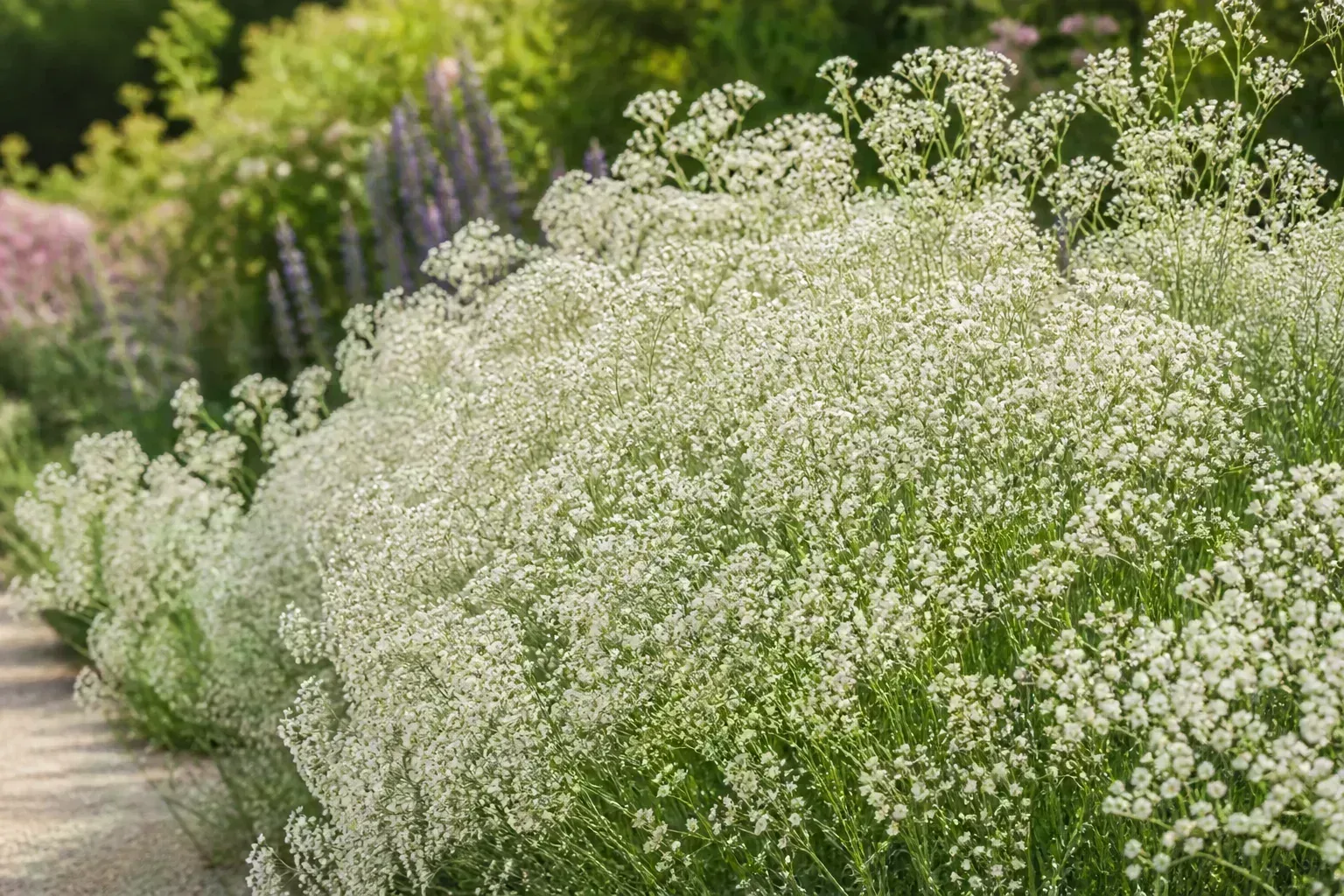
Baby’s breath (Gypsophila spp.) is the cloud of tiny white or pink flowers tucked between roses in almost every florist bouquet — but in the garden it can be something better than filler. A mature drift of Gypsophila paniculata in full June sun looks airy and intentional, softening rock gardens, masking spent spring bulbs, and supplying weeks of cut stems for the house.
The catch is that baby’s breath is not one plant with one set of rules. The genus includes tall perennials, fast annuals, and creeping alpines. Some cultivars are border stars; others are declared noxious weeds in parts of North America. Get the species, site, and watering right and you have a low-maintenance workhorse. Get them wrong and you end up with leggy, flop-prone plants — or seedlings marching into the neighbor’s field.
This guide walks through species choice, regional risk, soil prep, planting, pruning, cut-flower use, and the problems that actually show up in home gardens.
What Baby’s Breath Actually Is (and Which Species You Want)
Baby’s breath belongs to Caryophyllaceae, the carnation family. The genus name Gypsophila means “gypsum-loving,” which is a useful clue: these plants prefer neutral to alkaline, well-drained soils and often thrive where other flowers struggle — sandy banks, gravelly borders, and lime-rich ground.
Most garden talk centers on three species:
- G. paniculata — the tall perennial behind most florist “gyp.” Mounding plants reach roughly 2–3 feet tall and wide, with clouds of tiny white or pink flowers from early summer into fall. Hardy in USDA zones 3–9.
- G. elegans — showy annual baby’s breath with larger, more open blooms on airy stems. It self-seeds freely and works well for quick summer color.
- G. repens — creeping or alpine baby’s breath, a low mat-forming perennial for rock gardens and edges. Hardy in zones 2–9.
Florists love G. paniculata for its fine texture and long stems. Gardeners love it for the same reason — plus the way it hides dying tulip foliage and pairs with poppies, lavender, and salvia in cottage-style borders (NC State Extension: Gypsophila paniculata).
Annual vs Perennial Gypsophila
Before you buy seed or a nursery pot, decide which life cycle fits your goal.
Choose a perennial (G. paniculata or G. repens) if you want a permanent border plant, rock-garden mat, or reliable cut-flower patch that returns yearly. Perennials develop large, fleshy taproots and resent frequent transplanting. Leave them undisturbed once they are settled.
Choose an annual (G. elegans) if you want fast fill in a new bed, a one-season cutting garden, or massed groundcover color. Annual types can self-seed and reappear, but they are easier to rotate out if you change plans.
Red flag: If you live near open sandy habitat — dunes, roadsides, pastures, or disturbed grassland — perennial G. paniculata can escape cultivation. In those settings, annual types in a contained bed or a native alternative is the safer call.
Check Invasive and Noxious-Weed Rules Before You Plant
Baby’s breath is a beautiful garden plant and a serious weed in the wrong place. G. paniculata has naturalized across North America and is classed as invasive around the Great Lakes, the Chicago region, the Pacific Northwest, and California. Washington and California list it as a noxious weed, and it is problematic in parts of Canada as well (Gardeners’ Path: How to Grow Baby’s Breath).
Why it spreads so easily:
- Each plant can produce thousands of seeds per year that germinate readily in dry, open soil.
- Seeds blow on wind and ride on mowing equipment.
- The deep taproot helps established plants survive drought and disturbance.
Responsible planting checklist:
- Check your state or provincial noxious-weed list before ordering seed.
- Avoid planting near prairies, dunes, vacant lots, or unmanaged grassland.
- Deadhead spent blooms before seeds mature if you are in a sensitive region.
- Do not dump garden waste where stems and seed heads can root or reseed.
- Consider native alternatives suggested by extension programs — white asters, whorled milkweed, and bowman’s root are among the native options NC State lists near G. paniculata (NC State Extension).
In a contained suburban border with full sun and alkaline soil, many gardeners grow baby’s breath without issue for decades. The decision is not “evil plant vs innocent plant” — it is right plant, right place, with seed management.
Light Requirements for Strong Blooms
Baby’s breath wants full sun — at least six hours of direct light on most days. NC State lists full sun as the primary exposure, with partial shade tolerated only in hot climates (NC State Extension).
More sun means:
- Tighter, bushier growth
- Stronger stems that need less staking
- Heavier flower production
Too much shade produces the classic failure mode: tall, floppy stems and sparse bloom. If your plants lean or collapse mid-season, shade is the first suspect — not fertilizer deficiency.
In very hot southern gardens, light afternoon shade can reduce heat stress, but morning sun should still be strong. Do not tuck baby’s breath under deciduous trees that leaf out fully by June.
Soil, pH, and Drainage Baby’s Breath Needs
This is where Gypsophila earns its “gypsum lover” reputation. Ideal soil is well drained, lean, and neutral to alkaline, roughly pH 7.0–7.5. Slightly acidic soil down to about 6.5 is often tolerated, but compact clay and chronically wet ground are deal-breakers (Gardeners’ Path).
What works well:
- Sandy or gravelly garden soil
- Raised beds filled with amended loam plus coarse grit
- Rock garden pockets with lime-rich rubble
- Containers with a fast-draining potting mix
What fails:
- Heavy clay that holds water after rain
- Low spots that stay soggy
- Rich, constantly moist vegetable-garden soil
Run a soil test before planting. If pH is below 6.5, incorporate garden lime according to label rates for your soil type and retest the following season. Gypsum can improve structure in some clay soils, but pH correction is usually the bigger win for baby’s breath.
When planting in clay, a raised bed is not a luxury — it is insurance against root rot. Mound soil 4–6 inches if you cannot build a formal frame.
Watering Without Inviting Root Rot
Established baby’s breath is drought tolerant. NC State notes resistance to drought, salt, and deer damage — this is a plant built for dry, open conditions (NC State Extension).
Watering rules:
| Stage | Approach |
|---|---|
| New transplants (first season) | Keep soil evenly moist, not saturated, until roots spread |
| Established in-ground plants | Water only during prolonged drought |
| Container plants | Check more often; pots dry faster than garden soil |
| Humid climates | Prioritize drainage over extra irrigation |
Overwatering is the fastest way to kill baby’s breath. Soggy soil invites root rot and stem collapse. Water in the morning so foliage dries quickly, and skip irrigation entirely if the top few inches of soil still feel cool and slightly moist.
If stems blacken at the base or the plant wilts in wet soil, stop watering immediately and improve drainage before replanting in a drier spot.
Temperature, Humidity, and Hardiness Zones
Most G. paniculata cultivars are hardy in USDA zones 3–9. G. repens stretches even colder, into zone 2. Annual G. elegans is frost-tender and finishes with hard freeze.
Baby’s breath prefers dry air over humid coastal conditions. In muggy summers, excellent drainage matters more than anywhere else — constant leaf wetness plus heat encourages fungal issues.
Young plants can be sensitive to temperatures below about 40°F after late planting. Fall-planted perennials generally establish better than spring-planted ones because roots grow in cool soil before summer heat arrives (Gardeners’ Path).
Fertilizer and Spring Maintenance
Baby’s breath is not a heavy feeder. Too much nitrogen produces lush foliage and weak, floppy stems with fewer flowers.
Each spring, work a shovel of compost into the soil around established clumps — not buried against the crown. That is usually enough nutrition for the season.
Skip high-nitrogen synthetic feeds unless a soil test shows a deficiency. If bloom count drops year over year in very poor sand, a single light application of balanced granular fertilizer in early spring is sufficient. More is not better.
Because perennial roots are large and fleshy, avoid deep cultivation around established plants. Pull weeds by hand and mulch lightly after cutting back in fall.
Best Baby’s Breath Varieties for Gardens and Bouquets
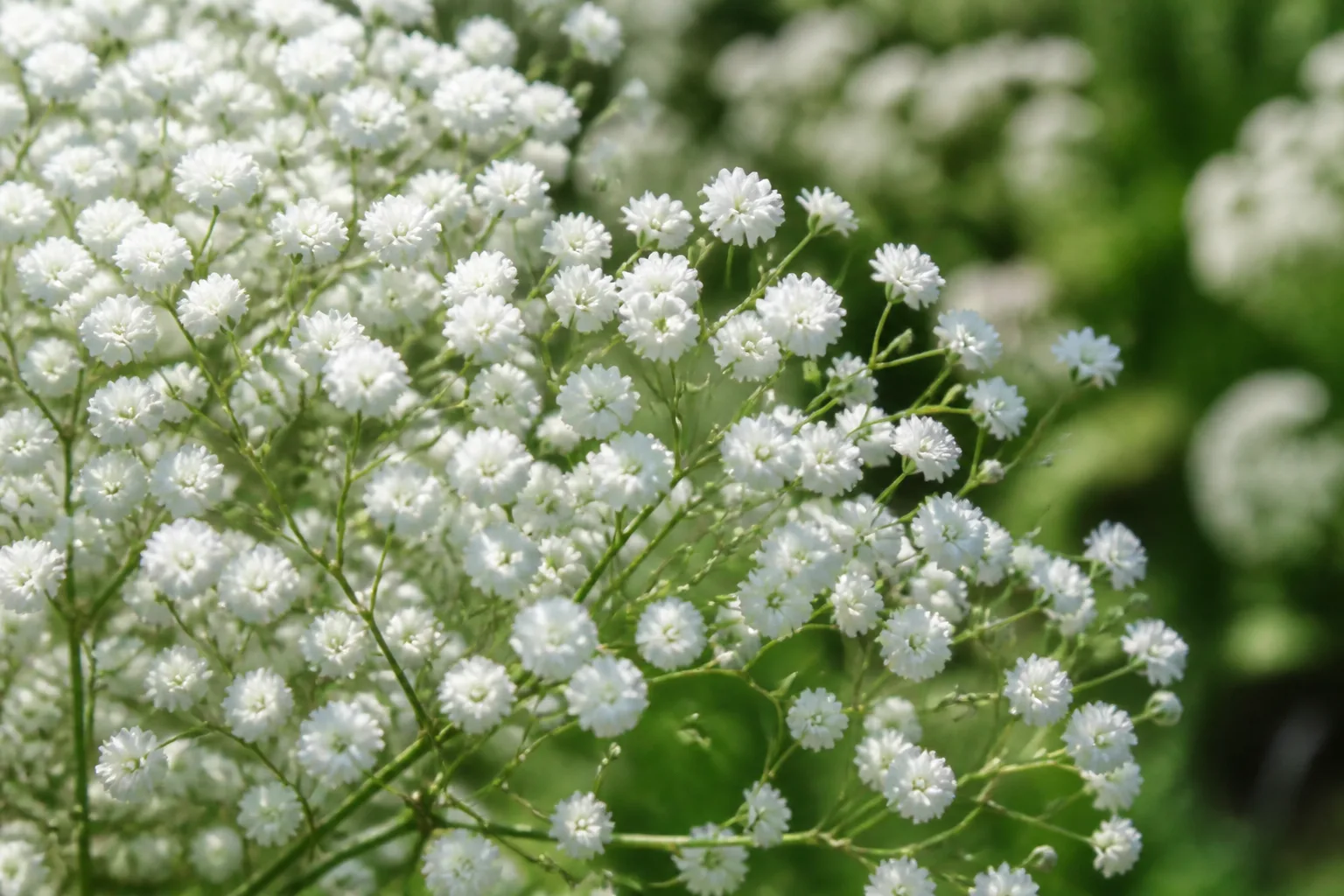
Perennial Border and Cut-Flower Cultivars
These G. paniculata selections are the backbone of cutting gardens and sunny borders:
- ‘Bristol Fairy’ — classic double white flowers on 2–3-foot mounds; the florist standard.
- ‘Compacta Plena’ — shorter double white blooms on 15–18-inch plants for small beds.
- ‘Perfekta’ — similar to ‘Bristol Fairy’ but with larger individual flowers on 3-foot plants.
- ‘Viette’s Dwarf’ — pink double flowers fading to white on compact 12–15-inch plants; rarely needs staking.
- ‘Festival Star’ — compact white bloomer marketed for continuous summer flowers with less deadheading.
Grafted plants: Some double-flowered cultivars are grafted onto hardier single-flowered rootstock. When pruning or cutting back, never remove growth below the graft union or you lose the named cultivar (NC State Extension).
Annual and Groundcover Options
- G. elegans ‘Covent Garden’ — open white annual blooms to about 2 feet; excellent cut flower.
- G. elegans ‘Gypsy’ — compact annual with rose-red star-shaped flowers to 18 inches.
- G. repens — mat-forming perennial for rock walls and edging; white to lilac flowers; container-friendly.
Match cultivar height to placement: tall types at the back of borders, compact and creeping types at front edges and in pots.
How to Grow Baby’s Breath From Seed

Baby’s breath is easy from seed — which is both a blessing in the garden and a reason to manage spent flowers in invasive-prone regions.
Direct sowing outdoors (spring):
- Wait until all danger of frost has passed.
- Loosen the top 3 inches of soil, moisten lightly, and rake level.
- Broadcast seed and cover with about ⅛ inch of soil (roughly 3 mm).
- Keep evenly moist; germination usually takes 10–20 days.
- Thin seedlings to 6–8 inches apart for tall types.
For all-season annual color, sow successive batches of G. elegans every two to four weeks until early July.
Indoor starting:
Sow six to eight weeks before last frost in trays of moist seed-starting mix. Keep at about 70°F out of direct sun. Transplant into individual pots after the first true leaves form, then harden off before planting out.
Most perennials bloom the first year from seed, though a few may need a second season to reach full size. Bag faded flower heads if you want to collect seed deliberately instead of letting it scatter.
Propagating Baby’s Breath From Cuttings
Stem cuttings are the reliable vegetative method for cloning a cultivar you already like.
- In late spring or early summer, cut 4–5-inch healthy stem tips.
- Strip leaves from the lower third of each cutting.
- Insert into small pots of moist, alkaline, well-drained rooting medium.
- Mist often; keep medium moist but not waterlogged.
- Roots typically form in about four weeks. Transplant carefully — roots are brittle.
Division of mature clumps is possible but risky because of the long taproot. If you must divide, do it in early spring, take small sections with plenty of root, and expect slower recovery than cuttings or seed.
Planting in Containers and Raised Beds
Baby’s breath grows well in pots as long as drainage is excellent. Choose containers with large drainage holes and use a gritty mix — not heavy bagged “moisture control” soil.
Container tips:
- Terracotta dries faster than plastic; check water more often the first summer.
- One compact perennial or a single annual per medium pot; tall G. paniculata needs a deep container for taproot room.
- In cold zones, potted perennials are more vulnerable than in-ground plants. Sink pots into the garden soil for winter or move them to a sheltered spot and mulch the crown.
Raised beds solve clay drainage problems and make pH amendment easier. Space tall cultivars 18–24 inches apart so air circulates through the fine foliage — critical in humid regions.
Pruning, Deadheading, and Encouraging Rebloom
Deadheading is not optional if you want a second flush and need to limit self-seeding. Cut spent flower sprays back to the next side branch or bud — the same technique florists use to keep stems long for vases.
After the first heavy bloom, a light shear of one-third of stem length can refresh shape and trigger another round of flowers on many perennial cultivars.
In fall, cut perennial stems to about 1 inch above ground after the final bloom fades. A light mulch layer protects the crown in northern zones. If you skip fall cleanup, brittle dead stems can break off and tumble, spreading seed on wind.
Do not cut grafted plants below the graft line. Mark the union with a twist tie the first year so you remember where it sits.
Overwintering Perennial Baby’s Breath
Cold-hardy G. paniculata survives zone 3 winters in the ground with minimal help. A 2–3-inch mulch of shredded leaves or straw after the ground freezes prevents frost heaving.
Container plants need more protection: cluster pots against a wall, insulate sides with burlap or bubble wrap, and keep soil barely moist — not wet — through dormancy.
Avoid digging and moving established clumps in winter. The fleshy root system stores energy for spring regrowth, and disturbance can set plants back a full season.
Pests, Diseases, and Common Problems
Baby’s breath is relatively trouble-free when sited in sun and dry soil. Problems usually trace to culture, not mystery plagues.
Aphids cluster on soft new growth and undersides of leaves. A strong water spray dislodges light infestations; horticultural oil handles heavier outbreaks if applied according to label directions in cool morning temperatures.
Japanese beetles chew ragged holes in leaves. Hand-pick early in the morning into soapy water, or use labeled controls only when damage threatens plant survival — baby’s breath often outgrows minor beetle feeding.
Slugs and rabbits may nibble young shoots. Protect new transplants with temporary fencing or slug traps until stems toughen.
Fungal issues and root rot follow overwatering or poor air circulation. Fix drainage first; fungicides are secondary.
Leggy, floppy plants — increase sun, reduce nitrogen, and stake only as a last resort for tall cultivars in windy sites.
No bloom — usually too much shade, overcrowding, or plants too young. Perennials started from seed occasionally need a second year for full display.
Harvesting Baby’s Breath for Cut Flowers
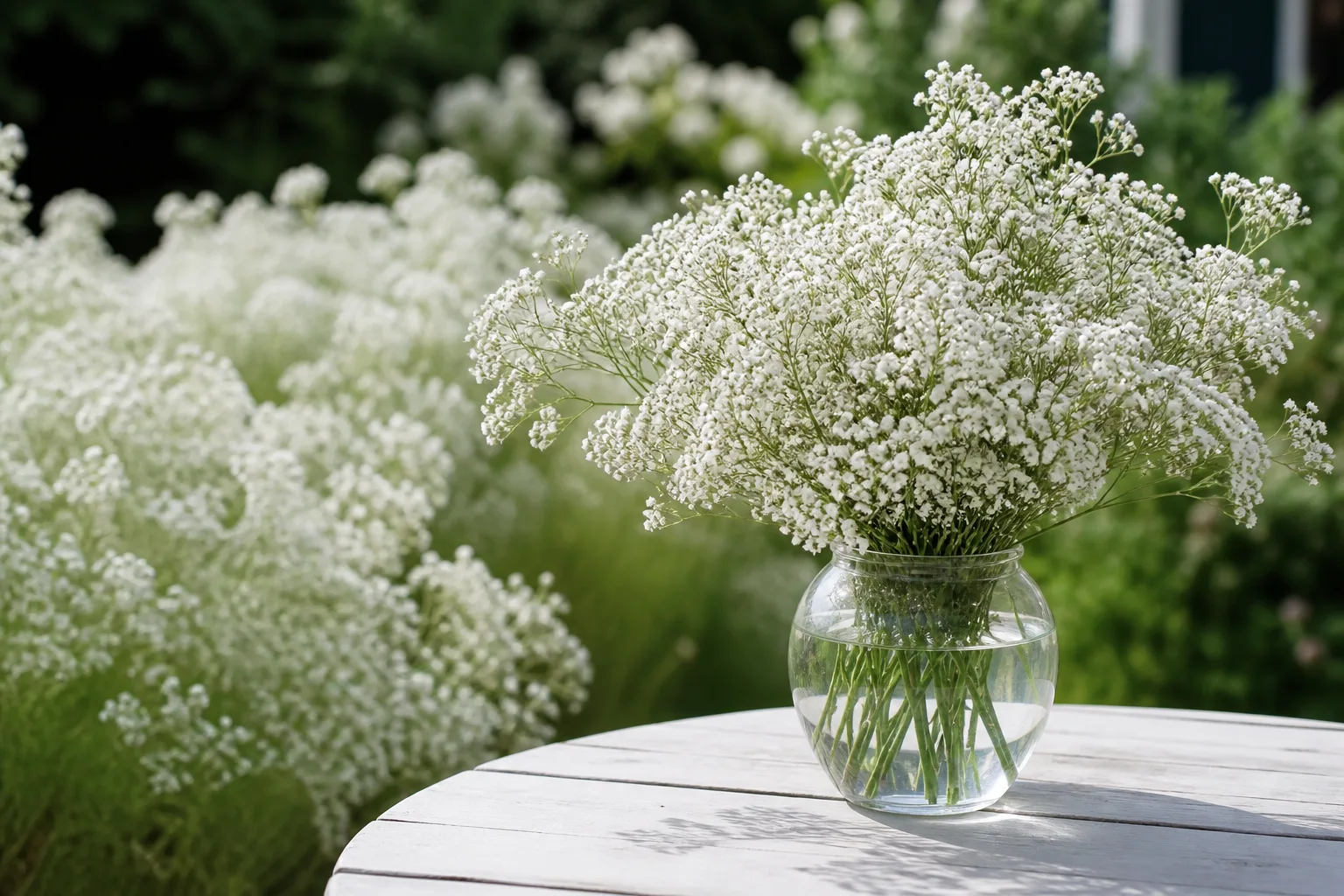
Cut baby’s breath when roughly half the florets on a spray are open and the rest are still in bud. Early morning harvest after dew dries gives the longest vase life.
Place stems immediately in clean, cool water. Strip leaves that would sit below the waterline. With fresh cuts and changed water every two days, sprays often last 8–10 days indoors.
For drying, hang small bunches upside down in a dark, airy room. Dried gypsophila holds its cloud shape for months in arrangements.
Because the stems are branched and delicate, use a sharp bypass pruner rather than crushing stems with dull scissors — crushed vascular tissue shortens vase life.
Toxicity to People and Pets
Baby’s breath is mildly toxic if ingested and can irritate skin with repeated handling. NC State lists medium poison severity with possible eye, nose, sinus irritation, asthma with repeated exposure, and skin irritation after contact. Saponins in the plant are the likely irritant principle (NC State Extension).
Pet Poison Helpline notes that Gypsophila species contain gyposenin, a saponin that can cause gastrointestinal irritation in pets after ingestion (Pet Poison Helpline: Baby’s Breath). Cats may be especially curious about fine stems in bouquets.
Practical safety steps:
- Wear gloves if you handle large volumes for wedding work
- Keep fresh and dried arrangements away from chewing pets
- Wash hands after pruning
- Do not assume “mild” means harmless — call your vet or poison control if a pet eats a noticeable amount
Conclusion
Baby’s breath rewards gardeners who treat it as a sun-loving, alkaline-soil perennial — not as an afterthought wedged between roses. Pick the right species for your space, confirm you are not planting an escape risk into sensitive habitat, and give it drainage plus full sun. Water lightly once established, deadhead if you want rebloom or need to control seed, and cut back in fall.
Get those basics right and Gypsophila delivers the same airy magic in the border that florists charge extra for in a bouquet — without the floppy, weedy mess that happens when it is planted in shade and clay.