Winter Houseplant Care in North India
North India winter care for cold nights, fog, dry heater air, balcony frost moves, and watering that matches slower growth.
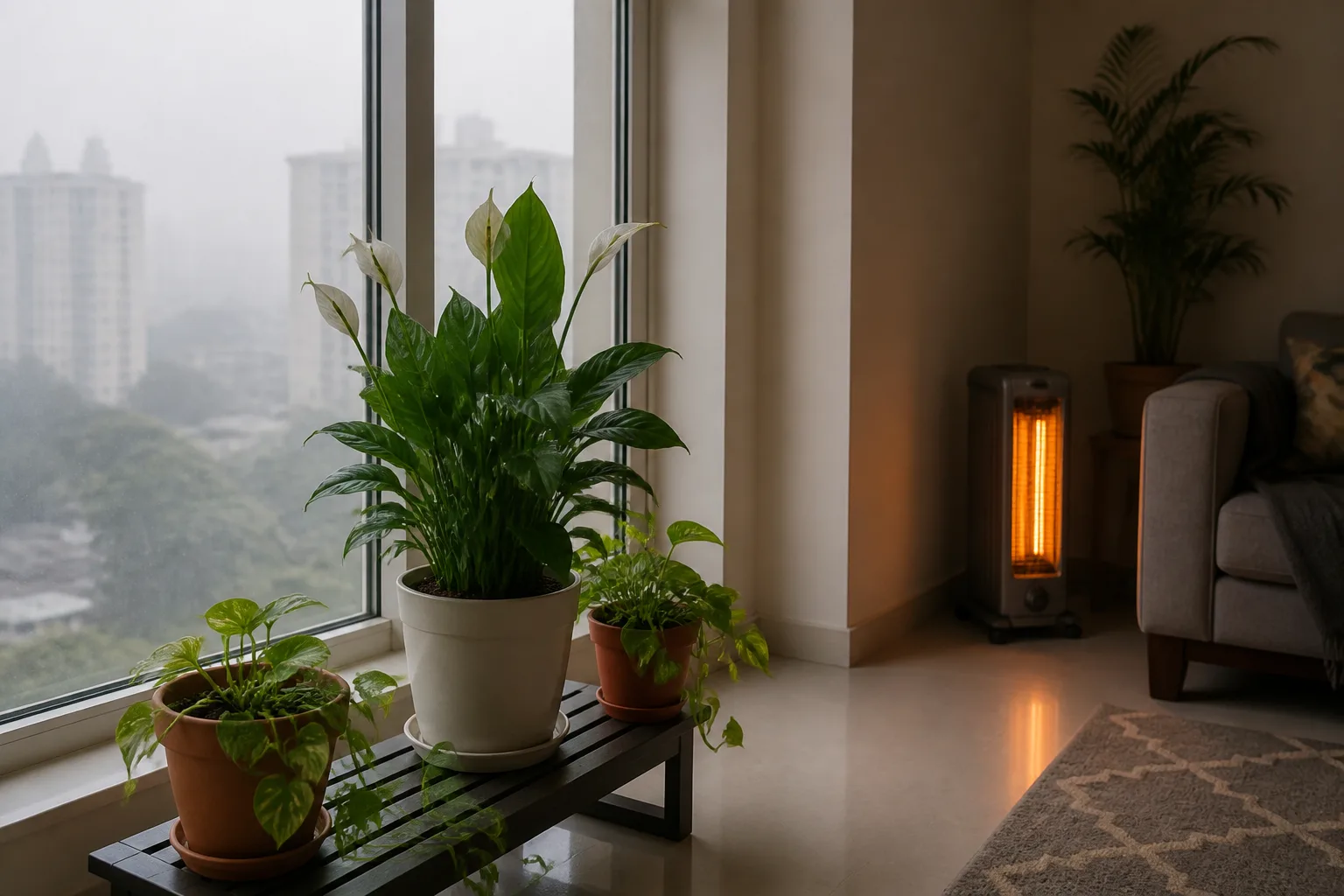
Generic winter houseplant care advice assumes a heated Western apartment with short days and dry forced air. North India adds its own stack: cold waves on the plains, fog and smog that steal light for days, room heaters that blast one corner of a flat, and balcony pots that sit inches from outdoor night air. In a Noida west-facing flat, the same peace lily that drank every three to four days in May can stay heavy for a week after a fog spell — and still crisp on the heater side if you park it beside an oil blower.
This guide is a season playbook for Delhi NCR, Punjab, Haryana, western Uttar Pradesh, and similar plains homes — with notes for cooler hill stations where nights drop harder. You will get watering checks that match slow growth, light moves for fog weeks, humidity that works better than misting theater, heater and window draft rules, balcony in/out decisions, first-hand dry-down notes, and a short post-cold-wave ramp. For plant picks that already suit Indian rooms year-round, start with indoor plants for Indian homes.
Why North India Winter Hits Plants Differently
Temperate winter care focuses on weak sun and bone-dry central heating. North Indian flats often swing between chilly nights and warm midday rooms, then add particulate haze that keeps curtains shut. Growth slows, soil stays wet longer, leaf edges crisp near heaters, and balcony tropicals can chill even when the afternoon still feels mild.
Treat winter as a regime, not a single cold weekend. When night minima fall and dry-down stretches, flip your care mode even if the calendar still says “pleasant days.”
Cold Waves, Clear Nights, and Western Disturbances
On the plains, the India Meteorological Department’s cold-wave FAQ defines the plant-care cue you should track: cold wave is considered when a station’s minimum drops to 10°C or less (plains) or 0°C or less (hilly regions), with a departure from normal of −4.5°C to −6.4°C for a cold wave and −6.4°C or less for a severe cold wave — and the criteria must be met for at least two consecutive days (declared on the second day). For plain stations only, an absolute minimum of ≤4°C (cold wave) or ≤2°C (severe) can also trigger the label. That is a care trigger, not just a weather headline.
Clear nights after a Western Disturbance often dump heat from the ground into open sky, so balcony pots cool faster than your living-room thermostat suggests. Hill stations and elevated terraces can run colder still. Soft tropicals that survived November nights may not survive a mid-January clear-sky minimum. Use local IMD forecasts to move plants before the coldest nights, not after blackened leaf tips appear.
Fog, Smog, and Closed-Window Days
Dense fog and winter haze cut usable light even when your phone says “daytime.” South and west windows that felt bright in October can behave like medium-low light for a week. Closed windows also trap heater dryness and reduce leaf drying after any misting — a poor combo for fungal spots if you keep foliage wet.
Expect two practical effects. First, photosynthesis and water use drop, so the same watering interval that worked in October becomes risky. Second, dust and soot settle faster on leaves, which is why winter leaf cleaning is not cosmetic in North Indian cities. Wipe or rinse foliage more often than in monsoon — every one to two weeks in heavy smog weeks is a useful default — and treat fog weeks as a light emergency, not a reason to fertilize “for recovery.”
Plains vs Hill Stations: Quick Placement Notes
Use this as a placement filter before you copy a friend’s schedule from another city:
| Setting | Night risk | Default move |
|---|---|---|
| Plains open balcony (Delhi-NCR, Punjab, Haryana, western UP) | Cold-wave minima; clear-sky radiative chill | Soft tropicals and cuttings indoors or under solid cover before forecast cold-wave nights |
| Plains glazed loggia / covered balcony | Milder than open ledge; still colder than room core | Often keep hardier pots out; pull tender foliage away from open rail gaps |
| Hill terrace / elevated station | Harder frost risk; 0°C hill cold-wave threshold | Treat most tropical houseplants as indoor-only for peak cold weeks |
| Heated indoor-only flat | Draft + dry air dominate more than frost | Follow humidity, heater clearance, and dry-down rules below |
Hill cities are not “Delhi advice plus a sweater.” If nights approach freezing, prioritize shelter over fog-week light chasing on the terrace.
Water Less — Finger, Skewer, and Pot-Weight Checks
Clemson Extension’s watering guidance is blunt: overwatering is the main cause of death in potted plants because roots need oxygen as well as water, and there is no universal “every X days” schedule. Species, pot material, mix, plant size, and weather all change the answer. North India winter weather is the variable that changes fastest — cold nights slow uptake while fog slows drying.
If you watered every three to four days in May, stretch that hard in December. In fog weeks, a plastic peace-lily pot can stay heavy 6–8 days; a terracotta snake plant may still need 10–14 days. Thick-leaved plants such as snake plant and ZZ plant often wait a week or more. Thirstier plants such as peace lily still need checks, not a summer habit.
NC State Extension’s winter houseplant notes recommend letting most indoor mixes nearly dry between waterings and checking with a finger in the upper couple of inches, pot weight, or a wooden skewer. Use those methods twice a week for soft tropicals and once a week for drought-tolerant plants.
When you do water, water thoroughly at the soil line until drainage runs, then empty saucers within about 30 minutes. Cold, wet media after a chill is how soft stems and root decline start. Use room-temperature water; icy tap water on a cold night adds unnecessary stress. If a plant wilted after a balcony chill, check moisture before you “rescue” it with more water — wet wilt is not thirst.
Low-evaporation weeks also concentrate salts. If your tap is hard, or you use RO water, keep winter intervals honest and flush occasionally when growth returns — see hard water and houseplants and RO water for indoor plants rather than watering more “to dilute.”
Move Plants Toward Better Winter Light (Including Fog Weeks)
Short days already cut light. Fog and closed curtains cut it again. NC State’s winter guidance treats light as the common limiting factor: north and east windows that felt fine in summer can become too dim, so plants may need a brighter sill or supplemental light.
In North Indian flats, prioritize south and west exposures on clear afternoons, then pull plants a little back from glass at night if the pane gets cold. Rotate pots weekly so one side does not stretch toward the only bright strip. On multi-day fog stretches, a simple full-spectrum grow light on a timer — roughly 10–12 hours, hung close enough that leaves look evenly lit without bleaching — beats hoping for a sunny weekend. For hardware and distance basics, use the grow lights complete guide. Do not compensate for low light with fertilizer; compensate with placement.
If leaves yellow and drop after you move a plant from a dim inner wall to a bright balcony door, separate light shock from cold shock. Sudden bright sun on fog-adapted leaves can bleach; sudden night air can blacken. Change one variable at a time when you can.
Raise Humidity Without Constant Misting
Cold outdoor air holds less moisture, and heating removes more. Penn State Extension notes that ASHRAE’s general indoor comfort band is often cited around 30–60% relative humidity, and heated winter homes can fall below 30%. NC State Extension similarly reports indoor humidity sometimes dropping below 20%, while many houseplants prefer roughly 40–50%.
Misting fails as a humidity strategy. Penn State is clear that any humidity bump lasts only until droplets evaporate — often minutes. In a dry Delhi heater room, that is theater. Pebble trays help little at room scale because vapor diffuses into the whole space; they are optional micro-helps at best, not a fix for a 25% RH flat. Group plants, run a small humidifier near a cluster (not soaking the soil), and keep humidity lovers away from heater exhaust. For deeper humidity tactics, see the houseplant humidity guide and symptom pages on brown tips and crispy leaves.
Succulents and plants such as jade plant are the exception: they tolerate dry air better than calathea and ferns. Do not chase rainforest humidity for every pot in a North Indian winter — match the plant. And do not seal wet pots in closed cabinets while chasing humidity; still air plus wet media invites mold and gnats.
Stop Heater Drafts and Window Chill Damage
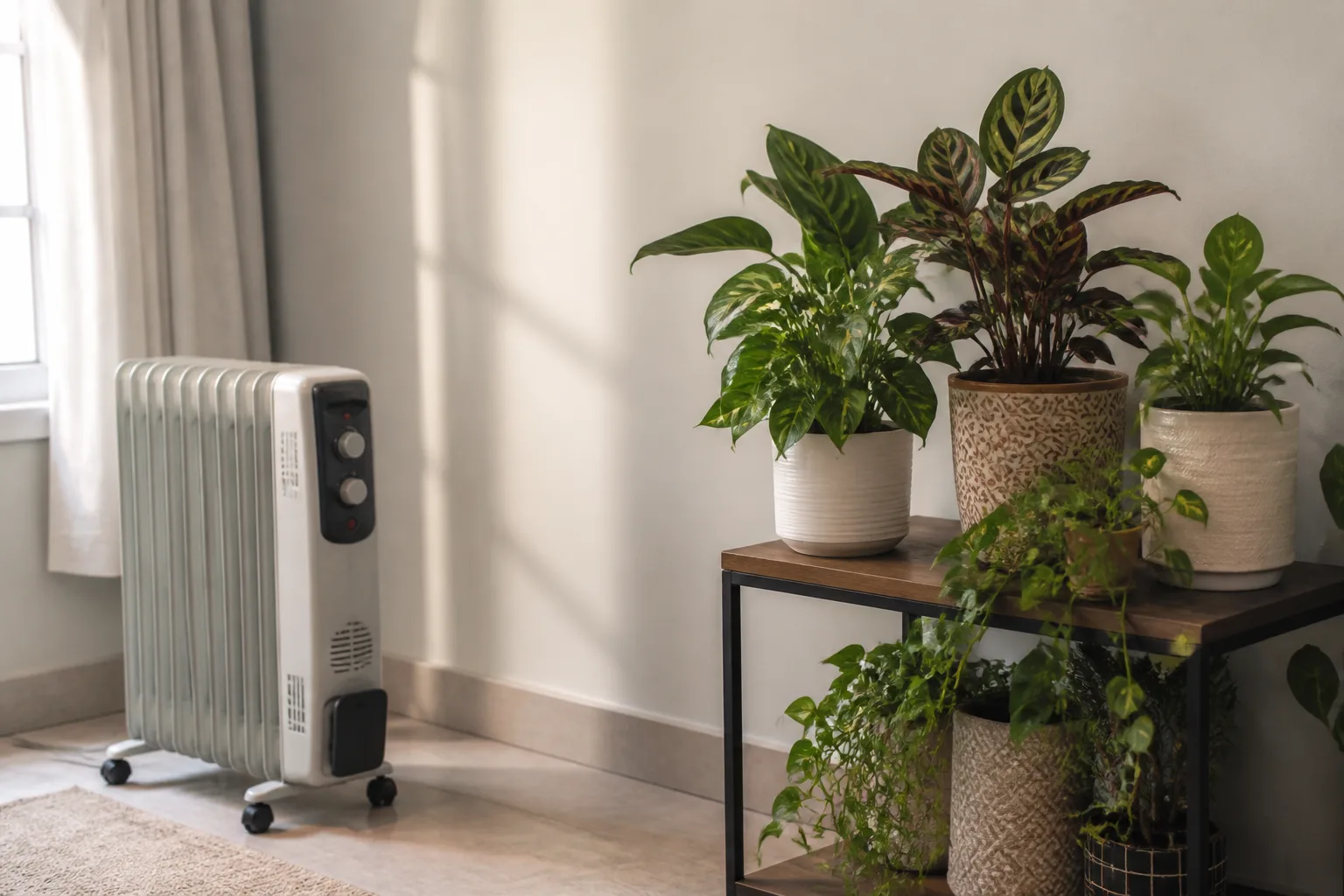
Missouri Botanical Garden’s indoor environmental guidance warns that hot air from furnace vents, cold air from doors or windows, or a cold trip home from the nursery can cause leaf and flower drop, while freezing exposure can collapse foliage and turn it black. North Indian homes swap “furnace vent” for room heaters, oil blowers, and AC heat mode — the physics is the same.
Draft stress often looks one-sided: curl, tip burn, or bud abort on the face toward the blast or the leaky window. Confirm with a thermometer at leaf height before you drown the plant.
Room Heaters, Blowers, and Door Drafts
Keep tropicals out of the direct path of a blower or heater. A plant that feels comfortably warm to your hand at desk height may still sit in a drying jet at leaf tips. Move pots behind a furniture barrier or to a side wall where air mixes. Avoid sandwiching plants between a heater and a cold window — that is a daily temperature whip.
Oil blowers and AC heat mode both dry air; blowers add a directional jet. Give foliage a clear gap from the outlet, and prefer grouping humidity lovers on the opposite side of the room from the heat source.
Door drafts matter in winter corridors and stairwell-facing flats. Each entry blast of cold air hits the nearest foliage. Pull sensitive plants a meter inward from exterior doors during peak cold weeks.
Cold Glass and Overnight Sills
Leaves touching cold glass can chill even when the room feels fine. Leave a finger-width gap between foliage and the pane on clear nights. If you use heavy curtains, do not trap plants between curtain and glass overnight — that pocket can run colder than the room. The RHS poorly-houseplant guidance flags the same pattern: draughts near heat sources, and windowsill plants suffering when curtains trap cold air against the glass.
After a suspected chill, wait before heavy pruning. Dead tissue will not green again, but the full extent often shows over days. For symptom triage, use the cold damage guide rather than fertilizing or overwatering in panic.
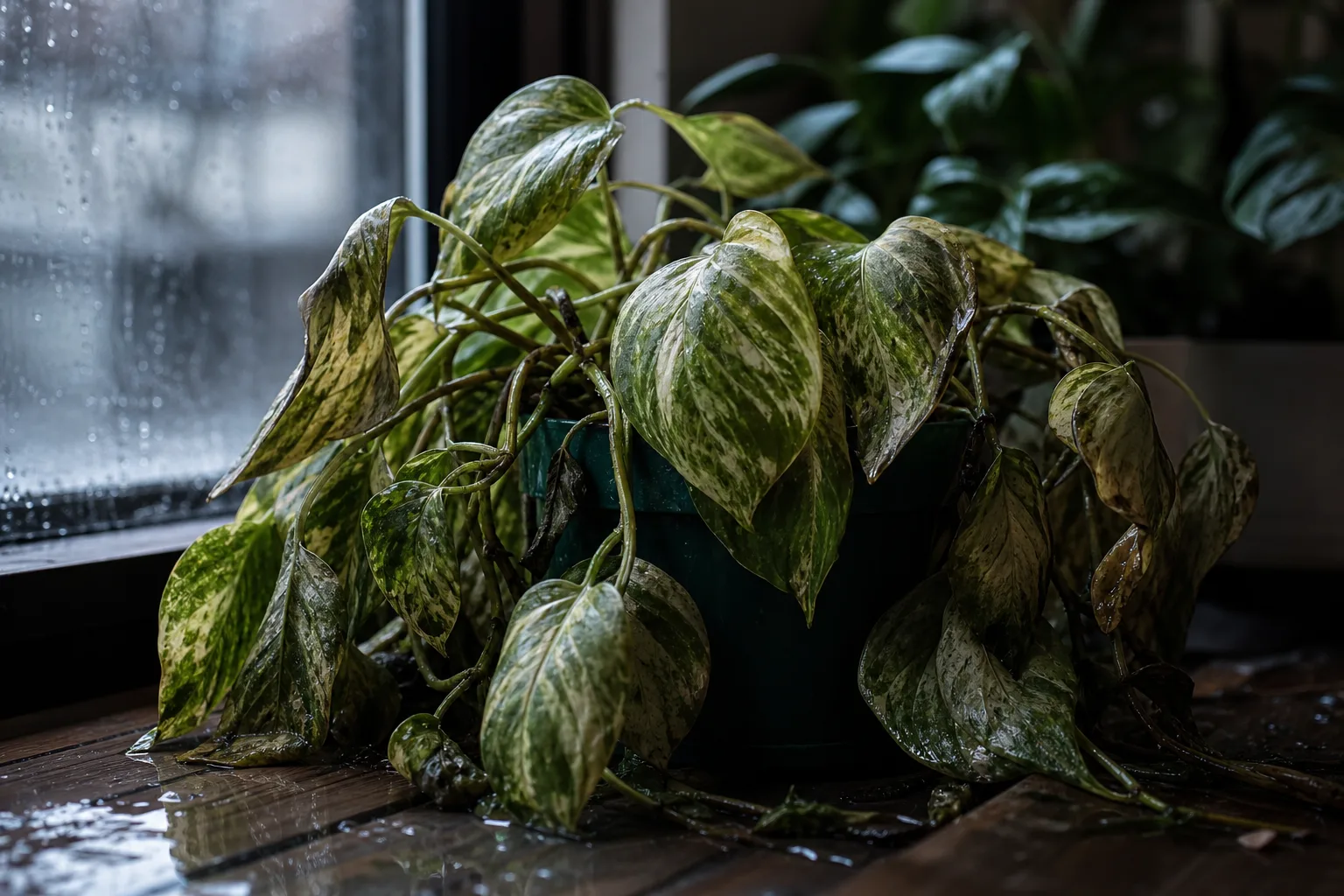
Frost-Sensitive Balcony and Terrace Moves
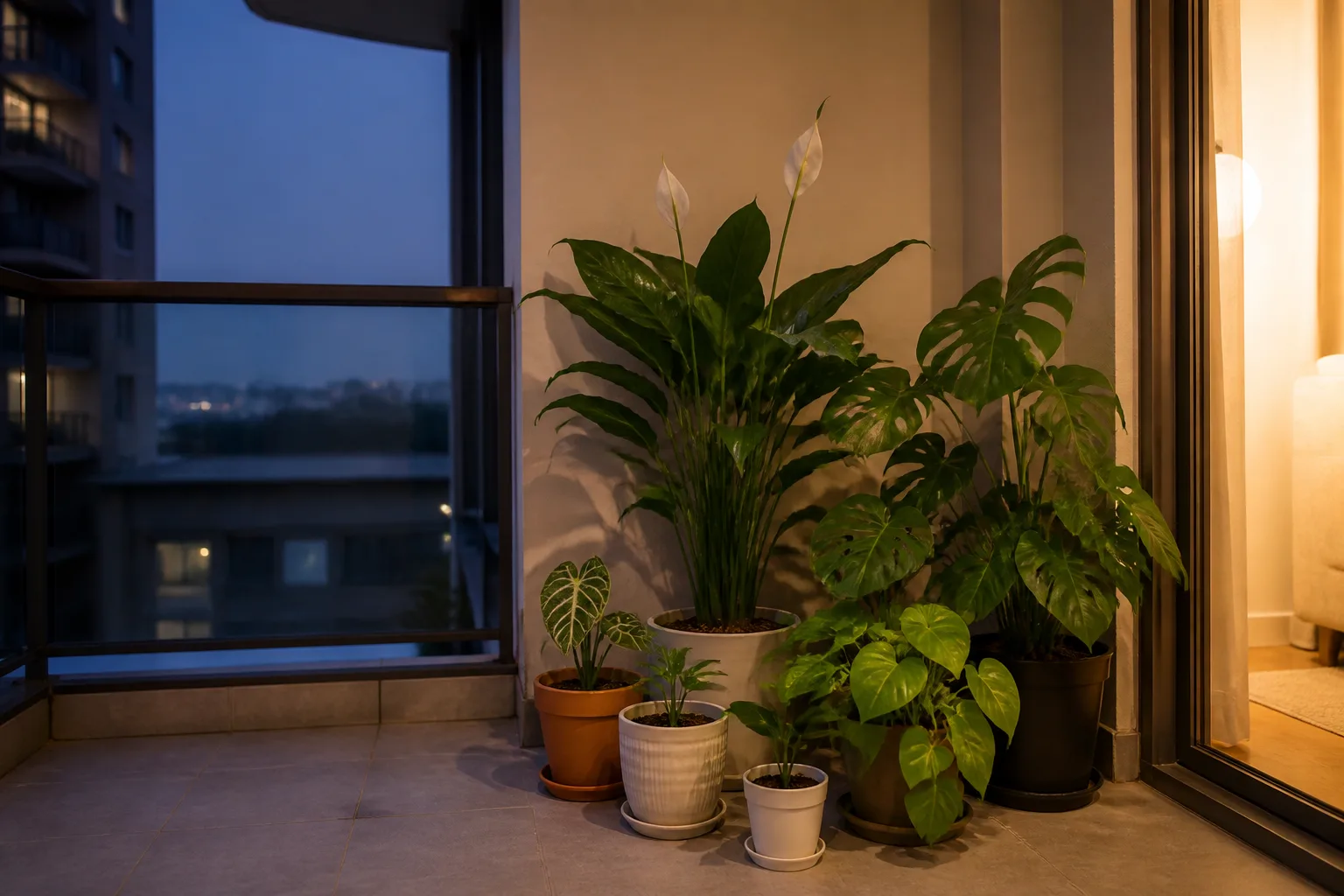
Balcony culture is where North India winter diverges hardest from indoor-only temperate advice. Afternoon sun can still feel pleasant while night air on an open ledge approaches cold-wave territory. Soft tropicals, freshly rooted cuttings, and thin-leaved aroids are first to show translucent patches, then brown or black collapse.
Use forecast minima, not optimism. When nights are headed toward the IMD cold-wave band on the plains — or simply toward single-digit °C for tender species — move frost-sensitive pots indoors or against a sheltered wall under cover the afternoon before. Waiting until leaves look water-soaked wastes a recovery window.
| Plant type | Open balcony in cold-wave weeks | Why |
|---|---|---|
| Soft tropicals, thin aroids, cuttings | Bring in / solid cover | Chill blackening starts fast |
| Peace lily, calathea, ferns | Indoors preferred | Thin leaves + moisture sensitivity |
| Established jasmine in sheltered spots | Often stay out if crowns stay dry | Woody structure tolerates plains chill better than soft foliage |
| Bougainvillea (plains winters) | Often stay out with sharp drainage | Free-draining pots; avoid standing wet cold |
| Succulents / jade | Often stay out if trays empty | Crown wetness + freeze is the real risk, not dry cold alone |
When you bring plants in, quarantine briefly and check for pests that rode in from outdoor pots. Do not yo-yo plants daily between deep indoor shade and harsh afternoon balcony sun. Pick a winter station for the coldest weeks, then transition gradually when nights warm. For the opposite season’s heat playbook, see balcony plants for Indian summers.
Pause Fertilizer Until Growth Returns
NC State’s winter guidance is practical: fertilization is generally unnecessary while growth is slow; resume in spring as light and temperatures improve. In North India, that often means holding feed through the foggiest, coldest stretch and restarting only when you see steady new growth and faster dry-down — often late February or March depending on city and balcony exposure.
Feeding a chilled, low-light plant does not “wake it up.” It raises salt load in media that is already drying slowly. Winter bloomers are the exception only when they are actively budding under adequate light. Everyone else can wait.
Clean Leaves and Watch for Spider Mites (and Gnats)
Dust and urban film cut light and create a friendlier surface for mites. Wipe leaves with a soft cloth and mild soap solution, or give a lukewarm shower, as NC State Extension suggests — never with hot water on cold foliage.
Colorado State Extension notes that plants in very hot, dry sites are prone to spider mites, which stipple leaves, bronze foliage, and leave fine webbing as populations climb. Heater corners in North Indian flats are classic mite incubators. Increase humidity around susceptible plants, rinse leaf undersides repeatedly over a couple of weeks, and isolate heavy infestations. For species-level mite triage, see spider mites on houseplants.
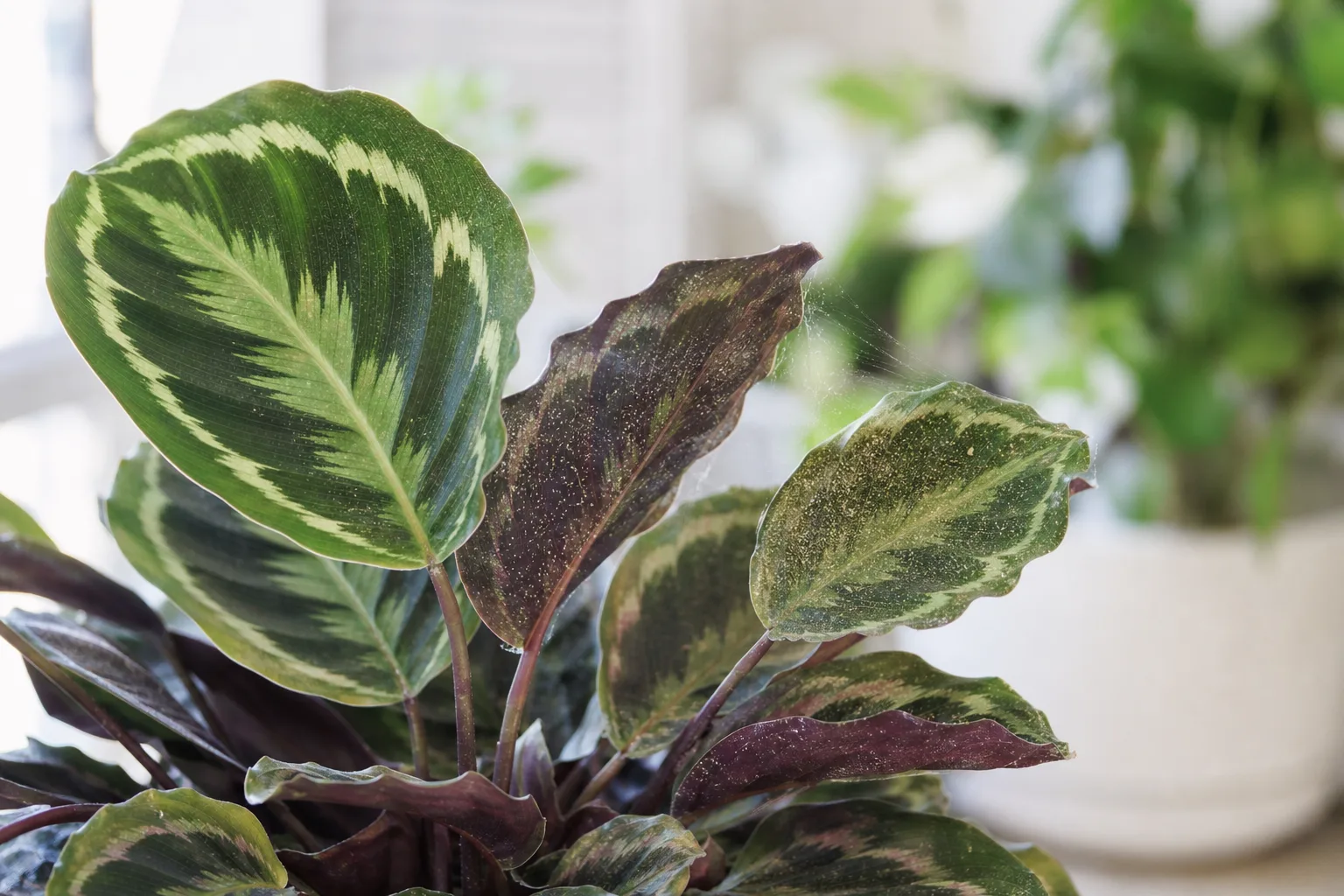
Fungus gnats are the other winter trap: they thrive when people keep media constantly moist “because heaters dry the air.” Dry the top layer between waterings; do not answer dry air by drowning roots. If leaves yellow while the mix stays wet, also read overwatered plant signs before you water again.
First-Hand Notes From North India Winter Weeks
These are LeafyPixels editorial observations from plains apartment and balcony pots — not lab trials. Use them as calibration, then trust your own pot weight.
- Noida west-balcony peace lily (plastic 15 cm pot, peat-leaning mix): After a May schedule of watering every 3–4 days, the same pot stayed heavy for 6–8 days through a foggy December week with closed windows. Emptying the saucer within 30 minutes stopped overnight re-wetting; the plant flagged for water only when the pot felt light again, not on the old calendar.
- Delhi heater-side calathea vs humidity corner (same room): A calathea parked 1–1.5 m from an oil blower developed tip burn within about two weeks of nightly heating. The same cultivar grouped with other plants on the opposite wall, with a small humidifier running nearby, held edges better while RH in the heater corner felt noticeably drier to the touch.
- Open sill chill after a clear-sky night: A thin-leaved aroid left with leaves touching glass behind drawn curtains showed translucent patches by morning, then blackening over the next two days. Moving the pot a finger-width off the glass and inside the curtain line stopped new damage; the black tissue did not green again.
- Indicator-pot weight tracking: One snake plant in terracotta became the shelf’s winter metronome — when it stayed cool and heavy past day 10–12 after a fog spell, every softer tropical on the same shelf needed longer intervals too.
A Weekly Winter Routine for Delhi-NCR Style Homes
Use this as a default for plains apartments from roughly December through mid-February, then adjust to your pots:
- Twice-weekly moisture check for tropicals; weekly for snake plant, ZZ, and similar. Water only when the mix has dried to that plant’s preferred depth.
- Fog-week light audit every few days — move clusters to the brightest safe window or add a grow light on dark stretches.
- Heater and draft scan whenever you run heating: no direct blower on foliage, no plants trapped against cold glass behind curtains.
- Balcony forecast check before clear cold nights; bring tender pots in early.
- Leaf wipe every one to two weeks in smog season; underside rinse if you see stippling.
- Fertilizer hold until active growth returns.
Track pot weight for one “indicator plant” you know well. When that pot suddenly stays heavy for days after a fog spell, the whole shelf needs longer intervals.
After the Cold Wave: How to Ramp Care Back Up
When minima rise and fog spells break, do not swing overnight into May watering or full balcony sun.
- Days 1–3 after the coldest nights: Keep tender pots in their winter station. Assess chill damage without heavy pruning; wait for the full blackening line to show.
- Week 1 of milder nights: Resume soil checks; shorten intervals only if pots are light and leaves feel firm. Increase light gradually — sudden afternoon balcony sun can bleach fog-adapted leaves.
- Week 2: Reintroduce covered-balcony time for plants that stayed indoors, starting with morning light. Hold fertilizer until you see steady new growth.
- Week 3–4: Return hardy balcony plants to their summer stations only after nights stay clearly above your tender threshold. If another Western Disturbance and clear-sky chill is forecast, flip back to cold-wave mode using the same IMD cue — do not wait for tissue damage.
Mistakes That Mimic Disease
Winter decline is often cultural, not a mystery pathogen. Overwatering after a cold night looks like root disease. Heater tip burn looks like fertilizer burn. One-sided leaf drop near a door looks like pest damage until you feel the draft. Clemson’s disorders page notes that chilling can cause leaf drop, and environment-change drop may last about three weeks — so do not stack fixes every other day.
If leaves yellow while soil stays wet, stop watering and check roots before buying fungicide. If tips crisp only on the heater side, move the plant before you raise humidity for the whole flat. If buds abort after you brought a plant past a cold corridor, stabilize temperature and humidity rather than force-feeding. Sudden winter leaf drop often tracks chill, drafts, or light loss more than a mystery disease.
Author: Sai Ananth, LeafyPixels lead content writer. Reviewer: Dr. Priya Menon, botanist and indoor plant specialist on the LeafyPixels Editorial Review Board. Dry-down day ranges and heater/balcony notes in the first-hand section are apartment observations; IMD thresholds and moisture science are tied to the cited primary sources.
Related Guides
Use these when a single problem takes over — each link has a winter trigger:
- Winter houseplant care — temperate indoor-only watering, light, humidity, and pest checks when your setup is not a North India balcony stack.
- Draft stress on houseplants — one-sided curl, tip burn, or bud abort near heaters, vents, and leaky doors.
- Houseplant humidity guide — dry-air fixes beyond misting, including humidifiers and plant grouping.
- Brown tips and crispy leaves — symptom pages for dry heater air and uneven watering.
- Cold damage — triage after balcony chill or cold glass injury.
- Monsoon houseplant care in India — the wet-season counterpart when humidity and overwatering flip the other way.
- Grow lights for indoor plants — fog-week supplemental light without guessing distance and timing.
Conclusion
North India winter care is a regional stack: stretch watering as nights cool and fog slows drying, chase usable light on haze days, protect foliage from heater jets and cold glass, and move frost-sensitive balcony plants before cold-wave nights — not after black tissue shows. Dry air is real, but misting is not the fix; humidity clusters and sensible heater distance are. Hold fertilizer until growth returns, clean leaves in smog season, watch dry hot corners for spider mites, and ramp care back up gradually after the coldest stretch.
Use this page as the plains-specific playbook, and lean on the general winter guide linked above when your microclimate looks more like a heated indoor-only room than an open Delhi balcony. Your plants do not need more winter love. They need less water, steadier placement, and honest respect for cold nights.



