6 Ornamental Grasses That Come Back Every Year
Choose six ornamental grasses that return bigger each year, then match them to sun, soil, mature spread, watering, pruning, and garden size.
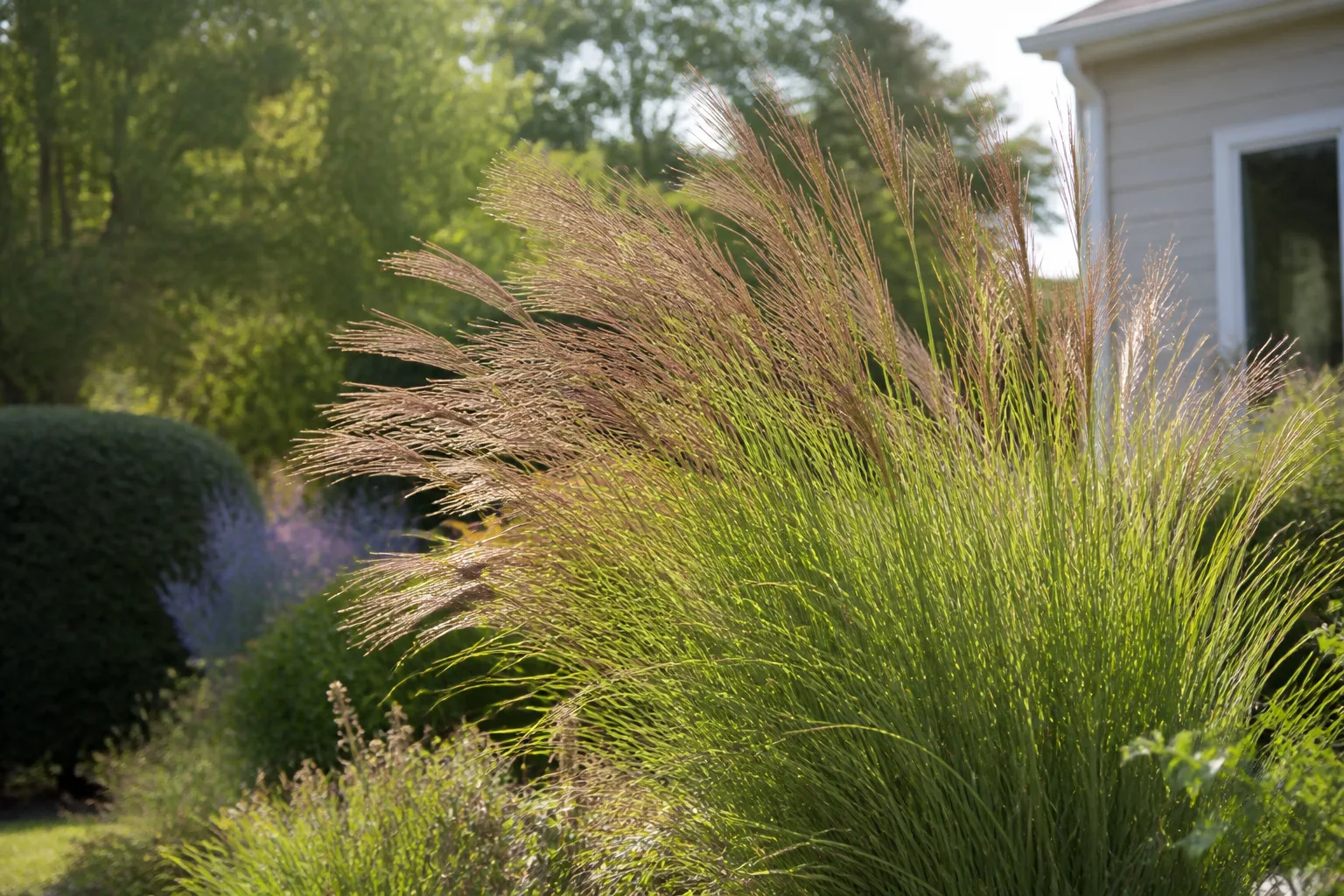
The best ornamental grasses for a fuller garden are not necessarily the fastest spreaders. They are perennial plants that survive winter, build a wider crown, and keep their shape when the site matches their needs. A grass planted in the wrong light may stay thin or flop, while the same cultivar can become a substantial, low-care clump in the right border.
The six choices below cover tall screens, upright accents, fall color, airy plumes, and low groundcover. They also include two sedges—grass-like plants that are especially useful in shade—because a sunny prairie grass is not a substitute for a plant that can handle dry woodland conditions. The practical rule is simple: choose by light and moisture first, then leave enough room for mature width.
What “Bigger Every Year” Really Means
“Comes back bigger” describes a healthy perennial crown adding shoots and roots over multiple growing seasons. It does not mean every plant doubles in size each summer, and it does not mean the plant will fill an empty bed immediately. Most ornamental grasses spend their first season establishing roots; a thin-looking plug may become a dense clump in its second or third growing season.
There is also an important difference between clumping and spreading. A clumping grass expands outward from a central crown, so its growth is usually predictable and easy to see. A rhizomatous plant sends underground stems sideways and can cover ground more quickly, but it also needs more deliberate spacing and occasional editing. Pennsylvania sedge is useful as a low groundcover partly because it spreads; pink muhly, by contrast, is a clump-former that does not spread by rhizomes, according to the Missouri Botanical Garden Plant Finder.
The goal is not to find the most aggressive plant. It is to find a plant whose natural rate of increase matches the job. A slow, shade-tolerant sedge can be the better choice than a fast grass if it will stay where you need it and require less correction later.
Pick the Grass by Sun, Soil, and Mature Spread
Start with the site, not the flower color. Count direct sun on the planting area during the growing season, note whether the soil stays wet or dries quickly, and measure the bed’s usable width from the path, wall, or neighboring plant. Full sun generally gives flowering grasses their strongest stems and best color, while shade can reduce bloom and make many grasses lax or floppy. Colorado State University Extension notes that many ornamental grasses perform best with several hours of direct sun, but the exact threshold varies by species.
Next, decide whether you want a vertical accent, a medium clump, or a low carpet. Tall switchgrass belongs toward the back of a border or where a screen is welcome. Little bluestem and pink muhly sit more comfortably in the middle. Pennsylvania sedge can knit together a shady foreground, but it is not a lawn replacement for heavy foot traffic.
Finally, check the mature width on the plant tag rather than planting by the size of the nursery pot. The space between plants should be based on the distance from center to center. If you want the clumps to touch sooner, use a slightly closer spacing, but do not crowd them so tightly that air movement and root growth suffer.
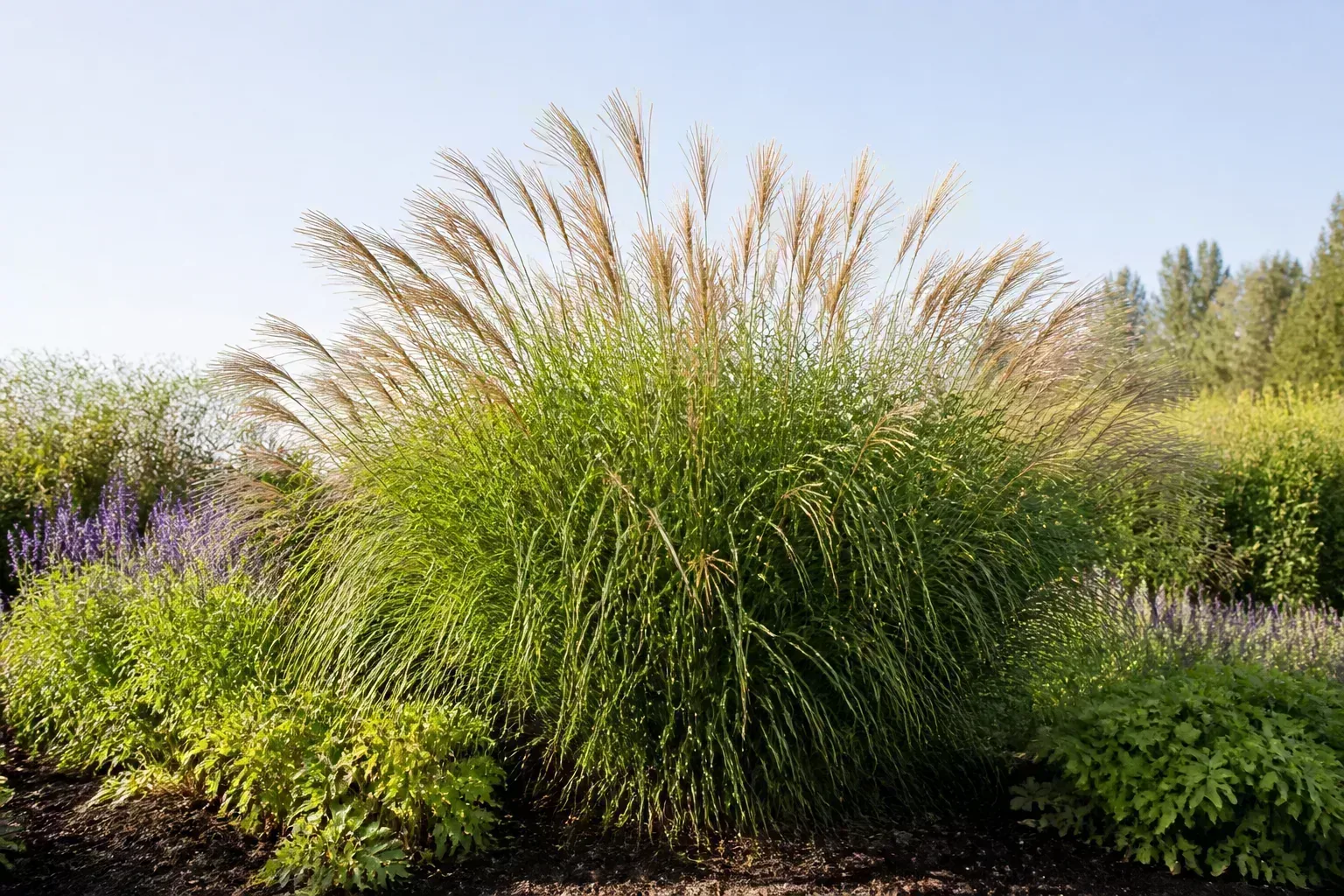
Quick Comparison: Six Grasses for a Fuller Garden
| Plant | Best site | Mature character | How it gets fuller | Main caution |
|---|---|---|---|---|
| Switchgrass | Full sun; average to moist soil | Upright, 3–4 feet of foliage with taller plumes | Dense crown and slow rhizomatous spread | Can flop in too much shade; dry foliage is flammable |
| ‘Karl Foerster’ feather reed grass | Full sun to light shade; average to moist soil | Narrow clump, 2–3 feet tall with 5–6-foot plumes | Upright crown; sterile cultivar does not self-seed | Needs early spring cleanup because growth starts early |
| Pink muhly grass | Full sun; sharply drained, dry to medium soil | Fine foliage and pink fall clouds, about 2–3 feet | Clump-forming crown | Wet winter soil and shade reduce performance |
| Little bluestem | Full sun; dry to medium, well-drained soil | 2–4-foot blue-green clumps with copper fall color | Bunching crown | Excess water or fertilizer can weaken its upright habit |
| Appalachian sedge | Part shade to shade; woodland-type soil | Low, fine-textured tufts | Gradual crown expansion | Confirm local availability and mature size; not a sunny prairie plant |
| Pennsylvania sedge | Dry to medium shade; light foot traffic only | Low, soft groundcover | Rhizomes and spreading clumps | It can move beyond the intended edge if given open space |
1. Switchgrass (Panicum virgatum)
Switchgrass is the best choice of the six when you want height, structure, and a plant that can handle more than one kind of soil. It is a warm-season North American perennial that forms a dense, columnar clump, with airy flower panicles rising above the leaves. The NC State Extension profile describes the species as roughly 3 to 4 feet in foliage and up to about 7 feet with plumes, though cultivar size varies substantially.
For a strongly upright look, ‘Northwind’ and ‘Prairie Sky’ are useful starting points. ‘Northwind’ is listed by NC State as an erect, blue-leaved cultivar around 5 feet tall, while ‘Prairie Sky’ is commonly used for blue foliage and a vertical silhouette. In a larger border, repeat three or five plants rather than placing one clump in the middle of a wide bed; repetition makes the eventual fullness look intentional.
Give switchgrass full sun and consistent moisture while it establishes. Mature plants can tolerate drought, but a tall grass with a large leaf canopy cannot build that size from a dry root ball in its first summer. Partial shade may be survivable, but it can loosen the clump and increase flopping. Switchgrass can spread slowly through creeping rhizomes, so place it where a gradual increase is useful rather than directly against a narrow path.
Leave the seed heads through winter if they are not a fire hazard. They add movement and can provide food and cover for wildlife, but dry grass is combustible. NC State flags switchgrass as highly flammable, so keep large dry stands away from structures and follow local fire-safety guidance. Cut it back in late winter or early spring before fresh growth gets tangled in last year’s stems.
2. Feather Reed Grass ‘Karl Foerster’ (Calamagrostis × acutiflora)
Choose ‘Karl Foerster’ when you want a narrow, architectural plant with early-season foliage and tall plumes. It is a cool-season grass, so it starts growing earlier than warm-season switchgrass and can provide a vertical line when many perennials are still waking up. The clump itself is often about 2 to 3 feet tall and less than 2 feet wide, while its flower stems can reach 5 to 6 feet.
The plumes change from greenish and rosy pink to maroon, bronze, and tan. They remain upright into winter, which makes this cultivar especially effective along a driveway, fence, or sunny foundation bed. The University of Wisconsin–Madison profile lists it as hardy in Zones 3–9 and notes that ‘Karl Foerster’ does not self-seed, a valuable distinction for gardeners who want a tidy clump rather than volunteer seedlings.
Plant it in full sun for the strongest stems, although light shade can work if the soil is not waterlogged. Its narrow habit makes it easier to fit into a smaller bed than a wide fountain-shaped grass, but do not mistake narrow for tiny: the flower stems rise well above neighboring plants. It generally grows best in a soil that drains reasonably well and has regular moisture during establishment.
This is one grass not to cut back in fall if you want its winter form. Because it begins growth early, remove the old stems in late winter or very early spring before the new blades are tall enough to be clipped. Divide a congested clump in spring or fall, using a sharp spade; a small division may need another growing season before it looks full.
3. Pink Muhly Grass (Muhlenbergia capillaris)
Pink muhly grass earns its place for late-season color rather than sheer height. In autumn, its fine branches carry airy pink to pinkish-red flower clouds that appear to hover above wiry foliage. It works best as a repeated drift or as a soft front-of-border accent where the backlighting can show off the plumes.
The Missouri Botanical Garden lists pink muhlygrass for Zones 5–11, with a typical spread of 2 to 3 feet and a preference for full sun, dry to medium moisture, and well-drained soil. It tolerates heat, humidity, drought, poor soil, and urban conditions, but consistent moisture can help it grow taller. The key phrase is well-drained: drought tolerance does not make a plant happy in a wet winter bed.
Pink muhly is a warm-season, clump-forming grass. It does not spread by rhizomes, so you can use several plants to build a fuller look without treating the planting as a roaming groundcover. Leave enough space between crowns for air circulation and for the clumps to widen. If the center of an older plant dies out or the outer growth becomes thin, division in spring can rejuvenate it.
Avoid rich, high-nitrogen feeding in an effort to force growth. It can produce lush leaves at the expense of the compact, flowering form you wanted. Give the plant sun, sharp drainage, and time; most of the visual payoff arrives later in the season, so a plain green clump in early summer is not a sign that it has failed.
4. Little Bluestem (Schizachyrium scoparium)
Little bluestem is a durable native prairie grass for a sunny, drier border. Its narrow leaves form upright clumps roughly 2 to 4 feet tall, starting blue-green in summer and shifting to copper, orange, or red tones in fall. Purplish-bronze seed heads hold their shape into winter, giving the plant more than one season of interest.
The NC State Extension profile describes little bluestem as adaptable to average, dry to medium-moist, well-drained soil, including infertile and clay soils. Once established, it has strong drought resistance. That does not mean it should be planted in compacted soil and abandoned immediately: new plants still need deep watering while roots move into the surrounding ground.
Use little bluestem in a meadow-style border, a rain-light slope, or among late-season flowers. It is a bunching grass, so it expands as a crown rather than racing across the bed. It is also a useful wildlife plant: NC State identifies it as a larval host and year-round cover, with seeds used by birds and small mammals. Deer resistance is another advantage where browsing is a recurring problem.
Cut it back to the ground in late winter or early spring before new blades emerge. Keep thick mulch away from the crown, especially in wet climates. If a clump grows broad but open, check light and nitrogen first; moving the plant or improving drainage is usually more effective than dividing a grass that is simply stressed.
5. Appalachian Sedge (Carex appalachica)
Appalachian sedge is the quiet option for gardeners who need a low, shade-friendly texture rather than a tall plume. It forms fine, arching tufts that soften the front of a woodland border, the edge of a path, or the space beneath taller shrubs. It is a sedge, not a true grass, but it belongs in this list because sedges solve a problem that most sun-loving ornamental grasses cannot.
Treat it as a foliage plant. In shade, it may not deliver a showy flower display, but its narrow blades can create a more cohesive ground layer than a collection of isolated shade perennials. Give it soil with organic matter and enough drainage to avoid staying saturated for long periods; dry shade and bright dappled shade are different from the deep, root-filled shade beneath a thirsty tree.
Its increase is gradual, which is an advantage in a small garden. Instead of expecting one plant to cover a large area in a season, place several plugs at a spacing based on the seller’s mature-width information. The exact behavior and availability of native sedges can vary by region, so confirm the species and local suitability with a native-plant nursery or extension office before buying a substitute labeled only “shade grass.”
Do not shear Appalachian sedge as if it were switchgrass. Comb out dead blades in spring, trim only the damaged material, and protect the crown from an oversized layer of wet mulch. This lighter touch preserves the texture that makes it valuable.
6. Pennsylvania Sedge (Carex pensylvanica)
Pennsylvania sedge is the best of these six for creating a low, soft carpet in dry shade. The NC State Extension profile describes it as a native perennial for eastern North American woodlands that tolerates heavy shade and wet soils but performs especially well in dry to moist shade. It is semi-evergreen in many gardens and can be mowed once or twice a season if you want a short, lawn-like appearance.
The sedge does not tolerate full sun as a general rule, and it does not tolerate heavy foot traffic. Use it under trees, beneath taller perennials, or on a lightly used slope—not in the main route between a gate and a patio. Its fine foliage can make a garden feel fuller without adding height, which is often the missing layer in a small or shady landscape.
Pennsylvania sedge spreads through rhizomes and can form a broad groundcover. That makes it more effective than a strict clump-former when you want to knit an open area together, but it also means you should define the edge before planting. A path, edging, or a routine spring trim can keep it from moving into neighboring beds. If you need a sedge that stays more tufted, ask a local native-plant specialist about alternatives rather than assuming every Carex behaves the same way.
Design the Six Grasses Into a Fuller Border
Layer the planting by height and season. Put switchgrass or ‘Karl Foerster’ where their stems can rise behind shorter perennials, use little bluestem or pink muhly in the middle, and let a sedge occupy the foreground or shade transition. This gives you fullness at several levels instead of six plants competing for the same visual space.
Repeat a plant at least three times when the bed is wide enough. A single ornamental grass can look like an afterthought; a repeated group reads as a deliberate rhythm. Epic Gardening’s landscape guidance similarly emphasizes massing grasses for movement, texture, and a stronger seasonal composition. Pair blue-green foliage with warm fall color, dark-leaved perennials, or seed-bearing flowers, and leave some winter stems standing so the garden does not collapse into bare soil after the first frost.
Use mass planting carefully around structures. A dense, dry stand can be a fire concern, especially under drought conditions. Colorado State Extension notes that dried grass foliage is combustible, and NC State specifically gives switchgrass a high flammability rating. Keep the tallest, driest grasses away from vents, decks, and the defensible space immediately around a home.
Planting for Fast, Even Establishment
Plant in spring in cold climates so the root system has time to develop before winter. Container-grown plants can often be installed beyond spring where conditions allow, but warm-season grasses planted late in a cool season may sit still and enter winter under-established. Water the root zone thoroughly after planting, then keep it evenly moist—not constantly soggy—until you see steady new growth.
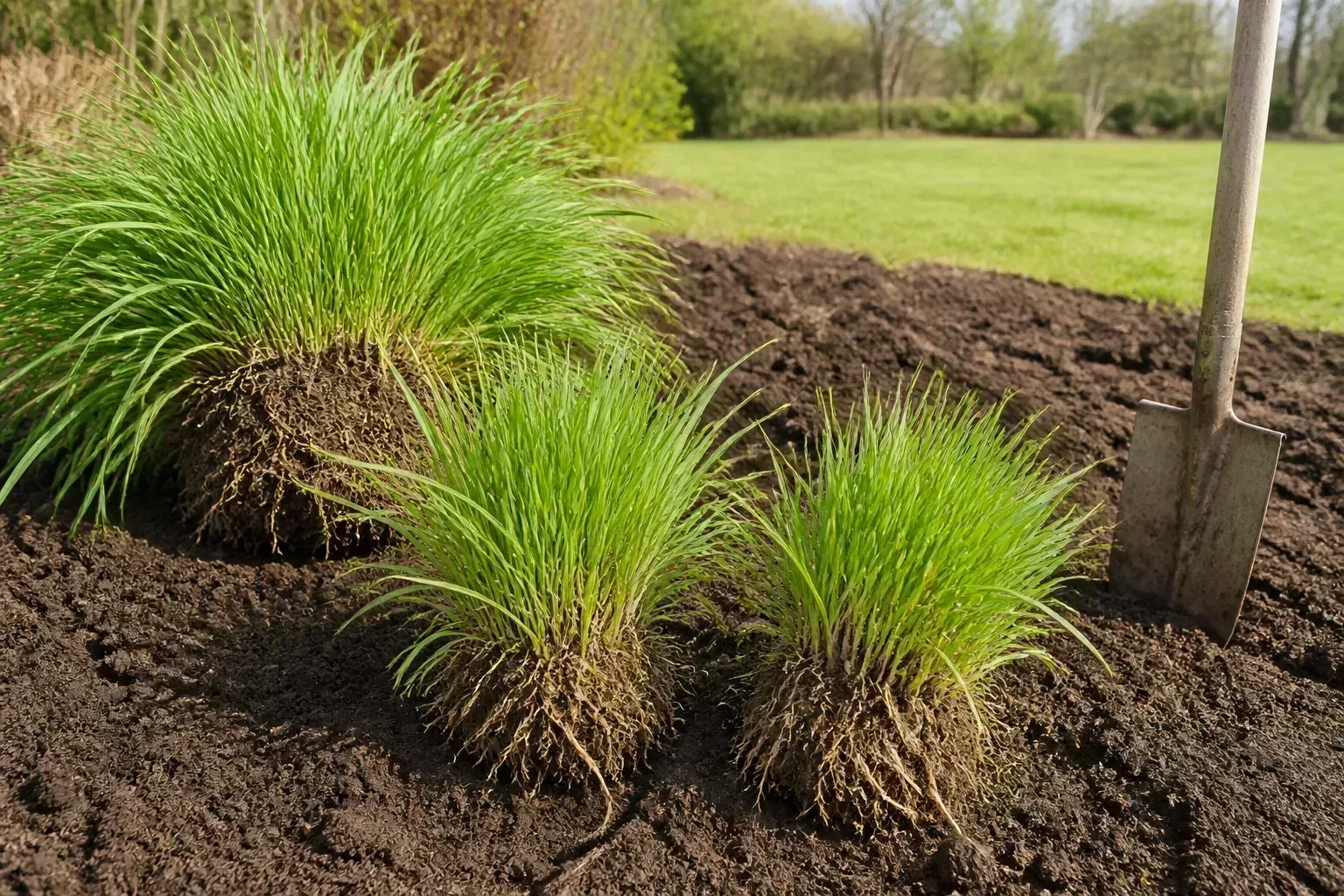
Remove competing weeds before they set seed. New grass crowns are easy to lose in a bed where weeds take the water and light, and a weedy planting can look like a plant failure when the real problem is competition. A thin layer of mulch helps conserve moisture, but leave a small air gap around each crown so the base does not remain wet.
Match Spacing to Mature Width
Use the plant’s mature width as the starting point. If a grass is expected to reach 3 feet wide, spacing centers 3 feet apart creates a connected mass at maturity; spacing them 2 feet apart creates a faster-filling but more crowded planting. For a sedge groundcover, follow the nursery’s plug spacing and expect the area to knit together over more than one season.
Avoid the common shortcut of planting every grass 12 inches apart because the nursery pot looks small. That creates instant density but can force division sooner, reduce airflow, and hide the plant’s natural form. If you need coverage quickly, use more plants at a reasonable mature spacing rather than cramming a few crowns together.
Water and Feed Until the Clumps Establish
Established ornamental grasses are often low maintenance, but “drought tolerant” is not the same as “never water.” Deeply water new plants when the upper soil begins to dry, and adjust for rainfall, soil texture, wind, and heat. Sandy beds drain quickly; clay soils may hold water at the crown even when the surface looks dry.
Once a grass is growing vigorously, reduce irrigation according to the species. Little bluestem and pink muhly prefer the drier side, while switchgrass and ‘Karl Foerster’ look better with more consistent moisture. Pennsylvania sedge handles dry shade, but a new planting beneath a mature tree may need supplemental water because tree roots intercept rainfall.
Skip routine fertilizer unless a soil test or clear deficiency supports it. Many prairie grasses are adapted to lean soils, and excess nitrogen can create soft, leafy growth that flops. If a plant is small after one season, first check light, drainage, root competition, and establishment water before adding feed.
Cut Back, Divide, or Leave Alone?
Leave ornamental grasses standing through winter when the stems are attractive, safe, and not blocking a path. Seed heads provide structure and can offer food or cover, while the dry foliage protects the crown from some winter exposure. Remove or shorten it earlier where dry growth creates a fire hazard, becomes a safety issue, or mats into a wet, rotting layer.
Divide only when the plant is genuinely overcrowded, has a dead center, or needs to be propagated. Digging a mature grass is hard work because the root mass can be dense. Warm-season grasses are usually divided as new growth begins in spring; cool-season grasses such as ‘Karl Foerster’ can be divided in spring or fall when conditions are favorable. Water divisions in and do not expect a small piece to look like the parent immediately.
A Simple Late-Winter Cleanup
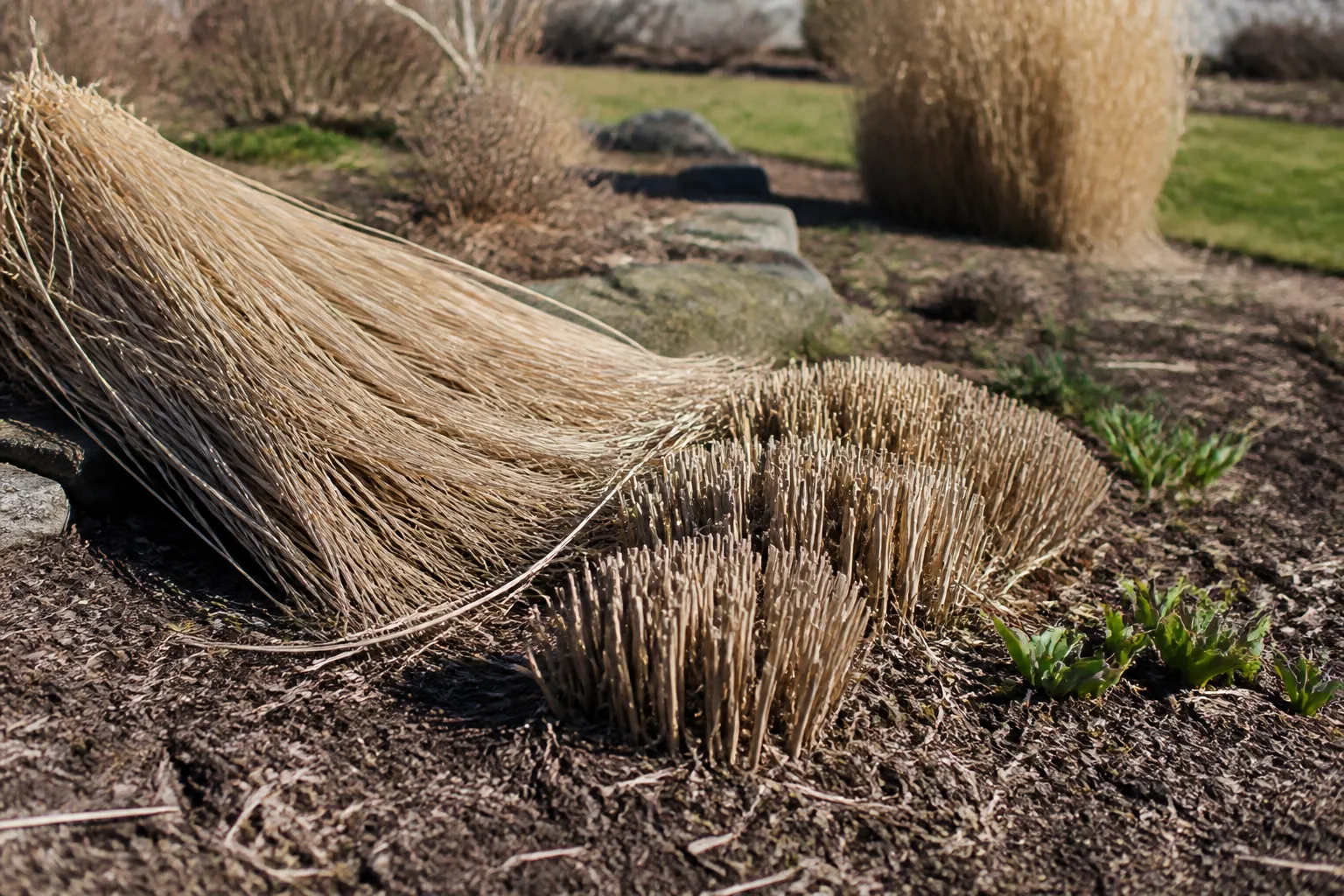
For deciduous grasses, tie the old stems into a bundle, wear gloves and long sleeves, and cut the clump low enough to clear the crown without gouging it. Late winter or very early spring is the useful window: the plant has retained winter interest, but new blades have not grown far enough to be sliced off. Savvy Gardening’s pruning guide describes this seasonal distinction and recommends different cut heights for short and tall grasses.
Sedges are the exception. Do not automatically cut them to the ground. Rake or comb out dead material, remove winter-damaged blades, and leave healthy evergreen or semi-evergreen growth in place. Clean your tools between plants if you are cutting material that shows disease, and compost only debris that is free of serious pests or pathogens.
Troubleshoot Thin, Floppy, or Brown Clumps
Flopping: Check light first. A grass that receives less sun than its cultivar requires may stretch toward light and lose the upright outline shown on the tag. Overfertilizing, excessive irrigation, wind exposure, or a naturally arching cultivar can contribute. Improve the site or support the plant temporarily; do not keep adding fertilizer.
Brown center: A dead center in an older clump can signal crowding or normal aging. If the outer ring is healthy, divide the plant and replant vigorous sections with fresh space. If the whole crown is brown, inspect planting depth, winter damage, drainage, and whether the species is hardy in your climate before assuming it needs more water.
Slow first-year growth: Warm-season grasses can sit quietly in cool spring weather, and newly divided plants may prioritize roots over leaves. Keep weeds down, water deeply during dry spells, and judge the plant after a full growing season. A plant that is alive but small is usually not a reason to move it in midsummer.
Few or no plumes: Shade, late planting, drought stress, or a short growing season can delay flowering. Some sedges are grown for foliage and will never behave like a plume-producing grass. Move the expectation before moving the plant: the right grass for a shady bed may be a low green carpet, not a pink cloud.
Common Mistakes That Keep Grasses From Filling In
- Planting a sun grass in shade: Switchgrass, little bluestem, and pink muhly need strong light for their best form and bloom. Choose a sedge for a genuinely shady site.
- Ignoring mature width: A crowded crown may look full on planting day but decline sooner and need difficult division.
- Treating all “grass” as the same: Sedges, cool-season grasses, and warm-season grasses have different growth timing and pruning needs.
- Cutting everything in fall: You lose winter structure and may remove useful cover before the plant enters dormancy.
- Waiting too long in spring: Early-growing ‘Karl Foerster’ can be damaged by cutting through new blades.
- Watering only the foliage: Water the soil around the root zone, especially during the first growing season.
- Assuming low maintenance means no maintenance: Weeds, dead centers, unsafe dry growth, and rhizomatous edges still need occasional attention.
- Fertilizing by habit: Rich feeding can make some grasses floppy and does not solve poor light or poor drainage.
- Planting a rhizomatous sedge without an edge: Pennsylvania sedge is useful because it spreads, but that same trait needs room and boundaries.
Conclusion: Choose for the Site, Then Give It Time
For height and a strong vertical rhythm, start with switchgrass or ‘Karl Foerster.’ For dry, sunny color, little bluestem and pink muhly offer tough crowns, seasonal change, and useful winter structure. For shade, Appalachian sedge and Pennsylvania sedge create the low layer that most ornamental-grass lists overlook.
None of these plants becomes a fuller garden by name alone. Match the grass to its light and moisture, plant it at mature spacing, water during establishment, and prune according to its season. That combination gives the crown time to expand—and keeps “bigger every year” from turning into “more work than expected.”



