8 Plants Not to Prune in Summer
Learn which plants not to prune in summer, when each should be cut instead, and which emergency and deadwood cuts are still safe.
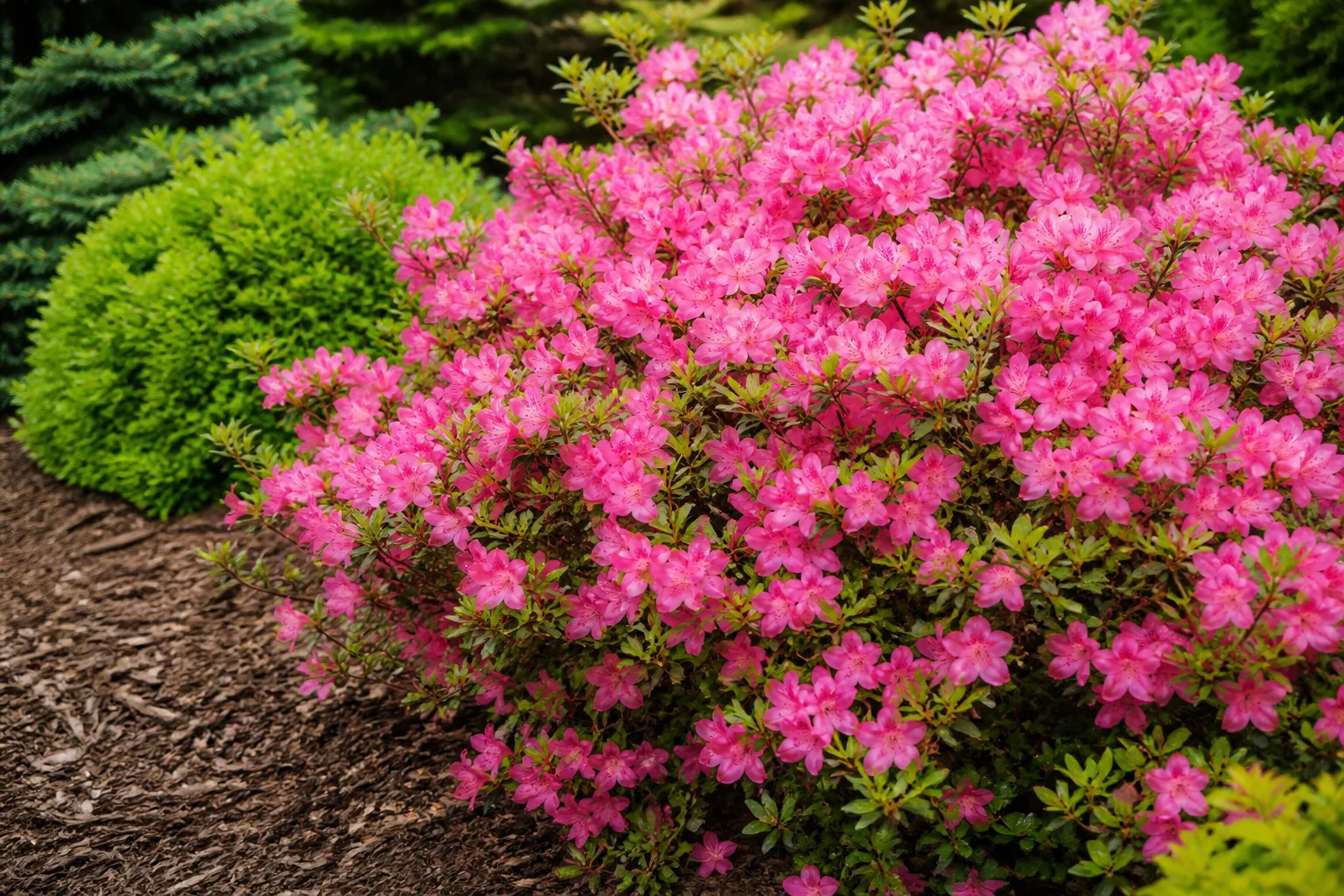
Quick answer: pause major cuts until you know the bloom cycle
The safest answer is not “never touch a shrub in summer.” It is do not make a major shaping cut until you know whether that plant has already formed next year’s flower buds. For many spring bloomers, summer shearing removes buds that are sitting on last year’s stems. For many summer bloomers, a hard cut can remove the flowering shoots that are carrying the current display or push out tender growth too late in the season.
The eight plants below are azalea, forsythia, rhododendron, beautyberry, abelia, crape myrtle, oleander, and butterfly bush. Their best pruning windows are not identical, and a dead, broken, diseased, or dangerous branch is still a reason to cut at once. The distinction is between a targeted repair and a cosmetic haircut.
| Plant | Why to pause major summer pruning | Better routine window | Summer work that is usually reasonable |
|---|---|---|---|
| Azalea | Flower buds for next spring form after this season’s bloom | Soon after flowering; major renovation before spring growth | Dead, broken, or diseased wood |
| Forsythia | Next spring’s buds sit on older stems | Immediately after flowering | A hazardous or damaged branch |
| Rhododendron | Buds for the next display set by mid- to late summer | Soon after bloom, before buds set | Clean-up cuts and careful deadheading |
| Beautyberry | New wood carries summer flowers and the berries that follow | Late winter or early spring | Dead or damaged stems |
| Abelia | New-season growth carries its fragrant flowers | Late winter or early spring | Light clean-up only |
| Crape myrtle | Flowering shoots are removed or delayed by hard summer cuts | Late winter or early spring | Broken wood; restrained deadheading |
| Oleander | Cutting while it is flowering removes tips; late cuts can remove next year’s shoots | After a flowering flush or before vigorous spring growth, depending on climate | Dead or frost-damaged wood with full safety controls |
| Butterfly bush | Summer shearing removes flowering growth and can spread seed-bearing material | Late winter or early spring | Deadheading flower spikes without shearing the shrub |
This is a timing guide, not a substitute for identifying the exact cultivar and climate. Penn State Extension groups spring bloomers such as azalea, forsythia, and rhododendron with old-wood shrubs, while beautyberry and butterfly bush are among the summer-blooming shrubs that are normally cut before spring growth. Penn State Extension’s flowering-shrub guide is a useful reference when a plant does not fit a simple “summer equals bad” rule.
Why a summer cut can cost you more than one season of flowers
Pruning is a growth decision, not just a size decision. A cut changes the plant’s balance of roots, leaves, dormant buds, new shoots, light, and stored energy. If you remove a branch that already carries flower buds, you may lose the next bloom before winter even arrives. If you force a flush of new shoots during a hot, dry period or late in the growing season, those shoots may be soft, poorly acclimated, or unable to mature before cold weather.
There is also a structural cost to repeated shearing. A shrub that is clipped only at its outer surface can develop a dense shell of leaves, weak interior growth, and long bare sections when the outer shoots are eventually removed. Penn State Extension puts size control low on the list of reasons to prune because plant selection and natural form are usually more durable than constant shearing. A selective cut at a branch junction is more informative—and usually kinder—than shortening every stem to the same height.
Summer heat raises the stakes. A plant already spending water on leaf cooling and active growth has less room to replace a large canopy, especially after drought, transplanting, root damage, or disease. A small corrective cut on a healthy plant is different from removing one-third or one-half of the living crown during a heat wave.
The old-wood and new-wood rule that solves most pruning timing questions
Old wood means stems that grew in the previous season or earlier. Spring-flowering shrubs often form their flower buds on those stems after they finish blooming, then carry the buds through summer, fall, and winter. The practical window is therefore right after flowering: the plant has finished its show, but it still has time to grow the stems that will hold next year’s buds.
New wood means growth produced during the current season. Many summer- and fall-flowering shrubs form flowers on those new shoots, so the usual major-pruning window is late winter or early spring, before new growth begins. That timing removes old, awkward stems without cutting off the season’s future flowering shoots. It does not mean every new-wood shrub should be cut to the ground every year; the species, cultivar, climate, and goal still matter.
The rule has exceptions. A reblooming cultivar may flower on both old and new wood. A plant sold under a common name may include several species with different habits. A branch that is dead, rubbing, storm-broken, infected, or threatening a walkway is a separate safety problem. When you do not know the plant, postpone cosmetic pruning and make identification the first task.
Azalea: prune soon after bloom, not by a fixed summer date
Azaleas are among the easiest shrubs to damage with a calendar-based haircut because the best window depends on when they finish flowering in your garden. Light shaping should happen while the flowers are fading or soon afterward, before the plant has progressed into summer bud formation. New York Botanical Garden advises pruning azaleas and rhododendrons immediately after bloom through roughly mid-July in its region; a warmer or cooler garden may reach that stage earlier or later.
For a small azalea, follow an overlong branch down to a lower lateral and cut just above that junction. Avoid leaving a stub and avoid automatically shearing the entire outside. The New York Botanical Garden’s azalea and rhododendron maintenance guide and the Azalea Society of America’s pruning guidance both emphasize removing dead wood first and staging major reductions on older plants, which preserves enough foliage and reduces shock.
If summer arrives and the azalea is too large, resist the urge to correct its outline immediately. Remove only dead, broken, or clearly diseased branches unless a branch is a hazard. You can mark the branches you want to reduce and make the structural cuts during the plant’s appropriate dormant-season window, or return soon after the next bloom cycle if the job is light.
Forsythia: finish shaping after the yellow flowers fade
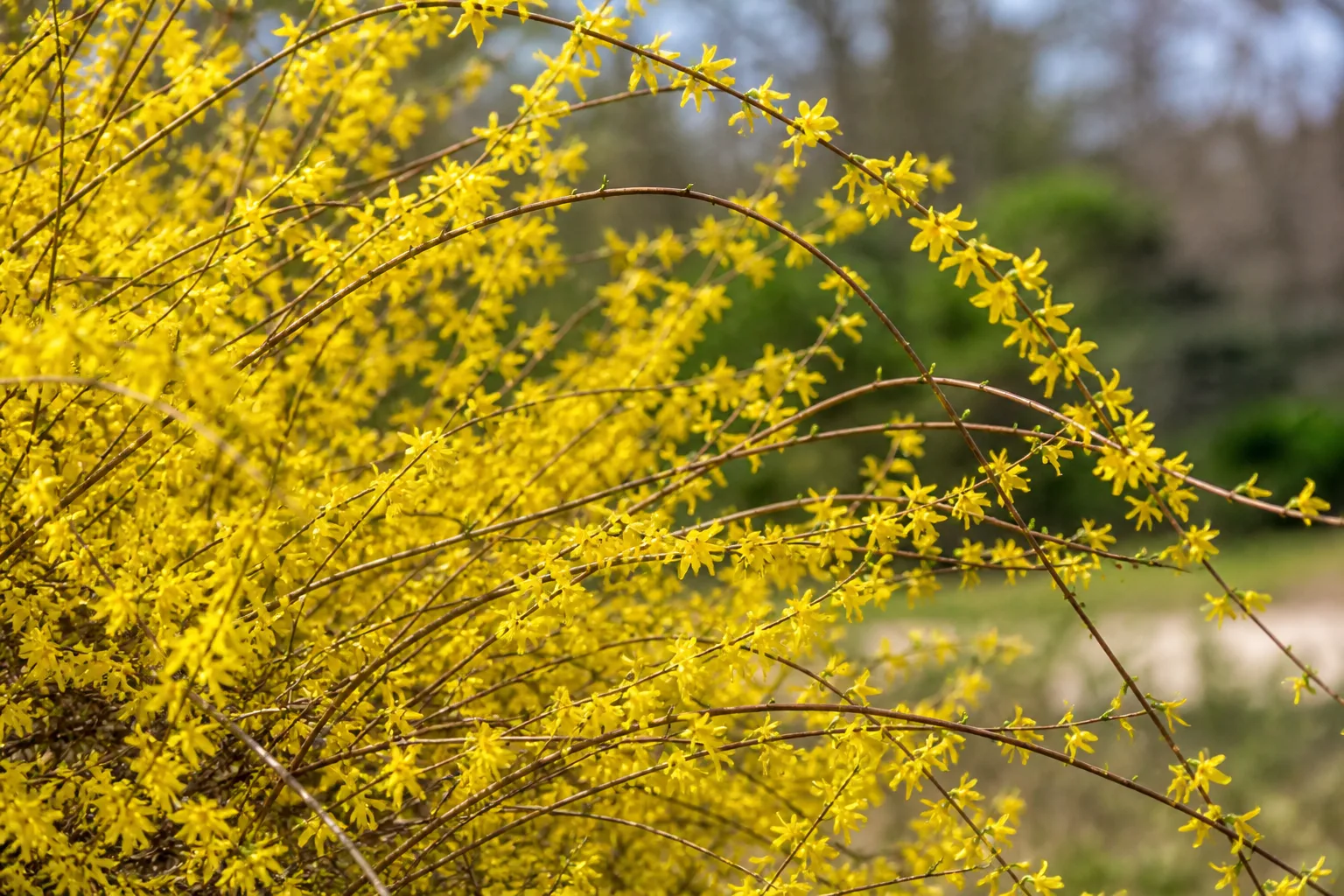
Forsythia blooms on older stems, which is why a spring display can vanish after a well-intentioned summer trim. Its loose, arching shape is part of the plant’s character, so the most useful pruning is usually selective thinning: remove a few of the oldest canes at ground level and shorten a wayward branch back to a well-placed side branch soon after flowering.
Do not wait until late summer or fall to make a major size correction. By then, you may be removing the stems that already contain next spring’s flower buds. If a storm breaks a branch in July, cut the damaged section back to sound wood; that repair is more important than preserving every bud. The mistake is treating a whole-shrub reshaping job as if it were emergency maintenance.
Forsythia can also produce vigorous new shoots after a hard rejuvenation cut. That does not make summer shearing a good shortcut. Penn State Extension recommends hard pruning in early spring, when the framework is easier to see and the shrub is under less active-growth stress; use the post-bloom window for ordinary thinning and shape correction.
Rhododendron: protect buds that set by mid- to late summer
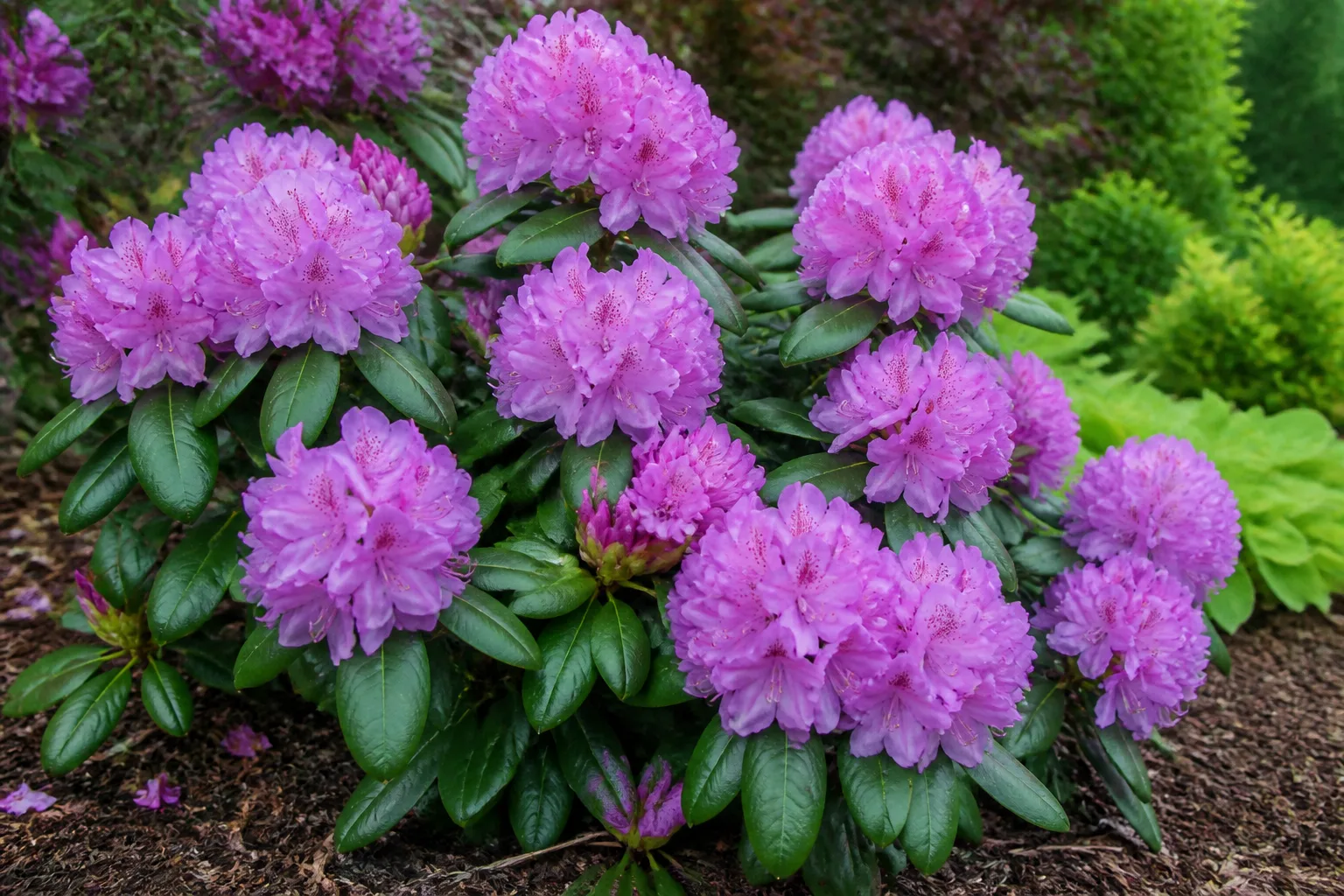
Rhododendrons and azaleas have a narrow practical window after flowering. The American Rhododendron Society notes that these shrubs typically set next year’s buds by mid- to late summer, and that late-summer or fall pruning can also encourage new growth that may not harden before frost. That makes an apparently harmless late-season trim a double risk: fewer flowers and tender shoots exposed to cold.
Most established rhododendrons need less pruning than gardeners expect. Start with dead, diseased, damaged, crossing, or light-starved interior branches. For shape, cut just above a growth bud or a suitable branch junction rather than leaving short stubs. The American Rhododendron Society’s pruning guide also recommends spreading rejuvenation over several years when a plant is very old or leggy, because dormant buds on very old wood may not be reliable.
Deadheading is not the same as removing a branch. On large-flowered rhododendrons, you can snap off spent flower trusses carefully after bloom, taking care not to damage the new growth buds immediately below. If the plant is already in late summer, leave healthy branches alone and wait for structural pruning unless there is a clear safety or health reason to act.
Beautyberry: preserve the new wood that makes fall berries
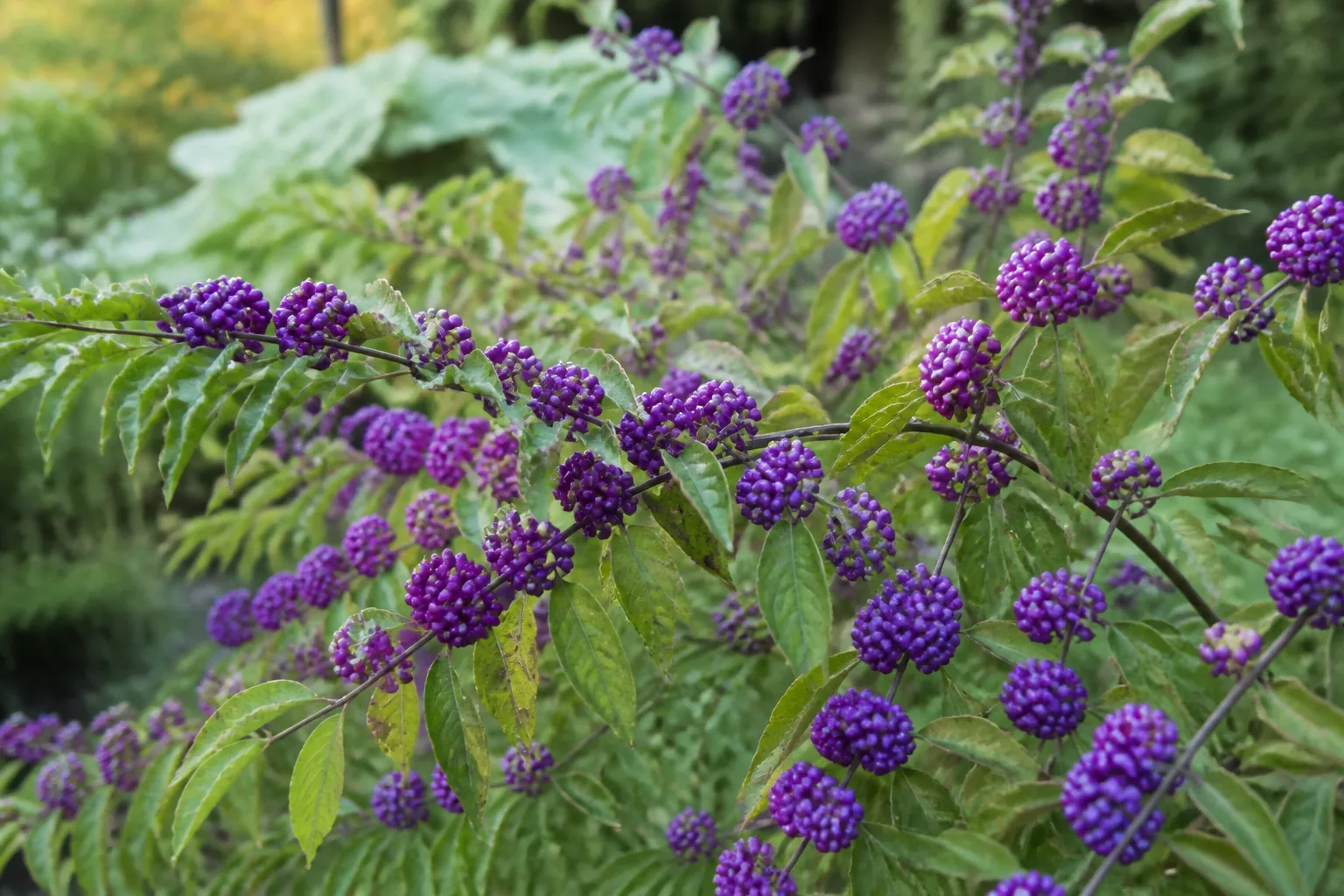
Beautyberry is a useful reminder that “do not prune in summer” is not limited to spring-flowering shrubs. It flowers on new wood, and the small summer flowers are followed by the purple, pink, or white berries that provide the plant’s main ornamental value later in the year. A hard summer cut can remove the shoots that would carry both the flowers and the berries.
Make the routine cut in late winter or early spring before new growth begins. That is the time to reduce an overgrown plant, remove some of the oldest stems at the base, and keep the shrub from becoming a tangled thicket. If the plant is currently carrying berries, leave healthy fruiting stems in place unless they are broken or obstructing a path.
Summer cleanup can still be selective. Remove a dead stem at its origin, cut out storm damage to healthy wood, and deal with a branch that is rubbing or creating a hazard. Do not confuse removing a few problem stems with cutting the whole plant back to a uniform height.
Abelia: leave summer growth to carry its flower buds
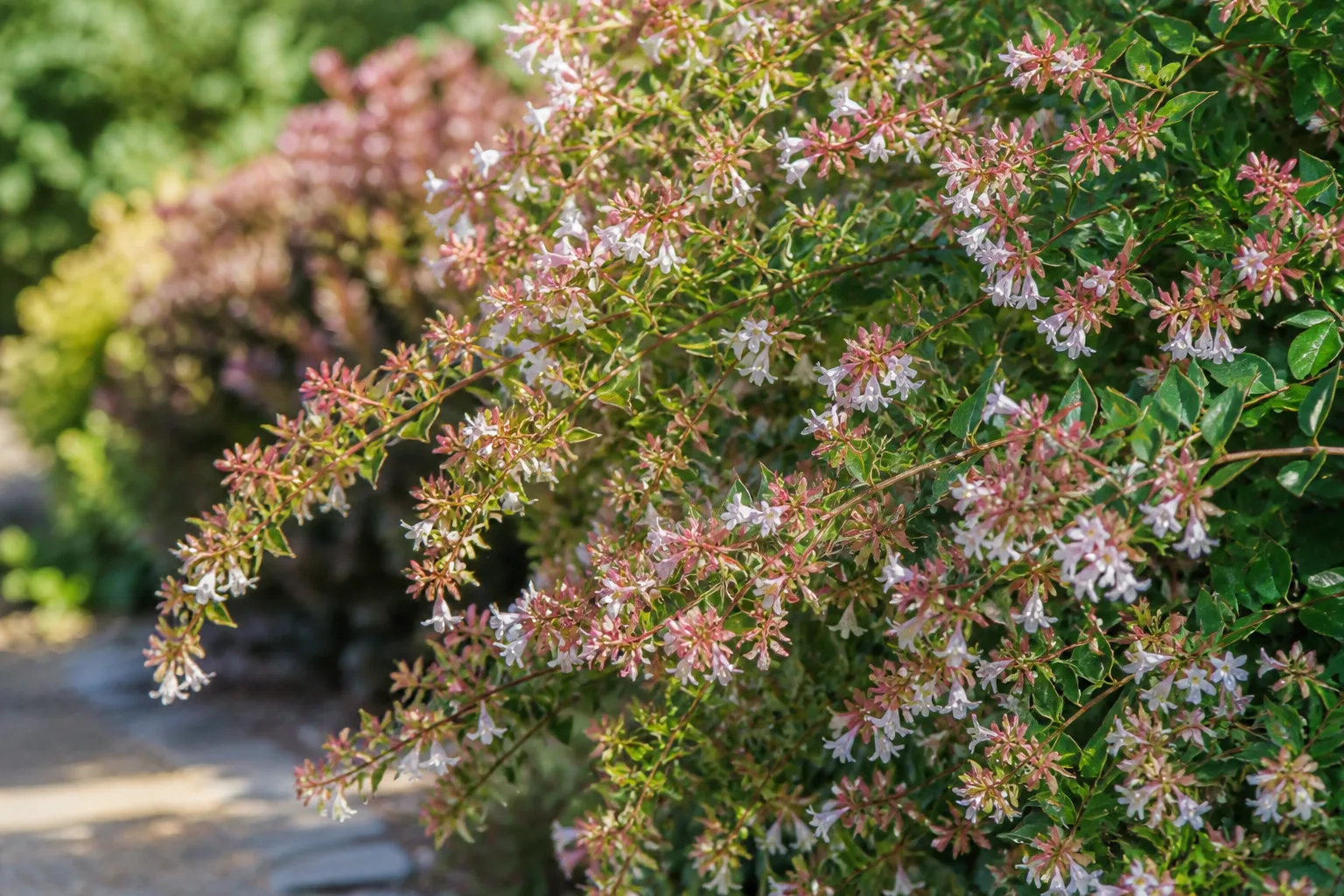
Abelia’s fragrant flowers appear on current-season growth, so summer is when the shrub is building the shoots that make its display. A hard cut during that growth period can remove developing flower sites and leave you with a bare-looking plant just when pollinators would otherwise be using it. The BHG pruning guide includes abelia among the shrubs that can lose flower buds when pruned at the wrong time.
Plan structural pruning for late winter or early spring, before vigorous new growth begins. Remove dead and damaged wood first, then thin a few crowded stems if needed. Abelia usually looks better when its arching form is retained, so reach inside the shrub and remove selected older branches instead of repeatedly clipping its outer tips.
If a single branch has split or is growing into a walkway, take care of that branch even in summer. Make a clean cut at the point where it joins a healthy branch or at the base, depending on the problem. The goal is to solve the problem without turning an isolated repair into a full reshaping session.
Crape myrtle: reserve hard cuts for late winter or early spring
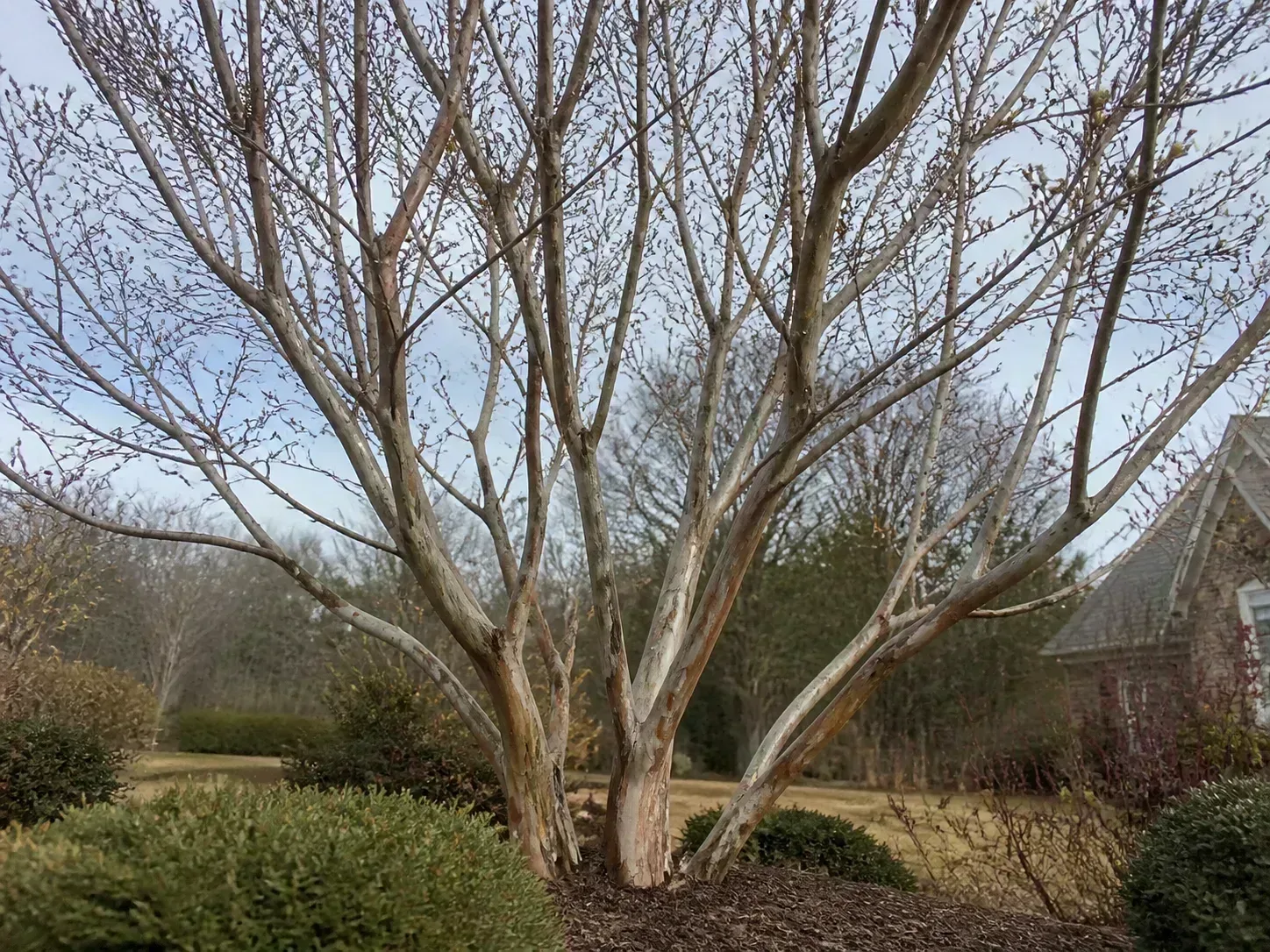
Crape myrtle (Lagerstroemia indica) flowers on new growth, which is why late winter or early spring is the standard time for substantial pruning. That window lets you remove weak, crossing, or poorly placed branches before the new flowering shoots develop. Summer topping or heavy shortening can delay the display, remove flowering tips, and leave the tree spending energy on replacement growth instead of flowers.
The best summer response to spent flower clusters is restraint. You may remove a few dead or broken twigs, and a light deadheading pass can be a cosmetic choice, but there is no need to strip every seed capsule or cut the canopy into a small ball. Repeated topping also creates dense shoots at the ends of stubs and destroys the tree’s natural branching and bark display.
If the tree is healthy but not blooming, do not assume more pruning is the answer. Sun, root-zone competition, cultivar, drought, and excess nitrogen can all affect flowering. Diagnose the limiting condition first, then choose a cut that solves that condition rather than reacting to a single disappointing season.
Oleander: avoid summer shaping and protect yourself from toxic sap
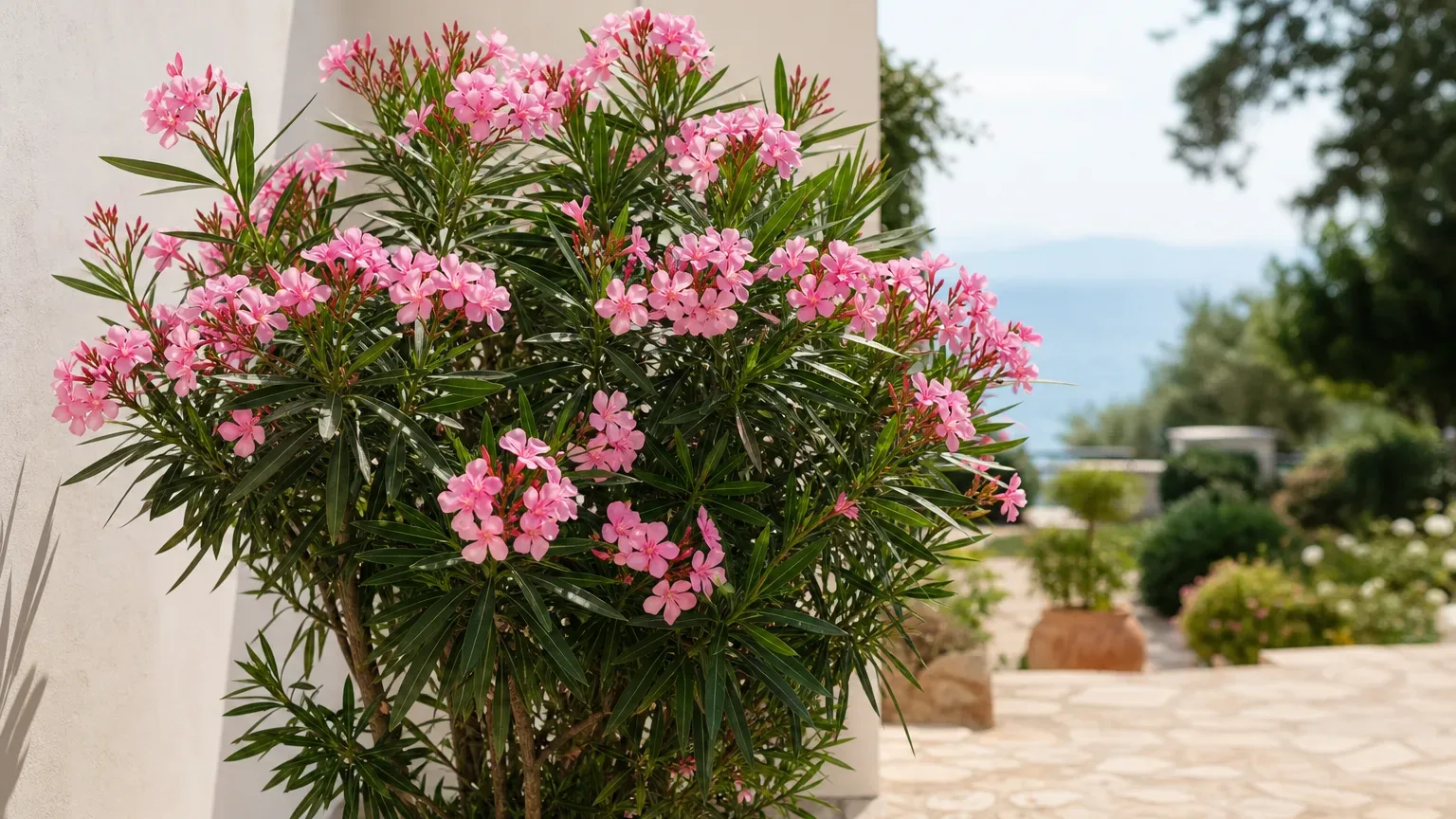
Oleander needs a more careful answer than a simple “never prune in summer.” It flowers on new growth, and NC State Extension’s oleander profile says regular light pruning after flowering can improve shape, while warning against pruning after early fall because you may remove the growth carrying next year’s flower buds. In practice, preserve flowering tips while the shrub is actively blooming, and reserve major size reduction for the plant’s safest warm, active-growth window—often after a main flowering flush or before vigorous spring growth, depending on local climate and whether it is grown in a container.
The safety rule is non-negotiable. NC State classifies oleander as highly poisonous and warns that the smoke from burning it is injurious; the Royal Horticultural Society’s oleander profile likewise flags toxicity, harmful smoke, and the need for protective equipment. Wear intact waterproof gloves, long sleeves, closed shoes, and eye protection. Keep children and animals away, collect every leaf and stem, and never burn the waste.
The ASPCA’s oleander listing identifies oleander as a toxic plant for pets. If sap reaches skin or eyes, rinse promptly; if a person or animal may have ingested any part, contact a medical professional, veterinarian, or appropriate poison service rather than waiting for symptoms. A gardener who cannot secure the work area should hire a properly equipped professional instead of attempting a large summer renovation.
Butterfly bush: use a dormant-season cut, with an invasive-plant caveat
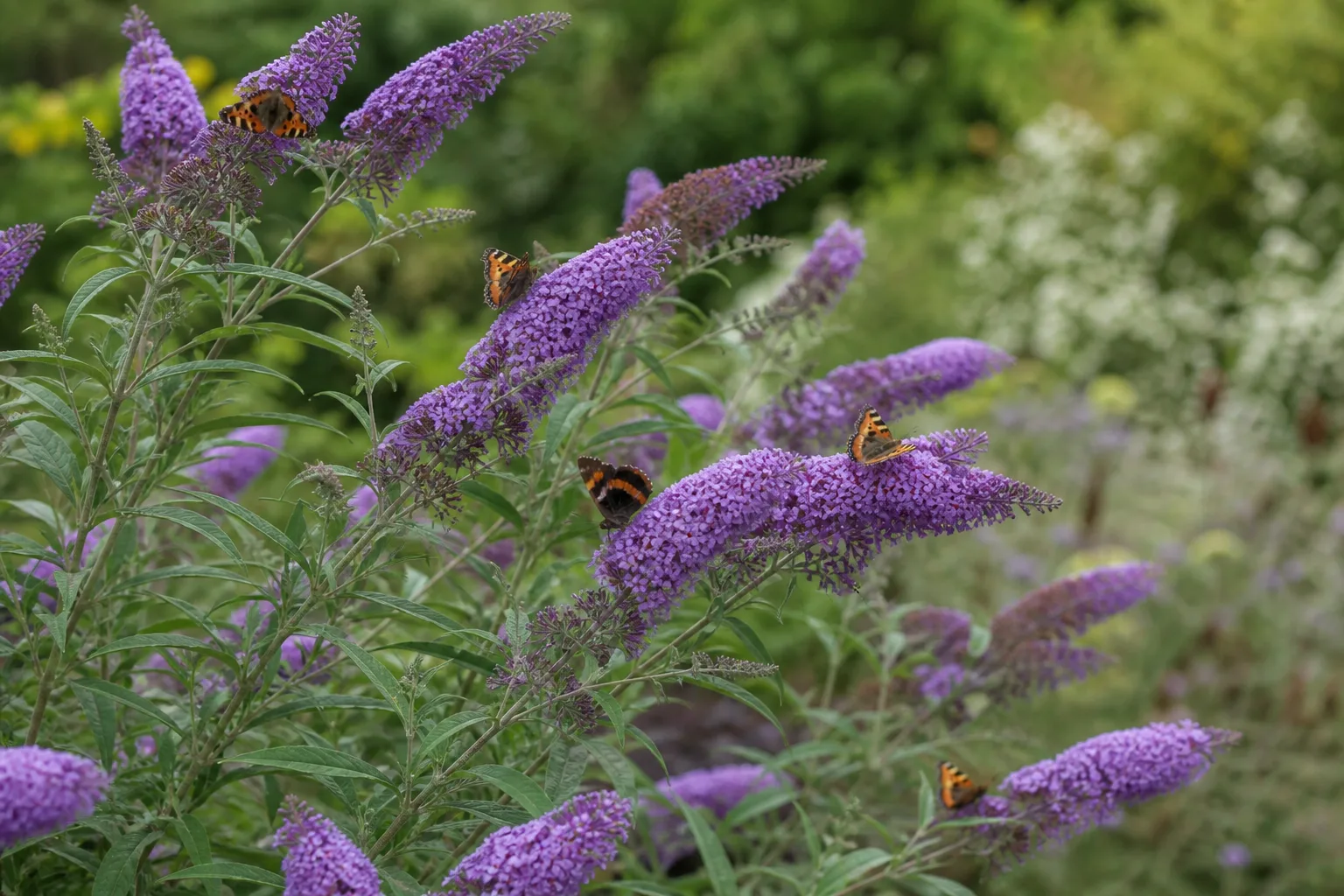
Butterfly bush (Buddleja davidii) blooms on new wood, so its substantial annual pruning belongs in late winter or early spring before new shoots emerge. A hard summer cut removes the flowering growth you are enjoying and can trigger a flush of shoots at an awkward point in the season. Summer deadheading is different: snip off spent flower spikes if you want to keep the shrub tidy or reduce seed production, but do not shear the entire plant.
There is an ecological decision here as well as a pruning decision. NC State Extension reports that Buddleja davidii self-seeds readily, can naturalize, and is listed as invasive in parts of North Carolina; Penn State Extension explains that its wind-borne seeds can move into natural areas and that native butterfly caterpillars cannot use its leaves as a food source. Status varies by species, cultivar, and location, so check local invasive-plant guidance before planting or encouraging volunteer seedlings.
If you already have one, deadhead before seed capsules mature and dispose of the flower heads responsibly. Consider replacing a spreading species with native host and nectar plants suited to your region. That is a stronger pollinator strategy than relying on a shrub that feeds adult butterflies but does not support the caterpillars that complete the life cycle.
What you can remove in summer without sacrificing the next bloom
The list is about major pruning, not about ignoring a problem until winter. Remove a branch promptly when it is dead, broken, diseased, rubbing against another branch, blocking a safe walkway, touching a structure, or creating a falling hazard. Cut back to healthy wood or to the branch collar without leaving a long stub, and remove diseased tissue below the visibly affected section.
Deadheading can also be appropriate, but the goal matters. Removing spent flower heads is not the same as shortening flowering branches. On rhododendrons, handle spent trusses carefully so you do not knock off the buds below. On butterfly bush, deadheading can reduce seed formation. On crape myrtle, it is optional rather than a requirement for a healthy tree.
Wait on summer pruning when the job is purely cosmetic: reducing height because the shrub looks untidy, making every branch the same length, correcting a natural arch, or reclaiming a size the plant will naturally exceed. If the mature size is a constant problem, a smaller cultivar or a better location is a longer-lasting fix than repeated severe cuts.
A no-regrets summer pruning protocol
1. Identify the plant and define the goal
Before opening the pruners, confirm the plant’s name, species, cultivar if possible, and whether it flowers on old or new wood. Take a clear photograph, compare the foliage and flower structure with a reliable extension or botanical reference, and check whether the plant has special safety or invasive-status concerns. If you cannot identify it, do not guess based on leaf shape alone.
Then name the job in one sentence: “remove a broken limb,” “thin two crossing stems,” or “reduce the shrub by half.” The first two may be summer repairs. The last is a major renovation and usually belongs in the correct dormant-season window. Writing the goal down prevents a quick repair from turning into an unplanned haircut.
2. Remove only dead, damaged, diseased, or hazardous wood
Start with the branch that has the clearest reason to go. Trace it to a healthy junction or the base, and use a sharp bypass pruner, lopper, or pruning saw sized for the branch. Do not force a small pruner through thick wood; crushed bark creates a larger wound and makes the cut harder to control.
Clean tools before the job and disinfect them between plants or after cutting diseased tissue. Work on a cool, non-stressful day when possible, and avoid combining a major cut with repotting, transplanting, fertilizer pushing, or other stress. If the plant is wilted from heat or drought, stabilize its root-zone moisture first unless immediate hazard removal is required.
3. Make the smallest clean cut and stop to reassess
After one or two cuts, step back and look at the plant from several angles. If the hazard is gone and the remaining branches are healthy, stop. You can always schedule a second session in the correct season; you cannot reattach a flower-bearing branch.
Dispose of diseased material according to local guidance rather than leaving it under the shrub. Keep toxic oleander clippings contained and never burn them. A clean tool, a controlled work area, and a modest cut do more for long-term plant health than an aggressive attempt to make the shrub look finished in one afternoon.
If you already pruned at the wrong time
Do not try to repair an early mistake by cutting even more. Stop pruning, keep the plant’s moisture reasonably even without waterlogging it, maintain its normal light, and watch for new growth, dieback, wilting, or disease. Avoid an immediate heavy dose of fertilizer; a freshly cut plant still needs roots and leaves to rebalance before it can use a strong flush of nutrients.
The likely consequence is a smaller flower display, not automatic death. A healthy shrub may replace lost growth, but the timing and severity of the cut, the plant’s age, its roots, and the weather all change the outcome. A rhododendron that lost its bud-bearing tips may simply flower sparsely next spring; a plant cut during drought or extreme heat may suffer additional dieback.
Use the next growth cycle as information. Mark when new shoots appear, whether cut ends remain healthy, and when buds form. If decline progresses below the cuts, the plant wilts despite appropriate moisture, or a toxic plant was handled unsafely, get help from a local extension service, arborist, veterinarian, or poison professional as appropriate. Do not keep recutting a shrub just because recovery is slower than expected.
Conclusion
The best summer-pruning habit is to pause before you cut. Azalea, forsythia, and rhododendron usually need post-bloom timing because their next flower buds form on older wood; beautyberry, abelia, crape myrtle, oleander, and butterfly bush generally need major pruning before spring growth or after a carefully chosen flowering window because their new wood carries the display.
When summer work is necessary, remove the one dead, broken, diseased, rubbing, or dangerous branch and leave healthy flowering wood alone. That small decision preserves more than next year’s flowers: it protects the shrub’s structure, reduces heat stress, and gives you a better chance of a strong, naturally shaped plant for seasons to come.