7 Things Attracting Spiders to Your House
Learn what attracts spiders to your house, from insects and porch lights to gaps, clutter, damp spaces, and plants—and fix the cause step by step.
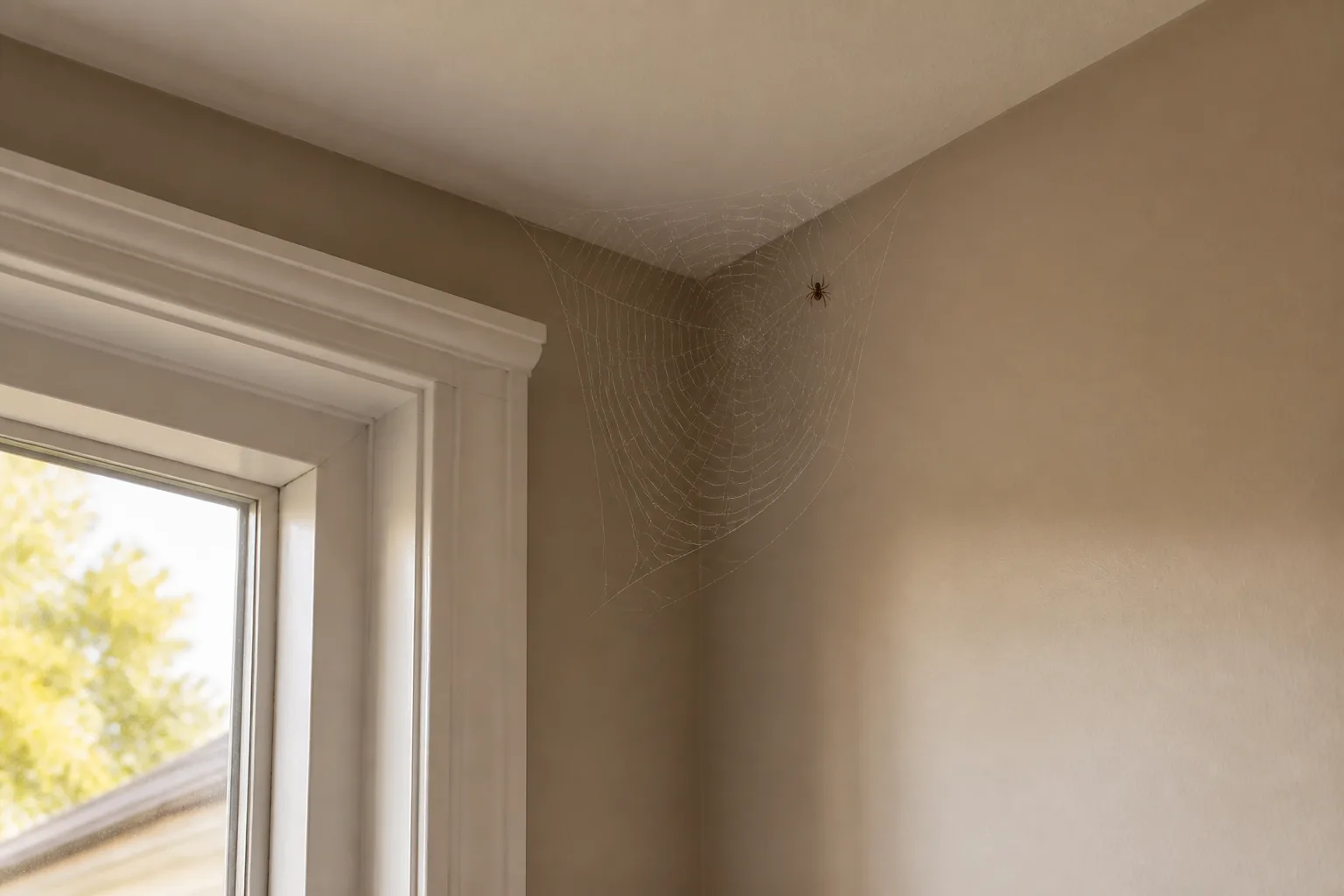
Spiders rarely choose a house because it is “dirty.” They choose a combination of prey, shelter, and access. If insects are gathering near a bright window, a screen has a torn corner, or a quiet basement offers damp hiding places, a spider has a reason to stay.
That distinction changes the fix. Vacuuming one web removes the evidence, but it does not close the gap or reduce the insects that keep rebuilding the buffet. Use the seven attractants below as a diagnosis, then finish with the 30-minute sweep so you address the cause in the right order.
The short answer: spiders follow food, shelter, and a way in
The most important attractant is usually other insects. Spiders are predators, so crumbs and garbage do not feed them directly; food waste can matter because it supports flies, ants, roaches, and other prey. A home can therefore have a spider problem that is really an insect-entry or sanitation problem one step upstream.
The other two parts are shelter and access. A spider may enter through a gap under a door, then remain behind boxes in a garage because the space is quiet. Colorado State University Extension describes spiders as beneficial predators of insects and notes that some wander indoors in early fall as outdoor temperatures cool; its home-spider guide also separates web builders from active hunters rather than treating every spider as the same pest. (Colorado State University Extension)
How to tell whether you have a spider problem
One spider in a sink, bathtub, or windowsill is not evidence of an infestation. It may be a wandering hunter that slipped through a door or a harmless house spider that has been living unnoticed in a corner. Start paying attention when you see the same pattern repeatedly: fresh webs returning in one location, several spiders in a short period, egg sacs, or a rising number of flying or crawling insects.
The location is useful evidence. Webs around porch lights point toward night-flying insects and outdoor shelter. Spiders along a basement wall suggest cracks, stored clutter, or moisture. Large ground-running spiders after landscaping or heavy rain may have been displaced from outdoor cover. Take a photo from a safe distance if identification matters, but do not rely on a casual color description to diagnose a medically important species.
1. Other insects are already inside
Spiders go where hunting pays. Flies around a kitchen bin, moths near a light, ants following a food trail, or tiny insects around a damp plant shelf can sustain a spider even when the spider itself is not interested in your food. Repeated webs are often a useful signal to inspect the prey population rather than a reason to spray the web.
Look for insect clues before reaching for pesticide: fruit flies near produce or drains, pantry moths around stored grains, ants along baseboards, gnats rising from potting mix, or insects collecting at windows after dark. If the activity is concentrated around one plant, the solution may be plant-pest management; our guide to tackling indoor plant pests at home covers isolation and identification before treatment.
How to break the food chain
Clean spills and crumbs promptly, keep dry goods in sealed containers, rinse recyclables, and use a lidded bin for food scraps. These steps reduce prey insects; they do not act as a spider repellent by themselves. Repair leaking faucets, empty standing water in saucers, and keep screens intact so insects cannot turn a bright room into a feeding zone.
If you see insects but cannot identify them, use a single monitoring trap where children and pets cannot reach it, or collect a specimen for an extension office. A trap is more useful when it answers a question—what is active, where, and when—than when it is scattered randomly throughout the house.
2. Openings around doors, windows, and screens
A spider needs very little space to enter, especially when it follows prey through the same route. Torn screens, loose window tracks, daylight under exterior doors, gaps around pipes, and cracks where siding meets the foundation are high-value checks. Ground-level windows and doors deserve the closest inspection because they connect directly to vegetation, mulch, porch furniture, and outdoor webs.
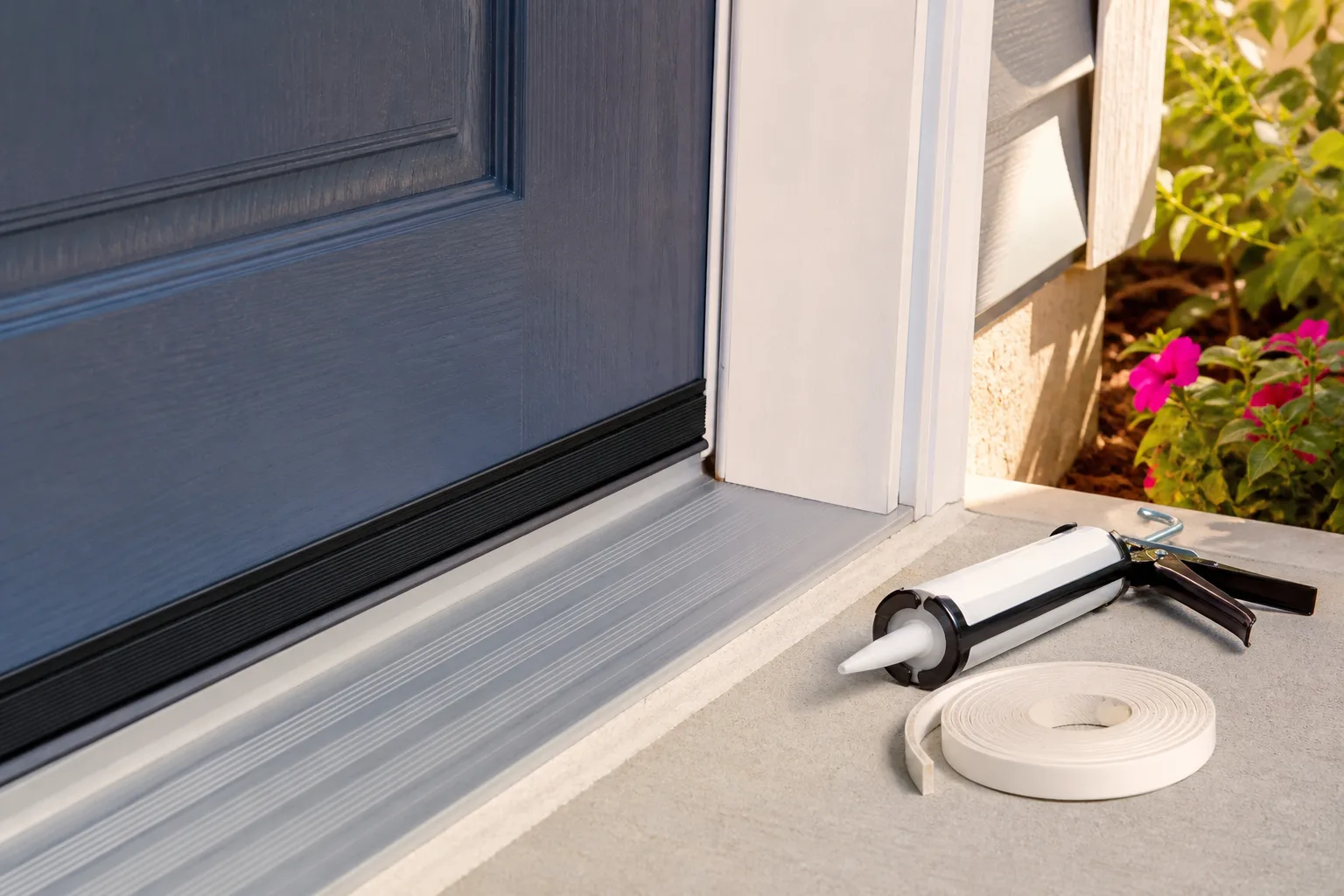
Do a nighttime check with the indoor lights on and the room dark outside. From outdoors, look for glowing lines around the frame; from indoors, use a flashlight to follow the screen, track, and sill. A plant or branch touching the wall can bring insects close, but trimming it will not solve a torn screen or a loose threshold.
Seal the low gaps first
Fix the opening that matches the evidence. Replace a damaged screen, fit a door sweep, renew cracked caulk around stationary trim, and repair the seal around utility penetrations with a durable material appropriate to the surface. Do not block a required vent, drain, dryer exhaust, or combustion-air opening just to close a suspected spider route.
Weather stripping that stops a draft may still leave a corner gap at the threshold. Close the door on a strip of paper; if it slides out easily at the bottom edge, the seal needs attention. Recheck the repair after rain or a change in temperature, because movement can reopen a hairline gap.
3. Bright outdoor lights near entryways
Outdoor lights do not usually attract spiders because spiders crave the bulb. They attract moths, flies, and other night-active insects, and spiders build webs where those insects pass. The clearest sign is a concentration of webs on the sheltered side of a porch fixture, around a doorway, or across the corner of a lit window.
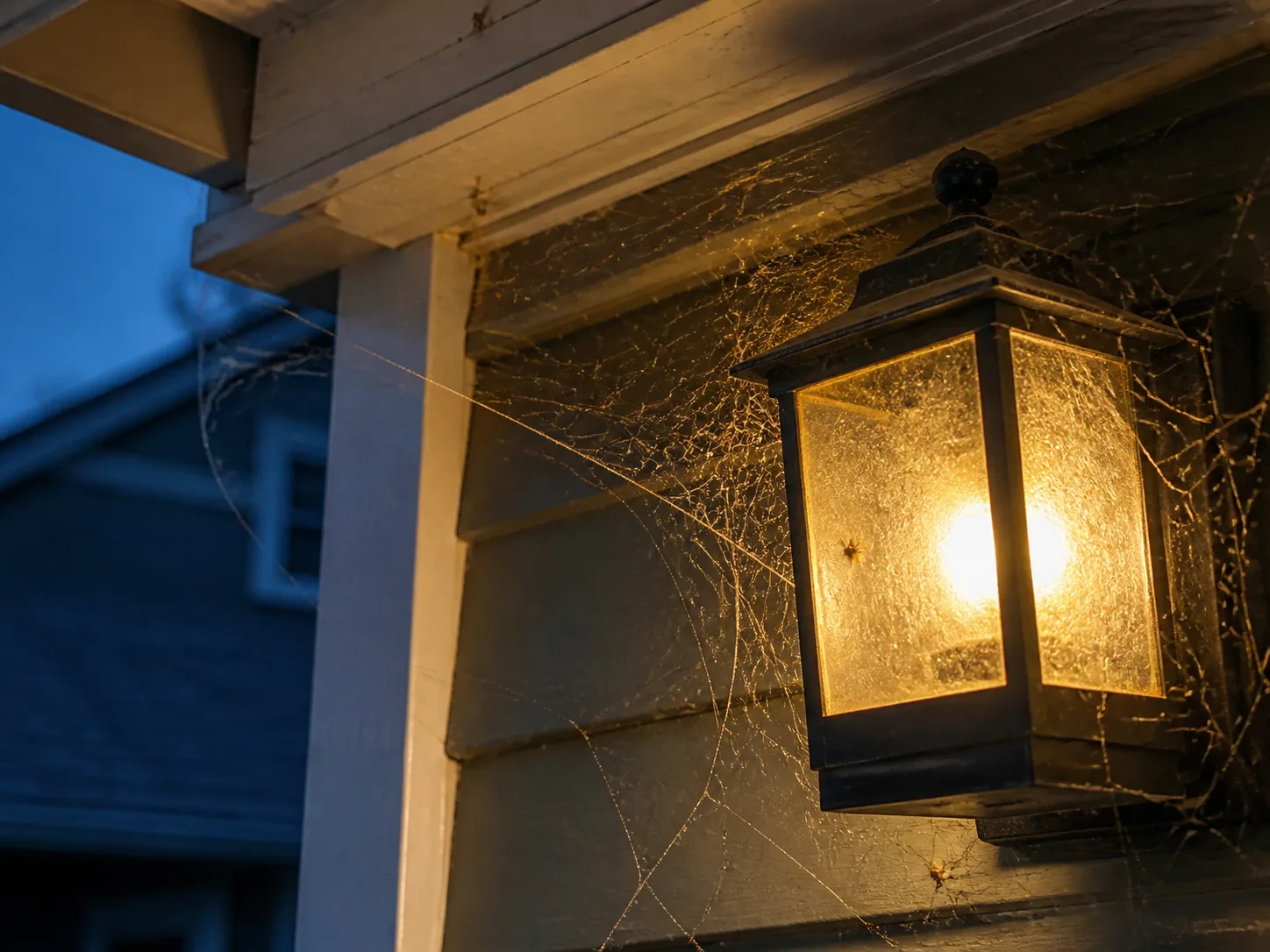
You do not have to sacrifice security lighting. Use a motion sensor where suitable, turn decorative lights off when they are not needed, and position fixtures so they do not shine directly through a window or illuminate a wall covered in vegetation. A warmer, less insect-active light may reduce the number of insects at the fixture, but it is not a guarantee and will not compensate for an open door or nearby food source.
Sweep webs from the fixture and nearby eaves after reducing the insect draw. Clearing webs alone is temporary; leaving the light-and-prey combination unchanged invites a rebuild.
4. Damp, dark, undisturbed storage
Basements, crawl spaces, garages, attics, and storage closets give spiders what a living room often does not: low disturbance, cracks, and stable surfaces for webs or retreats. Moisture adds another advantage by supporting small arthropods and making a basement or crawl space a more reliable refuge. A damp corner is not proof that humidity alone attracted the spider, but it is a strong reason to inspect for leaks, condensation, and prey.
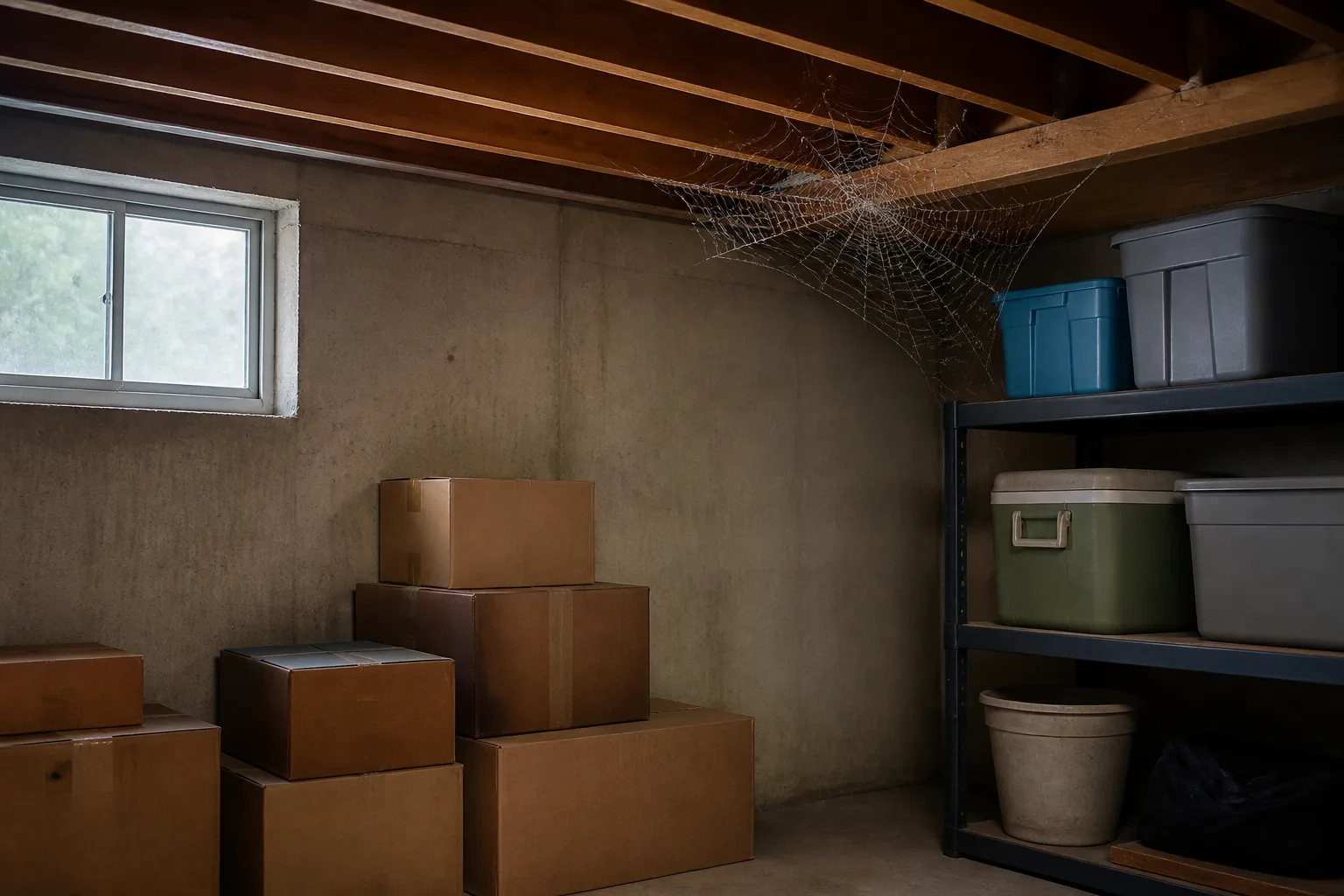
Make basements, garages, and attics less inviting
Start with the conditions that keep the room quiet and inaccessible. Move boxes off the floor, leave an inspectable gap along walls, repair plumbing leaks, improve ventilation where appropriate, and remove old webs and egg sacs with a vacuum. Store rarely used clothing, boots, and garden gear in lidded containers rather than open cardboard cartons.
Use gloves when reaching into woodpiles, storm debris, or long-undisturbed storage. NC State Extension notes that heavy rain can drive ground-dwelling spiders toward foundations and siding, while debris left on the ground can support insects and other arthropods that become prey. It recommends caution with debris and says mechanical removal is usually adequate for a random indoor spider. (NC State Extension)
Do not aim a dehumidifier at a mystery “spider problem” without checking the source of the moisture. A leak, blocked gutter, or foundation seepage needs a repair; drying the air may hide the symptom while the entry route remains.
5. Clutter, cardboard, firewood, and outdoor debris
Clutter is attractive because it creates cover, not because spiders prefer mess. Stacked boxes, folded tarps, unused pots, leaf piles, firewood, and dense debris create sheltered edges where a spider can hide and where its prey can remain undisturbed. Cardboard stored in a garage can also bring in a spider or egg sac from outside.
Open deliveries and storage boxes in a bright, easy-to-clean area before carrying them into a bedroom or closet. Shake out outdoor cushions, gardening gloves, and shoes, and inspect the underside of furniture moved from a shed or garage. If you find a web, do not put your hand inside the box to investigate; tip the contents out or use a tool while wearing gloves.
Outside, keep firewood and lumber elevated and away from the foundation, remove storm debris promptly, and keep recycling contained. You do not need a bare yard. The goal is a visible inspection strip around doors, windows, vents, and the foundation so webs and gaps cannot disappear behind vegetation or stored materials.
6. Weather shifts and seasonal shelter
Spiders may appear suddenly when the outdoor environment changes. Heavy rain can displace ground-dwelling spiders toward higher, drier surfaces; heat, cold snaps, and the approach of winter can make protected indoor edges more attractive. NC State Extension specifically describes post-storm movement onto foundations, siding, shutters, and gutters, especially when debris also increases the prey supply.
Seasonality does not mean every spider is trying to “move in.” Some are temporary wanderers, while others are adults dispersing, hunting, or looking for a protected retreat. Colorado State University Extension reports that some indoor wandering is more noticeable in early fall, while garden spiders and orb weavers remain outdoor predators in late summer and fall. (Colorado State University Extension)
After a storm, clear debris with gloves, inspect damaged screens and door seals, and vacuum indoor corners rather than fogging the entire room. After the first cool spell, perform the exterior gap check before you see a seasonal increase indoors. If the pattern ends after weather stabilizes, exclusion may be enough; if it continues, look for an indoor prey source or sheltered breeding site.
7. Houseplants and vegetation touching the house
Outdoor foliage against siding, windows, or porch rails can act as a bridge and a hunting habitat. It brings insects close to the building and provides stems, leaves, and sheltered angles for webs. Inside, a plant can occasionally carry a spider, web, or insect from a patio or nursery, especially after spending time outdoors.
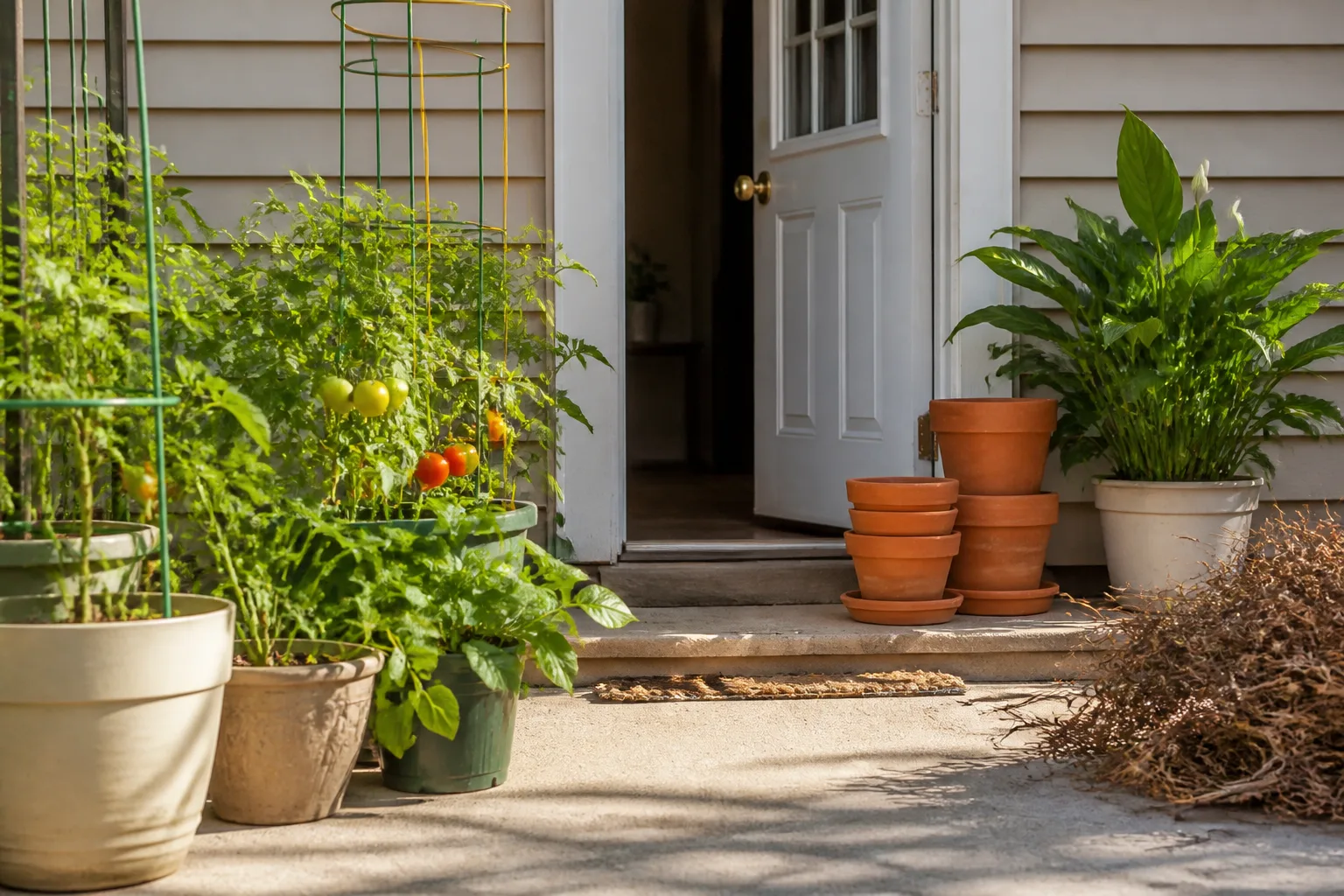
Trim branches and vines that touch the structure, but keep enough clearance for the plant’s health and local landscape design. Avoid pruning a flowering plant solely to eliminate one harmless garden spider; the useful question is whether foliage is touching an entry point or concentrating insects beside it. Gardening Know How and Almanac Garden Planner both describe garden spiders as predators of flies, gnats, mosquitoes, aphids, and other pests, and note that pesticides can kill these outdoor helpers. (Gardening Know How) (Almanac Garden Planner)
Quarantine plants before bringing them inside
Before moving a patio plant indoors, inspect leaf undersides, stems, saucers, pot rims, and the space between foliage and the wall. Remove visible webs outside, rinse the plant if its species tolerates it, and keep it separate from your indoor collection for several days while you watch for insects. This is especially important because the insects—not the occasional spider—are often the reason activity persists.
For seasonal timing and a broader checklist before plants come inside, see our fall houseplant care and winter-prep guide. Do not spray an indoor plant with a household spider insecticide; a product that is safe or labeled for a structural surface may injure foliage, and it still may not solve the insect source.
A practical 30-minute spider-prevention sweep
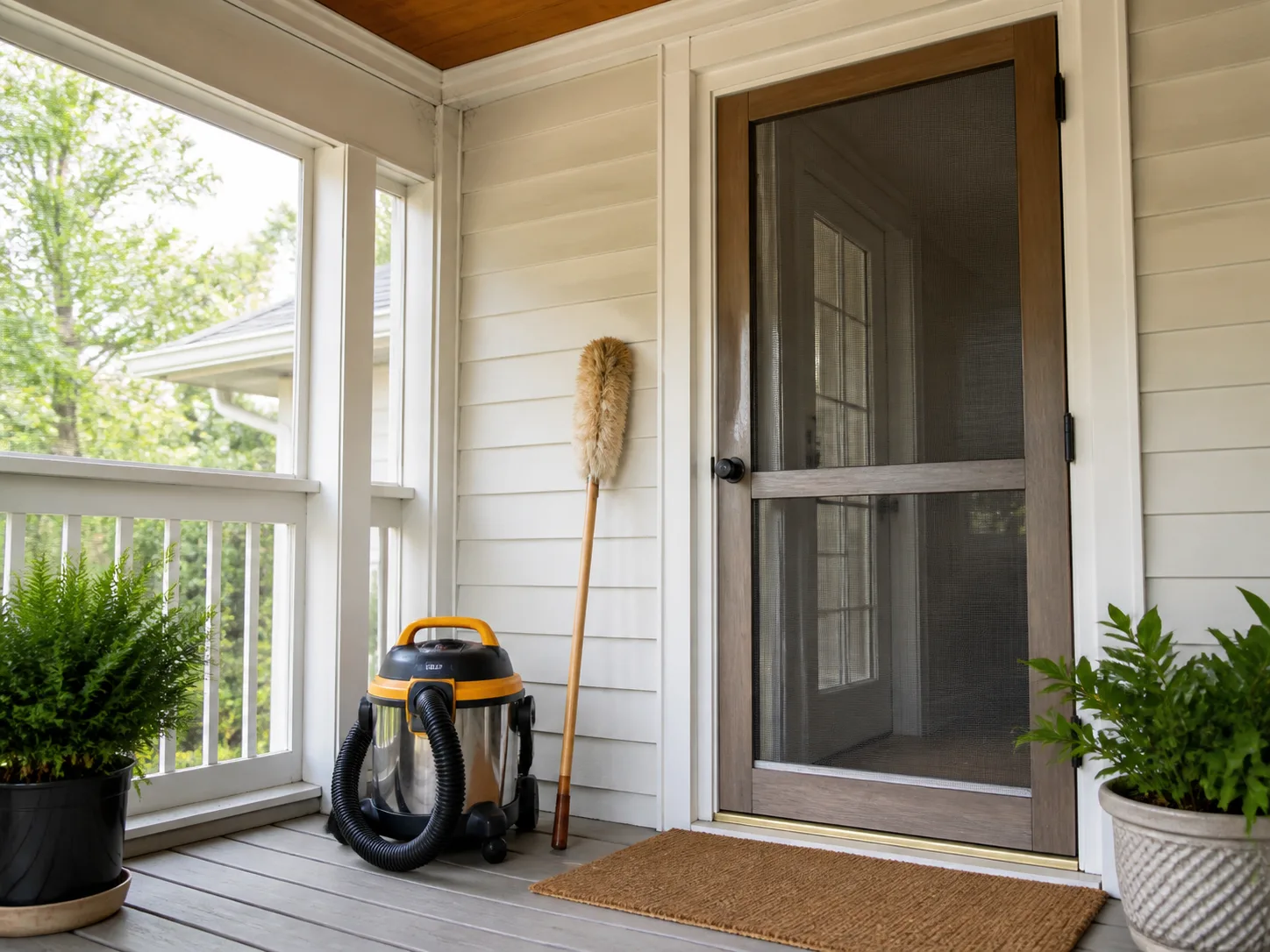
When several spiders appear, work from inside the house outward. This order prevents you from spending an hour cleaning webs while leaving the opening that keeps supplying new visitors.
- Minute 0–5: record the pattern. Note the room, height, web type, time of day, recent weather, and any visible insects. Photograph a spider only if you can do so without handling it.
- Minute 5–10: remove evidence mechanically. Vacuum webs and egg sacs from corners, behind furniture, window tracks, and baseboards. Empty the vacuum according to its instructions rather than leaving captured material in the machine.
- Minute 10–15: check the room’s food source. Seal food, clean crumbs, inspect bins and drains, and examine houseplants for pests or wet soil that supports gnats.
- Minute 15–20: inspect the nearest opening. Check the window screen, track, door sweep, threshold, and nearby pipe or cable penetrations. Fix the obvious low gap first.
- Minute 20–25: inspect outside that opening. Move clutter, trim contact vegetation, look behind shutters and gutters, and check porch lighting for flying insects and fresh webs.
- Minute 25–30: choose a follow-up. Schedule a repair, place one monitoring trap in an inaccessible location, or contact an expert if the activity is repeated, inaccessible, or associated with a species concern.
Should you kill or relocate a spider?
You do not have to kill every spider to make a home comfortable. If it is in a low-traffic spot and looks like a typical harmless house visitor, leaving it alone or carefully relocating it can be reasonable. Colorado State University Extension notes that spiders are important predators of insects, while the University of Wisconsin Extension’s identification guide recommends tolerance and simple capture and removal whenever possible for many common household spiders. (University of Wisconsin Extension)
For a spider in a bathtub, use a container and a stiff piece of paper if you are comfortable doing so. For a fast-moving or unfamiliar spider, close the room, keep children and pets away, and use a vacuum or professional help rather than cornering it with bare hands. Relocating one spider will not fix recurring activity; pair the removal choice with an entry-point and prey inspection.
When to use traps, pesticides, or professional help
Sticky traps can help with monitoring along walls and in hidden areas when they are placed out of reach of children and pets. They are most useful for confirming whether activity is ongoing and where it is concentrated. They will not repair a screen, remove a food source, or make a damp crawl space dry.
Indoor pesticide applications are rarely the best first response to one or two spiders. UC Integrated Pest Management guidance notes that regular vacuuming, sealing windows and door jambs, and reducing rubble can reduce indoor spiders, while pesticide performance can be variable when the spider is not directly contacted. (UC Integrated Pest Management) If you use any product, follow its current label, use it only on the listed site, ventilate as directed, and never improvise a stronger mix.
Call a licensed pest professional or local extension office when webs and egg sacs keep returning after exclusion and cleaning, when a crawl space or attic cannot be inspected safely, when there is a substantial insect population, or when you repeatedly find an unfamiliar spider in a region where medically important species occur. Seek medical advice for a concerning bite or symptoms; do not diagnose the species from the wound alone.
Conclusion: remove the invitation, not just the web
The most reliable way to reduce spiders indoors is to remove the combination that keeps rewarding them: prey insects, quiet shelter, and an easy route inside. Start with the room where you see the activity, vacuum the webs, identify the likely food source, seal the nearest low gap, and then clean the outdoor edge around that opening.
Most homes do not need a chemical blanket or a fragrance-based remedy. They need a tighter screen, a better door seal, less undisturbed storage, more thoughtful lighting, and a plant-and-debris check after weather changes. Fix those conditions consistently and the house becomes less useful to spiders—even when the garden outside remains healthy enough to support them.