How to Grow and Care for Teddy Bear Sunflowers
Learn when to plant Teddy Bear sunflower seeds, how to space and water them, grow them in pots, deadhead blooms, and save seed for next year.
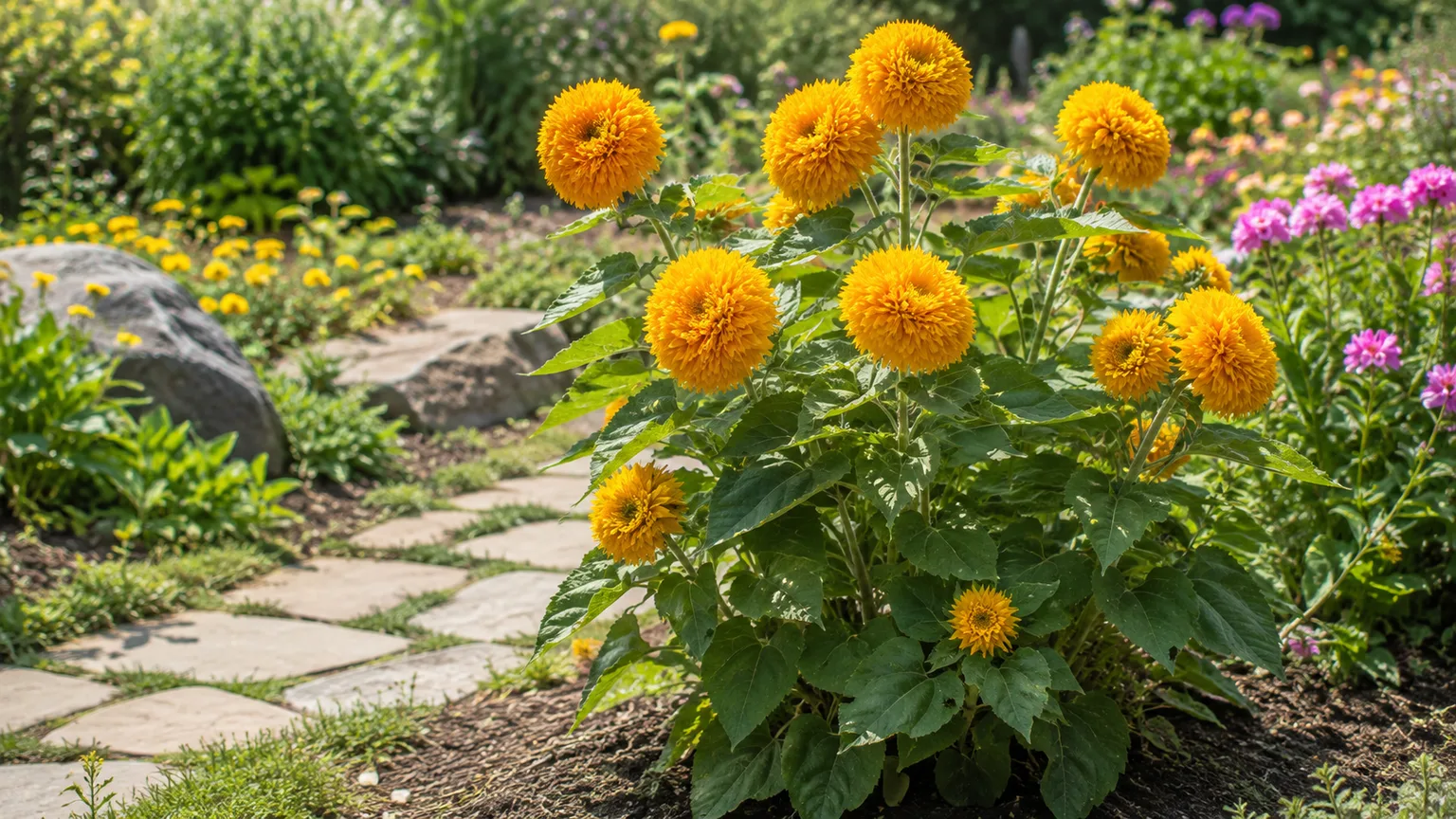
The easiest way to grow a ‘Teddy Bear’ sunflower is to treat it as a sun-loving annual, not as a miniature perennial and not as a houseplant. Sow the seed after frost in warm soil, give the plant an open site with six to eight hours of direct sun, thin seedlings early, and keep the root zone evenly watered while it builds its branching stems.
Unlike classic single-flowered sunflowers, ‘Teddy Bear’ is prized for compact growth and fluffy, double golden blooms. Plants commonly reach roughly 2 to 3 feet, but height, branching, bloom size, and timing vary with the seed strain, crowding, available water, soil fertility, and weather. The practical goal is not to force a catalog number; it is to give this short cultivar enough light, root room, and steady moisture to make a sturdy plant that fits a bed, border, or patio container.
Start with the right expectations for this dwarf cultivar
‘Teddy Bear’ is a named cultivar of Helianthus annuus, the common sunflower, in the Asteraceae family. It completes its life cycle in one growing season: seed germinates, the plant grows and flowers, seed develops, and the plant dies after frost or age. NC State Extension lists ‘Teddy Bear’ among common sunflower cultivars and describes the species as a fast-growing, warm-season annual that is not frost tolerant. (NC State Extension)
The word dwarf describes relative size, not a promise that every plant will be short. A crowded seedling in a shallow pot may stay small but produce weak stems and small flowers; a generously fed, widely spaced plant in rich soil may be taller than expected. Read the packet for the exact strain you bought, then use the mature size to decide spacing and container volume.
Double flowers also change how you use the plant. They are excellent for a cheerful cutting garden and a soft-textured border, but heavily doubled heads may offer less accessible pollen than an open-centered sunflower. If pollinator value is your main goal, mix ‘Teddy Bear’ with open-flowered annuals rather than relying on this cultivar alone.
Choose a site with sun, airflow, and room to branch
Give ‘Teddy Bear’ the brightest practical location you have: six to eight hours of direct sunlight is a useful target. Morning sun plus afternoon shade can work in very hot climates if the plant still receives strong light, but a dim site encourages stretched stems, delayed flowering, and a plant that leans toward the brightest direction. Sunflowers are named for their light-loving habit, yet the plant still needs good soil moisture when high heat increases water loss.
Choose a spot where air can move through the foliage and where mature leaves will not press against a wall, fence, or dense neighboring plants. Airflow does not prevent every fungal problem, but it helps leaves dry after rain and makes aphids, holes, and early leaf spots easier to notice. Keep the plant away from a narrow walkway if its side branches will spill into the path.
Sunflowers have a strong taproot, so avoid a place that stays waterlogged after rain. A raised bed, a gently sloped border, or a deep container is safer than a low pocket where water pools. If wind is a problem, place the plant near a permeable fence or other shelter; a solid barrier can create turbulent gusts that still snap stems.
Prepare soil that drains but does not dry too quickly
Work a modest layer of finished compost into the planting area before sowing. The goal is a crumbly soil that holds enough moisture for fast growth but drains excess water, not a deep pocket of rich compost surrounded by compacted clay. UF/IFAS notes that sunflowers tolerate many soil types and perform best in sunny locations, while NC State Extension describes the species as adaptable to loamy, sandy, or clay soils when moisture and drainage are reasonable. (UF/IFAS Gardening Solutions)
Do not add fertilizer just because the leaves are green and the plant is growing quickly. Soil-test results, the bed’s history, and the appearance of new growth are more useful than a fixed feeding schedule. Excess nitrogen can produce lush leaves and softer stems at the expense of flower timing, and runoff from overfertilizing is avoidable.
For a new bed, loosen the top several inches and remove perennial weeds before planting. Do not turn the entire area into powder; a lightly textured seedbed gives the emerging root a better balance of contact and drainage. After seedlings appear, a thin organic mulch can slow evaporation, but leave a small gap around the stem so damp mulch does not stay pressed against it.
Set planting time by soil warmth and your bloom goal
Plant outdoors after the danger of frost has passed and the soil has warmed. Seedlings emerge quickly in warm conditions, but cold, wet soil slows germination and increases the chance that seed rots or young stems are damaged. A calendar date is only a starting point: a late cold spring calls for patience, while a long warm season gives you room to sow more than once.
If your priority is the strongest, least-disturbed plants, direct sow in the final bed. If you want earlier flowers, sow a small batch indoors a few weeks before the local last-frost date, then move sturdy seedlings outside after gradual hardening off. If you want a long display rather than one flush, sow another small group two to three weeks after the first, stopping early enough that the plants have time to flower before autumn cold.
The number of days from seed to flower is not fixed. BBC Gardeners’ World Magazine gives annual sunflowers a broad range of roughly 11 to 18 weeks from seed to flower and notes that variety and conditions matter. (BBC Gardeners’ World Magazine) For ‘Teddy Bear’, use the packet’s maturity estimate as a planning tool, then add time if your site is cool, shaded, dry, or crowded.
Direct sow Teddy Bear sunflower seeds in the garden
Direct sowing is usually the cleanest method because it avoids disturbing the taproot. Make a shallow hole about 1/2 inch deep, place the seed, cover it lightly, and water gently so the seed stays in place. Sow two seeds at each intended position if wildlife pressure is high, then remove the weaker seedling rather than allowing both plants to compete all season.
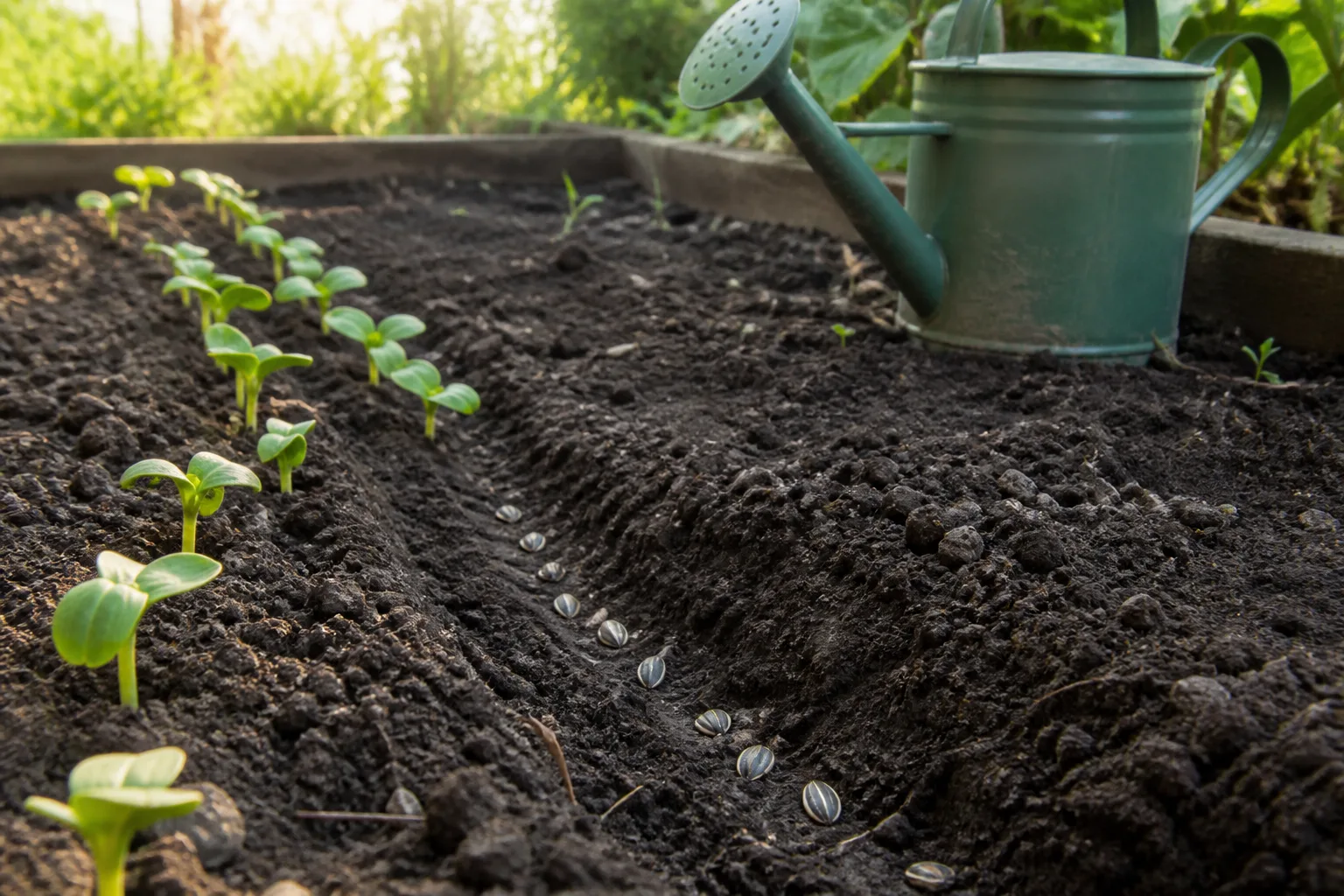
Keep the seed zone consistently damp—not muddy—until the seedlings emerge. A fine-rose watering can or gentle spray is less likely to wash seed downhill than a hard jet. Once seedlings are visible, let the surface dry slightly between thorough waterings while checking that the deeper root zone does not become dusty and dry.
Sunflower seed soaking is optional, not a requirement. Healthy seed germinates without it, and handling a swollen seed can damage the seed coat or lead to sowing into soil that is too cool. Focus on warm soil, fresh seed, the correct depth, and moisture that does not fluctuate wildly.
Thin seedlings for stronger stems and larger blooms
Thin when seedlings have their first true leaves and you can identify the sturdier plant. For a typical garden display, leave plants about 12 to 18 inches apart, using the wider end when you want larger heads, better airflow, or easier access for cutting. A dense row can look full early but often produces spindly stems, smaller blooms, and leaves that stay wet after rain.
Spacing is a design choice. Close planting is reasonable for a short-lived screen or a mass of smaller flowers, while wider spacing is better for individual specimen plants, bouquets, and humid climates. Pull unwanted seedlings cleanly or snip them at soil level; yanking beside a plant you are keeping can disturb its roots.
Start seeds indoors only when you need a head start
Starting indoors can give you a jump on a short season or help seedlings outgrow slugs, birds, and snails before planting. Use individual biodegradable or small nursery pots with drainage, sow one or two seeds about 1/2 inch deep, and place them in a very bright, warm location. A sunny window may be enough for a short start, but seedlings stretch quickly if light is weak.
Do not start too early. A tall seedling circling its pot is not an advantage; it is a plant that has already run out of root space and may stall after transplanting. Savvy Gardening notes that sunflower seedlings are sensitive to transplanting and recommends only a short indoor head start rather than letting them become pot-bound. (Savvy Gardening)
Harden seedlings gradually over roughly one to two weeks. Put them outdoors in bright shade at first, increase exposure to sun and wind, and bring them in if frost threatens. Plant at the same depth as in the pot, water the root ball thoroughly, and avoid breaking or teasing apart roots more than necessary.
Grow Teddy Bear sunflowers successfully in pots
Yes, ‘Teddy Bear’ is a good container candidate because its mature size is more manageable than that of a giant sunflower. Choose a container with a drainage hole and enough depth for a substantial root system; a pot around 12 inches wide and deep is a sensible starting point for one plant, but use the seed packet and the container’s actual volume as your guide.
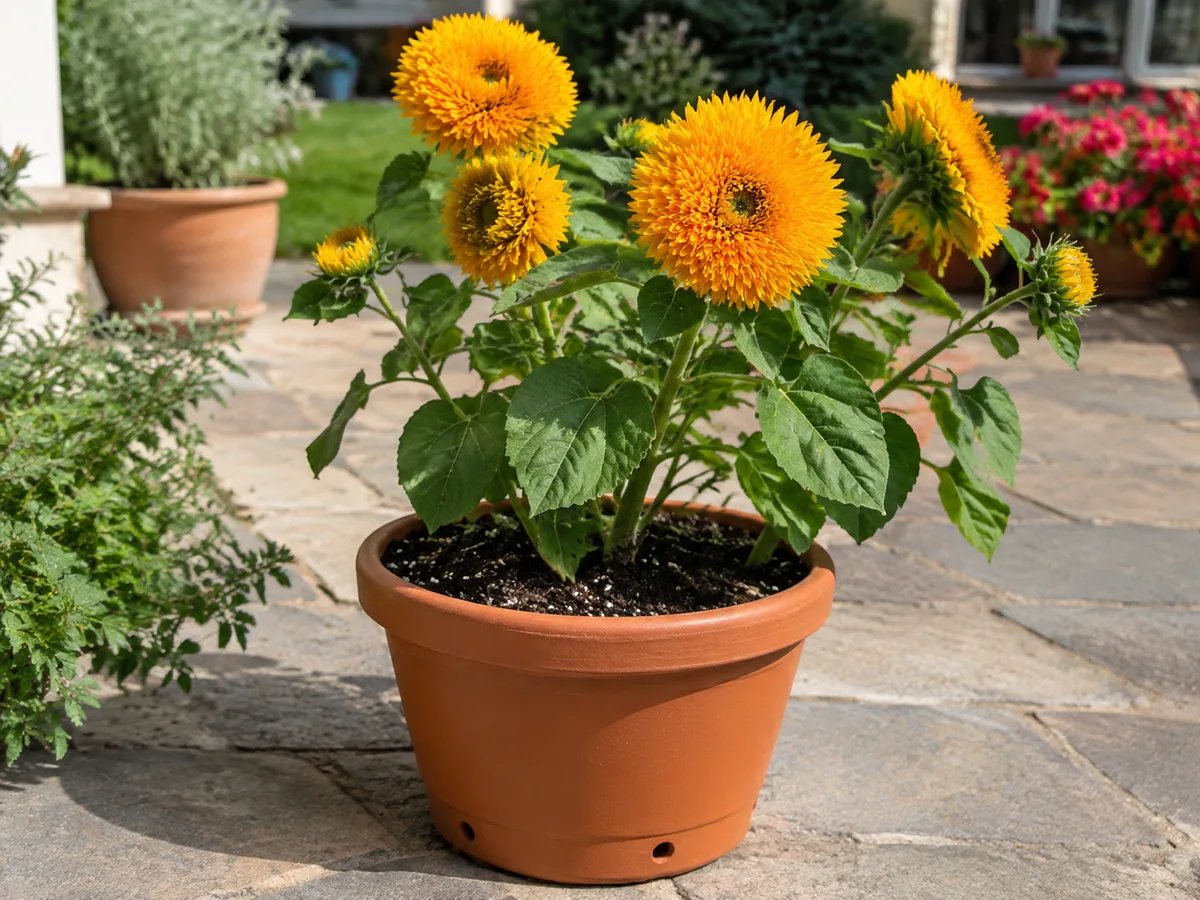
Fill the pot with a quality potting mix, not garden soil. Garden soil compacts in containers and can leave the taproot in a stagnant, airless mix. Set the pot where it gets full sun, and remember that a dark or terracotta container can heat and dry quickly in afternoon sun.
Sow directly into the final pot when possible. If you start several seeds, thin to the strongest plant while they are young; separating mature sunflower seedlings is harder on the roots and can reduce the final result. A pot can hold multiple plants only when it is wide and deep enough for the combined root demand, with spacing that still permits air movement.
Containers need closer observation than beds. They dry from the sides and top, and a flowering plant can use water rapidly on hot, windy days. Water until some drains from the bottom, then empty any saucer so the pot does not sit in standing water.
Water by root-zone moisture, not by the calendar
Newly sown seed needs steady moisture at the surface; established plants need a deeper soak when the upper soil begins to dry. Instead of applying a fixed amount every week, press a finger into the soil near—but not directly against—the stem and check below the surface. A mature plant in a bed may need less frequent watering after rain, while a container in full sun may need attention every day during a heat wave.
Water slowly at the soil line so the moisture reaches the root zone. Avoid wetting the foliage late in the day when possible, especially in humid weather. Wilting during the hottest afternoon hour does not always mean a crisis; check the soil and whether leaves recover in the evening before adding water.
Underwatering shows as limp leaves, dry soil pulling from a pot edge, crispy margins, or buds that stall. Overwatering produces soil that stays wet for days, yellowing that spreads, a sour smell, and sometimes a plant that wilts despite damp soil because roots are losing function. Correct the cause first: improve drainage or pause watering for a waterlogged plant, and water deeply and more consistently for a genuinely dry one.
Feed only when soil or containers need it
In a reasonably fertile garden bed amended with compost, ‘Teddy Bear’ may need no additional fertilizer. If growth is pale and slow across the whole plant, a soil test or a cautious application of a balanced flower fertilizer can make sense. Follow the label; stronger is not better, and fertilizer applied to bone-dry soil can injure roots.
Container plants have a smaller nutrient reservoir, so they are more likely to benefit from light feeding during active growth. A controlled-release fertilizer mixed according to its label or a diluted liquid feed at the recommended interval is safer than repeated heavy doses. If the plant is all leaves and few buds, stop adding nitrogen and check light, crowding, and cultivar timing before feeding again.
Never use fertilizer to compensate for shade, compacted mix, or irregular watering. Nutrients cannot repair roots sitting in saturated soil, and a richer mix does not create sunlight. The strongest bloom response usually comes from solving the limiting factor rather than adding more products.
Use spacing and light support to prevent flopping
‘Teddy Bear’ is shorter than many sunflowers, but short does not mean windproof. A well-spaced plant in full sun develops a sturdier architecture than a shaded plant stretching toward light. If the stem leans, first check whether the plant is reaching for sun or has been softened by excess nitrogen and wet soil.
Install a slim stake early if the site is exposed, placing it a few inches from the stem so you do not spear the root. Tie loosely with soft material, leaving room for the stem to thicken. Do not wait until a heavy flower head has bent the stem; staking a young plant is less conspicuous and less disruptive.
In a container, wind can tip the entire pot before it breaks the stem. Use a heavy, stable pot, place it against a sheltered wall without trapping humid air, and move it before a storm if the container is easy to lift. Avoid pruning healthy leaves to make the plant “compact”; those leaves power the developing buds.
Deadhead for display, or cut flowers at the right stage
Deadheading is optional. If you want a tidy border and continued flower production from a branching plant, snip a fading head back to a lateral stem or a healthy leaf joint with clean pruners. Removing the spent head before it spends energy on seed can keep the plant looking fresh, although no deadheading technique can guarantee rebloom if the cultivar is naturally single-stemmed or the season is ending.
For a vase, cut when the outer petals are beginning to lift and the flower is not fully open. Harvest in the cool part of the day, strip only foliage that would sit below the water line, and place stems in clean water immediately. Sunflower stems can be thick, so sharp pruners are safer than twisting or snapping them.
There is a real trade-off between bouquets and wildlife. Removing every head gives you more control over appearance; leaving some heads supplies food for birds and lets you observe whether the plant will self-sow. Cut flowers from a dry, well-hydrated plant rather than harvesting immediately after drought or heavy rain.
Save mature seed while sharing some with wildlife
To save seed, leave selected flowerheads on the plant after petals fade. The back of the head gradually changes from green to yellow-brown, the head droops, and the seeds become plumper and harder. Cover the head with a breathable paper bag or fine mesh if birds reach it before maturity, but allow air circulation and remove the cover during wet weather if condensation builds.
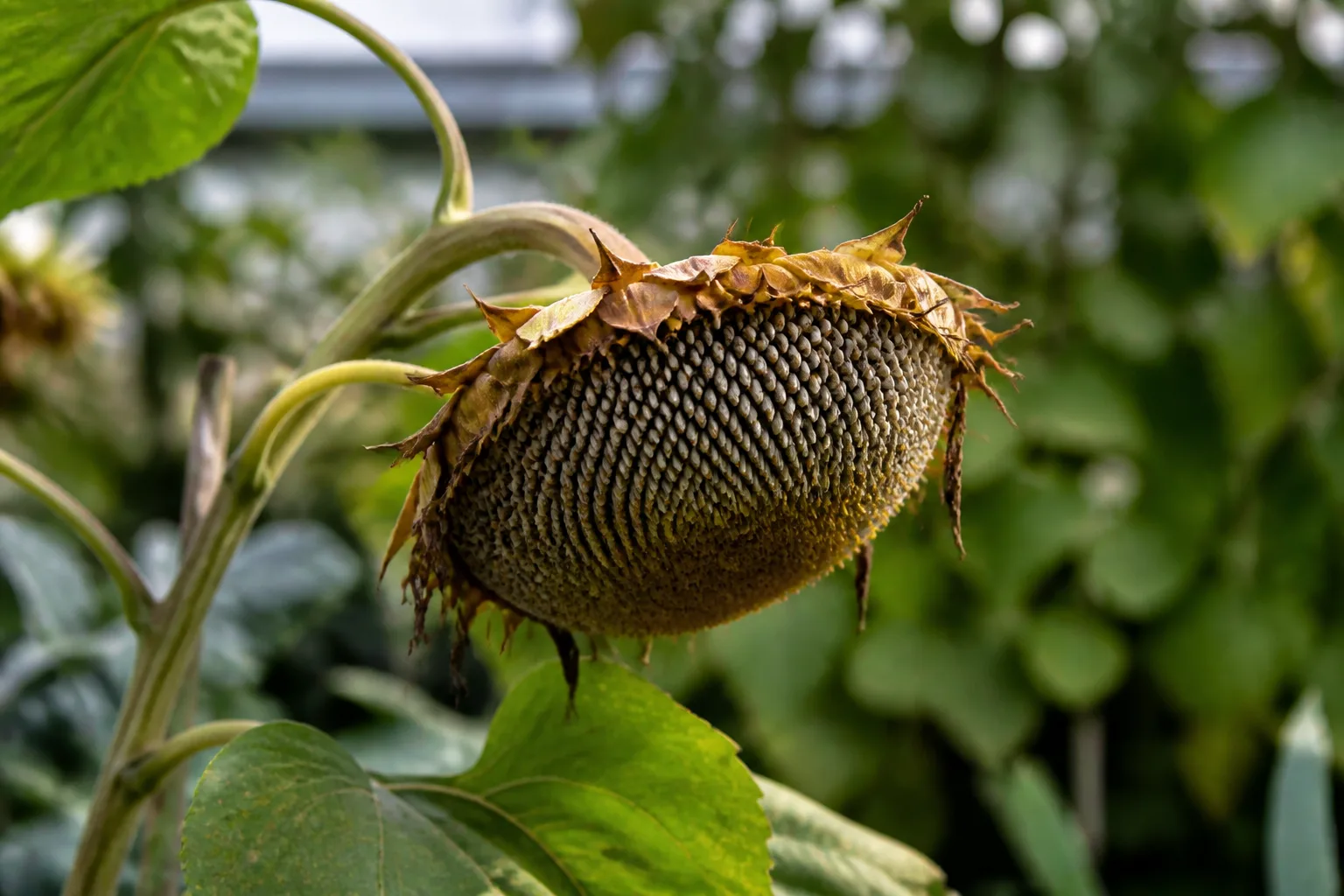
Cut the head with several inches of stem, then finish drying it in a warm, dry, airy place. Rub or brush out the seeds only when they release easily, and store fully dry seed in a labeled paper envelope in a cool, dry location. If the original plant was a hybrid or cross-pollinated with another sunflower, saved seed may not produce plants identical to ‘Teddy Bear’; buy fresh seed when uniform flower form matters.
Do not expect the plant to overwinter. NC State Extension notes that common sunflower is seasonal and can self-seed readily, while birds and squirrels value the seedheads. (NC State Extension) Pull the spent annual after wildlife has finished, or leave the stalks through winter if they are stable and you want habitat, then remove them before spring volunteers become a thicket.
Manage pests and disease with low-impact first steps
The most likely early pest problem is not a mysterious disease; it is a seedling being chewed overnight. Slugs and snails can rasp young leaves, while birds, squirrels, and sometimes rabbits may disturb or eat seed. Inspect at dusk, remove hiding places near seedlings, use a physical barrier where practical, and protect a short row with mesh until plants are established.
Aphids often cluster on tender tips or the undersides of leaves. A firm spray of water can dislodge a light infestation without coating the whole garden; repeat as needed and avoid blasting flowers. Spider mites are more likely during hot, dry weather and may cause stippled leaves or fine webbing. Isolate a potted plant, rinse foliage, and improve consistent watering before considering a labeled product.
If you use insecticidal soap or another pesticide, read the label for the crop or ornamental use, dilution, timing, pollinator precautions, and spray conditions. “Natural” does not mean harmless to beneficial insects or flowers. Spray only when you have identified the problem, never in high heat or on drought-stressed foliage, and do not mix products unless the label permits it.
Diagnose yellow leaves before adding fertilizer
Yellowing is a symptom, not a diagnosis. A few oldest lower leaves may yellow as the plant reallocates resources, especially late in the season. Widespread yellowing with wet soil points more toward excess water or poor drainage; yellowing with dry soil and limp leaves points toward drought stress; pale new growth with otherwise healthy roots can justify checking fertility after light and moisture are corrected.
Look at the pattern before taking action. Are only lower leaves affected, or are new leaves pale? Is the soil wet below the surface? Are there brown spots, stippling, holes, or a white coating? Take one corrective step, then watch the newest growth rather than expecting damaged leaves to turn green again.
Respond to powdery mildew, leaf spots, or rust
Powdery mildew appears as white, dusty growth on leaf surfaces, often when days are warm but nights are cool and humid. Leaf spots and rust create different markings, but all are easier to manage when you remove badly affected leaves, keep foliage drier, improve airflow, and avoid crowding. NC State Extension lists powdery mildew, leaf spots, and rust among possible problems for common sunflower. (NC State Extension)

Do not automatically reach for neem oil or another spray at the first blemish. Photograph the symptom, compare its spread over a few days, and follow local extension or product-label guidance if treatment is needed. Remove diseased annual debris at season’s end rather than composting it if the pile will not heat adequately, and rotate the location next year when a bed has repeated disease.
Troubleshoot poor flowering and short plants
If your plant has lots of leaves but no buds, start with light and timing. A shaded plant may keep growing vegetatively, and a late sowing may simply be younger than the packet estimate suggests. Crowding, transplant setback, drought during bud formation, and excess nitrogen are the next checks; applying more fertilizer before investigating these factors usually makes the diagnosis harder.
If the plant is much shorter than expected, check the seed label first. A container, shallow soil, close spacing, cool weather, or inconsistent moisture can all limit size without indicating disease. If the stem is tall and weak, move next year’s plants to brighter light and space them wider rather than pruning the top.
If blooms are small, decide whether the result is actually a problem. Close spacing, heat, a small pot, and a naturally compact strain can all produce smaller heads. For larger flowers, give one plant more root volume, steady moisture, full sun, and less competition; for more total color, accept smaller heads and sow a wider group.
Can it return next year?
No—‘Teddy Bear’ sunflower is an annual, so the original plant does not come back from a hardy crown after winter. Its season ends after flowering and seed production, and frost finishes plants that have not already declined. A volunteer may appear next spring if mature seed fell into bare soil, but that is a new seedling, not the same plant returning.
Letting a few seedheads remain is the easiest way to encourage volunteers and feed wildlife. Pull volunteers that crowd a path, shade vegetables, or emerge too close together; keep the strongest plants and thin the rest while small. If you want the same fluffy double form and a predictable height, save seed only from an isolated, healthy plant—or purchase fresh labeled seed.
Conclusion
Grow ‘Teddy Bear’ sunflower where it can see the sky: warm soil, full sun, open spacing, and reliable moisture are the essentials. Direct sowing after frost is usually best, while a short indoor start can help in a brief season or a garden with heavy seedling pressure. A deep, draining container works if you are willing to check it more often than a bed.
The rest is goal-setting. Thin widely for sturdy stems and larger blooms, deadhead when you want a tidy display, cut flowers as they begin to open, or leave selected heads for birds and mature seed. When leaves yellow or flowering disappoints, inspect light, water, roots, spacing, and timing before adding fertilizer. With those decisions made in the right order, this compact sunflower delivers the plush golden flowers that make it worth growing.



