How to Get a Snake Plant to Bloom Indoors
Snake plant flowers are rare indoors—but not impossible. Learn maturity cues, light and water stress that trigger blooms, and what to do when a spike appears.
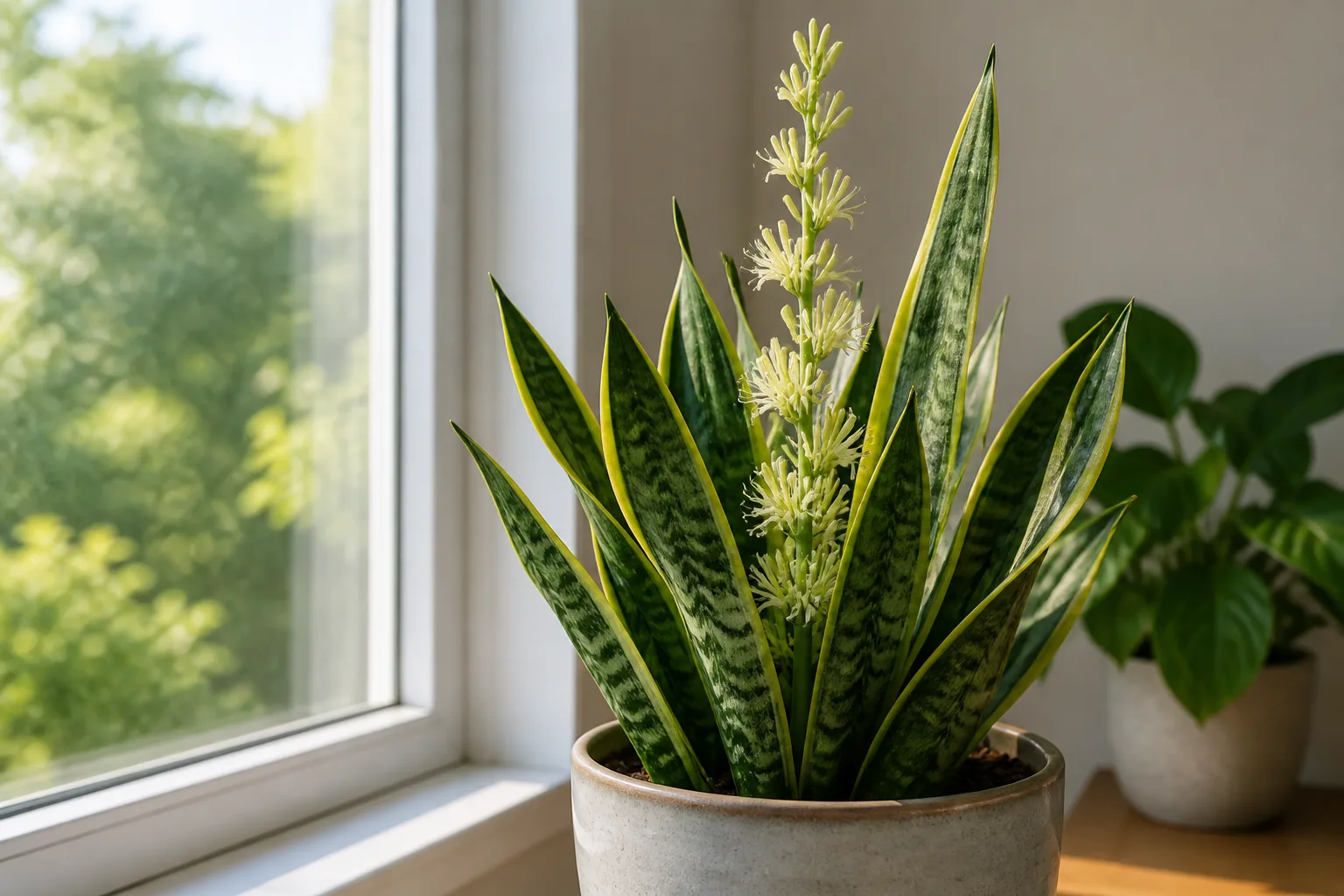
A snake plant bloom indoors is one of those houseplant surprises that stops you mid-water: a skinny green stalk rising from the center crown, nothing like the stiff sword leaves you expected. Most Dracaena trifasciata plants grown as foliage houseplants never flower inside, and that is normal. Blooming is not a report card on your parenting skills—it is a rare reproductive event triggered when a mature plant reads its environment as stable enough, bright enough, and just stressed enough to gamble on seeds.
If you want to improve your odds without turning neglect into abuse, the goal is not to torture the plant. It is to stack maturity, light, seasonal timing, mild root crowding, and disciplined watering so the plant chooses flowering over simply surviving. This guide walks through identification, realistic expectations, the conditions that matter, a seasonal calendar, and exactly what to do when—or if—a spike appears.
What Snake Plant Flowers Actually Look Like
Snake plant flowers are easy to miss until you know the silhouette. According to NC State Extension, the inflorescence is a raceme: a vertical flower stalk bearing many small blooms along its length. Flowers are greenish-white to cream, sticky from nectar, and fragrant. In the wild and in warm outdoor plantings, bloom time skews toward spring; indoors, spikes most often appear in late winter through early summer when daylight lengthens and the plant exits its slow season.
The stalk itself can reach 2–3 feet on a healthy specimen—far taller than a new leaf would stand at first emergence. Individual flowers are tubular and spidery, opening in sequence rather than all at once. Color can read white, pale green, or slightly yellow depending on cultivar and age. Some growers report pinkish or burgundy tones on certain varieties, though the classic indoor show is cream on green.
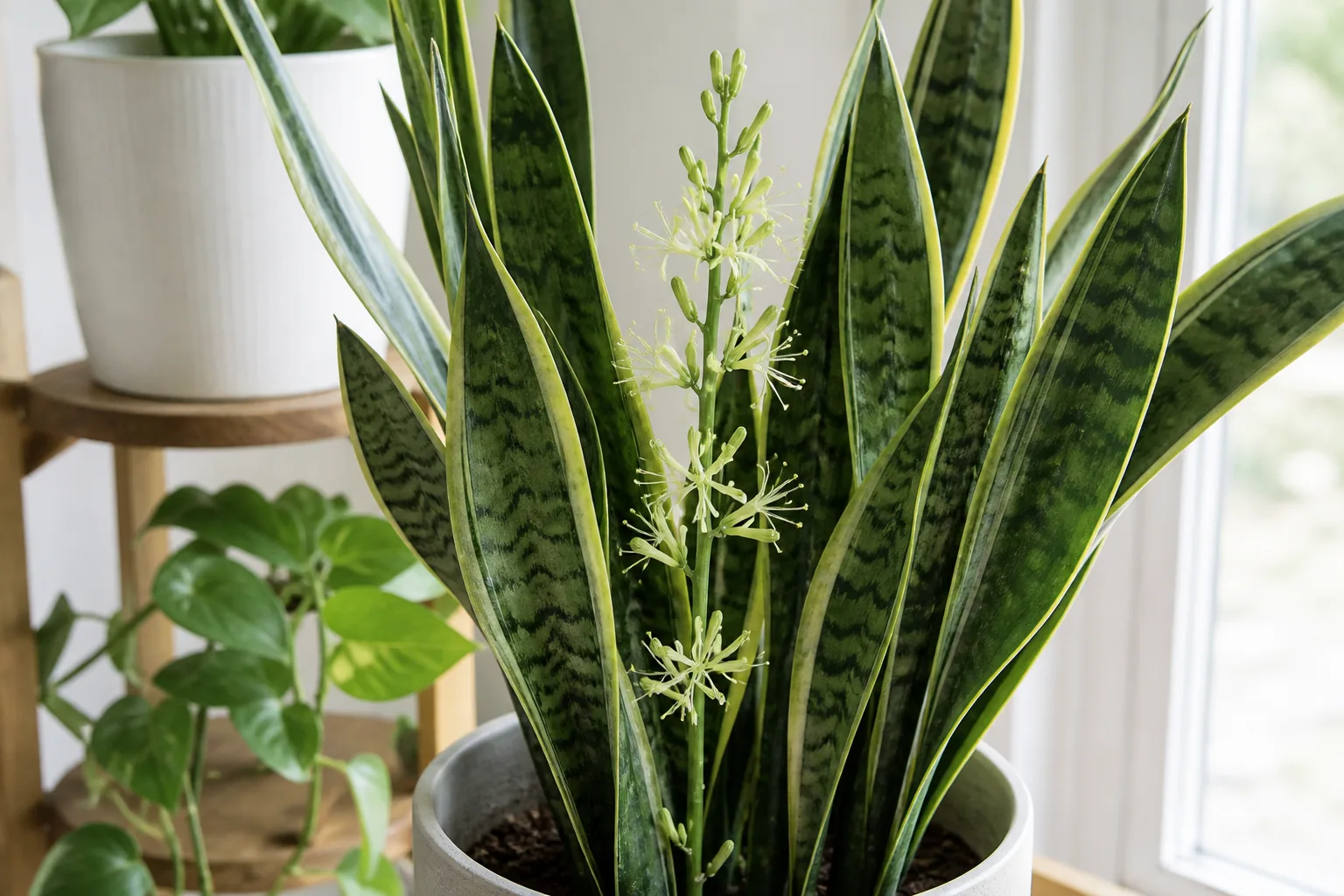
Flower spike vs new leaf pup — how to tell early
Both a bloom stalk and a new leaf start as a tight green point in the center of the rosette, which is why social media is full of “is this a flower?” posts. Use these cues in the first two weeks:
Likely flower spike: the emerging structure stays narrow and round, like a pencil or asparagus spear, without the flat, folded tip of a leaf. Growth is fast vertically—you may gain an inch or more per week once it commits. The surface looks smooth and slightly glossy, not leathery. As it lengthens, it does not begin to unfurl.
Likely new leaf: the tip shows a blunt or pointed leaf nose within days. Growth is slower and the structure widens as the leaf blade develops inside the sheath. You will eventually see the familiar stiff arch forming.
If you are still unsure after ten days, mark the height with a pencil line on the stake or pot rim. A flower spike will outpace leaf growth noticeably. When in doubt, do nothing dramatic—both outcomes are fine, and repotting or moving the plant to “check” can abort whichever was forming.
Night blooms, fragrance, and orange berries
Snake plant flowers are nocturnal. They tend to open from the bottom of the spike upward, releasing a sweet scent often compared to vanilla or jasmine—strong enough to notice across a room on a warm evening. That fragrance is lovely for you and confusing for pets; more on that below.
After successful pollination, plants can produce orange berry fruits. NC State Extension notes these berries are rarely seen on indoor plants because there is usually no pollinator and no second plant flowering at the same time. Hand pollination with a small brush is possible but optional—berries are ornamental, not edible, and the plant does not need them to stay healthy.
One critical lifecycle detail: the individual rosette that flowers will not bloom again. It keeps its leaves, but future flowers—if any—come from other offsets or rosettes in the pot. Think of flowering as a one-time performance per crown, not an annual subscription.
Set Honest Expectations Before You Chase Blooms
Let’s say the quiet part out loud: most indoor snake plants never bloom, and a plant that thrives for twenty years on a dim hallway shelf may never bother. NC State Extension states plainly that in native habitat plants bloom in winter, but as houseplants they rarely flower. That is not failure—it is biology meeting living-room ceilings, weak winter sun, and year-round comfort temperatures.
Chasing blooms also means accepting trade-offs. You will delay repotting longer than foliage-focused care recommends. You will place the pot in brighter light than low-light survival requires. You may keep the plant slightly drier than a beginner-friendly schedule. Each lever increases flowering odds a little and decline risk a little.
Ask yourself the real question: Do you want flowers, or do you want the easiest plant on the shelf? Snake plants are famous because they tolerate neglect. Bloom-chasing is the opposite project—calculated consistency with a dash of stress. If your plant is new, recently repotted, recovering from root rot, or sitting in a dark bedroom, fix health first. Flowers can wait.
Which Snake Plant Varieties Bloom Most Reliably
Taxonomy shifted: what many still call Sansevieria is now classified as Dracaena, but care advice crosses old and new names. Not every cultivar flowers with equal enthusiasm. Reliable bloom candidates reported by growers and collections include:
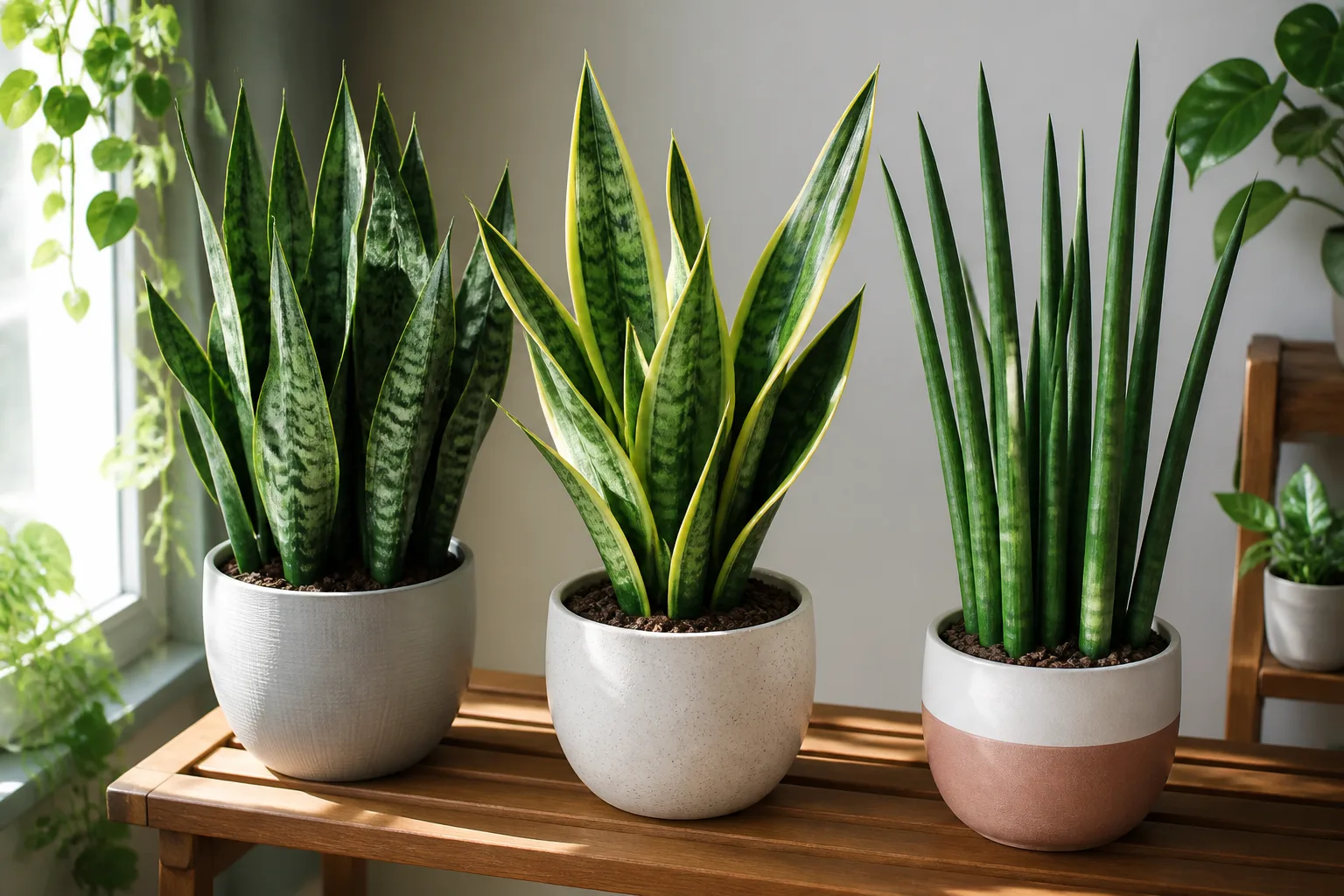
- Dracaena trifasciata (standard mother-in-law’s tongue)
- D. trifasciata ‘Laurentii’ (yellow-edged)
- D. angolensis (cylindrical snake plant, formerly Sansevieria cylindrica)
- D. patens, D. longiflora, and other upright species in mixed collections
Compact birds-nest forms like ‘Hahnii’ can bloom but do so less often indoors because they stay small and slow. If flowering is your primary goal, choose an upright, species-type plant rather than a miniature cultivar—and buy a mature specimen if your budget allows. A four-inch nursery pot seedling is a multi-year project.
The Five Conditions That Make Indoor Blooming Possible
Indoor snake plant flowering is not random, but it is multi-factor. Missing one pillar rarely kills the effort; missing three guarantees foliage only. Stack these five.
Plant maturity
A juvenile snake plant will not bloom, and stressing a young plant is more likely to produce stunted growth or rot than flowers. As a practical rule, wait until the plant is at least two to three years old, with multiple leaves or visible offsets, and a stem mass that looks established rather than nursery-fresh.
Maturity also means energy reserves. The plant should have produced at least one full season of active growth in your home—not a week on the windowsill after shipping. If you propagated a single leaf cutting eighteen months ago, patience: that clone may still be building rhizome mass underground.
Root-bound status without decline
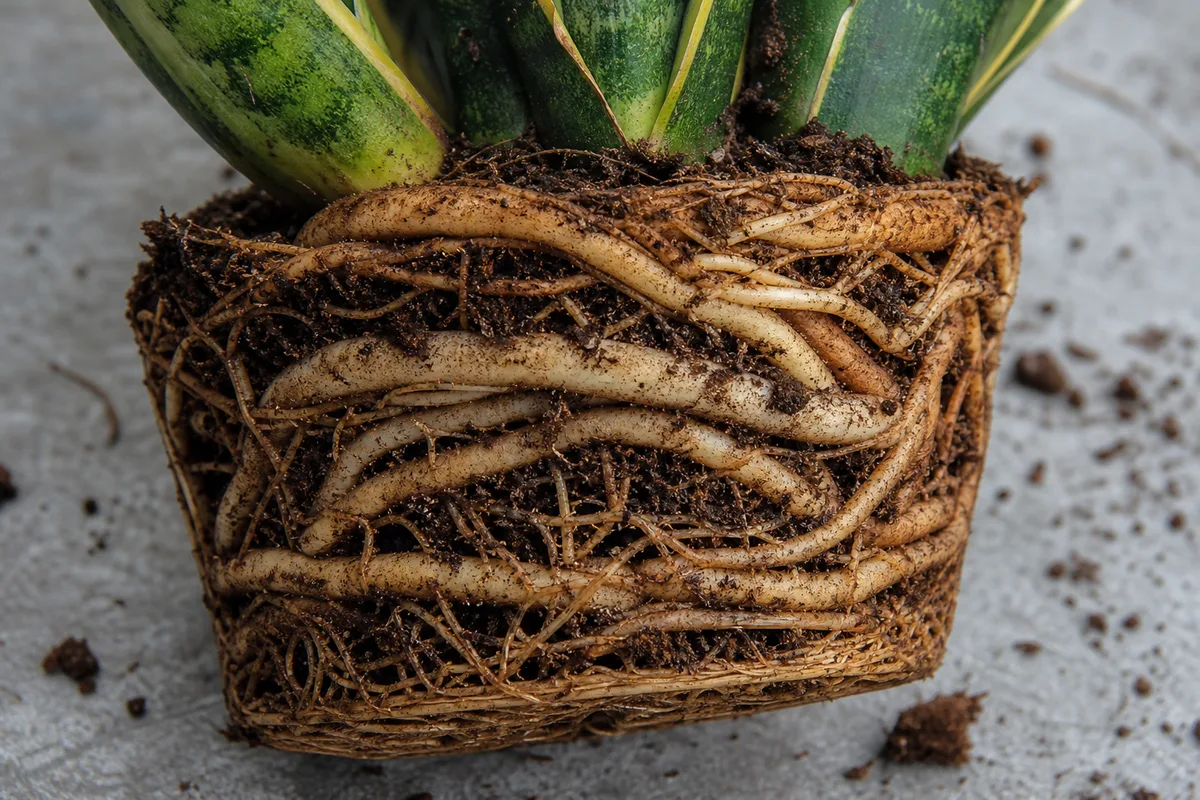
Mild root-bound stress is the most cited indoor bloom trigger. When roots circle the pot and lightly fill the soil volume, the plant receives a signal that space is limited—reproduction becomes attractive.
The sweet spot is snug, not suffocated:
- Roots visible at drainage holes but not wrapping the soil surface in a solid mat
- Soil drying faster than it did last year, but still holding structure—not pure dust
- No chronic wilting, yellowing, or stunted new leaves
If water runs straight through in seconds and leaves look thin or wrinkled, you have crossed from helpful crowding into deprivation. That stress produces survival blooms on some species—but it also produces decline. For guidance on reading the line, see root-bound stress on snake plant. When blooms are not the goal, repotting guidance lives in the snake plant repotting guide.
Bright light and longer spring days
Snake plants survive low light but flower in bright conditions. For bloom chasing, aim for several hours of bright indirect light daily, with optional one to two hours of gentle direct sun—morning east or late afternoon west is safer than midday south glass.
Season matters. Increasing day length in late winter and spring mimics the plant’s native cue to invest in reproduction. Move the pot to its brightest acceptable location in February or March rather than July. If your brightest spot is still dim, add a full-spectrum grow light positioned according to a real setup guide—start with the grow lights complete guide for indoor plants rather than guessing distance.
More light without more water discipline equals faster soil drying—adjust together, not separately.
Controlled drought and watering rhythm
Snake plants are drought-tolerant succulents. Bloom protocols lean on consistent dry cycles: water deeply, then let the pot go fully dry several inches down before the next soak. In spring push months, many experienced growers stretch the dry window an extra three to five days beyond their winter schedule—never until leaves pucker or fold.
The failure mode is confusing drought with hydrophobic, nutrient-starved soil. If water channels out instantly and leaves look dull, the plant may lack the resources to flower. A top-dress of fresh potting mix or a modest spring feed addresses that better than heroic thirst. Full watering philosophy is in the snake plant watering guide.
Balanced fertilizer—skip bloom boosters
Feed lightly during active growth: a balanced liquid fertilizer (such as 10-10-10) at half label strength once in early spring and again in midsummer—or monthly half-strength from spring through summer if the plant is already vigorous. Skip fall and winter entirely.
Avoid high-phosphorus “bloom booster” formulas on snake plants. They are unnecessary for this species and can accelerate salt buildup in a pot you are intentionally keeping small. If salts accumulate, flush the soil or delay feeding; see the snake plant fertilizer guide for rates tied to low-light vs bright rooms.
Month-by-Month Bloom-Push Calendar
Use this as a Northern Hemisphere template; flip seasons if you are south of the equator.
January–February: Observe only. Keep temperatures stable (65–80°F / 18–27°C), water sparingly, and do not repot. Confirm the plant is mature and healthy.
March: Move to the brightest location or add grow lights. Resume half-strength feeding if new growth is active. Begin extending dry cycles slightly.
April–May: Peak bloom window. Maintain bright light and mild root-bound status. Watch the center crown weekly for a spike. Avoid moving or rotating the pot unnecessarily.
June: Continue bright light; ease watering slightly if summer heat dries soil faster. If no spike appeared, return to standard excellent care—do not escalate stress.
July–August: Back off fertilizer. Let soil dry fully between waterings. Treat as foliage season.
September–December: Winter rest. Cooler room temperatures are fine if above 50°F (10°C); reduce water. No repotting unless emergency.
This calendar aligns with how Kew Gardens describes the species: a West African succulent adapted to seasonal rhythm, not perpetual tropical lushness.
Step-by-Step Protocol to Encourage a Flower Spike
When you are ready to run the experiment for one growing season, follow this sequence:
- Confirm maturity and health — multiple leaves, no active rot, no recent repot (wait at least 12 months after repotting before a bloom push).
- Choose the brightest stable station — southeast or east window, or grow light on a timer mimicking 12–14 hour days in spring.
- Keep the pot slightly root-bound — skip repotting this year unless roots are escaping en masse.
- Water deeply, then wait — soak until drainage runs clear; do not water again until a finger or skewer shows dryness deep in the pot.
- Fertilize twice lightly — half-strength balanced feed in March and June unless the plant looks pale or salts are visible.
- Stop touching it — no weekly relocations, no prop checks, no division projects mid-spike.
Run the protocol one spring. If nothing happens, return to foliage-first care in the snake plant care hub. Repeated yearly torture does not improve odds; age and light matter more than gimmicks.
When Stress Helps—and When It Ruins the Plant
Helpful stress looks like: slightly tight roots, brighter light than before, longer dry spells on a healthy plant, stable temperatures, and seasonal timing. The plant stays firm at the base, leaves are upright, color is normal for the cultivar.
Harmful stress looks like: chronic underwatering with wrinkled leaves, root rot smell, mushy bases, sunburn bleaching, cold drafts below 50°F, or fertilizer burn. A desperate plant may throw a bloom—or it may collapse. Do not confuse a last-gasp flower with success.
If leaves yellow, soften, or tip-burn suddenly during your bloom push, abort the experiment: resume moderate watering, shade harsh direct sun, and inspect roots if the base feels soft. Problem-specific fixes live under snake plant problems and related guides.
What to Do When Your Snake Plant Blooms
Congratulations—you beat the odds. Now protect the show:
Do not repot while the spike is active. Flowering already signals stress; fresh disturbance rarely helps. Do not move the pot unless necessary—bud drop happens. Maintain the same light and watering rhythm that got you here; dramatic changes shorten bloom life.
Expect flowers to last roughly two to three weeks, opening at night and fading sequentially up the stalk. Enjoy the scent, but manage pets: snake plants are toxic to cats and dogs if chewed, and sticky nectar can attract curious mouths. ASPCA Poison Control lists saponins as the toxic principle—keep blooming plants off floor-level pet routes and wipe nectar drips. More detail: snake plant toxicity guide.
Hand pollination is optional: transfer pollen between flowers on the same spike or between two plants with a small dry brush. Indoor berries are a fun novelty, not a goal.
After the Flowers Fade: Stalk Removal and Recovery
When the last blooms brown and the stalk dries, cut it at the base with clean shears. Do not yank—it can damage the crown. Wipe sticky residue off leaves to discourage pests.
The plant may look tired for a few weeks while it reallocates energy to roots and foliage. Resume normal excellent care: bright indirect light, full dry cycles, no fertilizer until the next spring. Offsets may grow more actively after flowering—that is your future bloom candidate.
Still skip repotting for four to six weeks unless soil is clearly exhausted. When you do repot, choose a pot only one size larger with drainage and a gritty mix per the soil guide.
Why Your Snake Plant May Never Bloom (And That’s Fine)
Genetics, indoor light ceilings, and patience limits mean no flower spike is the default outcome. A snake plant that never blooms can still be a decades-long, air-cleaning, architectural specimen—the reason most people buy it.
Stop chasing blooms when:
- The plant is primarily decorative in a low-light room you cannot change
- You have a compact cultivar or young propagation
- Previous stress attempts caused health setbacks
- You would rather repot on schedule and maximize pup production for sharing
Foliage care excellence is not a consolation prize. It is what the species does best indoors.
Conclusion
Getting a snake plant to bloom indoors is less about secrets and more about stacking rare conditions: a mature, slightly root-bound plant in bright spring light, fed lightly, watered with disciplined drought, and left alone long enough to interpret those cues as “now or never.” Identify spikes early, protect the plant during bloom, cut the stalk when done, and return to the steady care that kept it alive in the first place.
If flowers never come, you still have one of the most forgiving houseplants on the market. If they do, you will understand why growers talk about the scent for years—and you will know exactly how to care for the plant afterward without starting the cycle of decline.



