Are Snake Plants Toxic to Pets? Symptoms, First Aid, and Safe Alternatives
Snake plants are toxic to cats and dogs due to saponins that cause nausea, vomiting, and diarrhea. Learn symptoms, what to do if your pet eats a snake plant, and pet-safe upright alternatives.
Quick Answer: Are Snake Plants Toxic to Pets?
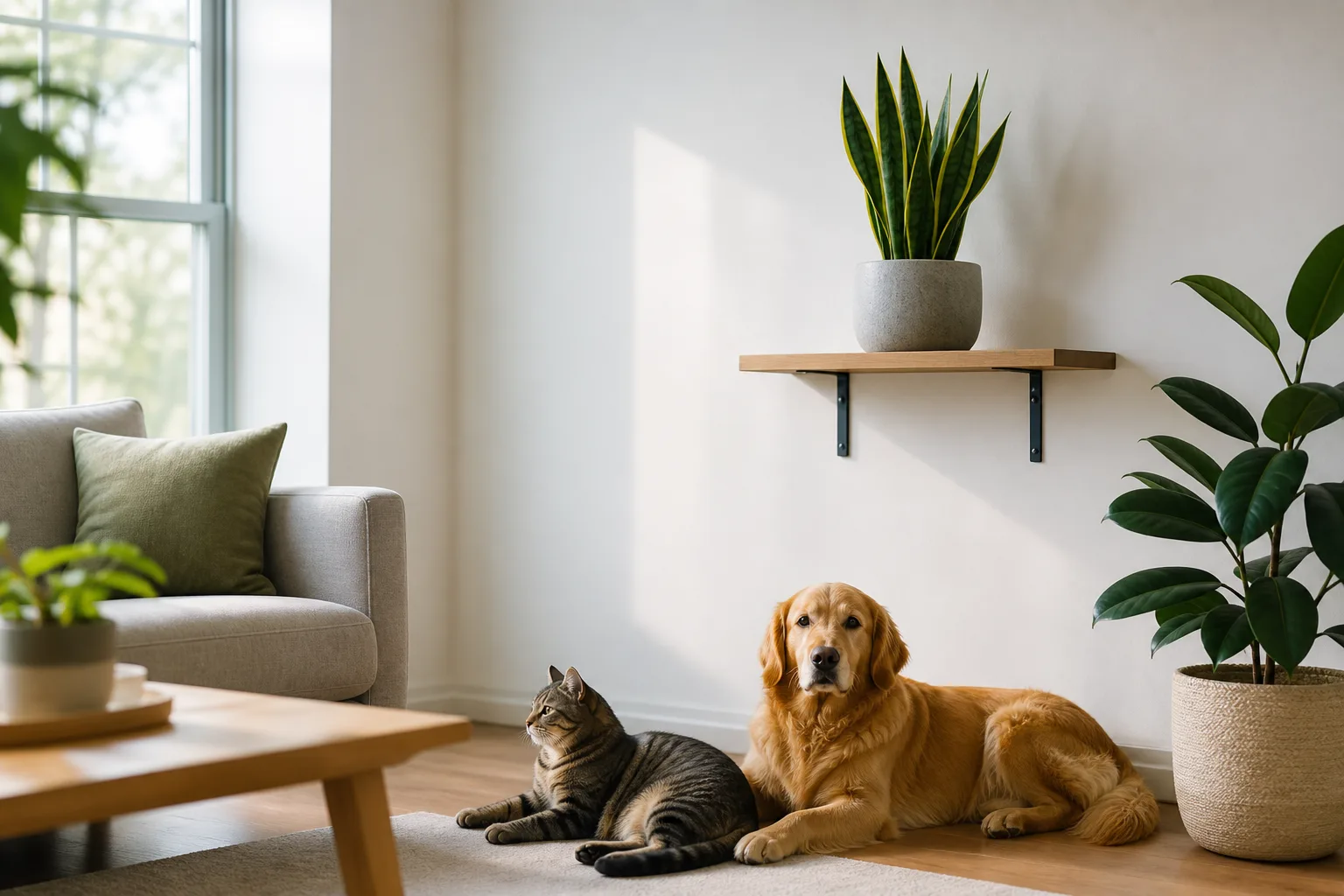
Yes, snake plants are toxic to cats and dogs. The ASPCA classifies Sansevieria trifasciata — also known as mother-in-law’s tongue, golden bird’s nest, and good luck plant — as toxic to both species. The toxic principle is saponins, natural chemical compounds concentrated in the leaves and stems that trigger nausea, vomiting, and diarrhea when ingested.
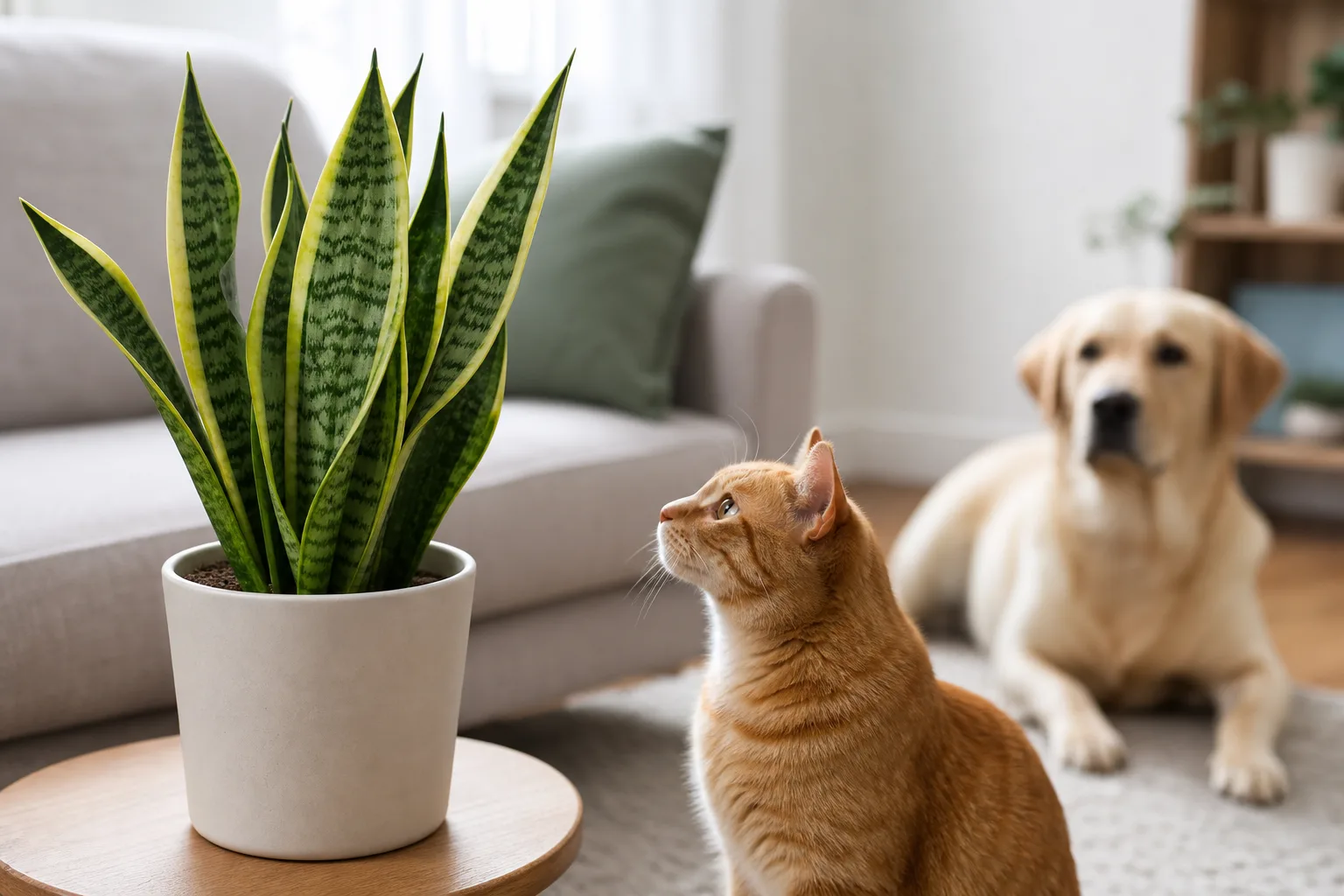
This is a different toxic mechanism than the one found in pothos, peace lilies, and philodendrons, which rely on calcium oxalate crystals to cause immediate mouth pain. Snake plant saponins produce a slower, more gastrointestinal-focused reaction — and that difference matters enormously for how quickly you may notice symptoms and how much your pet might eat before feeling sick.
This guide covers the saponin mechanism, why symptoms appear on a delay, the specific signs to watch for in cats and dogs, clear triage guidance for deciding between home care and a vet visit, and upright non-toxic alternatives that give you the same architectural look without the worry. If you need the full framework for growing and troubleshooting this plant, start with the snake plant care guide. For broader pet-safety plant decisions across your whole collection, see the pet-safe houseplants guide.
What Makes Snake Plants Toxic: The Saponin Mechanism
Most pet toxicity articles lump snake plants together with pothos and peace lilies under a generic “toxic to pets” label. They are not the same, and not understanding the difference can lead you to misjudge the timeline and severity of a snake plant incident.
Saponins vs. Calcium Oxalate: Why the Distinction Matters
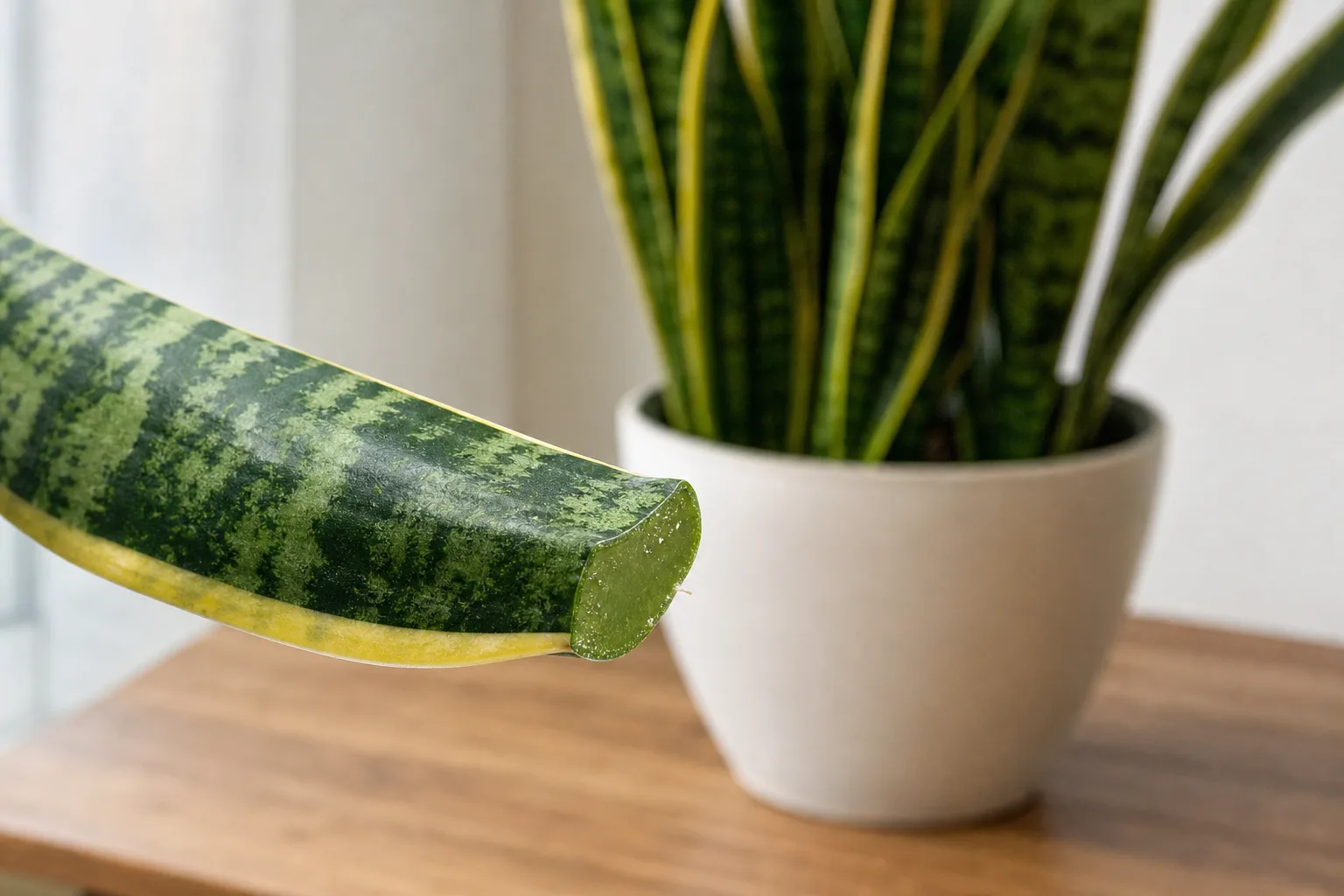
Snake plants belong to the Asparagaceae family — not the Araceae family that includes pothos, philodendrons, peace lilies, monstera, and dieffenbachia. Aroids rely on calcium oxalate raphides: microscopic needle-shaped crystals that rupture from plant cells on contact and embed in mouth tissue, causing instant, intense burning pain. The pain is the deterrent. Most pets take one bite, feel the damage immediately, and stop.
Snake plants use saponins instead — soapy, bitter chemical compounds that produce gastrointestinal distress rather than immediate oral pain. This is a subtle but critical difference. With pothos, the moment your pet bites down, they feel the burn and recoil. With a snake plant, the first few bites may not register as immediately dangerous. A pet might chew and swallow more leaf material before the nausea sets in, simply because the warning system is slower.
The Pet Poison Helpline identifies saponins as the toxic principle and notes that ingestion causes drooling and vomiting, with clinical signs of dilated pupils and wobbly gait reported specifically in cats. The ASPCA lists the clinical signs more narrowly as nausea, vomiting, and diarrhea. Both sources agree on gastrointestinal distress as the primary presentation, with cats potentially showing more neurological involvement than dogs.
Why Saponins Cause Gastrointestinal Symptoms
Saponins are surfactant compounds — chemically similar to soap — that disrupt cell membranes in the digestive tract. When your pet swallows snake plant material, the saponins irritate the lining of the stomach and intestines, triggering the body’s defense response: nausea to discourage further eating, vomiting to expel the contents, and diarrhea to flush the system.
This is a chemical irritation, not a mechanical puncture. It takes minutes to an hour for the digestive tract to register the insult and respond. The delayed onset is the single most important thing to understand about snake plant toxicity because it means:
- You may not realize your pet ate the plant until vomiting starts 30 to 90 minutes later
- The amount consumed could be larger than it would be with a calcium oxalate plant
- The toxic effects are primarily gastrointestinal and self-limiting, not systemic organ damage
WagWalking notes that veterinary treatment for snake plant poisoning focuses on supportive care — managing vomiting, preventing dehydration, and allowing the GI tract to recover. There is no antidote because saponins work through local irritation rather than metabolic poisoning.
Every Part of the Plant Is Toxic
The ASPCA, Pet Poison Helpline, and NC State Extension agree: all parts of the snake plant contain saponins. This includes the upright sword-like leaves, the underground rhizomes, and the sap released when any part is cut or crushed.
The long, grass-like leaves are the most commonly chewed part — cats are drawn to the shape, and dogs may mouth low-hanging leaf tips. The rhizomes, if exposed through digging in the pot, present an additional risk: some sources identify calcium oxalate crystals in the rhizome tissue alongside saponins, adding a mechanical irritation component if a pet chews the underground storage structures. Regardless of which specific part your pet targets, assume toxicity across the entire plant.
Symptoms of Snake Plant Poisoning
The symptom timeline for snake plant ingestion is different from what you would see with a pothos or peace lily. Because saponins work through chemical irritation of the GI tract rather than mechanical embedding in oral tissue, symptoms appear more gradually — and the primary complaints are digestive, not oral.
Primary Symptoms
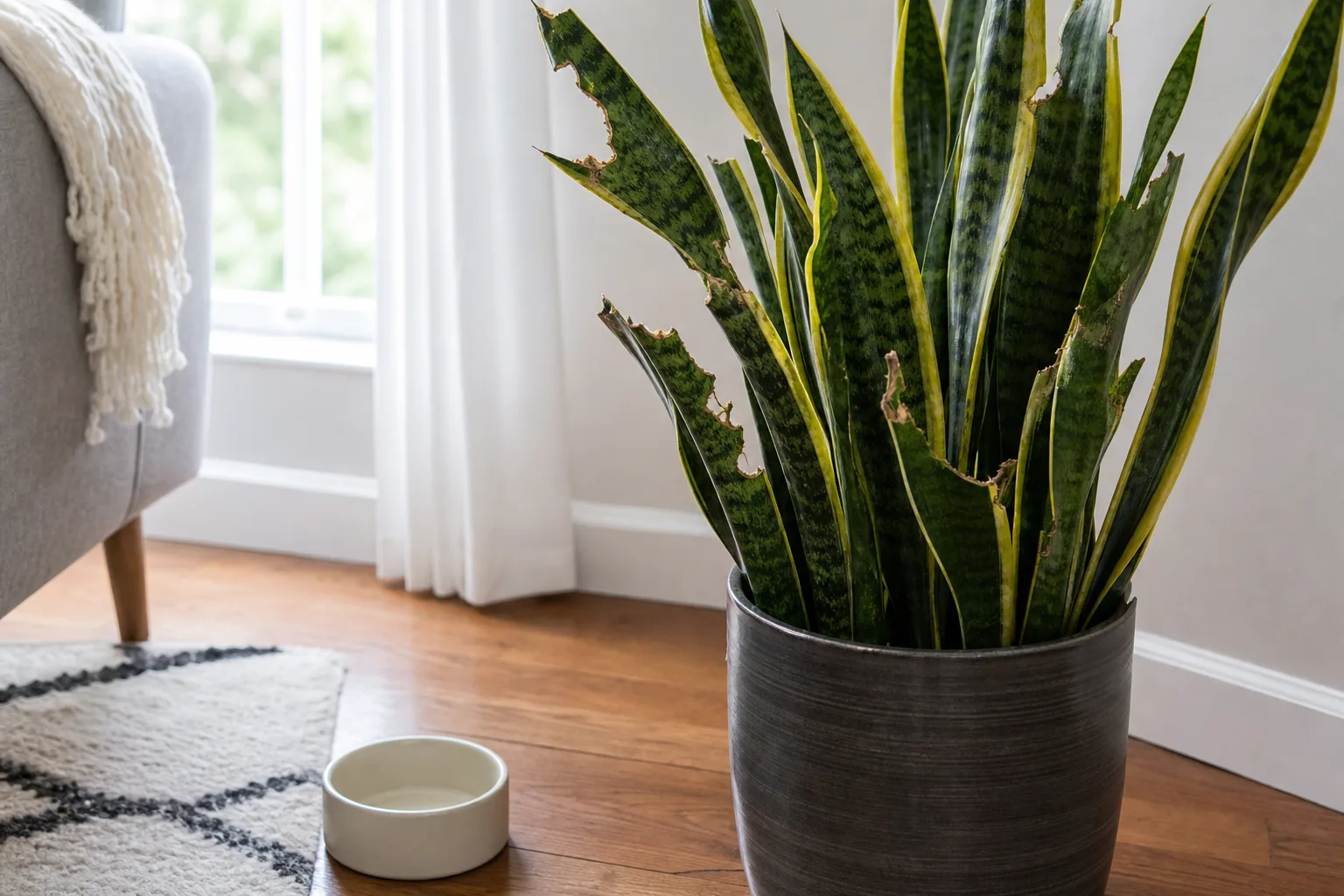
The ASPCA lists the core clinical signs as nausea, vomiting, and diarrhea. These are the symptoms most pets will show, and they typically begin 30 minutes to 2 hours after ingestion:
- Nausea — the pet may drool lightly, lick their lips repeatedly, or appear unsettled; not the profuse hypersalivation of calcium oxalate exposure, but a subtler queasiness
- Vomiting — may contain visible pieces of leaf; often the first definitive sign that something is wrong; may occur in multiple episodes over several hours
- Diarrhea — loose or watery stool, sometimes with urgency; less immediate than vomiting but common within the first few hours
Additional Signs in Cats
The Pet Poison Helpline specifically notes dilated pupils and wobbly gait reported in cats. These neurological signs are not universal — not every cat will show them, and the literature does not clearly establish whether they are a direct effect of saponins or a secondary response to GI distress, dehydration, or the stress of the experience. Regardless of mechanism, they are worth taking seriously because they represent a level of systemic involvement beyond simple stomach upset:
- Dilated pupils — pupils remain wide even in normal room light
- Wobbly gait or ataxia — the cat appears unsteady, stumbles, or has difficulty jumping
Behavioral Signs
- Lethargy and hiding — the pet may seem subdued, sleep more than usual, or withdraw to an isolated spot
- Decreased appetite — may refuse food for 12 to 24 hours due to ongoing nausea
- Mild drooling — less dramatic than the ropey saliva of calcium oxalate exposure, but present as a nausea response
Why Symptoms Appear on a Delay
Unlike calcium oxalate plants where the mouth pain is instant and unmistakable, snake plant saponins must reach the stomach and small intestine before the irritation begins. This 30-to-90-minute window means the plant-chewing incident may have happened while you were in another room, and the first clue is your pet vomiting on the floor.
The delay is also what makes snake plant consumption potentially higher in volume. A pet that feels no immediate pain may continue chewing. If you find chewed snake plant leaves and your pet is not yet showing symptoms, do not assume nothing is wrong — the reaction is likely building and will manifest within an hour or two.
How Much Snake Plant Is Dangerous?
Even a small amount of snake plant can trigger nausea and vomiting because saponins are irritants — not something your pet has to absorb a threshold dose of to feel effects. A cat that chews a few bites off a leaf tip may vomit once or twice and recover quickly. A larger dog that eats multiple leaves will likely have more prolonged vomiting and a higher risk of dehydration.
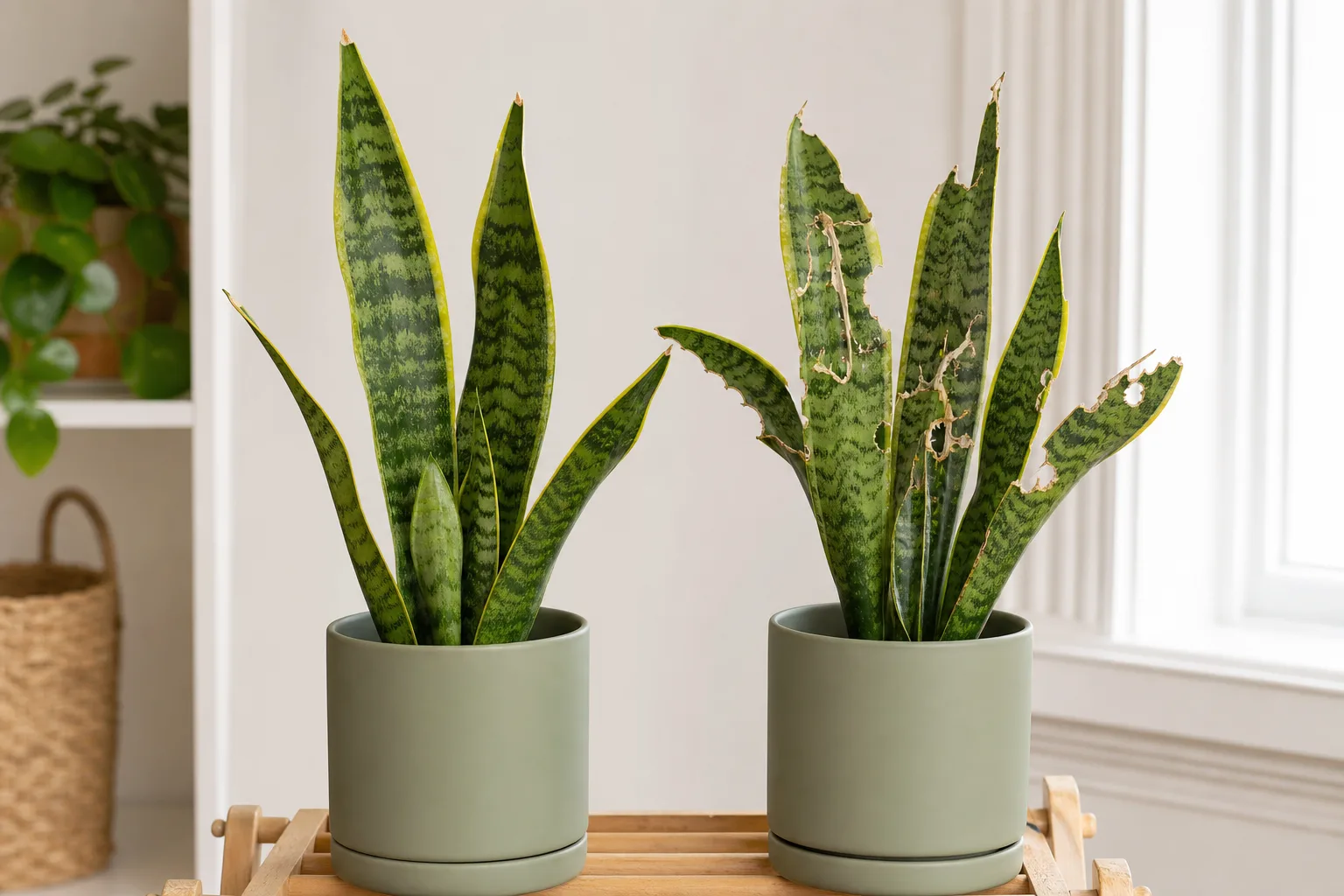
Size matters. A 10-pound cat eating the same amount of leaf material as a 70-pound dog receives a proportionally larger dose. Toy breeds, puppies, kittens, and older pets with pre-existing health conditions warrant closer monitoring after any exposure.
The saponin concentration is reportedly higher in younger, actively growing leaves and in the rhizomes. A pet that digs up and chews the underground tubers may get a more concentrated dose than one that nibbles a mature leaf tip.
When to Call the Vet: A Decision Guide
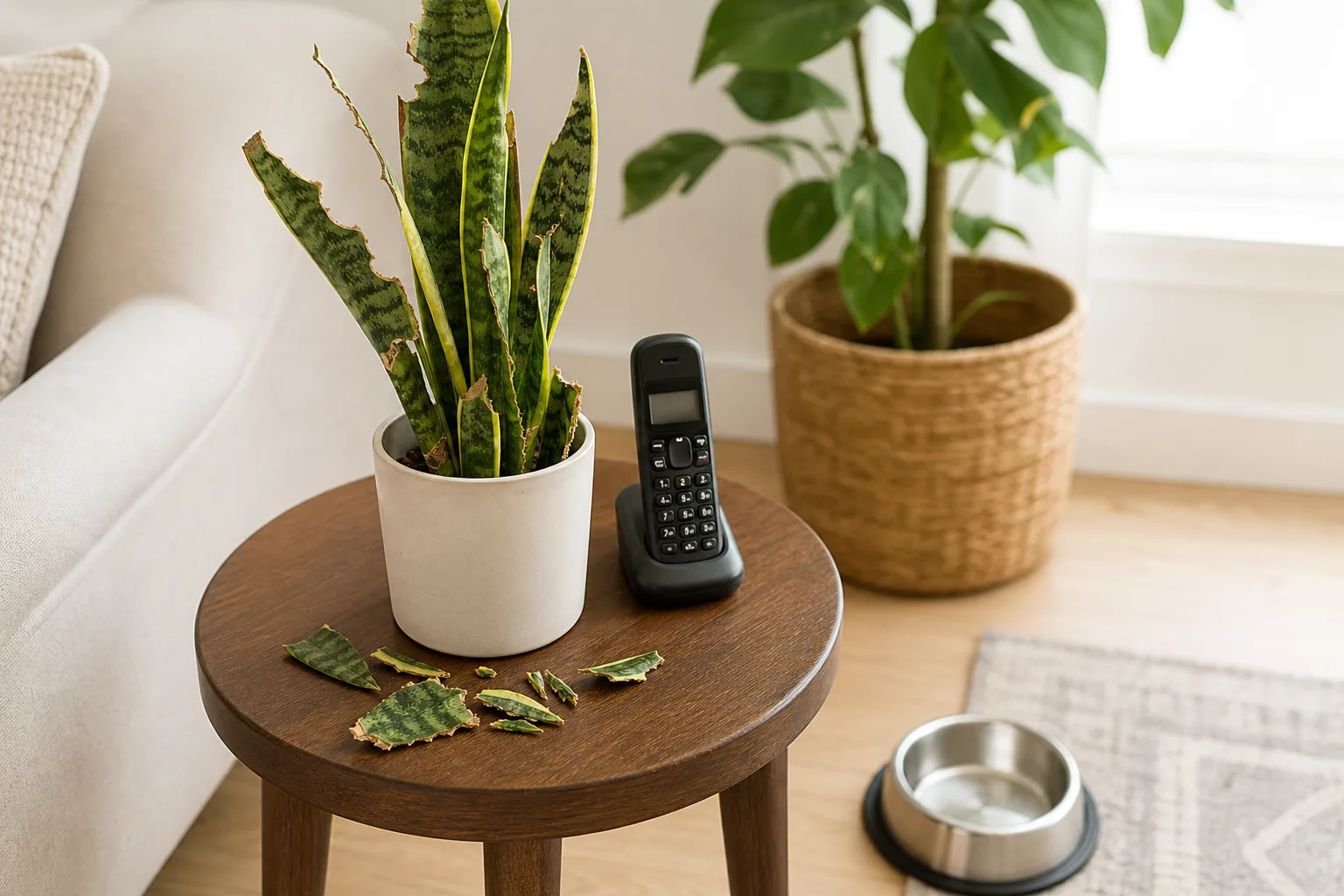
Symptoms You Can Monitor at Home
The following presentation is appropriate for home monitoring with a phone call to your vet or the ASPCA Poison Control for guidance:
- A single episode of vomiting that stops within 30 minutes
- Mild diarrhea without blood
- Your pet remains alert, responsive, and is drinking water
- No neurological signs — pupils normal, gait steady, no tremors
- Symptoms improving noticeably within 4 to 6 hours
Offer small amounts of water frequently to prevent dehydration, and watch for the next several hours. Most snake plant cases resolve with minimal intervention.
Red-Flag Signs That Need Veterinary Care
Call your veterinarian or go to an emergency clinic if you see:
- Persistent vomiting — more than 3 episodes in 4 hours, or vomiting that continues beyond 1 hour without improvement
- Blood in vomit or stool — indicates significant GI tract irritation
- Severe lethargy or collapse — the pet cannot stand, is unresponsive, or appears disoriented
- Neurological signs — dilated pupils, wobbly gait, tremors, or seizures (particularly in cats)
- Dehydration — refusal to drink water for more than 4 hours, dry or tacky gums, sunken eyes
- Symptoms persisting beyond 12 hours — most cases resolve within half a day; ongoing vomiting or diarrhea suggests complications or a different underlying problem
- You are unsure how much was eaten — if you come home to a severely chewed plant with no way to estimate consumption, err on the side of professional evaluation
If you are uncertain which category applies, call the ASPCA Animal Poison Control Center at (888) 426-4435 or the Pet Poison Helpline at (855) 764-7661. Both operate 24/7 with veterinary toxicologists. A consultation fee applies, but the guidance is specific to your pet’s weight, the amount consumed, and the symptoms you are seeing.
What Happens at the Vet: Treatment and Prognosis
Snake plant poisoning is treated supportively — there is no antidote for saponins, and treatment focuses on managing symptoms while the digestive tract clears the irritants naturally.
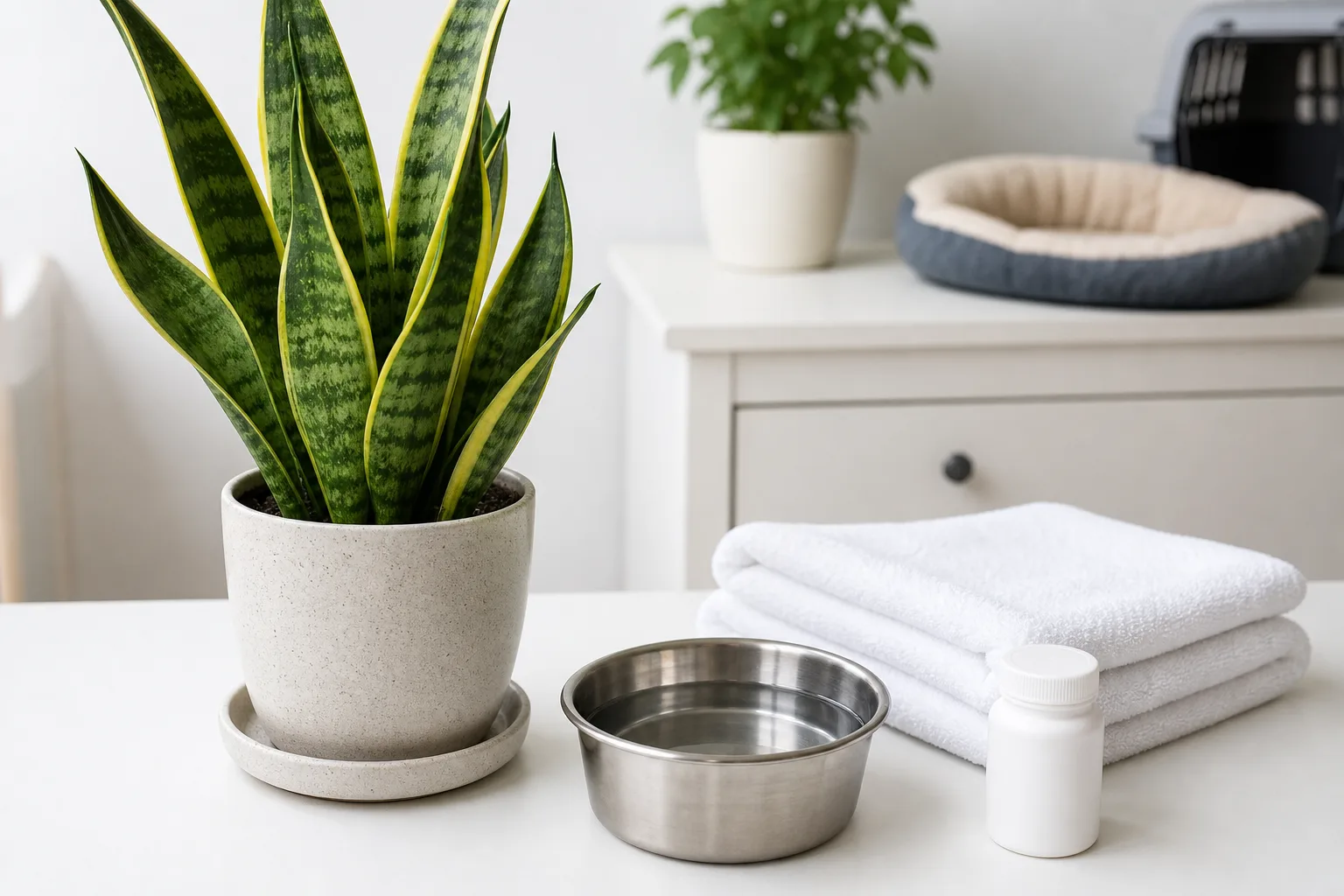
What veterinary supportive care typically involves:
- Anti-nausea medication — antiemetics to control vomiting and allow the GI tract to settle
- Fluid support — subcutaneous or intravenous fluids if the pet is dehydrated from vomiting and diarrhea
- Gastrointestinal protectants — medications like sucralfate to coat and protect irritated stomach and intestinal lining
- Activated charcoal — in some cases, if ingestion was recent and the veterinarian determines it is appropriate
- Bland diet — for 24 to 48 hours after symptoms resolve, to avoid re-irritating the GI tract
Prognosis is excellent for the vast majority of snake plant exposures. Most pets recover fully within 24 hours with minimal or no veterinary intervention. Hospitalization is rare and typically reserved for cases with severe dehydration, persistent vomiting unresponsive to antiemetics, or neurological signs requiring monitoring.
First Aid at Home: What to Do Right Now
If you just discovered your pet eating a snake plant, take these steps in order.
Remove remaining plant material. Take any leaf pieces out of your pet’s mouth if you can do so safely. Clear any fallen leaves or chewed pieces from the floor so your pet cannot eat more. Be cautious — a pet in distress may bite defensively even if they have never bitten before.
Offer a small amount of water. Hydration is the priority for any GI-focused toxin. Offer cool, fresh water in small amounts — do not force your pet to drink, but make water easily available and encourage sipping.
Do not induce vomiting unless instructed by a veterinarian. The saponins have already begun irritating the upper GI tract. Forcing vomiting re-exposes the esophagus and mouth to the same irritants and adds aspiration risk. Let a veterinary professional make the call on whether gastric emptying is beneficial.
Call for professional guidance. The ASPCA Animal Poison Control Center at (888) 426-4435 or the Pet Poison Helpline at (855) 764-7661 can give you guidance specific to your pet’s breed, weight, the estimated amount consumed, and the symptoms you are seeing. This phone call is often all you need for mild exposures.
Monitor for 4 to 6 hours. Watch for vomiting frequency, diarrhea, lethargy, and any neurological signs. If symptoms are mild and improving after a few hours, full recovery is likely. If symptoms worsen or new red-flag signs appear, escalate to veterinary care.
What Not to Do After Snake Plant Ingestion
Do not give human anti-nausea medication. Pepto-Bismol, Imodium, and other human GI medications can be toxic to both cats and dogs. Only a veterinarian should prescribe antiemetics or GI protectants.
Do not force-feed water or food. A nauseated pet may refuse to drink or eat. Forcing it can cause aspiration, especially if they are still actively vomiting.
Do not assume one vomit means the danger has passed. Saponin irritation can come in waves over several hours. A pet that vomits once and then seems fine at 30 minutes may vomit again at 2 hours. Continue monitoring even if there is an apparent pause in symptoms.
Do not put the snake plant back in the same location. A pet that chewed a plant once may do it again, especially since saponins do not create the same powerful mouth-pain deterrent that calcium oxalate crystals do. If you keep the plant, move it to an inaccessible location.
How to Keep Snake Plants and Pets in the Same Home
Keeping a snake plant with pets is less about managing temptation during chewing — the plant does not cause instant mouth pain, so a pet that starts chewing may not stop on its own — and more about physical prevention.
Out-of-Reach Placement
Snake plants have tall, upright leaves that make them visually prominent and tempting. Their vertical form means even a small snake plant on a low table is within easy reach of a cat standing on hind legs or a dog at nose height.
Tall plant stands (4 to 5 feet minimum) work for dogs and less agile cats. The stand itself should have a narrow top — no landing zone for a jumping cat. Avoid placing stands near furniture that can serve as a launching point.
High shelves without step access work for cats if you ensure there is no climbable path to the plant. A snake plant on a shelf that requires a cat to jump from a nearby dresser, then a bookshelf, then the target shelf will eventually be reached. The only reliable shelf placement is one with no intermediate surfaces within a 3-foot radius.
Hanging planters are less ideal for snake plants than for trailing plants — the upright growth habit can make them top-heavy and awkward in a hanging basket — but smaller cultivars like ‘Hahnii’ or ‘Bird’s Nest’ snake plants can work in a secure hanging planter.
A pet-free room with a closed door is the most reliable option. A home office, sunroom, or spare bedroom that pets cannot access eliminates the risk entirely and requires no ongoing management of heights, stands, or deterrents.
The Behavioral Challenge
A key point worth emphasizing: snake plant saponins do not create the powerful immediate aversion that calcium oxalate plants do. With pothos, most pets bite once and never try again because the pain is instant and intense. With snake plants, a pet might chew a leaf, feel nauseated an hour later, and not connect the discomfort to the plant. This means behavioral deterrence — hoping your pet learns from the experience — is less reliable for snake plants than for calcium oxalate-containing houseplants.
If your pet has a demonstrated habit of chewing houseplants, physical separation or rehoming the plant is safer than relying on the hope that the first GI episode was a sufficient lesson.
Pet-Safe Alternatives to Snake Plants
If managing a toxic plant feels like more stress than it is worth, several houseplants deliver a similar upright, architectural presence with zero toxicity risk. All plants below are ASPCA-verified non-toxic to both cats and dogs.
| Plant | Growth Habit | Light Tolerance | Care Level | Best For |
|---|---|---|---|---|
| Cast Iron Plant (Aspidistra elatior) | Upright, lance-shaped dark green leaves; 2 to 3 feet tall | Low to bright indirect | Very easy | Closest snake plant look-alike in both form and near-indestructibility |
| Parlor Palm (Chamaedorea elegans) | Upright, feathery fronds; 3 to 4 feet tall | Low to bright indirect | Easy | Tall, vertical presence with zero toxicity |
| Bromeliad (Neoregelia, Guzmania, Aechmea spp.) | Upright rosette of stiff leaves; colorful central bracts | Bright indirect | Easy | Architectural form with the bonus of striking color |
| Calathea / Prayer Plant (Calathea, Maranta, Ctenanthe spp.) | Upright patterned leaves that fold at night; 1 to 2 feet tall | Medium to bright indirect | Moderate | Ornamental foliage in a shorter, highly decorative form |
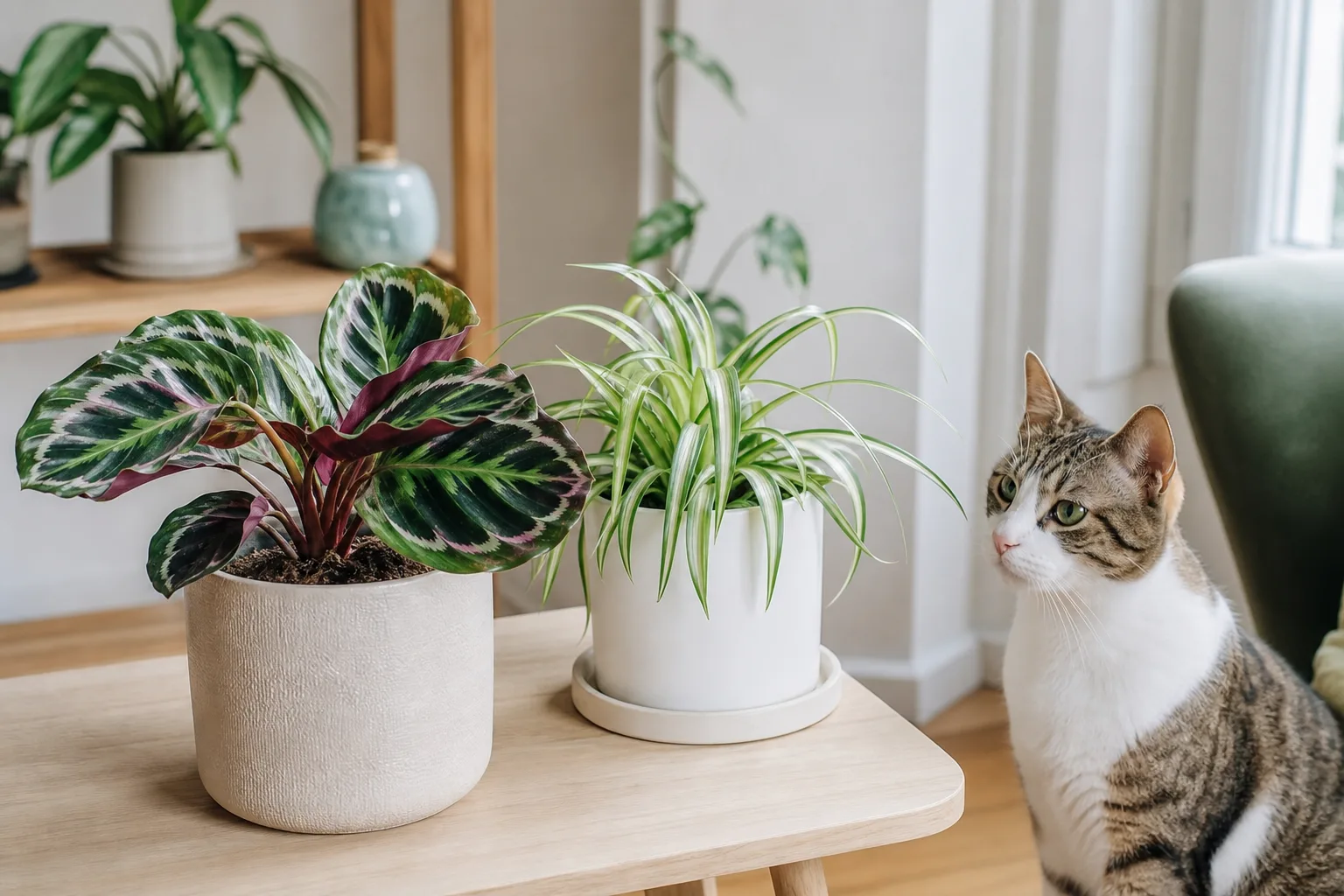
| Spider Plant (Chlorophytum comosum) | Arching, grass-like leaves; 1 to 2 feet tall and wide | Low to bright indirect | Very easy | Different shape but matches snake plant’s forgiving care and pet-safe status |
Best direct replacement: Cast iron plant. It is the closest visual match to a snake plant — tall, upright, dark green leaves that hold their shape without fuss. Like snake plants, cast iron plants tolerate low light, irregular watering, and general neglect. Their ASPCA non-toxic status makes them the simplest swap for pet households.
Parlor palm is the better choice if you want a floor plant with height. It grows taller than most snake plant cultivars and delivers the same vertical accent without any toxicity concern. Bromeliads offer a more colorful alternative — their stiff, upright rosette form maintains the architectural quality of a snake plant while adding red, pink, or orange bracts. For broader context on building a fully pet-safe plant collection, see the non-toxic plants for cats and non-toxic plants for dogs guides.
Related Guides
- Snake plant care guide — full framework for light, water, soil, and troubleshooting
- Snake plant propagation: water vs. soil — safe propagation setups for homes with pets
- Pet-safe houseplants — 12 ASPCA-verified non-toxic plants for every room
- Houseplant symptom checker — diagnose plant problems across your collection
- Best indoor plants for beginners — easy-care options, many pet-safe
- Pothos toxicity — calcium oxalate toxicity comparison (different mechanism, different symptoms)
Conclusion
Snake plant toxicity pets is a real concern, but it works differently than most people assume. Snake plants contain saponins that primarily cause gastrointestinal distress — vomiting, diarrhea, and nausea — rather than the immediate oral burning of calcium oxalate plants like pothos or peace lilies. The delayed symptom onset can mean pets consume more plant material before feeling sick, but the good news is that the toxicity is rarely life-threatening and almost always resolves with supportive care within 24 hours.
After ingestion, offer small amounts of water, do not induce vomiting, and call the ASPCA Poison Control Center or your veterinarian for guidance. Watch for persistent vomiting, neurological signs (dilated pupils, wobbly gait in cats), or dehydration — these are the reasons to escalate to professional veterinary care. Prevention comes down to placement: keep snake plants on tall, narrow stands or in rooms your pets cannot access, since the plant’s lack of immediate oral deterrent means a chewing pet may not learn to avoid it naturally.
If the risk feels like more than you want to manage, cast iron plants, parlor palms, and bromeliads offer the same upright, architectural look with none of the toxicity. The snake plant is a resilient, beautiful plant — but in a pet household, peace of mind matters more.