Are Pothos Plants Safe for Cats and Dogs? Toxicity, Symptoms, and What to Do
Pothos is toxic to cats and dogs. Learn why it hurts, the 7 symptoms to watch for, when to call a vet, and which pet-safe trailing plants make the best replacement.
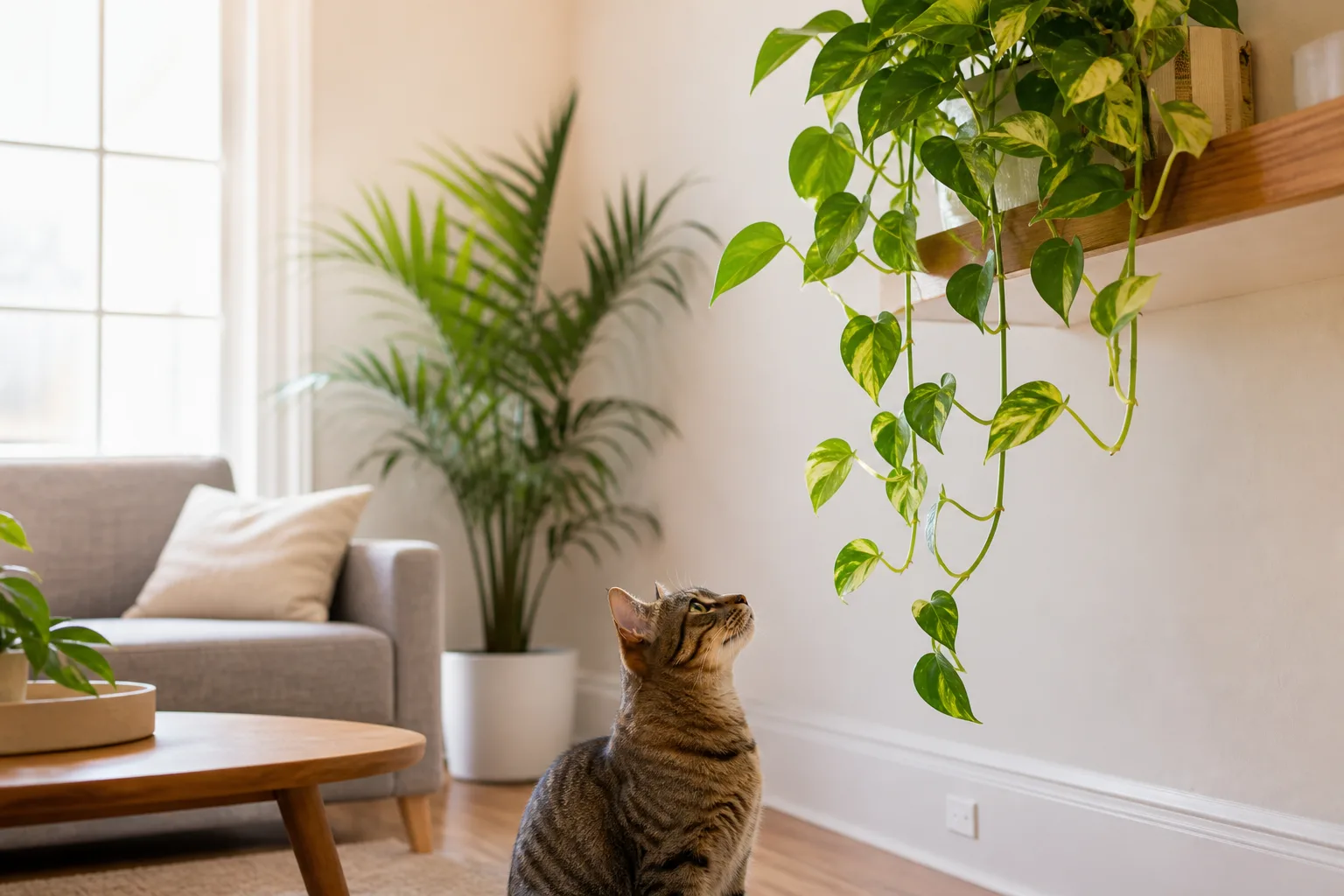
Quick Answer: Are Pothos Plants Toxic to Pets?
Yes, pothos is toxic to cats and dogs. The ASPCA classifies golden pothos (Epipremnum aureum) as toxic to both species. The plant contains insoluble calcium oxalate crystals — microscopic, needle-shaped structures that physically puncture the soft tissues of the mouth, tongue, and throat when chewed. The result is immediate, intense pain that most pets find so unpleasant they stop after one bite. The toxicity is real and the symptoms look alarming, but pothos poisoning is rarely life-threatening for healthy adult pets at normal household exposure levels.
That is the headline. But there is a lot of confusion online about how pothos toxicity actually works, how serious it really is, and what you should do in the moment. This guide gives you the mechanism behind the pain, the symptoms to watch for in cats and dogs, a clear triage framework for deciding whether you need a vet, and realistic strategies for keeping pothos and pets in the same home — plus four trailing plants that give you the same cascading look with zero toxicity risk.
If your pet just ate pothos and you need answers fast, the first aid and vet triage sections are the ones to read first. For the full picture on growing and troubleshooting this plant, see the pothos care guide. For all-purpose pest and problem diagnosis across your collection, start with the houseplant symptom checker.
What Makes Pothos Toxic: The Calcium Oxalate Mechanism
Most plant toxicity articles say pothos “contains calcium oxalate crystals” and leave it at that. That is only half the explanation, and missing the other half is why so many pet owners are surprised by how quickly symptoms appear after a single bite.
How Raphides and Protease Enzymes Work Together
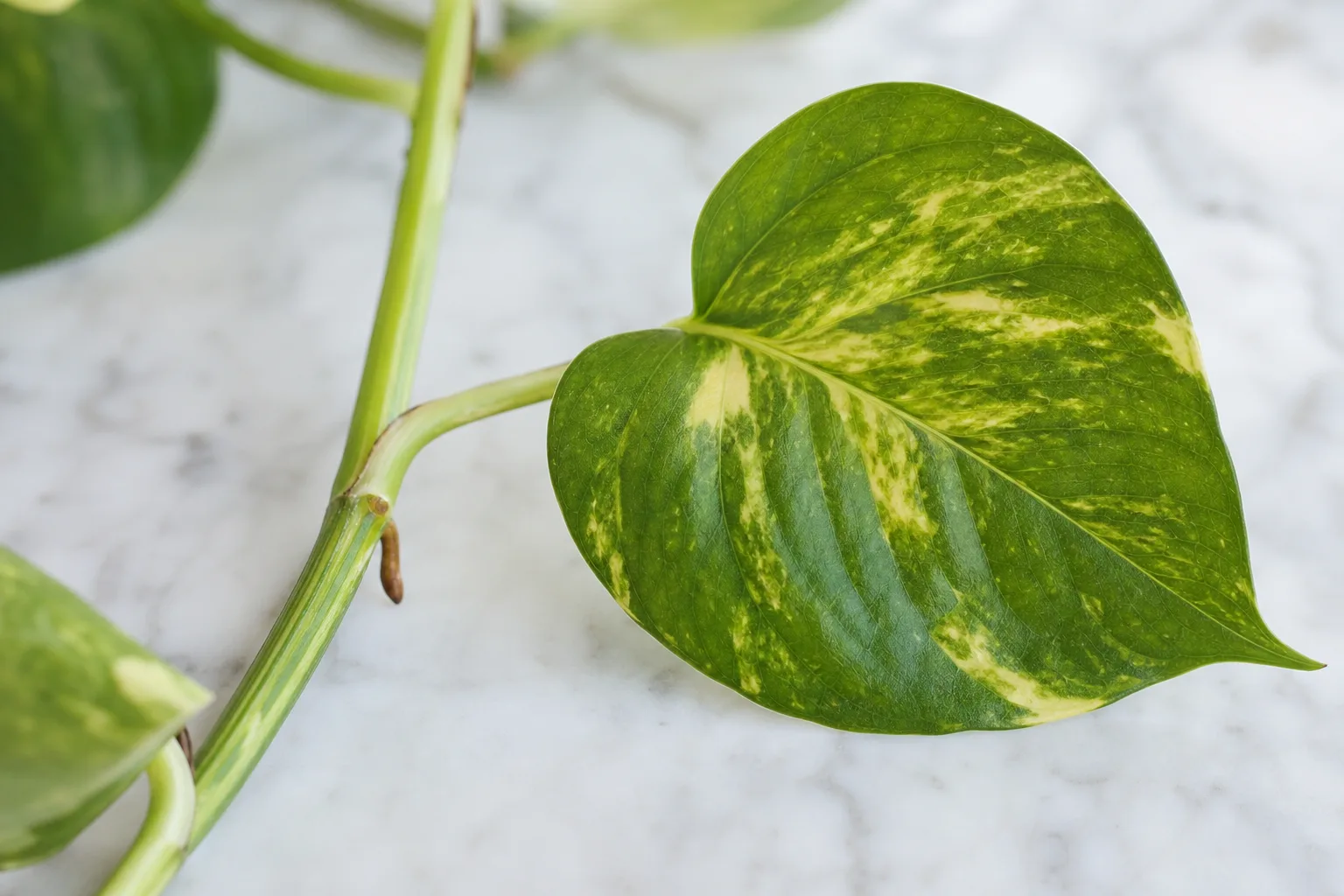
Pothos belongs to the Araceae family, and like most aroids — including philodendrons, peace lilies, dieffenbachia, and monstera — it packs its tissues with raphides: microscopic, needle-shaped calcium oxalate crystals stored inside specialized cells called crystal idioblasts. When your pet bites down on a leaf or stem, those cells rupture and eject the needles into the mouth and throat tissue.
The puncture alone produces mild irritation. The real damage comes from a synergistic combination identified in peer-reviewed research published in PLOS ONE. Raphides in Araceae plants co-occur with a cysteine protease enzyme. The needles punch tiny holes through the mucous membrane barrier, and the protease flows through those holes directly into underlying tissue. Either agent alone causes weak irritation. Together, researchers found they produce dramatically stronger damage — what the study calls “the needle effect” — which explains why pothos causes immediate burning rather than slow, mild discomfort.
Why the Toxicity Is Local, Not Systemic
This distinction matters enormously for understanding how worried you should be. The ASPCA lists the toxic principle as insoluble calcium oxalates. Insoluble means the crystals cannot be absorbed into the bloodstream. Unlike soluble oxalate poisoning — which occurs with plants like rhubarb leaves or certain lilies and causes systemic hypocalcemia and kidney damage — pothos toxicity is almost entirely local. The damage stays in the mouth, throat, and upper gastrointestinal tract.
This is why outcomes are generally good, but it is also why the symptoms hit so hard so fast. The Merck Veterinary Manual describes treatment for calcium oxalate-containing Araceae plants as supportive, meaning there is no antidote and no medication to block the toxin because there is no toxin circulating through the body. The pain is mechanical and chemical at the contact site, not metabolic.
How Much Pothos Does a Pet Need to Eat for Symptoms?
Even a small bite is enough to trigger the calcium oxalate response. The crystals release on cell rupture, and only a few damaged cells are needed for the immediate pain. Think of it like biting fiberglass insulation — you do not need to swallow much to know something is wrong.
Quantity matters more for how long symptoms last than for whether they occur. A pet that chews and swallows multiple leaves will have more prolonged GI irritation and a higher likelihood of vomiting than one that takes a single bite and spits it out. But the threshold for triggering the initial pain response is extremely low — that is the plant’s evolutionary strategy, and it works.
Smaller pets experience proportionally greater effects from the same exposure. A 10-pound cat chewing one leaf faces a meaningfully higher relative dose than a 70-pound dog chewing the same amount. Puppies, kittens, and toy breeds warrant closer monitoring after any exposure.
Symptoms of Pothos Poisoning
Cats and dogs show essentially the same symptoms after pothos ingestion because the mechanism is mechanical and local rather than metabolic. Both typically react within minutes of chewing.
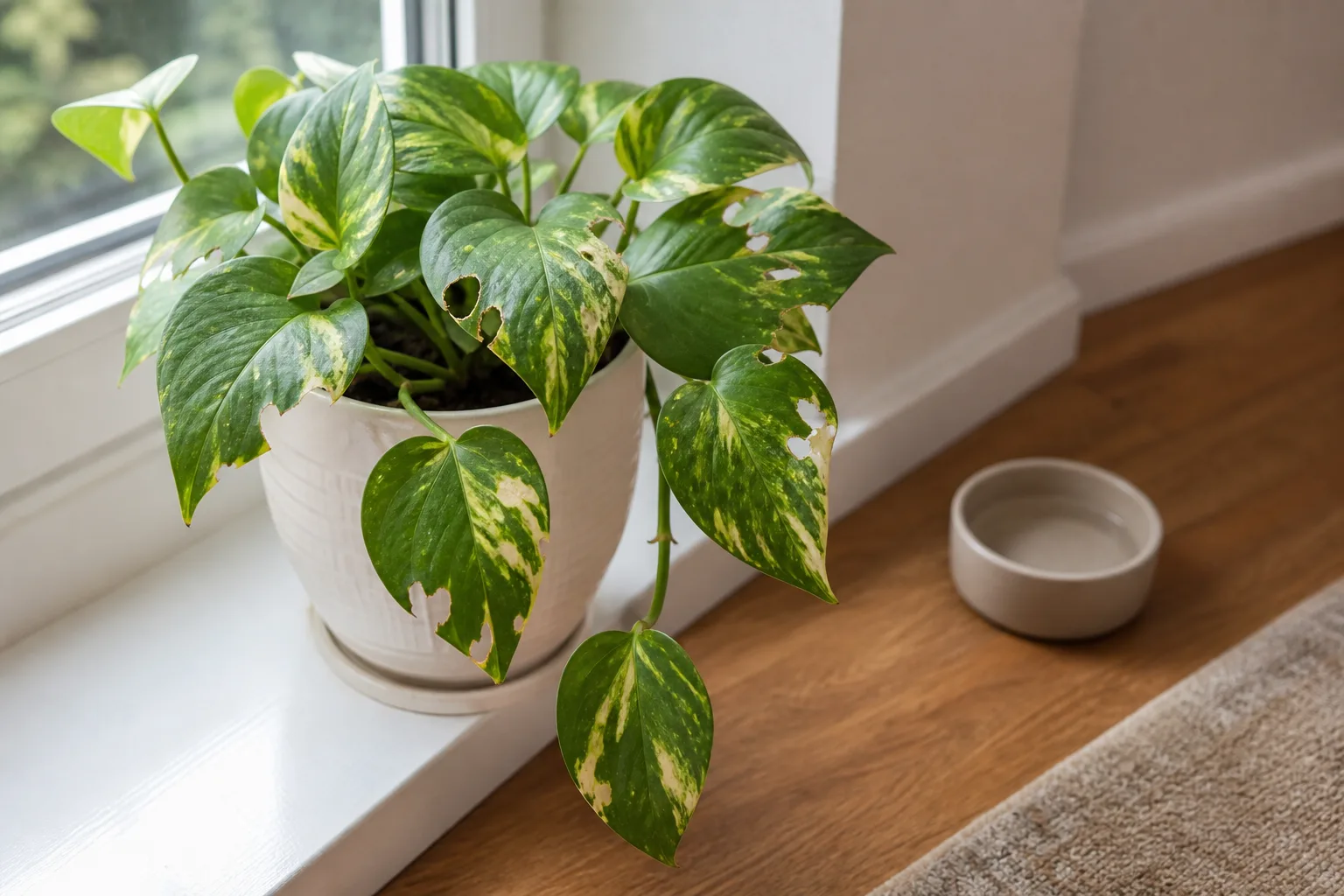
The seven most common signs, in typical order of appearance:
- Oral pain and pawing at the mouth — the most immediate sign. Pets shake their head, paw at their muzzle, or rub their face against surfaces trying to dislodge the sensation.
- Excessive drooling — often heavy enough to wet the fur around the muzzle and chest. The hypersalivation is a direct response to oral irritation.
- Vomiting — may contain visible pieces of leaf. Usually begins within 15 to 30 minutes if plant material was swallowed.
- Difficulty swallowing — repeated swallowing attempts, gagging, or neck stretching as the pet tries to manage the irritation.
- Swelling of lips, tongue, or face — the inflammatory response to the crystal-embedded tissue can be visible externally.
- Reduced appetite — pets may refuse food for 12 to 48 hours because their mouth is too sore to eat comfortably.
- Vocalizing or hiding — the irritation is genuinely painful, and many pets express distress or withdraw.
The Merck Veterinary Manual notes that cats exposed to calcium oxalate-containing Araceae plants can sometimes show excitability, nervous spasms, and in rare severe cases, swelling of the throat and pharynx. These more serious neurological signs are uncommon with pothos specifically but represent the upper end of severity and a reason to monitor cats more carefully than dogs after similar exposure.
Diarrhea may appear 30 minutes to 2 hours after ingestion if enough plant material was swallowed, though it is less common than the oral symptoms. Most GI symptoms resolve within 24 hours.
The Symptom Timeline: Minutes to Recovery
Symptoms appear within minutes of contact, not hours. The speed is part of what makes pothos exposures so alarming to witness — one second your pet is sniffing a trailing vine, and the next they are drooling and pawing frantically at their face.
Immediately on chewing (0–5 minutes): Acute oral pain, immediate pawing at the mouth, and the beginning of hypersalivation. Most pets drop the plant instantly. The pain is intense but does not escalate beyond this initial level for mild exposures.
First 1–2 hours: Drooling peaks. Vomiting may occur if leaf material was swallowed. Visible swelling of the lips, tongue, or muzzle may develop and typically reaches its maximum in this window. Most pets appear visibly miserable but stable.
2–6 hours: This is usually when symptoms begin improving if the exposure was mild. Swelling starts to subside. Drooling decreases. A pet that was pawing aggressively at their mouth in the first hour may appear tired but more settled.
12–24 hours: Most cases resolve fully. Reduced appetite may persist slightly longer because of residual mouth tenderness, but by 24 hours most pets are eating soft food normally. If symptoms persist beyond this window, something else may be going on and a vet visit is warranted.
When to Call the Vet: A Decision Guide
One of the most useful things this article can give you is a clear framework for deciding between emergency care and home monitoring. Most online sources either catastrophize pothos toxicity or dismiss it entirely. The clinical reality sits between those extremes.

Symptoms You Can Monitor at Home
The following presentation is appropriate for home monitoring with a phone call to your vet or the ASPCA Animal Poison Control Center for guidance:
- Pawing at the mouth or drooling that is not worsening after 20 to 30 minutes
- A single episode of vomiting that stops within 30 minutes
- Your pet remains alert, responsive, and is not showing respiratory distress
- Normal gum color (pink, not pale, blue, or brick-red)
- No visible swelling of the throat or face that is expanding
Rinse the mouth with cool water, offer a small amount of cold milk or plain yogurt if tolerated, and watch closely for the next 2 to 3 hours.
Red-Flag Signs That Need Emergency Care
Go to an emergency clinic or call your veterinarian immediately if you see:
- Difficulty breathing — labored inhalation, noisy breathing, gagging, or visible throat swelling. Airway compromise is the single most dangerous complication from pothos toxicity and cannot wait.
- Persistent vomiting — more than 3 to 4 episodes in 6 hours or vomiting that continues for more than 1 hour without stopping. The dehydration risk increases with each episode.
- Refusal to drink water for more than 4 hours — especially concerning in small pets where dehydration develops quickly.
- Neurological signs in cats — tremors, seizures, severe lethargy, or inability to stand.
- Symptoms persisting beyond 24 hours — most pothos cases resolve within a day. Ongoing symptoms suggest compounding factors or a different underlying problem.
- Pale, blue, or brick-red gums — signs of poor oxygenation or shock requiring immediate intervention.
If you are unsure which category your situation falls into, call the ASPCA Animal Poison Control Center at (888) 426-4435. The line operates 24/7 with board-certified veterinary toxicologists. A consultation fee applies, but the guidance is faster and more specific than waiting for your regular vet’s office to open.
What Happens at the Vet: Treatment and Prognosis
Because pothos toxicity is local rather than systemic, treatment is almost entirely supportive. There is no antidote to administer and no specific drug to neutralize the calcium oxalate crystals.
What supportive care typically involves:
- Mouth and pharynx lavage — rinsing the mouth and throat with water to remove residual plant material and dislodge any crystals still on the surface.
- Anti-nausea medication — antiemetics if vomiting is persistent or the pet is at risk of dehydration.
- Fluid support — IV or subcutaneous fluids if the pet is dehydrated or refusing to drink.
- Soft food for 24 to 48 hours — to reduce further mechanical irritation to already inflamed oral tissues.
- Topical oral anesthetics — in more severe cases to provide relief while the tissue heals.
Prognosis is excellent for the vast majority of pothos exposures. Most cases resolve fully within 24 hours with minimal or no veterinary intervention. Death from pothos toxicity alone is essentially undocumented in clinical veterinary literature for insoluble oxalate plants at normal household exposure levels. The severity is genuine — the symptoms can look alarming — but the long-term risk is low.
First Aid to Start at Home Right Now
If you just discovered your pet chewing on pothos, take these steps in order.
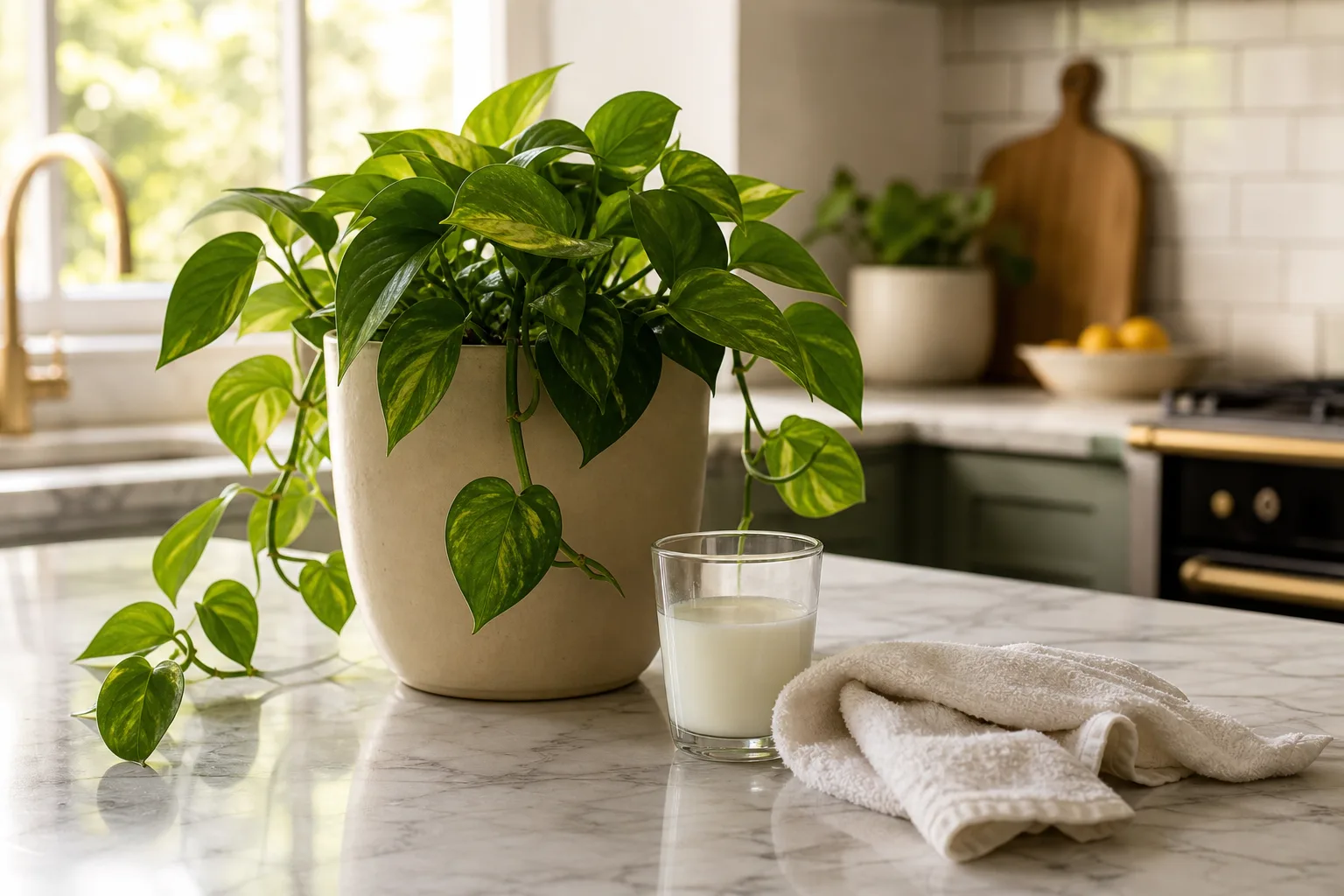
Rinse the mouth. Gently flush your pet’s mouth with cool, clean water to wash away crystals still on the surface. A clean, damp washcloth wiped around the gums and tongue is effective if your pet resists having water poured into their mouth. The goal is physical removal of residual crystals before they embed deeper.
Offer dairy if tolerated. A tablespoon of cold milk or plain yogurt for a small dog or cat, more for a larger dog. Calcium from dairy binds to oxalate crystals and helps neutralize the chemical irritation. This is one of the few situations where giving a pet dairy is therapeutically useful rather than problematic, but only offer it if your pet is not lactose intolerant and shows no signs of dairy sensitivity.
Do not induce vomiting. The calcium oxalate damage is from physical embedment of crystals in oral and esophageal tissue. Bringing the material back up causes a second round of burning to the esophagus and adds aspiration risk with no benefit. Vomiting that happens spontaneously is the body’s natural response, but do not try to force it.
Remove any remaining plant material from reach and check for leaves or stem pieces near your pet so they do not eat more.
Call for guidance. Phone the ASPCA Animal Poison Control Center at (888) 426-4435 or your veterinarian, especially if you see red-flag signs. Even if symptoms are mild, having professional guidance documented is valuable.
What Not to Do After Pothos Ingestion
Several common reactions can make the situation worse.
Do not give human pain medication. Ibuprofen, acetaminophen, and other human NSAIDs are toxic to both cats and dogs. Even a single tablet of ibuprofen can cause stomach ulceration or kidney damage in a small cat. If pain seems severe enough to require medication, the vet will prescribe a pet-safe analgesic.
Do not force your pet to drink large amounts of water. A small rinse is helpful; forcing water down your pet’s throat while they are already struggling to swallow can cause aspiration.
Do not assume the danger has passed because your pet stopped pawing at their mouth. Oral and facial swelling can peak up to 2 hours after exposure. Re-check the lips, gums, and breathing at least once in that window, even if your pet seems to have settled.
Do not put the pothos back in the same spot after the incident. Pets that chew a plant once may try again. The calcium oxalate experience deters many animals, but not all, and a pet with a habit of chewing plants will seek out another target.
Every Part of the Pothos Plant Is Toxic
There is no safe part for pets to chew. NC State Cooperative Extension lists the toxic parts of Epipremnum aureum as “flowers, fruits, leaves, roots, seeds, and stems” — meaning every structure the plant produces carries the same calcium oxalate risk.
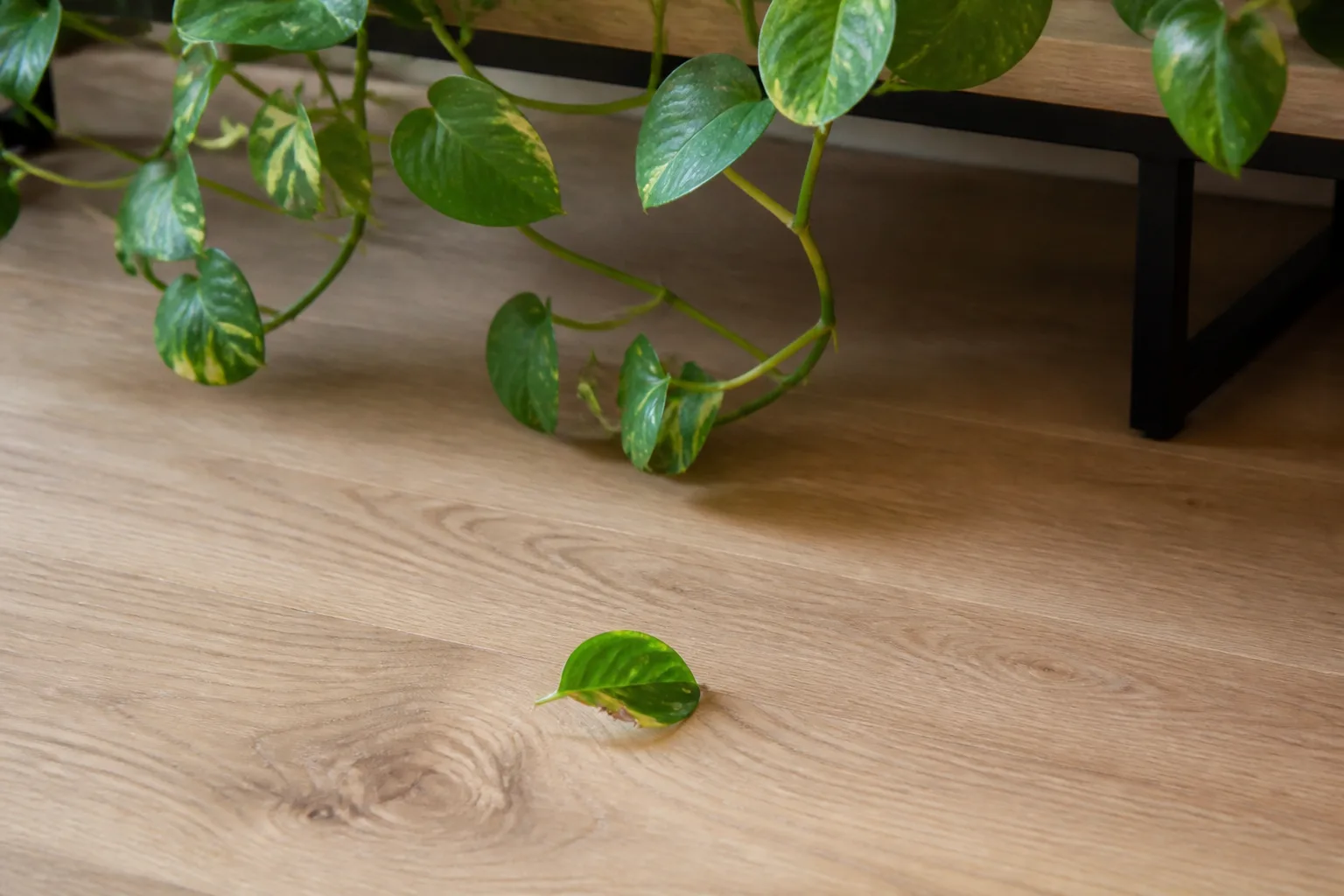
This includes parts that might seem less dangerous. A fallen yellow leaf you did not sweep up, a stem you pruned and left on the counter, a cutting rooting in a jar of water — all contain the same crystals. There is no varietal exception either. Marble Queen, Neon, Golden, N’Joy, Pearls and Jade, Jade, Manjula, Global Green, and every other pothos cultivar share the same defense mechanism because the calcium oxalate idioblasts are part of the species-level chemistry, not a pigment variant.
Does Pothos Sap Irritate Skin or Eyes?
One angle most toxicity articles skip entirely: pothos sap causes contact dermatitis. NC State Extension specifically flags this risk. If your pet rubs their face against cut or crushed stems, or if sap transfers to their skin when they brush against a damaged vine, the sap alone can cause localized redness and irritation without any ingestion.
The same applies to you. Pothos sap can irritate sensitive skin during pruning, repotting, or handling cut stems. Wearing gloves during heavy pruning is a practical precaution. If sap gets in your eyes or an open cut, rinse thoroughly with water.
This is also why water propagation jars are a hidden risk. Cuttings rooting in water leach sap and oxalate compounds into the water over time. A cat that drinks from a propagation jar — and many cats are drawn to open water containers — gets a dose of the same irritants without even eating a leaf. Keep water propagation jars in rooms your pets cannot access, or use narrow-necked vessels that prevent drinking. If you propagate pothos regularly, the pothos propagation guide covers safe setups for homes with pets.
How to Keep Pothos and Pets Under One Roof
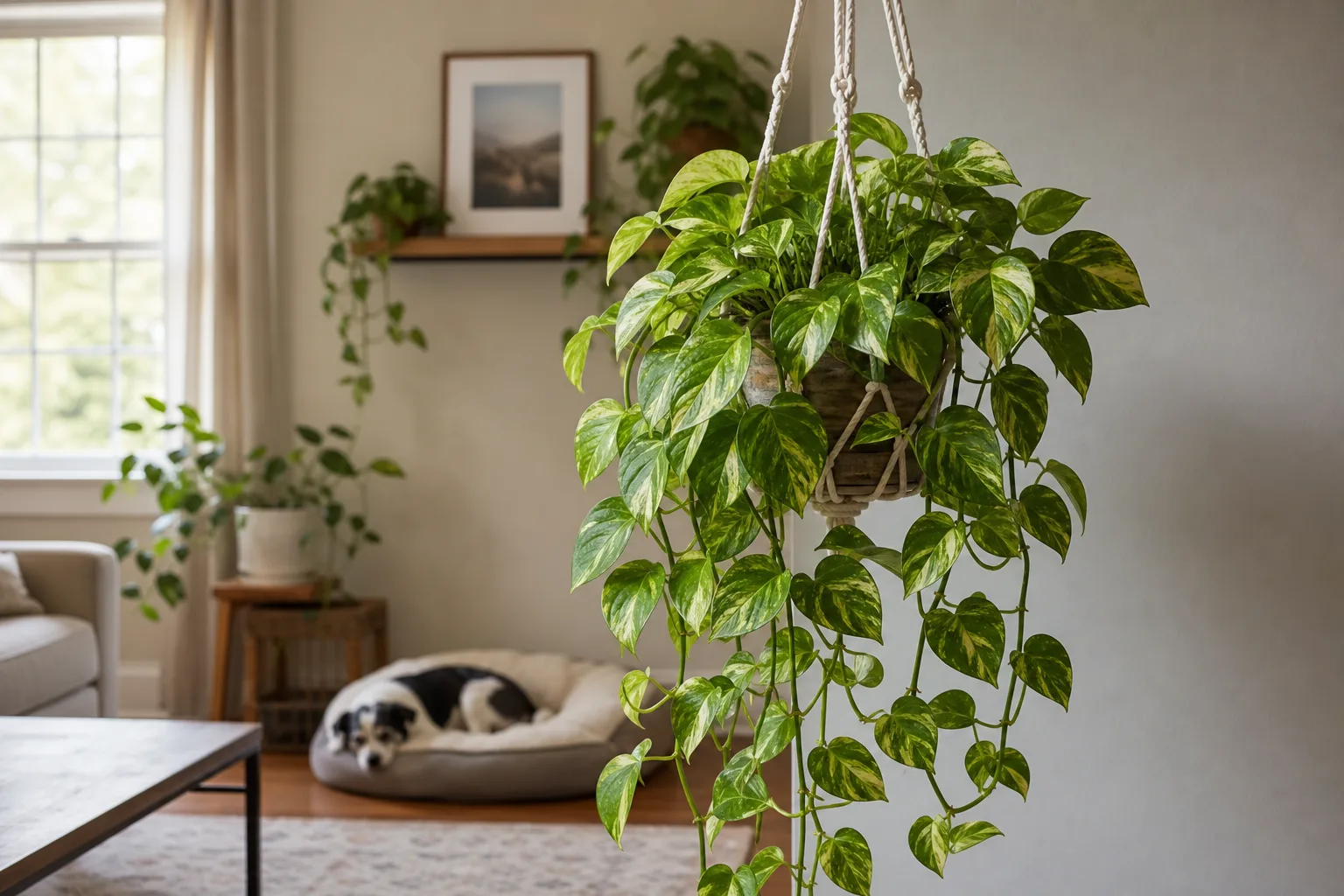
You do not need to throw out your pothos. You do need to be strategic about placement, because pothos is a trailing vine — and those long, dangling vines look exactly like cat toys swaying in the breeze.
Out-of-Reach Placement That Works
Ceiling-mounted hangers, high wall brackets, and tall shelves that are at least 6 feet above the floor are your best defense. Cats can jump surprising heights, so a standard bookshelf is not automatically safe. A ceiling hook with a trailing plant hanging in a room where your cat cannot reach any nearby launching point (counters, furniture backs, windowsills) is the most reliable setup.
Keep vines trimmed so the tips stay above pet-jumping range. A long, flowing pothos looks beautiful trailing 4 feet from a basket, but every inch below the safe line is an invitation. Regular pruning is not a compromise on aesthetics — it is a safety habit, and cuttings root easily as new plants. For the trimming technique, see the pothos pruning section of the main care guide.
Any pothos sitting on the floor at a dog’s nose height is essentially bait. Terracotta pots at floor level, plants on low plant stands, and vines that trail from a shelf to the ground all put the plant in range of a curious mouth.
Physical Separation Over Behavioral Training
Relying on training alone — teaching your pet to ignore plants — works for some animals but fails for many. Chewing plants is often a combination of boredom, nutritional curiosity, and instinct (especially in cats that seek out greenery). Physical barriers are more reliable.
If you have a pet that compulsively chews any plant they can reach regardless of taste, the safest solution is to keep pothos in a room where that pet has no access — a home office with a closed door, a bedroom your cat does not enter, or a sunroom that is functionally a pet-free zone. This eliminates the management burden of checking vine lengths and pot placement constantly.
If devoting a room to plants is not an option, the pet-safe alternatives in the next section may be the better path.
Four Pet-Safe Trailing Plants to Replace Pothos
If keeping pothos out of reach is impractical in your home — or if your pet’s plant-chewing habit makes any risk unacceptable — these four trailing plants give you the same cascading look with zero toxicity concern. All four are verified Non-Toxic to Dogs and Cats by the ASPCA.
| Plant | Trailing Habit | Light Range | Care Level | Best For |
|---|---|---|---|---|
| Swedish Ivy (Plectranthus australis) | Dense, fast-trailing; rounded bright-green leaves | Bright indirect to moderate | Easy | The closest pothos look-alike without the risk |
| Spider Plant (Chlorophytum comosum) | Arching stems with dangling spiderettes | Low to bright indirect | Very easy | Maximum hardiness; nearly impossible to kill |
| Boston Fern (Nephrolepis exaltata) | Cascading fronds; lush, full appearance | Bright indirect; needs humidity | Moderate | Full, dramatic greenery in hanging baskets |
| Lipstick Plant (Aeschynanthus radicans) | Long trailing stems with tubular orange-red flowers | Bright indirect | Moderate | Color accent plus trailing coverage |
Best direct pothos replacement: Swedish Ivy. Of the four, it most closely replicates the look and feel of pothos — rounded, glossy leaves on trailing stems that spill generously from a hanging basket. It handles lower light better than lipstick plant, does not demand the humidity Boston fern requires, and propagation by stem cuttings is equally straightforward.
Spider plant is the better choice if your home has genuinely low light or if you want the most forgiving option available. The dangling spiderettes are visually different from pothos’s plain trailing stems, but the plant tolerates neglect and is one of the few houseplants that reliably survives low-light bathrooms and offices.
Peperomia obtusifolia (Baby Rubber Plant) and Hoya carnosa (Wax Plant) are also ASPCA-verified non-toxic. Neither trails as aggressively as pothos, but both offer glossy leaves, compact growth, and excellent tolerance for moderate-to-low light. They are worth considering if you want a smaller sculptural plant rather than a long cascading vine.
Related Guides
- Pothos care guide — full framework for light, water, soil, pruning, and problem diagnosis
- How to propagate pothos — water and soil rooting methods
- Houseplant symptom checker — identify what is wrong when a plant looks off
- Snake plant care — another popular plant with similar pet toxicity concerns
- Low-maintenance indoor plants — easy-care alternatives when you want fewer worries
Conclusion
Pothos toxicity pets is a real concern — the plant causes genuine, immediate pain when chewed — but it is not a crisis for most household exposures. The calcium oxalate mechanism is local rather than systemic, symptoms are dramatic but self-limiting in the vast majority of cases, and death from pothos chewing alone is essentially unheard of in veterinary literature. The three things that matter most: rinse the mouth with cool water, do not induce vomiting, and call the ASPCA Poison Control Center or your vet if red-flag signs like breathing difficulty or persistent vomiting appear.
Keeping pothos and pets in the same home comes down to placement discipline. Ceiling hangers, trimmed vines, closed-door rooms, and the discipline to keep propagation jars out of reach reduce risk to near zero. If your pet is a compulsive plant-chewer, swapping pothos for Swedish Ivy, Spider Plant, or another ASPCA-verified non-toxic trailing plant gives you the same look without the management overhead. If you are attached to your pothos and want to redirect vines upward instead of trailing downward, a DIY moss pole keeps them out of paw’s reach while giving the plant a climbing structure. The plant is beautiful, but peace of mind is worth more.