Lucky Bamboo Care Guide: Light, Water, Soil & Problems
Learn lucky bamboo care for water or soil: weekly water changes, fluoride-safe water, bright indirect light, and why stalks turn yellow.
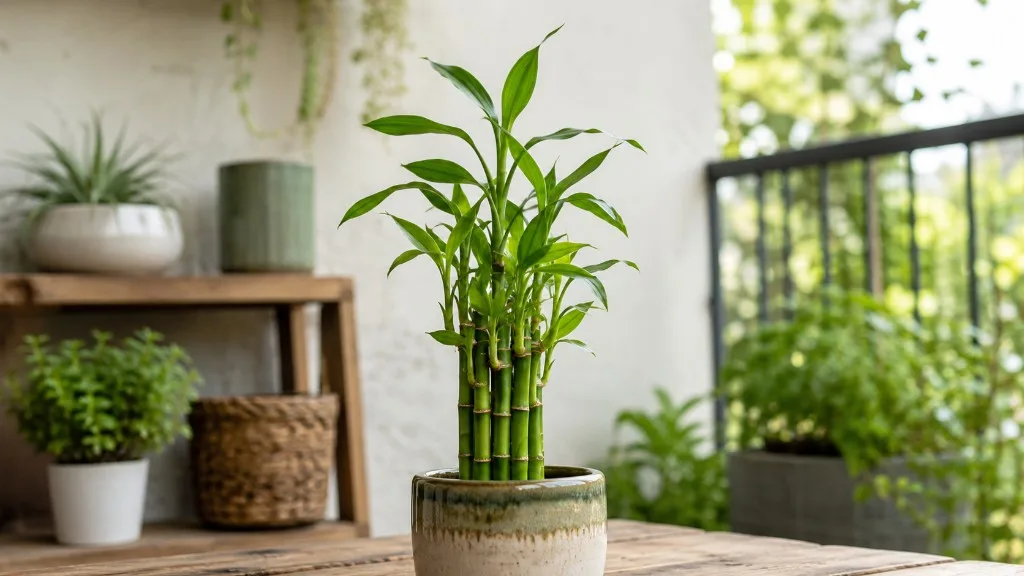
Yellow stalks, cloudy vase water, or brown leaf tips are the usual reasons people search for lucky bamboo care - not a craving for botanical trivia. Act on three rules first: change the vase water completely every week, use distilled, reverse-osmosis, rain, or other low-fluoride water when tips keep burning, and give the plant bright indirect light away from hot glass. Soft, mushy tissue at the waterline means rot - dump and rinse now. Firm stems with crispy tips mean chemistry or light stress - switch water and pull back from sun. Everything below deepens those decisions for Dracaena sanderiana in water or soil.
Start Here: Weekly Water, Better Water, Bright Indirect Light
If your arrangement is already declining, do this today:
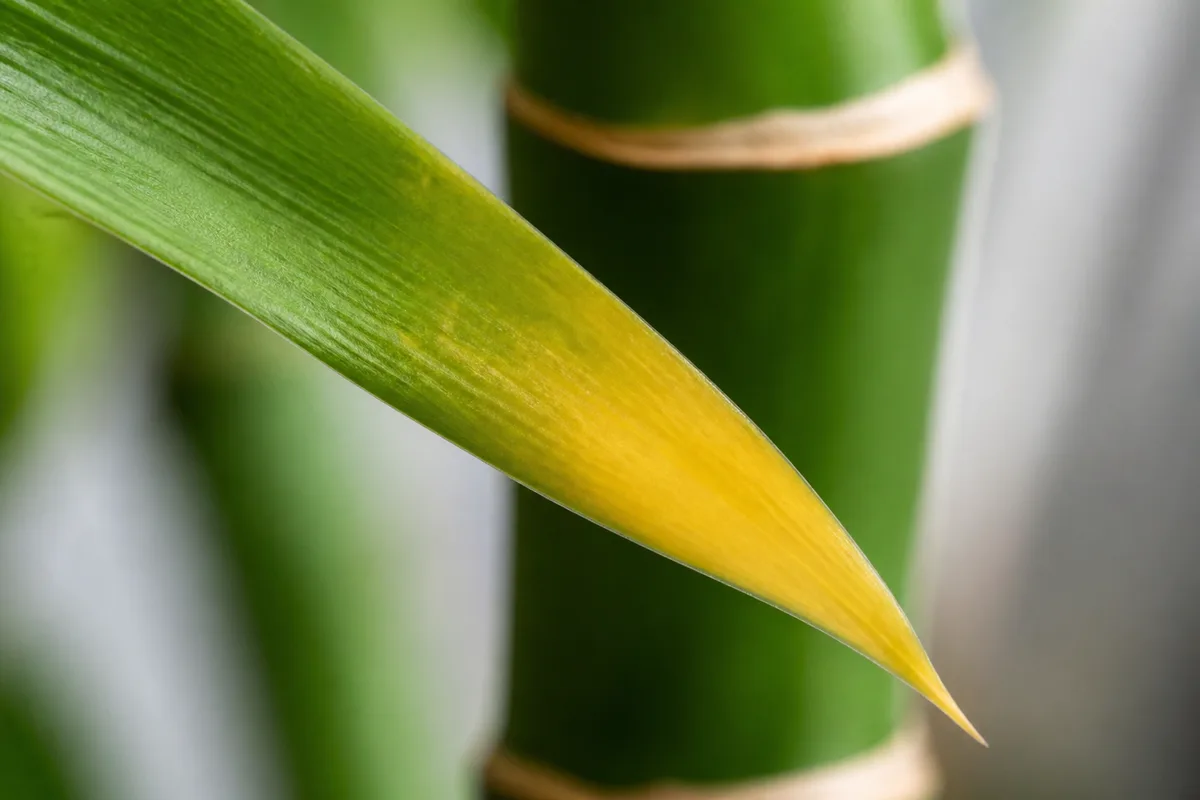
- Feel the stems at the waterline. Soft or slimy = dump all water, rinse pebbles and roots, trim mushy tissue to firm green, refill with clean water covering roots plus about 1 inch of stem. (Clemson HGIC)
- If stems are firm but tips are brown, switch to distilled, RO, or rainwater for a month before assuming disease. Overnight sit-out helps chlorine more than fluoride. (PNW Plant Disease Handbook) (Deep Green Permaculture)
- Move out of direct sun. East- or north-facing windows, or a filtered south/west exposure, match extension guidance. (Clemson HGIC) (Missouri Botanical Garden)
Then choose whether to keep water culture or move healthy firm stems into soil. Symptom-first pages for yellow leaves, brown tips, and root rot live on the lucky bamboo hub when you already know which problem you have.
What Lucky Bamboo Actually Is (Dracaena sanderiana)
Lucky bamboo is not bamboo. It is Dracaena sanderiana, a slow-growing herbaceous perennial in the asparagus family (Asparagaceae), native to tropical western Africa - Missouri Botanical Garden lists Cameroon and notes mature plants can reach about 3 to 5 feet tall with an equal spread in cultivation. (Missouri Botanical Garden) NC State Extension is blunt: “Lucky bamboo is not a bamboo at all. It is a tropical, perennial shrub from West Africa.” (NC State Extension)
Tags also say ribbon plant, friendship bamboo, Chinese water bamboo, and water bamboo. Older synonyms include Dracaena braunii and Pleomele sanderiana. The jointed look comes from stem nodes plus lower leaves stripped in production so canes resemble bamboo. Cultivars such as ‘Silver Ribbon’ and ‘White Stripe’ add variegation but follow the same care rules. Indoor flowering is rare. (Clemson HGIC) (NC State Extension)
Not True Bamboo — Why Care Differs
Treating lucky bamboo like an aquatic grass is the first setup error. As a Dracaena, it shares genus-wide sensitivity to fluoride and chlorine in tap water - the same chemistry that browns tips on corn plant and dragon tree - and saponin-based toxicity to pets under ASPCA’s Dracaena listing. (ASPCA) (PNW Plant Disease Handbook)
A second misconception: vase culture is not the plant’s natural habitat. Ask Extension notes that although stores sell it in water, Dracaena sanderiana grows in the understory of tropical rain forests in soil. (Ask Extension) Water-and-pebbles is a clean display method that can work for years with disciplined water changes - it is not how the species evolved, which is why many water-grown arrangements stall or decline after a year or two unless care is meticulous. (Laidback Gardener)
Quick Lucky Bamboo Care Snapshot
For healthy indoor lucky bamboo, give bright indirect light, keep roots covered in clean water (or keep soil evenly moist but not soggy), use chlorine-free / low-fluoride water when possible, and change vase water weekly. Direct sun scorches leaves. Over-fertilizing in water yellows stems quickly. (Clemson HGIC) (Missouri Botanical Garden)
| Care factor | Water culture | Soil culture | Deeper guide |
|---|---|---|---|
| Light | Bright indirect; no hot sun on glass | Bright indirect to part shade | Light guide |
| Moisture | Cover roots + ~1 in of stem; change weekly | Water when top inch is dry; drain fully | Watering guide |
| Medium | Pebbles/marbles for support only | Well-drained indoor/tropical mix | Soil guide |
| Feed | Every other month at 1/4 strength | Monthly in active growth at normal rate | Fertilizer guide |
| Water quality | Distilled, RO, rain, or filtered preferred | Same preference; flush salts occasionally | Plant hub |
A plant on a sunny balcony, a cool flat, and a dry office will not drink at the same rate. Vase plants fail from stale water and chemistry more often than from “missed watering.” Soil plants fail from soggy pots and dark corners that keep mix wet for days.
Water Culture vs Soil Culture — Which Should You Choose?
Both methods are valid. Clemson HGIC and Missouri Botanical Garden list water and soil as acceptable media. The decision is about lifespan, maintenance style, and aesthetics - not about finding a secret “correct” method. (Clemson HGIC)
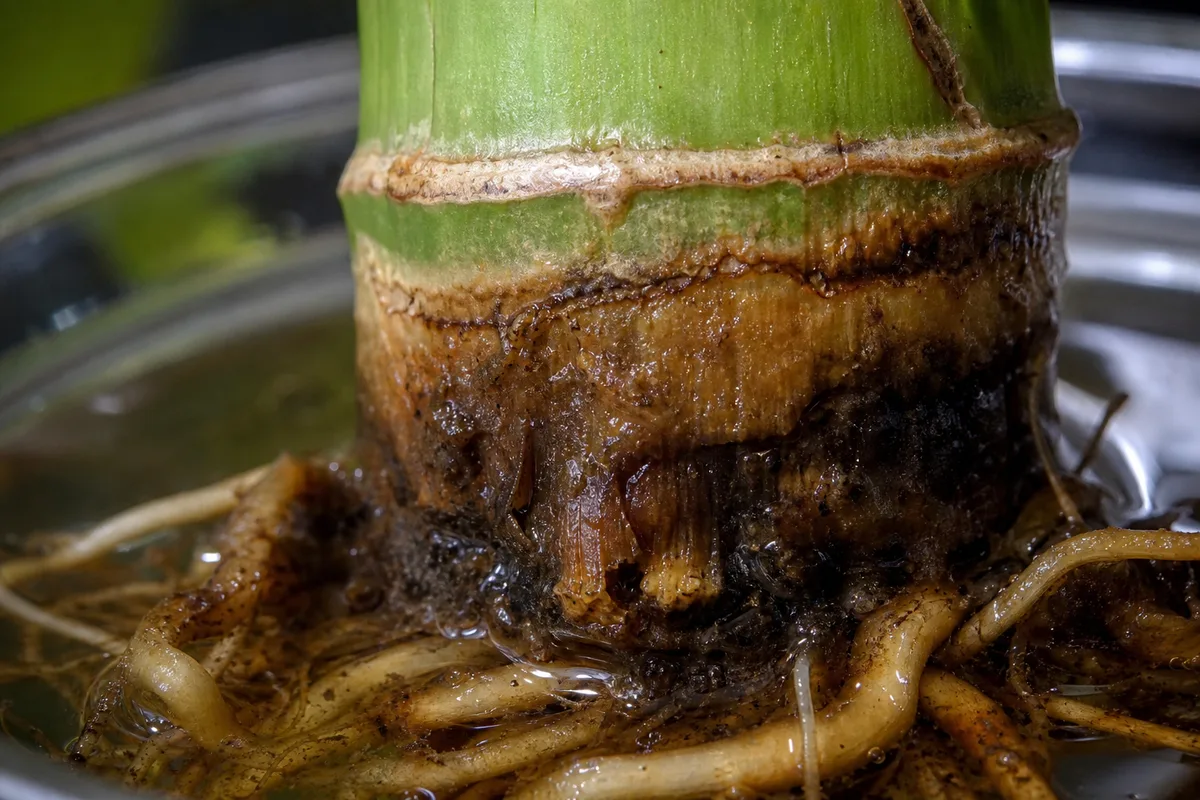
Water culture wins on looks and simplicity: clear vase, visible roots, no potting mess. The trade-off is thinner aquatic-adapted roots, no soil buffer for nutrients or salts, algae and bacterial cloudiness, and a shorter typical display lifespan unless you change water on schedule. Soil culture matches the plant’s rain-forest understory habit more closely. Laidback Gardener notes water-grown plants often decline after a year or two and that moving healthy stock into soil can restore growth once new terrestrial roots form. (Laidback Gardener) Ask Extension likewise reports soil is less difficult to maintain long term for many owners. (Ask Extension)
Keep a healthy vase plant in water if you enjoy the look and will change water weekly. Move to soil if stems yellow despite good light and clean water, growth has stalled for months, or the arrangement is aging and you want a longer-lived houseplant.
Growing Lucky Bamboo in Water
Submerge enough water to cover the roots and at least one inch of stem - not the entire cane. Clemson HGIC recommends that depth because deep submersion invites stem rot at the waterline. Pebbles or marbles hold stalks upright and add weight so top-heavy braids do not tip; they provide support, not nutrients. (Clemson HGIC) NC State Extension adds the same pebble advice and stresses chlorine-free water with a weekly change to keep the culture clean and discourage mosquitoes. (NC State Extension)
Change the water completely every week. Pour out the old batch, rinse roots and pebbles, scrub algae from the glass, and refill with fresh quality water. Top off between changes only if evaporation drops the level below the roots, using the same water quality. Fertilize lightly - Clemson suggests liquid houseplant fertilizer at one-quarter strength every other month in water culture, because there is no soil to buffer salts.
Avoid placing clear glass in hot afternoon sun. Vase water can heat quickly and stress tissue at the waterline even when room air feels fine. Foggy or milky water is a bacterial warning - Ask Extension flags cloudiness as a cue to refresh before roots decline. (Ask Extension)
Growing Lucky Bamboo in Soil
Plant in a well-drained indoor or tropical potting mix in a pot with drainage holes. Water when the top inch of soil feels dry, let the pot drain thoroughly, and empty the saucer - Clemson HGIC is explicit that leftover saucer water is a problem. Stake tall or newly transplanted stems until roots anchor. (Clemson HGIC)
Missouri Botanical Garden describes the species as easily grown in evenly moist soil in part shade to full shade, with bright indirect light preferred and direct sun avoided. (Missouri Botanical Garden) A practical home blend used across our soil topic pages is roughly 60% quality potting mix and 40% perlite for aeration without turning the pot into a swamp. Garden soil and sealed decorative pots without drainage are poor choices.
Expect temporary leaf drop after a water-to-soil move while roots convert - Laidback Gardener warns that reaction is common and usually temporary if stems stay firm. Full transplant steps live in the repotting guide and the soil guide.
Documented Cases: Vase Reset and Water-to-Soil
Documented water-to-soil case (Laidback Gardener, 2020): Reader Therese Plante described a five-stem arrangement kept for one year in a glass container with white stones, in a bright window without direct sun, with weekly emptying and stone rinsing. Growth had barely moved and leaves were dropping. Larry Hodgson confirmed the plant was Dracaena sanderiana (not bamboo), noted that water culture often declines after a year or two, and walked through a soil transplant: drainage-hole pot, moist houseplant mix, stones knocked free, tangled roots loosened or lightly pruned, then water until settled and discard saucer runoff. He warned of temporary extra leaf loss while aquatic-adapted roots convert, followed by stronger growth once terrestrial roots form - and noted soil-grown plants can live for decades with ordinary indoor care. (Laidback Gardener)
LeafyPixels editorial pattern (vase reset): When we review gift-shop vase setups for the watering and root rot topic pages, the early soft-waterline cases that still have firm green tissue above the meniscus typically stop climbing yellowing after one to two full dump-rinse-refills with filtered or distilled water at Clemson’s roots-plus-1-inch depth - matching the mild-vase recovery window we publish on the root-rot page. Arrangements that stay cloudy within days despite weekly changes, or that go soft at multiple nodes, are better candidates for cutting firm tops or moving healthy canes to soil than for endless top-offs of stale water. That is an editorial pattern from care-page development, not a claim that every home matches the same timeline.
Light Requirements and Wrong-Light Signs
Lucky bamboo is an understory plant. Indoors, target bright, indirect light for most of the day: an east- or north-facing window, or a south- or west-facing window filtered by a sheer curtain or set back several feet. Clemson HGIC recommends east or north exposures and warns that direct sunlight browns leaves. (Clemson HGIC) Missouri Botanical Garden agrees: too much direct sun scorches foliage; bright indirect light is best. (Missouri Botanical Garden)
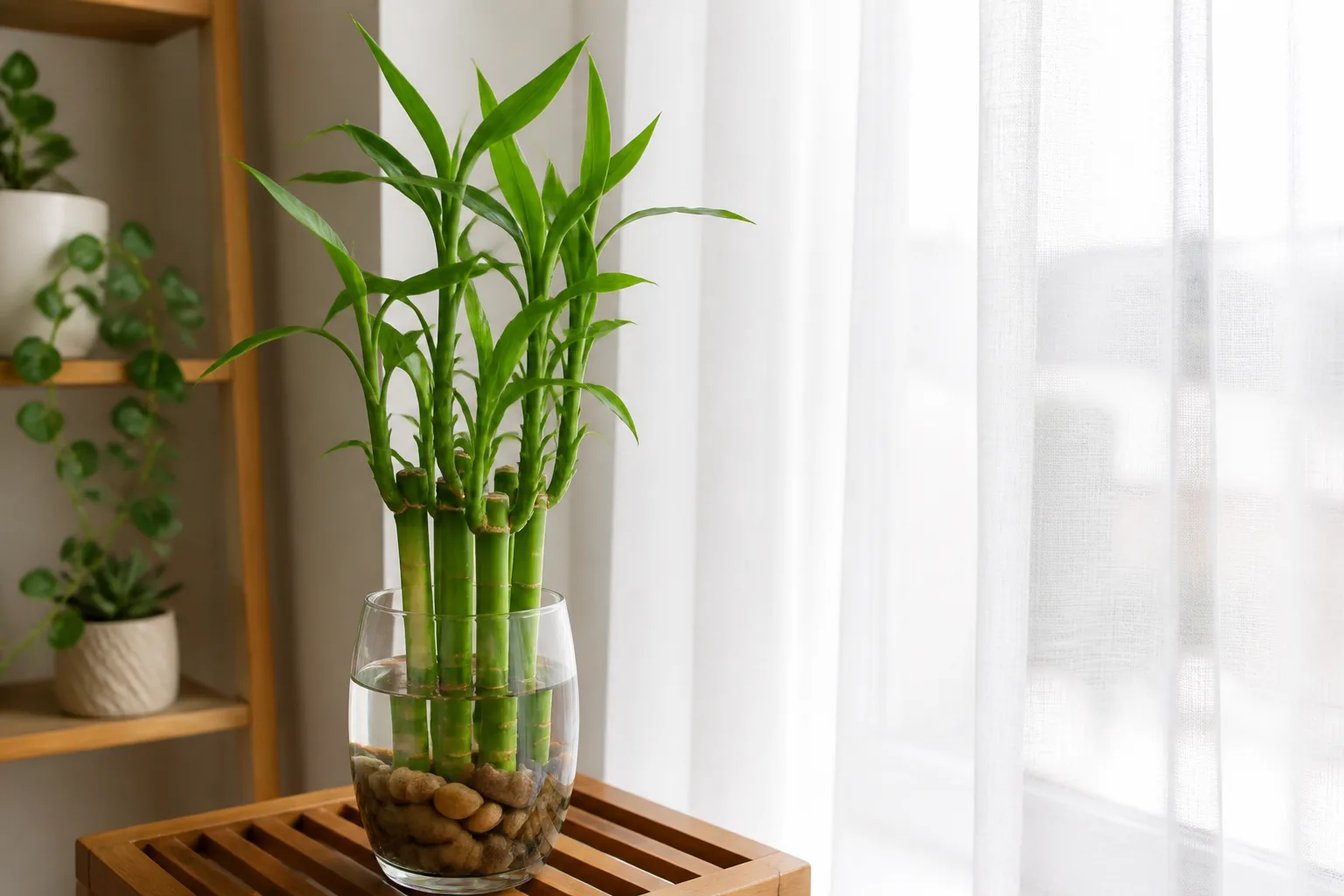
The plant tolerates medium and even low indirect light, including many office fluorescents and LEDs. Tolerance is not the same as preference. In weak light, expect slower growth, thinner stems, and less recovery after stress. Rotate the vase or pot a quarter turn every week or two so braided and spiral forms stay even.
Bleached, pale, or yellowing leaves with crispy brown patches usually mean too much direct sun or a sudden move into harsh light. Dark, sparse leaves on elongated weak stems point to insufficient light. Uniform yellowing across multiple stems in decent light more often implicates water quality, stale vase water, or fertilizer than light alone. UF/IFAS Nassau County Extension also lists excess sunlight among causes of yellowing leaves and advises a bright room without direct window sun. (UF/IFAS Nassau County)
Water Quality: Chlorine, Fluoride, and Tip Burn
Water chemistry is where lucky bamboo care diverges from many other houseplants. NC State Extension specifies chlorine-free water for standing-water culture. (NC State Extension) Missouri Botanical Garden notes that brown leaf tips can come from low humidity, incorrect lighting, or high levels of water additives such as chlorine, and that filtered or rain water may help. (Missouri Botanical Garden) UF/IFAS Nassau County flags city water alkalinity, chlorine, and fluorine as suspects when leaves yellow and recommends filtered water, or letting tap water sit uncovered for one to two days if filtration is unavailable. (UF/IFAS Nassau County) Ask Extension likewise recommends rain or distilled water for water or soil culture because fluoride can yellow leaves. (Ask Extension)
Practical hierarchy for vase or soil watering: distilled, reverse-osmosis, or rainwater first; quality filtered water next; dechlorinated tap water if the plant stays green. If tips keep browning on firm stems with weekly water changes, switch water source for a month before assuming disease. Do not confuse tip burn with soft, mushy yellow stalks at the waterline - those point to rot, not fluoride.
Does Sitting Tap Water Overnight Remove Fluoride?
Leaving tap water open overnight helps chlorine dissipate for many municipal systems. Fluoride is more persistent. The Pacific Northwest Plant Disease Handbook notes many municipal supplies inject fluorine around 1 ppm for dental health, that Dracaena species are highly sensitive, and that reverse osmosis, condensation, or charcoal treatment reduces the problem better than hoping additives simply evaporate. (PNW Plant Disease Handbook) Deep Green Permaculture documents fluoride tip burn on lucky bamboo - tips yellow, then brown irreversibly as fluoride accumulates in leaf margins - and recommends rainwater, distilled water, or related strategies rather than relying on evaporation alone. (Deep Green Permaculture)
Treat UF/IFAS’s sit-out tip as a chlorine-reduction fallback when you cannot filter, not as a guaranteed fluoride fix. Damaged tip tissue will not turn green again - trim for cosmetics after the cause is fixed.
Why Stalks Turn Yellow
Yellow stalks are the symptom that sends most owners searching. Causes overlap, so diagnose by texture, location, and water history rather than leaf color alone.
Common drivers include too much direct sun, fluoridated or chlorinated tap water, over-fertilization, stale bacterial water in the vase, and stem or root rot from over-submerged canes or soggy soil. NC State Extension notes that overwatering can yellow leaves and rot stems, while low humidity browns tips. (NC State Extension) UF/IFAS Nassau County adds alkaline water and excess sun to the yellowing list. (UF/IFAS Nassau County)
Yellowing from the top down or in sun-facing patches often points to light or chemical burn. Yellowing from the base with soft, mushy tissue points to rot. A single older leaf yellowing on an otherwise firm green cane can be normal aging.
| Pattern | Soft waterline rot | Firm-stem tip burn | Sun bleach |
|---|---|---|---|
| Feel | Soft, slimy at/below waterline | Firm canes | Firm canes |
| Water | Cloudy, sour, or algae-heavy | Often clear | Clear |
| Leaf look | Yellow climbing from base | Tips/margins yellow then brown | Bleached patches on sun side |
| First action | Dump, rinse, trim mush, refill | Switch water source; reduce feed | Move to bright indirect |
Soft Rot vs Chemical Tip Burn
Soft rot: Stalks feel soft or slimy at or below the waterline, water smells sour or looks cloudy within days of a change, and yellowing climbs from the submerged zone.
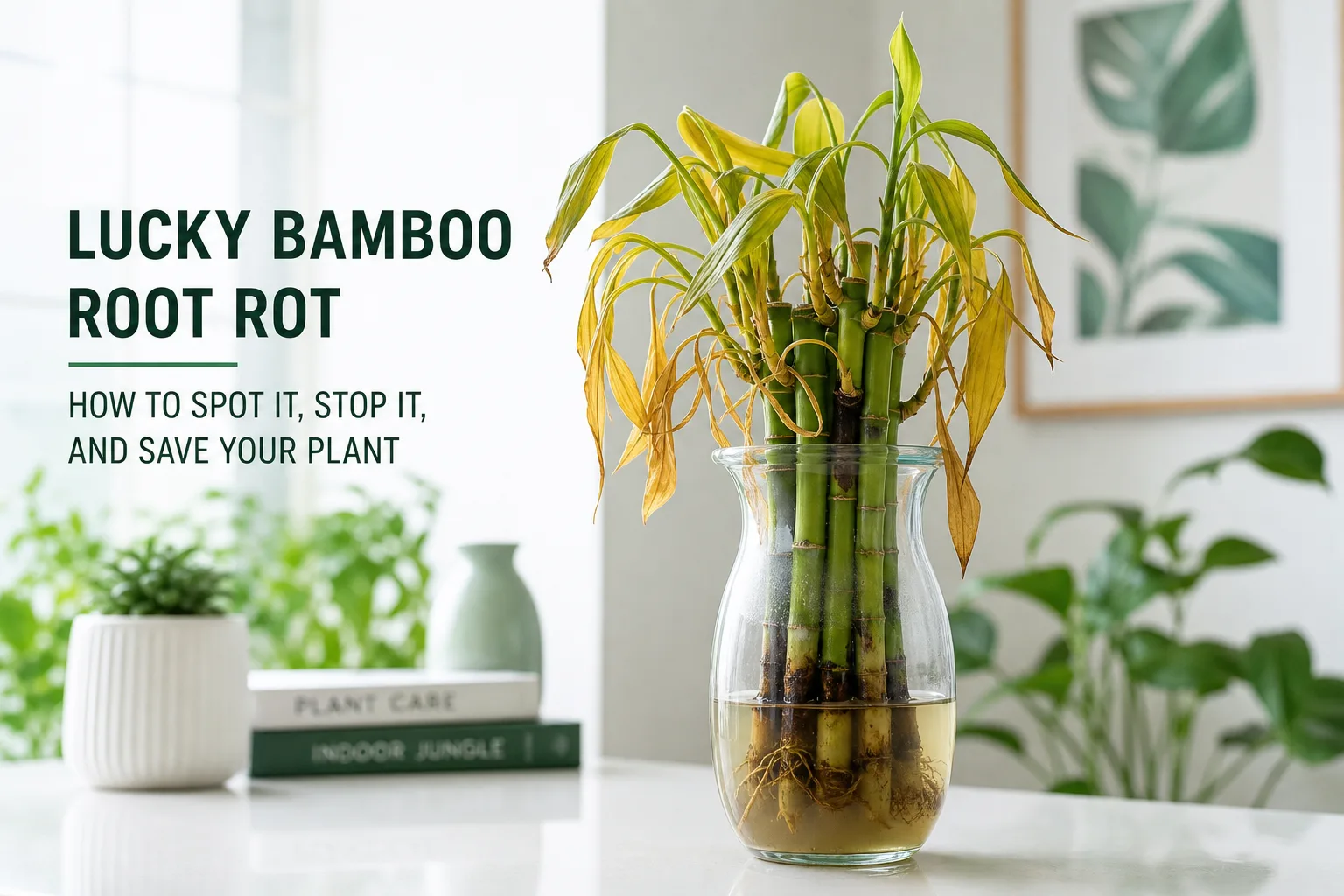
Soft waterline rot: mushy tissue and root decline at the submerged zone - dump water and rinse immediately.
Action: discard all water, rinse pebbles and roots, trim mushy tissue to firm green with clean shears, and refill with fresh chlorine-free water. Severely rotten canes rarely recover - remove them so healthy stems are not sitting in contaminated water. See root rot for full recovery steps.
Chemical tip burn: Leaf tips and margins yellow then brown while stems stay firm. Water may look clear.
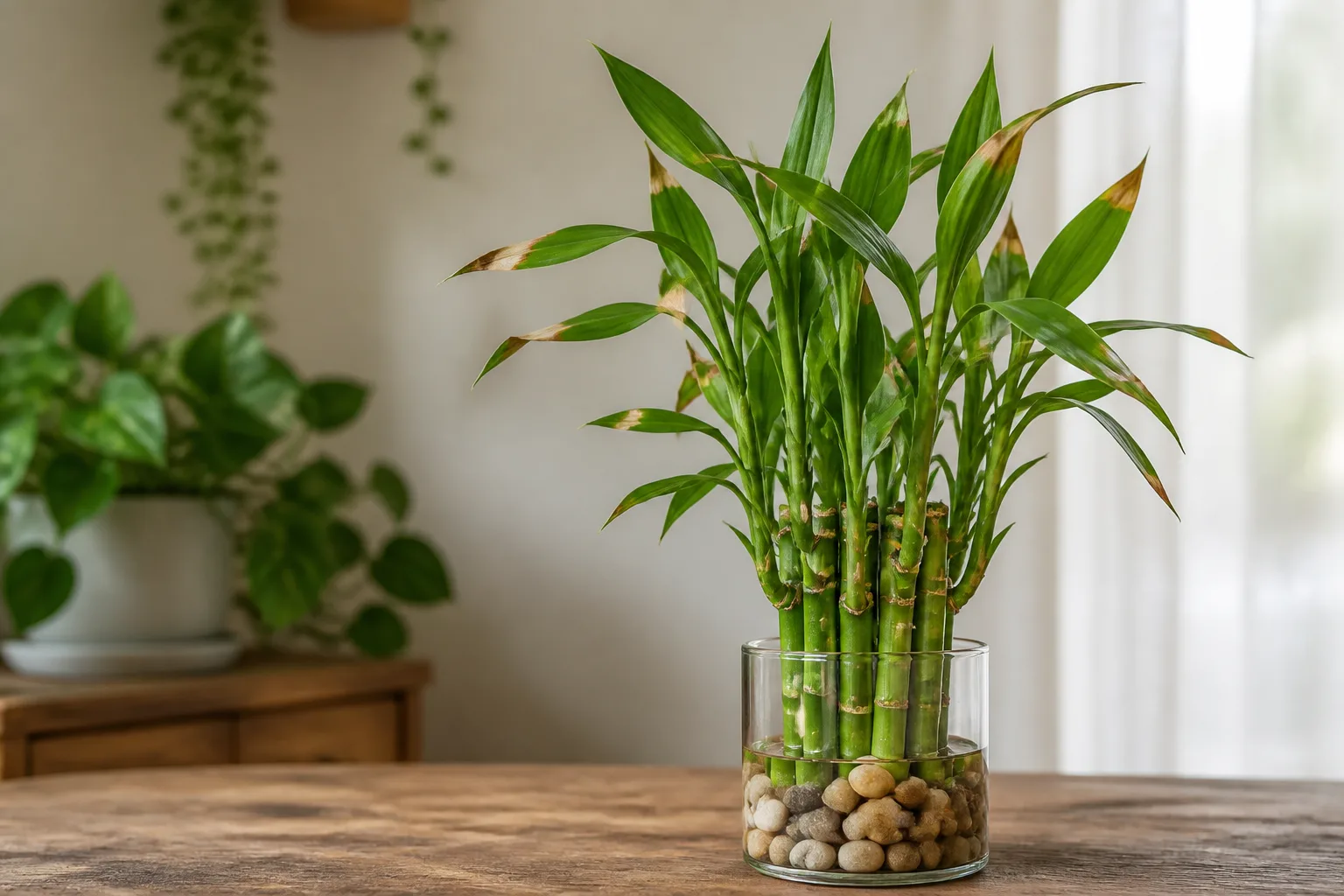
Firm-stem tip burn: necrotic tips and margins on otherwise firm canes - usually water chemistry or dry air, not rot.
Action: switch to distilled, RO, or rainwater; reduce fertilizer; confirm the plant is out of direct sun. (Deep Green Permaculture) More lookalikes: brown tips and yellow leaves.
If several canes are failing in an old vase arrangement, consider starting cuttings or transitioning healthy stems to soil rather than fighting a declining water culture indefinitely.
Weekly Vase Maintenance Checklist
Print or save this one-screen list for desk arrangements:
- Prep room-temperature distilled, RO, rain, or filtered water.
- Pour out all old water - do not just top off cloudy liquid.
- Rinse pebbles; scrub algae from glass.
- Inspect the waterline: soft tissue gets trimmed; firm green stays.
- Rinse roots briefly if biofilm is visible.
- Refill to cover roots + ~1 inch of stem.
- Wipe the glass; note the date; change sooner if water clouds midweek.
- Skip fertilizer this week if you recently fed, trimmed rot, or moved the plant.
NC State’s mosquito note is a real reason weekly full changes matter in standing water, not just aesthetics. (NC State Extension) Keep vase water out of reach of curious pets and children - do not drink it, and treat spilled water as part of a toxic-plant display.
Fertilizer, Temperature, and Humidity
Lucky bamboo is a light feeder. In water, use liquid houseplant fertilizer at about one-quarter strength every other month. In soil, fertilize monthly during active growth at a normal houseplant dilution, then pause or reduce in winter. (Clemson HGIC) More fertilizer will not force braided stems to thicken quickly; excess salts yellow stems and burn tips, especially in water with no soil buffer. See the fertilizer guide if tips crispen after feeding.
Temperature matters more than people expect. Clemson HGIC says outdoor summer shade is fine after frost risk passes, but bring plants indoors before nights drop below 65°F (18°C). Keep indoor plants away from cold window glass in winter and away from heater blasts that dry leaf edges. Average home humidity is usually acceptable; very dry air can contribute to brown tips alongside water chemistry. NC State Extension lists low humidity among tip-browning causes. (NC State Extension)
Propagation and Simple Pruning
Propagation is straightforward. Clemson HGIC recommends cutting a shoot of new growth from the main stem, removing the lowest leaves, and placing the shoot in water - roots usually form in two to three weeks. (Clemson HGIC) Missouri Botanical Garden notes you can cut lanky older stems back to encourage new growth from the base. (Missouri Botanical Garden)
Use clean tools. Root cuttings in the same quality water you use for the parent plant. Once roots are a few inches long, keep the new plant in water or pot it into moist, well-drained mix. Braids and spirals are trained by growers with light and wiring - you cannot “unbraid” mature fused stems without damage, so buy the shape you want. Full cutting technique lives in the propagation guide; shaping cuts are covered under pruning.
Pests and Pet Toxicity
Lucky bamboo is usually clean indoors, but Clemson HGIC lists spider mites, mealybugs, and aphids; NC State Extension adds mites, mealybugs, and scale, plus false spider mites as a known issue. (Clemson HGIC) (NC State Extension) Rinse leaves, wipe pests by hand, and use insecticidal soap or neem as labeled for houseplants. Isolate a heavily infested arrangement so pests do not walk to neighboring plants.
Pet safety is not optional. The ASPCA lists Dracaena spp. as toxic to dogs and cats; toxic principles are saponins, with clinical signs including vomiting (occasionally with blood), depression, anorexia, hypersalivation, and dilated pupils in cats. (ASPCA) Pet Poison Helpline also lists lucky bamboo under Dracaena and notes drooling, vomiting, and cat-specific dilated pupils and wobbly gait. (Pet Poison Helpline) Keep arrangements out of reach. If a pet chews any part, contact a veterinarian or ASPCA Animal Poison Control at (888) 426-4435. Clemson HGIC also notes skin irritation potential for humans handling the plant - wash sap off skin and avoid rubbing eyes.
Related Guides
- Lucky bamboo hub - overview, topic links, and problem index for Dracaena sanderiana
- Lucky bamboo watering - vase change routine and soil dry-down checks
- Lucky bamboo light - window placement and low-light limits
- Lucky bamboo soil - mix ratios and water-to-soil transplant steps
- How to water indoor plants the right way - general indoor watering decisions
- Snake plant care - another fluoride-sensitive Dracaena relative with very different watering
Conclusion: Keep the Vase, Move to Soil, or Cut Out Rot
Decide with what you can feel and see - not with a restatement of the care pillars.
- Keep the vase if stems are firm, water stays clear on a weekly change schedule, and you like the display. Commit to the checklist and better water.
- Move to soil if growth has stalled for months despite clean water and good light, or if you want a longer-lived houseplant and stems are still firm enough to transplant.
- Cut out rot if tissue is soft at the waterline: remove ruined canes, rinse everything, and start cuttings from firm green tops rather than nursing a sour arrangement indefinitely.
Yellow stalks usually mean stale water, chemical tip burn, sun scorch, or rot - not bad luck. Use this page for the full care system, then open the hub and problem pages linked above when a single symptom needs a deeper fix.