Dracaena Reflexa Care Guide: Light, Water & Song of India
Dracaena reflexa
Dracaena reflexa (Song of India) care: bright indirect light for variegation, moderate watering, humidity, stem-cut propagation, and pet toxicity.
Dracaena Reflexa Care Guide: Light, Water & Song of India
Start with wateringThe most common care mistake for Dracaena ReflexaWatering guide →Dracaena Reflexa care essentials
Light
Water
Water when top 2 inches are dry; every 7–14 days in summer; 14–21 days in winter.
Soil
Well-draining potting mix with perlite and coarse bark.
Humidity
40–60%
Temperature
18–27°C (65–80°F)
Fertilizer
About Dracaena Reflexa
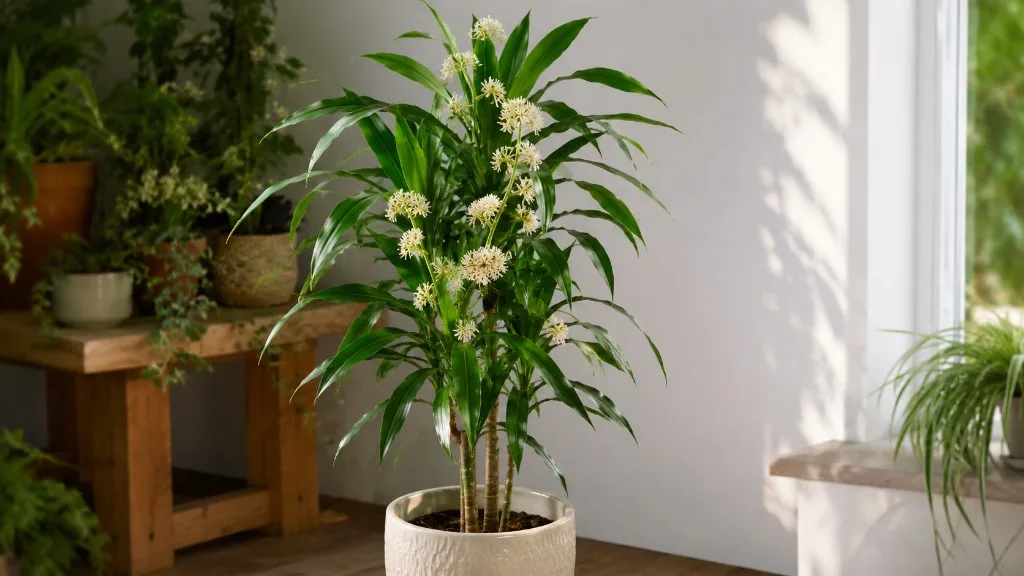
Dracaena Reflexa is native to Madagascar, Mauritius, Mozambique, and other Indian Ocean islands, typically reaches 3–6 ft indoors; narrow lance leaves with yellow or cream margins in spiral rosettes on flexible stems indoors, with slow to moderate growth. Dracaena Reflexa has a shrub like growth habit and part of the Asparagaceae family. It is also known as Song of India, Pleomele, and Song of Jamaica.
| Detail | Information |
|---|---|
| Also known as | Song of India, Pleomele, Song of Jamaica |
| Native region | Madagascar, Mauritius, Mozambique, and other Indian Ocean islands |
| Mature size | 3–6 ft indoors; narrow lance leaves with yellow or cream margins in spiral rosettes on flexible stems |
| Growth rate | Slow to moderate |
| Growth habit | Shrub Like |
| Scientific name | Dracaena reflexa |
| Family | Asparagaceae |
Dracaena Reflexa Care Guide: Light, Water & Song of India
About this guide: Dracaena reflexa — widely sold as Song of India — carries narrow leaves with yellow or cream margins arranged in spiral rosettes on flexible stems. It wants brighter light than corn plant to keep variegation crisp, and it is less drought-forgiving than Dracaena marginata. Treat reflexa as a bright-room foliage plant with steady moisture once the top two inches dry, not as a dim-corner survivor.
Dracaena reflexa is the botanical name behind Song of India, one of the most recognizable variegated indoor trees in nurseries and hotel lobbies. Unlike the thick-cane corn plant or the slim red-edged dragon tree, reflexa builds short, dense leaf whorls that spiral up flexible stems — a look Clemson Extension still describes under the older trade genus Pleomele. That structure is not cosmetic trivia: it tells you this plant needs bright, indirect light to keep yellow margins sharp, moderate watering once the upper soil dries, and low-fluoride water if you want clean leaf tips. Get those three right and Song of India becomes a slow, architectural shrub that holds color for years. Miss them and you get pale stripes, brown tips, or yellow leaves that look like a generic dracaena problem but trace back to reflexa-specific habits.
For the full species hub, see Dracaena Reflexa main care page.
What Is Dracaena Reflexa?
Dracaena reflexa is a slow-to-moderate shrubby dracaena in the family Asparagaceae, native to Madagascar, Mauritius, and nearby Indian Ocean islands. The species name reflexa refers to the way older leaves curve backward on the stem. Indoors it is grown almost exclusively for foliage — narrow, lance-shaped leaves with yellow or cream margins packed into rosettes that wrap around the stem like a soft spiral staircase.
Commerce labels it Song of India (yellow-margined forms) or Song of Jamaica (cream- or white-edged selections). You may still see Pleomele on older tags because reflexa was once placed in that genus before botanists folded it into Dracaena. None of those names change the care: they all point to the same flexible-stem, spiral-rosette plant.
Song of India, Pleomele, and Tag Confusion
Garden centers often group reflexa with unrelated dracaenas at the checkout. Do not match care to the word “dracaena” alone. Corn plant (Dracaena fragrans) carries broad leaves on thick canes and tolerates deeper dry-downs. Dragon tree (Dracaena marginata) has narrow red-edged leaves on slim woody stems and survives dim offices better than reflexa. Song of India sits between them on light demand — brighter than fragrans, less shade-tolerant than marginata for variegation — and on water: it dries out faster than marginata but rots faster than you might expect if you keep the mix wet in low light.
If your plant shows spiral clusters of short leaves on bendable stems, you have reflexa regardless of whether the pot says Pleomele, Song of India, or simply “variegated dracaena.”
Native Habitat and Indoor Growth Habit
In its native range, reflexa grows as an understory to mid-story shrub in warm, humid coastal climates with seasonal rainfall. Indoors that translates to warm stable rooms, filtered bright light, and a watering rhythm that lets the root zone breathe between drinks. Clemson HGIC notes that pleomele-type dracaenas keep dense foliage to the base when grown with enough light — a useful diagnostic. Leggy bare stems with a tuft of leaves at the top usually mean the plant has been starving for photons, not that it is genetically meant to look like a palm trunk.
Dracaena Reflexa at a Glance
Song of India rewards growers who treat it as a variegated foliage shrub, not a set-and-forget lobby plant. The table below summarizes baseline needs; the sections that follow explain how to apply them in a real home.
| Topic | Baseline for Dracaena reflexa |
|---|---|
| Light | Bright indirect; more than corn plant for stripe color |
| Water | When top 2 inches (5 cm) of mix are dry; soak and drain |
| Soil | Well-draining peat-free mix + perlite + coarse bark |
| Temperature | 65–80°F (18–27°C); avoid below 55°F (13°C) |
| Humidity | 40–60%; cleaner margins than desert-dry winter air |
| Feed | Dilute balanced liquid spring–summer only |
| Size indoors | Typically 3–6 ft (0.9–1.8 m) on flexible stems |
| Pets | Toxic to cats and dogs (ASPCA) |
Mature Size and Spiral Rosette Structure
Indoors, most Song of India specimens reach 3 to 6 feet over several years, though ceiling height and light ultimately cap size. Growth is slow to moderate: new rosettes appear at stem tips while older leaves below eventually yellow and drop, which is normal if it happens one leaf at a time on a firm stem. The signature look — tight spiral rosettes hugging flexible stems — is what Clemson HGIC highlights for Dracaena reflexa (Pleomele). Stems can be trained or pruned to branch; cut sites often sprout two new shoots, which is how growers build bushier plants from a single vertical stem.
How Reflexa Differs From Corn Plant and Dragon Tree
Corn plant (Dracaena fragrans) grows on thick, woody canes with a rosette of wide leaves at the top. It tolerates lower light and longer dry periods than reflexa. Dragon tree (Dracaena marginata) has narrow, stiff leaves with red or pink edges on slim stems and is the most drought-forgiving of the three. Song of India has flexible stems, shorter leaves, and yellow-margined variegation that fades in dim corners faster than plain-green marginata foliage fades. Reflexa also sits in the middle on watering: it is less forgiving of bone-dry soil than marginata but more sensitive to soggy mix than fragrans when light is weak. If you are comparing shopping options, choose reflexa for colorful spiral rosettes in a bright room; choose marginata for tall, slim structure in moderate light; choose fragrans for wide corn-like leaves and cane height in typical living-room brightness.
Light Needs for Song of India
Bright, indirect light is the default placement for Dracaena reflexa. The RHS recommends positioning dracaenas in bright but indirect light — such as an east-facing window or a south- or west-facing window filtered by sheer curtain — and keeping plants out of direct summer sun that scorches leaves. That guidance fits Song of India especially well because variegated leaves carry less chlorophyll in the pale zones and need more total brightness to maintain color contrast.
Why Variegation Demands Brighter Placement
When Song of India loses yellow or cream margins and reverts toward plain green, insufficient light is the first suspect, not fertilizer. Variegated tissue cannot photosynthesize as efficiently as all-green tissue, so the plant needs a brighter station than a plain marginata in the same room. A practical test: after two weeks in a new spot, new leaves should show crisp margin color and normal size. Pale, small, or widely spaced leaves mean move closer to the window, add a sheer filter if sunbeams hit the foliage, or supplement with a full-spectrum grow light for 10–12 hours daily. Clemson HGIC links round dry patches and streaks to excessive sunlight — so the goal is bright ambient light, not midday sun on the leaves. For window-by-window placement detail, see the Dracaena Reflexa light guide.
Watering Dracaena Reflexa
Watering Song of India is a check-the-pot habit, not a calendar habit. The plant prefers to dry slightly between thorough soakings while never sitting in stale wet mix — the same genus-wide pattern Clemson HGIC describes for dracaenas, with reflexa leaning slightly moister than marginata but still unforgiving of waterlogged roots.
When the Top Two Inches Are Dry
Push your finger 2 inches (5 cm) into the soil — or use a dry skewer to the same depth. When that zone feels dry and the pot has lost noticeable weight, water until a little runs from the drainage hole, then empty the saucer. In warm, bright months that often means every 7 to 14 days; in cooler, slower growth it can stretch to 14 to 21 days. A reflexa moved into dimmer light uses less water; adjust downward or root rot on Dracaena Reflexa follows. Shallow daily sips are worse than a single deep drink followed by a real dry-down because they keep the surface damp while the core stays oxygen-starved.
Fluoride, Tap Water, and Brown Tips
Brown, papery leaf tips and margins are the most common Song of India complaint — and fluoride in tap water is the leading cause across the dracaena genus. The Pacific Northwest Pest Management Handbooks document tip burn on dracaenas irrigated with fluoridated water as fluoride accumulates in margins and causes necrosis. Clemson HGIC lists fluoride injury among dracaena sensitivities and advises keeping soil pH around 6.0 to 6.5 and avoiding superphosphate fertilizers that add fluorine. Michigan State University Extension notes that perlite-heavy mixes can also contribute to fluoride availability — relevant because reflexa still needs perlite for drainage, but the mix should not be mostly perlite.
The RHS recommends rainwater or filtered water when tap water damages foliage. Letting tap water sit overnight removes chlorine but not fluoride. Switch to rainwater, distilled, or reverse-osmosis water when new growth shows tip burn despite correct dry-down timing. Trim old brown tips for appearance — they will not regreen — and judge success on new leaves emerging clean. Full watering mechanics live in the Dracaena Reflexa watering guide.
Soil, Drainage, and Repotting Rhythm
Song of India needs fast-draining potting mix that retains some moisture without staying soggy for days. A workable blend is peat-free houseplant compost with perlite and coarse bark or grit — roughly the mix described on the species hub. The RHS suggests slightly acidic (ericaceous) compost with added perlite or grit for drainage; keep the blend moist but well-drained and never let the pot sit in standing water.
Always use a container with a drainage hole. Repot when roots circle the pot, water runs straight through dry mix, or the plant dries out within a day of watering — typically every two years in spring. Move up one pot size only; oversized pots hold wet soil around small root balls and invite rot. Fresh mix refreshes minerals without the salt load that mimics fluoride burn. See the Dracaena Reflexa soil guide and repotting guide for mix ratios and step-by-step timing.
Temperature, Humidity, and Airflow
Dracaena reflexa prefers stable indoor warmth. Clemson HGIC recommends daytime temperatures around 60 to 70°F (16 to 21°C) with nights about 10°F cooler, which aligns with the 65–80°F (18–27°C) comfort band most homes already provide. Cold is the sharper edge: drafts below about 55°F (13°C) from winter windows or AC vents cause leaf drop, limp foliage, or brown patches on tissue that will not recover.
Humidity near 40 to 60% keeps leaf margins cleaner in heated winter air. Clemson HGIC suggests misting when indoor humidity drops below 30 to 40%, though fixing water chemistry matters more than misting for isolated tip burn. Keep Song of India away from radiators and fireplace heat; repeated hot-cold swings show up as spotty yellowing long before you notice the vent placement.
Fertilizer: Light Feeding Without Salt Buildup
Song of India is a light feeder. Apply a balanced liquid houseplant fertilizer at half strength to moist soil once monthly in spring and summer, matching Clemson HGIC guidance for dracaenas. Skip feeding in fall and winter unless the plant sits under strong grow lights with active new growth. Never use superphosphate on reflexa — it can worsen fluoride-type tip burn. Hold fertilizer after repotting, pest recovery, or any root repair until you see firm new leaves. Heavy feeding produces salt buildup that browns margins the same way tap fluoride does. Details and NPK notes are in the Dracaena Reflexa fertilizer guide.
Propagation and Shape Control
The practical home methods for Song of India are stem-tip cuttings and horizontal cane sections rooted in moist, well-draining mix or water. Clemson HGIC lists tip cuttings, stem sections, air layering, and basal shoots as standard dracaena propagation paths; reflexa flexible stems respond well to beheading an overgrown rosette and rooting the top while the stub sprouts new shoots below. Take cuttings in spring or summer with clean sharp pruners, keep humidity moderate, and avoid direct sun on cuttings.
If stems grow leggy, prune or air-layer rather than chasing fertilizer. Flexible stems can also be trained on stakes for shape. See the Dracaena Reflexa propagation guide and pruning guide for step-by-step timing.
Pet Safety and Handling
Dracaena reflexa is not safe for pets. The ASPCA lists Dracaena spp. as toxic to cats and dogs, with saponins as the toxic principle. Ingestion can cause vomiting (occasionally with blood), depression, anorexia, and dilated pupils in cats. The RHS also notes that all parts of dracaena are toxic. Keep Song of India on high shelves or out of pet-accessible rooms — not on floor corners where dogs and cats chew foliage. Sap may irritate sensitive skin; use gloves if you react to latex-like plant juices. If ingestion is suspected, contact your veterinarian or the ASPCA Animal Poison Control Center at (888) 426-4435.
Common Mistakes With Song of India
Treating it like a low-light office dracaena. Variegated reflexa loses stripe color and grows sparse in dim corners; marginata survives that look longer.
Watering on a fixed schedule. Light, season, and pot size change dry speed. A weekly pour into still-damp soil causes overwatering on Dracaena Reflexa and yellow leaves.
Blaming humidity for brown tips before checking water. Fluoride and salt margins are tip-focused on otherwise firm leaves; fix water source and flush salts before buying a humidifier.
Repotting into a huge decorative pot without drainage. Excess wet soil around reflexa roots rots flexible stems faster than thick corn-plant canes.
Fertilizing a stressed plant. Yellow leaves on wet soil need root recovery, not more nitrogen. See yellow leaves on Dracaena Reflexa and brown tips on Dracaena Reflexa for symptom-first paths.
Conclusion
Dracaena reflexa — Song of India — is a variegated spiral-rosette shrub for bright rooms, not dark hallways. Place it in bright indirect light to hold yellow margins, water when the top two inches of mix are dry, use well-draining soil in a pot with drainage, and irrigate with low-fluoride water if tips brown on an otherwise sound schedule. It is less drought-tolerant than dragon tree and more light-hungry than corn plant for stripe color, but those trade-offs buy you one of the cleanest variegated silhouettes in the dracaena group. Keep it away from pets, repot on a modest spring schedule, and open the topic guides below when you need depth on light, water, soil, or specific symptoms. Read the plant in order — new leaf color, stem firmness, soil moisture, water quality — and Song of India stays dense, colorful, and upright for years.
When to use this page vs other Dracaena Reflexa guides
- Dracaena Reflexa hub — Species landing page with quick facts and links to every care topic.
- This overview — Identity, baseline light/water/soil, toxicity, and how reflexa differs from other dracaenas; start here if you are new to the plant.
- Dracaena Reflexa light — Window placement, variegation recovery, grow lights, and sunburn signs.
- Dracaena Reflexa watering — Moisture tests, seasonal intervals, fluoride detail, and rescue from overwatering.
- Problem pages — Use brown tips, yellow leaves, or root rot when you already have a symptom.
Related Dracaena Reflexa guides
How to care for Dracaena Reflexa?
When should you water Dracaena Reflexa?
Water when top 2 inches are dry; every 7–14 days in summer; 14–21 days in winter.
- Push finger 2 inches into soil; water only when dry at that depth - Water when top 2 inches are dry; every 7–14 days in summer; 14–21 days in winter.
- Drain excess water - Water when top 2 inches are dry; every 7–14 days in summer; 14–21 days in winter.
What soil works best for Dracaena Reflexa?
Well-draining potting mix with perlite and coarse bark.
- standard peat-free potting compost - Well-draining potting mix with perlite and coarse bark.
- perlite (20%) - Well-draining potting mix with perlite and coarse bark.
- coarse grit or bark - Well-draining potting mix with perlite and coarse bark.
Grower notes for Dracaena Reflexa
What makes reflexa different from corn plant
Dracaena reflexa — Song of India — is the spiral-rosette shrub dracaena with flexible stems and narrow leaves edged in cream or yellow. It is not the thick-stemmed corn plant (Dracaena fragrans) or the slim-cane dragon tree (D. marginata). Reflexa needs brighter light than corn plant to hold variegation, and foliage only stays dense to the base when light is adequate.
Best placement in a real home
Place Song of India where bright indirect light is realistic for most of the day — near an east window or several feet back from south or west glass. Deep shade fades the cream margins and opens bare lower stems. Water when the top 2 inches dry. Humidity target: 40–60%. Temperature comfort zone: 18–27°C (65–80°F).
Before you buy this plant
Choose reflexa with firm new rosettes, crisp variegated margins, and soil that does not smell sour. Be cautious if cream stripes are browning on fresh growth, stems feel soft at the base, or a pot stays wet in a dim corner. Song of Jamaica (reverse variegation) and plain green forms need the same bright placement to stay full.
First month after bringing it home
Do not repot on day one unless the mix is failing or pests are obvious. Quarantine the plant, learn how fast the pot dries in your light level, and use filtered or rainwater if your tap water is fluoridated. Watch for brown tips, yellow leaves, and mushy stems. Fix light, water quality, and drainage before stacking fertilizer, repotting, and pruning.
Safety note for Dracaena Reflexa
Song of India is toxic to cats and dogs. The ASPCA lists saponins as the toxic principle, with vomiting and dilated pupils in cats. Keep flexible stems and fallen leaves out of reach on floor pots and low shelves.
How to tell reflexa is settling in
New spiral rosettes opening with crisp cream or yellow margins are the best sign the plant has found its spot. If stems get leggy, cut back a rosette — reflexa roots readily from stem cuttings. Repot only when you see roots from drainage holes and soil drying within a day of watering.
Is it pet safe?
Dracaena Reflexa is toxic to cats and dogs.
Contains saponins. Causes vomiting (sometimes with blood), anorexia, depression, and dilated pupils in cats. Keep completely out of reach of pets.
Watering Dracaena Reflexa
For Dracaena Reflexa, push finger 2 inches into soil; water only when dry at that depth and water every 7–14 days in summer; every 14–21 days in winter. Reduce frequency significantly in winter; keep mix slightly moist during active growth but never soggy.
| Detail | Information |
|---|---|
| How often | Every 7–14 days in summer; every 14–21 days in winter |
| How to check | Push finger 2 inches into soil; water only when dry at that depth |
| Seasonal changes | Reduce frequency significantly in winter; keep mix slightly moist during active growth but never soggy |
Signs of overwatering
- Yellow lower leaves
- soft mushy stems at soil level
- soggy soil that never dries
Signs of underwatering
- Drooping or curling leaves
- brown and dry leaf tips
- very light pot
Soil & potting for Dracaena Reflexa
Use a mix of standard peat-free potting compost, perlite (20%), coarse grit or bark for Dracaena Reflexa. Good drainage essential to prevent root rot. Target soil pH around 6.0–6.5. Repot every 2 years or when roots are very compacted, ideally in spring.
| Detail | Information |
|---|---|
| Recommended mix | standard peat-free potting compost, perlite (20%), coarse grit or bark |
| Drainage | Good drainage essential to prevent root rot |
| Soil pH | 6.0–6.5 |
| Repotting frequency | Every 2 years or when roots are very compacted |
| Best season to repot | Spring |
Signs it needs repotting
- Roots growing from drainage holes
- soil drying within a day of watering
- plant becoming top-heavy
Humidity & temperature for Dracaena Reflexa
Dracaena Reflexa prefers 40–60%, though normal home humidity is usually fine. Keep temperatures around 18–27°C (65–80°F).
| Detail | Information |
|---|---|
| Humidity | 40–60% - normal home humidity is fine. |
| Ideal temperature | 18–27°C (65–80°F) |
Fertilizer & pruning for Dracaena Reflexa
Common problems on Dracaena Reflexa
Yellow Leaves
MediumLikely cause: Common on this plant type; confirm with recent watering, light, and root checks.
Quick fix: Inspect the plant and correct the most likely care stressor before stacking treatments.
Full fix guide →Brown Tips
MediumLikely cause: Common on this plant type; confirm with recent watering, light, and root checks.
Quick fix: Inspect the plant and correct the most likely care stressor before stacking treatments.
Full fix guide →Root Rot
MediumLikely cause: Common on this plant type; confirm with recent watering, light, and root checks.
Quick fix: Inspect the plant and correct the most likely care stressor before stacking treatments.
Full fix guide →Overwatering
MediumLikely cause: Common on this plant type; confirm with recent watering, light, and root checks.
Quick fix: Inspect the plant and correct the most likely care stressor before stacking treatments.
Full fix guide →Underwatering
MediumLikely cause: Common on this plant type; confirm with recent watering, light, and root checks.
Quick fix: Inspect the plant and correct the most likely care stressor before stacking treatments.
Full fix guide →Spider Mites
MediumLikely cause: Common on this plant type; confirm with recent watering, light, and root checks.
Quick fix: Inspect the plant and correct the most likely care stressor before stacking treatments.
Full fix guide →Mealybugs
MediumLikely cause: Common on this plant type; confirm with recent watering, light, and root checks.
Quick fix: Inspect the plant and correct the most likely care stressor before stacking treatments.
Full fix guide →Aphids
MediumLikely cause: Common on this plant type; confirm with recent watering, light, and root checks.
Quick fix: Inspect the plant and correct the most likely care stressor before stacking treatments.
Full fix guide →Leggy Growth
MediumLikely cause: Common on this plant type; confirm with recent watering, light, and root checks.
Quick fix: Inspect the plant and correct the most likely care stressor before stacking treatments.
Full fix guide →Slow Growth
MediumLikely cause: Common on this plant type; confirm with recent watering, light, and root checks.
Quick fix: Inspect the plant and correct the most likely care stressor before stacking treatments.
Full fix guide →Wilting
MediumLikely cause: Common on this plant type; confirm with recent watering, light, and root checks.
Quick fix: Inspect the plant and correct the most likely care stressor before stacking treatments.
Full fix guide →Drooping Leaves
MediumLikely cause: Common on this plant type; confirm with recent watering, light, and root checks.
Quick fix: Inspect the plant and correct the most likely care stressor before stacking treatments.
Full fix guide →Low Humidity
MediumLikely cause: Common on this plant type; confirm with recent watering, light, and root checks.
Quick fix: Inspect the plant and correct the most likely care stressor before stacking treatments.
Full fix guide →Not Enough Light
MediumLikely cause: Common on this plant type; confirm with recent watering, light, and root checks.
Quick fix: Inspect the plant and correct the most likely care stressor before stacking treatments.
Full fix guide →Fungus Gnats
MediumLikely cause: Common on this plant type; confirm with recent watering, light, and root checks.
Quick fix: Inspect the plant and correct the most likely care stressor before stacking treatments.
Full fix guide →Mold on Soil
MediumLikely cause: Common on this plant type; confirm with recent watering, light, and root checks.
Quick fix: Inspect the plant and correct the most likely care stressor before stacking treatments.
Full fix guide →