Brown Tips on Dracaena Reflexa: Causes, Checks & Fixes
Quick answer
Brown tips on Dracaena reflexa (Song of India) usually trace to fluoride or salts in tap water collecting at narrow leaf tips—often on the yellow or cream margin first—not a single missed watering. First step: irrigate with rainwater, distilled, or reverse-osmosis water for four to six weeks and watch whether the next spiral rosette opens with clean edges.
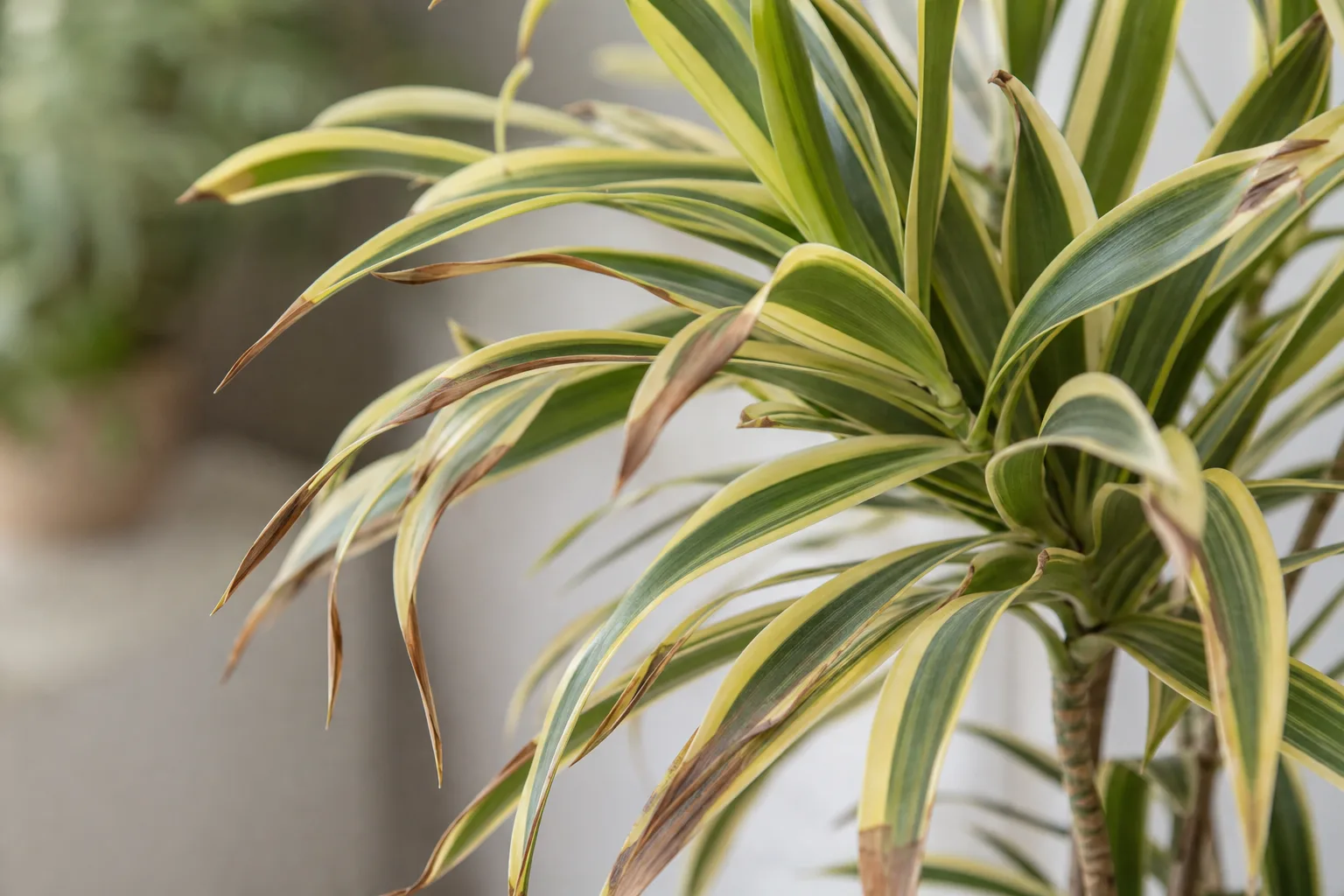
Brown Tips on Dracaena Reflexa: Causes, Checks & Fixes
This guide covers brown tips on Dracaena Reflexa. See also the general Brown Tips guide, watering, and light pages for this plant.
Brown Tips on Dracaena Reflexa: Causes, Checks & Fixes
Quick answer
Brown tips on Dracaena reflexa—sold as Song of India, Song of Jamaica, or plain pleomele—show up as dry, papery necrosis on the narrow tips or cream-colored margins of lance leaves packed in spiral rosettes atop flexible stems. Unlike the thick canes of corn plant (Dracaena fragrans), reflexa concentrates many slender blades in each whorl, so water chemistry and desk-level dry air can brown several tips at once while stems still feel pliable and woody.
The usual indoor drivers are fluoride and soluble salts in tap water, low humidity near heat vents and bright windows, letting the top 2 inches of mix go bone-dry between drinks, and direct sun on variegated tissue. For how margin burn works on houseplants in general, see our brown leaf tips guide. On reflexa, separate crown-first tipping on firm flexible stems (fluoride and salts) from a light pot with dusty mix throughout (drought) and from bleached patches on the window-facing side of the rosette (sun scorch).
First step: use rainwater, distilled, or reverse-osmosis water exclusively for four to six weeks and inspect the next spiral rosette at each stem tip. If those newest lance leaves open with clean margins, tap-water fluoride or salt buildup was likely the main issue. If crisping continues with good water, move off heat paths and check humidity before repotting, pruning hard, or feeding.
What brown tips look like on spiral Song of India rosettes
Reflexa carries narrow, glossy leaves in whorls around stem tips—often dark green with broad yellow or cream stripes on Song of India forms, or darker green with paler bands on Song of Jamaica. Tip burn on this silhouette has recognizable patterns:
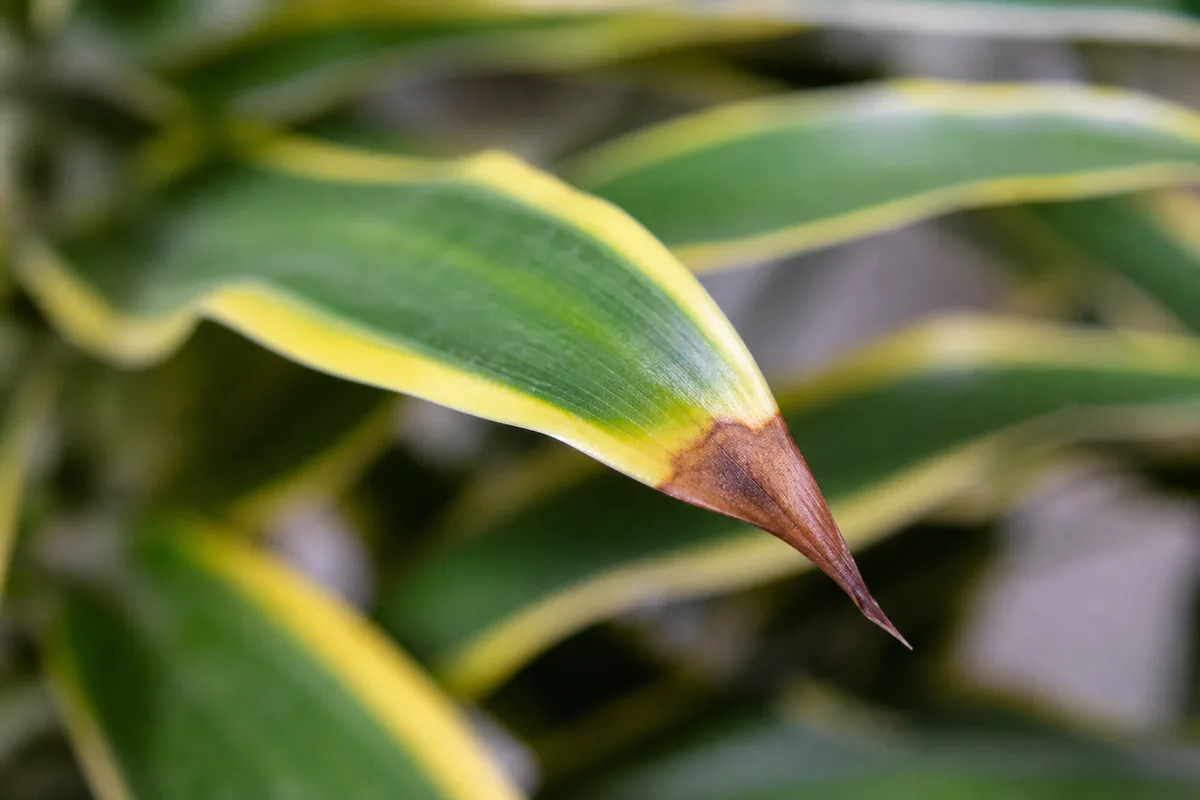
Brown tip symptoms on Dracaena reflexa — compare crisp margin tissue with healthy variegation on the same lance leaf.
- Fluoride or salt burn (most common indoors) — Tan to dark brown necrosis at the leaf tip or along the variegated margin, sometimes with a thin yellow halo before dead tissue. Leaves feel firm; flexible stems stay hard when you pinch lightly. Older rosette leaves lower on the branch often show damage first while the top whorl still opens green—until concentrations rise enough to injure fresh growth.
- Low-humidity marginal crisping — Dry tips on many outer lances in a whorl while inner leaves look fine, often in winter beside a radiator, forced-air vent, or single-pane window. Soil moisture often looks normal. See low humidity on Dracaena reflexa when placement aligns.
- Underwatering — Tips crisp while the top 2 inches of mix are bone-dry, the pot feels light, and the rosette may droop slightly. Differs from fluoride burn on moderately moist soil with firm stems—see underwatering.
- Sun scorch on variegation — Bleached or brown patches on leaves facing intense glass, not only the very tip. Reflexa needs brighter indirect light than corn plant to hold stripes, but midday direct sun on a south window can scorch cream margins fast—cross-check the light guide.
- Normal aging — One or two oldest lances at the base of a long stem with minor tip tan on an otherwise stable plant. Low priority if new spiral growth stays crisp.
Worry when every new rosette leaf tips, soil stays wet and sour, or stem tissue softens at the base—not when a single outer leaf near winter heat shows a few millimeters of brown.
Why cream margins brown before the green midrib
Variegated reflexa is built for bright understory light in Madagascar and the western Indian Ocean islands. Indoors, two physics problems dominate tip burn.
Fluoride and salt sensitivity (genus-wide). Both Dracaena deremensis and D. fragrans are very sensitive to fluoride toxicity. Municipal water in many cities adds fluorine near 1 ppm; fluoride is an accumulative poison in foliage that moves with transpiration and collects in leaf margins where tips turn brown and necrotic. Reflexa shares that dracaena chemistry even though its leaves are narrower than corn-plant straps—each lance still exports water to a fine tip.
On Song of India, the exposed cream or yellow band transpires faster than the green center, so margin and tip necrosis often appears on the variegation first. That pattern is easy to misread as “too much sun” when the real driver is tap water plus dry air.
RHS culture for D. reflexa recommends watering moderately in the growing season, preferably with rainwater as plants dislike tap water, and the broader dracaena growing guide notes that fluoride in tap water can damage foliage, causing tips to turn brown, alongside overwatering, underwatering, sun scorch, very dry air, and heat sources such as radiators.
Salt and fertilizer buildup. Hard tap water and heavy feeding leave minerals in the pot. Gardening Know How describes dracaenas as extremely sensitive to excess fluoride and notes that toxicity from irrigation water can progress from yellowing tips and margins to brown as salts build. Pair a water switch with a lighter feed schedule in the fertilizer guide while margins recover.
Dry air at rosette height. Reflexa targets 40–60% RH on the plant hub. Low humidity can form brown tips when water quality is not fluoridated. Spiral rosettes on a tabletop expose many narrow tips to the same dry microclimate at once.
Drought between drinks. PNW guidance notes that excessive drying between waterings can lead to brown tips and margins, especially with heavy fertilizer. Reflexa should dry on the schedule in the watering guide—top 2 inches dry, then a thorough soak—not stay soggy and not desiccate repeatedly.
Reading the top whorl versus lower rosettes on flexible stems
Reflexa’s diagnostic trick is where the narrow leaves brown on each branching stem:
- Newest lances at the spiral tip — Think fluoride, salts, or recent fertilizer on fresh tissue. Stems should feel firm; mix should dry on your normal rhythm.
- Outer lances only in winter — Think low humidity or a heat vent before you repot. Confirm RH beside the foliage.
- Whole rosette limp on light, dry pot — Think underwatering first; soak once, then resume dry-down checks.
- Yellow lower leaves on wet, heavy mix — Not a filter fix—see overwatering and yellow leaves before you chase humidity.
Flexible stems that stay woody while only tips brown usually mean foliar chemistry or air, not immediate root death.
Lookalike symptoms to rule out
| Signal | Fluoride / salt tip burn | Low humidity | Underwatering | Overwatering | Sun on variegation |
|---|---|---|---|---|---|
| Soil moisture | Normal dry-down; moderate pot weight | Normal; often winter heating | Dry 2 in. down; light pot | Heavy, wet days after watering | Often normal |
| Stem feel | Firm, flexible | Firm | Firm until severe drought | May soften at base | Firm |
| Leaf pattern | Brown tips/margins; margin-first on variegation | Crisp tips on many outer lances | Limp whorl; papery tips | Yellow whole leaves on wet mix | Bleached/brown patches facing glass |
| New growth | Clean until salts rise; then crown tips burn | New leaves may crisp at edges in dry heat | Small, curled if chronic drought | Stalled or limp on wet soil | Faded stripes plus scorch |
| First fix | Rainwater/distilled/RO; flush if needed | Move from vent; raise RH | Deep soak when dry | Stop watering; dry down | Move back from direct sun |
When moderate pot weight, firm stems, tap water, and tips-only burn align, start on water chemistry—not a humidity hardware run. When wet heavy pot and yellow lower leaves align, read overwatering first.
How to confirm the cause (5-step inspection)
Work through these checks in order on Song of India.
-
Soil moisture at 2 inches — Push a finger or skewer two inches into the mix near the stem. A moderate-weight pot on evenly moist soil with firm stems and tips-only burn points to fluoride or humidity, not drought. A light, dusty-dry pot with droop means fix watering before water chemistry.
-
Water source — Note municipal tap in a fluoridated area, overnight sitting (chlorine only), and whether you use rainwater, distilled, or RO. Chronic tap without flushing is the leading tip-burn setup on dracaenas.
-
Hygrometer at rosette height — Place a digital hygrometer beside the top whorl for 24 hours. Sustained below 30–40% supports low humidity as contributor or primary driver near heat. Mid-range household RH with tap-water tips still points to fluoride first.
-
Newest spiral growth — Inspect each stem tip. Clean new lances with only older lower tips brown fits progressive fluoride accumulation. Every new leaf opening with burn means water chemistry and possibly humidity need immediate change. Limp new growth on wet soil is not tip burn—check roots.
-
Light and placement — Confirm bright indirect light without hot midday sun on the variegation. Faded stripes plus leggy bare lower stems suggest not enough light; bleached brown patches on the window side suggest scorch.
Confirmed fluoride or salt tip burn: Firm flexible stems, appropriate soil moisture, tips or margins necrotic on narrow leaves, tap or hard water in use, new rosette growth starting to show burn or older tips worsening.
First fix for Dracaena reflexa
Switch irrigation to rainwater, distilled, or reverse-osmosis water starting with the next watering—and hold fertilizer until one or two new spiral rosettes open without fresh marginal necrosis. Standard carbon pitcher filters improve taste but typically do not remove fluoride; alternating tap usually lets marginal accumulation return.
That single change stops new fluoride from entering the root zone. It does not instantly heal old margins. Empty saucers after every drink, use room-temperature water, and follow dry-down targets in the watering guide.
If tips have spread to new crown leaves or you have used tap water for years without leaching, flush the soil during the same week: slowly run several pot volumes of low-mineral water through the mix until it drains freely, discard saucer water, and let the soil return to your normal dry-down before the next irrigation. PNW Handbooks recommend avoiding fluoridated water and treating water by reverse osmosis or charcoal for sensitive dracaenas.
Secondary steps after the water switch (not day one):
- Move the pot away from heat vents and radiators if RH reads below 30–40% at the foliage
- Group plants or use a humidifier targeting 45–55% RH when winter air stays dry
- Trim only dead brown tissue if cosmetic damage bothers you; leave a thin margin rather than cutting into green blade
- Confirm drainage and mix per the soil guide—soggy reflexa rots faster than it recovers from crisp tips
Do not repot, prune every rosette, and change water on the same day—reflexa handles one stress correction at a time more predictably.
Step-by-step recovery by confirmed cause
Fluoride or salt tip burn (most indoor cases)
- Switch to rainwater, distilled, or RO water immediately; label the watering can.
- Flush salts with low-mineral water if burn is spreading or tap use was long-term.
- Hold fertilizer until two new whorls open without marginal necrosis.
- Optionally trim dead tip tissue for appearance; damaged cells will not re-green.
- Flush again every two to three months if any tap or hard water remains in the rotation.
Low humidity contributing
- Confirm RH below 30–40% at foliage height for several days.
- Move away from registers and radiators first.
- Raise local RH through grouping or a room humidifier; misting alone offers minutes of relief.
- Keep low-fluoride water in place—dry air alone rarely explains tips on moist soil in average homes, but it worsens fluoride margins on variegation.
Underwatering overlap
- If soil is dusty dry and the pot is light, deep-soak until drainage runs, then resume dry-down checks.
- Reduce fertilizer until the plant rehydrates.
- After soil moisture stabilizes, maintain the water-source switch if tips persist.
Recovery timeline
Week 1–2 after a water switch: Existing brown tips stay brown; the goal is no new spread on the youngest lances. Older leaves in lower whorls may look unchanged.
Week 3–6: The next one or two spiral rosettes should open with clean margins if fluoride was the primary driver and humidity is adequate. Reflexa grows slowly to moderately—allow extra time compared with fast corn-plant crowns.
Month 2+: Cosmetic old tips remain unless trimmed. Crisp new variegation at stem tips means the fix worked; historic burn on lower branches can stay indefinitely without harming health.
What not to do
Do not fertilize a tip-burned reflexa hoping to push green tissue—salts compound marginal injury. Do not overwater because leaf edges look dry; soggy soil kills this species faster than crisp margins in dry air. Do not assume overwatering when only tips are brown, soil dries appropriately, and stems are firm. Do not rely on overnight tap-water sitting to fix fluoride burn. Do not stack repotting, heavy pruning, and water changes on the same day. Do not trim large sections of narrow leaf into living green tissue. Do not place Song of India in dim corners to “reduce stress”—weak light fades variegation and opens bare lower stems without fixing chemistry.
How to prevent brown tips next time
Prevention on reflexa is water chemistry plus bright indirect light and predictable dry-down, not a rigid calendar.
- Use rainwater, distilled, or RO water year-round if your municipality fluoridates.
- Flush the soil every two to three months with low-mineral water when any tap or hard water is used.
- Water when the top 2 inches dry, then soak until drainage runs—see the watering guide.
- Fertilize lightly during active growth only; skip feed on stressed foliage.
- Keep RH near 40–60% or higher in heated winters; move pots off radiator ledges before margins crisp.
- Inspect crown rosettes monthly—early tip discoloration on new lances is cheaper to fix than waiting until every branch shows burn.
Full species context, propagation notes, and pet-toxicity information live on the Dracaena reflexa overview.
When to use this page vs other Dracaena reflexa guides
Use this page when damage is confined to dry brown tips or margins on firm flexible stems with otherwise normal watering rhythm. Escalate to low humidity when a hygrometer stays low beside the rosette; to underwatering when the pot is chronically light; to overwatering or root rot when soil stays wet and stems soften; and to light when stripes fade or scorch patches face the window.
When to worry
Brown tips alone on firm stems are a comfort and water-quality fix, not a rescue emergency.
Treat as urgent if the stem base softens on wet soil, multiple leaves yellow within days, spider mites coat new growth, or roots are dark and mushy when you unpot—escalate to root rot, spider mites, or overwatering protocols.
Related Dracaena reflexa guides
- Watering — dry-down depth, flush protocol, and seasonal rhythm
- Light — holding variegation without scorching cream margins
- Low humidity — when dry winter air worsens marginal burn
- Underwatering and overwatering — whole-plant wilt lookalikes
- Fertilizer — salt burn accelerator
- Problems hub — full symptom list for this plant
Conclusion
Brown tips on Dracaena reflexa announce fluoride or salt accumulation in narrow leaf margins—often on Song of India variegation—more often than a single bad watering day. Confirm with soil moisture at two inches, water source, RH at the rosette, newest spiral growth, and light placement—then switch to rainwater, distilled, or RO water first, flush if burn is spreading, and hold feed until clean crown leaves prove the chemistry is right. Old browned edges do not heal; success is stable new variegation at each stem tip. When humidity, soggy soil, or yellow whole leaves join the picture, use the linked guides so you fix the primary driver before stacking treatments.