Dracaena Reflexa Light Needs: Bright Indirect Guide
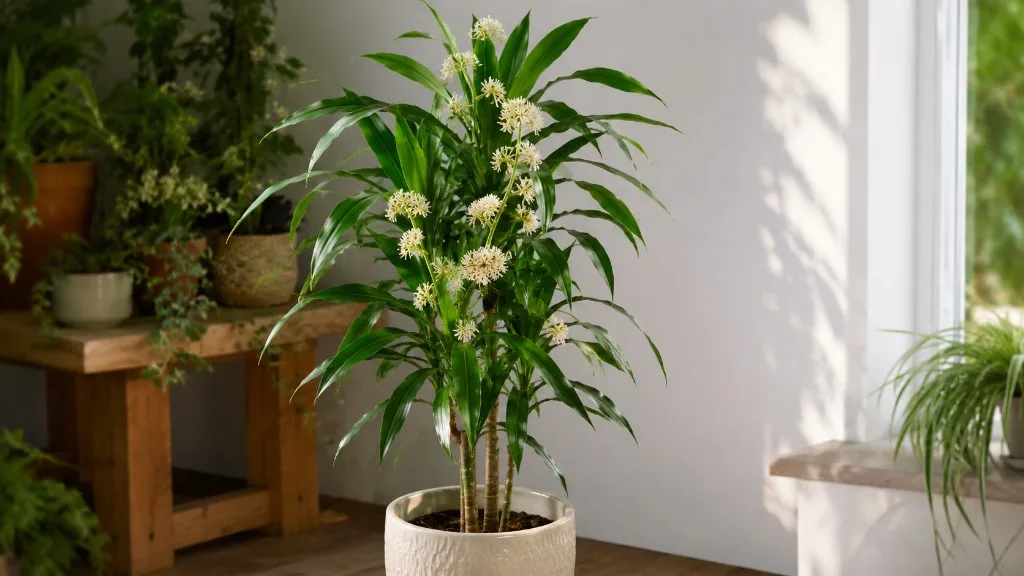
Dracaena Reflexa Light Needs: Bright Indirect Guide
Dracaena Reflexa Light Needs: Bright Indirect Guide
About this guide: Dracaena reflexa — widely sold as Song of India — carries narrow leaves with yellow or cream margins arranged in spiral rosettes on flexible stems. It wants brighter light than corn plant to keep variegation crisp, and it is less drought-forgiving than Dracaena marginata. Treat reflexa as a bright-room foliage plant with steady moisture once the top inch dries, not as a dim-corner survivor.
Dracaena reflexa is sold for its yellow- or cream-edged spiral leaves, not for surviving a fluorescent-lit lobby the way Dracaena marginata often does. Song of India is a multi-stem shrub with flexible woody stems and tight leaf whorls — a different silhouette from corn plant canes or dragon-tree swords. Light is the control dial for whether those whorls stay dense, colorful, and upright, or whether the plant stretches, greens out, and sheds lower foliage until you are left with bare stems and a small tuft at the top.
The practical indoor target is bright, indirect light for most of the day — strong ambient brightness on the leaves without hours of direct sunbeams tracing across the foliage. Missouri Botanical Garden recommends siting container Dracaena reflexa ‘Variegata’ in bright indirect light, protecting plants from direct sun except limited early morning exposure, and notes that in too much shade growth becomes spindly and variegated leaves lose their variegation. That single sentence explains most Song of India disappointments: the plant is not asking for greenhouse intensity, but it is asking for more than “it is still alive in the corner.”
This guide covers how much light reflexa actually needs, why it outranks corn plant and dragon tree on brightness, where to place pots by window direction, when grow lights earn their keep, and how to read warning signs before faded margins or scorched patches become permanent habit.
How Much Light Song of India Actually Needs
Indoors, healthy Dracaena reflexa grows best with bright indirect light across most daylight hours — roughly the brightness you get within a few feet of an east window, or several feet back from south or west glass filtered by sheer curtain or building overhang. NC State Extension describes the species as preferring bright, indirect sunlight and tags it partial shade (direct sun only part of the day, about two to six hours) in outdoor terms — a useful ceiling for acclimated morning exposure, not a license for unfiltered afternoon rays on a windowsill. (NC State Extension — Dracaena reflexa var. reflexa)
Native to Madagascar, Mauritius, and nearby Indian Ocean islands, reflexa evolved as an understory-to-edge shrub in warm, humid climates — brighter than deep forest shade, but rarely exposed to all-day tropical sun on a single leaf surface. (Missouri Botanical Garden) Indoors that translates to filtered brightness: the leaf whorls should look evenly lit from sky and room reflection, not blasted from one compass direction for hours.
Low light is a short-term survival mode, not a display setting. Clemson Cooperative Extension notes that most dracaenas grow best in bright, indirect light, though many tolerate lower light — and that plants moved from dim spots to brighter ones produce thicker, stronger new leaves with faster growth, proving the dim location was limiting. (Clemson HGIC) For variegated Song of India, the cost of dim placement shows faster: cream and yellow margins narrow, new whorls emerge greener, and stems elongate between leaf clusters.
Why Reflexa Needs Brighter Light Than Other Dracaenas
Generic “dracaena tolerates low light” advice misleads Song of India buyers. Three comparisons matter:
Versus corn plant (Dracaena fragrans): Corn plants carry broad green leaves — or a central yellow stripe with substantial green tissue — and tolerate medium indirect light more gracefully. Reflexa’s narrow leaves pack large cream or yellow margins with less total chlorophyll per blade, so each whorl needs more total daily brightness to maintain pigment contrast. LeafyPixels grower data and nursery practice both rank reflexa as needing brighter light than corn plant to keep variegation crisp.
Versus dragon tree (Dracaena marginata): Marginata is the classic office survivor — slim green or pink-edged swords on a cane that persists for years under ceiling fluorescents. Reflexa is less drought-forgiving and less shade-tolerant for color: dim offices that hold a plain marginata will bleach Song of India to green within a few leaf cycles. Marginata’s drought adaptation lets it coast on stored stem water; reflexa in shade uses less water but stays wet longer, inviting root stress if you do not adjust watering on Dracaena Reflexa.
Versus Warneckii stripes (Dracaena deremensis): Clemson calls Warneckii one of the better variegated dracaenas for low light — reflexa is not in that category. Clemson’s species note on Pleomele (Dracaena reflexa) adds a reflexa-specific clue: foliage stays dense to the base only when grown with enough light — otherwise lower whorls die off and reveal bare flexible stems that may need staking as the shrub leans. (Clemson HGIC)
The Short Answer for Busy Growers
If you only remember four rules: (1) Default to bright indirect — east window or filtered south/west, pot close enough that light lands on leaf whorls, not just the floor. (2) Treat Song of India as a variegated bright-room plant, not a dim-corner dracaena. (3) Avoid prolonged direct midday or afternoon sun on the foliage; brief acclimated morning rays may work. (4) Judge by newest whorls — firm leaves with crisp yellow or cream edges mean the current light works; pale, smaller, or solid-green new growth means step brighter before changing fertilizer or soil on Dracaena Reflexa.
Give any placement change 10 to 14 days before deciding it failed. Reflexa responds slowly, and old damaged leaves do not recover — only new spiral clusters tell the truth.
Bright Indirect Light for Spiral Rosettes
Bright indirect light sounds vague until you map it onto reflexa’s spiral whorls. Each stem carries clusters of narrow lance leaves arranged in a rosette; light must reach the outer margin zones where yellow and cream pigment live, not just the green center. A spot that feels bright to your eyes but sits across the room from the glass may still be too dim for margin color — your pupils adapt faster than chlorophyll density rebuilds.
For Song of India, bright indirect means you could read comfortably at the plant without a lamp at midday, but you would not feel sharp heat on your hand from sunbeams hitting the leaves directly. The whorl surfaces should be lit from sky brightness and room reflection, not from a hard sun disk moving across the foliage hour after hour. RHS places dracaena houseplants in bright but indirect light — such as east- or west-facing windows, or south-facing windows shaded by sheer curtains — and warns that too much direct sun in summer can scorch leaves.
This level supports reflexa’s slow to moderate indoor growth to 3–6 feet on multiple flexible stems without forcing etiolated reach toward a distant window. (Missouri Botanical Garden) Bright indirect also preserves the margin color chemistry young leaves show: deep green centers with yellow-lime margins when young, maturing to lighter green with creamy edges on mature foliage in the ‘Variegata’ form.
What Bright Indirect Looks Like on Narrow Leaves
Use the new-growth test on the top whorl of each stem. After two weeks in a candidate spot, the newest cluster should match Song of India’s expected size and edge color. If every new leaf is smaller than the whorl below it, or margins are narrower and greener, the spot is likely too dim even if older leaves still look acceptable.
A simple shadow check helps. On a clear day, hold your hand between the plant and the window at whorl height. A soft, readable shadow with defined edges suggests bright indirect. A faint or absent shadow means low light — survivable briefly, not ideal for variegation. If leaves feel hot to touch within an hour of direct sun, filter or pull back.
Rotate the pot a quarter turn every one to two weeks so flexible stems do not lean permanently toward the glass. Multi-stem nursery pots especially need even light on all sides, or outer stems thrive while inner ones yellow and drop.
Why Filtered Light Beats Hot Window Glass
Window glass concentrates winter sun and heats leaf tissue when rays pass through for hours. A south pane that delivers perfect bright indirect at the room’s edge in January can magnify summer afternoon rays into scorch on the glass-facing half of reflexa’s narrow leaves while the shaded half stays green.
Sheer curtains, light-filtering film, or placement back from the sill convert harsh direct exposure into the filtered bright indirect reflexa prefers. Clemson HGIC links excessive sunlight on foliage to round dry patches and streaks — distinct from thin brown tips caused by fluoride in tap water on many dracaenas. (Clemson HGIC) Filtering peak hours matters more than maximizing total hours for this species.
Morning sun is gentler than afternoon sun because air and leaf temperatures are lower. An east window with one to two hours of soft direct morning light often suits acclimated Song of India better than an unprotected west window with the same duration in July. Missouri Botanical Garden explicitly allows limited early morning sun while cautioning against broader direct exposure and drafts.
Low Light: What Song of India Tolerates vs What It Needs
Song of India can persist in medium to low indirect light longer than a fiddle-leaf fig — but persistence is not the purchase reason. In dim conditions reflexa slows whorl production, stretches between leaf clusters, sheds lower whorls it cannot energize, and reverts margins toward green as the plant rebuilds photosynthetic area in the only zones that work efficiently — the leaf centers.
NC State Extension lists leaf scorch or faded leaves as consequences of direct sunlight, but faded, green-dominated foliage in shade is the mirror problem: not enough light to sustain variegation pigment. (NC State Extension — Dracaena reflexa var. reflexa) Missouri Botanical Garden states plainly that too much shade produces spindly plants with variegation loss — the horticultural phrase for what owners describe as “it turned into a plain green plant.”
Low light also changes the whole care system. A reflexa in correct bright indirect dries its pot on a predictable rhythm and processes water steadily. A dim plant uses less energy, stays wet longer, and becomes vulnerable to root problems if you water on the schedule that worked near the window. Light is the throttle — not an isolated décor choice.
Office and Dim Corner Realities
Commercial interiors sustain plain green dracaenas — especially marginata and Janet Craig corn plants — on overhead fluorescents plus borrowed window light. That setup is extended low to medium light, not bright indirect in the horticultural sense. Song of India in a desk cluster more than eight to ten feet from perimeter glass, relying on ceiling tubes alone, will fade and stretch unless you add a local full-spectrum LED on a timer.
Do not compensate for dim light with heavy fertilizer on Dracaena Reflexa. Unused nutrients accumulate and burn margins — especially painful on a plant already losing variegation from shade. If the location cannot improve, honest options are relocate the pot, add a grow light, or choose a lower-light dracaena species and accept a different look.
Direct Sun and Leaf Scorch on Dracaena Reflexa
Dracaena reflexa is not a direct-sun houseplant for indoor culture. Prolonged direct sunlight — especially midday and afternoon rays through clear glass — damages narrow leaves quickly because margins desiccate and bleach before the plant can acclimate.
Clemson HGIC describes sun damage as round dry patches and streaks from excessive sunlight on foliage. (Clemson HGIC) NC State Extension adds leaf scorch or faded leaves from direct sunlight on reflexa. (NC State Extension) The classic failure mode is moving a nursery-shaded Song of India to unfiltered west glass “because dracaenas like bright light” — bleaching within days on the window-facing half of each whorl.
Brief, acclimated morning sun through east glass is the upper bound most sources allow. Missouri Botanical Garden permits limited early morning sun while requiring protection from broader direct exposure. Bright indirect alone is sufficient for health; direct sun is not required and is often harmful indoors.
Heat compounds light damage. Dark pots on hot sills, radiators below the glass, and reflected heat near patio doors can scorch leaves on moist soil — wilting at midday without underwatering. If burn appears only on the glass-facing leaf half while the rest of the plant looks fine, suspect directional sun or heat, not a watering formula change alone.
Reading Scorched vs Fluoride Brown Tips
Sun-stressed reflexa shows predictable patterns:
Bleached or whitened patches on sun-facing zones indicate photobleaching — common on cream margins that already lack full chlorophyll protection.
Round, dry, tan or brown patches mid-leaf match Clemson’s excessive-sunlight description. They feel papery and crisp, not soft like rot.
Crisp margins appearing within days of a move to a brighter window suggest scorch or heat, especially when only the glass-facing side is affected.
Sudden whorl drop after relocation without soft stems or foul soil often signals light shock from too large a jump — pull back, diffuse, and acclimate more slowly.
Do not confuse these with fluoride brown tips common on dracaenas irrigated with municipal tap water — those tips are usually thin, repeated on many leaves regardless of sun direction, and linked to water chemistry rather than a directional patch pattern. Fixing sun burn requires less light intensity; fixing fluoride requires filtered water per the Dracaena Reflexa watering guide. Misdiagnosis wastes weeks.
Keeping Yellow and Cream Margins Crisp
Variegated Song of India leaves contain zones with less chlorophyll in the yellow and cream margins. Those zones cannot photosynthesize at full capacity, so the green tissue must receive enough total daily light to supply the whole whorl — or the plant simplifies the leaf toward green.
The effect is visible within one to two whorl cycles. A plant moved from a bright east sill to an interior shelf may still grow, but new leaves emerge with narrower yellow edges and deeper green centers until the yellow nearly disappears. The plant is not diseased — it is reallocating chlorophyll to survive.
Bright indirect near the window, not across the room, is the minimum for display-quality Song of India. In winter at higher latitudes, supplement with a full-spectrum LED to prevent fade during short days. Song of Jamaica — the greener reflexa cultivar with less marginal white — tolerates slightly lower light but still looks best with the same bright indirect baseline; do not treat either cultivar as a low-light default.
No fertilizer compensates for chronic shade on a variegated shrub. Match genetics to your brightest realistic spot, not to a dark corner in your floor plan.
Best Window Placement for Reflexa Indoors
Compass direction is a starting guess, not a verdict. A labeled south window blocked by a porch roof may deliver less usable light than an open east window. Reflexa placement succeeds when whorl-level brightness stays in the bright indirect band for roughly 10 to 12 hours of meaningful ambient light during the growing season, with lower totals in winter acceptable if growth slows accordingly.
Place the pot within three feet of the glass on the chosen exposure — not on a distant table where stems see sky but receive little flux. For multi-stem specimens, ensure upper whorls receive light, not just lower stems; a common failure is bright light on the pot rim while top clusters sit in ceiling shadow.
East, North, South, and West Compared
An east-facing window is the most versatile Song of India default. Morning sun is bright but cooler than afternoon sun, providing strong indirect light after soft direct rays pass. Most reflexa perform well east with minimal filtering. Watch cold drafts on the winter sill; light is rarely the problem east.
A north-facing window delivers consistent but lower-intensity light in the northern hemisphere. Reflexa may maintain on north in summer at mid-latitudes but often needs supplementation October through March. Expect slower whorl production and greener new margins; reduce watering to match.
A south-facing window offers the strongest winter sun — excellent for variegated reflexa pulled back from direct rays or behind sheer curtain. In summer, diffuse peak hours or move the pot four to six feet inward when bleaching appears on the glass-facing side.
A west-facing window delivers harsh afternoon rays — high burn risk for unfiltered Song of India. Use sheer diffusion, situate the plant back from the pane, or treat afternoon filtering as mandatory, not optional.
Grow Lights When Natural Light Falls Short
When windows cannot deliver enough brightness — north rooms, winter at high latitudes, interior corners you want to keep — a full-spectrum LED grow light is the most reliable upgrade. Reflexa responds well to supplemental light for holding variegation and preventing stretch; it does not need bloom-stage red spectra or extreme intensity.
Choose a horticultural white LED in the 5000–6500 K range. Position the fixture 12 to 24 inches (30 to 60 cm) above the top whorls depending on lamp strength — close enough for impact, far enough to avoid heat spots on slow-growing stems that sit under the lamp for months.
Run the light 10 to 12 hours daily on a timer to extend effective day length in winter or dim offices. Combine overhead LED with the brightest window available when possible so growth is not one-directional. Adjust using new whorl signals after two weeks: if internodes still stretch and new margins pale, lower the fixture slightly or add one hour — not both at once. If leaf edges bleach only under the lamp, raise the fixture or reduce hours.
Multi-stem shrubs may need wider lamp coverage so outer stems do not lean toward a single point source. For plants you summer outdoors, acclimate again when moving back indoors — winter lamp intensity is for steady maintenance, not forced rapid elongation in December.
How Light Sets the Pace for Watering and Stem Density
Light and water move together on reflexa more tightly than on drought-hardy marginata. Bright appropriate light increases transpiration and keeps soil on the 7–14 day summer dry-down rhythm described in the overview and watering guide. Dim light slows water use; soil that stayed appropriately dry near the window may stay wet for weeks in a moved pot — the classic path to yellow lower whorls and sour mix.
Clemson’s reflexa note ties light to stem architecture: with enough brightness, foliage stays dense toward the base; in shade, lower leaves die and reveal bare flexible stems that may need staking as the shrub gains height. (Clemson HGIC) Missouri Botanical Garden likewise notes that stems may need staking as plants grow taller — more common when light is marginal and stems lean toward the window.
When you increase light, confirm faster dry-down before adding water. When you reduce light, cut back watering before leaves signal distress. Pair light changes with your moisture check — push a finger 2 inches into the mix — not with a fixed calendar.
Moving and Acclimating Reflexa Safely
Reflexa reacts to sudden light jumps more visibly than gradual ones. Moving from a nursery shade house to harsh west glass, or from a dim office to a bright east sill without transition, produces whorl drop, curl, scorch, or stalled new growth even when the destination is correct long term.
Acclimate over 7 to 14 days when increasing light:
- Start at the new bright location during the gentlest hours, or keep at the new spot but filter heavily with sheer curtain.
- Increase exposure by 30 to 60 minutes daily or remove one diffusion layer every few days.
- Watch newest whorls and the sun-facing side each afternoon; halt if bleaching appears.
- Increase watering slightly only after confirming soil dry-down speed rises — not preemptively on day one.
When reducing light, expect slower whorl production and possible lower-leaf yellowing over weeks. Reduce water first. Variegation may fade; accept that or add LED rather than increasing feed.
Make one change at a time. Do not simultaneously repot Dracaena Reflexa, fertilize heavily, and move to a new window. Reflexa’s slow feedback loop makes stacked interventions impossible to diagnose.
Warning Signs Your Reflexa Has the Wrong Light
Reflexa reports light problems on new tissue first, but symptoms unfold slowly. Old scorched or stretched leaves will not revert; watch the youngest whorl on each stem. Wait 10 to 14 days after one adjustment before changing water, fertilizer, or pot size.
Too Little Light vs Too Much Direct Sun
Too little light shows as longer gaps between whorls on each stem, smaller new leaves than older ones, pale or solid-green new margins where yellow or cream should appear, strong lean toward the window or lamp, bare lower stems as old whorls drop, and slow recovery after pruning with weak side shoots. Lower-whorl yellowing on moist soil in a dim room often couples low light to overwatering — fix light and dry-down together.
Too much direct sun shows as bleached or whitened patches on sun-facing zones, round dry tan spots and streaks per Clemson’s sun-damage description, crisp margins appearing days after a move, afternoon curling on the glass-facing side only, and sudden whorl drop after relocation without soft stems or foul soil. Cream margin zones fail first.
Fixes for low light: move closer to glass, remove obstructions, shift to a brighter exposure, add or lower a grow light, and reduce watering to match slower growth.
Fixes for excess sun: pull back from glass, add sheer diffusion, shift to east or filtered placement, acclimate gradually in future moves, and avoid dark pots on hot sills. Do not trim burned patches expecting recovery on those leaves — wait for clean new whorls after light is corrected.
Conclusion
Dracaena reflexa light needs are straightforward to state and easy to miss in practice: bright indirect light is the target, Song of India is not a low-light dracaena, direct sun scorches narrow variegated leaves, and yellow margins need more brightness than corn plant or dragon tree to stay crisp. Place multi-stem reflexa where whorls receive filtered daylight, not just where the pot fits the room layout.
Read new spiral clusters, not nostalgia for old whorls. Move exposure in steps over one to two weeks, pair brighter light with adjusted watering, and separate directional sun burn from fluoride tip burn before you change water chemistry. Get the light band right and Song of India rewards you with dense, colorful stems for years; miss it and even perfect soil produces a green, leggy shrub that looks nothing like the nursery tag promised.
When to use this page vs other Dracaena Reflexa guides
- Dracaena Reflexa overview — Whole-plant context: native range, toxicity, and how light fits the full care picture.
- Dracaena Reflexa watering — Dry-down timing, fluoride, and overwatering signs once light placement is settled.
- Dracaena Reflexa soil — Mix and drainage when soggy soil in dim light is part of the problem.
- Dracaena Reflexa fertilizer — Feeding only after light and water are stable; not a fix for shade fade.