Dracaena Reflexa Fertilizer: When, How, and Mistakes
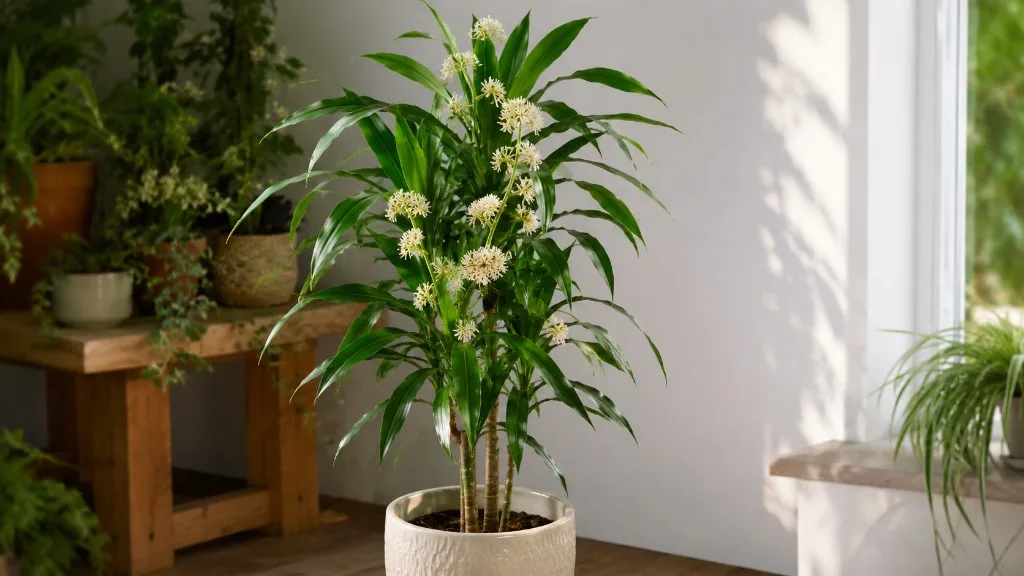
Dracaena Reflexa Fertilizer: When, How, and Mistakes to Avoid
Dracaena Reflexa Fertilizer: When, How, and Mistakes to Avoid
About this guide: Dracaena reflexa — widely sold as Song of India — carries narrow leaves with yellow or cream margins arranged in spiral rosettes on flexible stems. It wants brighter light than corn plant to keep variegation crisp, and it is less drought-forgiving than Dracaena marginata. Treat reflexa as a bright-room foliage plant with steady moisture once the top inch dries, not as a dim-corner survivor.
A Song of India that develops crispy leaf margins right after you start feeding is not being dramatic — it is reacting to dose, timing, or fluoride in the formula. Dracaena reflexa fertilizer should be a small seasonal supplement during active growth, not a year-round growth booster. This slow-to-moderate shrub from the Indian Ocean islands evolved in lean, well-drained soils and tolerates missed feeds far better than excess salts. The practical path is simple: dilute balanced liquid fertilizer in spring and summer only, on moist but not soggy soil, while respecting the genus-wide fluoride sensitivity that makes brown tips the default complaint on municipal tap water.
Unlike thick-cane corn plants or ultra-lean dragon trees, reflexa grows as bushy spiral rosettes on flexible stems that need steady light and moisture before they can use nutrients efficiently. The sections below cover when Song of India actually needs food, which formula to choose, how variegation and placement change the schedule, and how to recover when salts or fluoride push past the leaf margins.
Why Song of India Needs Light Feeding, Not Heavy Doses
Dracaena reflexa is not a heavy feeder. Its slow to moderate indoor growth — typically 3 to 6 feet (0.9 to 1.8 m) tall in a pot over several years according to NC State Extension — runs on a conservative metabolic budget compared with fast vines like pothos. In native range across Madagascar, Mauritius, Mozambique, and nearby Indian Ocean islands, reflexa grows as an understory to open woodland shrub with periodic rain, not constant nutrient flooding.
Potting mix loses nitrogen, potassium, and trace elements as you water and as roots absorb what they need. A light balanced supply keeps spiral leaves deep green and yellow margins crisp without pushing soft, pale growth the plant cannot sustain. Excess fertilizer does not speed reflexa into a tree overnight — it accumulates as soluble salts, stresses roots, and shows up as burned leaf tips and margins. Clemson HGIC notes that dracaena leaf tips and margins may burn or yellow when plants are fertilized too heavily.
Spiral Rosettes and Slow Indoor Growth
Song of India’s narrow, reflexed leaves in spiral clusters have less total photosynthetic area per stem than a broad corn-plant rosette. That geometry matters for feeding: reflexa converts nutrients into new spiral whorls slowly, and variegated zones carry less chlorophyll than the green tissue. In dim corners, the plant uses even less fertilizer — salts build while variegation fades. Bright Dracaena Reflexa light is the prerequisite that makes feeding worthwhile; fertilizer cannot replace photons or restore stripes on its own.
Reflexa is also less drought-forgiving than Dracaena marginata. Steady moisture culture — without waterlogging — keeps roots active enough to absorb dilute feeds. Feeding bone-dry soil or chronically soggy mix both fail: dry roots cannot take nutrients, and wet anaerobic roots cannot process them safely.
When to Fertilize Dracaena Reflexa
Dracaena reflexa fertilizer belongs in the growing season only — roughly spring through late summer in temperate climates, or whenever your plant is visibly pushing new spiral whorls in a warm, bright room. Longer days and active transpiration trigger new leaf clusters at stem tips; that is when roots take up water and nutrients efficiently.
Outside that window, growth slows even if your thermostat stays warm. Fertilizer applied during the slowdown does not disappear — it concentrates in the mix and raises salt index. PNW Handbooks link excessive drying between waterings combined with over-fertilization to brown tips on dracaena, a pattern that often surfaces weeks after the actual mistake.
Before every feed, confirm active growth: a fresh whorl unfurling, a new lateral shoot on a pruned stem, or visibly expanding leaves at the spiral tip. If your reflexa has not added growth in six weeks or more, skip feeding regardless of the calendar.
Spring and Summer Active-Growth Window
NC State Extension’s Dracaena reflexa profile recommends fertilizing monthly with a balanced liquid fertilizer during spring and summer months — aligned with Clemson HGIC guidance to feed dracaenas once a month in spring and summer. For most indoor Song of India plants, that translates to every four to six weeks at half label strength, not full-strength monthly doses designed for faster species.
In early spring, wait for the first visible new whorl before the first feed. Roots wake before top growth is obvious, but applying fertilizer before the plant shows new leaves adds salts the root zone is not yet using efficiently. Peak feeding runs from late spring through midsummer when spirals add leaves steadily in bright indirect light.
Why to Pause Completely in Fall and Winter
From late autumn through early spring, stop fertilizing Dracaena reflexa entirely in typical living-room conditions. Shorter photoperiod reduces metabolic activity even in warm rooms. Roots transpire less, pots stay wet longer, and unused fertilizer salts accumulate.
Winter feeding is a common hidden cause of tip burn that appears in spring — owners blame humidity or water quality when the trigger was a seemingly harmless December dose. If your Song of India sits in a bright sunroom and continues pushing new spirals through winter, one quarter-strength feed may be justified; for most indoor reflexa, the answer is still no. Resume in early spring when the first new whorl opens, starting at half strength.
Best Fertilizer Type for Dracaena Reflexa
The best dracaena reflexa fertilizer is a dilute balanced liquid applied to evenly moist soil during active growth. Liquids dissolve completely, distribute through the root zone, and let you control dose — critical for a salt- and fluoride-sensitive container plant.
Balanced means nitrogen (N), phosphorus (P), and potassium (K) in roughly equal proportions. Houseplant liquids labeled 10-10-10 or 20-20-20 work well for foliage-focused Song of India when diluted to half strength. Reflexa rarely flowers indoors, so high-phosphorus bloom boosters add salts without benefit.
Avoid slow-release pellets in small pots unless you understand their release curve — one heavy application can supply months of nutrients reflexa does not need. For most owners, liquid at half strength on a clear monthly-or-so schedule is simpler and easier to diagnose when something goes wrong.
Balanced Liquid NPK at Half Strength
These ratios perform well for indoor D. reflexa when cut to half the label strength (or further for newly repotted plants):
- 10-10-10 — widely available balanced foliage formula
- 20-20-20 — same balance at higher concentration; dilute aggressively
- 3-1-2 or 5-5-5 — slightly nitrogen-forward options that support leaf color without excess phosphorus
Micronutrients — iron, manganese, zinc — matter at trace levels for chlorophyll production. Quality houseplant fertilizers include them. If new leaves show interveinal yellowing despite correct Dracaena Reflexa watering and light, consider deficiency only after ruling out fluoride damage and overwatering stress, which mimic similar patterns.
Fluoride, Superphosphate, and Water Quality
Dracaena species are highly fluoride-sensitive. PNW Handbooks describe fluoride as an accumulative poison that moves through the transpiration stream and concentrates at leaf margins, causing necrotic brown tips. Clemson HGIC advises avoiding fertilizers with superphosphate, which often carries high fluorine levels, and keeping soil pH between 6.0 and 6.5 to reduce fluoride availability.
Michigan State University Extension lists dracaena among crops susceptible to fluoride from municipal water, perlite in mix, and superphosphate fertilizers, and recommends growers not over-fertilize fluoride-sensitive plants. For Song of India, combine low-fluoride fertilizer with filtered, reverse-osmosis, or rainwater for mixing and watering when tips persist despite correct feeding.
Fluoride damage and fertilizer salt burn look similar — brown necrotic margins — but salt burn often follows a heavy feed, while fluoride injury worsens gradually across months of tap-water irrigation. Existing brown tissue does not green up; only new spiral leaves tell you the fix worked.
How Often to Feed Song of India Indoors
During active growth, fertilize Dracaena reflexa every four to six weeks with half-strength balanced liquid, matching extension monthly guidance when doses stay dilute:
- Every 4 weeks — reflexa in bright indirect light actively adding spiral whorls
- Every 5–6 weeks — moderate office or living-room light, steady but slower growth
- Every 6–8 weeks — larger pots, cooler rooms, or plants recovering from stress
- Not at all — fall through early spring, or anytime growth has stalled
Variegated Song of India in strong light uses nutrients faster than the same plant in a dim corner — but dim plants should get less food, not more, to avoid salt buildup without growth to absorb it. Match frequency to new leaves, not guilt about a calendar reminder.
After Dracaena Reflexa repotting, wait four to six weeks before feeding. Fresh commercial mix often contains starter fertilizer, and disturbed roots need time to re-establish.
Step-by-Step: How to Feed Dracaena Reflexa Safely
Follow this sequence each feeding to minimize root burn:
Confirm season and growth. You are in the spring–summer window and see a new whorl or expanding spiral leaves. If not, skip.
Check soil moisture. Never feed dry soil. Water with plain water the day before, or feed immediately after a regular watering when the top inch has dried but the root ball is evenly moist — the reflexa rhythm described in the watering guide.
Mix at half strength. Measure from the product label, then cut the dose in half. Use a dedicated spoon or syringe.
Apply to soil only. Pour slowly over the mix until a little runs from drainage holes. Avoid splashing leaves — foliar feeding is unnecessary and can spot narrow reflexa foliage.
Empty the saucer. Do not let the pot sit in fertilizer runoff.
Note the date. Prevents accidental double-feeding within the same month.
Once monthly during the feeding season, replace one watering with a plain-water flush — water thoroughly two or three times in succession, draining fully each time — to leach accumulated salts. MSU Extension recommends monitoring soluble salts and leaching when high on fluoride-sensitive crops.
Signs Your Reflexa Is Getting the Right Amount
Correct song of india fertilizer timing shows up as steady spiral growth, not sudden spurts. New whorls match the size and variegation pattern of mature leaves — not oversized soft leaves or stunted pale clusters. Yellow margins stay crisp green-and-cream rather than bleached, and the soil surface stays free of white crystalline crust.
Stems remain flexible but firm, without sudden leaf drop after feeding. Perhaps the best signal is consistency: your reflexa adds a predictable number of spirals each growing season and does not develop fresh tip burn within two weeks of a feed. If the plant looked the same six weeks ago and still looks stable, you are on track.
Over-Fertilizing, Salt Burn, and Brown Tips
Over-fertilizing is the most common reflexa feeding mistake, and symptoms overlap with fluoride toxicity and underwatering — which is why you need the full care picture.
Signs of over-fertilizing or salt buildup:
- Brown, crispy tips and margins appearing soon after feeding
- White or yellowish crust on the soil surface
- Yellowing lower leaves while tips burn
- Sudden leaf drop without obvious pest or cold cause
- Stunted new whorls that emerge small or distorted
Signs linked more to fluoride accumulation:
- Gradual tip burn worsening over months
- Burn concentrated on margins while mid-leaf stays green longer
- Symptoms persisting despite reduced feeding, especially with fluoridated tap water
- Other fluoride-sensitive plants in the same space showing similar margins
Trim old damaged tips for appearance — they will not recover. Watch new spiral growth for clean margins.
How to Flush the Pot After Over-Feeding
If you suspect over-fertilizing, act quickly:
- Stop feeding immediately.
- Flush with low-fluoride water until it runs freely from drainage holes; wait thirty minutes; flush again; repeat once more for severe cases.
- Empty saucers completely after each flush.
- Hold fertilizer four to six weeks until new clean growth appears, then resume at half strength.
- Verify light and drainage — stressed roots in soggy soil cannot recover from salts even after flushing.
If white crust covers much of the soil surface and flushing fails twice, repot into fresh well-draining mix in spring if possible — not during winter dormancy on a weakened plant.
Light, Water, and Soil Before You Reach for Fertilizer
Fertilizer is the last layer, not the first fix. Song of India in bright indirect light photosynthesizes actively and uses feeds efficiently. The same plant in a dim hallway metabolizes slowly — feeding on a bright-window schedule builds salts faster than growth can absorb them.
Watering rhythm matters equally. Reflexa is less drought-tolerant than marginata; overwatered roots in soggy mix cannot absorb nutrients, and fertilizer in anaerobic soil worsens root decline. Underwatered reflexa with damaged fine roots cannot take up nutrients even when present. Feed only when moisture is stable — top inch dry, root ball evenly moist below.
Soil composition affects salt retention. Peat-heavy mixes hold minerals longer; chunky bark-perlite blends leach faster but may add fluoride from perlite — a trade-off Clemson HGIC flags for sensitive dracaenas. Match feeding frequency to your actual pot, mix, and light, not a generic blog schedule.
When NOT to Fertilize Dracaena Reflexa
Hold off entirely when:
- Soil is dry — water first, feed later
- Recent repot within four to six weeks
- Active stress — widespread yellowing, drooping, pests, or cold damage
- Fall, winter, or early spring without visible new growth
- White salt crust on the soil surface
- You fed within three weeks and the plant already looks off
- Sour-smelling or persistently wet mix — fix roots and drainage before nutrients
Fertilizer is not medicine. It will not revive a struggling Song of India and can accelerate decline when roots are already compromised.
Common Song of India Fertilizer Mistakes
Full label strength. Houseplant labels assume faster growers. Reflexa needs half strength minimum.
Feeding the calendar, not the plant. A reminder that fires in November hurts more than a skipped summer dose.
Bloom boosters indoors. Reflexa does not need high phosphorus for flowers you will not get in a pot.
Ignoring fluoride in fertilizer and water. Years of brown tips blamed on humidity when fluoride is the actual cause.
Slow-release pellets in small pots. Unpredictable release causes salt spikes liquid feeding avoids.
Feeding every watering at micro-dose without flushing. Salts still accumulate.
Double-dosing after a missed month. One skip is safe; two feeds to catch up are not.
When to use this page vs other Dracaena Reflexa guides
- Dracaena Reflexa overview — whole-plant context, toxicity, and species identity before feeding details.
- Dracaena Reflexa light — placement and variegation; read this if fading stripes appear after feeding (light may be the real limit).
- Dracaena Reflexa problems hub — symptom-specific guides when fertilizer changes do not resolve leaf damage.
Related Dracaena Reflexa guides
- Dracaena Reflexa overview
- Dracaena Reflexa watering
- Dracaena Reflexa light
- Dracaena Reflexa soil
- Dracaena Reflexa repotting
- Dracaena Reflexa propagation
Conclusion
Dracaena reflexa fertilizer demands restraint more than enthusiasm. Use half-strength balanced liquid — 10-10-10 or 20-20-20 — every four to six weeks during spring and summer, only when spiral rosettes are actively growing, and always on moist soil. Pause completely in fall and winter, avoid superphosphate formulas, and flush monthly with plain low-fluoride water to prevent salt buildup.
Song of India’s variegated spirals need bright indirect light and steady moisture before fertilizer does any good. Brown tips from salts or fluoride are common but preventable; old damaged margins never heal — only new whorls confirm you got the schedule right. When uncertain, skip a feed. Reflexa survives missed nutrients far better than it survives excess.