Dracaena Reflexa Repotting: When, How, and Pot Size
Dracaena Reflexa Repotting: When, How, and Pot Size
Dracaena Reflexa Repotting: When, How, and Pot Size
About this guide: Dracaena reflexa — widely sold as Song of India — carries narrow leaves with yellow or cream margins arranged in spiral rosettes on flexible stems. It wants brighter light than corn plant to keep variegation crisp, and it is less drought-forgiving than Dracaena marginata. Treat reflexa as a bright-room foliage plant with steady moisture once the top inch dries, not as a dim-corner survivor.
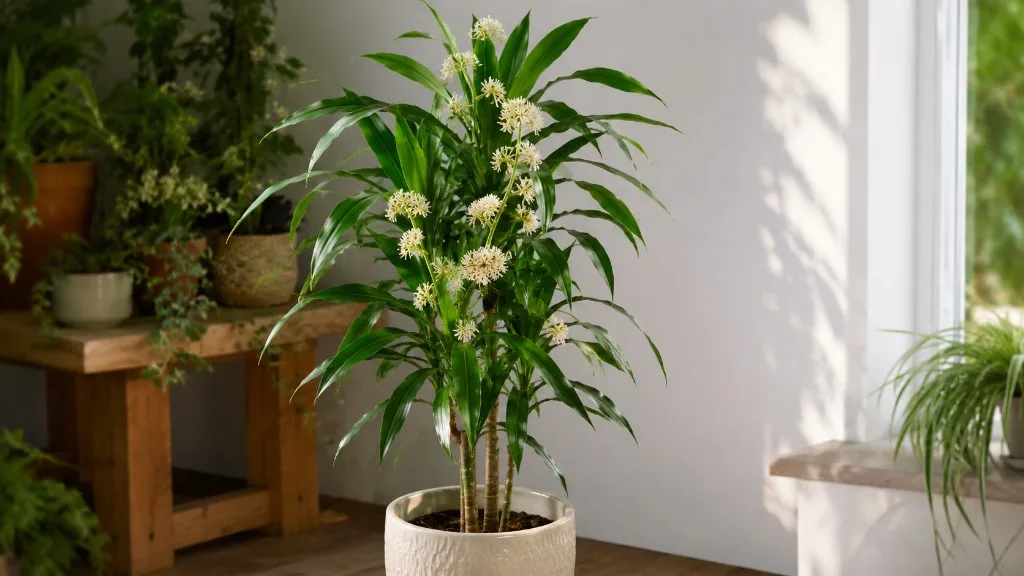
Dracaena Reflexa repotting is the moment you refresh soil, give roots modest new room, and rebalance a bushy Song of India that has been building spiral leaf whorls on flexible stems above a relatively small root zone. Unlike the single thick cane of a corn plant (Dracaena fragrans), reflexa often grows as a multi-stem shrub with leaves arranged in tight whorls — pretty in a bright room, but easy to misread when the plant needs a new pot. Repot on a roughly two-year rhythm in spring, move up only one pot size, use the same airy, well-draining mix from your Dracaena Reflexa soil guide, and keep bright indirect light steady through recovery so variegation does not fade while roots settle.
Done carefully, a reflexa repot is a half-hour of handling and a quiet week of adjustment. Done in an oversized pot, with bare-root washing, or in dim winter light, the same plant can yellow, droop, and sit in wet mix while you wonder what changed. This guide covers when Song of India actually needs repotting, how its shrubby habit changes pot and staking choices, and the post-move watering rhythm that fits a species less drought-forgiving than dragon tree.
Why Repotting Matters for Song of India
Repotting solves problems that show up as leaf symptoms only after the root zone has been struggling for months. Old mix compresses, peat and coir lose pore space, and salts from tap water and fertilizer accumulate near roots — a serious issue on reflexa because the genus is notably fluoride-sensitive, and Clemson HGIC advises keeping soil pH between 6.0 and 6.5 and avoiding potting soils with a very high percentage of perlite when fluoride injury is a concern. Fresh, well-structured mix restores drainage and gives you a clean chance to switch to rainwater or filtered water after the move.
Roots also outgrow the pot on a slow but steady schedule. Dracaena reflexa (synonymous with former Pleomele reflexa) is native to Madagascar, Mauritius, and nearby Indian Ocean islands and typically reaches 3–6 feet indoors as an upright shrub, according to the Missouri Botanical Garden. Multiple stems carry spirally arranged leaves; lower foliage dies back over time, revealing woody stems that may need support. Repotting is when you inspect whether roots still match that canopy — before fast dry-down, tipping pots, or sour-smelling mix force an emergency move.
Multi-stem whorls and a shallow root zone
Song of India looks fuller above the soil than below it. Several stems each hold dense whorls of narrow variegated leaves, so the visual weight sits high while roots occupy a relatively shallow zone at the base — similar to other dracaenas, but with more side stems to jostle during the job. When you tip the plant out, support all stems at the base rather than pulling individual whorls. Flexible stems that leaned together in the old pot may wobble after repot until new roots grip fresh mix; plan a loose stake and soft ties if the cluster rocks when you water.
Because reflexa prefers uniformly moist but not wet soil (Missouri Botanical Garden), the goal after repot is stable moisture without saturation. That is stricter than Dracaena marginata, which tolerates longer dry spells. Pair repotting with your existing Dracaena Reflexa watering routine — check the top 2 inches of mix, not a calendar — and expect the interval to lengthen slightly as soil volume increases.
Depleted mix, salt buildup, and fluoride at the root line
Even good care leaves residue. Fluoride from municipal tap water concentrates at leaf margins and in the root zone over time, producing brown tips that old leaves will not outgrow. A full repot removes crusted, exhausted surface mix and lets you reset water quality. The RHS genus guide recommends ericaceous peat-free compost when repotting dracaenas and watering with rainwater or filtered tap water where possible, because hard tap water can reduce acidity and add fluoride that damages foliage.
Repotting also exposes root rot early — brown, mushy, sour-smelling roots that are far easier to trim in hand than to diagnose from a few yellow leaves alone. Reflexa is vulnerable when mix stays waterlogged; the Missouri Botanical Garden notes root rot may occur if soils are poorly drained or overwatered. Catching firm white tips versus mushy brown tissue during repot tells you whether you are doing a routine upgrade or a rescue.
Signs Your Dracaena Reflexa Needs Repotting
Treat repotting as a root-zone decision, not a leaf cosmetic fix. The clearest triggers match what you will see at the drainage holes and under the root ball.
Repot when you see two or more of these during active growth:
- Roots emerging from drainage holes or circling tightly when you slide the plant partway out
- Soil drying unusually fast — often within a day of watering — because the root mat dominates the pot
- Water running straight through without evenly wetting the mix
- Top-heavy wobble — the multi-stem cluster tips when brushed or watered
- Growth stall despite adequate light and no recent environment shock
- Sour smell, salt crust, or permanently damp surface even when you water conservatively
Most healthy indoor Song of India specimens need a full repot about every two years, with spring as the ideal season — consistent with LeafyPixels plant data and broader RHS dracaena guidance to repot every two to three years into only a slightly larger container.
Root-bound, fast-dry, and top-heavy signals
Lift the pot and look at the bottom first. Roots peeking through holes mean the plant has used the volume you gave it. If the root ball holds a perfect pot-shaped mold with little visible mix on the sides, you are root-bound. Fast dry-down after years of stable habits usually means channels opened along the pot wall or the center turned hydrophobic — fresh mix fixes both.
Top-heavy instability matters on reflexa because several flexible stems multiply leverage against a narrow base. A decorative cache pot that is too light, or years of growth without fresh mix anchoring stems, can leave Song of India one bump away from snapped tissue. Repotting into a slightly wider, heavier pot with fresh backfill often solves tipping better than a taller narrow cylinder.
Yellow leaves that are not a repot cue
Do not repot reflexa just because lower leaves yellowed. Yellowing can mean overwatering, cold drafts below about 65°F (18°C) — the minimum the Missouri Botanical Garden recommends for indoor culture — low light, fluoride tip burn, or natural aging as lower whorl leaves die back to reveal stems. If only tips are brown but soil rhythm and roots are healthy, change water source before disturbing roots.
Repot when the pot, mix, or root mass is clearly limiting. If leaves yellow while soil stays wet and the stem feels soft at the soil line, inspect roots during repot — that pattern can indicate rot that fresh mix and trimming must address, not a cosmetic upgrade.
Best Time to Repot Dracaena Reflexa
Spring through early summer is the safest window for Song of India in most homes. Rising temperatures and longer days align with active root growth, so reflexa can colonize fresh mix before winter slowdown. Plan your two-year check for mid-spring — roughly March through May in the Northern Hemisphere — when you can still inspect roots and recover through months of growth.
Repot on a calm indoor day, keep room temperatures in the 65–80°F (18–27°C) comfort band reflexa prefers, and hold the plant in bright indirect light — not direct sun — for the first week after the move. Variegated reflexa loses stripe contrast in too much shade (Missouri Botanical Garden); dim recovery corners slow rooting and pale new whorls.
Spring through early summer as the default
Active growth means roots explore new mix within two to four weeks after a careful repot when temperatures stay warm and soil stays evenly moist but not soggy. Spring is also the best time to combine repotting with light pruning of discolored lower leaves, because the plant has energy to seal wounds and push new whorls. If early spring passed, early summer still works — just avoid repotting during the hottest week if the plant sits in strong afternoon sun and your home lacks cooling.
When a winter repot is still justified
Winter repotting is a backup. Growth slows, wet mix lingers longer, and disturbed roots sit idle. Skip winter if the plant is only slightly tight but stable. Repot in winter when delay would clearly harm the plant: severe root-binding with repeated wilting, active rot, a cracked pot, or dangerous tipping. Use a modest size increase, warm indoor temperatures, bright indirect light, and let the top 2–3 cm dry slightly further between waterings until new growth returns.
Choosing Pot Size and Stability for Reflexa
The most important choice is diameter, not décor. Song of India wants one step up, not a large jump. Moving from a 20 cm pot to a 22–25 cm pot refreshes mix and adds room; jumping to 35 cm leaves excess wet soil around a shallow root ball — the pattern that causes yellow lower leaves and rot on fluoride-sensitive dracaenas.
Measure the current inner diameter and choose a pot 2–5 cm (1–2 inches) wider, with drainage holes and a profile moderately deep but not excessively tall. Reflexa roots are relatively shallow; a very deep pot can leave a wet lower zone while the top dries.
The one-size-up rule for shrubby reflexa
Dracaenas tolerate being slightly root-bound, and snug roots can help stabilize stems — but exhausted mix still needs refresh on a two-year cadence. The one-size-up rule keeps post-repot watering predictable: soil volume increases modestly, so you water slightly less often without leaving the bottom saturated for a week. If you wait twelve to fourteen days before the top 2 inches dry after repot, the pot is probably too large or the mix too heavy.
Weight, width, and staking flexible stems
A desk-size Song of India in plastic may be fine. A 3–6 foot multi-stem specimen needs base weight: glazed ceramic, terracotta, or a heavy cache with a draining inner pot. Choose a pot wider at the base than the rim when possible. After backfill, gently test each stem — if the cluster wobbles, add a bamboo stake and soft ties at two points along the grouped stems until roots firm up. The Missouri Botanical Garden notes that stems may need staking as plants grow taller.
Best Soil Mix When Repotting Song of India
Use the same well-draining blend you would choose at purchase: peat-free potting compost amended with perlite and coarse bark, targeting pH 6.0–6.5 and moist but well-drained conditions (RHS Song of India profile). A practical repot blend:
- 60% quality peat-free or ericaceous potting base
- 20% perlite or coarse grit
- 20% medium orchid bark or coco chips
Mix dry in a tub before repotting — even distribution matters more than a gravel layer at the bottom. Avoid garden soil, pure cactus mix, and heavy moisture-control blends that stay wet too long indoors.
Moist but well-drained blend with fluoride awareness
Clemson HGIC cautions that dracaenas are very sensitive to fluoride and that very high perlite percentages can worsen injury in some water profiles. For reflexa already showing tip burn, favor moderate perlite (around 20%) and more bark for structure, then water with rainwater, distilled, or RO water after repot. Skip superphosphate fertilizers after repot; Clemson notes they often carry high fluorine.
Full repot — replacing essentially all old mix when roots are bound, compacted, or sour — is appropriate for the two-year refresh. Top-dressing only the top 3–5 cm can reduce surface salts between full repots if bottom roots are not yet circling, but it will not fix a tipping multi-stem plant or severe binding.
Step-by-Step: Repot Dracaena Reflexa Without Shock
Gather the new pot, pre-mixed soil, clean scissors, a chopstick, optional stake and ties, and a watering can. Work at table height so flexible stems are not bent against a wall.
Step 1: Water 24 hours before repotting so the root ball holds together.
Step 2: Add bottom mix so the root ball will sit with the previous soil line about 2–3 cm below the rim.
Step 3: Tip the plant gently, supporting all stems at the base, and slide it out. Squeeze flexible nursery pots or run a knife around rigid pots if needed.
Step 4: Inspect roots. Trim brown, mushy tissue. Tease outer circling roots outward. Do not wash away the entire ball unless rot forces it.
Step 5: Set the plant so the soil line matches its old position — do not bury stems deeper; buried reflexa tissue rots easily.
Step 6: Backfill with fresh mix, working soil between roots with a chopstick while centering the stem cluster.
Step 7: Water until excess drains; empty the saucer. Place in bright indirect light, shielded from direct sun, for 7–14 days.
Step 8: Stake if wobbly. Hold fertilizer for at least four weeks until new growth appears.
Preparing the multi-stem root ball
Tease to redirect growth, not to destroy fine root hairs. If the bottom is densely matted, slice 1–2 cm off with a clean knife to stimulate white tips — avoid removing more than one-third of root mass unless rescuing rot. For heavy plants, use a second pair of hands so you never yank whorls to free the pot.
Backfill, first watering, and recovery light
Center the cluster so it stands before staking. The first watering settles mix; top up if the level drops. For two weeks, water when the top 2 inches feel dry — expect slightly longer intervals than before. Mild droop or one to two yellow lower leaves in week one is common; worsening wilt on wet mix means rot, oversize pot, or buried stems.
Keep recovery light bright and indirect so new whorls hold yellow or cream margins. Pulling reflexa into a dim corner after repot invites stretch and fading variegation — a common mistake on variegated Song of India that corn-plant repot advice does not emphasize.
Post-Repot Care and Recovery Timeline
Mild transplant shock on reflexa shows as slight droop, paused new whorls, or one to three dropped lower leaves for one to two weeks. The plant should perk after a careful drink and should not smell sour at the soil line. Full root re-establishment typically takes four to six weeks in warm, bright conditions — longer after winter repots or on large multi-stem specimens.
Success looks like firm stems, new leaves with normal variegation, and a stable dry-down rhythm. Resume fertilizer at half strength only after that new growth — not in the first month. If wilting persists beyond three weeks, inspect for rot, buried stems, or an oversized pot. Older burned tips will not green up; watch new foliage and water quality.
Avoid stacking stress: do not repot, prune hard, move to a new window, and fertilize in the same week. If you must propagate stem cuttings from pruning, finish the repot first and let the parent stabilize.
Common Dracaena Reflexa Repotting Mistakes
Oversized pots leave chronic wet soil and yellow lower leaves. Bare-root washing strips uptake hairs and can extend recovery to six to eight weeks on slow reflexa growth. Immediate fertilizing burns tender tips in fresh mix. Narrow, lightweight pots invite tipping on multi-stem Song of India. Pots without drainage holes trap runoff. Repotting for fluoride tip burn alone adds root stress without fixing water — change water first.
Ignoring pet safety during the messy phase: ASPCA lists Dracaena species as toxic to cats and dogs due to saponins. Keep fallen leaves, trimmings, and spilled mix away from pets while you work.
Repotting on day one after purchase is another reflexa-specific trap noted in grower practice — let the plant acclimate unless mix is clearly failing or pests are present. See the Dracaena Reflexa overview for first-month settling guidance.
When to use this page vs other Dracaena Reflexa guides
Use this repotting guide when roots, pot size, or mix structure are the bottleneck — circling roots, fast dry-down, tipping, or sour compacted soil. For day-to-day moisture checks, read watering. For mix ingredients and drainage tests before you buy soil, read soil. For window placement and variegation recovery light, read light. For when to feed after the move, read fertilizer. For stem cuttings after pruning during repot, read propagation.
Related Dracaena Reflexa guides
- Dracaena Reflexa overview — identity, toxicity, and first-month settling
- Soil — mix recipe and drainage tests used at repot
- Watering — top-2-inch dry rhythm after fresh mix
- Light — bright indirect recovery placement for variegation
- Propagation — stem cuttings if you trim during repot
Conclusion
Dracaena Reflexa repotting comes down to a two-year spring check, a one-size-up pot with real drainage, fresh airy mix tuned for fluoride-sensitive Song of India, and bright indirect recovery light that protects variegated whorls while roots settle. Support multi-stem clusters at the base, stake if they wobble, and water when the top 2 inches dry — not on autopilot.
Get pot size, mix, stability, and water quality right and reflexa usually recovers quietly within weeks. Oversize the container, bare-root without cause, or hide the plant in dim light after the move and the same shrub will yellow and stall while wet mix lingers at the bottom. Read roots and base stability, not just leaves, and treat repotting as a targeted root-zone fix — not a reflex every time a lower whorl fades.