10 Small Low-Light Plants for Compact Indoor Spaces
Compare 10 small low-light plants by footprint, growth habit, and care needs, with practical tips for dim rooms, pet safety, and keeping each plant compact.
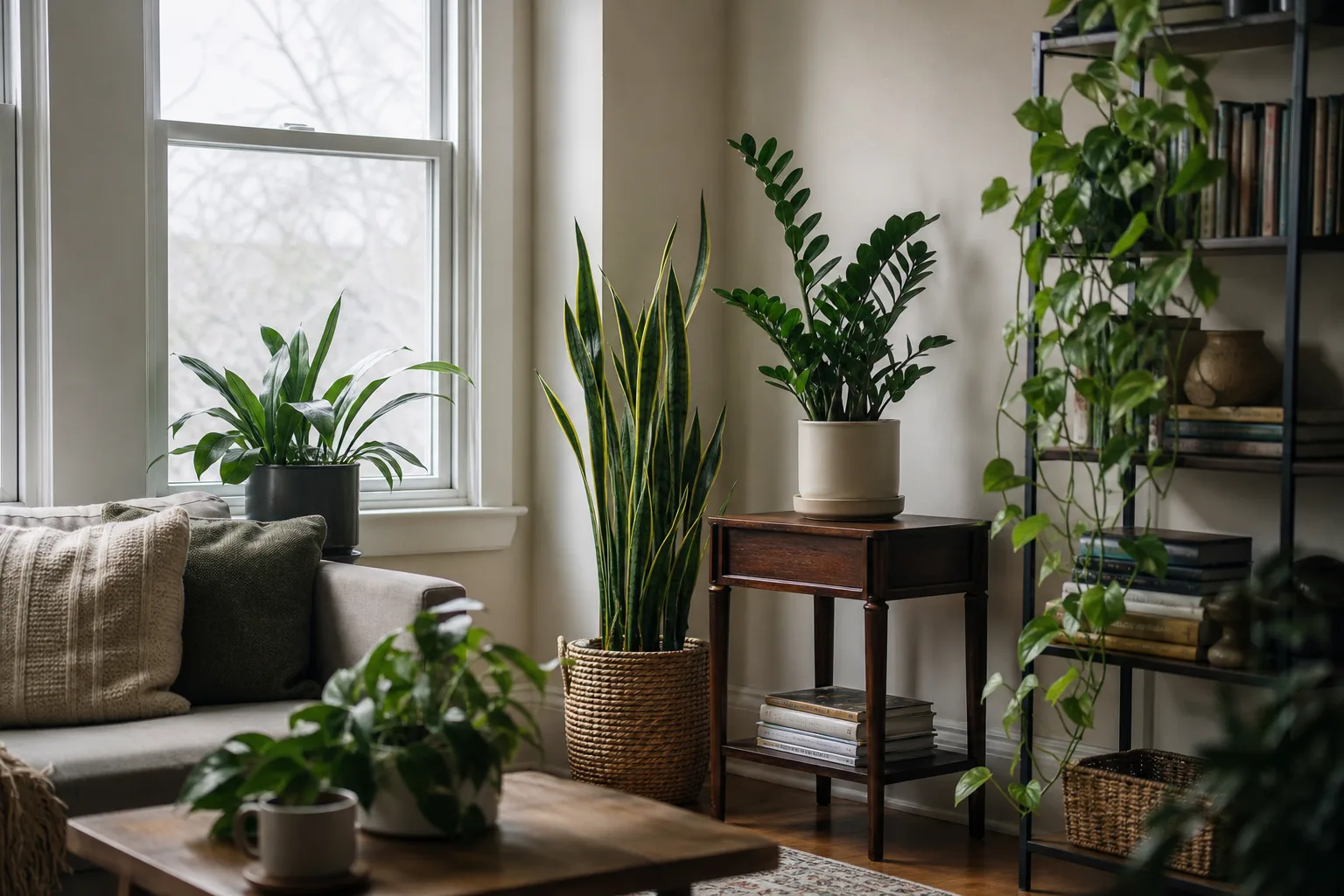
A small apartment, office, or north-facing room can still hold healthy greenery. The trick is to choose a plant for both the light you actually have and the amount of room its mature shape will occupy. Some low-light plants stay in a tidy clump; others begin as desk-sized pots but eventually trail across a shelf or rise above it.
“Low light” also does not mean darkness. Every houseplant needs light for photosynthesis, and a plant that merely hangs on in a shadowy corner may stop making new leaves, stretch toward a window, or lose variegation. The ten plants below can cope with less light than sun-loving houseplants, but each has a different ceiling for how dim the spot can be and still look good.
What counts as low light for a houseplant?
University of Minnesota Extension describes low light as roughly 50 to 250 foot-candles at plant level, while noting that those conditions support slower growth and lower water use. Treat the range as a reference, not a universal cutoff: a cloudy winter window, a north-facing room, and an interior shelf several feet from glass can deliver very different amounts of light. A phone light-meter app can help compare spots, but the phone sensor and app are not a substitute for a dedicated meter.
The practical test is to observe the spot during the brightest part of the day. If you can read there comfortably without turning on a lamp, it may suit the more tolerant plants below; if you need room lighting to see clearly, choose the strongest shade-tolerant options or add a grow light. A room with no window and no plant light is not “low light”—it is no light, and no houseplant can live there indefinitely. Epic Gardening makes the same useful distinction: shade-tolerant plants tolerate less light, but they do not prefer to grow in darkness. (University of Minnesota Extension’s indoor lighting guide; Epic Gardening’s guide to low-light houseplants)
The list includes compact species, but also a few plants that stay small only if you choose a modest starter, keep their growth pruned, or use vertical rather than floor space. A young plant is not necessarily a compact plant. Look at its growth habit and the available width—not just the pot size at the store.
10 small low-light plants with realistic care notes
Use this table to narrow the list before you buy. “Low-light fit” describes how forgiving each plant is in a dimmer room, not whether it grows quickly there.
| Plant | Best small-space use | Low-light fit | Main trade-off |
|---|---|---|---|
| ZZ plant | Desk, side table, narrow floor spot | Very tolerant | Slow growth; toxic to pets |
| Snake plant | Narrow floor space or compact tabletop rosette | Very tolerant | Standard varieties can grow tall; toxic to pets |
| Golden pothos | High shelf or hanging pot | Tolerant | Vines need trimming; variegation may fade |
| Spider plant | Hanging basket or bright shelf | Tolerates shade | Fewer plantlets and thinner growth in dim rooms |
| Dragon tree | Slim floor footprint | Tolerates shade | Becomes tall over time; toxic to pets |
| Nerve plant | Small desk pot or terrarium | Best in moderate indirect light | Needs more consistent moisture |
| Heartleaf philodendron | Shelf or hanging planter | Tolerates low light | Vines spread; toxic to pets |
| Chinese money plant | Tabletop or desk | Better in brighter indirect light | May lean or become leggy if too dim |
| Chinese evergreen | Compact floor pot or sturdy side table | Good low-light option | Variegated colors need more light; toxic to pets |
| Lucky bamboo | Small water vase or narrow tabletop | Tolerates shade | Not true bamboo; toxic to pets |
1. ZZ plant
For the darkest spot that still receives some daylight, a ZZ plant is one of the safest choices for slow, steady foliage. Its upright stems emerge from water-storing rhizomes, and it can tolerate very low indoor light, though it grows more vigorously in bright, indirect light. North Carolina Extension notes its slow growth, fleshy rhizomes, and preference for well-drained potting mix that dries between waterings. (North Carolina Extension Gardener Plant Toolbox: ZZ plant)
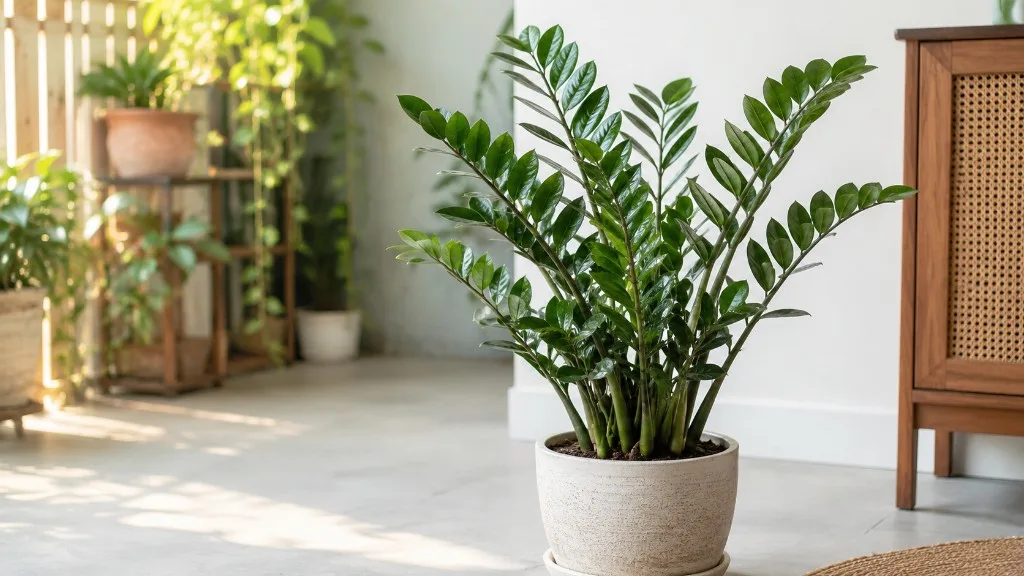
A standard ZZ can eventually make a larger clump than a little desk pot suggests, so select a smaller specimen and give it a few inches of clearance around its leaves. For tight spaces, the compact-growing ‘Zenzi’ type is worth seeking out, but confirm the label because sellers sometimes use cultivar names loosely. Let the potting mix dry substantially before watering; in dim rooms this can take much longer than a weekly schedule assumes. ZZ plants are toxic to cats and dogs if chewed, so place them where pets cannot reach them.
2. Snake plant
If floor space is narrow, a snake plant’s upright leaves take up less width than a bushy plant or sprawling vine. The familiar tall form can grow well above tabletop height, but compact bird’s-nest types form a low rosette that fits on a desk or shelf. The Royal Horticultural Society recommends all-green forms for low-light settings; strongly variegated cultivars generally need a brighter position to keep their markings. (RHS guide to growing snake plants)
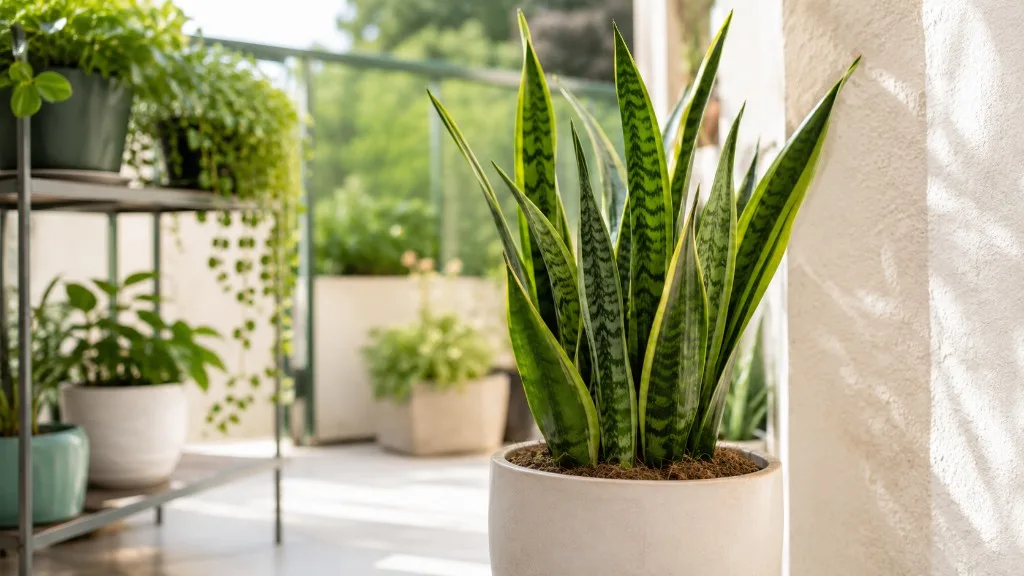
Let the soil dry fully before watering, and use a pot with a drainage hole so water does not collect around the roots. In low light the plant uses water slowly, which makes soggy soil a bigger risk than a short dry spell. The accepted botanical name is Dracaena trifasciata; many labels still use the former name Sansevieria trifasciata. ASPCA lists snake plant as toxic to cats and dogs, so choose a different plant for a pet’s accessible shelf.
3. Golden pothos
Pothos suits a small room when the footprint is vertical: let a few vines trail from a high shelf, then trim them before they reach the floor or tangle with nearby objects. The plant is not inherently small. In a low-light position it usually grows more slowly, but its stems can still lengthen over time. North Carolina Extension describes it as a low-maintenance vine that survives for long periods in low light, while noting that reduced light can diminish variegation. (North Carolina Extension Gardener Plant Toolbox: golden pothos)
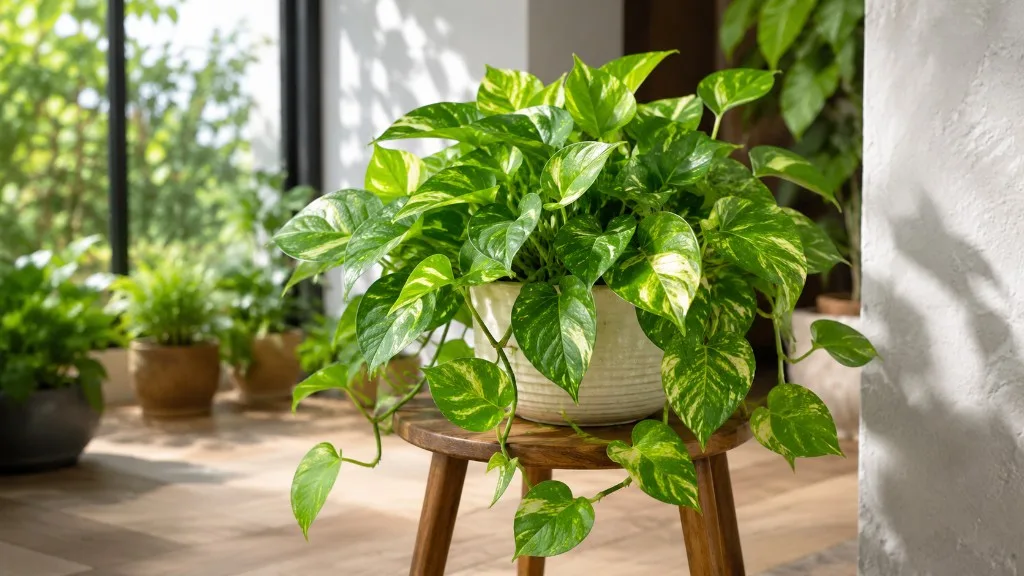
Choose a greener variety if the only available spot is dim; yellow or cream patterns may become less pronounced when the plant receives less light. Allow the potting mix to dry partly, then water thoroughly and empty the saucer. Pruning above a leaf node keeps the plant from becoming a curtain of bare stems. ASPCA lists golden pothos as toxic to cats and dogs because it contains insoluble calcium oxalates, so it is not a safe choice for animals that chew trailing foliage. (ASPCA golden pothos listing)
4. Spider plant
A spider plant starts as a neat fountain of striped leaves and can make a hanging basket feel full without occupying a tabletop. Its arching leaves and hanging plantlets do need clearance, however, so measure the space below a shelf before placing one there. North Carolina Extension says spider plants can tolerate deep shade, but prefer medium light; expect fewer baby plantlets and less vigorous foliage in a genuinely dim spot. (North Carolina Extension Gardener Plant Toolbox: spider plant)
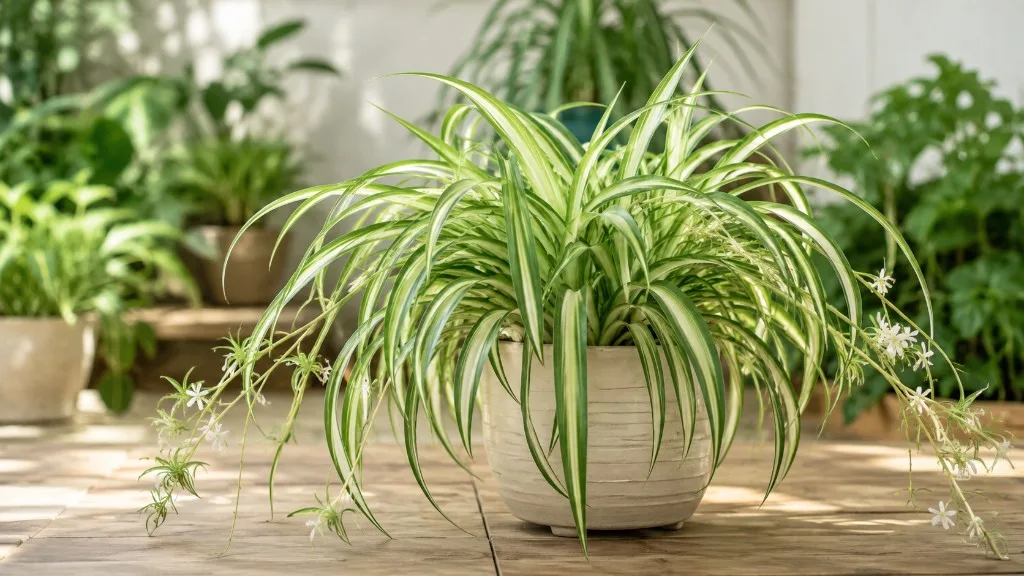
Water when the surface begins to dry, then let excess water drain away. A little more light helps the plant produce a fuller fountain and offshoots, but direct sun can scorch leaves. ASPCA lists spider plant as non-toxic to cats and dogs, which can make it a better option than several other plants on this list; still, chewing any foliage can upset a pet’s stomach, and the dangling plantlets may invite nibbling.
5. Dragon tree
A dragon tree works best when “small” means narrow rather than short. Its upright cane and tufted leaves take up little width, so it can sit beside a desk, in a corner, or behind a chair where a broad plant would be awkward. It is a slow-growing plant that tolerates shade, but it will eventually gain height; buy a smaller cane if you want a plant that stays manageable for longer. North Carolina Extension identifies bright, indirect light as ideal and recommends letting its well-draining mix dry between waterings. (North Carolina Extension Gardener Plant Toolbox: dragon tree)
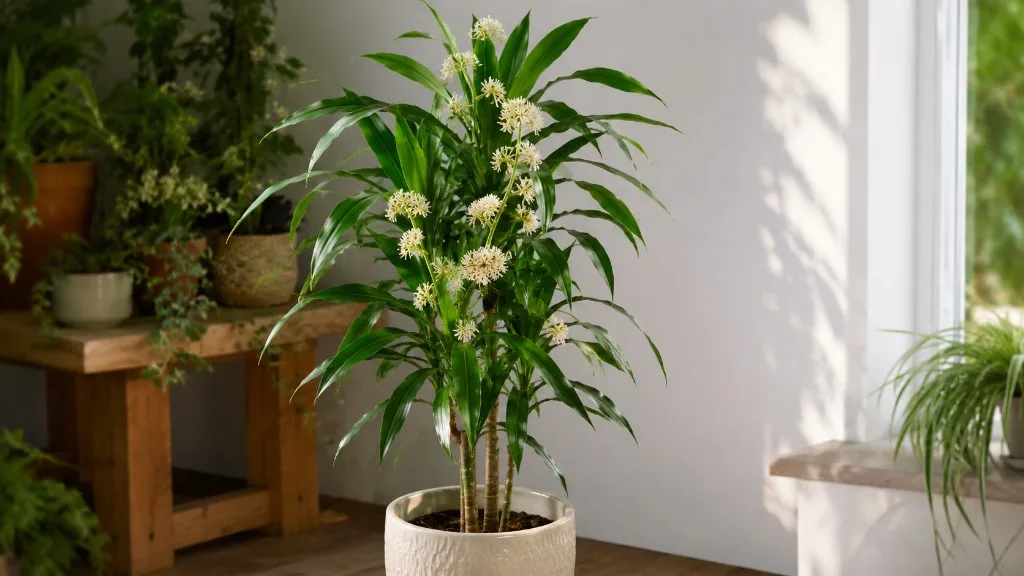
Do not push it into a windowless corner simply because it survives lower light. New growth can become sparse there, and older leaves may drop as the plant reaches toward a brighter source. Rotate the pot occasionally so the crown does not lean one way, and avoid keeping the soil wet. ASPCA lists Madagascar dragon tree as toxic to cats and dogs; keep it out of reach of animals that chew leaves. (ASPCA Madagascar dragon tree listing)
6. Nerve plant
Nerve plant is the truest miniature on this list: its low, creeping stems and bright-veined leaves suit a small desktop pot or terrarium. It stays short, though it may spread sideways, so pinch the growing tips if you want a denser shape. North Carolina Extension describes it as a small, low-growing houseplant that performs in medium light and under fluorescent lighting; it is not the best pick for a nearly dark corner. (North Carolina Extension Gardener Plant Toolbox: nerve plant)
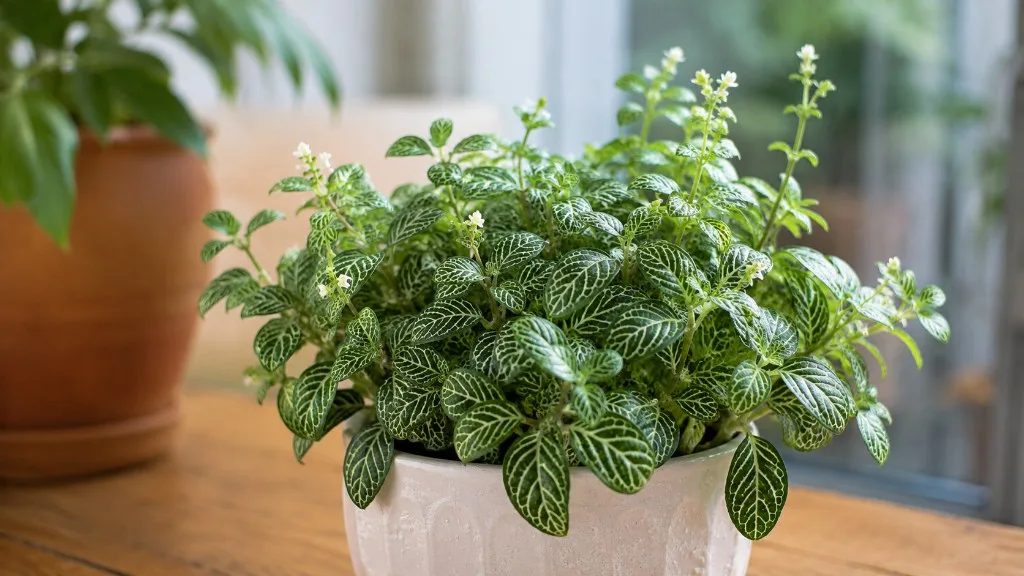
Fittonia needs more even moisture than the ZZ or snake plant. If its leaves droop, check the soil: a dry root ball often perks up after thorough watering, but constantly wet mix can lead to root rot. A terrarium or humid room can help it avoid drying out quickly, but it still needs some light and fresh air. Its pink, red, or white veins may look less vivid in a dim position. ASPCA lists nerve plant as non-toxic to cats and dogs.
7. Heartleaf philodendron
Heartleaf philodendron gives a shelf the softness of a trailing plant, with smaller leaves and a less stiff outline than an upright plant. Like pothos, it needs vertical room more than floor space, and a few careful trims keep it from becoming unruly. North Carolina Extension notes that it can survive for long periods in very low light, but that means slow, sparse growth rather than a lush, fast-growing vine. (North Carolina Extension Gardener Plant Toolbox: heartleaf philodendron)
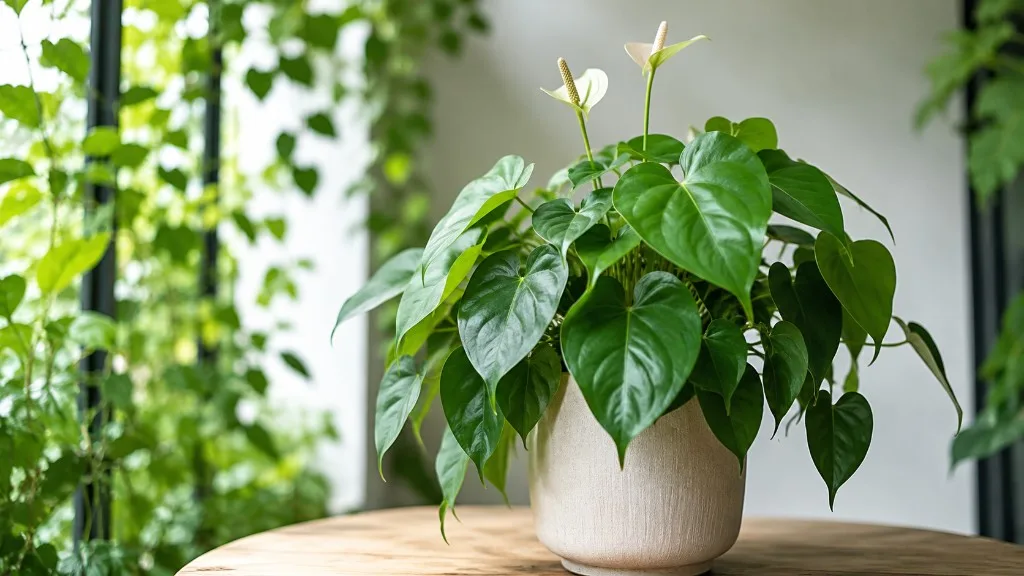
Let the upper soil dry slightly before watering; do not leave the root ball saturated. If the vines become long with large gaps between leaves, move the plant closer to a window or add supplemental lighting rather than feeding it heavily. The extra fertilizer will not replace the light it needs to make compact growth. Heartleaf philodendron is toxic to cats and dogs, so keep it away from pets and children who may chew the leaves.
8. Chinese money plant
The Chinese money plant is a good desk or side-table plant when you can offer moderate indirect light. Its round leaves rise on long petioles from a compact central stem, and a healthy specimen is usually around 8 to 12 inches tall and wide. North Carolina Extension describes its naturally compact shape and notes that inadequate light causes leggy growth, so it is a “small low-light” option only for the brighter end of a dim room. (North Carolina Extension Gardener Plant Toolbox: Chinese money plant)
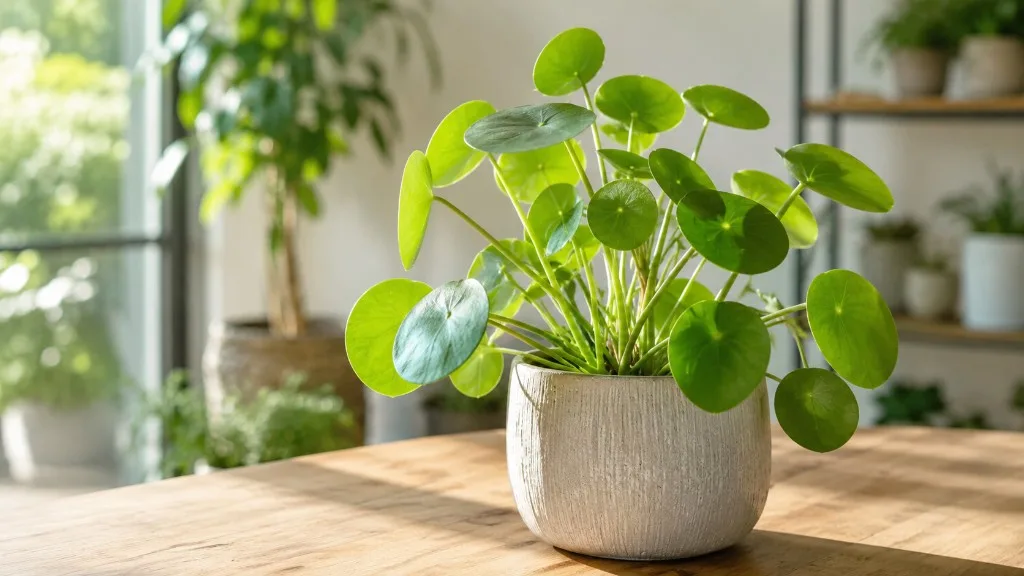
Place it near a north-facing window or a few feet from a brighter window, and turn the pot periodically if the crown leans toward the glass. Let the top portion of the potting mix dry before watering; its fleshy leaves and roots are vulnerable to staying wet. It can produce offsets around the base, which you can remove once they have their own roots if the pot starts to crowd. North Carolina Extension notes it is considered safe for pets and children, but individual plants should still be identified correctly before you rely on a common name.
9. Chinese evergreen
Chinese evergreen is a practical low-light choice if you want a fuller, leafy silhouette without a trailing vine. The genus includes many cultivars; green-dominant selections such as ‘Maria’ are generally a better fit for dimmer spots than vivid pink or red varieties, which need more light to maintain strong color. North Carolina Extension describes Chinese evergreen as an easy houseplant for low-light interiors and notes that it can become leggy with age. (North Carolina Extension Gardener Plant Toolbox: Chinese evergreen)
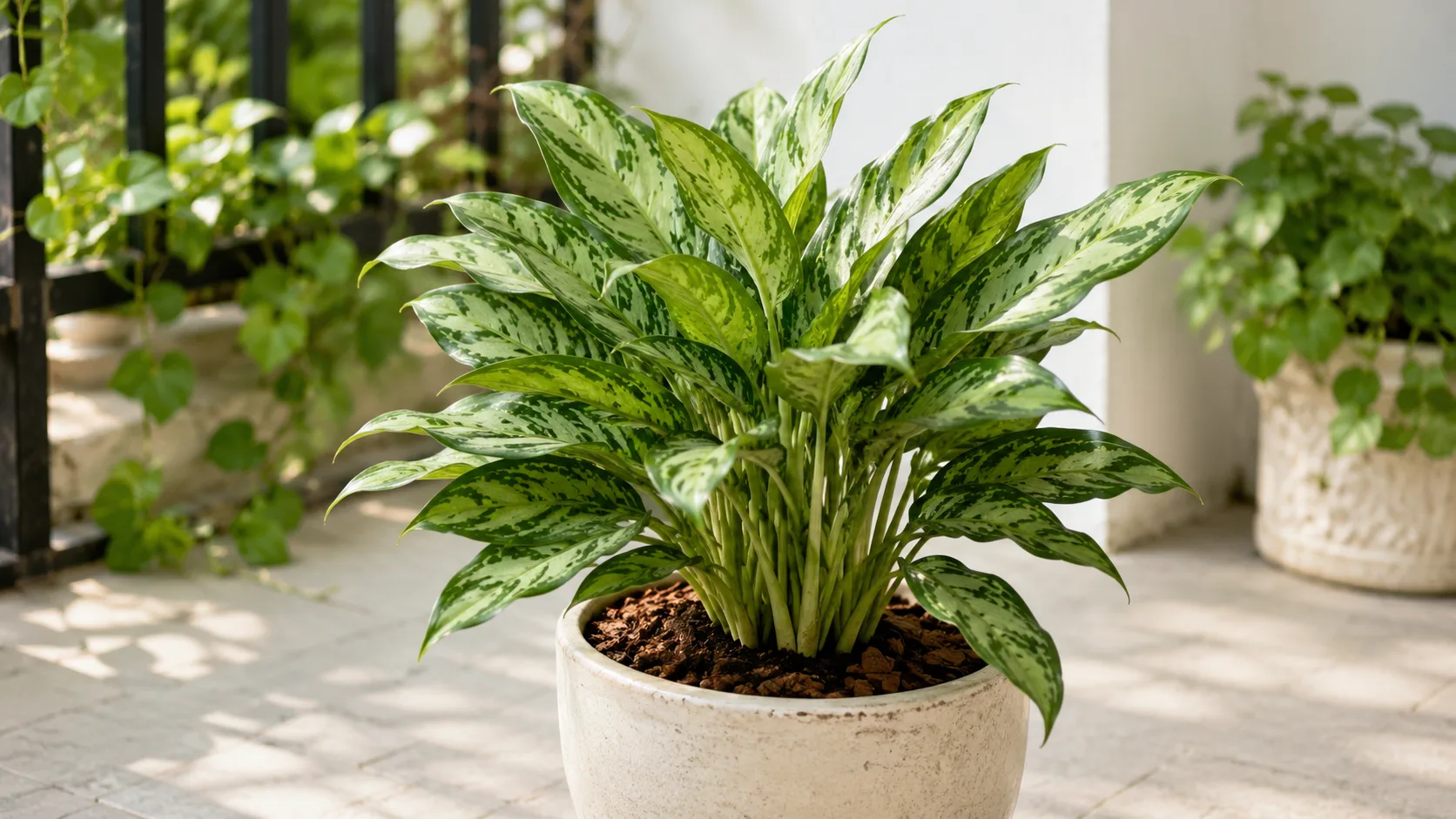
Keep the root zone lightly moist during active growth, but reduce watering in winter or whenever the pot remains damp for days. If the plant becomes bare near the base, a brighter location can encourage more balanced growth; cutting it back is best done only when you are comfortable with how the remaining stems will look. ASPCA lists Chinese evergreen as toxic to cats and dogs because it contains insoluble calcium oxalates, so it is a poor choice for a reachable plant shelf in a pet household. (ASPCA Chinese evergreen listing)
10. Lucky bamboo
Lucky bamboo is not a true bamboo but a dracaena often sold in compact arrangements of short canes. Its upright shape works on a desk or narrow console, and it can be grown in potting mix or in water. North Carolina Extension says it does well indoors in bright, indirect light and can tolerate shade; if grown in water, replace the water weekly and use chlorine-free water. (North Carolina Extension Gardener Plant Toolbox: lucky bamboo)
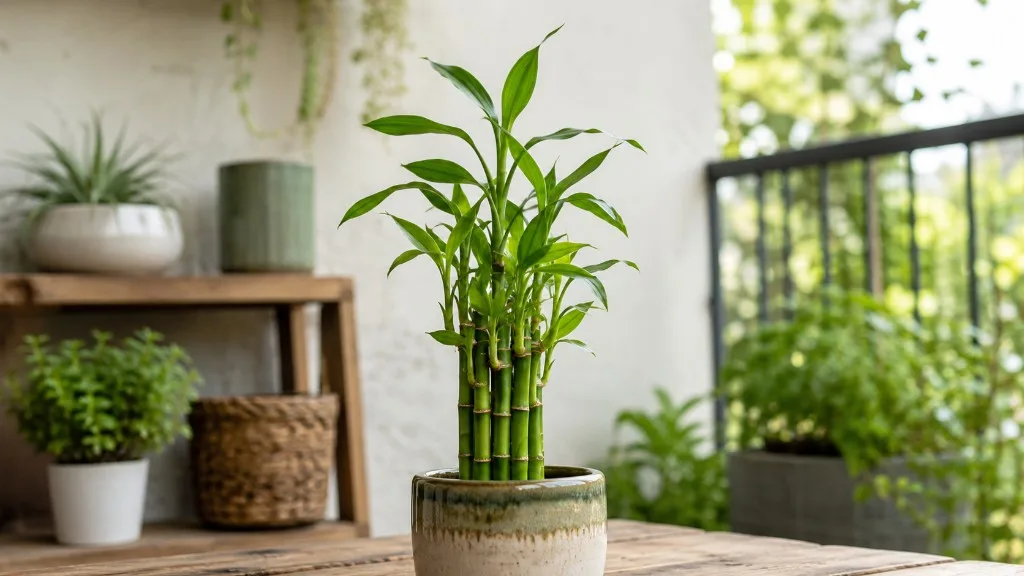
Keep water-grown roots submerged without burying the whole cane, and rinse the container when you change the water. For soil, keep the mix lightly moist but never waterlogged. A short arrangement stays visually compact longer, though the canes and leaves can grow over time. “Lucky” in the common name does not mean pet-safe: North Carolina Extension flags lucky bamboo as toxic if eaten by cats and dogs.
Choose a plant by room and footprint
For a narrow ledge or a small desk, start with a compact ZZ, bird’s-nest snake plant, or nerve plant. They do not send long vines into the room, and the first two tolerate dimmer conditions better than the others. Keep a nerve plant in a spot where you will notice drying soil quickly; it stays small partly because it is less forgiving of neglect.
For a shelf or hanging planter, pothos and heartleaf philodendron make the best use of vertical space. They look compact when young, but “small” depends on pruning them every few months and preventing vines from brushing floors, radiators, or pet-accessible areas. Spider plant is another option if there is room for its arching leaves and plantlets; choose it for the fountain shape rather than expecting it to remain a tiny pot.
For a slim floor accent, consider a dragon tree or standard snake plant, but choose one only if you have overhead clearance. A Chinese evergreen gives a broader, more substantial look while using less width than a spreading vine. If pets share the room, favor spider plant, nerve plant, or a correctly identified Chinese money plant, and check the exact botanical name of any other plant in the ASPCA database before purchase.
Care adjustments that matter in dim rooms
Water by the soil, not by the calendar. Plants in low light photosynthesize and grow more slowly, so they generally use less water than the same species in a brighter window. Before watering, feel the mix at the depth that matches the plant: allow ZZ and snake plants to dry more thoroughly, while Fittonia and lucky bamboo grown in soil need more consistent moisture. When the pot is still damp, wait and check again in a few days.
Use containers with drainage holes for soil-grown plants, and empty saucers after watering. A small decorative cachepot can hide a plastic nursery pot, but lift the inner pot out to water and let it drain before returning it. Without drainage, excess water can sit around roots for days—especially in a cool, dim room—and cause root rot even when the soil surface looks dry.
Keep leaves clean enough to use the light available. Dust is not usually a crisis, but a quick wipe with a soft damp cloth helps keep broad leaves like pothos and Chinese evergreen from looking dull and lets you inspect for pests. Do not fertilize a struggling plant heavily in winter or in a very dim location; fertilizer cannot compensate for insufficient light and can leave salts in a pot whose plant is barely growing.
A simple LED grow light can make a windowless or deeply shaded room workable if it is positioned for the plant canopy and run on a timer. University of Minnesota Extension recommends 12 to 14 hours of supplemental lighting for foliage houseplants; the right distance depends on the fixture’s output and the area it covers. Follow the lamp maker’s placement guidance, and give plants a regular dark period rather than leaving lights on around the clock. (University of Minnesota Extension’s indoor lighting guide)
Signs the spot is too dark
The first warning is often a change in new growth, not a dramatic collapse. Watch for long gaps between leaves, stems leaning strongly toward one side, leaves that emerge smaller than older ones, lost variegation, or weeks with no new growth during the plant’s normal growing season. A slow ZZ plant may simply be behaving normally, so compare the plant with its own previous growth rather than expecting weekly changes.
Move the plant closer to a window if leaves are reaching or the shape is thinning. Increase light gradually if the new position includes direct sun, because foliage adapted to shade can scorch when suddenly exposed to strong rays. If there is no suitable window, use a grow light; moving a plant to a completely dark room and hoping the species is “low light” will only postpone decline.
Yellow leaves alone do not prove a plant needs more light. If the potting mix remains wet, the more likely problem is overwatering; if only the older bottom leaves are dropping while new growth is healthy, some loss may be normal. Check the soil, drainage, and location together before changing several care conditions at once.
Conclusion
The best small low-light plant depends on the shape of the room as much as the light. Choose ZZ or a compact snake plant for a narrow, dim spot; select nerve plant or Chinese money plant for a small tabletop where you can provide brighter indirect light; and use pothos or heartleaf philodendron when you have vertical room and are willing to prune.
Do not confuse slow growth with a promise that a plant will stay miniature, or shade tolerance with the ability to grow without light. Check the spot during the day, choose a plant whose habits fit the actual footprint, and let the soil dry at a pace set by the room. That small bit of matching up front is what turns a plant that merely survives into one that remains attractive and easy to manage.



