Houseplants Without Drainage Holes: Risks and Safer Methods
Can houseplants grow without drainage holes? Learn root-rot risks, cachepot setups, wick methods, and when to refuse sealed pots.
Written by Sai Ananth · Reviewed by Dr. Priya Menon, Botanist and Indoor Plant Specialist
Yes—but “can” is not the same as “should.” Houseplants can survive for a while in pots without drainage holes if you water with extreme restraint and catch every overflow mistake early. Most people lose plants in sealed decorative pots because excess water has nowhere to leave, oxygen collapses in the root zone, and root rot starts before the leaves look dramatic. The Royal Horticultural Society treats drainage holes as essential for container growing, and university extensions give the same practical advice: either use holes or use a drained inner pot inside a decorative outer pot.
If your plant is already wilting on wet soil or smelling sour, jump to Fixing a Plant Already Stuck Without Drainage. Everyone else: use the Quick Answer and method comparison below to pick a safer setup before the next watering.
Quick Answer: Possible, Rarely Ideal
Houseplants can grow without drainage holes only under tight control. The safest approach is almost never planting directly into a sealed ceramic or metal vessel. Put the plant in a nursery pot with holes, then slip that pot into the decorative container—a setup called a cachepot or double potting. Empty any water that collects in the outer pot after every watering.
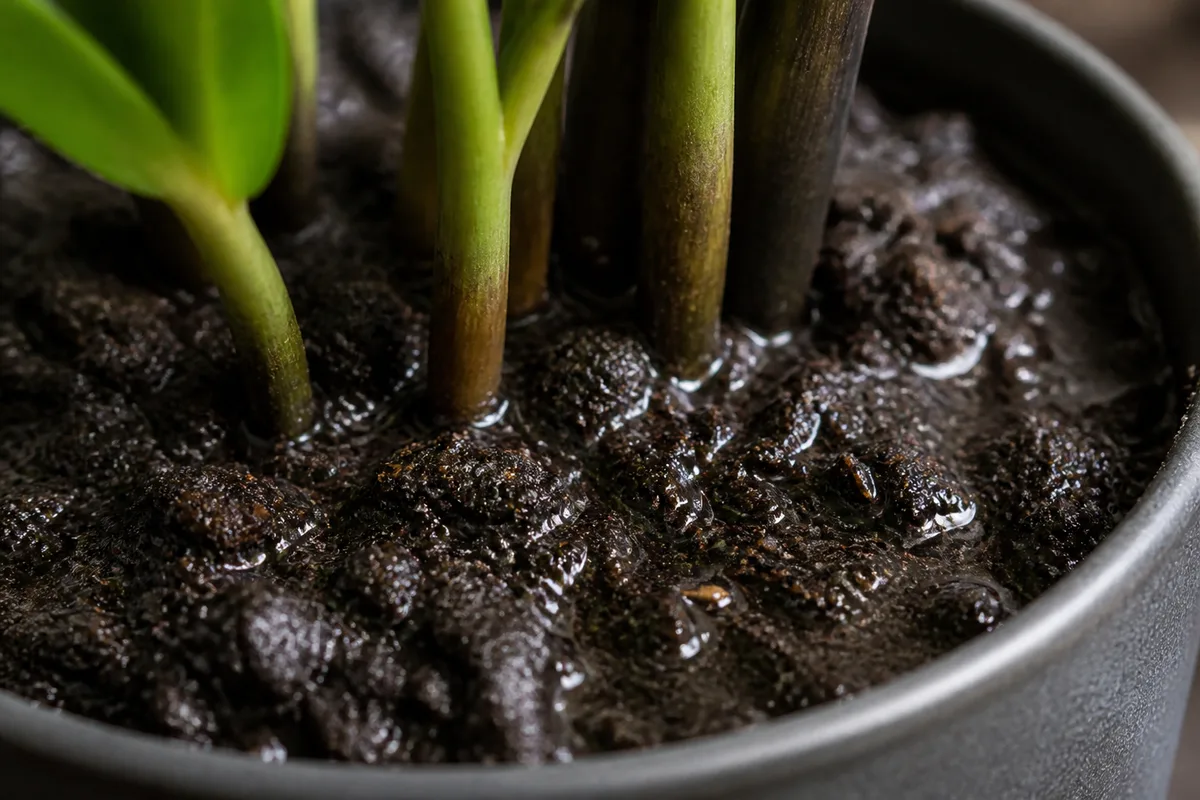
If you plant directly into a no-hole pot, you accept a higher failure rate. You must measure water carefully, check moisture deep in the mix, and never “top off” on a schedule. Virginia Tech Extension notes that plastic pots without drainage holes can create saturated and waterlogged conditions, which can lead to root rot, and recommends drilling holes when the base has none. That is the honest baseline: sealed pots are a design choice you manage around, not a free pass.
For day-to-day watering technique once drainage exists, use a thorough water-and-drain habit rather than tiny sips. The sealed-pot problem is that thorough watering becomes dangerous unless runoff can leave the root ball.
Why Drainage Holes Matter for Roots
Roots need water and air. Potting mix is a matrix of particles and pore spaces. After a good watering, those pores should hold a film of moisture while still leaving air for oxygen exchange. When a pot cannot drain, excess water fills the pores and displaces that air. Clemson HGIC puts it plainly: overwatering is the main cause of death for potted plants because roots surrounded by water cannot take up oxygen and may rot.
Drainage holes do three jobs at once. They let surplus water leave after you irrigate. They make thorough watering practical, so the whole root ball gets wet instead of only the top inch. They also support occasional leaching, which flushes fertilizer salts out of the mix. Without holes, every watering is a closed-system bet that you did not add too much.
Water, Oxygen, and Root Rot Risk
Root-rot pathogens thrive when the root zone stays wet and poorly aerated. Soft brown or black roots, a sour smell, and a plant that wilts while the mix is still wet are classic warnings. UConn Extension explains the container problem clearly—outdoor soil can shed excess water, but a houseplant keeps surplus water in the saucer or cachepot unless you remove it, and that surplus keeps the medium saturated until roots die from lack of oxygen.
Overwatering is often misunderstood as “too much water in one pour.” Virginia Tech Extension reframes it usefully: overwatering is usually about how often you water, not the volume of a single thorough soak—when drainage works. In a sealed pot, both frequency and volume matter because nothing can exit. A generous pour that would be healthy in a drained pot becomes a stagnant reservoir at the bottom of a sealed one.
What Goes Wrong in Sealed Decorative Pots
Decorative pots without holes look finished. That is why they sell. Functionally, they are closer to bowls than plant containers. Many glazed ceramics and metal vessels are sold as décor first, with the expectation—spoken or not—that you will keep a plastic grow pot inside them. Penn State Extension says cachepots are generally not suitable for planting into directly; use them as potholders for a drained inner pot, and remove excess water after watering. Virginia Tech likewise notes that many glazed clay pots lack drainage holes and are intended for decorative use with plastic pots placed inside.
Direct planting into those vessels fails in predictable ways:
- The bottom of the mix stays wet long after the surface feels dry, so finger tests at the top lie.
- Fungus gnats love persistently moist media.
- Salt concentrates because you cannot flush the pot the way Clemson recommends—water thoroughly until excess flows from drain holes into a tray you empty.
- Recovery is harder because you cannot bottom-water or leach without creating a swamp.
- In a drained pot, runoff appears in the saucer and reminds you to dump it. In a sealed pot, the same excess collects as a dark, anaerobic layer you may never see until you tip the pot or pull the plant.
PlantTalk Colorado and Clemson both describe double potting with space or gravel in the outer pot specifically so the inner pot is not sitting in a puddle—because a puddle against drainage holes recreates the sealed-pot problem even when the grow pot has holes. If you already use a cachepot, lift the inner pot after watering. If water has pooled, pour it out. Elevate the grow pot slightly so its drain holes are not sealed against the cachepot floor.
The Gravel Layer Myth
A common workaround is a layer of rocks, pebbles, or broken pottery in the bottom of a sealed pot. The idea sounds logical: water will “drain” into the gravel. In practice, that layer does not create true drainage. Water still has nowhere to leave the container. You have only moved the wettest zone—the perched water—upward so it sits above the gravel instead of at the very bottom. The root ball can still sit in saturated mix.
Extension sources do not all use identical language here, so be precise. Clemson HGIC does mention placing coarse gravel in the bottom of a no-hole pot to create a space for excess water, while warning not to saturate the soil. PlantTalk Colorado also mentions gravel in decorative outer pots for double potting. Those tips are about creating a temporary reservoir buffer—not about making a sealed pot behave like a drained one. Separately, Clemson’s repotting guidance for pots with holes warns against adding a layer of clay pieces or rocks because it can slow water movement through the pot.
The takeaway for home growers is simple: gravel is not a substitute for drainage holes, and it is a weak insurance policy if you water the way most people water. If you want the look of a solid ceramic, keep the plant in a drained liner. Use gravel only as a spacer under that liner so the drain holes stay clear—not as a reason to plant directly into a bowl.
Safer Method Comparison
Use this table to choose a method before you commit soil to a vessel.
| Method | Risk level | Skill / attention | Best for | Worst for |
|---|---|---|---|---|
| Cachepot / double potting | Low if emptied | Low–medium (empty after every water) | Decorative ceramics you will not drill | Anyone who leaves outer pots full for days |
| Drill holes | Low once open | Medium (tools + crack risk on ceramic) | Plastic or sacrificial vessels you own | Tempered glass, antiques, rented décor |
| Wick / true reservoir | Medium | Medium–high (monitor water line) | Moisture lovers + forgetful waterers with visible reservoirs | Succulents, opaque sealed bowls, low light |
| Measured sealed watering | High | High (weight/volume discipline) | Temporary displays only | Long-term culture, beginners, deep opaque pots |
Default to cachepot. Drill when the vessel is yours and safe to modify. Use wick systems only when the reservoir is visible and separate from the root ball. Treat measured sealed watering as damage control, not a lifestyle.
Safer Method 1: Cachepot / Double Potting
Double potting is the default safe answer for decorative no-hole vessels. Grow the plant in a plastic or terracotta pot with drainage holes. Place that pot inside the decorative container. Water the inner pot at a sink when you can, let it finish dripping, then return it to the cachepot. If you water in place, empty the outer pot afterward.
Penn State Extension describes this as the practical path when you cannot drill a decorative container: repot into a drained pot, use the decorative piece as a potholder, leave space under the drainage hole, add a saucer if needed, and remove excess water from the cachepot. Clemson HGIC describes the same two methods—plant directly only when the container has a drainage hole and tray, or double-pot into a more decorative container. UConn Extension stresses emptying saucers or cachepots within about an hour of watering so roots are not left in surplus water.
This method preserves thorough watering, salt leaching, and bottom watering when you need them. It also lets you swap decorative covers without disturbing roots.
How to Set Up a Cachepot Correctly
- Choose an inner pot with open drainage holes and a mix suited to the plant.
- Confirm the outer pot is wide and deep enough for the grow pot plus a little air gap.
- Optionally add a thin spacer (a trivet, pot feet, or a shallow gravel layer) so holes do not seal to the floor.
- Water until the inner pot drains; never leave the grow pot sitting in runoff.
- Check the cachepot weekly for forgotten water, especially after guests water for you.
If the decorative pot is opaque and tall, tip it carefully after watering for the first month until the habit sticks—or better, water the liner at the sink every time. Many “sudden” collapses are just weeks of unnoticed reservoir water. Do not tip heavy ceramic alone if the pot is awkward to lift; take the liner out instead.
Safer Method 2: Drill Holes When You Can
When the vessel is yours to modify, drilling is often cleaner than living with a sealed bowl. Virginia Tech Extension says that if a plastic container has no drainage holes, you may need to drill some yourself. Soft plastics are easy with a standard bit. Ceramic and glazed pots need masonry or glass/tile bits, low speed, painter’s tape to reduce bit wander, light water to cool the bit, and patience to avoid cracking. Penn State likewise says to drill holes if necessary, or else keep the decorative piece as a potholder only.
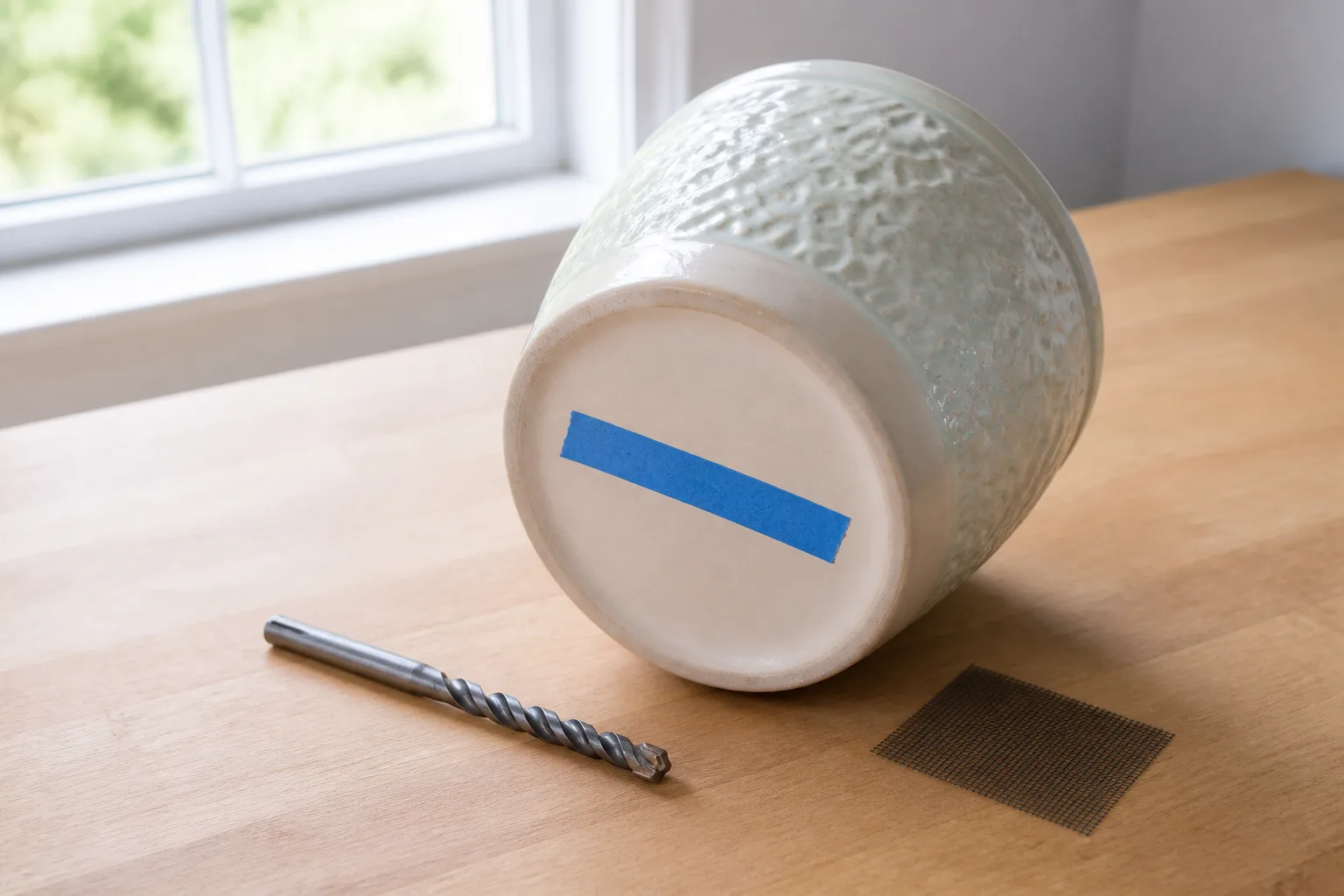
Practical drill notes:
- Start with one or two modest holes near the center, then add more if runoff is slow.
- Do not drill tempered glass, thin brittle antiques, or vessels you cannot afford to crack.
- After drilling, cover large holes with a scrap of mesh or a pot shard so mix does not wash out—Clemson’s transplanting guidance still applies: a small piece over the hole is enough; you do not need a deep rock layer.
- Raise the pot on feet or a trivet so holes stay clear, the same way RHS advises keeping drainage holes unblocked for containers.
If the piece is valuable, rare, or rented décor, do not drill—use a cachepot liner instead.
Safer Method 3: Wick and Semi-Hydro Approaches
Wick watering and some self-watering designs can reduce the feast-or-famine cycle for people who forget plants. UConn Extension even suggests trying a self-watering container or wick system if you are a forgetful waterer. That advice assumes a system designed to hold a reservoir separate from the root ball, with a wick or capillary path the plant can draw from—not a sealed pot of soil sitting in a permanent puddle.
When wick systems help: moisture-loving plants in bright, warm rooms; travel weeks; growers who consistently underwater; clear reservoirs you can see and empty.
When they hurt: drought-tolerant plants; low-light shelves where mix stays wet for weeks; any sealed outer pot that hides a rising water line; beginners who cannot check overflow. If the reservoir overfills into the root zone, you have rebuilt the sealed-pot problem with nicer branding.
Semi-hydro setups (inert media plus a monitored water line) are a different skill set: they can work for some aroids, but they are not a casual retrofit for a cactus in a ceramic bowl. A clear reservoir or a removable grow pot is non-negotiable for beginners. Self-watering planters still need overflow visibility—if you cannot see the water line, treat the system as high risk.
How to Water If You Refuse to Drill
Sometimes you keep a plant in a sealed pot anyway—gift arrangements, temporary displays, or a container you refuse to alter. Water by measured volume and weight, not by habit.
Starting points for a common ~15 cm (6-inch) sealed pot of foliage mix (editorial estimates—adjust for plant and mix):
- Weigh the pot when freshly watered and again when the plant is ready for water; use the lighter weight as your cue.
- For many tropical foliage plants in a modest sealed pot, start with about 60–120 ml (2–4 fl oz) of water, pause 10 minutes, then tip the pot to check for free water at the bottom.
- Stop while the mix is evenly moist, not shiny-wet. Check moisture several inches down, not only at the surface.
- Prefer plants that forgive brief dryness over plants that demand constant moisture.
- Skip fertilizer or use a very dilute dose, because you cannot leach salts well.
- Set a calendar reminder to tip and inspect the bottom zone weekly.
This is damage control, not best practice. If the plant is expensive, rare, or already stressed, move it to a drained liner the same day. Dense peat mixes and chunky aroid bark both change the numbers: peat holds more water longer in a sealed bowl; chunky mix can look dry on top while a puddle still sits underneath—so always tip-check.
Plants That Tolerate No-Hole Setups Better (and Worse)
Tolerance is relative. No common houseplant needs a sealed pot. Some merely die slower when you make a watering mistake.
| Relatively more forgiving (still use a liner if you can) | Poor candidates for direct sealed planting |
|---|---|
| Moisture-loving foliage in small volumes you can weigh easily (peace lily, pothos) | Cacti, jade, most succulents |
| Temporary gift arrangements you will convert within weeks | Snake plant, ZZ plant, Adenium / desert rose |
| Bright rooms with fast dry-back | Large specimens in deep opaque vessels |
| Seedlings and fresh cuttings that need oxygen-rich media |
University of Georgia Extension notes that containers without drainage holes can work for peace lily, which likes plenty of water, while warning they should not be used for cacti and succulents. That is a moisture-preference comment, not permission to ignore reservoirs. If you love the ceramic, keep the fussy plant in a drained inner pot. Let the outer pot stay empty décor.
When to Refuse a No-Drainage Pot
Refuse planting directly into a no-hole pot when any of these are true:
- The plant is a succulent, cactus, or other dry-down species.
- You are a new plant owner still learning soil checks.
- The vessel is large, deep, or opaque so you cannot judge water at the bottom.
- The plant already shows soft stems, mushy roots, fungus gnats, or a sour soil smell.
- You cannot commit to emptying a cachepot after every watering.
- Guests, kids, or office watering habits make “just a little water” unreliable.
- The vessel is tempered glass, a valuable antique, or décor you are not allowed to modify—and you also will not use a liner.
In those cases the kind answer is no. Buy or keep a liner pot. Or drill. Or choose a different container. Attractive dead plants are still dead plants.
Signs Your No-Hole Setup Is Failing
Watch for wet mix that never lightens, fungus gnats hovering at the surface, yellowing lower leaves with a heavy pot, wilting while the soil is still damp, soft blackened roots, mold on the mix, or a swampy smell when you tip the pot. Drooping after you watered yesterday is not always thirst—it is often broken roots that can no longer take up water. Clemson notes that overwatering and underwatering symptoms can look similar because both damage roots. In a sealed pot, assume excess moisture first and confirm by checking the bottom of the root ball.
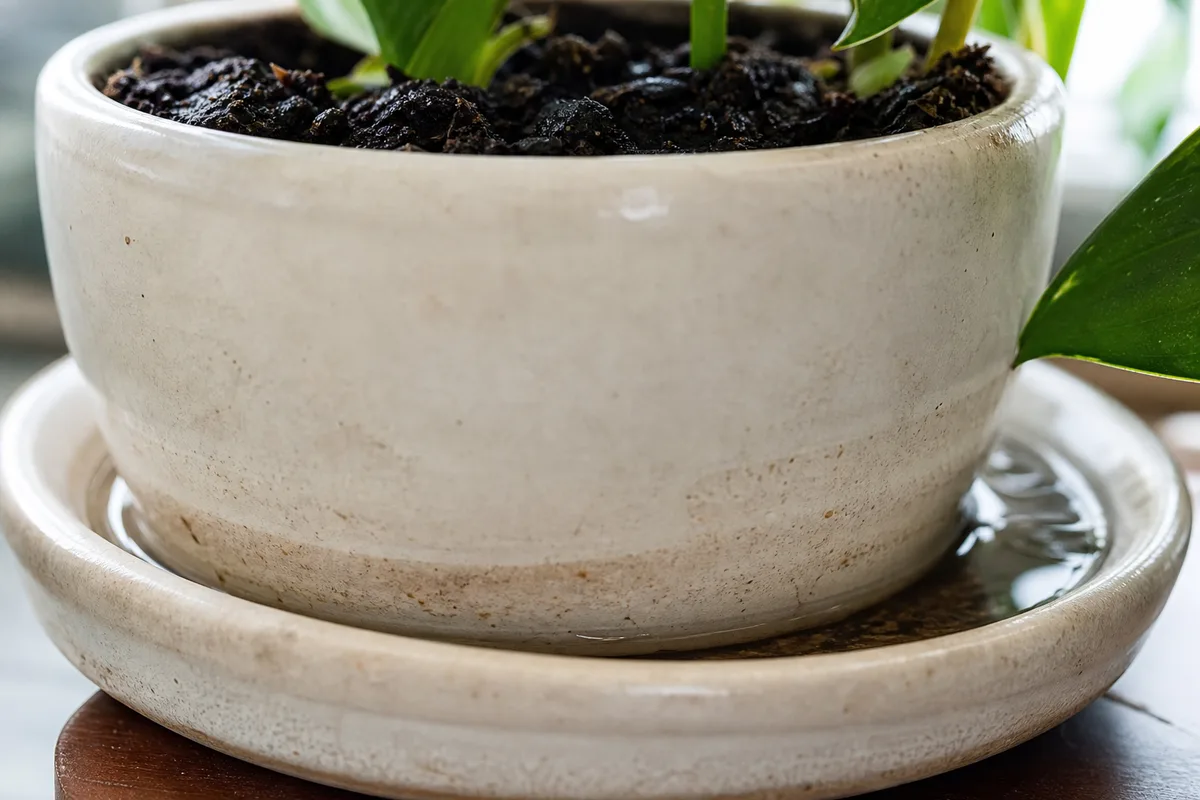
Act early. Waiting for dramatic leaf drop usually means the root system is already compromised. For the wider wet-soil pattern (compacted mix, saucers, oversized pots), also read the poor drainage houseplants guide.
Fixing a Plant Already Stuck Without Drainage
- Slide the plant out and inspect roots.
- Trim clearly dead, mushy tissue with clean shears.
- Repot into a container with drainage holes and fresh, airy mix sized close to the remaining roots—UConn advises a pot just large enough after root loss, and notes that a more porous mix with perlite, bark, or sand may be needed.
- Water lightly at first to encourage new roots without recreating saturation.
- Keep the plant in bright indirect light and hold fertilizer until you see stable new growth.
If you still want the original ceramic, return the plant to it only as a cachepot after the grow pot drains. Do not put a recovering plant back into a sealed bowl of soil. Pair this with the overwatered plant recovery guide when leaves are collapsing on wet mix.
First-Hand Notes From Sealed Pots and Cachepots
These are LeafyPixels editorial observations from sealed-pot and cachepot setups we corrected while reviewing this guide—not controlled lab trials. Timings assume typical indoor temperatures (~20–24°C) and bright indirect light unless noted.
- Forgotten cachepot (pothos in a 15 cm nursery pot inside glazed ceramic): After a thorough sink watering, about 2 cm of runoff sat in the sleeve. Left for two weeks, the liner stayed heavy, fungus gnats appeared, and two lower leaves yellowed. Emptied within 15 minutes on later cycles, the same pot was ready to water again in about four to five days with no new yellowing.
- Weigh cue on a ~15 cm sealed ceramic (direct plant, peat-heavy mix): Freshly watered weight was roughly 200–250 g heavier than the “ready to water” weight for that plant. Adding ~90 ml (3 fl oz), waiting, and tip-checking avoided a free-water layer; a full “until wet on top” pour left a puddle we only found by tipping.
- Drill vs liner on the same plant type (snake plant offsets): A sacrificial plastic bowl drilled with three 8 mm holes dried back faster and allowed a true soak-and-drain. An identical glazed ceramic kept as a cachepot around a nursery pot performed equally well only when emptied. The drilled plastic won on convenience; the cachepot won when we wanted the ceramic look without cracking risk.
- Gravel “drainage” band: Pulling a plant from a sealed pot with a rock layer showed a wet soil band sitting right above the gravel—classic perched water—not a dry root zone below.
The pattern that mattered most: every “almost fixed” plant that relapsed had been returned to a full decorative sleeve.
Plant-Specific Sealed-Pot Guides
This hub is the cross-plant decision page. For species context—caudex risk, rhizomes, moisture preference—use the matching plant problem guides:
- Adenium (desert rose) without drainage holes
- African violet without drainage holes
- Jade plant without drainage holes
- Janet Craig dracaena without drainage holes
- Lavender without drainage holes
- Maidenhair fern without drainage holes
- Mint without drainage holes
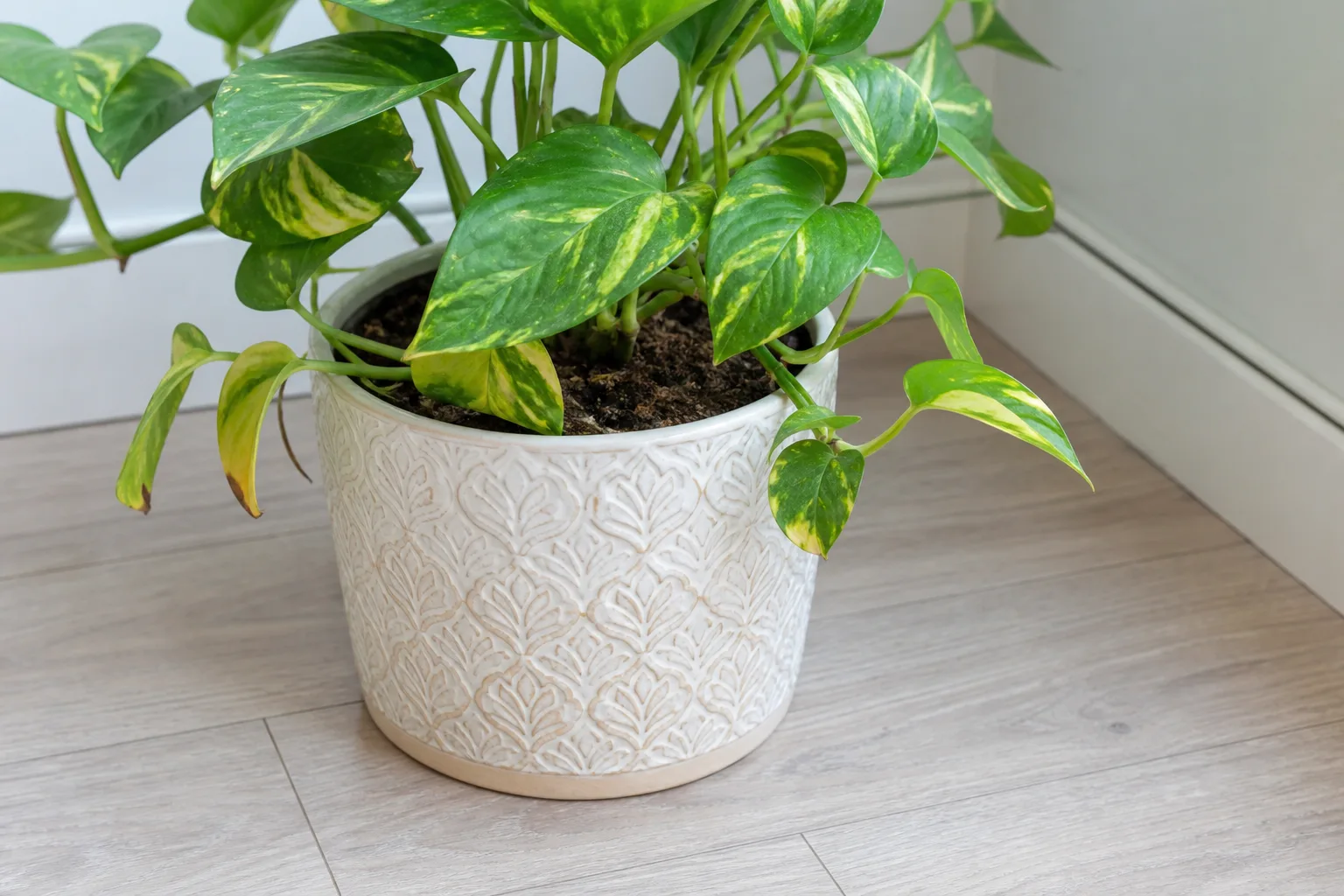
- Pothos without drainage holes
- Snake plant without drainage holes
- String of hearts without drainage holes
- Yucca without drainage holes
- ZZ plant without drainage holes
Related Care Decisions
No-hole risk interacts with everything else you choose. Dense peat mixes hold water longer than chunky aroid mixes. Plastic and glazed pots dry slower than unglazed terracotta. Low light slows water use, so the same sealed pot that survives in a bright window may rot on a dim shelf.
Match the pot material to your watering habit, keep a real drain path for excess water, and treat decorative vessels as covers unless they have holes of their own. Useful next reads:
- How to water indoor plants the right way — check, soak, drain, empty saucers
- Terracotta vs plastic pots — how pot material changes dry-back
- Poor drainage houseplants — holes, mix, saucers, and oversized pots as a system
- Root rot on houseplants — when wet roots are already failing
- Overwatered plant — recovery after too much water
- Fungus gnats houseplants — wet-media pests that often ride along
- Poor drainage symptom hub — symptom-first entry point
Conclusion
Run this refuse-or-fix checklist, then stop changing variables:
- Decide today: cachepot liner, drill (if safe), true wick/reservoir with a visible water line, or refuse the vessel.
- Never rely on gravel alone as drainage in a sealed bowl.
- If you keep a cachepot: water the liner, empty the outer pot every time, and keep holes off the floor with a spacer.
- If the plant is already failing: unpot, trim mushy roots, repot into a drained pot with airy mix, and only then reuse the ceramic as a cover.
- Refuse direct planting for succulents, beginners, deep opaque vessels, and any setup you cannot empty or monitor.
- Score success on lighter pot weight between waterings, no free water when tipped, and new growth—not on keeping a decorative bowl “pure.”
Houseplants can live without drainage holes, but sealed pots raise the stakes on every watering. Roots need oxygen as much as moisture. Choose a method that gives excess water somewhere honest to go—or choose a different pot.