Are Peace Lilies Toxic to Cats and Dogs? Symptoms, First Aid, and Safe Alternatives
Peace lilies are toxic to cats and dogs but they are not true lilies — they contain calcium oxalate crystals that cause oral irritation, not kidney failure. Learn symptoms, first aid, and safe alternatives.
You brought home a peace lily because it was beautiful, easy to care for, and that sales tag said “air-purifying.” Then you caught your cat chewing a leaf. Or your dog nosing around the pot. Now you are searching frantically, one hand on your phone and one hand holding your pet, trying to figure out if you need to drive to the emergency vet right now.
The answer is more nuanced than a simple yes or no — and the nuance matters. Most pet owners either panic unnecessarily and rush to the vet for a problem that will resolve on its own, or they dismiss the risk entirely because “it’s just a houseplant.” Neither response is right, and both can cause harm.
This guide covers exactly what happens when a cat or dog chews a peace lily, how dangerous it really is, what to do in the first few minutes, when to call the vet, and how to keep both your plants and your pets without choosing between them.
The Short Answer: Yes, Peace Lilies Are Toxic — But Not in the Way You Might Fear
Peace lilies are toxic to both cats and dogs. The ASPCA classifies Spathiphyllum as toxic to dogs and toxic to cats, and for good reason. Every part of the plant — leaves, stems, flowers, and roots — contains insoluble calcium oxalate crystals, microscopic needle-shaped structures that cause immediate pain and tissue damage when the plant is chewed.
However, here is the distinction that changes everything: peace lilies are not true lilies. They belong to the genus Spathiphyllum, which is botanically unrelated to the Lilium and Hemerocallis genera that include Easter lilies, Tiger lilies, Day lilies, and Asiatic lilies. True lilies contain a completely different toxin that causes acute kidney failure in cats — and even a few petals or a sip of vase water can be fatal within days. Peace lilies do not contain this nephrotoxin. They do not cause kidney failure.
This does not mean peace lilies are harmless. The calcium oxalate crystals they contain produce genuine pain and distress. Your pet will be uncomfortable, possibly for several hours. But the prognosis is almost always excellent with basic supportive care, and the vast majority of cases resolve without lasting damage. The first step in handling a peace lily incident is understanding which kind of emergency you are dealing with — and which kind you are not. If you also grow pothos, philodendron, or other Araceae houseplants, see our pothos toxicity and philodendron toxicity guides, since those plants share the same calcium oxalate irritant.
What Makes Peace Lilies Toxic? The Calcium Oxalate Mechanism
How the Crystals Work: A Physical Irritant, Not a Systemic Poison
The toxicity of peace lilies is mechanical rather than chemical. Inside the plant’s cells are specialized structures called idioblasts — thick-walled cells that package bundles of needle-sharp calcium oxalate crystals known as raphides. These crystals are encased in a gelatinous substance and held under pressure within the idioblast.
When your pet bites into a peace lily leaf, the idioblasts rupture. The crystals shoot out with force, embedding themselves into the soft tissues of the mouth, tongue, lips, gums, and throat (ScienceDirect). This is not a chemical reaction that takes time to develop — it is an instant physical injury. Imagine chewing on a mouthful of microscopic fiberglass. The pain is immediate, sharp, and impossible to ignore.
The body’s response to this assault is predictable. Histamine release triggers swelling and inflammation. Saliva production ramps up as the mouth tries to flush out the irritant. The throat may feel raw and swollen, making swallowing difficult and uncomfortable. If the crystals reach the stomach, they can irritate the gastrointestinal lining and trigger vomiting.
This is also why most pets do not eat much of a peace lily. The moment those crystals hit the mouth, the pain is so intense that almost every animal stops chewing immediately (Pet Poison Helpline). The plant’s defense mechanism works — it delivers one punishing warning shot and the animal backs off. Fatal peace lily poisonings are extraordinarily rare, and when they do occur, the mechanism is usually airway obstruction from severe throat swelling, not organ failure.
Peace Lily vs. True Lily: The Difference That Could Save Your Pet
If you remember only one thing from this guide, make it this: the plant name “lily” covers plants with completely different toxicity profiles. Confusing the two can lead you to either panic unnecessarily over a peace lily incident or, far more dangerously, underestimate the risk of a true lily.
True lilies (genus Lilium) and daylilies (genus Hemerocallis) contain an unidentified nephrotoxin that destroys kidney tubule cells in cats. The mechanism is distinct from calcium oxalate irritation — it is a systemic, organ-targeting poison that can cause irreversible kidney failure within 24 to 72 hours of ingestion (ASPCA). For the full picture of which plants to keep away from your cat, see our toxic plants for cats and toxic plants for dogs guides. All parts of the plant are toxic: petals, leaves, stems, pollen, and even the water in the vase. A cat that grooms lily pollen off its fur can receive a fatal dose. Dogs are less susceptible to the kidney effects but can still experience gastrointestinal illness.
The contrast is stark. A peace lily causes local irritation — your pet hurts where the plant touched. A true lily causes systemic organ failure — your pet’s kidneys shut down. One is a painful but self-limiting event. The other is a race against the clock where every hour without treatment reduces the chance of survival.
Other plants called “lilies” that are also not true lilies include calla lilies (Zantedeschia, calcium oxalate irritants similar to peace lily), canna lilies (non-toxic), and lily of the valley (Convallaria, contains cardiac glycosides — dangerous to the heart, not the kidneys). The lesson is simple: the word “lily” on a plant label tells you almost nothing about its toxicity. You have to know which lily you are dealing with.
What Happens When a Cat or Dog Chews a Peace Lily
Immediate Symptoms to Watch For
Peace lily poisoning symptoms appear within seconds to minutes of chewing. The signs are dramatic and unmistakable, which is actually helpful — you will not be left wondering whether your pet got into something.
The most common symptoms, confirmed by the ASPCA and multiple veterinary sources, include:
Excessive drooling and hypersalivation. This is usually the first and most obvious sign. The mouth floods with saliva as a protective response to the crystals. You may see thick, ropey drool or strings of saliva hanging from your pet’s mouth.
Pawing at the mouth and face. Cats especially will frantically paw at their mouth, rub their face against surfaces, or shake their head repeatedly. This is a pain response — the crystals are physically irritating the tissues and your pet is trying to dislodge something they cannot remove.
Vomiting. If any plant material was swallowed, stomach irritation can trigger vomiting, sometimes within 30 minutes to a few hours of ingestion. The vomit may contain visible pieces of the plant.
Difficulty swallowing and decreased appetite. A sore, swollen mouth and throat make eating and drinking uncomfortable. Your pet may approach their water bowl and then back away, or take a few bites of food and stop.
Vocalizing. Cats may meow, yowl, or growl in a way that is out of character. Dogs may whine. These are pain signals. If your pet is normally quiet and is suddenly vocalizing after being near a plant, take it seriously.
Swelling of the mouth, lips, or tongue. Visible puffiness around the mouth is a clear sign of an inflammatory reaction. In rare cases, swelling can extend to the throat and cause breathing difficulty — this is the one scenario where a peace lily incident becomes a true emergency.
Why Symptoms Appear Within Minutes
The rapid onset of symptoms is directly tied to the physical mechanism of the crystals. Unlike chemical toxins that must be absorbed into the bloodstream, processed by the liver, or metabolized into their active form, calcium oxalate raphides cause instant mechanical damage on contact. There is no latency period, no waiting for digestion — the injury happens the moment the plant cell wall breaks.
This is also why you can usually correlate symptoms directly to the event. If your cat was near a peace lily at 3 PM and started drooling at 3:01 PM, the plant is almost certainly the cause. If symptoms appear hours later with no obvious plant-chewing incident, you should consider other causes — dental problems, foreign objects stuck in the mouth, or exposure to a different toxin.
The good news is that the rapid onset also means rapid resolution once the crystals are cleared. Unlike true lily toxicity, where the damage continues to worsen for days even after the plant is removed from the system, peace lily symptoms peak early and then improve.
How Much Peace Lily Is Dangerous?
Even a small nibble on a peace lily is enough to cause noticeable symptoms — but this is largely because the crystals work on contact, not because the plant is highly potent in small doses. The relationship between amount consumed and severity is different from what you would expect with a chemical poison.
A single bite into a leaf will cause immediate oral pain and drooling. That first bite usually hurts enough to stop the animal from taking a second one. For most pets, the amount actually swallowed is minimal. The unpleasant taste and the burning sensation act as a built-in deterrent, so dogs and cats rarely consume enough plant material to cause severe gastrointestinal effects (WagWalking).
Most cases involve mild to moderate oral irritation that resolves within a few hours with rinsing and monitoring. Cases requiring veterinary intervention are usually those where the pet managed to swallow a larger quantity — which is uncommon — or where an individual animal has an unusually strong inflammatory reaction to the crystals.
Factors That Affect Severity
Several factors determine how serious a peace lily incident will be for your specific pet. The amount chewed is the most obvious variable, but it is not the only one. A cat that takes a single exploratory bite and immediately recoils will have a much milder experience than a determined puppy that chews through multiple leaves before the pain registers.
The size and species of your pet also matter. A small cat or a toy-breed dog will be more affected by the same amount of plant material than a large dog. Cats tend to chew houseplants more deliberately and are more likely to swallow pieces, while dogs often investigate with their mouths and may consume more before the irritation stops them.
Individual sensitivity plays a role too. Some pets mount a stronger histamine response to the crystals and develop more swelling. Others may have a lower pain tolerance and show more dramatic behavioral signs even with mild tissue damage. There is no way to predict this ahead of time, which is why monitoring is always necessary.
Pre-existing health conditions can complicate recovery. A pet with a history of oral health problems, esophageal issues, or a compromised immune system may have a harder time recovering from even mild calcium oxalate exposure. If your pet has any underlying health concerns, err on the side of calling your veterinarian earlier rather than later.
First Aid: What to Do If Your Pet Eats a Peace Lily
Step-by-Step Immediate Response
Your pet just chewed a peace lily. Your mind is racing. Here is exactly what to do, in order.
Step one: Remove your pet from the plant. Get them away from the peace lily immediately so they cannot chew more. Do this calmly — panicked movements can stress your pet and make the situation harder to manage.
Step two: Check the mouth for plant material. Gently open your pet’s mouth and look for pieces of leaf or stem stuck between the teeth or against the gums. Use your finger or a damp cloth to remove any visible debris. Be careful — your pet is in pain and may bite defensively, even if they have never bitten before.
Step three: Rinse the mouth with cool water. This is the single most effective immediate action you can take. Use a clean cloth soaked in cool water to gently wipe the inside of your pet’s mouth, gums, and tongue. If you can do so safely, use a small syringe or a cup to slowly dribble cool water into the side of the mouth and let it run out. The goal is to wash away as many of the calcium oxalate crystals as possible before they cause more tissue damage (Gardenia.net). Do not use hydrogen peroxide, mouthwash, or any other solution — cool, clean water only.
Step four: Offer a drink of water or milk. A small amount of cool water or milk can help soothe the mouth, dilute any remaining irritants, and provide comfort. Do not force your pet to drink. If they refuse, do not push it — a painful mouth makes swallowing unpleasant, and forcing liquids can cause aspiration.
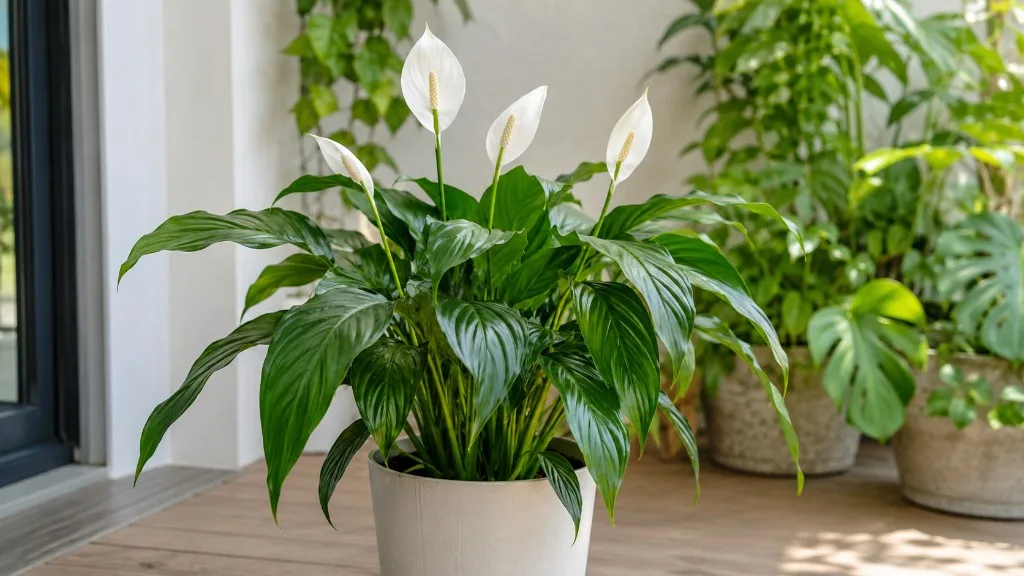
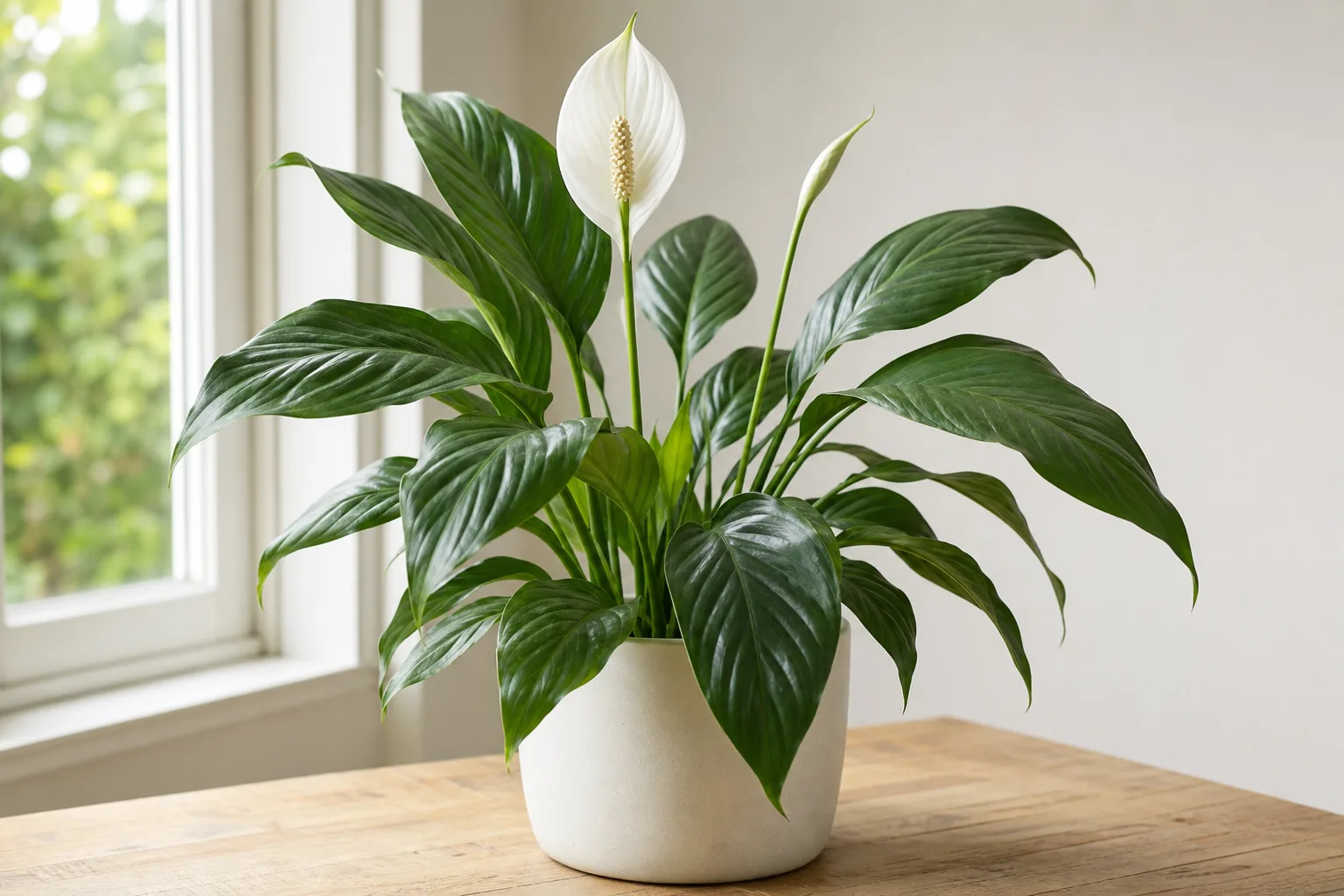
Step five: Identify the plant. Confirm that it is definitely a peace lily (Spathiphyllum) and not a true lily. Look for the characteristic white spathe flower and glossy dark green oval leaves with prominent veins. If you are unsure, take a photo of the plant and bring a leaf sample with you if you end up going to the vet. The treatment for peace lily ingestion is completely different from true lily ingestion, and knowing which plant is involved changes the entire medical approach.
Step six: Monitor closely for the next two to four hours. Most peace lily symptoms peak within the first hour and improve steadily after that. Watch for worsening drooling, repeated vomiting, decreased responsiveness, or any sign of breathing difficulty. If your pet’s breathing becomes labored, noisy, or rapid, this is an emergency — go to the vet immediately.
When to Call the Vet vs. When to Monitor at Home
Most peace lily incidents resolve at home without professional intervention. The mouth pain, drooling, and initial vomiting are unpleasant to witness but are not dangerous in themselves. If your pet is alert, responsive, breathing normally, and the drooling is gradually decreasing, you are in monitoring territory.
Call your veterinarian or the Pet Poison Helpline (855-764-7661) immediately if you see any of these warning signs:
- Difficulty breathing — any wheezing, noisy breathing, open-mouth breathing in a cat, or exaggerated chest movements
- Persistent vomiting — more than two or three episodes, or vomiting that continues beyond the first hour
- Severe swelling — visible swelling of the face, throat, or tongue that seems to be getting worse
- Lethargy or collapse — your pet becomes unusually quiet, unresponsive, or unable to stand
- No improvement after four hours — if drooling, mouth pain, and distress are not noticeably better after several hours
- You are unsure whether the plant was a peace lily or a true lily — if there is any doubt about plant identification, treat it as a true lily emergency and seek immediate veterinary care. With true lilies, the window for effective treatment is measured in hours.
Do not induce vomiting at home unless specifically instructed to do so by a veterinarian. The calcium oxalate crystals cause damage on the way up just as they do on the way down, and vomiting can re-expose the esophagus and mouth to the irritants. Inducing vomiting can also be dangerous if your pet’s throat is already swollen.
Veterinary Treatment for Peace Lily Poisoning
When a peace lily case does reach a veterinary clinic, treatment is supportive rather than antidotal — there is no specific reversal agent for calcium oxalate crystals. The goal is to manage pain, reduce inflammation, prevent dehydration, and protect the gastrointestinal tract while the body clears the irritants naturally.
Your veterinarian will begin with an oral examination to assess the extent of irritation, swelling, and any tissue damage. They will check for plant material still lodged in the mouth or throat and remove it. The mouth may be flushed thoroughly with water or saline under controlled conditions.
For pain and inflammation, the vet may administer an antihistamine such as diphenhydramine (Benadryl) to reduce swelling and an analgesic for pain relief. In cases with significant gastrointestinal involvement — persistent vomiting, signs of stomach pain — medications like sucralfate may be prescribed to coat and protect the irritated stomach lining while it heals (American College of Veterinary Pharmacists).
If your pet has vomited repeatedly and is dehydrated, subcutaneous or intravenous fluids may be given to restore hydration and electrolyte balance. This is particularly common in smaller pets where even a few episodes of vomiting can cause significant fluid loss.
In the rare case where throat swelling threatens the airway, the veterinary team will provide oxygen support and anti-inflammatory medications, potentially including corticosteroids to rapidly reduce swelling. This is uncommon but must be treated aggressively when it occurs.
Most treated pets go home the same day with instructions for a soft diet, continued monitoring, and a follow-up plan. Recovery from an uncomplicated peace lily incident typically takes 12 to 24 hours for the acute symptoms to resolve, though mild mouth sensitivity may linger for a day or two. The prognosis is excellent — peace lily poisoning, when properly managed, leaves no lasting damage.
Keeping Peace Lilies and Pets in the Same Home

Placement Strategies That Actually Work
If you want to keep your peace lily and your pets under the same roof, it is possible — but only with deliberate, consistent placement choices. “Out of reach” means something very different for a cat than for a dog, and cats in particular are Olympic-tier acrobats when motivated.
High shelves and hanging planters are the most reliable strategy for cats. Mount floating shelves at least five to six feet off the ground with no nearby furniture that a cat can use as a launching point. A peace lily on a tall bookshelf is safe only if the shelves below it are empty or filled with books — a cat will use each shelf as a step. Macramé hanging planters suspended from ceiling hooks keep the plant completely isolated as long as there is nothing climbable within a three-foot radius.
Closed terrariums and glass cabinets offer near-perfect protection. A peace lily inside a glass terrarium or an IKEA-style greenhouse cabinet is visible and attractive but physically inaccessible to pets. This approach also provides the humidity peace lilies prefer, so it is a win for the plant too.
Plant-free zones work for dogs. Most dogs cannot reach high shelves, so keeping peace lilies on elevated surfaces is usually sufficient. For large dogs that can counter-surf, a dedicated plant room with a closed door — a sunroom, home office, or spare bedroom — creates a permanent barrier without requiring the plant to live behind glass.
Floor placement is never safe for a peace lily in a home with pets that show any interest in plants. Even a dog that has ignored houseplants for years may suddenly decide to investigate, and the cost of that one moment of curiosity is oral pain, a vet visit, and guilt you do not need.
Training and Deterrents Worth Trying
Training pets to leave houseplants alone is a long-term project, not a quick fix. It works best as a complement to physical barriers, not a replacement for them.
For cats, consistent redirection is the foundation. When your cat approaches the peace lily, interrupt with a firm “no” or a clap and immediately redirect to an acceptable alternative — cat grass, a scratching post, or a toy. Reward the desired behavior with treats or attention. The goal is not to punish curiosity but to teach that the plant is boring and the alternative is rewarding.
Bitter-tasting deterrent sprays applied to the outer pot and the tips of outer leaves can discourage casual nibbling, but they are not reliable as a sole strategy. Some pets are not bothered by bitter flavors, and the taste fades over time and must be reapplied. These sprays also will not stop a cat that is determined to chew — the taste deterrent works after the first bite, but the first bite is enough to release the calcium oxalate crystals.
Aluminum foil or double-sided tape around the base of the pot can discourage cats that like to paw at the soil or sit near the plant. Cats dislike the texture and sound. It is not elegant, but it works during the training phase.
For dogs, the “leave it” command reliably taught and proofed across different situations is the single most valuable tool. A dog that will back away from a plant on command is a dog you can trust around houseplants. This takes weeks of consistent training, but the investment pays off for every potential hazard in your home, not just the peace lily.
Pet-Safe Alternatives to Peace Lilies
Non-Toxic Plants That Deliver the Same Elegant Look
If the stress of managing a toxic plant around pets outweighs the joy of owning it, switching to a non-toxic alternative is the simplest solution. Several houseplants deliver a similar aesthetic — lush green foliage, graceful form, and even white blooms — without the calcium oxalate crystals.
Moth orchids (Phalaenopsis) are ASPCA-approved as non-toxic to both cats and dogs. They produce elegant arching sprays of white flowers that last for months, and their care requirements are comparable to peace lilies — indirect light, weekly watering, and moderate humidity. A white Phalaenopsis on a side table gives you the same sophisticated look with zero toxicity risk.
Bromeliads come in a range of colors and forms, and the entire family is non-toxic to pets. Their rosette shape and tropical appearance make them a visually interesting alternative. Bromeliads prefer bright indirect light and need water in their central cup rather than their soil, which also makes them less appealing for pets that like to dig.
Cast iron plants (Aspidistra elatior) are the closest visual match to peace lily foliage. They have the same dark green, glossy, lance-shaped leaves and the same tolerance for low light and irregular watering. They are completely non-toxic and nearly indestructible — the “cast iron” name is earned.
Parlor palms (Chamaedorea elegans) do not mimic peace lily foliage but offer the same lush, calming presence in a room. They are non-toxic, thrive in the same indirect light conditions as peace lilies, and add vertical interest without being climbable for cats.
Calatheas and prayer plants — including rattlesnake plant, peacock plant, and medallion calathea — are all pet-safe and bring striking leaf patterns that peace lilies do not. They need higher humidity, which makes them a good choice if you already run a humidifier for your peace lily.
If you are looking for more low-maintenance options that suit households with pets, our guide on best indoor plants for beginners covers several non-toxic starter plants. And for comprehensive care that keeps any houseplant thriving, start with our indoor plant watering guide. For a wider roundup of pet-safe choices, see our pet-safe houseplants and non-toxic plants for cats guides.
Conclusion
Peace lilies are toxic to cats and dogs, but the real risk is often misunderstood. They contain insoluble calcium oxalate crystals that cause immediate oral pain, drooling, and vomiting — not the nephrotoxins that make true lilies (Easter, Tiger, Day, and Asiatic lilies) deadly to cats. This distinction is not academic. It determines whether you are dealing with a painful but self-limiting incident or a life-threatening emergency.
If your pet chews a peace lily, rinse their mouth with cool water, remove any visible plant material, offer water to drink, and monitor. Most cases resolve at home within hours. Seek veterinary care if you see breathing difficulty, persistent vomiting, severe swelling, or if there is any doubt about whether the plant was a peace lily or a true lily.
The safest approach is prevention. Place peace lilies where pets cannot reach them — high shelves, hanging planters, or closed glass cabinets — or switch to one of several non-toxic alternatives that deliver the same beauty without the risk. You do not have to choose between loving houseplants and keeping your pets safe. You just need to choose the right plants and the right placement.