Sansevieria Cylindrica Care Guide: Light, Water & Soil
Dracaena angolensis
Sansevieria cylindrica care: round spear leaves, braided vs natural clumps, bright light, dry soil watering, propagation by division or leaf cuttings, and fixes for root rot and brown tips.
Sansevieria Cylindrica Care Guide: Light, Water & Soil
Start with wateringThe most common care mistake for Sansevieria CylindricaWatering guide →Sansevieria Cylindrica care essentials
Light
Water
Water only when the soil is completely dry - roughly every 2–4 weeks in summer and every 4–6 weeks in winter.
Soil
Fast-draining cactus or succulent mix that prevents waterlogging.
Humidity
30–50%
Temperature
18–27°C (65–80°F); bring indoors below 13°C (55°F)
Fertilizer
About Sansevieria Cylindrica
Sansevieria Cylindrica is native to Angola and central Africa, typically reaches 2–4 ft indoors when braided; round cylindrical leaves up to 7 ft in ideal light indoors, with slow growth. Sansevieria Cylindrica has a upright growth habit and part of the Asparagaceae family. It is also known as African Spear, Cylindrical Snake Plant, Spear Sansevieria, and Sansevieria cylindrica.
| Detail | Information |
|---|---|
| Also known as | African Spear, Cylindrical Snake Plant, Spear Sansevieria, Sansevieria cylindrica |
| Native region | Angola and central Africa |
| Mature size | 2–4 ft indoors when braided; round cylindrical leaves up to 7 ft in ideal light |
| Growth rate | Slow |
| Growth habit | Upright |
| Scientific name | Dracaena angolensis |
| Family | Asparagaceae |
Sansevieria Cylindrica Care Guide: Light, Water & Soil
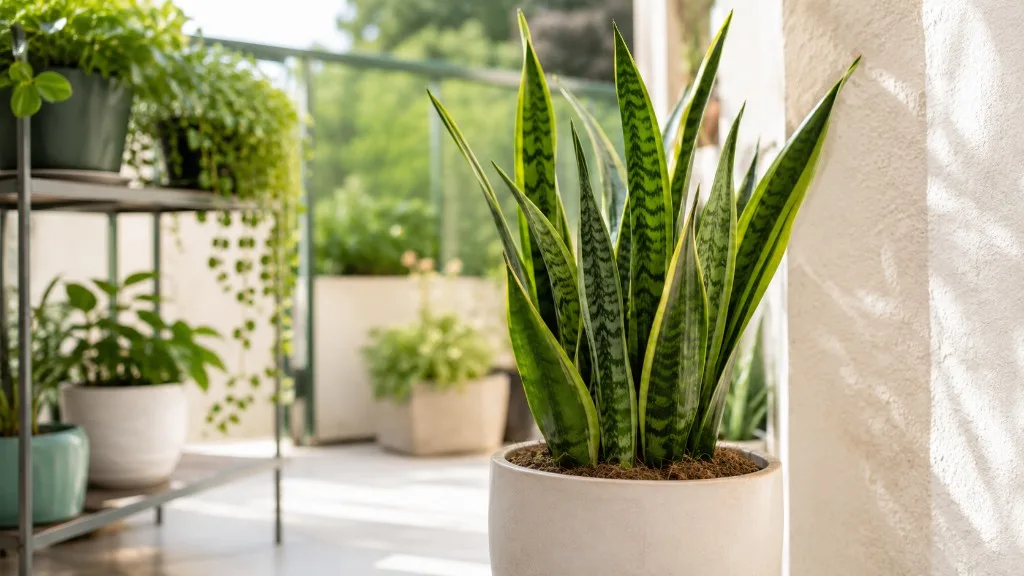
Dracaena cylindrica — the African spear or cylindrical snake plant — grows round, spear-like leaves upright from rhizomes. Nursery braids are cosmetic; unbraid or leave them intact based on preference, but never force wet soil through tight braids. Care matches other drought-adapted dracaenas: gritty mix, full dry-down, and bright indirect light for active pup production.
What Sansevieria Cylindrica Actually Is (and Why the Names Keep Changing)
If you bought a plant with smooth, round, upright spears instead of flat banded leaves, you have Sansevieria cylindrica — even if the pot tag says African spear, cylindrical snake plant, or spear sansevieria. Botanists now classify it in the genus Dracaena after DNA work merged the old Sansevieria genus into Dracaena, the same shift that renamed the common snake plant Dracaena trifasciata.
Naming is messier here than on flat snake plants. NC State Extension lists the accepted name as Dracaena angolensis, with former synonyms Sansevieria cylindrica and Sansevieria cylindrica var. patula. SANBI PlantZAfrica explains that this species is not called Dracaena cylindrica in current taxonomy because that epithet belongs to a different plant (now a synonym of D. bicolor). LeafyPixels and many nursery labels still use Dracaena cylindrica for this African spear — the same round-leaved houseplant those references describe as D. angolensis. The care is identical; only the Latin label differs.
What matters for growing it: this is a rhizomatous, drought-adapted perennial in the Asparagaceae family. It is native to southern Africa — Angola, Zambia, and Zimbabwe — on rocky, dry ground where rain is irregular and soil drains fast. Leaves are subcylindrical, stiff, and grooved, arranged in a fan-like distichous pattern from short stems and creeping orange rhizomes. In habitat the plant uses CAM photosynthesis to open stomata at night and cut water loss — an arid adaptation SANBI documents for Dracaena angolensis. Treat it like a leafy tropical that wants constant moisture and the rhizome rots; treat it like the succulent-adapted species it is and it will sit quietly for years.
Sansevieria Cylindrica at a Glance
- Botanical names: Dracaena cylindrica (common trade name) / Dracaena angolensis (NC State, SANBI); formerly Sansevieria cylindrica
- Common names: African spear, cylindrical snake plant, spear sansevieria, Saint Bárbara sword (Brazil)
- Leaf form: Round to subcylindrical spears, 1 in (2.5 cm) thick, often with faint horizontal banding — not flat swords
- Mature size indoors: Typically 2–4 ft (60–120 cm); can reach up to 7 ft (2 m) in ideal bright conditions per NC State
- Light: Bright indirect for growth; tolerates low light but stalls
- Water: Allow soil to dry completely; roughly every 2 weeks in summer and monthly in winter as a starting point
- Soil: Fast-draining cactus/succulent mix
- Temperature: Comfortable 65–85 °F (18–29 °C); bring indoors below 55 °F (13 °C)
- Toxicity: Toxic to dogs and cats (ASPCA lists Dracaena spp.; principles are saponins)
- Main failure mode: Overwatering on Sansevieria Cylindrica — especially in braided or oversized pots
Round Leaves, Braids, and What Nurseries Sell
The round leaf is the whole identity. Where Dracaena trifasciata carries flat, strap-like blades with horizontal bands, Sansevieria cylindrica leaves are smooth cylinders with subtle grooves and grey-green coloring. They emerge from a basal fan — usually three to five spears per division — and slowly build a clump from underground rhizomes.
Commerce adds a twist you rarely see on flat snake plants: braided spears. Nurseries often sell young plants with three or more cylindrical leaves plaited together for a sculptural look. NC State Extension notes these are frequently rooted leaf cuttings that live for a long time before pups appear at the base. The braid is purely cosmetic. You can leave it, gently unbraid it as leaves thicken, or buy unbraided fans — all are valid.
Natural fan-shaped clumps vs cosmetic braids
In a natural clump, each spear has space at the base for air movement and dry-down after watering. Tight braids trap moisture where the leaves cross near the soil line — exactly where rot starts on overwatered specimens. If you keep a braid, water even more conservatively, aim the pour at the soil edge rather than the leaf crown, and check that the base stays firm. Never mist the braid or let the pot sit in a saucer of runoff.
‘Boncel’ and the starfish form
The cultivar ‘Boncel’ — nicknamed starfish sansevieria — has shorter, thicker cylindrical leaves that spread in a low fan. It follows the same dry-soil logic but in a smaller pot that dries faster. Expect even less tolerance for heavy peat mixes and winter overwatering.
Light: Bright Indirect for Growth, Low Light for Survival
Marketing calls every snake plant a “low-light” plant. Sansevieria cylindrica survives dim corners because CAM metabolism and leaf water storage let it idle. It does not thrive there. In low light, growth stops, pups are rare, and soil stays wet dangerously long.
For active growth — new spears, offsets, strong grey-green color — place the plant in bright indirect light. NC State recommends a brightly lit window indoors and morning sun only if you summer it outdoors, to avoid sunburn on cylindrical leaves. An east window or a filtered south/west exposure 3–6 ft (1–2 m) from the glass is the everyday sweet spot.
Diagnostic cues: firm, evenly colored new spears mean adequate light. Pale, leaning spears want more brightness. Bleached or sunken patches on the sun-facing side mean too much direct midday sun — pull back or filter the window. For deeper detail on windows and grow lights, see the Sansevieria Cylindrica light guide.
Watering: Dry Soil All the Way Down
Watering separates a healthy African spear from a mushy base. The plant stores water in thick leaves and rhizomes; roots need oxygen between drinks. A weekly calendar — or a saucer full of runoff — invites the rot that kills more of these plants than any pest.
Water only when the soil is completely dry throughout the pot, not just on the surface. Push a finger or dry skewer to the bottom of the mix; lift the pot and compare weight to how it felt right after the last soak. When you water, drench until a little runs from the drainage hole, drain 10–15 minutes, and empty the saucer.
NC State Extension suggests about every two weeks in summer and monthly in winter as a rough rhythm in a bright window with succulent mix. Your home will differ: small terracotta pots in bright rooms dry faster; large braided plants in dim halls can go longer. Wrinkled but firm spears signal drought stress soon; soft, translucent bases mean stop watering and inspect roots.
Seasonal watering rhythm
| Season | Plant state | Approximate interval | Check before watering |
|---|---|---|---|
| Spring | Growth resuming | Every 2–3 weeks | Soil dry at depth; pot feels light |
| Summer | Active growth | Every 2–4 weeks | Same; braided pots need extra caution |
| Fall | Slowing | Every 3–5 weeks | Stretch interval as light drops |
| Winter | Mostly resting | Every 4–8 weeks | Fully dry; no fertilizer |
The most common timing mistake is continuing a summer schedule through winter. For step-by-step dry-down tests and recovery from rot, use the Sansevieria Cylindrica watering guide.
Soil and Drainage: Build a Mix That Drains in Seconds
Roots evolved in sandy, rocky African soils that pass water in seconds. A peat-heavy indoor mix that stays damp for a week is the opposite environment. Use a commercial cactus and succulent potting mix or a fast-draining peat-perlite blend with extra coarse sand or pumice, following Clemson Extension guidance on indoor soil mixes for succulents and drought-tolerant houseplants.
Skip garden soil, moisture-control blends, and pots without drainage holes. Do not add a gravel layer instead of a drainage hole — that raises the perched water table where roots sit. Refresh mix every two to three years during repotting. More recipes and warning signs of wrong soil live in the Sansevieria Cylindrica soil guide.
Temperature, Humidity, and Airflow
Indoors, Sansevieria cylindrica is comfortable in the 65–85 °F (18–29 °C) range most homes already provide. Growth slows in cool rooms, and NC State advises bringing plants inside when temperatures fall below 55 °F (13 °C). Cold window glass in winter can leave dark, water-soaked patches on spears that touch the pane.
Humidity is rarely limiting — 30–50% is fine. Very dry winter air may encourage spider mites; fix the room, not the individual leaf, with a humidifier or grouping plants. Good airflow around the pot lip helps braided and crowded bases dry after watering.
Fertilizer: Light Feeding in Warm Months Only
African spears are lean feeders. Overfertilizing produces weak growth and salt buildup that shows as brown tips on otherwise firm spears. Feed lightly only in spring and summer — a balanced liquid fertilizer at half label strength, once a month at most, or twice a season if growth is strong. Stop entirely in fall and winter. Never feed a dry, rotting, or recently repotted plant. See the Sansevieria Cylindrica fertilizer guide for dilution detail.
Choosing the Right Pot for Cylindrical Leaves
Tall cylindrical spears topple easily in narrow pots. Choose a wide, stable base — especially for braided specimens. Move up only one pot size (1–2 in / 2.5–5 cm wider) at repot time; oversized pots hold wet soil the rhizome cannot dry quickly.
Unglazed terracotta wicks moisture through the walls and forgives occasional overwatering better than glazed ceramic or plastic. Whatever material you use, at least one drainage hole is non-negotiable for soil culture.
Repotting Without Inviting Root Rot
Repot every two to three years, or when roots crowd drainage holes, pups lift the soil surface, or water runs straight through old broken-down mix. Early spring is safest — active growth helps roots recover.
Slide the plant out, loosen old mix gently, and inspect rhizomes. Healthy tissue is firm and pale orange inside; rot is dark, mushy, and sour-smelling. Trim rot with a clean blade, let cuts air-dry a day if extensive, then replant at the same depth in fresh dry mix. Wait five to seven days before the first thorough watering. Full walkthrough: Sansevieria Cylindrica repotting guide.
Propagation: Division, Rhizome Sections, and Leaf Cuttings
Division is fastest — separate a pup with its own roots and rhizome at repot time, let cuts dry 24 hours, pot in gritty mix, water sparingly after a week. Rhizome sections with at least one spear attached also work after a short callus.
Leaf cuttings are slower but common with cylindrical spears: cut a healthy leaf into sections, mark bottom orientation, callus two to three days, bury the lower third in moist — not wet — mix. Pups can take one to three months. SANBI notes controlled propagation from small leaf pieces in nursery settings; home growers usually get easier results from division.
Do not propagate rotting or pest-infested stock. Detailed timing and failure modes: Sansevieria Cylindrica propagation guide.
How Sansevieria Cylindrica Differs from Flat Snake Plants
Both are drought-adapted Dracaena houseplants with similar watering philosophy, but they are different species with different geometry:
| Trait | Sansevieria cylindrica (African spear) | Dracaena trifasciata (flat snake plant) |
|---|---|---|
| Leaf shape | Round/subcylindrical spears | Flat, strap-like swords |
| Arrangement | Distichous fan, often 3–5 spears | Rosette or tight clump of flat leaves |
| Commerce | Often sold braided | Usually sold as individual fans |
| Indoor height | Often 2–4 ft; can reach 7 ft | Often 2–4 ft; dwarf forms shorter |
| Variegation | Mostly subtle banding on spears | Bold cultivars like ‘Laurentii’ common |
If your care routine works on a flat snake plant, keep the same dry-soil discipline — but watch braided bases and tall narrow pots more closely on cylindrical types.
Common Problems and How to Read the Symptoms
Most problems are environmental. The plant reacts slowly, so read signs before you change everything.
- Overwatering and root rot: Soft yellowing at the base, foul soil, spears detach easily. Stop water, unpot, trim mushy rhizome, repot dry.
- Underwatering: Slight wrinkling on firm spears, crispy tips. Soak once; adjust dry-down checks.
- Low light: No new spears for months, soil wet for weeks. Move brighter; acclimate gradually.
- Sunburn: Bleached patches after a sudden move to harsh sun. Filter light; damage is permanent on affected tissue.
- Cold damage: Water-soaked patches after a cold night near glass. Warm the plant; trim later.
- Pests: Mealybugs in leaf bases; spider mites in very dry air. Treat early with alcohol swabs or insecticidal soap.
A single old spear yellowing at the bottom while others stay firm is usually normal aging. Mushy bases are never normal — inspect the rhizome immediately.
Pet Safety: Saponins and Placement
African spears sit on floors and desks within pet reach. The ASPCA lists Dracaena species as toxic to dogs and cats, with toxic principles identified as saponins. Ingestion can cause vomiting, diarrhea, and nausea. NC State also flags low-severity poison characteristics for children and pets.
Toxicity requires ingestion, not passive room sharing. Elevate pots, use hanging planters, or choose pet-safe species for chew-prone animals. If a pet eats foliage, contact your veterinarian or the ASPCA Animal Poison Control Center at (888) 426-4435.
Where to Place Sansevieria Cylindrica in a Real Home
The best everyday spot is 3–6 ft (1–2 m) from an east-facing window, or the same distance from a south/west window with a sheer curtain. That delivers bright indirect light for steady spears without scorch. A dim hallway keeps the plant alive but expect slow growth, fewer pups, and longer intervals between waterings.
Avoid: cold window glass in winter, AC vents blowing on spears, and cache pots without drainage. CAM photosynthesis is real physiology, but one potted plant does not meaningfully purify room air compared with ventilation — grow it for form and drought tolerance, not as a filter.
Conclusion
Sansevieria cylindrica rewards growers who respect its southern African biology: bright indirect light, gritty fast-draining soil, and watering driven by completely dry mix — not a calendar. Remember the round spears, the optional braid, and the naming split between Dracaena cylindrica and Dracaena angolensis; they are the same African spear in most pots. Repot modestly in spring, propagate by division when you want reliable offsets, and inspect rhizomes at the first soft base rather than watering again by reflex.
Safety and expectations matter too: ASPCA-classified toxicity means thoughtful placement in pet homes, and braided nursery plants need extra drainage discipline at the leaf crown. Get light, pot, and dry-down right, and this cylindrical snake plant will hold its sculptural spears for years with minimal fuss.
When to use this page vs other Sansevieria Cylindrica guides
- Sansevieria Cylindrica hub — Main entry for this species; links to every care topic.
- Sansevieria Cylindrica problems — Use when you already have a symptom and need a fix path.
This overview covers identity and the full care rhythm. Open sibling guides when one topic needs depth — watering checks, window placement, soil recipes, or propagation steps.
Related Sansevieria Cylindrica guides
- Sansevieria Cylindrica watering
- Sansevieria Cylindrica light
- Sansevieria Cylindrica soil
- Sansevieria Cylindrica propagation
- Sansevieria Cylindrica fertilizer
- Sansevieria Cylindrica repotting
- Sansevieria Cylindrica pruning
- Root rot on Sansevieria Cylindrica
- Brown tips on Sansevieria Cylindrica
- Yellow leaves on Sansevieria Cylindrica
- Slow growth on Sansevieria Cylindrica
- Overwatering on Sansevieria Cylindrica
How to care for Sansevieria Cylindrica?
When should you water Sansevieria Cylindrica?
Water only when the soil is completely dry - roughly every 2–4 weeks in summer and every 4–6 weeks in winter.
- Push finger to the bottom of the pot - Water only when the soil is completely dry - roughly every 2–4 weeks in summer and every 4–6 weeks in winter.
- water only when soil is bone dry throughout - Water only when the soil is completely dry - roughly every 2–4 weeks in summer and every 4–6 weeks in winter.
- Drain excess water - Water only when the soil is completely dry - roughly every 2–4 weeks in summer and every 4–6 weeks in winter.
What soil works best for Sansevieria Cylindrica?
Fast-draining cactus or succulent mix that prevents waterlogging.
- cactus and succulent mix - Fast-draining cactus or succulent mix that prevents waterlogging.
- perlite (30%) - Light white granules that keep soil airy and help prevent compaction.
- coarse horticultural sand - Adds weight and drainage; use coarse horticultural sand rather than fine beach sand.
Grower notes for Sansevieria Cylindrica
What makes cylindrical snake plant different
Sansevieria Cylindrica is *Dracaena angolensis* — not the flat sword-leaf *D. trifasciata* most people picture as a snake plant. Its round, spear-like leaves grow upright from rhizomes and are often sold as nursery braids of rooted leaf cuttings. Those braids are cosmetic; care still comes down to bright light, gritty mix, and letting the pot dry completely between drinks.
Best placement in a real home
Place African spear where bright indirect light is realistic for most of the day — near an east window or several feet back from south or west glass. NC State Extension recommends a brightly lit window and morning sun only if you summer it outdoors. Water only when soil is bone dry throughout. Humidity target: 30–50%. Temperature comfort zone: 18–27°C (65–80°F); bring indoors below 13°C (55°F).
Before you buy this plant
Choose firm cylindrical leaves with gray-green striping, no soft bases, and soil that does not smell sour. Be cautious if braids feel loose, leaf tips are dipped in paint, or the pot stays wet in a dim corner. Many pots are individual rooted cuttings — confirm the mix drains fast before assuming a braided display will forgive heavy watering.
First month after bringing it home
Do not repot or unbraid on day one unless the mix is failing or pests are obvious. Quarantine it, learn how fast the pot dries, and keep care boring while it adjusts. Watch especially for mushy spear bases, brown crispy tips, and soil that never dries inside tight braids. Fix light and drainage before stacking fertilizer, repotting, and pruning.
Safety note for Sansevieria Cylindrica
African spear is toxic to cats and dogs. NC State lists saponins as the toxic principle, with vomiting, dilated pupils, and drooling in pets. Keep cylindrical leaves out of reach on floor pots and low shelves.
How to tell Sansevieria Cylindrica is settling in
Also sold as African Spear and Spear Sansevieria, judge this plant by firm new cylindrical growth and occasional pups at the base rather than label names alone. Divide pups at repotting for the fastest propagation; leaf cuttings work but take months. Repot only when roots push from drainage holes or the pot cracks under root pressure.
Is it pet safe?
Sansevieria Cylindrica is toxic to cats and dogs.
Contains saponins. Ingestion causes nausea, vomiting, and diarrhoea in cats and dogs. ASPCA lists as toxic.
Watering Sansevieria Cylindrica
For Sansevieria Cylindrica, push finger to the bottom of the pot; water only when soil is bone dry throughout and water every 2–4 weeks in summer; every 4–6 weeks in winter. Dramatically reduce watering in autumn and winter; overwatering is the most common cause of death.
| Detail | Information |
|---|---|
| How often | Every 2–4 weeks in summer; every 4–6 weeks in winter |
| How to check | Push finger to the bottom of the pot; water only when soil is bone dry throughout |
| Seasonal changes | Dramatically reduce watering in autumn and winter; overwatering is the most common cause of death |
Signs of overwatering
- Soft, mushy leaf bases
- brown mushy roots
- foul smell from soil
Signs of underwatering
- Wrinkled or puckering cylindrical leaves
- leaf tips turning brown and crispy
Soil & potting for Sansevieria Cylindrica
Use a mix of cactus and succulent mix, perlite (30%), coarse horticultural sand for Sansevieria Cylindrica. Excellent drainage essential; terracotta pots recommended. Target soil pH around 5.5–7.5. Repot every 2–3 years or when roots crack the pot, ideally in spring.
| Detail | Information |
|---|---|
| Recommended mix | cactus and succulent mix, perlite (30%), coarse horticultural sand |
| Drainage | Excellent drainage essential; terracotta pots recommended |
| Soil pH | 5.5–7.5 |
| Repotting frequency | Every 2–3 years or when roots crack the pot |
| Best season to repot | Spring |
Signs it needs repotting
- Roots pushing out of drainage holes
- pot cracking under root pressure
- plant toppling due to root mass
Humidity & temperature for Sansevieria Cylindrica
Sansevieria Cylindrica prefers 30–50%, though normal home humidity is usually fine. Keep temperatures around 18–27°C (65–80°F); bring indoors below 13°C (55°F).
| Detail | Information |
|---|---|
| Humidity | 30–50% - normal home humidity is fine. |
| Ideal temperature | 18–27°C (65–80°F); bring indoors below 13°C (55°F) |
Fertilizer & pruning for Sansevieria Cylindrica
Common problems on Sansevieria Cylindrica
Yellow Leaves
MediumLikely cause: Common on this plant type; confirm with recent watering, light, and root checks.
Quick fix: Inspect the plant and correct the most likely care stressor before stacking treatments.
Full fix guide →Brown Tips
MediumLikely cause: Common on this plant type; confirm with recent watering, light, and root checks.
Quick fix: Inspect the plant and correct the most likely care stressor before stacking treatments.
Full fix guide →Root Rot
MediumLikely cause: Common on this plant type; confirm with recent watering, light, and root checks.
Quick fix: Inspect the plant and correct the most likely care stressor before stacking treatments.
Full fix guide →Overwatering
MediumLikely cause: Common on this plant type; confirm with recent watering, light, and root checks.
Quick fix: Inspect the plant and correct the most likely care stressor before stacking treatments.
Full fix guide →Underwatering
MediumLikely cause: Common on this plant type; confirm with recent watering, light, and root checks.
Quick fix: Inspect the plant and correct the most likely care stressor before stacking treatments.
Full fix guide →Spider Mites
MediumLikely cause: Common on this plant type; confirm with recent watering, light, and root checks.
Quick fix: Inspect the plant and correct the most likely care stressor before stacking treatments.
Full fix guide →Mealybugs
MediumLikely cause: Common on this plant type; confirm with recent watering, light, and root checks.
Quick fix: Inspect the plant and correct the most likely care stressor before stacking treatments.
Full fix guide →Aphids
MediumLikely cause: Common on this plant type; confirm with recent watering, light, and root checks.
Quick fix: Inspect the plant and correct the most likely care stressor before stacking treatments.
Full fix guide →Leggy Growth
MediumLikely cause: Common on this plant type; confirm with recent watering, light, and root checks.
Quick fix: Inspect the plant and correct the most likely care stressor before stacking treatments.
Full fix guide →Slow Growth
MediumLikely cause: Common on this plant type; confirm with recent watering, light, and root checks.
Quick fix: Inspect the plant and correct the most likely care stressor before stacking treatments.
Full fix guide →Wilting
MediumLikely cause: Common on this plant type; confirm with recent watering, light, and root checks.
Quick fix: Inspect the plant and correct the most likely care stressor before stacking treatments.
Full fix guide →Drooping Leaves
MediumLikely cause: Common on this plant type; confirm with recent watering, light, and root checks.
Quick fix: Inspect the plant and correct the most likely care stressor before stacking treatments.
Full fix guide →Low Humidity
MediumLikely cause: Common on this plant type; confirm with recent watering, light, and root checks.
Quick fix: Inspect the plant and correct the most likely care stressor before stacking treatments.
Full fix guide →Not Enough Light
MediumLikely cause: Common on this plant type; confirm with recent watering, light, and root checks.
Quick fix: Inspect the plant and correct the most likely care stressor before stacking treatments.
Full fix guide →Fungus Gnats
MediumLikely cause: Common on this plant type; confirm with recent watering, light, and root checks.
Quick fix: Inspect the plant and correct the most likely care stressor before stacking treatments.
Full fix guide →Mold on Soil
MediumLikely cause: Common on this plant type; confirm with recent watering, light, and root checks.
Quick fix: Inspect the plant and correct the most likely care stressor before stacking treatments.
Full fix guide →