Sansevieria Cylindrica Light Needs: Window & Sun Guide
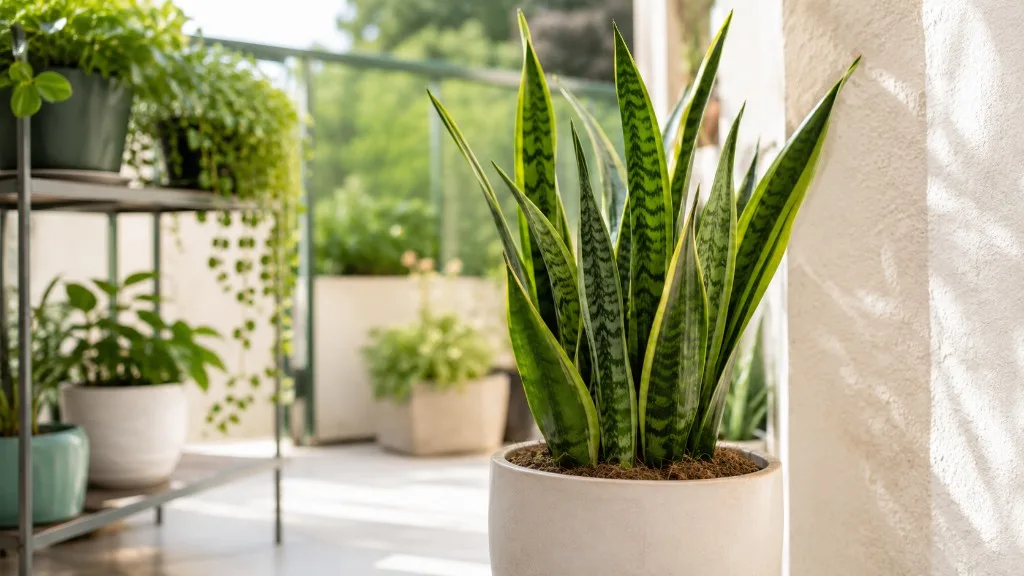
Sansevieria Cylindrica Light Needs: Window & Sun Guide
Sansevieria Cylindrica Light Needs: Window & Sun Guide
About this guide: Dracaena cylindrica — the African spear or cylindrical snake plant — grows round, spear-like leaves upright from rhizomes. Nursery braids are cosmetic; unbraid or leave them intact based on preference, but never force wet soil through tight braids. Care matches other drought-adapted dracaenas: gritty mix, full dry-down, and bright indirect light for active pup production.
Sansevieria cylindrica — the African spear or cylindrical snake plant — looks tough enough to live anywhere you set it down. The round, upright spears and slow growth reinforce that idea. So does the marketing label “low-light plant.” What the label hides is that Dracaena angolensis (the name NC State Extension uses for the species long sold as Sansevieria cylindrica) still runs on light. It tolerates dim rooms longer than a fern or a calathea. It does not prefer them if you want firm new spears, offsets at the base, or a pot that dries on a predictable schedule.
The practical goal is placement where new cylindrical leaves emerge stiff and green from the center or base, without bleached tips from hot glass or the quiet stall that happens when a drought-adapted plant lives on stored water instead of active photosynthesis. NC State Extension advises growing African spear in a brightly lit window and, if moved outdoors in summer, giving only morning sun to avoid sunburn. That is stronger guidance than “any dark corner” — and it matches what growers see on braided retail plants that survive but never pup.
This guide covers window placement for round spears and braided clumps, direct sun limits, honest low-light boundaries, grow-light setups, and the warning signs that tell you to move the pot before cosmetic damage becomes overwatering on Sansevieria Cylindrica in a dim corner.
How Much Light Sansevieria Cylindrica Actually Needs
African spear sits in the same broad light band as flat-leaf snake plants — bright indirect light indoors, with tolerance for low light and some direct sun when acclimated — but the round leaf shape changes how you read the plant. Flat Dracaena trifasciata blades present a broad face to the window. Cylindrical spears catch light from fewer angles unless you rotate the pot. A braided clump adds another layer: outer spears shade the inner ones. Placement that looks “bright enough” to your eyes may still leave half the rosette in shadow.
Indoors, aim for the brightness you get two to four feet from an unobstructed east window, or four to six feet back from a filtered south exposure with sheer fabric or a light-colored wall reflecting ambient light. NC State Extension lists cultural light for African spear as dappled sunlight and partial shade — direct sun only part of the day, two to six hours — the same partial-shade band NC State gives flat snake plant, with the added note to prioritize a bright window for this species. In dim corners, existing spears stay rigid but new growth and pup formation usually stop.
The honest summary: give Sansevieria cylindrica as much bright indirect light as the room allows, pull back only when you see heat or scorch on the sun-facing spears, and treat dim corners as temporary holding zones — not long-term homes for plants you want to divide or braid into fuller clumps.
Surviving vs Thriving on Round Spear Leaves
Houseplant advice often collapses “tolerates low light” into “wants low light.” African spear exposes why that shortcut fails. In insufficient light, thick spear tissue and rhizome reserves let the plant enter metabolic stasis — existing spears stay firm while new ones stop emerging and pups at the base fail to form. Because growth is already slow, stasis can look “normal” for a year or more until you compare with a brighter specimen producing offsets.
In bright indirect light, the same plant shifts to active growth: new spears push from the center on a seasonal rhythm, rhizome offsets appear beside the main clump, and soil dries on a schedule that matches CAM-based water use. UF/IFAS Extension notes that related snake plants use Crassulacean acid metabolism (CAM) photosynthesis — stomata open at night to save water in dry native habitats. CAM is a drought adaptation, not a shade adaptation. The plant still needs light to build tissue; it simply manages water differently than a typical tropical foliage plant.
Judge light by new spears and pups, not by whether old spears remain green. Outer leaves in a braid can look healthy while the center has not produced growth in months — a sign the clump needs brighter placement, looser braiding, or rotation.
What Bright Indirect Light Means for Cylindrical Foliage
“Bright indirect light” is accurate horticultural language and vague room advice at the same time. Translate it with a simple field test. On a clear day, hold your hand between the plant and the window. A soft, readable shadow with defined edges at spear height usually means bright indirect — the range African spear prefers. A faint or absent shadow means low light: survivable, not ideal. If spear tips feel hot to touch within an hour of direct sun on the glass, you are in exposure that may need filtering or distance.
Duration matters as much as peak intensity. Sansevieria cylindrica benefits from roughly eight to ten hours of useful ambient brightness across the day. A spot with one hour of gentle morning direct sun plus bright ambient light often outperforms a west windowsill that delivers a harsh late-afternoon blast alone. Re-check placement in late winter if growth stalls without any other care change — lower sun angle and shorter days drop effective brightness sharply on north and interior placements.
African Spear Origins and Why Braids Change Placement
Dracaena angolensis is native to Africa — the species epithet references Angola — and grows as a succulent herbaceous perennial with subcylindrical, spiky leaves up to several feet long from a basal rosette (NC State Extension). In habitat, light is bright overall with filtered or intermittent direct sun through sparse cover — open, rocky, semi-arid conditions rather than deep forest shade. That maps cleanly to an east-facing window indoors or a set-back south exposure with diffusion.
Retail plants add a human layer: nursery braids are cosmetic. Growers weave young spears together for shape; the braid does not change biology. It does change light and airflow. Outer spears intercept most window light. Inner spears sit in perpetual shadow. Tight braids also slow soil dry-down at the crown — a problem that worsens in dim rooms where water use already lags. You can leave a braid intact for aesthetics, but rotate the pot every two to three weeks and favor brighter placement than you would for a single unbraided rosette. If inner spears soften or the center smells sour, loosen or remove the braid after stabilizing light and soil drainage on Sansevieria Cylindrica.
Native Habitat Light in Angola and Central Africa
African spear evolved where sky brightness is high and rain is intermittent. The plant stores water in round spears and rhizomes, then uses CAM to limit daytime water loss — the same broad pattern UF/IFAS describes for Sansevieria trifasciata in tropical western Africa. Habitat light is not “office dark.” It is strong ambient brightness with dappled or morning direct sun — closer to a bright windowsill than a hallway alcove.
Calling cylindrical snake plants “shade lovers” sends them to interior rooms with no window path, where even drought-tolerant spears eventually exhaust reserves. African spear is a strong candidate for a grow-light desk in a windowless office. It is not a candidate for a closet unless you add a lamp.
Nursery Braids and Inner-Spear Shading
Braided stock introduces a placement rule flat snake plants do not need: light must reach the base of every spear, not only the outer ring. When outer spears lean toward glass — normal directional growth — inner spears fall further into shade. Over months, the clump looks full on the outside while the center produces no pups and holds moisture longer than a single rosette would.
If you buy a braided plant from a low-light retail display, quarantine it in moderate indirect light for a week before moving toward your brightest acceptable window. Combine that light increase with a dry-down check from the Sansevieria Cylindrica watering guide — do not stack repotting, fertilizing, and a major light jump in the same week.
Best Window Placement for Sansevieria Cylindrica
Window direction is a starting point, not the whole answer. Obstructions, tree shade outside, glass tint, and pot distance all change intensity at the spear tips. In the northern hemisphere, compass orientation still gives a reliable first guess.
Place African spear where spear tips receive strong plant-facing light for most of the day, not where the room looks bright to human eyes. A braided clump on a bookshelf across from a window is decoration. A pot within a few feet of the glass on an appropriate exposure is horticulture. Rotate a quarter turn every two to three weeks so all sides of a braid or single rosette share exposure over time.
East, South, West, and North Windows Compared
An east-facing window is the safest default for most Sansevieria cylindrica indoors. Morning sun tends to be bright but cooler than late-day sun. Two to three feet from an unobstructed east pane often delivers steady bright indirect growth without frequent scorch on round tips. Clemson Extension lists bright indirect light as ideal for snake plants, with low light tolerated but slower growth — and names Dracaena angolensis specifically for its cylindrical, finger-like leaves.
A south-facing window delivers the highest total daily light, especially in winter. That intensity is an asset with distance or diffusion. Place the pot roughly four to six feet back from the glass, or use a sheer curtain to soften direct beams. Watch bleached or crisp spear tips facing the pane in midsummer — a sign to pull back or filter afternoon heat.
A west-facing window can work in spring and fall and become risky in midsummer when late-afternoon sun carries heat through the pane. Treat west like south with extra caution, not like east with bonus sun.
A north-facing window provides gentle indirect light all day but often lands in the low to moderate range, especially in winter. African spear survives north windows more reliably than most houseplants, but pup production slows and soil dries slowly. If north is your only option, extend watering intervals and consider a supplemental LED rather than accepting permanent stasis.
Distance acts as a dimmer: closer increases intensity and heat; farther softens direct sun but may drop below the growth threshold. Seasonal adjustment beats permanent guessing — move closer in winter when sun angle drops, slightly back in midsummer if spear surfaces heat up.
Can Sansevieria Cylindrica Take Direct Sun?
Yes — with conditions. African spear handles some direct sun, especially gentle morning exposure on an east windowsill or filtered direct light through sheer fabric. NC State Extension recommends morning sun only when plants summer outdoors, explicitly to avoid sunburn — a species-specific caution worth taking seriously on round tips that show damage quickly.
Problems start when intensity jumps faster than the plant can adjust. A braided plant grown under fluorescent store lighting and then placed on a south sill in July may develop permanent bleached or sunken patches on the sun-facing spears within days. Direct sun through glass also concentrates heat at the leaf surface. CAM physiology helps with drought, not with photobleaching or thermal tip damage.
Treat direct sun as a tool, not a default. Use it when acclimated plants show compact spears and even green color. Remove it when sun-facing tissue develops crisp brown zones or sudden softening after a move.
Morning Sun vs Harsh Afternoon Rays
Morning direct sun differs from afternoon direct sun in heat load and duration of stress. East exposure gives African spear a manageable direct period followed by bright indirect day length. Afternoon sun through west or south glass can exceed what unacclimated spears tolerate, especially when outdoor temperatures are high and the pot sits on a heat-radiating sill.
If you want direct sun benefits — slightly tighter spear spacing on some specimens — east morning sun is the safest entry. South and west direct sun can work for established plants with curtain diffusion. Never assume round spears cannot burn; sunburn is permanent on affected tissue.
Acclimating Store-Bought or Braided Plants
Acclimation is non-negotiable when upgrading light. Move a low-light plant toward brighter exposure in stages over two to three weeks, not in one afternoon. Week one: place the pot in the target room but several feet back from the window. Week two: move halfway to the final distance. Week three: settle at the intended spot unless newest spears show stress.
Watch the newest spear first. Mild temporary reddening on the sun-facing side during peak hours can occur during acclimation. Bleaching, large brown patches, or softening tissue mean you moved too fast — step back to the last safe distance for another week. Avoid combining a major light jump with immediate repotting on Sansevieria Cylindrica or fertilizer on Sansevieria Cylindrica on the same timeline.
Low-Light Limits: How Dark Is Too Dark?
Sansevieria cylindrica can survive surprisingly dim conditions — north rooms, distant corners, offices with weak ceiling fluorescents — longer than most tropical foliage plants. Survival has limits. Zero usable light is not survivable long term. A windowless room without a grow lamp will eventually exhaust stored reserves.
The more common failure mode is slow decline masked by drought tolerance. Soil stays wet. Rhizomes stop pushing pups. New spears are absent for a year or more. Outer spears may look darker green as the plant maximizes chlorophyll in dim conditions — counterintuitively, darker can mean less light, not more health. When watering finally catches up with the dim placement, rot appears — and beginners blame water alone.
How dark is too dark for a plant you want to grow? If no new spear has emerged in twelve or more months and no pups have formed beside the main clump, you are below the growth threshold. If the pot takes more than three weeks to dry in a normal indoor temperature range, light is likely too low for safe watering rhythms. Short-term dim placement during a renovation is reasonable. Multi-year dark-corner storage is not.
Signs Your African Spear Is in Survival Mode
Survival mode on cylindrical snake plant shows a distinct profile. Existing spears stay rigid but new spears and pups are absent or rare. Soil in the center of a braid stays moist while the surface looks dry. The clump may look unchanged for seasons while a brighter specimen of the same age produces offsets you could divide during propagation.
If policy or layout forces a low-light office, commit to a grow light rather than hoping tolerance equals preference. A small full-spectrum LED on a timer converts a survival placement into a workable one without redesigning the room.
Grow Lights When Natural Light Falls Short
When windows cannot deliver enough daily brightness — windowless rooms, deep interior offices, north-only winter exposures, or shelves far from glass — full-spectrum LED grow lights are the most reliable fix. African spear responds well to supplementation because it does not need extreme PAR levels compared with flowering crops. Moderate, consistent artificial light often beats a mediocre natural placement.
Choose a fixture labeled for houseplants or seedlings, not a standard room bulb optimized for human lumens. Full-spectrum white LEDs in the roughly 4000K to 6500K range support foliage maintenance and steady pup formation. Position the light 12 to 18 inches (30 to 45 cm) above the tallest spear tip as a starting point. Run eight to twelve hours daily on a timer for consistent photoperiod.
Coverage beats pinpoint intensity. A single bulb over the center of a wide braided clump leaves outer spears in shadow. Use a bar or panel that spans the pot, or rotate under a clip-on lamp every few days. When you add artificial light, re-check dry-down after two weeks — brighter total daily exposure speeds water use even if the window did not change.
Fixture Choice, Distance, and Daily Hours
Integrate grow lights with seasonal natural light rather than treating them as winter-only tools. A plant on a mediocre north window plus a supplemental LED often outperforms either source alone. Heat from enclosed fixtures above a closed terrarium lid can still stress spear tips — leave air space between lamp and foliage.
Warning Signs of the Wrong Light
African spear communicates light stress quietly. It rarely wilts like a thirsty fern. Instead, spear color, tip texture, and pup pace shift over weeks. Use a two-week observation window after any placement change. Old damage is historical. New spears after the move tell you whether current light works.
Too Little Light vs Too Much Sun on Round Leaves
Too little light typically shows as absent or very slow new spears, no pups at the base, darker overall green, soil that stays moist too long (especially inside braids), and elongated loose spacing as spears lean toward the brightest direction. Pests like fungus gnats become more common when root zones stay wet in dim, cool conditions — light and moisture interact.
Too much light or heat shows as bleached white or yellow patches on sun-facing spears, crisp brown tips, sunken scorched zones that feel thin, and sudden damage after an unacclimated move to strong south or west glass. Unlike low-light darkening, sunburn creates permanent cosmetic damage on affected tissue.
When both seem possible — hot glass in a dim winter room — prioritize removing direct beam and heat first. Scorch can happen in a week; low-light stasis takes months.
How Light Affects Watering and Pup Production
Light is the throttle on African spear metabolism even though watering gets blamed first. Brighter light increases photosynthesis and transpiration; dim light slows both. A watering rhythm that worked on a bright east windowsill will overwater the same plant in a dim corner because the root zone — especially inside a braid — stays saturated longer.
After any light increase, check soil moisture more frequently for the first month, but still wait until the mix is fully dry deep in the pot before watering. After a light decrease, extend dry intervals and pause fertilizer until new growth confirms the plant is still active. Growth pace expectations should match light level: in bright indirect light, one to several new spears per year and occasional pups is normal. In low light, zero visible growth for a year may still mean the plant is alive — match expectations and watering to that reality.
Light also influences propagation success. Division pups and leaf cuttings root more predictably when parent plants receive moderate to bright indirect light. Dim propagation shelves produce slow, rot-prone cuttings not because African spear is hard to propagate, but because energy input is too low for clean callus and root formation.
Conclusion
Sansevieria cylindrica light needs come down to a distinction beginners skip: tolerance is not preference. African spear will endure low light longer than most houseplants, but it grows, pups, and tolerates watering mistakes best in bright indirect light — roughly the brightness of an unobstructed east window at moderate distance, or a filtered south exposure with enough setback to avoid hot direct glass.
Place the pot where new spears and pups prove the light works, not where the braid looks decorative. Use morning direct sun cautiously after acclimation; follow NC State Extension’s outdoor rule of morning sun only to avoid sunburn. Treat north windows and interior desks as survival or grow-light placements unless you accept slow growth. When natural light falls short, a simple full-spectrum LED on an eight- to twelve-hour timer closes the gap more reliably than myths about unkillable snake plants.
If something looks wrong, read the newest spear and adjust one variable at a time. Step light changes gradually, link watering to dry-down speed, and remember that old scorch scars never heal — but the right placement today still produces clean new spears tomorrow.
When to use this page vs other Sansevieria Cylindrica guides
- Sansevieria Cylindrica overview — Start here for whole-plant context, braid notes, and toxicity before deep-diving light placement.
- Sansevieria Cylindrica watering — Use when soil stays wet too long or dry-down timing is unclear after a light change.
- Sansevieria Cylindrica soil — Use when drainage problems overlap with dim placement and slow dry-down.
- Sansevieria Cylindrica propagation — Use when pups are absent despite bright light, or when dividing after a placement fix.