How to Grow and Care for Bird's Nest Fern
Grow bird's nest fern indoors with bright indirect light, steady humidity, edge watering that avoids crown rot, and a loose epiphyte-friendly mix.
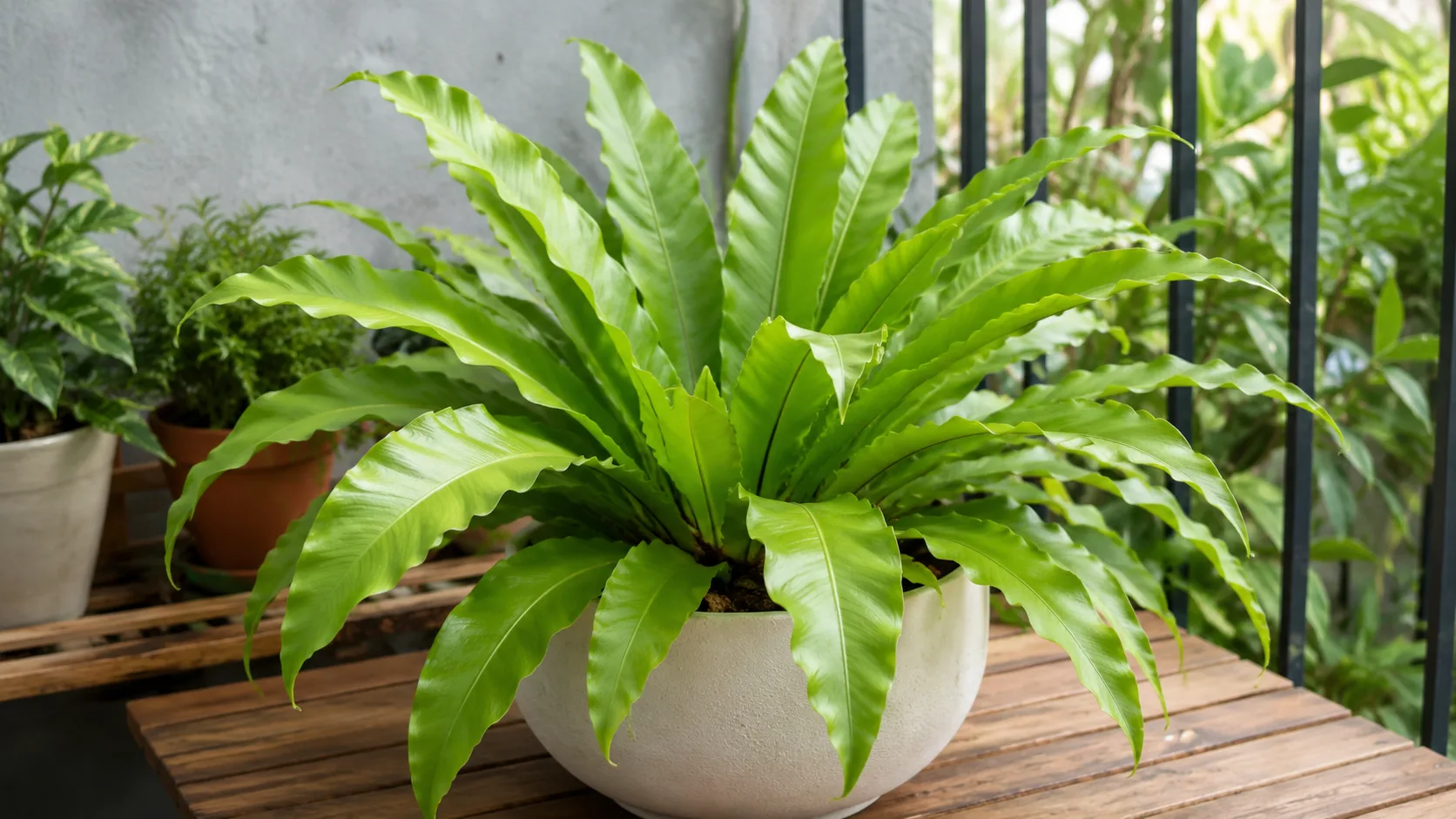
A bird’s nest fern looks like the easiest fern in the shop—broad glossy fronds, no lacy mess, a tidy rosette that reads as “low maintenance tropical.” Then the center turns mushy, the edges go crispy in February, or a new frond stalls halfway open and never finishes. Asplenium nidus is not difficult because it is delicate; it is difficult because most houseplant advice ignores what it actually is: an epiphytic tropical fern with one vulnerable growth point in the middle of a funnel-shaped crown. Get light, humidity, and edge watering right, and a Bird’s Nest Fern can sit in the same pot for years, slowly building a sculptural bowl of green. Pour water into the nest, park it in hot afternoon sun, or let winter heating air strip humidity for a month, and the same plant collapses fast.
This guide covers the full indoor care loop—placement, soil, watering technique, feeding, repotting, propagation reality checks, summer outdoor moves, pest response, and a troubleshooting path when fronds tell you something is off. If you want topic-specific deep dives, the LeafyPixels cluster breaks out light, watering, soil, fertilizer, repotting, propagation, and pruning on their own pages.
Bird’s Nest Fern Quick Reference
Use this table before you change anything. When a symptom shows up, match it to the fix column instead of guessing with more water.
| Factor | Indoor target | Watch for |
|---|---|---|
| Light | Bright indirect; east or north window, or filtered west/south | Bleached or scorched fronds = too much direct sun |
| Temperature | 60–80°F (16–27°C) day-to-day | Below ~50°F (10°C) damages tissue |
| Humidity | 50–80%; 60%+ ideal | Wide brown leaf margins in heated winter air |
| Water | When top 1 in. (2.5 cm) of mix feels dry | Never pour into the central crown |
| Soil | Loose, organic-rich, fast-draining epiphyte mix | Heavy wet mud = root stress + gnats |
| Fertilizer | Half-strength liquid monthly spring–early fall | Distorted new fronds = too much feed |
| Repot | Every 2–3 years when unstable, not on a calendar | Spring timing; one pot size up |
| Pets | Non-toxic to cats and dogs (ASPCA) | Chewing can still upset stomachs |
| Outdoor zones | USDA 11–12 year-round | Elsewhere: summer shade only, frost-free nights |
Clemson Cooperative Extension describes Asplenium nidus as an epiphytic fern suited to warm rooms with bright indirect light and steady moisture—not a sun plant and not a drought-tolerant succulent. (Clemson HGIC) Indoors, most container plants settle around 1–2 feet tall and wide, though individual fronds can reach 18–24 inches on a happy specimen. Outdoors in the ground in frost-free climates, plants can grow substantially larger over time. (Missouri Botanical Garden)
What Makes Bird’s Nest Fern Different From Other Ferns
If you have kept a Boston fern or maidenhair, reset your expectations. Bird’s nest fern fronds are undivided, strap-shaped, and relatively leathery, emerging one at a time from a central rosette rather than as a feathery mass of pinnae. That leaf architecture changes how the plant handles light, drying, and handling. It tolerates lower light better than many tropical foliage plants, but it still needs enough brightness for firm new growth. It also punishes crown wetness more brutally than ferns whose growth points are less exposed.
Epiphytic Roots and the Central Rosette
In tropical forests across Asia, Australia, the Pacific, and parts of Africa, Asplenium nidus grows as an epiphyte on tree trunks and branches—not as a ground-rooted plant in dense soil. NC State Extension notes the species is epiphytic in nature, which explains why roots want air, organic matter, and quick drainage rather than heavy garden loam. (NC State Extension) The upright rosette acts like a funnel, catching debris and rain in the wild. Indoors, that same shape traps water, pet hair, and dust if you pour into the center.
The visible “nest” is both the plant’s signature look and its engineering. New fronds unfurl from a fuzzy brown crown at the center. Mature fronds may show ** neat brown lines (sori) on the undersides**—those are spore cases, not pests or scale. Plantvale, which field-tests houseplant care at home, emphasizes that those sporangia are a sign of maturity, not a problem to scrape off. (Plantvale)
Why the Crown Changes How You Water
Crown rot is the fastest way to lose a bird’s nest fern. Water that pools in the central nest sits against soft, actively dividing tissue that dries slowly. Bacterial and fungal breakdown can kill the only meristem that produces new fronds. Clemson HGIC explicitly recommends watering along the outer edge of the pot so water does not enter the crown. (Clemson HGIC) UF/IFAS Gardening Solutions repeats the same rule for Florida growers moving these ferns between patio shade and indoor rooms. (UF/IFAS)
That single habit separates thriving plants from the “it was fine until it wasn’t” stories. Edge watering also keeps frond surfaces drier, which matters in cool rooms where foliar moisture lingers. When you lift the pot to move it, hold the container, not the fronds—tears at the base heal slowly on a slow-growing fern.
Light Requirements and Best Window Placement
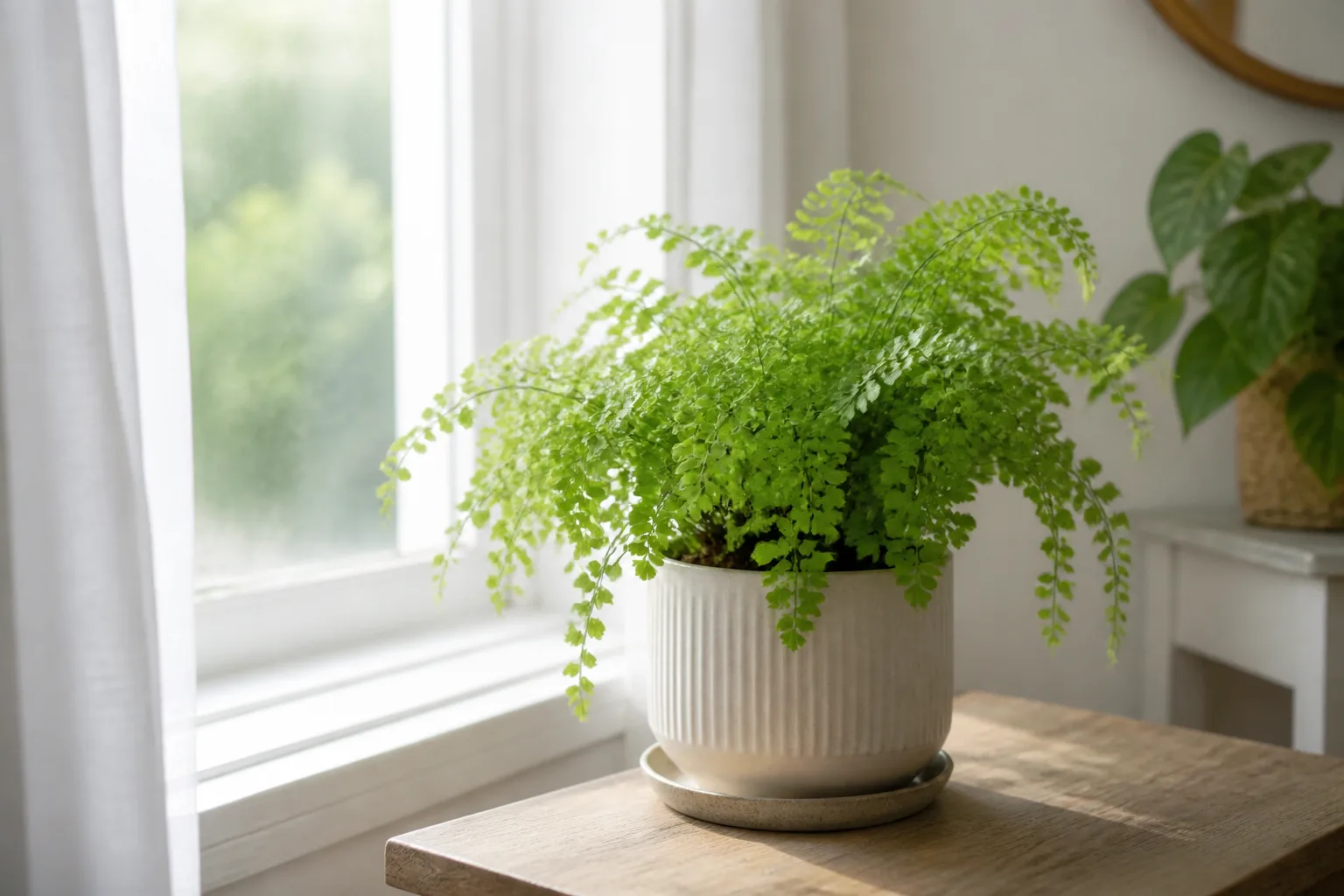
Bird’s nest fern wants filtered light to partial shade—the kind it would receive under a rainforest canopy. Indoors, that usually means an east-facing window (gentle morning sun, bright ambient light afterward), a north-facing window in many homes, or a spot several feet back from a west- or south-facing window where direct rays do not hit the fronds. Clemson HGIC recommends bright indirect light, especially in east- or north-facing rooms. (Clemson HGIC)
Adequate light produces firm, wavy fronds with good color. Too little light slows growth, shrinks new fronds, and stretches the gap between unfurling leaves—but the plant may survive for a long time if humidity and watering stay stable. Too much direct afternoon sun bleaches or scorches foliage within days, especially if the plant came from softer nursery light. If you must increase brightness, move the pot gradually over one to two weeks and watch the newest frond first; it is the most honest sensor.
Grow lights work well in dark winters. A full-spectrum LED at moderate intensity, far enough that fronds do not heat up, can supplement a north room or an interior shelf. For placement nuance and window-by-window trade-offs, see the dedicated Bird’s Nest Fern light guide.
Temperature and Humidity Targets
Warm, stable room temperatures suit Asplenium nidus best: roughly 60–80°F (16–27°C) during normal indoor life. Brief dips happen, but sustained exposure below about 50°F (10°C) stresses tissues and can damage fronds. Keep the pot away from air-conditioning vents, radiator blasts, and drafty doors—rapid swings matter as much as absolute numbers because epiphytic crown tissue reacts to instability with stalled growth and edge browning.
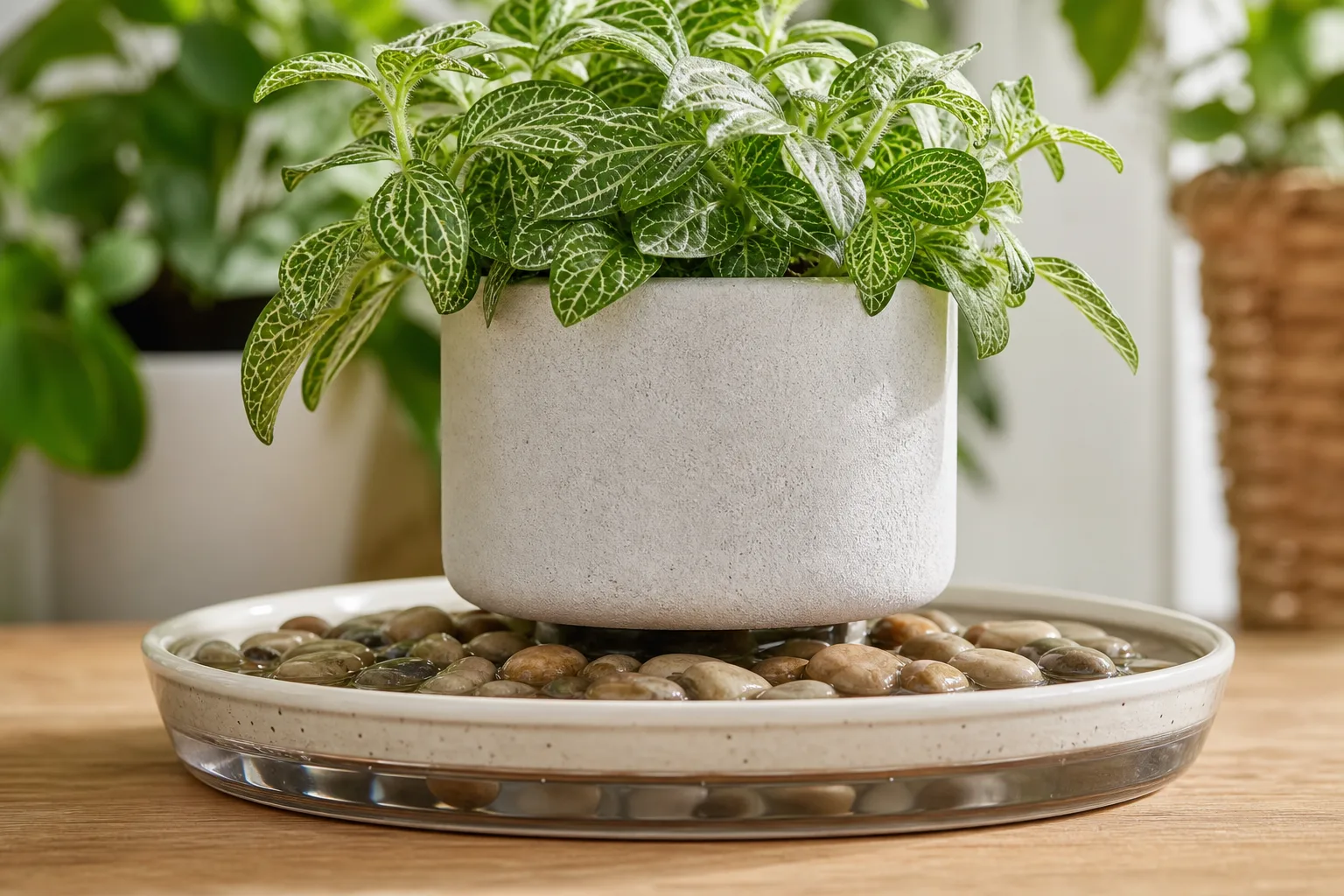
Humidity is the other lever people underestimate. This fern evolved in air that stays moist. Aim for 50–80% relative humidity, with 60%+ as a practical sweet spot in heated homes. Below that—especially when furnaces run—wide brown margins appear even when watering looks “correct.” A humidifier is the most reliable fix. Grouping plants helps at the margins. Misting raises humidity only briefly and can leave spots on fronds in cool, stagnant air; treat it as a supplement, not a strategy.
Bathrooms and kitchens often work because humidity spikes regularly, provided there is enough light. A steamy but windowless bathroom still needs a grow light or the fern will slowly decline. The best placements combine usable light plus moisture, not just one or the other.
Soil Mix and Container Requirements
Because Asplenium nidus is epiphytic, think orchid-adjacent mix, not heavy all-purpose potting soil. UF/IFAS recommends a rich, well-drained organic mix for container culture. (UF/IFAS) A workable indoor blend combines peat or coco coir for moisture retention, orchid bark or coarse perlite for air pockets, and a little compost or worm castings for organic matter. The goal is evenly moist but never muddy—like a wrung-out sponge, not a wet towel.
Always use a pot with drainage holes. Decorative cachepots are fine if you empty excess water after each soak. Ceramic or stoneware pots often anchor a top-heavy rosette better than lightweight plastic when the plant matures. Avoid burying the crown deeper at repot time; the rosette should sit at the same level as before. More mix recipes and drainage tests live on the Bird’s Nest Fern soil page.
Watering Bird’s Nest Fern Without Crown Rot
Water when the top inch (about 2.5 cm) of mix feels dry and the pot feels lighter than right after a soak—not on a fixed calendar. In many bright, humid homes that lands near every 7–10 days in warm months and every 10–14 days in cooler, dimmer months, but light, pot size, airflow, and season change the interval. When you water, soak the outer edge of the root ball until excess drains from the bottom, then empty the saucer. Never pour into the central nest.
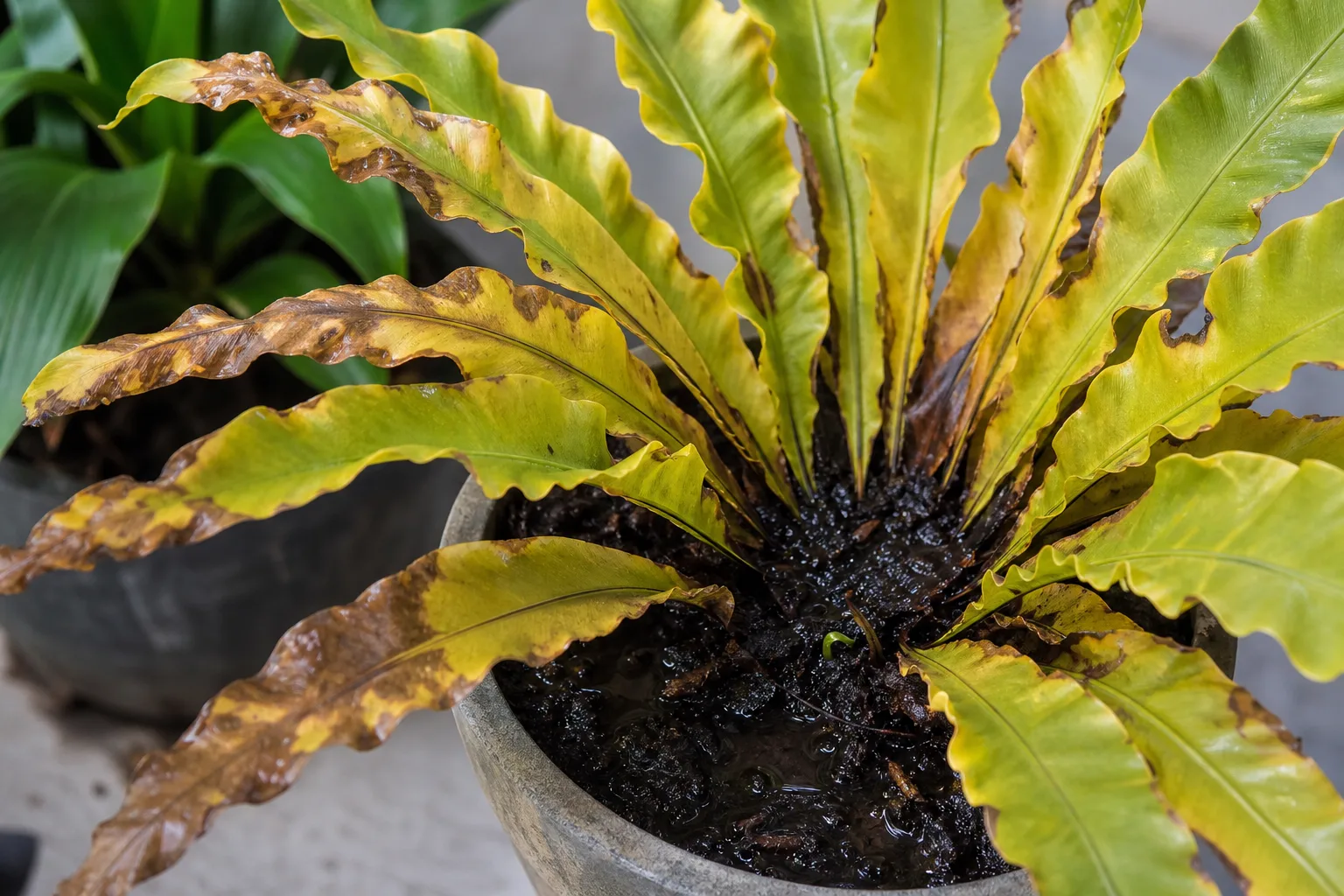
The plant prefers consistent moisture, not swings between bone-dry and soggy. If fronds go limp and the mix is dry, it is thirsty. If fronds yellow while the mix stays wet and heavy, you are likely overdoing it—see overwatering on Bird’s Nest Fern before adding more water. Tap water high in fluoride or salts can contribute to edge browning over time; occasional flushing with plain water helps if you feed regularly.
If you are unsure whether dryness or wetness is the issue, lift the pot and feel the top inch before every decision. That one check prevents more rescues than any fertilizer ever will.
Fertilizer Timing and Dilution Rules
Bird’s nest fern is a light feeder. During active growth from spring through early fall, apply a balanced liquid houseplant fertilizer diluted to half strength about once a month, directed at the soil surface, not the fronds. Direct fertilizer contact can burn foliage. Stop feeding in late fall and winter when growth slows, then resume the following spring.
Overfeeding shows up as crinkled, distorted new fronds—a clearer signal than generic “slow growth.” If you never fertilize but light, humidity, and watering are solid, the plant can still look excellent. When you do feed, less is more. Detailed timing and flush protocols are on the Bird’s Nest Fern fertilizer guide.
Popular Cultivars Worth Knowing
Most nursery tags say Asplenium nidus, but selections differ in frond shape and ripple:
- ‘Crispy Wave’ — deeply ruffled, upright sword-shaped leaves; often sold as a standalone architectural specimen.
- ‘Osaka’ — narrower, strap-like fronds with pronounced rippled edges.
- ‘Antiquum’ — broad blades with wavy margins; sometimes labeled separately though closely related to nidus culture.
- ‘Victoria’ — long, tongue-shaped fronds with strong waviness.
For practical care, treat these as the same core culture—filtered light, high humidity, edge watering—while expecting different silhouette and pot stability. A heavy ruffled rosette may need a wider, heavier base sooner than a narrow Osaka type.
Repotting When the Rosette Outgrows the Pot
Repot every two to three years, or when the plant becomes top-heavy and unstable—not because roots filled every crack. Asplenium nidus often grows slowly enough that root-bound panic is misplaced; stability and fresh mix matter more than chasing maximum pot size. Spring, as new growth starts, is the best window.
Choose a container one size larger with drainage holes. Loosen the root ball gently, set the plant at the same depth, and backfill with fresh epiphyte-friendly mix. Water lightly after repotting and keep humidity steady while roots settle. Step-by-step handling of the crown during repot lives on the Bird’s Nest Fern repotting guide.
Propagation by Spores (What Actually Works at Home)
Here is the honest version: you cannot propagate bird’s nest fern from leaf cuttings. Fronds have no nodes; a severed leaf withers. Division only works if you have a natural offset with its own roots— uncommon on standard single-crown nursery plants. The real biological path is spores.
On mature fronds, brown fuzzy patches (sori) on the underside hold spores. When they look plump and fuzzy, you can collect them:
- Cut a frond with ripe sori and place it in a paper bag for a few days so spores drop.
- Moisten sphagnum moss in a shallow dish; keep it damp, not submerged.
- Shake spores onto the moss surface.
- Cover with clear plastic to hold humidity and place in warm, shaded light.
- Mist if the moss dries; germination can take weeks to months before tiny prothalli appear and eventually young ferns.
Sterility, patience, and stable humidity make home spore propagation possible but slow—measured in months, not weekends. Most growers who want a second plant buy one. The Bird’s Nest Fern propagation page walks through offsets vs spores in more detail.
Pruning, Cleaning, and Handling Fronds
Bird’s nest fern does not need shaping cuts. Remove dead outer fronds at the base with clean, sharp scissors when they brown fully. Do not pull torn fronds; a clean cut heals cleaner. Dust blocks light on broad blades—wipe gently with a soft, slightly damp cloth, then let fronds dry. Keep the crown dry after cleaning.
Never polish leaves with commercial shine products; they clog stomata and stress epiphytic foliage. For tool hygiene and crown-safe removal, see Bird’s Nest Fern pruning.
Moving Bird’s Nest Fern Outdoors for Summer
In most of the U.S., bird’s nest fern is an indoor plant. You can move pots outdoors for summer when nights stay above about 60°F (16°C) and days remain below about 90°F (32°C) without blazing sun. Choose full shade or dappled shade—a covered porch or tree canopy—not a sunny patio. Acclimate over 7–10 days so nursery-soft fronds do not scorch.
Bring plants indoors before nights drop toward 50°F (10°C). Wind and rapid temperature drops damage fronds faster than many growers expect. In USDA zones 11–12, in-ground culture is possible in moist, shaded sites with excellent drainage. (Missouri Botanical Garden)
Pests and Gentle Treatment Options
No plant is immune, but bird’s nest fern is not a magnet for constant infestations. Watch for scale, mealybugs, and spider mites in dry air, plus fungus gnats when soil stays wet too long. Inspect frond bases and the crown when you water.
Because fronds are fragile, favor insecticidal soap or neem oil applied carefully to pests—not broad-spectrum chemical sprays that burn foliage. Wipe visible scale and mealybugs with a cotton swab dipped in alcohol, then follow with soap per label directions. For gnats, ease off watering and let the top layer dry slightly between soaks. LeafyPixels pest pages cover scale, spider mites, and fungus gnats on this species specifically.
Troubleshooting Common Leaf Problems
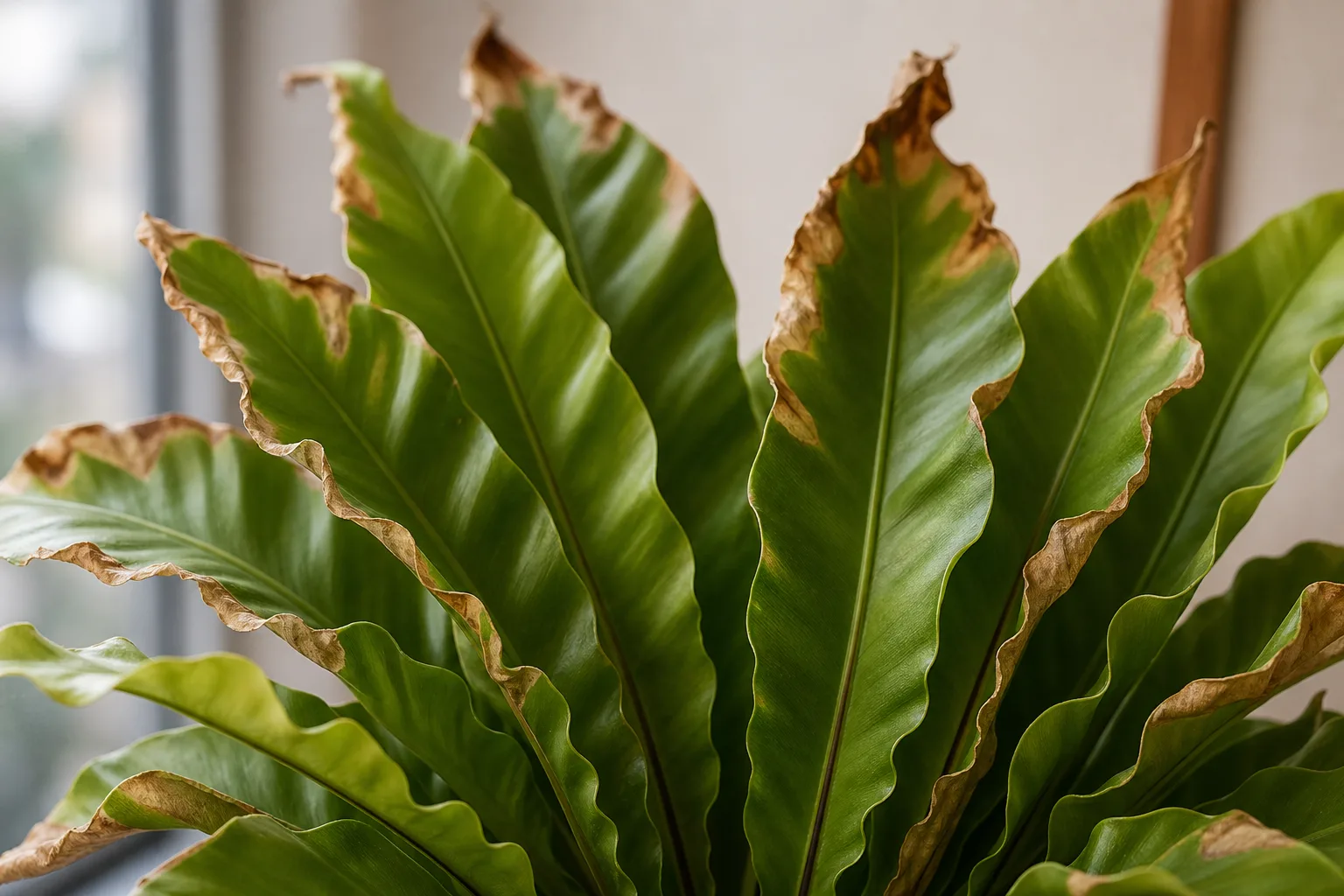
Start with environment before products. Most “sick” bird’s nest ferns are responding to light, water path, humidity, or drafts—not mysterious fern disease.
Curling leaves and brown edges usually mean low humidity, underwatering, or both. Raise humidity toward 60%+, water when the top inch dries, and avoid crown pooling. If edges persist after humidity improves, flush the pot to wash accumulated salts. See brown tips and low humidity for photo-level diagnostics.
Pale or yellow fronds often trace to too much direct sun (bleaching on the exposed side) or overwatering (yellow lower fronds with wet, heavy mix). Move the plant out of direct rays or reduce watering frequency and verify drainage. Drafts can brown tips on otherwise green fronds—especially air-conditioning hits in summer.
Wilting with dry mix is thirst; wilting with wet mix may be root damage—stop watering and inspect roots if the crown still firm. Wilting with a mushy center is likely crown rot; recovery is rare once the nest collapses.
| Symptom | Likely cause | First action |
|---|---|---|
| Wide brown leaf margins | Dry air / low humidity | Humidifier or pebble tray; check watering |
| Bleached patches on sun-facing side | Too much direct sun | Filter light or move back from window |
| Yellow lower fronds, soggy mix | Overwatering | Let top inch dry; confirm drainage holes |
| Mushy brown center | Crown rot from center watering | Discard if meristem destroyed; repot only if crown firm |
| Crispy new frond shape | Over-fertilizing or cold draft | Pause feed; move away from vents |
Is Bird’s Nest Fern Safe for Pets?
Yes—for typical pet exposures. ASPCA lists bird’s nest fern (Asplenium nidus) as non-toxic to cats and dogs. (ASPCA) That makes it a strong choice for pet-conscious homes compared with many popular tropicals. Eating any houseplant can still cause mild stomach upset, so keep pots out of reach if your pets are aggressive chewers.
Conclusion
Bird’s nest fern rewards a specific setup more than constant fuss: bright indirect light, warm stable air, real humidity, a loose draining mix, and water applied at the pot edge while the crown stays dry. Master those five variables and Asplenium nidus becomes one of the more forgiving indoor ferns—slow-growing, sculptural, and pet-safe. Skip them and no amount of misting on schedule will save a rotting nest. Keep the quick-reference table handy, link out to the LeafyPixels cluster when one factor needs depth, and let the newest frond tell you whether your room is working.